I have made every mistake in this list. I have watered in the evening and invited mildew, sown carrots so thick they grew like tangled thread, fed beans like they were roses and wondered why leaves boomed but pods didn’t, and planted tomatoes the day after buying them because I could not wait — only to watch them shiver in 48°F soil for three weeks. If you recognize yourself here, you are not behind. You are exactly where every good gardener starts.
The difference between a frustrating first year and a generous one is rarely talent. It is a handful of correctable habits. Below are the fifteen mistakes I see most often when I visit new gardens, in the order they cost harvest, with the gentler fix that actually works. No shame. Just second chances.
Quick Answer: Beginners lose harvest to 1) starting too big, 2) poor sun assessment, 3) planting at wrong time, 4) bad soil with no compost, 5) guesswork feeding, 6) crowded spacing and skipped thinning, 7) shallow daily watering, 8) bare soil with no mulch, 9) no thinning or pruning, 10) ignoring pollination, 11) leaving fruits too long, 12) planting same family same spot yearly, 13) choosing wrong varieties for climate, 14) ignoring pests until outbreak, and 15) quitting too early / not keeping records. Fix with 4×8 bed, 6–8 hours sun, compost, spacing per packet, deep 1 inch/week morning water, mulch, succession and rotation.
At a Glance: 15 Mistakes at a Glance
| # | Mistake | What Happens | Gentler Fix |
|---|---|---|---|
| 1 | Starting too big | Weeds win, burnout by July | 4×8 bed, 3–5 crops first year |
| 2 | Misjudging sun | Leggy, no fruit | Track sun 8am-noon-4pm, give 6–8 hrs |
| 3 | Wrong timing | Bolt or frost kill | Cool vs warm crops by soil temp/frost |
| 4 | Skipping compost | Hard crust, pale growth | 2–3 inches compost, loose loam |
| 5 | Random fertilizing | Huge leaves no fruit | Soil test, feed per crop need |
| 6 | Overcrowding | Disease, 30–50% yield loss | Space per packet, thin bravely |
| 7 | Shallow daily water | Shallow roots, wilt, crack | Deep 1 inch/week, mulch |
| 8 | Bare soil | Dries, weeds, splash disease | Straw mulch 3 inches after establishment |
| 9 | Not thinning/pruning | Nothing sizes up | Thin twice, prune suckers/air |
| 10 | Ignoring pollination | Flowers drop, no fruit | Hand-pollinate, pollinator border |
| 11 | Leaving fruits long | Plant stops producing | Harvest small every 2–3 days |
| 12 | No rotation | Blight builds yearly | Rotate families yearly, journal |
| 13 | Wrong variety | Bolt, late harvest | Choose early/disease-resistant for zone |
| 14 | Late pest scout | Outbreak | Scout weekly undersides, early soap |
| 15 | No records | Repeat same errors | Notebook dates, what worked |
1. Starting Too Big
Every February I sketch a garden bigger than I can weed in July. That first year I tilled 20 by 20 feet because the space existed. By late June that space existed as pigweed.
A big garden is not more generous; it is more exposed. Weeds grow faster than you learn, watering takes longer than you budgeted, and harvest becomes a chore you avoid on hot evenings. Confidence curdles.
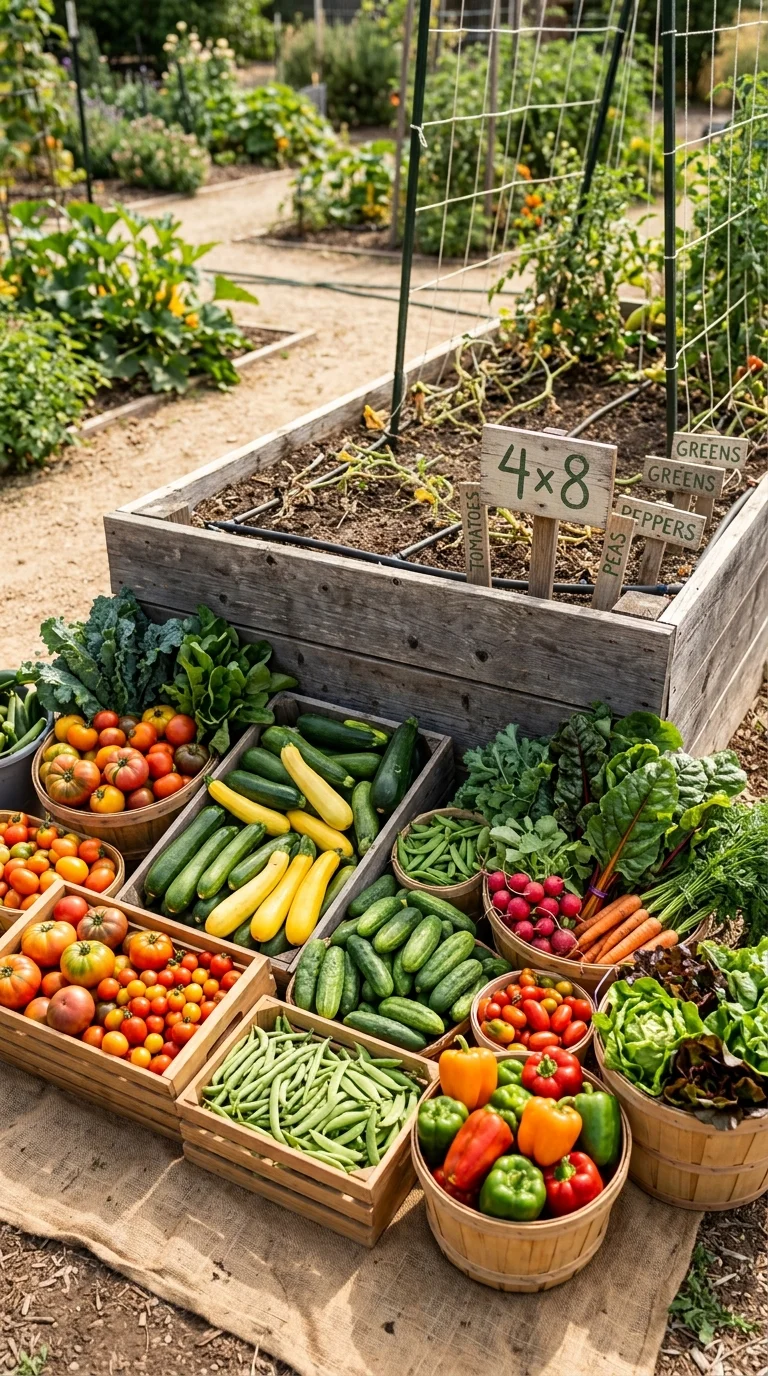
Fix: Start 4 by 8 feet — 32 square feet — with 2 to 3 crops plus one trellis. Tend it 15 minutes a day and it feeds you salad daily. Master water, mulch, thinning there; expand next spring with compost and a second bed. Abundance loves a small well-tended space.
2. Misjudging Sun
I once put tomatoes where the fence shadow fell from 2 p.m. on, because morning looked sunny. They grew leggy, pale, reached sideways, bloomed little. Vegetables do not forgive optimism about light.
Most fruiting vegetables need 6 to 8 hours direct sun; leafy greens manage 4. Shade before 10 a.m. or after 4 p.m. matters less than midday, but dappled all day is not full sun.
Fix: Before you dig, watch the spot at 8 a.m., noon, and 4 p.m. on graph paper. Mark shadows. Put tall crops north, short south, rows north-south. If you only have 4 hours, make that a salad-bar bed — lettuce, spinach, radishes, herbs — and put a container tomato where sun actually falls.
3. Planting at the Wrong Time — Too Early and Too Late
There are cool lovers and heat lovers, and pretending they all start same week costs harvest. Lettuce and peas planted in 75°F soil bolt in days; tomatoes planted in 50°F soil sit, stunted, more disease-prone than if you had waited two weeks.
Cool crops — peas, spinach, lettuce, carrots, beets — thrive sown 2 to 4 weeks before last frost while nights still cool. Warm crops — beans, zucchini, cucumbers, tomatoes, peppers — need frost past and soil 60 to 65°F. I use a soil thermometer — $8, worth more than any fertilizer that week.
Fix: Plant in two waves. Wave one before last frost for cool. Wave two two weeks after for warm when evenings feel soft. See when to plant vegetables and keep a simple calendar on fridge.
4. Ignoring Soil — Planting in Hard, Hungry Ground
Backyard dirt is not potting soil. It is often compacted, low in organic matter, and crusty. Roots suffocate, water pools then disappears, seedlings pale.
Fix: Add 2 to 3 inches of finished compost to the bed and work top 6 to 8 inches loose. That single addition improves drainage and water-holding at once — magic of organic matter. Do not till wet soil; it does more harm. Test pH every two years — 6.0 to 7.0 for most vegetables. See how to prepare soil and potting mix vs garden soil for containers use potting mix.
5. Feeding by Guesswork — Too Much, Too Little, Wrong Kind
Beginners either starve plants or blast them. I once fed bush beans with high-nitrogen lawn feed. Leaves became glossy dinner plates; pods were scarce for weeks. Legumes make their own nitrogen; leafy greens like nitrogen; fruiting crops want balanced phosphorus and potassium at bloom.
Fix: Soil test. If you won’t test, default to compost for everyone, then side-dress leafy greens lightly after a month if pale, and give heavy fruiters balanced organic vegetable fertilizer at flowering per label. Never exceed label rate — more is not more. Always water after feeding.
6. Crowding — Sowing Thick, Planting Tight, Hoping for More
The packet says 2 inches, but scattering feels more generous. Result is ferny carpet where nothing sizes up and disease finds humid microclimate. Crowding cuts yields 30 to 50 percent even though you planted more.
Fix: Follow packet spacing. Use a square-foot grid if you need visual help: lettuce 4 per square foot, carrots 16, tomatoes 1 per 4 squares. Note you must decide what to grow and what to pull — gardening is thinning.
7. Watering Shallow and Daily
Daily tinkling wets the top inch, leaves roots shallow, then plants wilt at noon and tomato fruits crack after a soak following drought. Deep roots are the goal.
Fix: Water deeply — about 1 inch per week in one or two long soaks at the base in morning — so moisture reaches 6 inches down. Mulch 3 inches with straw after seedlings are 3 inches tall. Push finger 2 inches down; if dry, water. If moist, wait. A soaker hose on timer beats heroic hand-watering. See how often to water.
8. Leaving Soil Bare — No Mulch
Bare soil crusts, dries three times faster, heats roots, splashes disease, and invites weeds that overwhelm by July — the moment many beginners quit.
Fix: Mulch pathways heavily and between rows after seedlings establish. Straw is cheap, keeps soil cool moist, suppresses weeds, and becomes compost by next year. Do not pile mulch against stems; leave an inch of breathing room.
9. Skipping Thinning and Pruning
That dense green line feels too precious to cut. Left that way, carrots stay threaded, radishes stay ball-less, tomatoes become mildewed tangle.
Fix: Thin twice with scissors in evening, water after. For tomatoes, prune suckers to one or two leaders and tie weekly; airflow halves disease. For cucumbers and zucchini, remove a few large overlapping leaves to open center for light and bees. Every thinning of beet, radish, scallion is a harvest.
10. Forgetting Pollination Is a Job
If cucumbers and zucchini bloom but fruits yellow at 2 inches and drop, it is often no bees. Squash pollen is heavy and sticky; wind does not move it. In cool rainy spring or hot still summer, female flowers abort.
Fix: Hand-pollinate mornings before 10 a.m. — transfer male pollen to female stigma — and plant pollinator border of zinnias, borage, calendula near bed. No spraying during bloom-morning hours. See why zucchini not producing for morning routine.
11. Harvesting Too Timidly — Leaving Giants
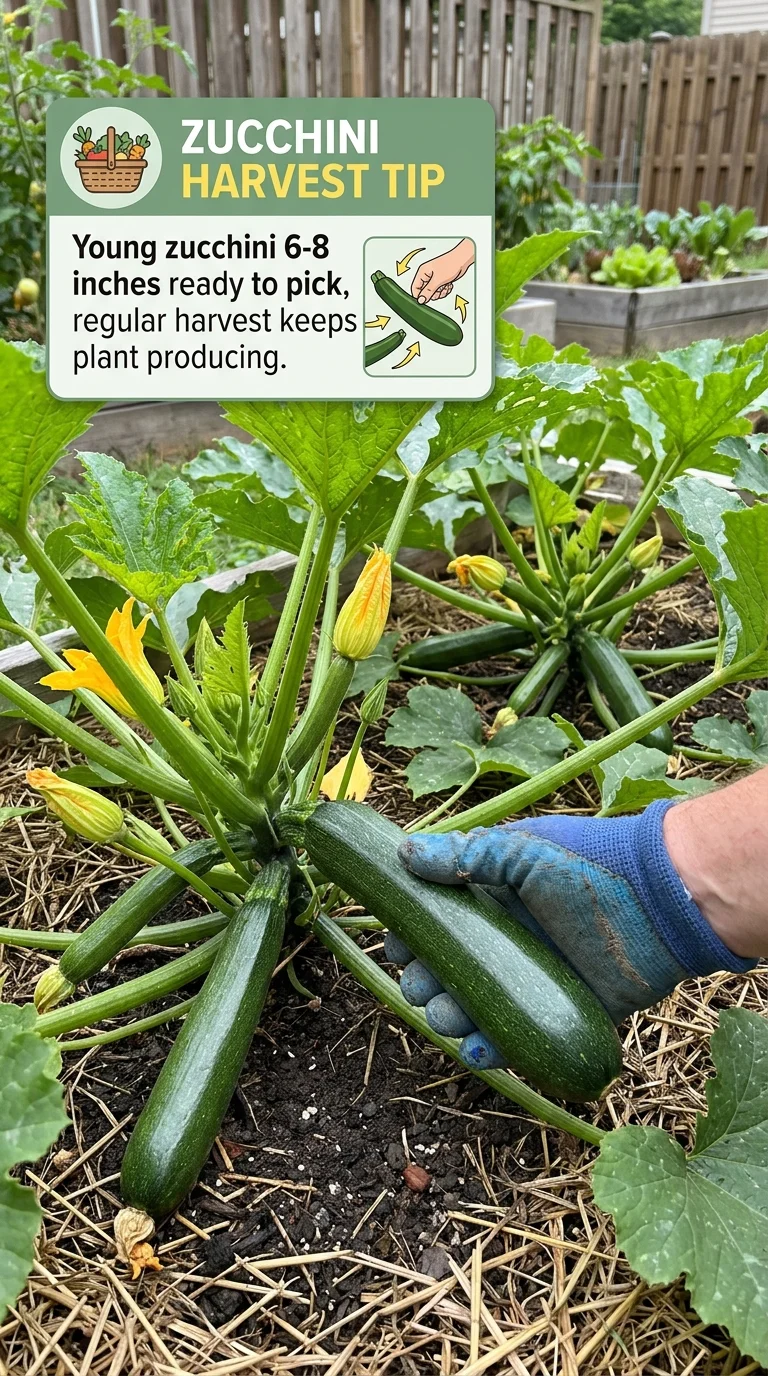
Bigger is not better for zucchini, cucumbers, beans. A baseball-bat zucchini signals plant to quit; a yellowed cucumber tells it seed done. You pick often, it sets more.
Fix: Pick zucchini 6 to 8 inches, cucumbers before they yellow, beans before beans bulge. Harvest every 2 to 3 days in warm weather; that rhythm is the best fertilizer. If you missed one and it got huge, harvest now and watch — often new female flowers appear within 3 to 5 days.
12. Planting Same Family in Same Spot Year After Year
Tomatoes where tomatoes were last year seems tidy. It also builds Fusarium, Verticillium, bacterial wilt in soil. Cabbage where cabbage was invites clubroot. Year two may be okay; year three collapse is common.
Fix: Rotate families yearly: Solanaceae (tomatoes, peppers), Cucurbitaceae (cucumbers, squash), Legumes (beans, peas), Brassicas (kale, cabbage), Roots (carrots, beets) each get different bed or row segment. Keep journal: “2026 Bed A = tomatoes.” Even in two beds, swap.
13. Choosing the Wrong Variety for Your Climate
A 110-day tomato will not ripen reliably where summers are 80 days. A bolt-prone lettuce will despair in July if you do not choose slow-bolt heat types. I love heirloom stories, but first, grow adapted.
Fix: Choose early and disease-resistant codes on packets — VFN for tomatoes, PM for squash mildew resistance, days-to-maturity that fits your frost window. Ask local extension or nursery what ripens there. Early ‘Gypsy’ peppers beat exotic long-season wonders in short summers.
14. Ignoring Pests Until They Own the Bed
By the time squash bugs are adults clustered at the crown, control is hard. Eggs laid two weeks earlier were the moment.
Fix: Scout weekly — flip leaves, check undersides for bronze egg rows, look at stem base for frass. Handpick early, use strong water jet for aphids/mites, insecticidal soap for nymphs on undersides. Keep air moving with trellises and spacing. See vegetable pests and diseases.
15. Not Keeping Records and Quitting Too Early
Most beginner gardens look sparse in May, weedy in late June, and like judgment. That is normal, not failure. The quiet middle is when daily 10-minute tending — water, thin, mulch, pick — builds soil and habit. Without notes, you repeat same timing errors next spring.
Fix: Keep a small notebook by the door: sow date, thin date, first harvest, what you ate most. Note what thrilled you and what flopped. Spend 10 minutes each evening walking, not weekend marathon. The garden rewards frequency over intensity.
A kindness: You do not need to fix all fifteen at once. Pick three this season — say, space correctly, water deeply, and mulch. Those three alone will double your harvest joy next month.
Seasonal Calendar: Avoiding Mistakes on Time
| When | Do Right | Avoid |
|---|---|---|
| Late winter | Plan 4×8, order adapted seed, test soil | Drawing 20×20 you cannot tend |
| 4 wks before last frost | Sow peas, lettuce, spinach cool window | Sowing warm crops in cold soil |
| 2 wks before last frost | Prep beds with compost loose top 8 inches | Tilling wet soil |
| 2 wks after last frost | Transplant tomatoes warm soil 60°F, trellis | Crowding, planting tight to “save space” |
| Early summer | Thin twice, mulch 3 inches, deep water 1 inch/week | Daily sprinkles bare soil |
| Midsummer | Hand-pollinate if drop, harvest small every 2 days | Leaving giants, spraying at bloom |
| Late summer | Succession sow fall greens, rotate plan journal | Replanting same family same spot, no records |
| Fall | Remove diseased vines to trash not compost, add compost | Composting mildewed debris |
Troubleshooting: Quick Rescue
Seedlings leggy: Not enough light or too crowded — move to sunniest spot, thin to spacing.
Yellow lower leaves: Overwater or hunger — finger test 2 inches down, drain if soggy, feed compost if pale stunted.
Bitter/woody roots: Sown too dense or hot — thin to 2–3 inches, sow cool window, keep even moisture.
Flowers no fruit: Pollination — hand-pollinate morning, add flowers for bees, ensure sun.
Mildew white then yellow: Airflow — remove worst leaves max one-third, thin canopy, base water morning, neem/bicarbonate.
One vine wilt + frass: Vine borer — slit remove larva or pull, rotate and wrap stems next year.
A Note Before You Fix Everything
I still keep the sketch where I put corn south shading everything, no paths, no mulch. On the back I wrote next year: north tall, mulch paths, one zucchini not three. That note fed us better than any new tool. Mistakes are not verdict; they are data. Choose three fixes that speak loudest to your garden as it is today, do them gently well, and let the rest wait until next season. The plants will meet you halfway — they want to grow.
My First-Year Save: From Overwhelm to Daily 10 Minutes
If your garden today feels like that July tangle I described, try this gentle reset. I did it one hot Saturday and by the next weekend the bed felt like mine again.
Pick one bed or even half a bed you will save. Ignore the rest for now. An hour that afternoon: pull the biggest weeds you see, not all — just the seeding ones. Thin the most crowded row by half with scissors, water after. Lay straw mulch 3 inches where you cleared so weeds lose light. The next morning, deep water that bed at the base for a slow count to 30 per section. Then keep a 10-minute evening walk: water if finger test says dry, pick any ready fruits, flip two leaves for eggs. That smallest loop rebuilds habit while soil recovers.
By August my rescue bed gave more than the rest of the big plot combined because it had light and air and I actually tended it.
Indoor Seed Starting vs Direct Sow — A Timing Note
Another quiet mistake is starting too much indoors without light. Leggy windowsill seedlings stretch pale reaching for dim light and transplant weak. Direct sow carrots, radishes, beans, peas — they resent moving. Start only tomatoes and peppers indoors 6 to 8 weeks before last frost under a bright shop light 2 inches above leaves, or simply buy sturdy nursery seedlings the first year. See starting seeds indoors.
Starting small inside and sowing fresh outside gives stronger plants than a tray of stretched seedlings hoping for sun.
Frequently Asked Questions
Q: What is the biggest mistake beginners make in vegetable gardens?
A: Starting too big, then feeling crushed by weeds, watering, and harvest that all peak together in July. A modest 4 by 8 foot bed with two to three kinds plus one trellis is reachable without stepping on soil, easy to mulch and water correctly, and genuinely feeds salad daily. Master that before adding a second bed next season.
Q: Why do my vegetables grow small and crowded?
A: Over-sowing and skipped thinning forces seedlings to compete for light, water, and air, so nothing sizes up and mildew finds a damp microclimate. Follow packet spacing, thin seedlings to final distance with scissors even when it hurts a little, and use a grid if needed — results double when plants can breathe.
Q: What watering mistake kills most vegetable gardens?
A: Light daily sprinkles that wet only the top inch encourage shallow roots and stress, followed by cracking or blossom drop. Switch to deep watering about 1 inch per week in one or two morning soaks at the base, enough to moisten 6 inches down, mulch 3 inches with straw, and check with finger 2 inches down before watering again.
Q: How can I avoid soil and feeding mistakes?
A: Test soil every couple years and enrich with 2 inches of finished compost at planting to loosen and feed moderately. Then match feed to crop: beans and peas fix nitrogen so skip high-nitrogen feeds, give leafy greens light nitrogen if pale, and give fruiting crops balanced organic fertilizer at bloom per label. Mulch to retain nutrients.
Related Articles
- How to Start a Vegetable Garden
- Best Vegetables for Beginners
- Easiest Vegetables to Grow
- Vegetable Garden Layout Ideas
- Vegetable Garden Spacing Guide
- How Often to Water Vegetables
Sources & References
- University of Minnesota Extension - Common Vegetable Garden Mistakes
- Cornell University - Vegetable Growing Best Practices
- Iowa State University Extension - Home Garden Troubleshooting
- Royal Horticultural Society - Beginner Vegetable Growing
- Old Farmer’s Almanac - Vegetable Gardening Tips