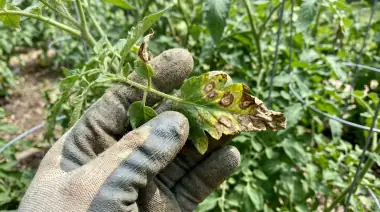
One day your plants look perfect; the next, white powder coats the squash leaves or dark spots spread across the tomatoes. Most common vegetable garden diseases follow predictable patterns, and most are preventable with good spacing, careful watering, and crop rotation. This guide shows you how to identify the usual diseases and treat them organically.
Quick Answer: Identify the disease by its symptoms, then remove badly infected leaves or plants before treating. Prevent most problems with proper spacing for airflow, watering at the base in the morning, crop rotation, and disease-resistant varieties. Treat fungal issues early with a copper fungicide; home remedies like baking soda spray only suppress, not cure.
At a Glance
| Fact | Detail | | Most common vegetable garden diseases | Powdery mildew, early and late blight, blossom end rot, damping off, downy mildew, wilt diseases, rust | | Primary causes | Wet foliage, poor airflow, overcrowding, garden debris, infected soil or seed | | First line of defense | Spacing for airflow and watering at the base in the morning | | Best cultural prevention | 3-4 year crop rotation, resistant varieties, clean tools | | Organic treatments | Copper fungicide, removing infected leaves, and discarding badly infected plants | | Blossom end rot | A watering problem, not a disease caused by fungus | | When to remove a plant | When more than half the foliage is infected or a stem is girdled |
Why Disease Control Matters
Diseases are the quiet killers of vegetable gardens. Pests you can see; fungi and wilts often take hold before you notice, and many, like late blight, can destroy a crop in a week of humid weather. The good news: most vegetable diseases need wet leaves to infect, so you control them largely through how you water, space, and rotate (Source: Cornell Vegetables).
Prevention First: The Two Rules
Two habits prevent most vegetable garden diseases. First, give plants room-crowded leaves trap humid air, and disease thrives in still, wet air. Space plants according to the layout planning guide, and never transplant more seedlings than the spacing calls for. Second, water at the bottom of the plant in the morning with about 1 inch per week, not over the leaves in the evening-see the watering guide for details. Add a 3-4 year crop rotation so soilborne pathogens never meet their host twice in one spot, choose resistant varieties (look for V, F, and N on tomato labels), and clean tools between beds.
The Usual Suspects: Symptoms, Causes, and Organic Treatment
Powdery Mildew
Symptoms: White, powdery spots that spread across leaves of squash, cucumbers, peas, and beans. Cause: A fungus that thrives in humid air on crowded plants with little airflow; it does not need wet leaves to spread.
Prevention: Space plants for airflow, give them full sun, and choose resistant varieties. Treatment: Remove badly infected leaves, then apply a copper or sulfur fungicide at the first sign, following label rates. Baking soda sprays (about 1 tablespoon per gallon of water with a little soap) can slow spread, but they must be reapplied weekly, they do not cure, and in hot sun they can burn leaves. Our powdery mildew treatment guide has the full details.
Early and Late Blight
Symptoms: Early blight shows as dark spots with yellow halos on lower leaves of tomatoes and potatoes. Late blight shows as greasy, gray-brown patches that rot leaves and fruit fast, with white mold underneath in humid weather. Cause: Fungal pathogens; early blight survives in soil and debris, while late blight can blow in on wind and spreads explosively in cool, wet weather.
Prevention: Stake and prune tomatoes, space rows for airflow, water at the base, rotate away from nightshades for 2-3 years, and use certified seed potatoes. Treatment: Remove and bag infected leaves as soon as you see spots. Apply copper fungicide at first sign per label instructions. Late blight is aggressive: if it takes hold in wet weather, dig up badly infected plants, bag them, and do not compost them. Read more in our tomato growing guide and the common plant problems guide.
Blossom End Rot
Symptoms: Sunken, leathery, dark brown or black patches on the blossom end of tomatoes, peppers, and squash. Cause: Not a fungus-it is a calcium deficiency caused by uneven moisture. Plants draw calcium from soil with water, so dry spells followed by heavy watering produce rot even in calcium-rich soil. Excess nitrogen makes it worse.
Prevention: Keep soil moisture steady with mulch and consistent watering of about 1 inch per week (Source: University of Wisconsin-Madison Extension). Treatment: You cannot fix fruit already affected-pick it and keep watering evenly. If rot continues, test your soil before adding lime; most of the time the soil is fine and the watering is the problem. See how to test soil pH and the yellow leaves guide for related diagnosis help.
Damping Off
Symptoms: Seedlings topple over at the soil line with thin, pinched, water-soaked stems. Cause: Soilborne fungi that attack seedlings in cool, wet, crowded conditions with poor airflow.
Prevention: Use clean containers, sterile seed-starting mix (garden soil is too heavy and can carry pathogens-see the potting mix vs. garden soil guide), water from below, and give seedlings airflow and bright light. Treatment: Remove collapsed seedlings, thin the rest, let the soil surface dry between waterings, and do not reuse infected mix. A fallen seedling will not recover. Our starting seeds indoors guide covers clean starting practices step by step.
Downy Mildew
Symptoms: Angular yellow spots on upper leaf surfaces with fuzzy gray-purple growth underneath. It hits cucumbers, melons, lettuce, and basil. Cause: A water-loving pathogen that spreads by splashing rain and irrigation in cool, humid weather.
Prevention: Space plants, avoid overhead watering, rotate crops, and choose resistant varieties when available. Treatment: Remove infected leaves promptly, apply copper fungicide as a protectant, and keep the weather in mind: downy mildew races change quickly, so resistant varieties can lose their edge over time.
Fusarium and Other Wilt Diseases
Symptoms: Yellowing on one side of the plant, wilting in the afternoon heat, recovery at night, then permanent wilt. Cut a lower stem and you may see brown streaking inside. Cause: Soilborne fungi, including fusarium and verticillium, that can persist in soil for many years.
Prevention: Choose resistant varieties (the V and F letters on tomato labels), rotate nightshades and other affected families on long cycles, and in raised beds, start with clean raised bed soil. Treatment: There is no effective organic cure. Remove infected plants completely-roots included-and do not compost them. Grow resistant varieties next season.
Rust
Symptoms: Orange, rust-colored pustules on leaves and stems, especially on beans, garlic, leeks, and asparagus. Cause: Fungal spores that thrive on wet foliage and overwinter on plant debris.
Prevention: Space plants, water at the base, and clean beds thoroughly in fall. Treatment: Strip and bag infected leaves promptly, treat with copper or sulfur fungicide, and never compost rust-infected debris.
Treat It or Remove It?
Treat when the infection is limited to a few leaves, the disease is slow (powdery mildew, early rust, early blight caught early), and the plant is healthy otherwise. Remove the plant when more than half the foliage is infected, when the stem or roots are involved (wilts), when late blight arrives in wet weather, or when you see virus-like symptoms-stunted, distorted growth with no fungus present. Viruses have no cure, and insects can spread them, so remove and bag those plants quickly. Whatever you remove, keep it out of the compost pile unless your pile stays hot (Source: UMass Extension Vegetable Program).
Common Mistakes
- Watering overhead in the evening. Wet leaves overnight are the top disease trigger. Water at the base in the morning.
- Crowding plants to fit more in. “A little closer than the label says” is how mildew and blight start. Follow spacing on the seed packet.
- Skipping crop rotation. Soilborne pathogens wait in the soil for their host; rotation breaks the chain.
- Treating everything with fungicide before diagnosing. Copper does nothing for blossom end rot or wilts, and spraying in cool, dry conditions wastes money.
- Adding lime for blossom end rot without a soil test. Most blossom end rot is caused by uneven watering, not low soil calcium.
- Composting diseased plants. Many spores and pathogens survive cool compost piles; bag and trash them instead.
Seasonal Troubleshooting
Damping off is a spring problem when you start seeds in cool rooms; add heat and airflow. Midsummer humidity is when mildew, downy mildew, and blight flare-check leaf undersides after rain. Dry spells bring blossom end rot, so mulch early to keep soil moisture even. Late blight hits hardest in cool, wet summers; if your region warns of it, apply copper before storms, not after.
Frequently Asked Questions
Q: Is baking soda spray a cure for powdery mildew?
A: No. It can slow the spread when applied weekly, but it does not cure existing infection and can burn leaves in hot sun. Copper or sulfur fungicides applied early are more reliable.
Q: Can I reuse soil where a diseased plant grew?
A: Clean the bed of plant material and wait a season for debris-borne diseases; for wilts that persist for years, rotate or replace container and raised-bed soil.
Q: Will copper fungicide hurt my garden?
A: Used at label rates it is safe for vegetables and beneficial insects, but it is a protectant, not a cure, and copper can build up in soil over years. Use it sparingly, only on fungal problems, and read the label for sensitive crops.
Q: Why does blossom end rot keep happening even though I added calcium?
A: Because the problem is usually water uptake, not soil calcium. Plants absorb calcium dissolved in water, so dry spells block it even in calcium-rich soil. Fix the watering, not the lime.
Q: Can I eat vegetables from a diseased plant?
A: Usually yes. Healthy-looking fruit from a blighted or mildewed plant is safe to eat, but discard rotting, moldy, or mushy fruit and never eat produce from a plant you treated right before harvest-check the spray label for days-to-harvest.
Q: How long do disease pathogens stay in soil?
A: It depends. Early blight and rust overwinter in debris for a season or two, while fusarium and verticillium can survive a decade or more. Rotation limits them; resistant varieties are the reliable answer.
Related Articles
- How to Treat Powdery Mildew
- Common Plant Problems and Fixes
- How to Fix Yellow Leaves
- How to Grow Tomatoes
- How Often to Water Vegetables
- Vegetable Garden Layout Planning
- How to Start a Vegetable Garden for Beginners
- Our Vegetable Gardening Guide