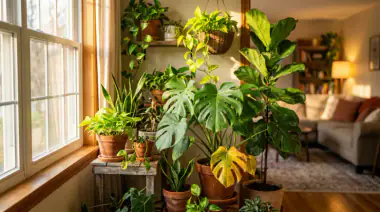
Common Plant Problems and Solutions: Diagnose & Fix
What's wrong with my plant? Use this beginner-friendly guide to common plant problems and solutions - yellow leaves, drooping, brown tips, pests, and more.
Diagnose and fix sick plants — yellow leaves, overwatering problems, fungal disease and blight.
A plant that is wilting or yellowing is telling you something specific, but the symptom alone is ambiguous. Yellow lower leaves, yellow upper leaves, spots, and wilting each have different causes and different fixes.
Start by ruling out the two things that cause most plant deaths: too much water and too little light. Then look at the pattern of damage and where on the plant it appears. Finally, consider whether what looks like disease is simply the plant being unsuitable for its position.
These guides work symptom-first, because that is how you actually meet the problem — something has changed and you need to know what.
Work through a symptom checklist before you treat. Distinguish between watering problems, light problems, nutrient problems and actual disease, because the treatments are completely different and misdiagnosis is expensive.
What's wrong with my plant? Use this beginner-friendly guide to common plant problems and solutions - yellow leaves, drooping, brown tips, pests, and more.
Leaves turning yellow? Find the cause with our diagnostic chart. Covers overwatering, nutrient deficiency, pests & light issues with step-by-step fixes.
Overwatering is the single most common cause of plant death indoors and in containers. Both under and over-watering produce wilting, which is why you must check the soil rather than trust the look of the plant.
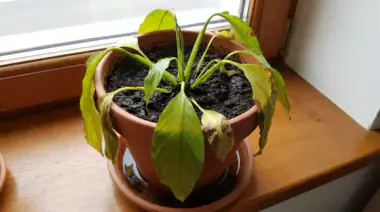
Overwatered your plant? Learn how to fix it step-by-step - dry roots, prune rot, repot in fresh soil & prevent it from happening again.
Powdery mildew and blight spread through wet foliage and crowded, poorly ventilated planting. Cultural fixes — spacing, watering at the base, removing infected material — do more than any spray.
White powder on leaves? Learn how to identify and treat powdery mildew naturally with neem, baking soda & milk spray - plus prevention.
Powdery mildew on vegetable plants? Learn causes — humidity, airflow, watering — and fixes with neem, baking soda & prevention.
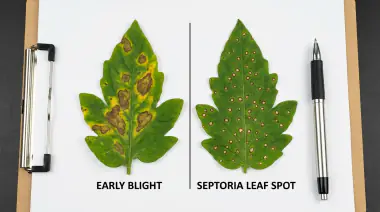
Tomato blight — early, late & septoria — how to identify by spots, prevent with airflow and treat organically before it spreads.
Indoor pests arrive on new plants and spread in warm, dry air. Spider mites, mealybugs and fungus gnats are the three you will meet most often — all are controllable if you catch them early and treat on a schedule rather than once.
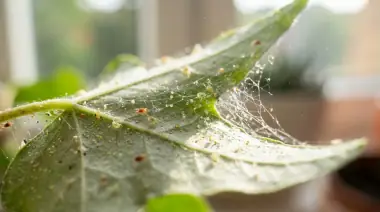
Spider mites on houseplants - early signs, why they explode in dry indoor air, and a 3-step treatment routine that breaks their cycle.
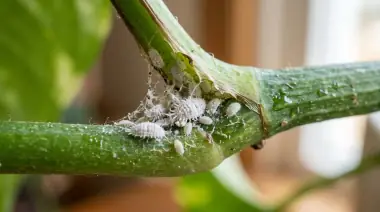
Mealybugs on houseplants? Identify them fast, kill them with alcohol, soap and neem, and stop them coming back with these checks.
Check which leaves. Uniform yellowing of lower leaves is normal ageing. Yellowing with mushy roots and sour soil means overwatering. Generalised yellowing in a dim spot means insufficient light. Yellowing between green veins suggests iron deficiency, usually driven by high pH.
Remove it from its pot, shake off the wet soil, inspect the roots and cut away anything black or mushy with a clean blade. Repot into fresh dry mix in a pot with drainage, then wait several days before watering again.
A fungal disease favoured by humid air, moderate temperatures, dry roots and poor air circulation. It is much easier to prevent than to cure: space plants for airflow, water at the soil line rather than the leaves, and remove affected foliage promptly.