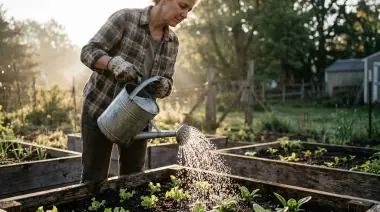
How often should you water a vegetable garden? It is the most common question new gardeners ask, and the answer is less about a calendar and more about a few simple rules. Most gardens need about 1 inch of water per week, but soil type, weather, and garden style all change the math. Here is how to tell exactly when your vegetables are thirsty.
Quick Answer: Most vegetable gardens need about 1 inch of water per week, delivered in 1-2 deep waterings rather than daily sprinkles (Source: University of Minnesota Extension). Push a finger into the soil; if the top inch is dry, water. Water in the morning, aim water at the soil instead of the leaves, and mulch with straw or leaves so you can water less often. Containers and raised beds dry out faster than in-ground gardens, so check them more often.
At a Glance
| Fact | Details |
|---|---|
| General rule | About 1 inch of water per week for in-ground gardens |
| How to check | Finger test: water when the top 1 inch of soil is dry |
| Best time to water | Morning, before 10 a.m. |
| Deep vs. shallow | Water deeply and less often to grow deep roots |
| Containers | May need daily watering in summer heat |
| Raised beds | Dry out faster than in-ground soil |
| Mulch | 2-3 inches of straw or leaves cuts watering needs |
| Irrigation | Drip or soaker hoses beat overhead sprinklers |
Why Watering Matters
Water is how plants move nutrients from the soil into their leaves and fruit, so inconsistent moisture shows up fast in a vegetable garden. Too little water causes wilt, bitter flavor, and small fruit. Too much water suffocates roots, rots them, and invites disease. The goal is soil that is evenly moist, like a wrung-out sponge, not soggy and not dust. Getting this right is the single biggest factor in whether your vegetables thrive, so it is worth the effort to learn your garden’s rhythms.
The 1-Inch Rule
The classic guideline is that vegetables need about 1 inch of water per week, which is roughly 0.6 gallons per square foot (Source: NC State Extension). During hot, dry, or windy weeks, double it; during cool, rainy weeks, skip watering entirely. You can measure it simply: set a rain gauge or a straight-sided can (a tuna can works) in the garden, and run your sprinkler until the water reaches 1 inch deep. After a rain, the same gauge tells you how much nature already delivered.
The Finger Test
Forget schedules; the finger test is the most reliable watering tool you own. Push your index finger about 1 inch into the soil near the base of a plant. If the soil feels dry at that depth, water. If it is cool and slightly damp, wait a day. On sandy soil, water more often; on heavy clay, less often but deeper. Seedlings and newly transplanted vegetables need more frequent checks because their shallow roots dry out quickly, while established plants with deep roots are more forgiving.
When to Water: Morning Is Best
Water in the morning, ideally before 10 a.m., for two reasons. First, leaves have the day to dry, which prevents fungal diseases like powdery mildew that thrive on wet foliage at night (Source: Oregon State University Extension). Second, less water is lost to evaporation in the cool morning air, so more of it reaches the roots. If you cannot water in the morning, early evening is the second choice; just keep leaves as dry as you can.
Deep vs. Shallow Watering
Watering deeply but less often is better than a light daily sprinkle. Deep watering, so that the top 6-8 inches of soil is moist, pushes roots down into the soil, where they are better protected from heat and drought. Frequent shallow watering keeps roots near the surface, making plants weak and needy. A weekly deep soaking is the foundation of the 1-inch rule, and mature gardens usually do fine on 1-2 thorough waterings per week rather than daily attention.
Containers vs. Raised Beds vs. In-Ground
Where you grow changes how often you water more than any other factor.
- In-ground gardens hold moisture longest and usually need water 1-2 times per week, depending on rain and soil.
- Raised beds drain freely and heat up faster, so they dry out quicker than in-ground beds; expect to water them every 2-3 days in summer, and daily in heat. See our raised bed gardening guide for more.
- Containers are the thirstiest of all; small pots may need water every day, sometimes twice on hot days. Use a high-quality potting mix instead of garden soil, which holds moisture without compacting, and group pots to reduce drying.
Drip Irrigation vs. Overhead
How you deliver water matters almost as much as how much. Drip irrigation and soaker hoses lay water right on the soil at the plant’s roots, using water efficiently, keeping leaves dry, and reducing disease. Overhead sprinklers are simple and cover a lot of ground, but they waste water to evaporation and wet the leaves, which invites fungal problems. For most home gardens, a soaker hose running 30-60 minutes early in the morning is the best balance of cost and effectiveness. Whatever you use, water the soil, not the plant.
Use Mulch to Water Less
A 2-3 inch layer of organic mulch, like straw, shredded leaves, or grass clippings, is the cheapest irrigation upgrade available. Mulch slows evaporation, keeps soil temperature even, blocks weeds, and as it breaks down, feeds the soil. Gardens with mulch need noticeably less water than bare soil, and their fruit stays cleaner. Our compost guide is a good starting point for building rich, moisture-holding soil over time.
Signs Your Plants Need Water
- Wilting leaves at midday that recover by evening is an early sign of drought stress.
- Dull, curling, or drooping leaves, even in the morning, mean the plant is genuinely thirsty.
- Slow growth and small, bitter or cracked fruit often trace back to uneven moisture.
- Blossom end rot on tomatoes and peppers (dark sunken spots on fruit) is caused by inconsistent watering.
- Yellowing lower leaves can signal either too little or too much water, so check the soil before reacting (Source: Iowa State University Extension). If leaves look pale or yellowed, work through our guide to fixing yellow leaves.
Signs You Are Overwatering
More gardens die from too much water than too little. Watch for these warning signs: soil that stays soggy days after watering, leaves that yellow and drop, mushy stems or a rotten smell at the base, mold or algae on the soil surface, and plants that wilt even though the soil is wet, a sign the roots are drowning. Overwatering is especially common in containers without drainage holes and in heavy clay soil. If you suspect it, stop watering until the top inch of soil is dry, and improve drainage with compost. For a full overview of common problems, see our common plant problems guide.
Seasonal Adjustments
Watering needs change through the season. In spring, cool soil and frequent rain mean you may barely water at all. In summer, hot afternoons and long dry spells push watering frequency up, especially for fruiting crops like tomatoes, peppers, and squash. In fall, cool weather and shorter days cut water needs back down, and plants headed into frost need less, not more, water. Vegetables like tomatoes and peppers also drink more once they set fruit, so check daily once harvest starts. Adjust by feel, not by the calendar.
Common Mistakes
- Watering a little every day. This grows shallow, weak roots and wastes water. The fix: water deeply 1-2 times a week instead.
- Watering at night. Wet leaves overnight invite fungal disease. The fix: water in the morning.
- Sprinkling the leaves instead of the soil. Foliage is not the part that drinks. The fix: aim water at the base of plants.
- Ignoring containers. Pots dry out fast and kill plants quickly. The fix: check containers daily with the finger test.
- Not mulching. Bare soil loses moisture fast. The fix: add 2-3 inches of straw or shredded leaves.
- Skipping the finger test. Guessing leads to both over- and underwatering. The fix: check the top inch of soil before every watering decision.
Frequently Asked Questions
Q: How often should I water my vegetable garden?
A: Most gardens need about 1 inch of water per week, split into 1-2 deep waterings. In summer heat or for containers, check daily and water as needed.
Q: How do I know if my garden needs water?
A: Push your finger 1 inch into the soil. If it is dry, water. If it is damp, wait. This is the most reliable method for every soil type.
Q: Is it better to water in the morning or evening?
A: Morning is best because leaves dry quickly, preventing disease, and less water is lost to evaporation.
Q: How much water is 1 inch of rain?
A: One inch of water is about 0.6 gallons per square foot. Measure it with a rain gauge or a straight-sided can in your garden.
Q: Should I water my garden every day?
A: Not usually. Daily light watering is worse than deep, less frequent watering. Only containers and seedlings in hot weather may need daily water.
Q: What time of day do plants absorb water best?
A: Plants take up water whenever it is available, but watering in the morning gives the soil time to absorb it before the heat of the day.
Related Articles
- How to Grow Tomatoes: A Complete Beginner’s Guide
- How to Grow Peppers: From Seed to Harvest
- Raised Bed Gardening
- How to Prepare Soil for Planting
- Common Plant Problems
- How to Fix Yellow Leaves
- The Ultimate Guide to Making Compost
- 10 Common Vegetable Gardening Mistakes
Sources & References
- University of Minnesota Extension - https://extension.umn.edu/vegetables
- NC State Extension - https://gardening.ces.ncsu.edu/
- Oregon State University Extension - https://extension.oregonstate.edu/gardening
- Iowa State University Extension - https://hortnews.extension.iastate.edu/
- Cornell Vegetables - https://www.vegetables.cornell.edu/