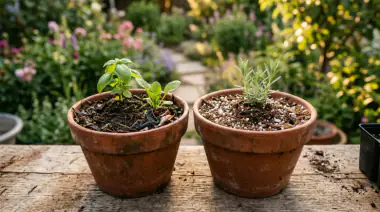
Complete GuideHow to Test Soil pH at Home: 3 Easy Methods (2026)
Test soil pH at home in minutes - with strips, kit or vinegar vs baking soda. Learn what your pH means and how to fix it fast.
Build healthy soil, understand pH, choose the right growing medium, and compost kitchen and garden waste.
Everything above this layer depends on what is below it. Soil decides how much water a plant holds, how much air reaches its roots, and which nutrients are available. Get this right and fertiliser matters far less.
The good news for a home garden is that soil improves. You do not need to replace it. You need to add organic matter, keep it covered, and stop compacting it — and a home compost heap does all three at once.
These guides cover testing your soil, reading the results, choosing between potting mix and garden soil, and filling a raised bed with a mix you can rely on.
pH controls which nutrients are available to plants. A soil can be full of nutrients and still starve a plant if the pH locks them up, which is why a soil test is the highest-value ten dollars in gardening.
Test soil pH at home in minutes - with strips, kit or vinegar vs baking soda. Learn what your pH means and how to fix it fast.
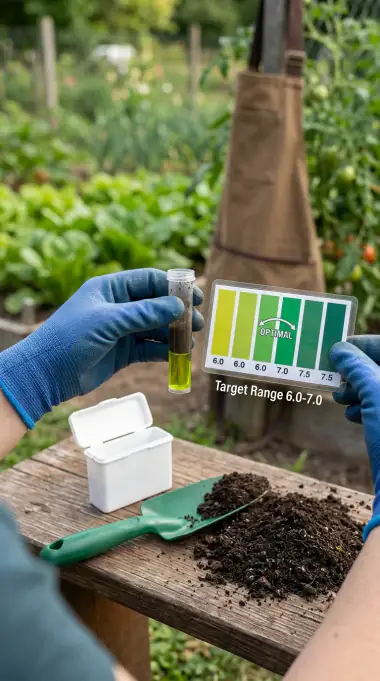
Best soil pH for vegetables? Complete guide to testing, adjusting and maintaining pH 6.0-7.0 for bigger yields and healthier plants.
Work in mature compost, keep soil covered with mulch, and avoid tilling wet ground. These three habits rebuild structure and biology faster than any fertiliser.
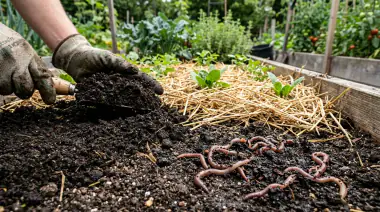
Learn how to improve garden soil with 10 easy ways — compost, mulch, pH fixes & aeration that build rich, loamy soil for any crop.
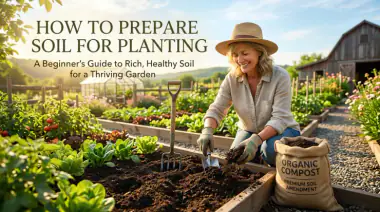
Prepare soil for planting in 6 steps: test pH, fix clay, add compost & create loam. Beginner-friendly guide to faster germination and bigger harvests.
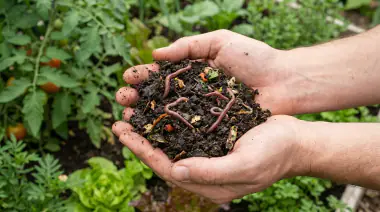
Best soil for vegetable gardens? Get the ideal loam mix — topsoil, compost & perlite ratios, pH 6.0-7.0 and depth for thriving vegetables.
A raised bed gives you full control of the medium. These guides cover the proportions that produce reliable results, and what to avoid putting in the mix.
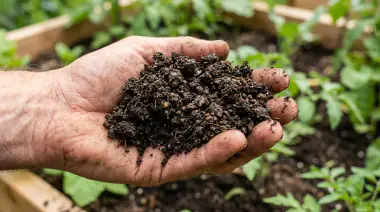
Best soil for raised beds? Learn the ideal mix — ratios, depth & pH — that grows healthy vegetables with perfect drainage and nutrients.
Build perfect raised bed soil with our proven recipe - topsoil, compost & perlite ratios that drain well, feed plants & save money.
They are not interchangeable. Garden soil is dug from the ground and compacts in containers. Potting mix is engineered to stay aerated. Using the wrong one is a leading cause of container plant failure.
Potting mix vs garden soil - what's the difference? Learn which to use for pots, raised beds & gardens so roots breathe and plants thrive.
At minimum once, before you build a new bed. It tells you whether to adjust pH and whether the soil has enough organic matter, and it prevents you from adding nutrients you do not need. Retest every two to three years.
No. Potting mix is largely compost and bark, so it breaks down over one to three seasons. Replace the top third each year with fresh mix and feed the remainder. If the mix has gone sour, sour-smelling or compacted, replace it fully.
Balance nitrogen-rich greens with carbon-rich browns, keep the pile as damp as a wrung-out sponge, and turn it every week or two to supply oxygen. A pile roughly one metre on each side heats enough to break down in about three months.