There is a particular heartbreak that belongs to zucchini growers. The plant looks magnificent — huge, fuzzy leaves, bright trumpets opening with the morning sun, bees humming somewhere in the distance — and yet the counter stays empty. Or worse, you see baby fruits swelling for a day and then shriveling to yellow, soft, and gone. I have stood there too, poking at blossoms, wondering if I planted a dud.
Most years, though, the plant is not a dud. It is trying. Zucchini is a fast, generous plant when its basic needs are met, but it is also honest. If it is not producing, it is usually missing one of a handful of things, and once you restore it, production often resumes within days. Not weeks. Days.
This guide is the checklist I walk through when a friend says my zucchini will not fruit. Nine reasons, in the order I actually check them, with the fixes that have brought vines back for me — and for the half-dozen neighbors I have coached over the fence.
Quick Answer: Zucchini fails to produce from 1) male-only early flowers (normal first 1–2 weeks), 2) poor pollination (no bees, rain, heat), 3) heat stress over 90°F or cold under 55°F, 4) too much nitrogen (leafy, no female flowers), 5) too little water or uneven water, 6) overcrowding and shade (needs 6–8 hours sun, 24–36 inch spacing), 7) not harvesting (mature fruits signal stop), 8) pests/disease stress (vine borer, powdery mildew), and 9) old spent vines. Fix pollination by hand-pollinating mornings, give 1 inch water/week, mulch, feed balanced, ensure sun and space, harvest at 6–8 inches to keep fruits coming every 2–3 days.
At a Glance: 9 Reasons and 9 Fixes
| # | Reason | Sign | Fix |
|---|---|---|---|
| 1 | Only male flowers so far | All flowers on thin stems, no swollen base | Wait 7–14 days, female flowers follow |
| 2 | Poor pollination | Female fruits yellow and abort at 2 inches | Hand-pollinate morning, plant pollinator flowers |
| 3 | Heat / Cold extremes | Flowers drop, no set over 90°F or under 55°F | Shade cloth in heat, wait out cool, water deeply |
| 4 | Excess nitrogen | Huge leaves, few female blooms | Stop high-N feed, balanced fertilizer, sun |
| 5 | Water stress | Wilting, blossom drop, bitter fruits | 1 inch/week deep, mulch 3 inches, morning water |
| 6 | Crowding / Shade | Leggy, pale, mildew, few blooms | Thin to 24–36 inch spacing, trellis, 6–8 hrs sun |
| 7 | Over-mature fruits left on | Baseball-bat zucchinis, plant stalls | Harvest at 6–8 inches every 2–3 days |
| 8 | Pests & disease | Chewed stems, powdery white, frass at base | Remove borers, manage mildew, improve air |
| 9 | Vine exhaustion | Late-season slowdown, sparse new leaves | Cut back badly mildewed growth, succession sow |
1. It Is Only Making Male Flowers So Far
This is the gentlest reason and the most common early-season worry. Young zucchini often opens male flowers first for a week or two — bright blooms on straight thin stems with no swollen ovary behind them. Female flowers come next, recognizable by the tiny zucchini bulge right behind the petals.
If you have only had blooms for 7 to 14 days and all are male, you are not failing. The plant is building pollen and calling in bees before it invests in fruit.
What to Do
Wait, water steadily, and watch. Once female flowers appear, you will see both types on the same plant — usually early morning. Females have a miniature fruit at the base; males have a simple stem. If females appear but drop, move to pollination.
My note: I once counted 12 male blooms before a single female showed on a late-planted ‘Costata.’ The next week had seven females at once and we were suddenly giving zucchini away.
2. Pollination Failed — The Number One Mid-Season Reason
If females appear — swollen base and all — then yellow, shrivel, and fall off at 2 to 3 inches, pollination is almost always the cause. Each female needs 6 to 12 bee visits to carry enough pollen grains to set. Rain, wind, few pollinators, or flowers that never fully opened can leave that work undone.
Zucchini pollen is sticky and heavy. It does not blow in the wind. It must be carried by bees, especially bumble and squash bees that work early morning. A week of cold rain or a neighborhood low on flowers can halve their visits.
How to Tell Male from Female
Go out before 10 a.m. when blooms are open. Male: slender stem, central pollen-covered anther inside. Female: small zucchini bulge behind petals, stigma in center with lobes. Both open the same morning and close by afternoon.
Hand-Pollinate Like a Pro
You can be the bee for a day and you will see fruit set in 2 to 3 days.
- Pick a fully open male flower, peel back petals to expose the pollen anther.
- Gently brush pollen onto the central stigma lobes of a fully open female, covering all lobes. Or use a small paintbrush to transfer pollen.
- One male can pollinate 2 to 3 females. Pollinate in the morning when humidity is moderate.
Do this every other morning for a week and you will learn quickly whether this was the limiter.
Invite More Bees
Interplant borage, zinnias, calendula, or dill nearby — I keep a 1-foot pollinator edge — and avoid spraying anything during bloom. Water bowls with pebbles help bees on hot days. Even a single flowering pot near the patch increases visits.
3. Heat, Cold, and the Flower That Drops
Zucchini is warm-season but not heat-proof. When daytime highs sit above 90 to 95°F, pollen can become sterile and females abort even if pollinated. When nights dip below 55°F, pollen is sluggish and fruit set stalls. You will see glossy flowers that open, then collapse without swelling.
What I do in heat is not heroic — shade cloth 30 percent draped over hoops, deep morning watering so roots stay cool under straw mulch, and picking any set fruits small so the plant is not exhausted. In a cool snap, just keep water even and wait; blossoms often resume within days when warmth returns.
If you consistently garden in extreme heat, choose heat-tolerant varieties and give afternoon shade — an east-west trellis that shades base roots helps more than moving the whole bed.
4. Too Much Nitrogen — All Leaves, No Babies
This one is humbling because it often comes from kindness. You fed heavily, perhaps with lawn fertilizer or thick fresh manure, and now you have spectacular, dark green, dinner-plate leaves and a dearth of female flowers. Excess nitrogen pushes vegetative growth and can suppress female bloom formation, especially when combined with shade.
You want balanced, not boastful leaves. If new leaves are enormous, deep glossy green, and soft, and flowering is sparse, nitrogen is suspect.
Fix: Stop high-nitrogen feeds immediately. If you used a lawn feed above 20-5-5, flush with a deep watering and do not re-feed nitrogen for 3 weeks. Switch to a balanced organic vegetable fertilizer or one slightly higher in potassium and phosphorus that supports flowering (follow label — labels exist for a reason). Side-dress lightly with compost instead of heavy liquid feeds. And ensure 6 to 8 hours of sun; shade plus excess nitrogen is a leafy desert for fruit.
I test soil every second spring. A $20 test showing pH and NPK has saved me from more guessing than any forum.
5. Water — Inconsistent Moisture Steals Fruit
Zucchini needs remarkably even moisture to hold female flowers. A dry stretch followed by a flood, or daily shallow sprinkles that never moisten deeper roots, stresses the plant and it drops females first — they are expensive to make.
You want about 1 inch of water per week, delivered deeply one or two times rather than daily misting, moistening 6 inches down. Check by pushing a finger 2 inches down; if dry, water. If moist, wait. Mulch 3 inches with straw once soil is warm to even moisture and keep roots cool. Water at the base in the morning so leaves dry and pollinators are not deterred.
Drought-stressed fruits also turn bitter; even watering is flavor.
Side note from the hose: I use a soaker hose on a battery timer set for 6 a.m. twice a week in summer. That one change cut my blossom drop by half.
6. Crowding and Too Little Sun
A zucchini needs room to be exuberant — 24 to 36 inches between plants, more if sprawling, and 6 to 8 hours of direct sun. At 12 inches apart under a fence shadow, vines stretch, pale, get mildewy, and bloom little. I have grown zucchini on a low trellis to save space and gained airflow as a bonus; fruits hang straight and stay cleaner.
If your vines are tangled into a mat where you cannot see soil, thin ruthlessly: remove a few of the largest oldest leaves to open light to the center, and if you planted two where one would thrive, pull the weaker. Harsh in the moment, generous by August.
7. You Left the Fruit Too Long — The Plant Thinks It Is Done
This is the zucchini paradox: harvesting more gives you more. A single zucchini left to swell to baseball-bat size signals the plant seed is made, work finished. Production stalls until you remove it, and the vine exhausts itself feeding that marrow.
Harvest at 6 to 8 inches when the skin still shines and a thumbnail can dent the blossom end. At that size flesh is sweet, nutty, seeds tender. Check every 2 days in warm weather — a zucchini can go from ready to overgrown in 48 hours. I keep a little basket by the door and walk the row with coffee.
If you already have a giant, do not waste it: halve, scoop, stuff, or bake, but pick it now and watch — new females often appear within 3 to 5 days after a heavy harvest.
8. Hidden Stress: Vine Borers, Squash Bugs, Powdery Mildew
A vine fighting borers or bugs will drop fruits to survive. Signs to check weekly:
Squash vine borer: One vine wilts suddenly while others look fine; sawdust-like frass at the lower stem base. The larva chews the vascular system. Fix by slitting the stem, removing the larva, mounding moist soil over the wound to reroot, or pulling and destroying severely wilted vines. Wrap lower stems with foil at planting and use row cover early — see vegetable pests.
Squash bugs: Bronze eggs in rows on leaf undersides, wilting stippled leaves, bugs hiding under boards at the crown. Handpick, scrape eggs with tape, water-spray nymphs, insecticidal soap for nymphs, neem deterrence. Keep mulch not too thick at the crown where they shelter.
Powdery mildew: White powder on tops then yellowing. It shades out productive leaf area and weakens the vine so it aborts fruit. Remove worst leaves (max one-third), thin for airflow, base water mornings, neem or bicarbonate per label. See zucchini leaves turning yellow.
Any stress that removes leaf area reduces the sugar the plant can send to fruits, so fruits yellow and fail.
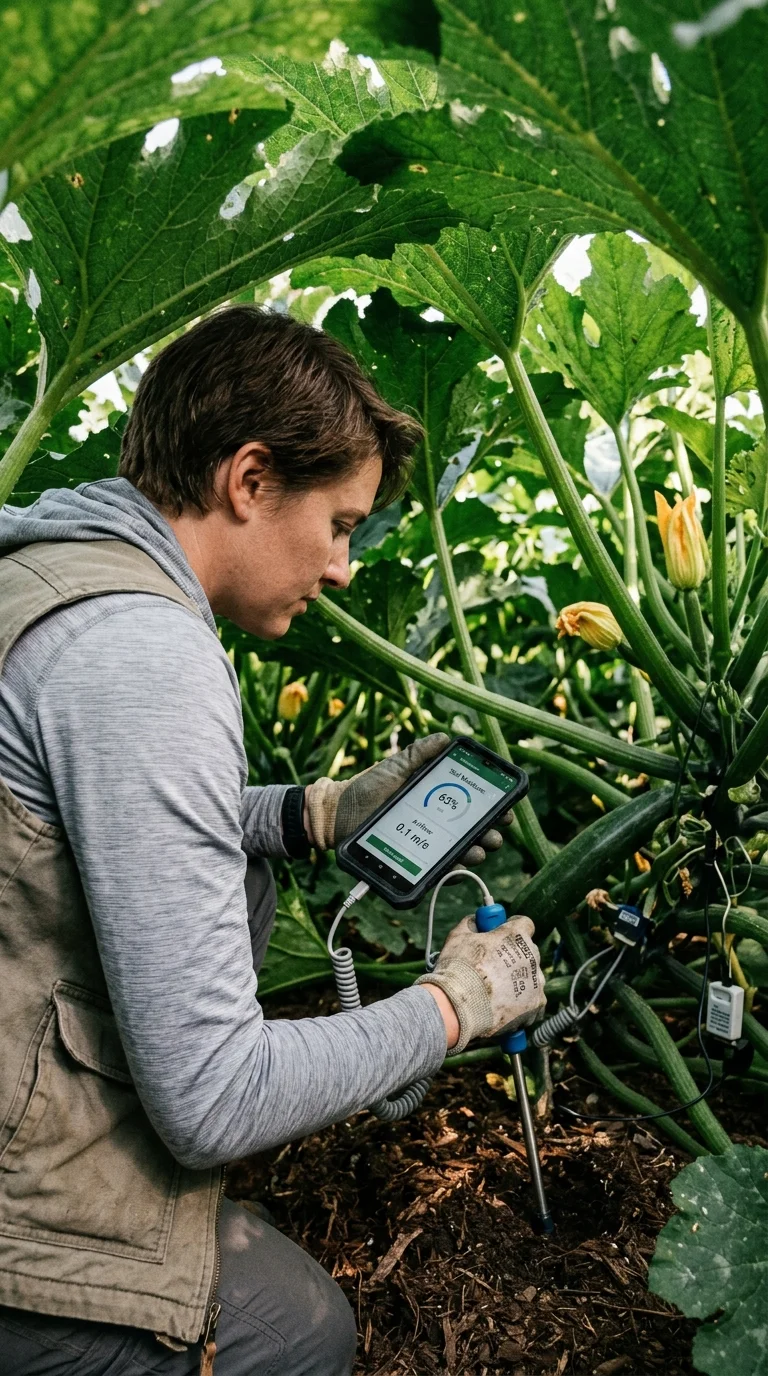
9. The Vine Is Simply Tired
Late summer vines fade. After 8 to 12 weeks of heavy bearing, leaves get mildewed, stems scarred, and new female flowers sparse. That is not failure; it is lifecycle.
You have two choices: cut back the worst mildewed leaves hard — never more than half — feed lightly with compost, and coax a second flush if weather allows, or pull and succession sow a new zucchini if you have 45 days before frost. A July-sown zucchini often out-produces a struggling June plant by September and comes into a moment when bees are abundant and mildew pressure resets.
Quick-Start Rescue Plan This Week
If you have flowers but no fruit today, do this in order:
Today: Check sun (6–8 hrs?), spacing, and soil moisture 2 inches down. Remove any baseball-bat fruits.
Tomorrow morning before 10 a.m.: Hand-pollinate every open female with fresh male pollen. Mark pollinated females with a twist tie.
This week: Deep water 1 inch, mulch 3 inches, ensure airflow, hand-pollinate every other morning, and scout vine bases for frass or egg rows.
In 7 days: Check marked females — pollinated ones should be 4 to 6 inches and firm, not yellow and soft. If leafy and bloomless, cut nitrogen feeds and switch to balanced.
Seasonal Timeline: From Flower to Harvest
| Stage | Days After Sowing | What You See | What to Do |
|---|---|---|---|
| Germination | 5–10 | Seedlings emerge | Thin to 24–36 inch spacing |
| Male bloom | 35–45 | First male trumpets | Water even, invite pollinators |
| Female bloom | 40–55 | Tiny fruits behind petals | Hand-pollinate mornings if bees scarce |
| Fruit set | 2–3 days after pollination | Fruit swells, flower wilts but stays green | Keep water even, do not disturb |
| Harvest | 4–7 days after set | 6–8 inch glossy fruits | Pick every 2–3 days to keep set |
| Late season | 80+ | Vine weary, mildew | Cut back or succession sow |
Common Mistakes That Keep Zucchini Fruitless
Pollinating at noon with closed flowers. Zucchini blooms open early and close by afternoon. Pollen collected from a closed, spent bloom is no good. Be out before 10 a.m., with dew still on leaves.
Spraying during bloom. Even organic insecticides can kill bees if sprayed on open flowers. If you must spray for aphids or mites, do it at dusk, avoid flowers, and never during bloom-morning hours.
Feeding like a lawn. That 30-5-5 lawn fertilizer grows a jungle with no fruits. Use vegetable-formulated feed per soil test — see vegetable garden fertilizer.
Planting too early in cold soil. Seeds or transplants in 50°F soil sit and sulk, flowering late. Wait until soil is at least 65°F for direct sowing — warm feet matter for curcurbits.
Leaving one giant to “prove” success. The biggest fruit is not success; steady small harvests are. The plant reads a mature fruit as mission accomplished and pauses female production.

Troubleshooting Speed Guide
All male flowers, no swollen bases: Normal first 2 weeks — wait, keep water even.
Females yellow at 2 inches: Pollination failure — hand-pollinate mornings, add pollinator strip.
Flowers drop in heat: Shade cloth, deep mulch, morning water; heat above 90°F disrupts pollen.
Huge leaves, few flowers: Excess nitrogen + shade — cut nitrogen, ensure sun, balanced feed.
Wilted vine + frass: Vine borer — slit, remove larva or pull vine, rotate next year.
White powder, slow set: Mildew stress — thin, base water, neem/bicarbonate, remove worst leaves.
Bat-sized fruit, then no new fruits: Harvest promptly at 6–8 inches every 2–3 days.
When to Worry and When to Wait
Wait if you are within the first 2 weeks of bloom, if weather is unusually cold or stormy, or if you just transplanted — roots are still settling. Keep water even, hand-pollinate, and give 7 days.
Worry if leaves are heavily mildewed or pest-damaged, if the vine base is chewed with frass, or if mosaic mottling and distorted fruits suggest virus — then remove severely affected vines so healthy neighbors can thrive.
Most “no fruit” worries I am called about resolve with two actions: hand-pollination for a week and harvesting small. It is almost boring how reliable that pair is. And there is a quiet joy in that morning ritual — coffee, a paintbrush, the soft give of a female stigma dusted with gold. Two days later a tiny fruit holds firm, three days more it is ready for the pan. The vine remembers.
Frequently Asked Questions
Q: Why does my zucchini flower but not produce fruit?
A: Early bloom is often male-only for 1 to 2 weeks, which is normal. After that, females need bees — 6 to 12 visits — and they abort if not pollinated. Rain, heat, and lack of pollinators are common culprits. Hand-pollinate each morning by brushing male pollen onto the female stigma lobes, add nearby pollinator flowers, and you should see fruits swell and hold within 2 to 3 days.
Q: Do I need two zucchini plants to get fruit?
A: One plant produces both male and female flowers, so technically no. But two plants stagger blooms so pollen is available every morning and bees visit more often, which steadies set. If space allows, I grow two at 30 inches apart and trellis lightly. In small gardens one strong, well-pollinated plant picked at 6 to 8 inches is plenty for a household.
Q: How long after flowering does zucchini produce fruit?
A: A successfully pollinated female shows swelling in 2 to 3 days and reaches harvest at 6 to 8 inches in 4 to 7 days under warm, moist conditions. Unpollinated fruits yellow, soften, and drop at that same 2 to 3 inch point. Keep water even and harvest small to encourage the next females to set in quick succession.
Q: Can too much nitrogen stop zucchini from producing?
A: Yes, excess nitrogen grows large dark leaves at the expense of female flowers and fruit. If vines are lush but bloomless, stop high-nitrogen lawn feeds, flush with a deep watering, and switch to a balanced organic vegetable fertilizer or one slightly higher in potassium. Ensure 6 to 8 hours of sun so energy shifts from leaves to bloom.
Related Articles
- Zucchini Leaves Turning Yellow
- How to Grow Cucumbers and Squash
- Vegetable Garden Pests
- Vegetable Garden Diseases
- How Often to Water Vegetables
- Vegetable Garden Fertilizer
Sources & References
- Cornell University - Cucurbit Pollination and Bee Management
- University of Minnesota Extension - Growing Squash and Pumpkins in Home Gardens
- Royal Horticultural Society - Courgette Growing Guide
- Old Farmer’s Almanac - Zucchini Growing Tips and Troubleshooting