
Complete GuideLawn Care for Beginners: Easy Schedule & 7 Essential Tips
New to lawn care? Get a simple month-by-month schedule, mowing, watering & fertilizing tips for a thick green lawn - no experience needed.
Grow and maintain a healthy lawn with simple mowing, watering and feeding schedules.
Most lawn problems are caused by mowing too short and watering too often. That combination produces thin, patchy grass with a shallow root system that struggles with heat and dry spells — the opposite of what a lawn needs.
A healthy lawn needs less attention than people give it. Grass cut at a taller height develops deeper roots, survives heat better and needs watering far less often. Fertiliser helps, but only on soil that has been tested.
If you would rather not mow at all, a clover lawn is a genuinely workable alternative that also feeds pollinators. These guides cover both conventional lawn care and the lower-maintenance alternatives.
Start with mowing height, watering depth and a realistic feeding schedule. Get those three right and most lawn issues never appear. Fix compacted soil and reseeding bare patches follow from the same principles.
New to lawn care? Get a simple month-by-month schedule, mowing, watering & fertilizing tips for a thick green lawn - no experience needed.
Complete bermuda grass guide: how to plant, identify, mow & care for bermudagrass lawns. Covers seed, sod, plugs, watering schedule & common problems.
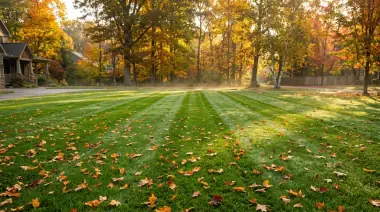
Fall lawn care schedule for a thicker, greener lawn next spring - dethatching, aeration, overseeding and fertilizing timing by month.
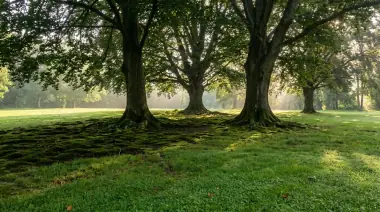
How to get rid of moss in your lawn for good - kill existing moss, fix shade, compaction and pH, and reseed bare patches correctly.
Fertilise only after a soil test, apply at the right rate, and feed during active growth rather than in high summer. Over-application does more damage than under-application.

Learn how to fertilize your lawn - when, how much & which N-P-K ratio to use. Organic and synthetic schedules for a greener, thicker lawn.
Clover and mixed grass-and-legume lawns need far less mowing and water, stay green through dry periods, and provide nectar for bees. The trade-off is that they do not look like a manicured sports turf.
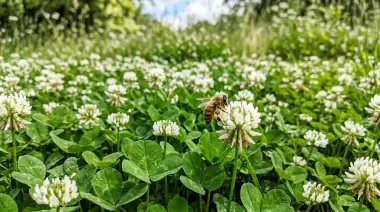
Want a no-mow lawn? Learn how to grow a clover lawn - less water, no fertilizer, pollinator-friendly & green all summer. Step-by-step setup.
Once a week during peak growth is usually right, and less often in cool or dry weather. Never remove more than a third of the blade length in one pass, and set the mower high — around 6-8cm for most lawns promotes deeper roots and better drought tolerance.
Only if a soil test shows a deficiency. If you do feed, use a slow-release nitrogen fertiliser, apply in spring and autumn for cool-season lawns, and follow the label rate exactly. More fertiliser produces more growth that you then have to mow, not a thicker lawn.
It depends on whether you want it gone. Clover fixes nitrogen, survives drought, and stays green when grass struggles, so many gardeners choose to keep it. To remove it, apply a clover-specific selective herbicide repeatedly, because it regrows from stolons underground.