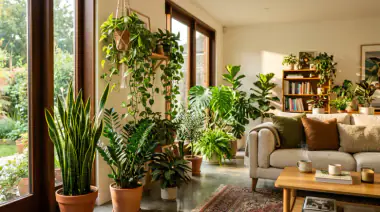
Complete Guide15 Best Low Maintenance Indoor Plants You Can't Kill
15 best low maintenance indoor plants for beginners — snake plant, pothos, ZZ and pet-safe picks, with watering schedules and light needs.
Care for houseplants successfully — watering, light, repotting and plant selection for your conditions.
Indoor plant problems are almost always one of two things: watering too much, or expecting a plant to survive in light it does not need. Both are fixable, and both are far easier to prevent than to correct once roots have rotted.
The species you choose matters more than the care you give it. A plant that suits your light and your schedule will thrive with less effort than a demanding one placed in a dim corner. Start from that matching, then learn the two skills that matter: reading soil moisture and repotting at the right time.
This is currently the smallest section on the site. It covers the fundamentals well — see the growing-solutions guides in Indoor Vegetable Gardening for producing food indoors.
Assess how much light your room actually gets, not how bright it looks. Then pick species that thrive at that level rather than fighting the conditions. Beginners should err toward tolerant plants.
15 best low maintenance indoor plants for beginners — snake plant, pothos, ZZ and pet-safe picks, with watering schedules and light needs.
Roots suffocate in wet soil far more often than they die of dryness. Water thoroughly, let the pot drain completely, and never leave a plant standing in a saucer of water. Learn to check soil moisture rather than following a weekly schedule.
Overwatering kills more houseplants than neglect. Learn how to water houseplants correctly - when, how much & the finger test that never fails.
A plant outgrows its pot shows clear signs: roots circling the base, water running straight through, growth stalling. Repot one size up only — a pot too large holds excess moisture the roots cannot use.
Roots poking out? Learn how to repot indoor plants step-by-step - when, what pot & soil to use, and how to avoid transplant shock.
Holiday plants like poinsettias are short-day bloomers with specific light and temperature needs. Buy carefully, keep them away from drafts, and follow a simple calendar if you want them to rebloom next year.
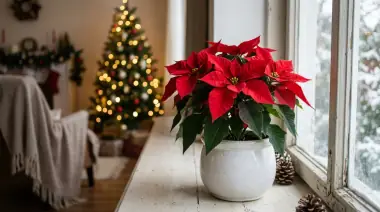
Poinsettia care made simple - watering, light and temperature for the holidays, plus how to keep and rebloom your plant for next Christmas.
Only when you check and the soil is dry. Push a finger one to two inches into the soil; if it feels damp, wait. There is no universal schedule, because soil volume, pot material, light and temperature all change how fast soil dries.
The most common cause is overwatering, which rots roots so the plant cannot take up nutrients. Check for mushy roots and sour-smelling soil. Less common causes are too little light and nutrient deficiency.
Only when they have outgrown the pot. Most plants need repotting every two to three years. Repotting yearly into a larger pot is a common mistake that leaves the plant sitting in permanently wet soil.