Do you dream of stepping out the kitchen door and cutting lettuce still cool from the morning, or picking a cherry tomato warm from the sun? I did, for years, before I put a shovel in ground — imagining harvest while worrying I would somehow do it wrong. If that is you right now, you are exactly where you should be. Starting is mostly choosing a sunny spot, loosening soil with compost, and planting a few forgiving things that want to grow.
This is the step-by-step I give friends who text where do I even start? It is the 4 by 8 foot version, not the homestead quarter-acre, because that small bed tended well will teach you more in one season than a huge one you dread weeding.
Quick Answer: To start a vegetable garden: 1) Pick a sunny spot — 6–8 hours direct sun, near water, well-drained; 2) Choose a small bed — 4×8 feet or 3 big containers; 3) Prepare soil — loosen 8 inches and mix 2–3 inches compost; 4) Plan layout — tall crops north, short south, rows north-south; 5) Plant two waves — cool crops (peas, lettuce, radishes) 2–4 weeks before last frost, warm crops (beans, zucchini, tomatoes, peppers) 2 weeks after soil is 60°F; 6) Mulch and water — 3 inches straw, 1 inch water/week at the base mornings; 7) Harvest small and often to keep producing.
At a Glance
| Factor | Beginner Recommendation |
|---|---|
| Sun | 6–8 hours direct sun (4 hrs enough for lettuce/spinach/radish) |
| Soil pH | 6.0–7.0, loose loam with 2–3 inches compost |
| Bed size | 4×8 feet raised bed, 12 inches deep, or three 5–10 gallon containers |
| Water | About 1 inch per week, deep 1–2 times/week morning at base |
| Easy first crops | Lettuce (30d), radishes (25d), bush beans (50d), zucchini (45d), cherry tomatoes (70d) |
| Layout | Tall north short south, rows north-south, 24–36 inch spacing for fruiters |
| Start small | 3–5 vegetable types year one, succession sow fast greens every 2 weeks |
Step 1: Choose the Perfect Spot — Walk Before You Dig
Before you draw anything, walk. Take a mug out at 8 a.m., noon, and 4 p.m. and stand where you are thinking of putting the garden. Where does sun actually fall? Where does wind tunnel between house and fence? Where does water puddle after rain? Where is the spigot — because the best plan fails if you will not drag a hose 50 feet in July.
I sketch this on graph paper, one square equals one foot, north arrow first. I mark the compost corner, the gate, the hose, the place the dog naps. Then I choose sunniest available. Not the prettiest corner, the sunniest. Near the kitchen door beats far edge of yard every time — you will water and pick daily if you see it.
Checklist for site:
- 6–8 hours direct sun for tomatoes, cucumbers, zucchini; 4 is enough for salad greens.
- Close to water and path — visible from kitchen window is ideal.
- Well-drained — no puddle an hour after rain; gentle slope helps.
- Not under large tree — roots steal water and light.
- Some wind protection from fence or hedge, but not shade.
If you only have 4 hours, start a salad-bar bed there and grow tomatoes in a sunny container. Constraints are design, not defeat.
Step 2: Decide — Raised Bed or In-Ground or Containers
You have three good choices; all work.
Raised Beds — My Beginner Favorite
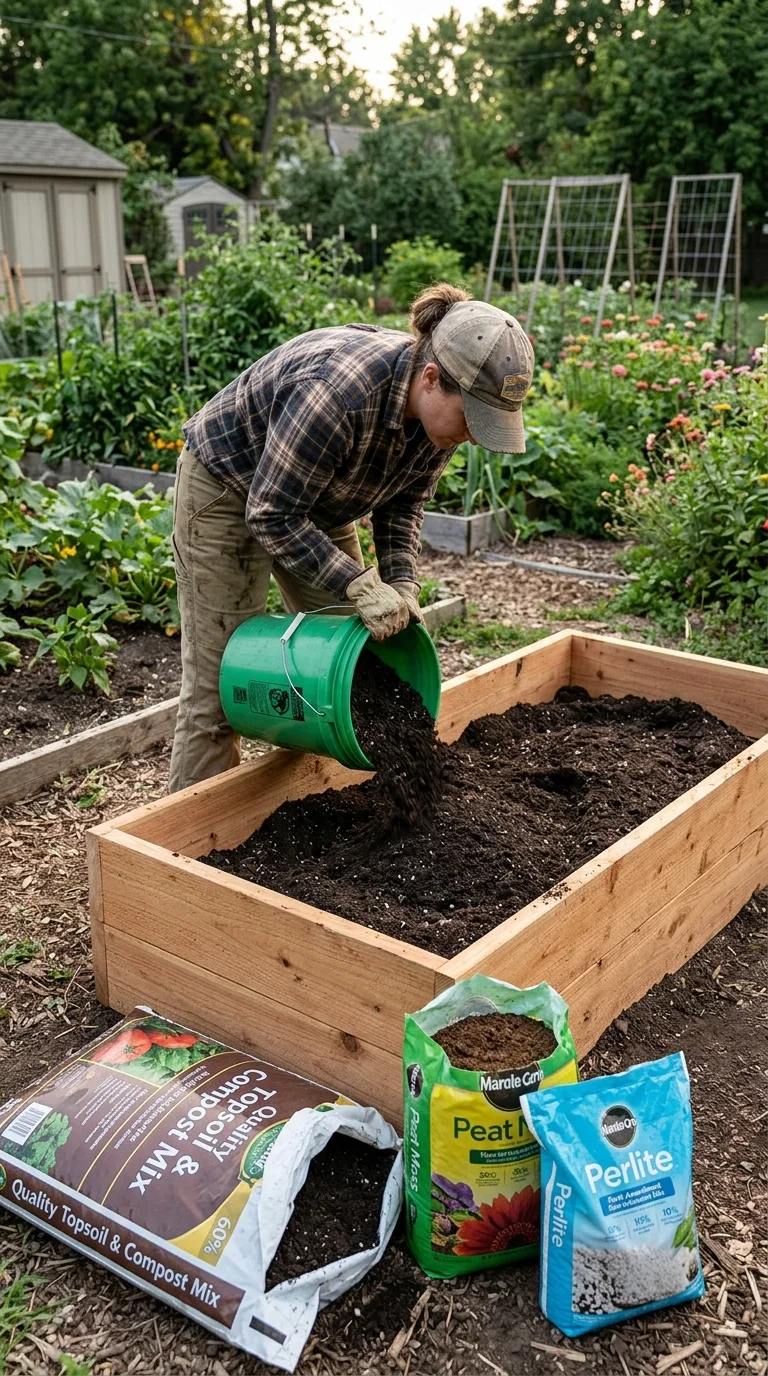
A 4 by 8 foot box 12 inches deep made of untreated wood, cedar, or galvanized steel corners. Fill not with yard dirt alone but a 60% topsoil / 30% compost / 10% vermiculite or perlite blend. Why I love them: they give perfect soil control, drain well, warm faster in spring, save your back, and you never step on soil. Cost is higher at start, but weeding is a fraction.
Place bed north-south, keep paths 18 inches so you kneel. If you can only afford one bed, that one bed is enough.
In-Ground — Cheapest Way to Start
If soil is decent and not compacted rubble, in-ground is fine. Mow, cover grass with cardboard two weeks to smother, then broadfork or fork deeply 12 inches, remove turf chunks, mix 2–3 inches compost. Edge to keep grass out. Keep planting area no wider than 4 feet so you reach center without stepping.
Containers — The No-Yard Garden
Three pots can feed two people salad and herbs all summer. Use potting mix not garden soil — garden soil compacts in pots and drowns roots. One cherry tomato per 10-gallon fabric pot, one pepper per 5-gallon, lettuce and radishes in window box 6 inches deep. Fabric pots air-prune roots and do not cook like black plastic. Place where sun falls; move with season if needed.
See raised bed gardening and potting mix vs garden soil for mixes.
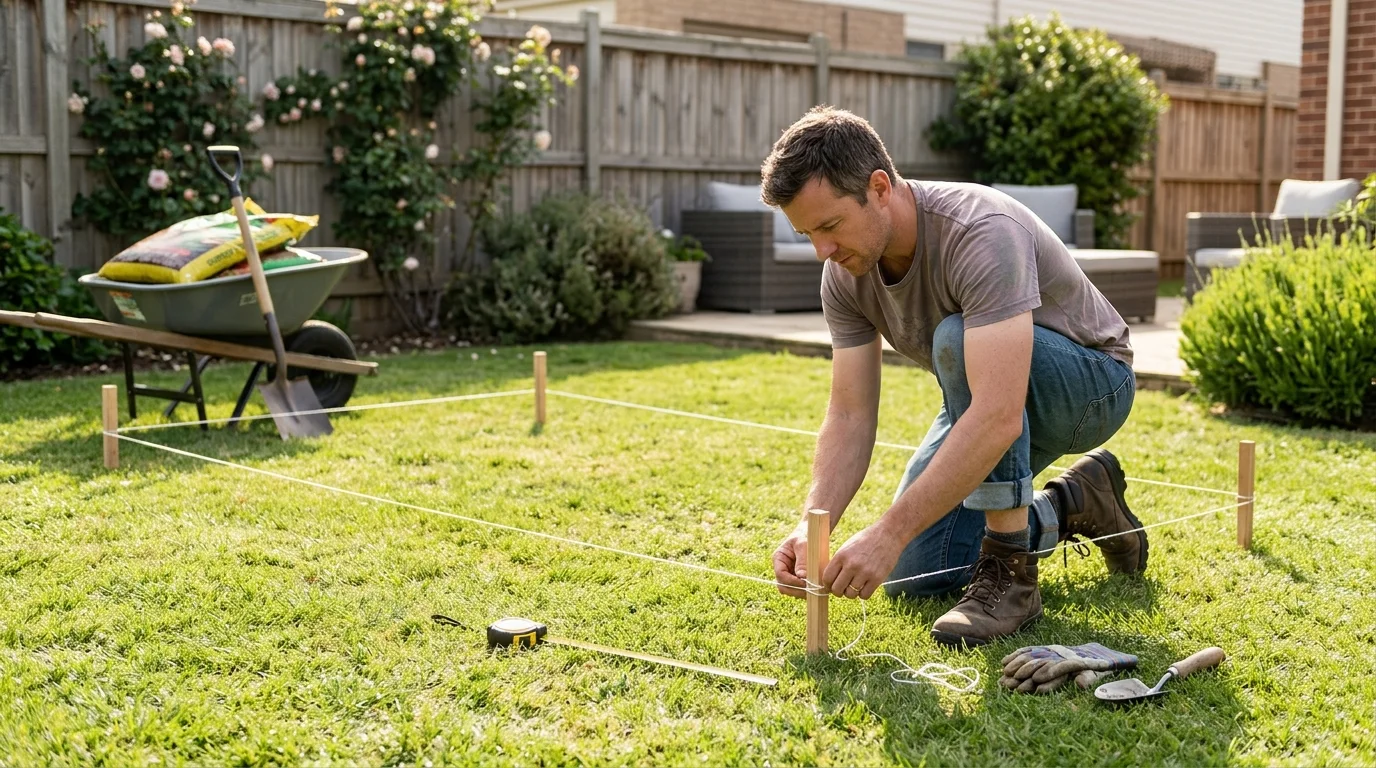
Step 3: Clear and Prepare Soil — The Pantry You Build
Soil is pantry. If it is crumbly, earthy-smelling, full of life, plants will do most of the work.
For raised beds: Fill to an inch below rim with that 60/30/10 mix, water deeply, let settle a day, top up.
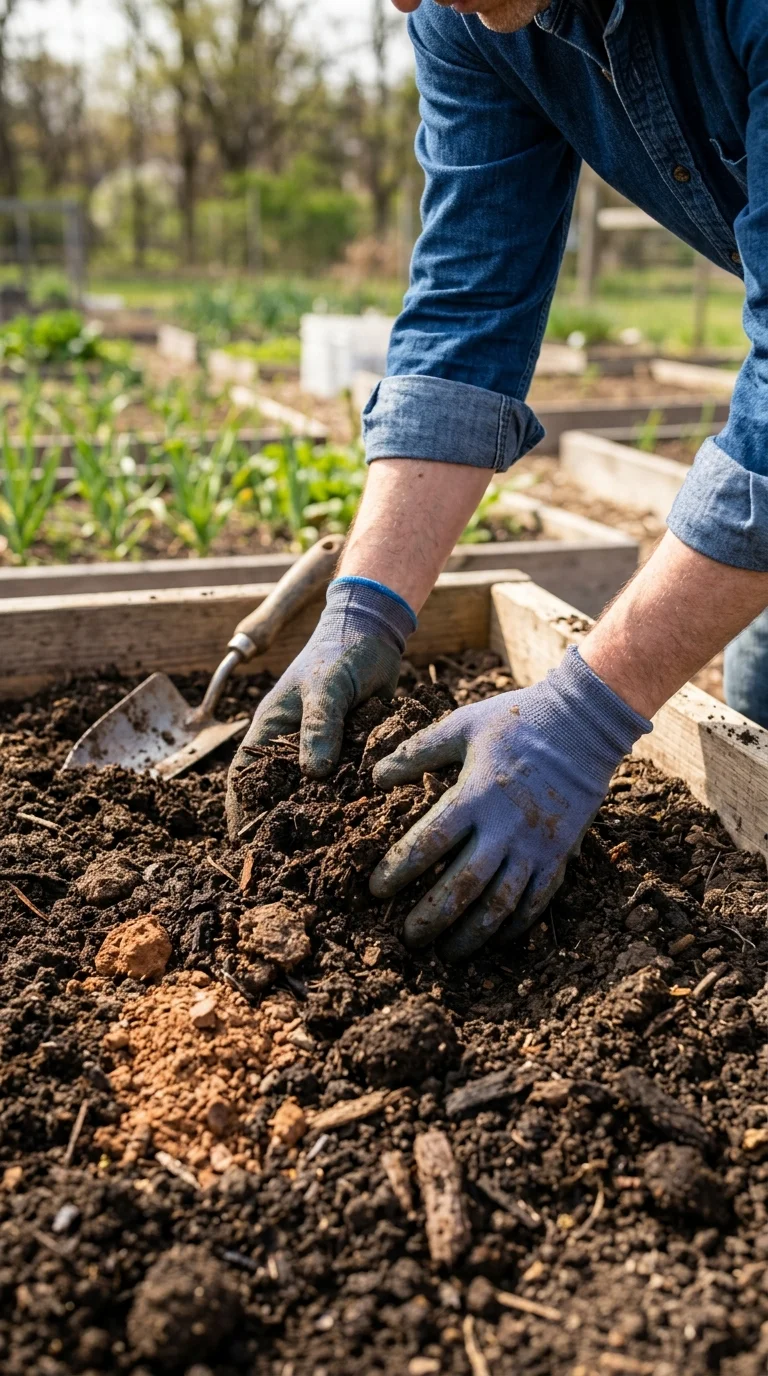
For in-ground: Fork top 8 to 12 inches when soil is damp not wet — it should crumble, not smear — then spread 2 to 3 inches compost and work into top 6 inches. Add a light balanced organic fertilizer only if soil test says so. I test every second spring; a $20 test tells pH and nutrients better than guess.
For containers: Fill with quality potting mix, blend compost at a quarter, and add perlite if mix seems heavy. Every pot must have drainage holes.
Cover with straw only after seedlings are 3 inches or transplants settled — mulch too early keeps spring soil cold where you want warmth.
Step 4: Plan the Layout — Tall North, Short South
My first drawn plan put corn south and tomatoes 12 inches apart with no paths. By July corn shaded everything and I was tightroping to pick cucumbers. Layout fixes before sowing saves summer.
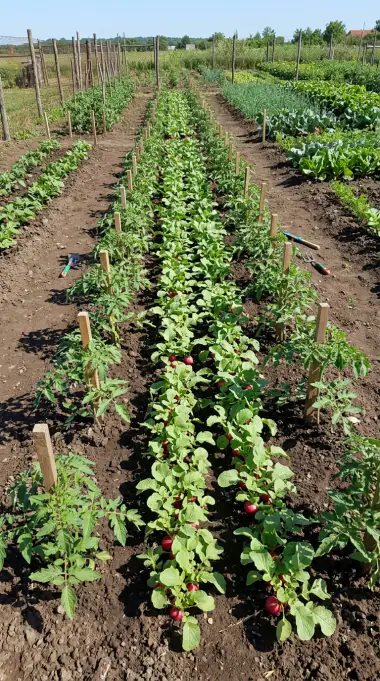
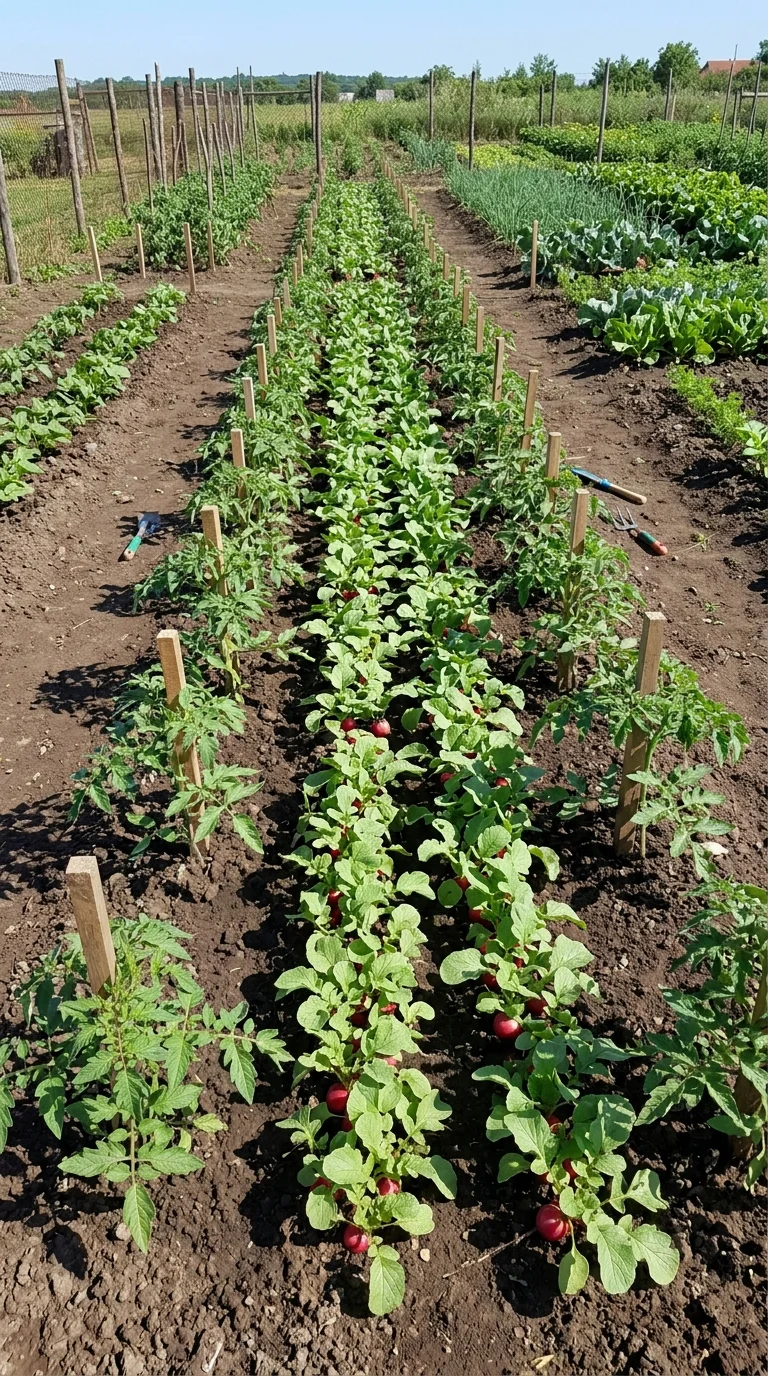
- Rows run north-south so every plant gets morning and afternoon sun as sun crosses.
- Tall crops north: trellised tomatoes, cucumbers, pole beans, corn block.
- Medium center: peppers, bush beans, kale.
- Short south: lettuce, spinach, radishes, spring onions, carrots.
Leave 18 inches between rows for greens, 36 for tomatoes/squash. Within rows: tomatoes 24–36 inches, peppers 18–24, carrots 2 after thinning, lettuce 6–10, bush beans 4. Crowding cuts yields 30–50 percent — thin bravely.
A simple first planting in a 4×8:
- North 2 feet: two trellised tomatoes or cucumbers on 6-foot panel, basil between.
- Mid 3 feet: row of bush beans and a pepper.
- South 3 feet: broad bands of lettuce/spinach and radishes, edge of spring onions/carrots.
See vegetable garden layout ideas and spacing guide.
Step 5: Choose What to Grow First — Grow What You Eat
Resist novelty the first year. Grow five things you actually like and that are forgiving: one fast (radish/lettuce), one generous (zucchini or bush beans), one snacking fruit (cherry tomatoes or cucumbers), one leaf that keeps giving (kale or spinach), and one herb (basil or parsley).
My five for absolute beginners:
- Lettuce — cut-and-come-again in 30 days, 4 hours sun.
- Radishes — 25 days, almost no pests.
- Bush beans — 50 days, fixes nitrogen, harvest for weeks.
- Zucchini — 45 days, one plant feeds family if picked at 6–8 inches.
- Cherry tomatoes — 70 days, more forgiving than beefsteaks.
See best vegetables for beginners and easiest vegetables to grow and fast-growing vegetables.
Step 6: Plant at the Right Time — Two Waves
This is where calendars outrank enthusiasm.
Wave one — Cool season, 2 to 4 weeks before last frost: Direct sow peas, lettuce, spinach, radishes, beets, carrots. They germinate in cool soil and tolerate light frost. I use a soil thermometer; lettuce at 45–65°F, peas even cooler.
Wave two — Warm season, 2 weeks after last frost when soil is 60°F (65°F for peppers): Direct sow beans, zucchini after frost danger, transplant tomatoes and peppers after warm nights. Warm feet matter — cold soil sulks warm crops.
Stagger fast crops every 2 to 3 weeks: sow a 2-foot band of lettuce and radishes on the 1st and 15th rather than a whole row once. That little-and-often calendar feeds you continuously.
Step 7: Plant Correctly — Depth, Thinning, Watering In
Seeds have opinions about depth. General rule: sow 2 to 3 times as deep as seed is wide; tiny lettuce barely covered, beans 1 inch. Keep row consistently moist 7 to 14 days — for carrots cover with board 5 days to hold moisture, checking daily.
Thin to spacing with scissors in evening: carrots to 2 inches, beets 3, lettuce 6. Thinning feels cruel for 10 seconds, generous for months. Every beet or radish thinning is a salad.
Transplants: dig hole slightly larger than root ball, set tomatoes deeper — bury to first leaves, they root along stem — firm gently, water immediately to settle, no air pockets. Stake or cage at planting so you do not spear roots later.
Water all new sowings and transplants deeply at the base; wet the root zone, not just the top inch.
Step 8: Water and Mulch — Deep and Infrequent Wins
Beginners often water a little daily. Roots stay shallow, then plants wilt at noon and tomato fruits crack. Better: about 1 inch per week delivered in one or two long soaks in the morning at the base, moistening 6 inches down, then mulch 3 inches with straw once seedlings are 3 inches tall. See how often to water.
Push finger 2 inches down: if dry, water thoroughly; if moist, wait. Containers need daily in heat — they dry 3 times faster than beds. A soaker hose on a timer at 6 a.m. twice a week cut my midsummer stress by half.
Step 9: Feed Lightly, Tend Daily
At planting, compost is often enough. Legumes beans peas need no extra nitrogen — they make their own. Leafy crops like light nitrogen if pale after a month; fruiting crops appreciate balanced organic at flowering. Do not overfeed; follow label.
Tend 10 minutes each evening: pull a few weeds, pinch basil tips to keep bushy, pick any ripe. That frequency catches eggs on leaf undersides early, spots wilt before collapse, and keeps harvest coming. Harvest small — zucchini 6–8 inches, cucumbers before yellowing, beans before bulge — and plant reads harvest as cue to set more.
Step 10: Succession and Rotation — Keep Bed Working
When a row of radishes finishes, do not leave bare — top-dress half-inch compost and sow bush beans. When peas finish, plant carrots in that nitrogen-enriched spot. My favorite succession — radish → bush beans → fall kale — gives three crops from same row.
Rotate families yearly so diseases do not build: tomatoes where beans were, brassicas where roots were. Keep a notebook by the door: sow date, thin date, first pick, what you ate most. Next year that notebook is worth more than any catalog because it is written in your light and seasons. See companion planting.
Essential Starter Tools — Only What You Need
You do not need every gadget. A hand trowel, garden fork to loosen, watering can or hose with gentle rose, gloves, pruners for harvest, and a rake suffice. A soil thermometer and a pair of scissors for thinning are my small luxuries. Buy quality on trowel and fork; they outlive trends.
Common Mistakes and Fast Fixes
Planting too early in cold soil: Warm crops sulk and disease finds them — wait till soil 60–65°F.
Spacing too tight: Nothing sizes up — thin to packet spacing even if it hurts.
No mulch: Soil dries, weeds explode July — straw 3 inches after seedlings establish.
Bare soil between crops: Succession sow, top-dress compost, never leave fallow long.
Harvesting too late: Plant stalls — pick small every 2–3 days.
Seasonal Timeline: Your First Year Month by Month
| When | What to Do | Harvest |
|---|---|---|
| Late winter | Plan 4×8, order seed, test soil, build bed | — |
| 4 wks before last frost | Sow peas, lettuce, spinach, radishes | — |
| 2 wks before last frost | Sow beets, carrots, kale; prepare containers | — |
| Last frost +2 wks soil 60°F+ | Plant bush beans, zucchini; transplant tomatoes/basil/peppers | Radishes 25d lettuce 30d |
| Early summer | Thin, mulch, deep water 1 inch/week, stake tomatoes | Lettuce daily, radishes |
| Midsummer | Succession sow beans/lettuce, hand-pollinate if drop | Beans, cucumbers, zucchini |
| Late summer | Sow fall greens, carrots again | Tomatoes peppers begin |
| Fall | Harvest storage, remove diseased vines to trash, add compost | Garlic planting for next year |
Troubleshooting: Quick Rescue
Seeds didn’t germinate: Soil dried or crusted — keep damp 10 days, barely cover lettuce, cover carrots with board, sow fresh.
Seedlings leggy pale: Not enough sun — move to sunniest spot, thin crowded.
Leaves yellow lower first: Overwater or hunger — check drainage, side-dress compost if stunted.
Bitter greens: Heat/water stress — mulch, water even, shade, harvest younger.
Blossom drop tomatoes/zucchini: Heat or pollination — shade, deep water even, hand-pollinate morning.
A Final Walk-Through Before You Sow
Last spring I helped a neighbor start her first bed. One 4 by 8, 6 hours sun, 2 inches compost, bamboo trellis north, lettuce band south, one zucchini that tried to claim the corner and one cherry tomato she tucked basil beside as companion. We sowed two 2-foot lettuce strips and a short radish row early, then after frost added beans. By mid-June she was cutting salads every other day; by July she was leaving zucchini on my porch because once you pick small, they simply keep coming.
Start that small, start today. Not perfect, just planted. The garden will teach the rest.
Keeping a Garden Notebook That Actually Helps
I keep a cheap spiral by the door, not an app, because it survives dirt and rain. One line per sowing: date, variety, where. One line per thin or transplant. One line per first harvest with a tiny taste note — lettuce bitter after hot week or Provider beans sweet even at 6 inches. That note does more than any book next year because it is your microclimate, your soil, your shade pattern. By winter you have a map that knows you. Even a photo once a week from the same corner — phone on the fence post — tells you how light shifted and where the crowded patch was you forgot to thin.
A notebook also keeps you from repeating variety mistakes. I note early Gypsy pepper ripe Aug 5 even cool June or late heirloom never colored. Next February you order what actually fed you, not what catalog photographed prettiest.
Frequently Asked Questions
Q: Where is the best place to start a vegetable garden?
A: The sunniest spot you actually use — 6 to 8 hours direct sun for fruiting crops, 4 hours for greens, close to water and visible from kitchen so you harvest and water daily. Avoid low frost pockets and shade from north walls or large trees. A little wind protection helps seedlings establish.
Q: How big should a beginner vegetable garden be?
A: A 4 by 8 foot raised bed is the sweet spot: 32 square feet, 12 inches deep, reachable without stepping on soil, weeded in 15 minutes, enough for salad daily plus one trellis of cucumbers or tomatoes. Master that for one season before adding beds.
Q: What are the easiest first vegetables to plant?
A: Fast greens and forgiving fruiters: lettuce and radishes for confidence in 25 to 30 days, bush beans and zucchini for generosity in 45 to 50, cherry tomatoes for joy in 70, plus basil or parsley. All tolerate average soil with compost, about an inch of water a week, and good spacing.
Q: Should I start vegetables from seeds or seedlings?
A: Direct sow small seeds where they grow — radishes, lettuce, carrots, peas, beans — they resent transplanting. Buy seedlings for tomatoes and peppers or start indoors 6 to 8 weeks before last frost if you want more varieties. Seedlings save time, seeds save money.
Related Articles
- Best Vegetables for Beginners
- Easiest Vegetables to Grow
- Vegetable Garden Layout Ideas
- Vegetable Garden Spacing Guide
- How Often to Water Vegetables
- How to Prepare Soil for Planting
Sources & References
- University of Minnesota Extension - Getting Started with Vegetables
- Cornell University - Vegetable Gardening for Beginners
- Iowa State University Extension - Home Vegetable Gardening
- Royal Horticultural Society - Beginner’s Guide to Growing Vegetables
- Old Farmer’s Almanac - Starting a Vegetable Garden