How to Start Seeds Indoors: Beginner’s Guide to Strong Seedlings
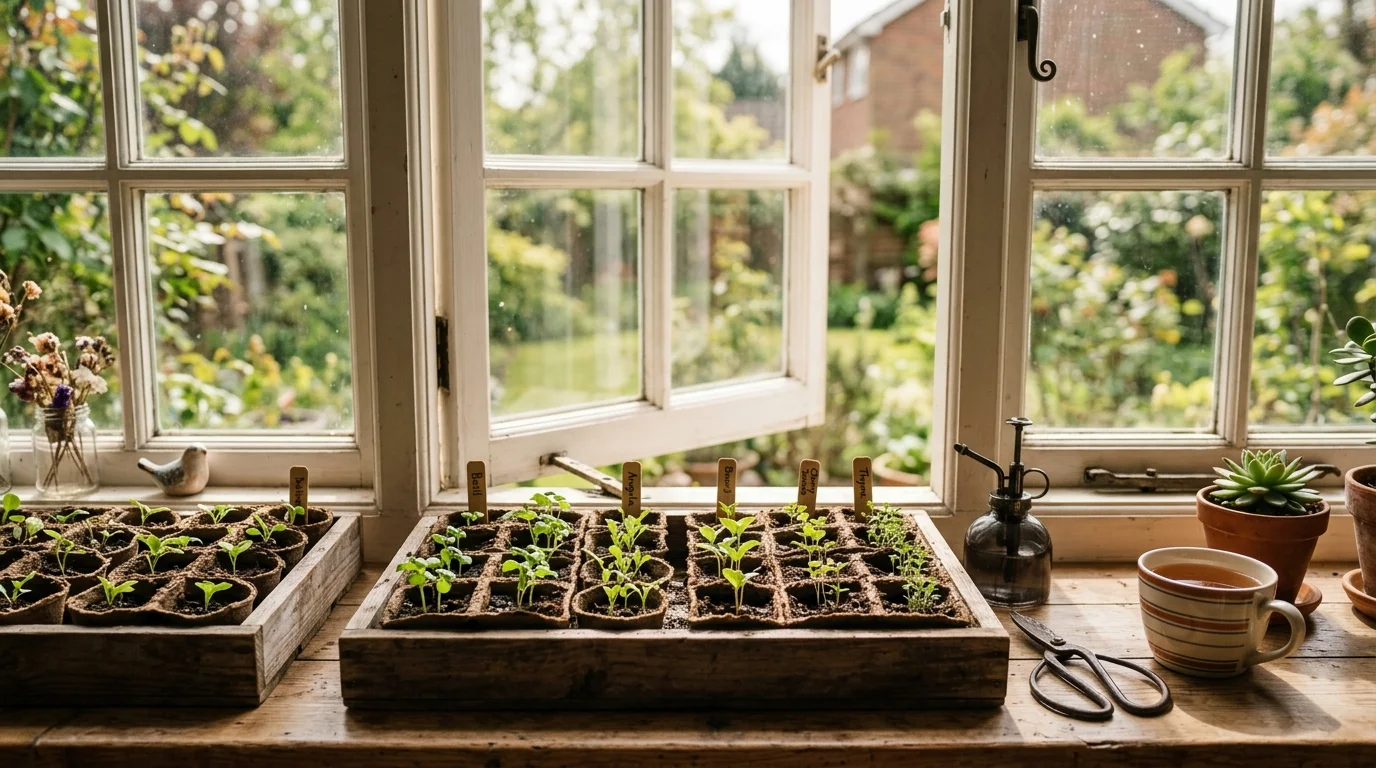
Learning how to start seeds indoors is one of the most satisfying skills in vegetable gardening. A single seed packet can grow into dozens of plants, and you get to choose from hundreds of varieties instead of the handful of transplants at the garden center.
This guide covers the timing, supplies, light, watering, and step-by-step process for raising strong seedlings. It works hand in hand with our when to plant vegetables guide, which tells you when those seedlings are ready to go outside.
Quick Answer: Start seeds indoors 6–8 weeks before your last spring frost date in trays filled with seed starting mix. Give them 12–16 hours of light per day under a grow light 2 inches above seedlings, water from below to keep soil moist but never soggy, thin each cell to the strongest seedling, and harden off for 7–10 days before transplanting.
Why Start Seeds Indoors?
-
Head start. Tomatoes, peppers, and warm-season crops need a long warm season they won’t get if sowed outdoors in northern climates. Starting indoors gives them 6–8 weeks of growth before the garden is ready.
-
Variety. Your local nursery carries a handful of tomato varieties; catalogs offer hundreds, including rare heirlooms and disease-resistant hybrids.
-
Cost. One seed packet replaces a $5 transplant, and one tray can produce dozens of plants.
When to Start Seeds Indoors
Count backward from your last spring frost date:
| Vegetable | Weeks Before Last Frost |
|---|---|
| Tomatoes | 6–8 weeks |
| Peppers | 8–10 weeks |
| Eggplant | 8–10 weeks |
| Cucumbers | 3–4 weeks |
| Squash | 3–4 weeks |
| Broccoli | 6–8 weeks |
| Cabbage | 6–8 weeks |
| Lettuce | 4–6 weeks |
| Onions | 10–12 weeks |
| Celery | 10–12 weeks |
Rule of thumb: If in doubt, start later. A stocky 6-week-old seedling beats a leggy, root-bound 12-week-old one.
Supplies for Starting Seeds Indoors
Trays and Containers
Use seed trays with individual cells (32 or 72 cells per tray) or any small container with drainage holes. A matching bottom tray makes bottom-watering easy, and a humidity dome holds in moisture while seeds germinate.
Seed Starting Mix
Use a fine-textured seed starting mix, not garden soil. Seed starting mix is light and sterile, so young roots push through easily and disease-causing organisms have no home. Garden soil is too heavy and can carry fungi that cause damping off.
Grow Lights
A bright south-facing windowsill can work, but a basic shop light or LED grow light gives dramatically better results. Keep the light about 2 inches above seedlings and raise it as they grow.
Heat Mats
A heat mat warms the root zone to the 70–85°F range that warm-season crops prefer for germination. It’s optional for lettuce and cool crops but nearly essential for peppers and eggplant indoors.
How to Plant Vegetable Seeds Indoors: Step-by-Step
-
Moisten the mix first. Stir seed starting mix with water in a bucket until uniformly damp, like a wrung-out sponge.
-
Fill the cells. Fill each cell to the top and press lightly.
-
Sow the seeds. Plant 2–3 seeds per cell at a depth of about twice the seed’s width.
-
Label everything. Write the variety and date on a label.
-
Cover the tray. Set the humidity dome in place, or drape plastic wrap loosely.
-
Set the temperature. Place the tray on a heat mat or warm appliance.
-
Turn on the light the moment sprouts appear. Remove the cover and switch the light on — 12–16 hours a day, about 2 inches above.
-
Water from below. Pour water into the bottom tray and let the mix wick it up.
How to Start Tomato Seeds Indoors
- Start 6–8 weeks before last frost
- Plant seeds 1/4 inch deep in seed starting mix
- Keep at 70–80°F until germination (5–10 days)
- Provide 12–16 hours of light daily
- Thin to strongest seedling per cell
- Transplant deeper when moving to larger containers
- Harden off 7–10 days before transplanting outdoors
How to Start Pepper Seeds Indoors
- Start 8–10 weeks before last frost
- Plant seeds 1/4 inch deep
- Keep at 80–90°F for germination (7–14 days) — heat mat recommended
- Provide 12–16 hours of light
- Transplant to larger containers when first true leaves appear
- Harden off 7–10 days before transplanting when soil reaches 65°F
Light Requirements for Indoor Seedlings
Seedlings need 12–16 hours of light per day and no more — they need dark periods to rest. Seedlings that grow taller than 3 inches with thin, pale stems and wide gaps between leaves are leggy, meaning not enough light.
Fix: Lower the grow light to 2 inches above seedlings, run it 12–16 hours, and consider a stronger lamp.
Watering Seedlings from Below
Bottom-watering avoids dry soil and soggy, disease-friendly leaves. Pour water into the tray, let the mix absorb it for 15–30 minutes, then dump out whatever remains so roots never sit in water.
Thinning Seedlings for Strong Growth
When seedlings have two sets of true leaves, thin each cell to the single strongest plant. Crowded seedlings compete for light and water and grow weak and spindly. Snip the extras at soil level with scissors instead of pulling.
How to Harden Off Seedlings
Seedlings raised indoors are soft; sun and wind will scorch them if they go straight into the garden. Harden them off over 7–10 days:
| Day | Exposure |
|---|---|
| 1–2 | 1–2 hours in light shade |
| 3–4 | 3–4 hours with some direct sun |
| 5–6 | 5–6 hours with increasing sun |
| 7–8 | Full day outside, bring in at night |
| 9–10 | Full day and night outside (if no frost) |
Common Seedling Problems and Fixes
Damping Off
Seedlings fall over at the soil line with a pinched, darkened stem. This fungal disease strikes in cold, wet, overcrowded conditions.
Prevention: Use fresh mix, thin early, remove dome once sprouts appear, bottom-water, and use a small fan on low for airflow.
Leggy Seedlings
Tall, pale, weak stems mean too little light.
Fix: Lower grow light to 2 inches above seedlings, run 12–16 hours, and transplant leggy tomatoes and peppers deeper so buried stems grow fresh roots.
Yellow Leaves
Yellowing usually means overwatering, underfeeding, or both.
Fix: Check moisture before watering, start half-strength liquid fertilizer weekly about two weeks after first true leaves appear.
Common Mistakes When Starting Seeds Indoors
- Starting too early. More than 6–8 weeks of indoor growth produces root-bound, leggy plants.
- Skipping the grow light. Windowsills grow stretchy seedlings.
- Overwatering. Soggy mix causes damping off and root rot.
- Forgetting to thin. Multiple seedlings per cell compete and fail.
- Moving seedlings straight outside. Unhardened seedlings sunburn and go into shock.
- Reusing old mix. Old mix can harbor damping-off fungi.
Frequently Asked Questions
When should you start seeds indoors?
Start seeds indoors 6–8 weeks before your last frost date for tomatoes and peppers, and 4 weeks for cucumbers and squash. Check your seed packet for days to transplant.
Do seeds need light to germinate?
Most seeds need darkness to germinate and light immediately after sprouting. Only lettuce, celery, and some flower seeds need light to germinate.
How do you harden off seedlings?
Harden off over 7–10 days by placing seedlings outdoors in shade for 2 hours, increasing sun and time daily. Without hardening, transplant shock kills up to 50% of seedlings.
What is the best soil for starting seeds indoors?
Use sterile seed starting mix — fine, light, and free of pathogens. Never use garden soil (too heavy) or regular potting mix (too coarse for tiny roots).
How long do grow lights need to stay on?
12–16 hours per day. Seedlings need a dark period to rest. A plug-in timer makes this effortless.
Can I start seeds on a sunny windowsill?
You can, but seedlings stretch toward the glass and grow leggy. A basic grow light gives far better, stockier results.