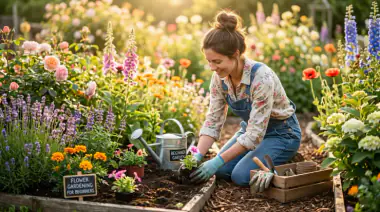
Flower Gardening for Beginners: Start to Bloom Guide (2026)
Start flower gardening from scratch - soil, sun, sowing & easy annuals vs perennials that bloom with minimal care, even for black thumbs.
Grow flowers that bloom reliably — from bulbs and shade beds to cut-flower gardens and pollinator planting.
A flower garden is judged on how long it performs rather than how much it produces. The best designs combine plants that flower at different times, so something is always in bloom from early spring to first frost.
That means choosing perennials for backbone structure and annuals for continuous colour, matching species to your light situation, and being honest about maintenance. A low-maintenance bed is achievable; it just requires picking plants that suit conditions rather than fighting them.
These guides cover the decisions that determine whether a bed looks intentional: what to plant where, what to plant for pollinators, and what to plant if you want flowers for cutting.
Plan for a long flowering season by combining bulbs, perennials and annuals. Beginners should start with a handful of reliable perennials and add annuals for colour between them.
Start flower gardening from scratch - soil, sun, sowing & easy annuals vs perennials that bloom with minimal care, even for black thumbs.
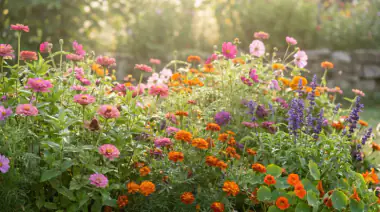
Annual flowers give season-long color. Learn the easiest varieties, when to plant & deadheading tricks that double bloom time.
![Perennial Flowers: Plant Once, Bloom for Years [Easy Guide]](/images/perennial-flowers-380.webp)
Perennial flowers return yearly. Discover easy, low-care varieties, when to divide & how to get blooms the first season.
Bulbs and other cool-season flowers carry a garden through early spring, before perennials wake up. Plant them at the correct depth in autumn and forget about them until they emerge.
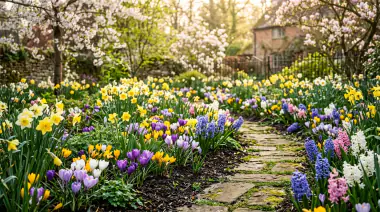
Plant flower bulbs like a pro - depth, spacing & timing for tulips, daffodils & alliums. Get reliable blooms spring and fall.
Sun-loving species in shade and shade species in sun will both struggle. Identifying what light your bed genuinely receives is the first step to picking plants that will actually bloom.
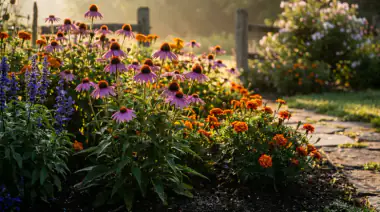
Need flowers that love full sun? Discover 15 heat-proof annuals & perennials that bloom all summer with minimal water and care.
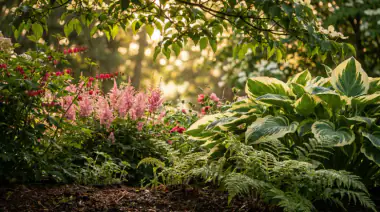
Shady yard? Grow flowers for shade that bloom where sun-lovers fail - 12 proven perennials & annuals for north-facing beds.
Perennials suited to your climate, mulched properly and watered deeply but infrequently need far less attention than annuals. Choose drought-tolerant species and skip the fertiliser.
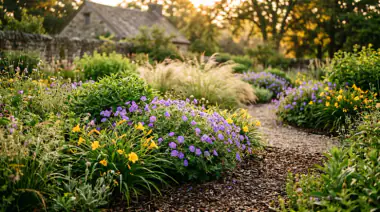
Want colour without work? Create a low maintenance flower garden with 10 self-seeding, drought-tolerant blooms that return yearly.
Bees and butterflies need nectar across the whole season, which means a succession of flowering species rather than one spectacular early-summer display. Native flowering plants are the most effective choice.
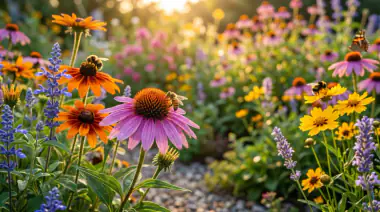
Plant pollinator garden flowers that feed bees, butterflies & hummingbirds - bloom times & companion combos for season-long nectar.
Pots and small spaces suit flowering plants well because drainage is controlled. For cut flowers, prioritise species that branch readily and have a long vase life.
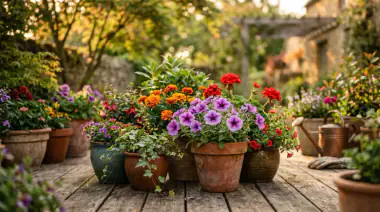
Create container flower gardens that thrive - thriller-filler-spiller combos, soil & watering for pots that bloom all summer.
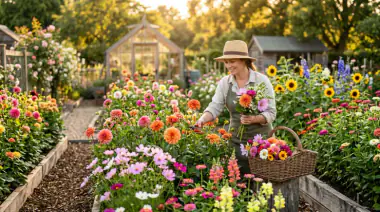
Grow a cut flower garden for endless bouquets - best varieties, succession sowing & cutting tips that extend vase life to 10 days.
Pruning at the wrong time is the main reason flowering shrubs skip a season. Roses are pruned in late winter before growth starts, while hydrangeas must be cut according to whether they bloom on old or new wood.
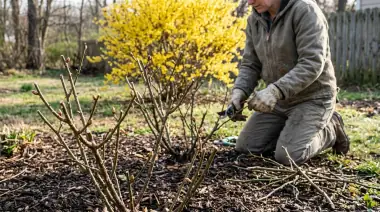
When to prune roses by type - spring timing for hybrid teas and shrubs, summer deadheading, and the fall cuts that protect bushes for winter.
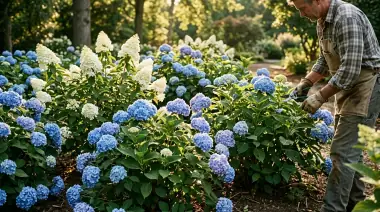
When to prune hydrangeas without losing next year's flowers - timing by type (bigleaf, panicle, smooth, oakleaf) and exactly how to cut.
Plant in layers. Start with bulbs and early perennials, follow with early-summer species, then add late-season asters, rudbeckia and ornamental grasses. Also deadhead annuals and perennials promptly, which is what triggers the plant to produce more flowers rather than seed.
For perennials in good soil, rarely — excess nitrogen gives lush leaves at the expense of flowers. Container-grown annuals do need regular feeding because the potting mix depletes within a season. Use a low-nitrogen, high-phosphorus feed when you do fertilise.
Check light first — most flowering plants need at least six hours of direct sun. Then check that you are not over-fertilising with nitrogen. Finally, confirm the plant is not being crowded by neighbours or shaded by earlier crops.