Every vegetable gardener eventually meets a pest. One morning your kale is dotted with holes; the next, your tomato plant is ragged. The good news is that most common vegetable garden pests can be managed without synthetic chemicals, and a little regular observation goes a long way. This guide teaches you how to identify the usual suspects and control them organically.
Quick Answer: Identify the pest before you spray, because different pests need different organic controls. Start with prevention-healthy plants, crop rotation, and garden hygiene-then use handpicking, floating row covers, diatomaceous earth, or sprays like neem oil and insecticidal soap. Encourage beneficial insects such as ladybugs, which eat many common pests for free.
At a Glance
| Fact | Detail | | Most common vegetable garden pests | Aphids, slugs and snails, cabbage worms, tomato hornworms, squash bugs, cucumber beetles, cutworms, flea beetles | | First line of defense | Healthy plants, crop rotation, garden hygiene, and 5-minute weekly inspections | | Physical controls | Handpicking, floating row covers, diatomaceous earth, cardboard collars | | Organic sprays | Neem oil and insecticidal soap, applied in the evening on leaf undersides | | Beneficial insects | Ladybugs, lacewings, and parasitic wasps | | Watering | At soil level in the morning, about 1 inch per week | | When to spray | Only after you see pests on more than a few leaves |
Why Garden Pest Control Matters
Pests do more than nibble leaves. They stunt growth, spread viruses, and can wipe out a crop in days once numbers build up. A healthy plant can outgrow light feeding, so the goal is not a bug-free garden but one where pest numbers stay low enough to harvest. Organic controls matter because broad-spectrum sprays kill the predatory insects that keep pests in check (Source: University of California IPM).
Prevention First: Stop Pests Before They Start
The cheapest pest control is never having an infestation. Prevention relies on three habits recommended by every extension service (Source: University of Minnesota Extension).
Grow Healthy Plants
Plants stressed by poor soil, too little sun, or uneven water attract more pests and tolerate damage worse. Give vegetables 6-8 hours of direct sun, about 1 inch of water per week, and soil in the pH 6.0-6.8 range. If you are new to this, our beginner’s guide covers the basics, and the watering guide explains how to water without drowning your plants.
Rotate Your Crops
Many pests overwinter in the soil and emerge hungry where they fed last year. Move plant families to new spots every year, ideally on a 3-4 year rotation. Keep your garden map handy when planning your layout.
Keep the Garden Clean
Remove spent plants, weeds, fallen fruit, and garden debris promptly, because these are where pests hide and lay eggs. Clearing beds in fall removes overwintering sites for squash bugs, cutworms, and flea beetles.
Scout Weekly
Walk your garden for 5 minutes each week and look at leaf undersides, where eggs and young insects hide. Catching a problem at 10 insects is easy; catching it at 10,000 is not.
Cover Young Plants With Row Covers
Floating row covers exclude cutworms, flea beetles, cabbage worms, and cucumber beetles while plants are young. Remove them when flowers open so bees can pollinate.
The Usual Suspects: Identification and Organic Control
Aphids
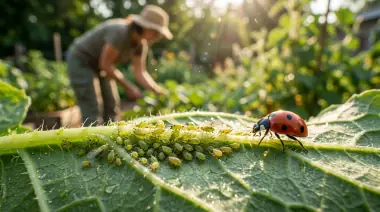
What they look like: Tiny pear-shaped insects in green, black, or yellow, in clusters on new growth and leaf undersides. You may also see sticky “honeydew” and ants farming them.
Damage: Curled, yellowed leaves, slowed growth, and in some cases virus spread. A heavy aphid population can cover a plant in weeks.
Control: Blast them off with a sharp stream of water, then spray undersides with insecticidal soap or neem oil. Ladybugs and lacewings are hungry aphid predators, so leave them alone. See our natural aphid control guide for full details.
Slugs and Snails
What they look like: You rarely see them; you see shiny silver trails and irregular holes with smooth edges in leaves, chewed mostly at night.
Damage: Ragged leaves and damaged seedlings, worst in cool, damp weather on lettuce, greens, and young transplants.
Control: Handpick at dusk with a flashlight, set out boards or traps they hide under during the day, and sprinkle diatomaceous earth around vulnerable plants (it dries them out; reapply after rain). Copper tape barriers work on raised beds and containers.
Cabbage Worms
What they look like: Small, velvety green caterpillars and the white or yellow butterflies that flutter over brassicas laying eggs on leaf undersides.
Damage: Ragged holes in leaves and green frass (droppings) tucked inside broccoli and cabbage heads.
Control: Cover brassicas with row covers from transplanting, handpick caterpillars, and if needed spray young worms with Bacillus thuringiensis (Bt), a bacteria that kills caterpillars but nothing else.
Tomato Hornworms
What they look like: Huge green caterpillars up to 4 inches long with white V-shaped markings and a horn on the rear end.
Damage: A single hornworm can strip whole branches of tomato foliage and leave dark droppings behind. They also feed on peppers.
Control: Handpick them-look first, because they camouflage perfectly. If you find a caterpillar dotted with small white cocoons, leave it: a parasitic wasp is already taking care of business. Tilling in fall destroys overwintering pupae. Learn more in our tomato growing guide.
Squash Bugs
What they look like: Flat, gray-brown shield-shaped bugs about 5/8 inch long, with brick-red egg clusters on leaf undersides.
Damage: Yellow speckling that turns brown, wilting vines, and stunted plants. They attack squash, pumpkins, and cucumbers, and they are one of the hardest pests to get rid of once established.
Control: Scrape off egg clusters weekly, handpick adults (they hide at the plant base under mulch), and remove plant debris in fall so they cannot overwinter. Promptly destroy heavily infested plants.
Cucumber Beetles
What they look like: Small yellow-green beetles, either striped or spotted with black, that jump when disturbed.
Damage: Chewed holes in leaves, but worse: striped cucumber beetles transmit bacterial wilt, which can kill cucumbers and melons within days.
Control: Cover plants with row covers from transplanting until bloom, handpick in the morning, and remove wilted plants immediately so beetles do not feed and spread the disease to healthy ones. In severe years, a trap crop of early-planted squash can draw beetles away from your main crop (Source: Cornell Vegetables).
Cutworms
What they look like: Fat, gray-brown caterpillars that curl into a C when disturbed. They hide in the soil during the day.
Damage: Newly set transplants and seedlings sliced off at the soil line overnight, the classic “dead transplant in the morning” mystery.
Control: Slip a cardboard or paper collar around each stem, pushed an inch into the soil at planting time. Handpick cutworms at night with a flashlight, and till beds in spring and fall to destroy overwintering pupae.
Flea Beetles
What they look like: Tiny, shiny black (or striped) beetles that jump like fleas when disturbed.
Damage: A “shot-hole” pattern of small pits in leaves. They hit young eggplants, radishes, and brassicas hardest, and heavy feeding can kill seedlings.
Control: Use row covers until plants are established, delay planting until soil warms, and keep beds free of weeds they feed on. Mature plants generally tolerate the damage.
Common Mistakes
- Spraying before you identify the pest. Insecticidal soap does nothing to a slug, and Bt does nothing to a beetle. Identify first.
- Spraying in midday sun. Oil-based sprays like neem can burn foliage in hot sun and harm bees at work. Spray in the evening.
- Killing every insect you find. Many are predators. Ladybug larvae look like tiny black alligators-if you squish them, you lose free pest control.
- Ignoring leaf undersides. Eggs, nymphs, and caterpillars hide there; spray or handpick where they actually are.
- Waiting until damage is severe. Once breeding populations build, organic sprays only slow them down. Treat early and slightly.
- Watering overhead in the evening. Wet leaves invite slugs and fungal problems. Water at the base in the morning.
Seasonal Troubleshooting
Spring brings cutworms, flea beetles, slugs, and transplant damage; summer brings aphids, hornworms, squash bugs, and cucumber beetles; fall sees cabbage worms and a second aphid wave. Hot, dry spells are when aphids and mites explode, so increase your watering slightly during heat waves-stressed plants attract more pests. Remember to pull row covers off squash and tomatoes once flowers form, or you will have no pollinators and no fruit.
Frequently Asked Questions
Q: Are neem oil and insecticidal soap safe for bees?
A: Both are far less toxic than synthetic sprays, but they can still harm bees they are sprayed on directly. Apply in the evening when bees are inactive, spot-treat only infested plants, and never spray flowers that are being pollinated.
Q: Do I need to treat every pest I see?
A: No. Five aphids on a mature tomato are nothing; an ant trail busy with thousands is a problem. Learn each pest’s damage threshold-a few chewed holes rarely matter, but a collapsed transplant always does.
Q: Does diatomaceous earth hurt earthworms or beneficial insects?
A: It can. Diatomaceous earth is abrasive to any small-bodied insect, including bees and ladybug larvae. Use it as a dry band around plants, avoid flowers, and reapply after rain because it stops working when wet.
Q: How do I attract ladybugs to my garden?
A: Grow flowering herbs like dill, fennel, yarrow, and alyssum for nectar, and stop broad-spectrum spraying. If you buy ladybugs, release them in the evening at the base of aphid-covered plants, not in the open sun.
Q: Can I use row covers all season?
A: Only for crops that do not need insect pollination, like leafy greens and peas, or on squash if you hand-pollinate. Tomatoes, peppers, and squash need covers removed when flowers open.
Q: Does companion planting repel pests?
A: A few plants help-nasturtiums and trap crops can draw pests away, and flowers attract predators-but most “repellent” claims are unproven. See our companion planting guide for what actually works.
Related Articles
- Get Rid of Aphids Naturally
- Garden Pest Control for Beginners
- How to Grow Tomatoes
- Companion Planting for Vegetables
- Common Plant Problems and Fixes
- How to Fix Yellow Leaves
- How to Start a Vegetable Garden for Beginners
- Our Vegetable Gardening Guide