I learned to how often water vegetables the way most of us do — with a bright March optimism and a tray that soon leaned like shy toddlers toward a dim window. The second spring a neighbor named Marta showed me how to hold my palm two inches above the leaves and ask, is this light close enough to feel? That one gesture changed everything. This guide is that habit, stretched into a calm, step-by-step plan you can start tonight with what you have, plus the few tiny upgrades that actually matter. The early details matter more than any later rescue.
Think of this as a walk through the bed together — sensorial, practical, a little messy, and very doable.
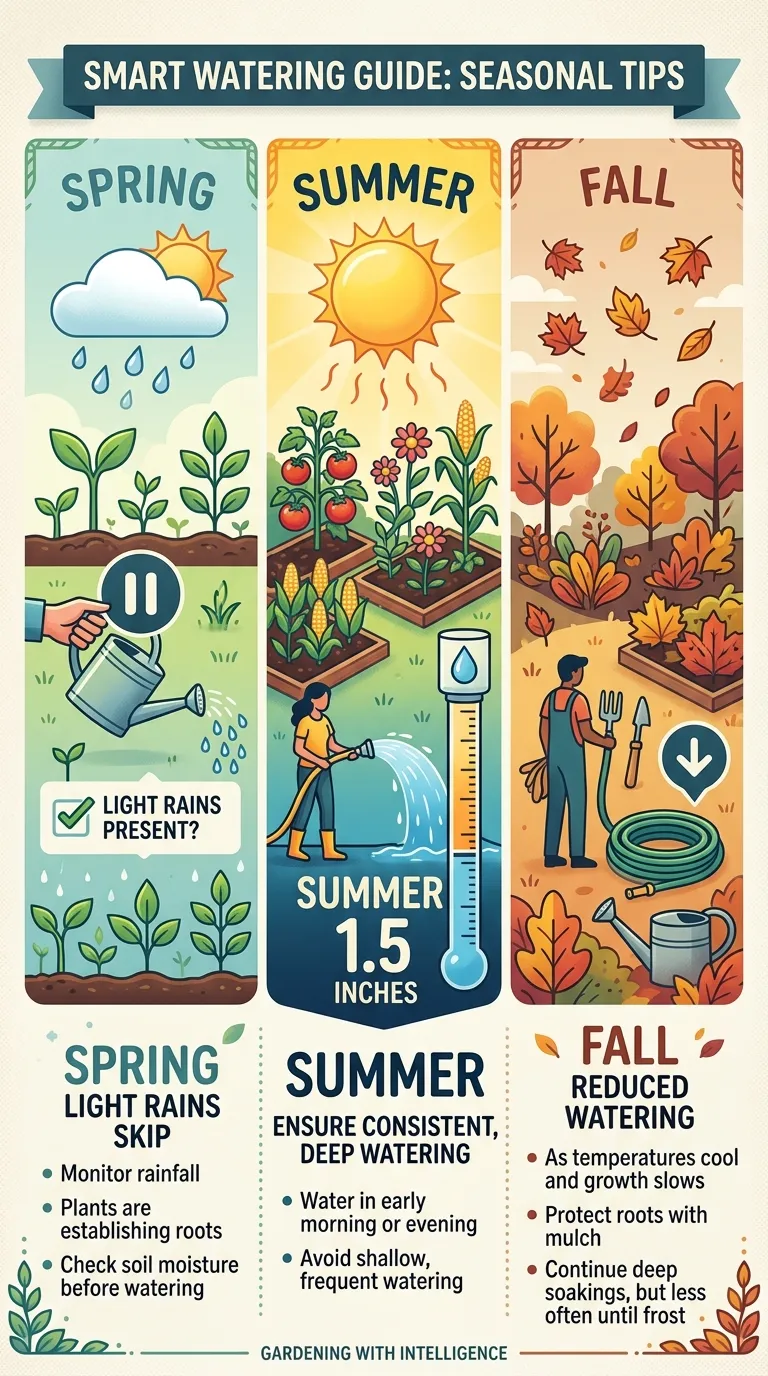
Quick Answer: Water most in-ground vegetable gardens 1 to 1.5 inches per week split into 2 to 3 deep waterings that soak 6 to 8 inches down, more on sand and less on clay. Check with a finger 1 to 2 inches deep — dry means water, damp means wait — and always water at soil level in the morning before 10 a.m. Raised beds need every 2 to 3 days, small containers often daily in summer. Mulch 2 to 3 inches to cut frequency by nearly half.
At a Glance
| Detail | Guidance |
|---|---|
| Weekly total | 1–1.5 inches in-ground; up to 2 in heat; 0.6 gal/sq ft per inch |
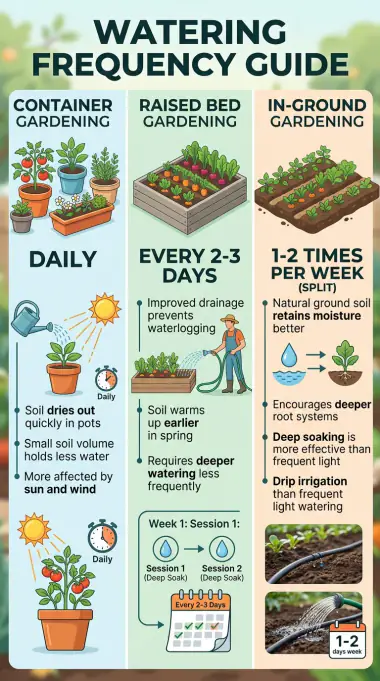
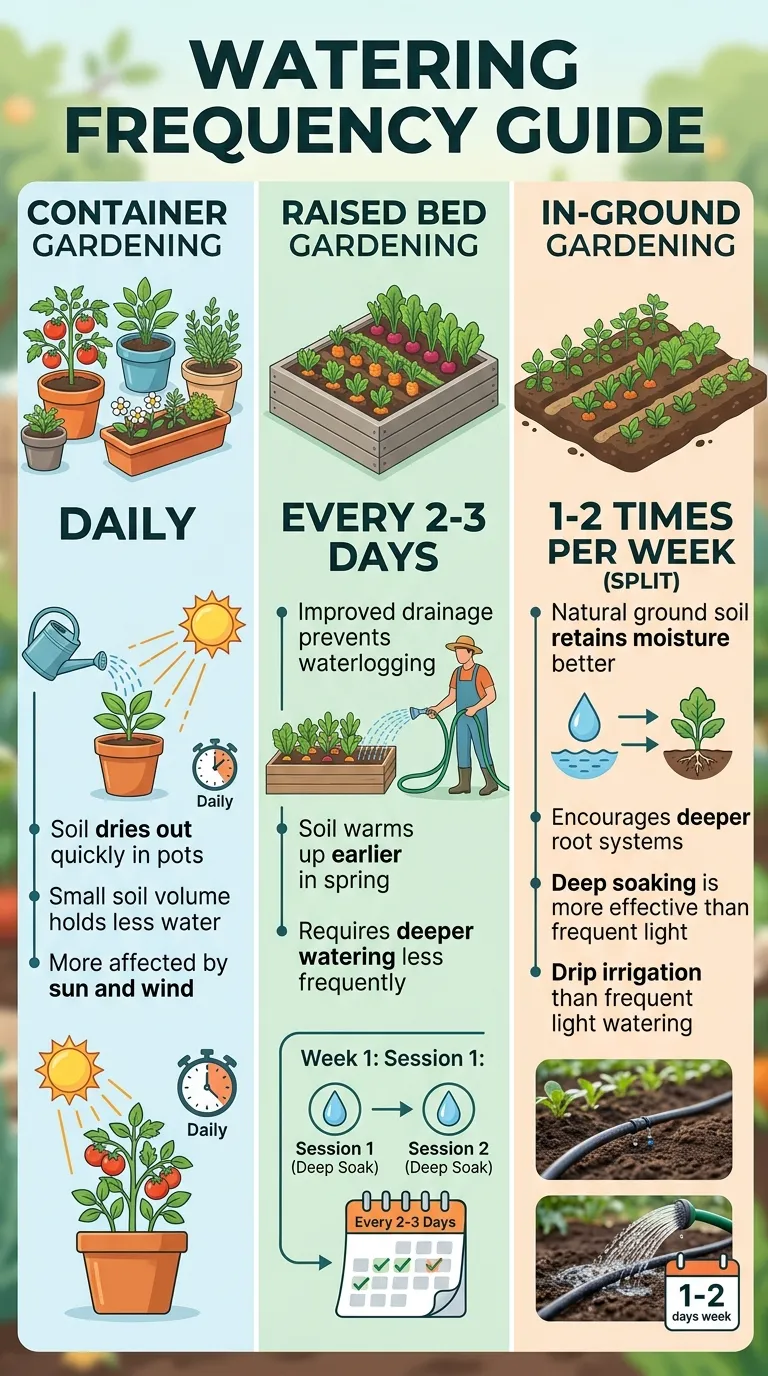
| Frequency | In-ground 2×/week deep; raised bed every 2–3 days; pots daily |
| Best time | 6–10 a.m. at soil level |
| Check | Finger 1–2 inches — dry = water |
| Mulch | 2–3 inches straw/leaves halves needs |
| Method | Soaker/drip beats sprinkler |
The 1 to 1.5 Inch Rule
That the 1 to 1.5 inch rule moment is where the garden quietly decides. I used to rush it, thinking plants wouldn’t notice. They did — tighter roots and that deep satiny green showed up only when I slowed down and treated this step like a ten-minute ritual with tea warm beside me. Do you hear how soil sounds when it’s at the right dampness? Like a wrung sponge, not a puddle.
The principle is simple: steady is better than splashy. Even moisture, gentle air, bright light at the right distance. My notebook proves it — one line a day, weather and leaf color, and patterns pop in two weeks. Your hands will learn faster than any calendar.
What an inch means
I handle what an inch means by measuring once, then trusting senses. Pre-moisten mix like a wrung sponge, sow about twice seed thickness deep, label same day, snip weaker at soil level after two true leaves.
Tuna can trick
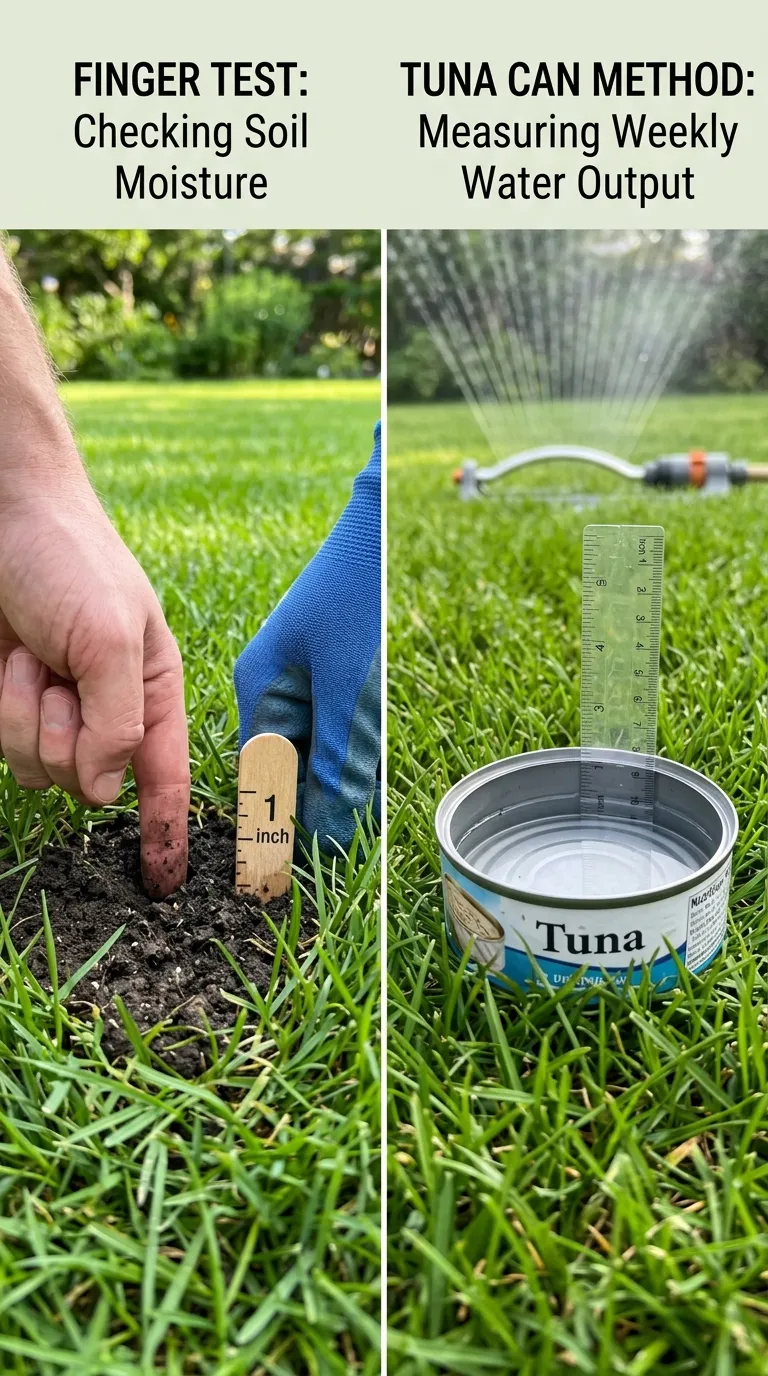
I handle tuna can trick by measuring once, then trusting senses. Pre-moisten mix like a wrung sponge, sow about twice seed thickness deep, label same day, snip weaker at soil level after two true leaves.
Give this step its own Sunday ten minutes. It looks slow the first week, but by week three roots have quietly doubled and leaves thicken. Quiet compounding beats quick fixes every time.
Quick tips for the 1 to 1.5 inch rule:
- Do it in morning light when you can see true color.
- Keep tools clean — wipe with alcohol before cuts.
- Check again in 3 days; small corrections beat big rescues.
Finger Test Before Calendar
That finger test before calendar moment is where the garden quietly decides. I used to rush it, thinking plants wouldn’t notice. They did — tighter roots and that deep satiny green showed up only when I slowed down and treated this step like a ten-minute ritual with tea warm beside me. Do you hear how soil sounds when it’s at the right dampness? Like a wrung sponge, not a puddle.
The principle is simple: steady is better than splashy. Even moisture, gentle air, bright light at the right distance. My notebook proves it — one line a day, weather and leaf color, and patterns pop in two weeks. Your hands will learn faster than any calendar.
How to test
I handle how to test by measuring once, then trusting senses. Pre-moisten mix like a wrung sponge, sow about twice seed thickness deep, label same day, snip weaker at soil level after two true leaves.
Sandy vs clay
I handle sandy vs clay by measuring once, then trusting senses. Pre-moisten mix like a wrung sponge, sow about twice seed thickness deep, label same day, snip weaker at soil level after two true leaves.
Give this step its own Sunday ten minutes. It looks slow the first week, but by week three roots have quietly doubled and leaves thicken. Quiet compounding beats quick fixes every time.
Quick tips for finger test before calendar:
- Do it in morning light when you can see true color.
- Keep tools clean — wipe with alcohol before cuts.
- Check again in 3 days; small corrections beat big rescues.
Morning Water at Soil Level
That morning water at soil level moment is where the garden quietly decides. I used to rush it, thinking plants wouldn’t notice. They did — tighter roots and that deep satiny green showed up only when I slowed down and treated this step like a ten-minute ritual with tea warm beside me. Do you hear how soil sounds when it’s at the right dampness? Like a wrung sponge, not a puddle.
The principle is simple: steady is better than splashy. Even moisture, gentle air, bright light at the right distance. My notebook proves it — one line a day, weather and leaf color, and patterns pop in two weeks. Your hands will learn faster than any calendar.
Disease cut
I handle disease cut by measuring once, then trusting senses. Pre-moisten mix like a wrung sponge, sow about twice seed thickness deep, label same day, snip weaker at soil level after two true leaves.
Evaporation saved
I handle evaporation saved by measuring once, then trusting senses. Pre-moisten mix like a wrung sponge, sow about twice seed thickness deep, label same day, snip weaker at soil level after two true leaves.
Give this step its own Sunday ten minutes. It looks slow the first week, but by week three roots have quietly doubled and leaves thicken. Quiet compounding beats quick fixes every time.
Quick tips for morning water at soil level:
- Do it in morning light when you can see true color.
- Keep tools clean — wipe with alcohol before cuts.
- Check again in 3 days; small corrections beat big rescues.
Deep vs Shallow — Grow Roots Down
That deep vs shallow — grow roots down moment is where the garden quietly decides. I used to rush it, thinking plants wouldn’t notice. They did — tighter roots and that deep satiny green showed up only when I slowed down and treated this step like a ten-minute ritual with tea warm beside me. Do you hear how soil sounds when it’s at the right dampness? Like a wrung sponge, not a puddle.
The principle is simple: steady is better than splashy. Even moisture, gentle air, bright light at the right distance. My notebook proves it — one line a day, weather and leaf color, and patterns pop in two weeks. Your hands will learn faster than any calendar.
Depth target
I handle depth target by measuring once, then trusting senses. Pre-moisten mix like a wrung sponge, sow about twice seed thickness deep, label same day, snip weaker at soil level after two true leaves.
Cracking fix
I handle cracking fix by measuring once, then trusting senses. Pre-moisten mix like a wrung sponge, sow about twice seed thickness deep, label same day, snip weaker at soil level after two true leaves.
Give this step its own Sunday ten minutes. It looks slow the first week, but by week three roots have quietly doubled and leaves thicken. Quiet compounding beats quick fixes every time.
Quick tips for deep vs shallow — grow roots down:
- Do it in morning light when you can see true color.
- Keep tools clean — wipe with alcohol before cuts.
- Check again in 3 days; small corrections beat big rescues.
Containers, Raised Beds, In-Ground
That containers, raised beds, in-ground moment is where the garden quietly decides. I used to rush it, thinking plants wouldn’t notice. They did — tighter roots and that deep satiny green showed up only when I slowed down and treated this step like a ten-minute ritual with tea warm beside me. Do you hear how soil sounds when it’s at the right dampness? Like a wrung sponge, not a puddle.
The principle is simple: steady is better than splashy. Even moisture, gentle air, bright light at the right distance. My notebook proves it — one line a day, weather and leaf color, and patterns pop in two weeks. Your hands will learn faster than any calendar.
Pot checks
I handle pot checks by measuring once, then trusting senses. Pre-moisten mix like a wrung sponge, sow about twice seed thickness deep, label same day, snip weaker at soil level after two true leaves.
Bed rhythm
I handle bed rhythm by measuring once, then trusting senses. Pre-moisten mix like a wrung sponge, sow about twice seed thickness deep, label same day, snip weaker at soil level after two true leaves.
Give this step its own Sunday ten minutes. It looks slow the first week, but by week three roots have quietly doubled and leaves thicken. Quiet compounding beats quick fixes every time.
Quick tips for containers, raised beds, in-ground:
- Do it in morning light when you can see true color.
- Keep tools clean — wipe with alcohol before cuts.
- Check again in 3 days; small corrections beat big rescues.
Signs You Got It Right or Wrong
That signs you got it right or wrong moment is where the garden quietly decides. I used to rush it, thinking plants wouldn’t notice. They did — tighter roots and that deep satiny green showed up only when I slowed down and treated this step like a ten-minute ritual with tea warm beside me. Do you hear how soil sounds when it’s at the right dampness? Like a wrung sponge, not a puddle.
The principle is simple: steady is better than splashy. Even moisture, gentle air, bright light at the right distance. My notebook proves it — one line a day, weather and leaf color, and patterns pop in two weeks. Your hands will learn faster than any calendar.
Wilt vs rot
I handle wilt vs rot by measuring once, then trusting senses. Pre-moisten mix like a wrung sponge, sow about twice seed thickness deep, label same day, snip weaker at soil level after two true leaves.
Blossom end clue
I handle blossom end clue by measuring once, then trusting senses. Pre-moisten mix like a wrung sponge, sow about twice seed thickness deep, label same day, snip weaker at soil level after two true leaves.
Give this step its own Sunday ten minutes. It looks slow the first week, but by week three roots have quietly doubled and leaves thicken. Quiet compounding beats quick fixes every time.
Quick tips for signs you got it right or wrong:
- Do it in morning light when you can see true color.
- Keep tools clean — wipe with alcohol before cuts.
- Check again in 3 days; small corrections beat big rescues.
Frequently Asked Questions
Q: How many inches of water does a vegetable garden need per week?
A: Most vegetable gardens need 1 to 1.5 inches of water per week from rain plus irrigation, measured with a tuna can or rain gauge, rising toward 2 inches in heat above 90°F or on sandy soil. That equals about 0.6 gallons per square foot per inch. Deliver it in 2 to 3 deep sessions that wet the top 6 to 8 inches so roots grow downward where soil stays cooler and moisture lasts longer.
Q: Is it better to water daily or a few times a week?
A: Deep watering 2 to 3 times weekly beats light daily sprinkles. Deep sessions encourage roots to explore 6 to 12 inches down and tolerate heat, while shallow daily water keeps roots weak at the surface and invites disease and cracks. Exceptions are small containers and fresh transplants the first week, which may need daily checks until roots establish and mulch is in place.
Q: What time of day should I water vegetables?
A: Water between 6 and 10 a.m. so leaves dry quickly, less water is lost to midday heat, and roots have a full day of available moisture. Morning watering cuts evaporation roughly in half versus midday and starves fungal spores that need overnight leaf wetness. If morning is impossible, late afternoon at soil level is second best; avoid wetting foliage at dusk.
Related Articles
- How Often to Water Tomato Plants
- How Often to Water Pepper Plants
- Raised Bed Gardening
- Best Soil for Raised Beds
- How to Fix Overwatered Plants
- Vegetable Garden Diseases
Sources & References
- University of Minnesota Extension — https://extension.umn.edu/yard-and-garden/vegetables
- Cornell Vegetables — https://www.vegetables.cornell.edu/
- Iowa State University Extension — https://hortnews.extension.iastate.edu/
- NC State Extension — https://content.ces.ncsu.edu/
- University of California IPM — https://ipm.ucanr.edu/