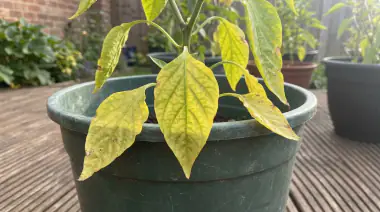
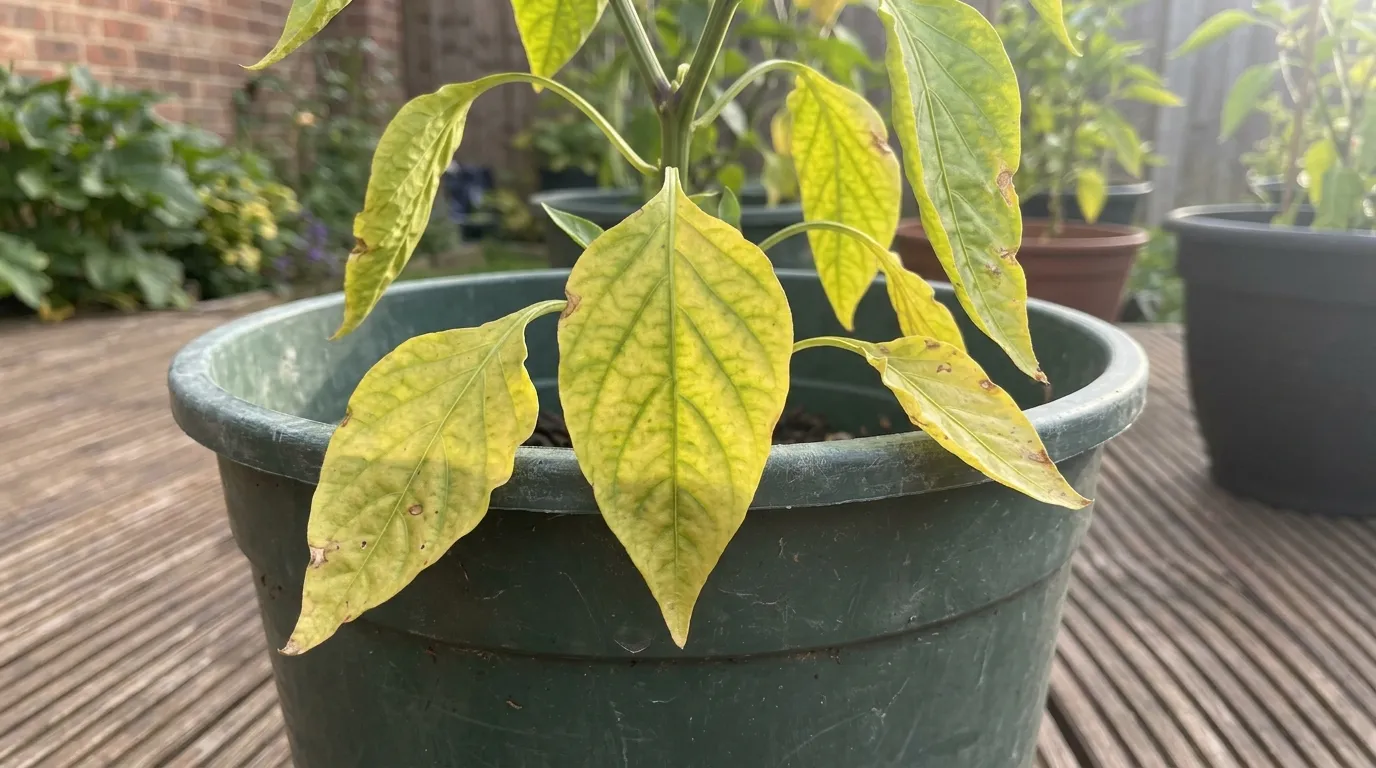
I still remember the first time I walked out to my peppers in early June and felt my stomach drop. The bell peppers had been so lush the week before — that deep, almost glossy green that makes you think you’ve finally got this gardening thing figured out — and suddenly the lower leaves were fading to a tired, buttery yellow. I thought I’d done everything right. I’d watered. I’d fed them. And there they were, looking pale and sulky, dropping a few blossoms like they were giving up.
If that’s where you are right now, coffee in hand, staring at yellowing pepper leaves and wondering what you did wrong, breathe. Peppers are dramatic. They yellow quickly when something is a little off, but they also green up again just as fast when you catch the pattern. Pepper leaves are supposed to stay that rich, dark green right up until frost paints them. When they start to yellow, it’s not just cosmetic. Peppers, more than tomatoes, will stall flowering and abort those little white blossoms within days of feeling stressed.
So learning to read the yellowing — where it starts, how it looks, how the leaf feels — is really learning to protect your harvest two weeks before the plant would otherwise tell you you’re in trouble.
Quick Answer: If your pepper’s lower leaves are turning a uniform, pale yellow and feel soft or limp, you’re almost always looking at overwatering or a nitrogen shortage. Let the top 2 inches of soil dry to about 50% moisture, then side-dress with a balanced feed like 5-10-10 or compost when first fruits set. If instead the upper, new leaves are yellow between green veins — the veins stay dark while tissue fades — that’s iron chlorosis, usually because pH is above 7.0. Test to 6.0-6.8 and correct with sulfur plus chelated iron foliar. Seeing speckles, sticky residue, curling, or fine webbing underneath? Flip the leaf. That’s pests — aphids or spider mites — and a strong blast of water followed by insecticidal soap will turn it around. Cold nights below 55°F also yellow peppers overnight; a row cover for a week does more than any fertilizer.
At a Glance
| Pattern | Most Likely Cause | Fix |
|---|---|---|
| Lower, uniform yellow, soft limp | Overwatering / nitrogen deficiency | Dry soil, improve drainage, feed lightly |
| Upper, green veins yellow tissue | Iron/pH above 7.0 | Test pH to 6.0-6.8, sulfur + chelated iron |
| Spots, speckles, sticky honeydew | Aphids / mites | Water jet, neem, insecticidal soap |
| Yellow after cold snap below 55°F | Cold soil/nights | Row cover, wait for warmth above 60°F |
| Edges yellow-brown crispy, wilting | Underwatering / heat | Deep soak 6-8 inches + mulch 2-3 inches |
| Interior pale in dense planting | Too little light / crowding | Thin for airflow, ensure 6-8 hours sun |
| Whole plant pale, slow growth | Nutrients + pH + cold combo | Test soil, even water, warm soil 60°F+ |
Why Peppers Yellow So Fast — The Tropical Heart
Peppers are originally warm-climate perennials grown as annuals, and that origin explains everything. They want warm roots, warm nights, steady moisture but never soggy feet, and a lot of light. Nudge any one too far and leaf chlorophyll fades.
Unlike tomatoes, which can sulk for weeks and still produce, peppers tell you immediately. Their root system is shallower and finer, so waterlogged soil suffocates it faster. Their demand for nitrogen is high early, then shifts to potassium and phosphorus when fruits set, so a schedule that worked for lettuce will leave them hungry. And they are notably more cold-sensitive than any other common vegetable. I’ve seen a 48°F night turn my Corno di Toro leaves chartreuse while tomatoes next to them didn’t blink.
That’s why the first rule is always: look at weather and water before you reach for fertilizer. For a deeper dive on growing them well from start, bookmark how to grow peppers and the general leaf-health guide how to fix yellow leaves. But for diagnosis right now, start with your fingers, not a product.
How to Read the Pattern Before You Treat
Grab a leaf. Really look at it.
Where did it start? Lower, older leaves yellow first when the problem is mobile nutrients like nitrogen or when roots are wet. The plant sacrifices its oldest leaves to feed new growth. Upper, youngest leaves yellow first when the problem is immobile — iron, calcium — or when something is wrong with new growth conditions like light or cold.
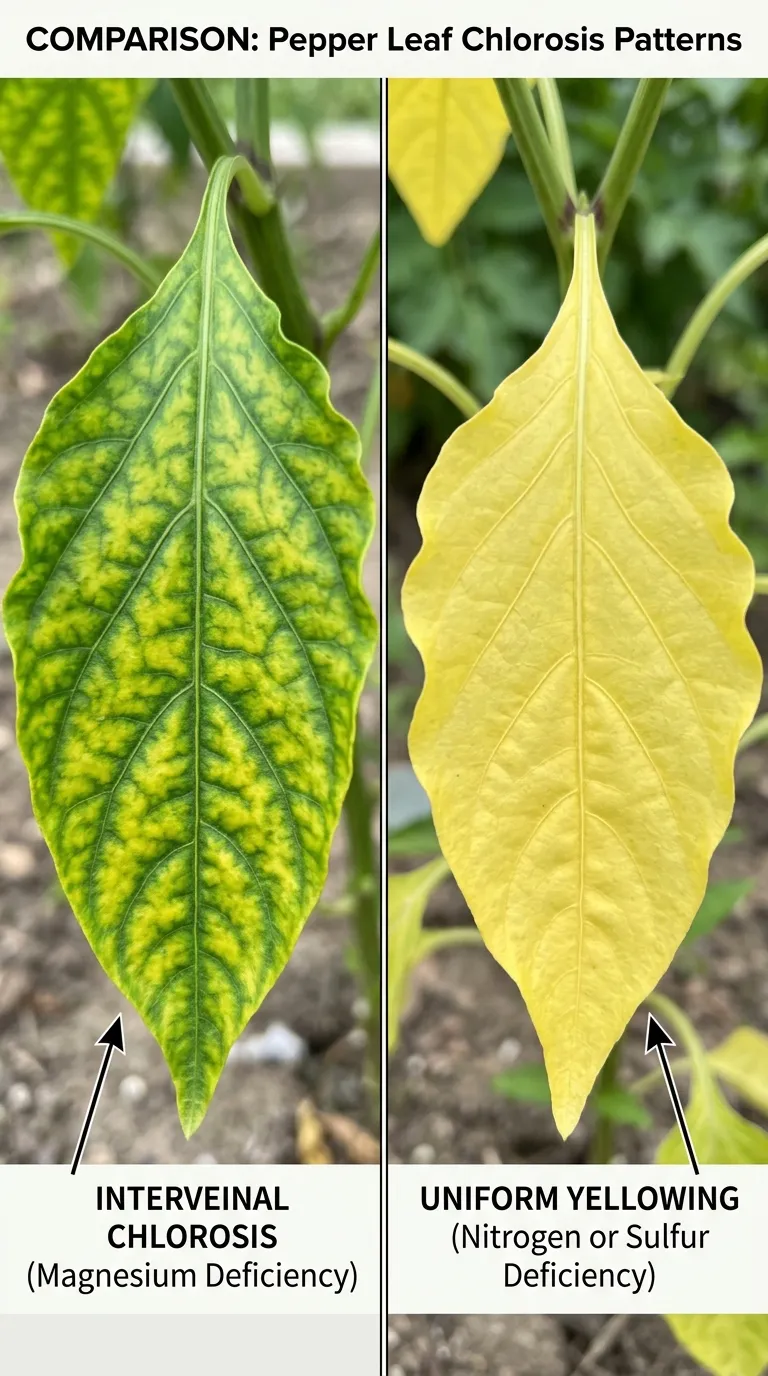
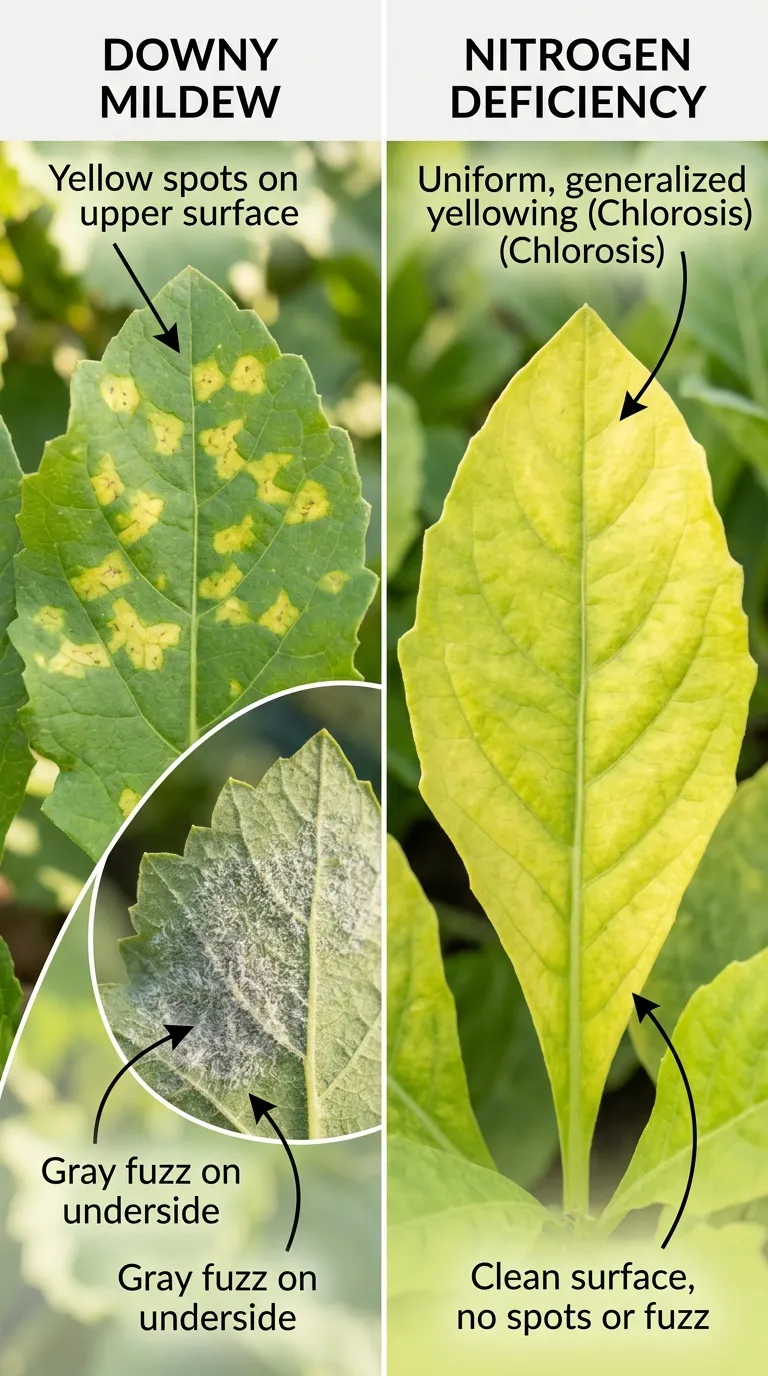
Is it uniform or veiny? Uniform pale yellow — whole leaf washing out evenly — is classic nitrogen or water stress. Yellow between still-green veins, like a green skeleton on yellow paper, is interveinal chlorosis, almost always iron locked out by high pH. Yellow spots, speckles, or mottled patches, especially with curling, sticky honeydew, or fine webs on underside, is biotic — insects or disease.
How does it feel? Soft, slightly translucent and limp? Overwatering. Dry, papery, perhaps crispy at edges? Underwatering or sun scorch. Sticky to touch? Aphids have been feeding.
Spend sixty seconds doing this inventory before you water, feed, or spray anything. It will save you from the most common beginner mistake I see: feeding a plant that is actually drowning, which only makes the drowning worse.
The 8 Causes on Peppers (And the Human Reason Behind Each)
1. Overwatering — The Kindest Mistake
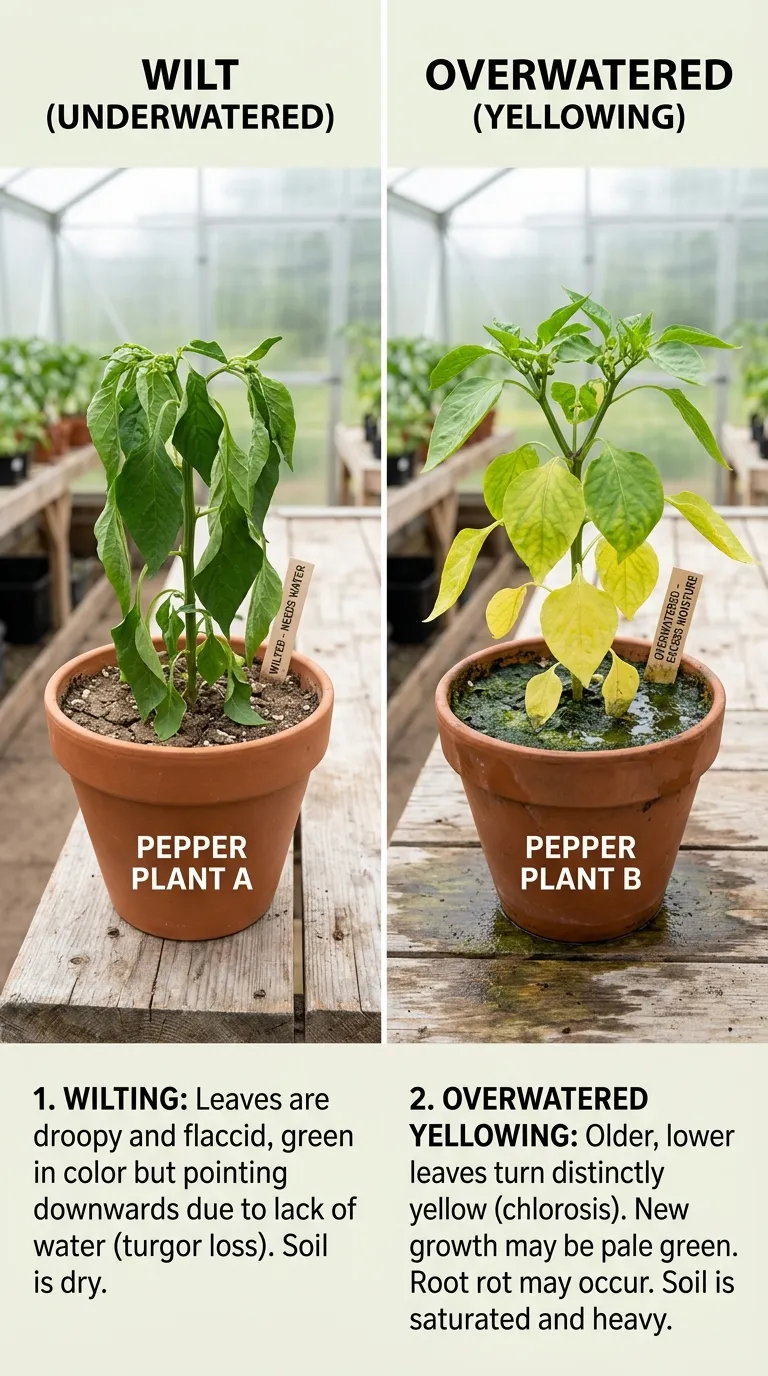
This is the number one cause I see in raised beds and containers, and it comes from love. We water because we care, especially in that anxious stretch after transplant when we want to help roots settle. Peppers want even moisture, not a swamp. Roots sitting in constantly wet soil can’t breathe. They rot slightly, they stop taking up nitrogen even though nitrogen is present, and lowest leaves turn that soft, even yellow. You might also see wilting despite wet soil and a faint sour smell if you scratch surface.
The fix is less about watering less overall and more about watering deeply but less often. Peppers thrive on about 1 inch of water per week, delivered in one or two deep soakings at the base, ideally before 10 a.m. so foliage dries. Stick your finger 2 inches deep. If it feels cool and moist, walk away. If it feels wet, wait a day. Early in season, I let top inch actually dry out — that 50% dry-back encourages roots to grow down. For containers, make sure water truly drains. A saucer full of standing water will yellow a pepper in three days. More on timing in how often to water vegetables.
2. Nitrogen Deficiency — The Hungry Plant
Nitrogen is the chlorophyll engine and it’s mobile, so when plant runs short, it pulls it from older leaves to fund new ones. That’s why nitrogen yellowing starts low and moves up. Leaves are uniformly pale, not spotty, and new growth looks small, pale green, maybe stunted. Fruits set but stay small. This is especially common in sandy soils, in beds heavy with fresh wood chips that tie up nitrogen, or right when first peppers set and demand spikes.
Before you throw fertilizer, ask: is soil wet? If so, fix water first because feeding a waterlogged plant wastes money and can burn roots. If soil moisture is reasonable and lower leaves are evenly yellow, it’s feeding time. Side-dress with balanced vegetable fertilizer like 5-10-10 or 10-10-10 according to label, or work in generous inch of finished compost around drip line. I prefer compost for peppers because it feeds slowly and adds biology. Do it when first fruits are marble-sized, not earlier — too much nitrogen before fruit set gives you beautiful leafy bush with no peppers.
3. pH and Iron Chlorosis — The Locked Pantry
Here is the head-scratcher that catches experienced gardeners: you feed, you water correctly, but top leaves still go yellow while veins stay green. That contrast — bright veins, yellow between them — is textbook interveinal chlorosis. The iron is actually in the soil, but when pH climbs above 7.0 (alkaline), pepper roots can’t unlock it. It’s like having a full pantry with a jammed lock.
Peppers want pH 6.0 to 6.8, slightly acidic. Above 7.0, chlorosis appears; below 5.8, other issues arise. You can’t guess this. A $12 pH test is the most valuable tool in your shed. Follow the steps in how to test soil pH with a home kit or county lab. If results show 7.2 or higher, amend per label with elemental sulfur — it works slowly over weeks as microbes convert it — and for quick relief, spray chelated iron on foliage in evening. Don’t overcorrect. Swinging pH fast hurts more than being a tenth high for another week.
I’ve learned to test beds every spring, especially those I’ve limed for brassicas or amended heavily with ash. Two beds can sit six feet apart and have completely different pH.
4. Cold Soil and Cold Nights — The Unseen Chill
Peppers are tropical at heart. While tomatoes tolerate nights in the low 50s, peppers start to sulk when nights dip below 55°F and soil stays below 60°F for several days. Leaves turn yellowish, sometimes with slight purple tinge to veins, growth stalls, and blossoms drop. You’ll notice this most with early transplants set out the same day as tomatoes, or after a late spring cold snap. Roots simply go semi-dormant and can’t take up nutrients.
The fix is warmth, not fertilizer. If forecast shows nights in 40s, cover with floating row cover, not plastic, which can cook them by day and traps condensation. During day, remove or vent cover. Once nights reliably stay above 60°F, plants rebound remarkably fast — often with flush of new deep-green growth within ten days. Next year, wait an extra week after tomatoes to transplant peppers. That one week of patience pays in vigor.
5. Pests — Aphids, Spider Mites, and Their Calling Cards
Flip every yellowing leaf over. The underside tells truth.
Aphids cluster on soft new growth and leaf undersides, tiny soft-bodied specks in green, black, or gray. They pierce and suck, leaving yellow speckles, curling leaves, stunted tips, and sticky sheen of honeydew that sometimes grows sooty black mold. Ants going up and down stems are often farming them. A strong jet of water knocks most off physically — hold leaf gently and blast underside. Follow with insecticidal soap or neem, coating undersides thoroughly in evening to protect bees. See vegetable garden pests and get rid of aphids naturally.
Spider mites love hot, dusty conditions. Signs: tiny yellow-to-bronze stippling, fine webbing between leaf and stem, leaves that look dusty then bleach yellow. They are nearly invisible. Mist test: shake leaf over white paper and look for moving specks. Blast with water daily for three days, lift dust with mulch, and apply insecticidal soap or horticultural oil. Keep plants hydrated — drought-stressed peppers invite mites.
6. Underwatering and Heat Stress — The Crispy Fade
This yellowing looks different — yellow-brown, dry, and papery at edges before whole leaf wilts, curling inward like a taco. Soil pulls away from pot edge, plant droops in afternoon heat even though mornings look fine. Peppers need consistent moisture to move calcium and keep fruits sweet. In heat above 90°F, a pepper can drink a half-gallon every 2 days; a 5-gallon container on sunny patio may need twice daily.
The fix: deep soak until water reaches 6 to 8 inches down — check with trowel — then lay down that 2 to 3-inch straw mulch to hold it. Water soil, count to 15 per plant, come back for second pass. That second pass is what really soaks in.
7. Too Little Light or Crowding — The Interior Shade
Peppers are sun-worshippers: 6 to 8 hours of direct sun for real production. With less, leaves pale, stems stretch, and lower leaves yellow simply from shading. Tight spacing does same — leaves overlap, air stalls, lower foliage yellows and stays damp with disease. Space 18 to 24 inches apart in beds with 30 inches between rows, and prune only very lightly if needed for airflow.
See garden planning help in garden layout. Finally, check roots if nothing else fits. Peppers in root-bound containers or field plants with nematodes will show chronic yellowing no matter what you spray.
8. Natural Leaf Drop and Late Season Fade — When Yellow Is Normal
Late in the season as peppers load heavy with fruit, the oldest lowest leaves naturally yellow and drop as plant throws energy into ripening. Fruits are coloring, nights cool, and those lower leaves fade even with perfect care. Don’t panic — just keep harvesting, remove ugliest leaves, and pinch new flowers about 4 weeks before first frost so plant finishes what it started. If new top growth stays green while only bottom 2 to 3 leaves yellow slowly, that’s attrition, not crisis. Take a photo today and compare in seven days — is green moving up or yellow moving up? That trajectory is truth.
How to Fix Step by Step (Without Making It Worse)
This is the calm, Saturday-morning protocol I walk beginners through. Do it in order.
1. Water audit: Push your finger 2 inches deep near stem, not path. Wet? Hold water 2 to 3 days, improve drainage, ensure mulch isn’t piled against stem. Moist and crumbly? Your schedule is good. Bone-dry? Water deeply — about 1 inch — at base in morning.
2. Light and airflow check: Are plants getting 6 to 8 hours unfiltered sun? Are leaves touching neighbors? Thin crowded branches by snipping a leaf or two, not whole stems, to open chimney for air.
3. Feed correctly, and only once: If lower leaves are uniformly pale and soil moisture is reasonable, side-dress once with balanced vegetable feed or compost as described in vegetable garden fertilizer. Water it in. Resist double-feed a week later.
4. Test pH if top leaves are veiny-yellow: Get soil test. If pH above 7.0, apply elemental sulfur at label rate (usually 1 to 2 pounds per 100 square feet to lower by half point) and give it weeks. For immediate help, spray chelated iron on foliage in cool of evening.
5. Pest patrol: Inspect every yellowing leaf’s underside with loupe or phone zoom. Sticky, clustered, or webbed? Blast with water, then treat with insecticidal soap or neem after bees head home for evening.
6. Prune and sanitize: Remove fully yellow leaves — they won’t re-green. Use clean scissors, wipe with alcohol between plants, toss leaves in trash or burn pile, not compost, if disease suspected.
7. Watch weather and wait: If cold snap just passed, cover at night and give 10 to 14 days. Peppers forgive. When nights return above 60°F and corrections are in place, you should see deeper green new leaves emerging from tip — that’s your victory. Old yellow leaves won’t turn green again; new growth is report card.
What I Learned After 5 Seasons of Yellow Leaves on Peppers
Season one, I overwatered faithfully. Every morning, hose in hand, I soaked my peppers like tomatoes. Lower leaves yellowed, I fed more, they yellowed worse. I finally stuck a flag in bed that said “DO NOT WATER UNTIL FINGER TEST” and my peppers doubled production.
Season two, I chased nitrogen while ignoring pH. My soil test came back 7.4 — I’d limed the bed for beans and forgot. No fertilizer greened top leaves until I gently lowered pH with sulfur in fall and spring.
Season three taught me about cold. I transplanted peppers with tomatoes on May 10th, proud of my earliness. A week of 45°F nights turned them yellow and stunted until July. Peppers I planted May 20th caught and passed the early ones.
Season four was aphids. I didn’t see them until honeydew shone in sunset. A weekly five-minute flip-and-spray habit — Sunday evening, insecticidal soap, tops and undersides — has kept them background-level ever since.
Season five, finally, was spacing. I crowded my Jimmy Nardellos to “fit one more” and inner leaves yellowed from shade and mildew. Thinning to 20 inches, staking lightly, and mulching with straw instead of dense wood chips gave me airflow I could feel.
If you take nothing else, take this: diagnose pattern first, change one thing at a time, and give plant a week to answer.
Preventing Yellow Leaves Next Time — A Simple Seasonal Rhythm
At planting: Warm soil is non-negotiable. Wait until daytime soil at 2 inches reads 65°F and nights hold above 55°F for a week. Enrich with 2 to 3 inches compost, not fresh manure, and set plants at same depth they were in cell — peppers don’t like being buried. Space for air.
Early summer: Mulch with 2 to 3 inches straw after soil warms, keeping mulch finger’s width from stem. Water deeply twice weekly rather than daily sips. Side-dress lightly when first fruits set, not before. Scout leaf undersides every Sunday.
Hot summer: Keep water even during heat waves — that’s when bitterness and stress accelerate. If heat dome plus drought hits, 30% shade cloth in afternoon can reduce scorch without starving light.
Fall: Pull and trash heavily diseased plants, compost healthy ones, and soil test again. Amend pH in fall so winter can do slow work. Rotate peppers out of same bed for 3 years if you saw bacterial spot.
Common Mistakes — Pepper-Specific Traps
-
Treating peppers like tomatoes — planting same day, same depth. Peppers want warmer soil and shallower planting. That week later matters.
-
Watering daily on a schedule even after rain. Peppers in straw-mulched beds may need only twice a week. Always finger test.
-
Feeding high-nitrogen before fruit set. Beautiful bush, no peppers. Wait for marble fruits.
-
Ignoring pH because “compost fixes everything.” Compost helps, but pH 7.4 still locks iron. Test yearly.
-
Ignoring cold nights because days are warm. Days at 75°F but nights at 48°F still yellows peppers. Cover at night that first two weeks.
-
Composting diseased pepper debris. Bacterial spot overwinters. Trash, don’t compost, badly spotted foliage.
Seasonal Calendar — When Leaves Are Most At Risk
-
Spring (transplant): Biggest risk is cold + overwatering. Keep moist but not soggy, protect below 55°F, don’t mulch until warm.
-
Early Summer (flowering): Watch nitrogen. Side-dress lightly only after fruit set, ensure 6 to 8 hours sun.
-
High Summer (fruiting & heat): Check water daily with finger, watch for mites in dusty heat, remove spotted leaves immediately.
-
Late Summer to Fall: Lower yellowing normal as plant ripens heavy load. Don’t panic — keep harvesting, remove ugliest leaves.
Troubleshooting Quick Fixes by Symptom
-
Whole lower leaf fades evenly to yellow, soil wet: Overwatering — dry, drain, prune.
-
Whole lower leaf fades evenly, soil dry, growth stunted: Nitrogen — side-dress and water in.
-
Top leaves yellow between green veins: Iron chlorosis/high pH — test pH, apply chelated iron + sulfur if needed.
-
Leaf edges yellow-brown crispy, wilting midday: Underwatering/heat — deep soak + mulch, water early.
-
Tiny yellow speckles, sticky or webbing underneath: Pests — blast with water, soap if needed, protect beneficials.
-
Pale interior leaves inside dense planting: Light/air — thin, stake, space better next year.
-
Yellow after cold night: Cold — cover, wait 10 to 14 days for new green growth.
A Deeper Seasonal Lens — What Changes When You Watch Closely
I keep a waterproof notebook in my apron pocket. One line a week, no more. Date, weather, what I did, what leaves looked like.
That tiny log taught me more than any book. Because the garden repeats itself, softly. The same bed that yellowed after a four-day rain last July yellows the same week this July — unless I mulch higher and prune lower before the rain.
Try it this season. Just one line every Sunday. You will have a personal almanac by September.
Notes From My Notebook — Three Years That Shaped This Guide
Year one: I overwatered with love. Flag in bed: “DO NOT WATER UNTIL FINGER 2 INCHES.” Yield doubled.
Year two: pH 7.4 after liming for beans. No fertilizer greened top leaves until sulfur in fall.
Year three: Cold nights at 45°F. Peppers stalled until July. Tomatoes beside them merely slowed. Waiting an extra week after tomatoes for peppers became permanent rule.
Those three lines are why this guide insists on finger tests, pH kits, and patience.
Troubleshooting Appendix — More Real Dialogues
“My soil looks great but fruits still have green shoulders.” Often potassium-light or too much shade on tops. Ensure second-half feed has good K (last number) and thin lightly for light.
“I mulched and still got blight.” Mulch helps but doesn’t erase wind-borne spores. Prune lower leaves for airflow, water at base, rotate next year 2 to 3 years without nightshades in that bed.
“Can I use garden lime to stop blossom end rot?” Only if soil test shows low pH. Otherwise even water is the fix. Lime without need raises pH and locks iron.
“Do I need to buy bees?” Lovely for ecology, not required for tomatoes or peppers which self-pollinate. Wind and your midday shake are the engine. Wild bees are a bonus that companion herbs invite.
“What if I only have a balcony?” Containers are honest. They dry fast and leach fast. Choose 7 to 10 gallon fabric bags, quality potting mix, morning sun, and check lift test daily. You can grow a surprising harvest in two bags and a bucket of basil.
The Quiet Math of Even Moisture — Why Mulch Beats More Water
Bare soil at 90°F loses nearly half an inch of water a day to evaporation. Straw mulch cuts that by roughly half. So 3 inches of straw is effectively like getting an extra watering without turning on the hose.
It also keeps soil splash from reaching lower leaves. That splash carries blight, septoria, and bacterial spot spores that overwinter in soil. Mulch is a clean sheet between soil and leaf. I lay it after soil passes 60°F, keeping a 2-inch collar open at stems so crowns breathe.
Have you measured how fast your bare bed dries vs. mulched? Try two fingers, two spots, same day. You’ll see why mulch is the first line, not the last.
Container, Raised Bed, and In-Ground — How the Same Plant Tells Different Stories
Containers tell you quickly. They yellow fast when wet or dry, and they forgive fast when corrected. Check lift plus finger daily in July. Half-strength liquid feed weekly during heavy fruiting plus monthly granular side-dress keeps them green without burn.
Raised beds tell you in mid-summer. They leach nitrogen after heavy rain, so lower leaves fade uniformly. A light side-dress perks them back in days.
In-ground clay tells you slowly. It holds water longest, so overwatering yellowing lingers. If trowel shines with smeared clay two days after rain, wait despite calendar. Annual fall compost turns clay to crumbs over seasons.
Name your setup. The yellowing pattern narrows to two likely causes instead of eight.
Final Encouragement — The Gardener Learns Slower Than the Plant
The plant responds in days. The gardener learns in seasons. Be patient with yourself.
If you fix water this year and pH next year and pruning the year after, you will still harvest beautifully each year — just more beautifully as you go. I wish someone had told me that good gardening is cumulative, not perfect on the first try.
Pick one habit from this guide to practice this week. Just one. Water at base before 10 a.m., or shake flowers at midday, or lay that straw mulch. Do it for seven days. Look at new growth. That is your feedback loop, truer than any forum.
Frequently Asked Questions
Q: Why are pepper plant leaves turning yellow?
A: Pepper leaves yellow from overwatering, nitrogen shortage, high pH locking out iron, cold nights below 55°F, or pests like aphids and spider mites. Lower uniform yellowing points to water or nitrogen; upper leaves where veins stay green while tissue yellows point to pH and iron. More than tomatoes, peppers yellow quickly from cold and soggy roots. I always check water with a finger test first, then look at temperature — a string of nights below 55°F can yellow peppers overnight even when everything else looks perfect. Soil test yearly to keep pH 6.0 to 6.8 so iron stays available.
Q: How do you fix yellow leaves on pepper plants?
A: Check soil moisture 2 inches deep, correct moisture to evenly moist not soggy, ensure 6 to 8 hours sun, side-dress with balanced fertilizer if lower leaves fade uniformly. Correct pH to 6.0 to 6.8 if you see green veins on yellow tissue, and inspect leaf undersides for aphids or mites. Most importantly, fix one thing, wait a week, and judge by new growth at tip — that’s your true signal. Old yellow leaves won’t turn green again. When nights return above 60°F and moisture is steady, deeper green new leaves emerge within 10 to 14 days.
Q: Should you remove yellow leaves from pepper plants?
A: Yes, remove fully yellow leaves that will not recover to improve airflow and help you monitor new growth. They won’t turn green again, and taking them off helps you see whether your fix is working. Trash diseased leaves, disinfect shears with alcohol between cuts, and toss leaves in trash or burn pile — not compost — if bacterial spot is suspected. Pruning also improves airflow so remaining foliage dries faster and resists disease. Watch fresh tip growth for recovery; that’s the report card, not the old yellow leaves.
Q: Can cold weather cause pepper leaves to turn yellow?
A: Yes, peppers are tropical and yellow quickly when nights dip below 55°F or soil stays below 60°F. Roots go semi-dormant and cannot take up nutrients, so leaves fade and blossoms drop even though soil is fine. You’ll notice this most with early transplants set out the same day as tomatoes, or after a late spring cold snap. Cover with floating row cover at night, not plastic, and remove or vent during day. Once nights reliably stay above 60°F, plants rebound remarkably fast — often with a flush of new deep-green growth within ten days. Next year, wait an extra week after tomatoes.
Related Articles
- How to Grow Peppers
- How Often to Water Tomato Plants
- Best Soil for Tomatoes
- How to Grow Tomatoes
- Tomato Leaves Turning Yellow
- Vegetable Garden Fertilizer
Sources & References
- Iowa State University Extension — https://hortnews.extension.iastate.edu/pepper-yellow-leaves
- University of Minnesota Extension — https://extension.umn.edu/yard-and-garden/vegetables/peppers
- Cornell Vegetables — https://www.vegetables.cornell.edu/crops/peppers/
- NC State Extension — https://content.ces.ncsu.edu/pepper-culture
- University of California IPM — https://ipm.ucanr.edu/PMG/GARDEN/VEGES/peppers.html