Fertilizer bags are covered in numbers, and knowing what to do with them is one of the most confusing parts of growing your own food. Get it wrong, and you can end up with giant leaves but no tomatoes - or worse, fertilizer burn. This guide walks you through exactly how to fertilize a vegetable garden, starting with what those N-P-K numbers actually mean, and it fits into our full vegetable gardening guide.
Quick Answer: To fertilize a vegetable garden, test your soil first, then build a base of compost and apply a balanced fertilizer such as 10-10-10 at planting. Side-dress heavy feeders like tomatoes, corn, and squash with extra nitrogen mid-season, and skip the fertilizer for beans and most root crops. Water after every application, and stay light on nitrogen: too much causes lush leaves, blossom end rot, and burnt roots.
At a Glance
| Fact | Detail |
|---|---|
| N-P-K meaning | The percentage of nitrogen (N), phosphorus (P), and potassium (K) in the bag |
| All-purpose blend | 10-10-10, applied at about 1 pound per 100 sq ft of garden |
| Soil test | Every 2-3 years; aim for a soil pH of 6.0-6.8 |
| Compost base | 1-2 inches of compost worked into the top 6-8 inches of soil |
| When to feed | At planting, then side-dress every 3-4 weeks for heavy feeders |
| Heavy feeders | Tomatoes, corn, squash, peppers - 2-3 feedings per season |
| Light feeders | Root crops like carrots and beets; beans and peas fix their own nitrogen |
| Over-feeding signs | Dark, soft leafy growth; yellow lower leaves; burnt root tips; blossom end rot |
Why Fertilizer Matters
Vegetables pull nutrients out of the soil all season and every harvest removes more, so unless your soil is naturally rich you will need to replace them [1] (Source: University of Minnesota Extension).
The Three Numbers on the Bag: N-P-K Explained
Every fertilizer label shows three numbers, like 10-10-10 - the percentages of the three primary nutrients in the bag, always in the same order:
- Nitrogen (N) drives leafy green growth - the number to think about for lettuce and spinach.
- Phosphorus (P) supports roots, flowers, and fruit development.
- Potassium (K) keeps plants healthy, helping them regulate water and resist stress and disease.
A bag labeled 5-10-10 contains 5% nitrogen, 10% phosphorus, and 10% potassium - a ratio built for fruiting crops like tomatoes and peppers [2] (Source: Penn State Extension).
N-P-K Quick Reference
| Crop group | Fertilizer style | Example |
|---|---|---|
| Leafy greens | High nitrogen | Blood meal (12-0-0) or fish emulsion |
| Tomatoes, peppers, squash | Higher phosphorus and potassium | 5-10-10 or a tomato-specific blend |
| Root crops (carrots, beets) | Low nitrogen, moderate phosphorus | 5-10-10 at planting only |
| Beans and peas | None needed | They make their own nitrogen |
| All-purpose starter | Balanced | 10-10-10 worked in at planting |
Step 1: Test Your Soil First
Fertilizing without a soil test is guesswork, and the most common garden mistake is feeding plants that never needed it. A basic test - taken every 2-3 years - tells you your nutrient levels and pH so you only buy what is missing [3] (Source: Ohio State University Extension). Most vegetables grow best at a pH between 6.0 and 6.8. Our guide to testing soil pH covers sampling and reading the report; our soil preparation guide fixes drainage and structure before you spend a dime on fertilizer.
Step 2: Build the Base with Compost
Compost comes first; fertilizer is a top-up. Work 1-2 inches of compost into the top 6-8 inches of soil before planting. It releases nutrients slowly, improves drainage, and feeds the microorganisms that make nutrients available to roots. Gardens built on generous compost usually need the least fertilizer; our complete guide to making compost shows how to produce a steady supply at home.
Step 3: Choose Organic or Synthetic
Organic and synthetic fertilizers both grow excellent vegetables. Organic products release nutrients slowly as soil life breaks them down, so they are hard to overdo and build long-term soil health. Synthetic fertilizers act fast and deliver exact doses but can burn roots if misapplied - a good reason to start organic.
Step 4: Fertilize at Planting
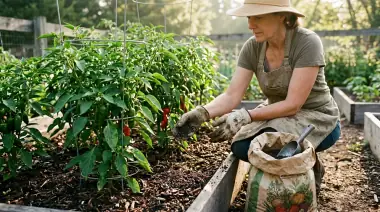
Work a balanced fertilizer into the top few inches at planting, or put a small handful in the planting hole and cover it so it never touches bare roots. Transplants get a lighter touch: a half-strength liquid feed at planting and again about two weeks later. Whatever you apply, water it in thoroughly. Consistent moisture - about 1 inch per week - carries nutrients to the roots; our watering guide has the details.
Step 5: Side-Dress Mid-Season
Side-dressing means adding fertilizer beside growing plants rather than over the whole bed. Apply it 3-6 inches from the stem, scratch it in lightly, and water. Most fruiting crops benefit from a side-dressing every 3-4 weeks through the season [4] (Source: University of Minnesota Extension).
Heavy Feeders vs Light Feeders
Not all vegetables eat the same, so match fertilizer to the crop - the single best way to avoid problems.
Heavy feeders - tomatoes, corn, squash, peppers, and cabbage - grow fast and pull out a lot of nutrients. They want the balanced dose at planting plus regular side-dressings; our guide to growing tomatoes covers a full-season schedule for the most popular heavy feeder.
Light feeders - carrots, beets, radishes, and other root crops - need little fertilizer. Too much nitrogen gives them huge tops with small, hairy, misshapen roots. Feed them sparingly at planting and leave them alone.
Legumes - beans and peas - need no fertilizer at all. Bacteria on their roots pull nitrogen out of the air and convert it into plant food, so they make their own fertilizer and add nitrogen back for the crop that follows.
How to Avoid Over-Fertilizing
Over-fertilizing is more common than under-fertilizing, and it shows up in three ways:
- Leafy growth, fewer fruit. Too much nitrogen pushes plants into leaf production and delays flowering - a huge tomato plant with no fruit is a nitrogen overdose.
- Blossom end rot. Excess nitrogen and uneven watering both block calcium uptake, causing the black, sunken spots on the bottom of tomato and pepper fruit. Ease off the fertilizer and keep watering steady.
- Fertilizer burn. The salts in fertilizer pull water out of roots, turning leaf edges brown and crisp, usually when fertilizer is over-applied or touches roots directly. Flush the soil with water and hold off on feeding.
Foliar Feeding
Foliar feeding is spraying a diluted liquid fertilizer directly onto leaves, which absorb nutrients through their pores. It is not a replacement for soil feeding, but a fast rescue for a yellowing or stalled plant. Use a half-strength liquid fertilizer such as fish emulsion, spray in the early morning or evening to avoid leaf burn, and repeat weekly until the plant recovers. Before reaching for a spray, check your watering first - yellow leaves are often a moisture problem, and our guide to fixing yellow leaves can help you tell the difference.
Common Mistakes
- Fertilizing without a soil test. The fix: test every 2-3 years and buy only what the report says you are missing.
- Pouring fertilizer right against the stem. The fix: keep it 3-6 inches away, scratch it in, and water thoroughly.
- Feeding beans and peas. The fix: skip them entirely; they make their own nitrogen.
- Fertilizing before the soil warms in spring. The fix: wait until plants are established or soil temperatures pass 55°F (13°C), when roots can take up nutrients.
- Leaving dry fertilizer on the surface. The fix: water it in so it reaches the roots instead of washing away.
- Fertilizing your way out of a watering problem. The fix: fix moisture first; nutrients do no good in dry soil.
Troubleshooting
- Pale, slow plants: a nitrogen shortage or cold soil; side-dress with a nitrogen-rich feed once the soil warms.
- Huge leaves, no flowers: too much nitrogen; stop feeding and let the plant settle into fruiting.
- Blossom end rot: over-feeding plus uneven watering; steady moisture of about 1 inch per week usually fixes it by the next fruit set.
- Crisp, brown leaf edges after feeding: fertilizer burn; flush the soil with water and skip the next two feedings.
Frequently Asked Questions
Q: What do the numbers on a fertilizer bag mean?
A: They are the percentages of nitrogen (N), phosphorus (P), and potassium (K) in the bag, in that order. A 10-10-10 bag is 10% of each nutrient.
Q: Is organic or synthetic fertilizer better?
A: Both work. Organic products release slowly and build soil health, making them more forgiving. Synthetic fertilizers act fast but can burn roots if misapplied.
Q: How often should I fertilize my vegetable garden?
A: Compost at the start of the season, a balanced feed at planting, then a side-dressing every 3-4 weeks for heavy feeders. Light feeders and legumes usually need nothing after planting.
Q: Can too much fertilizer kill my plants?
A: Yes. Over-feeding can burn roots, cause blossom end rot, and produce leafy plants that never set fruit. When in doubt, use less.
Q: Do beans really fix their own nitrogen?
A: Yes. Bacteria on their roots convert nitrogen from the air into plant food, so beans and peas need no nitrogen fertilizer.
Q: What is the best fertilizer for tomatoes?
A: A blend lower in nitrogen and higher in phosphorus and potassium, such as 5-10-10, applied at planting and side-dressed every 3-4 weeks while plants flower and set fruit.
Q: Should I fertilize seedlings?
A: Seed-starting mix has little food. Once seedlings have two sets of true leaves, a quarter-strength liquid feed every two weeks is plenty until transplanting.
Q: Do I still need fertilizer if I use lots of compost?
A: Often not. Compost-fed soil provides most of what vegetables need. A soil test will tell you whether specific nutrients are still low.
Related Articles
- Vegetable Gardening Guide
- How to Start a Vegetable Garden for Beginners
- How to Test Soil pH
- How to Prepare Soil for Planting
- The Ultimate Guide to Making Compost
- How to Grow Tomatoes
- How Often to Water Vegetables
- Garden Pest Control for Beginners