How to Fix Yellow Leaves on Plants: 7 Causes and Quick Fixes
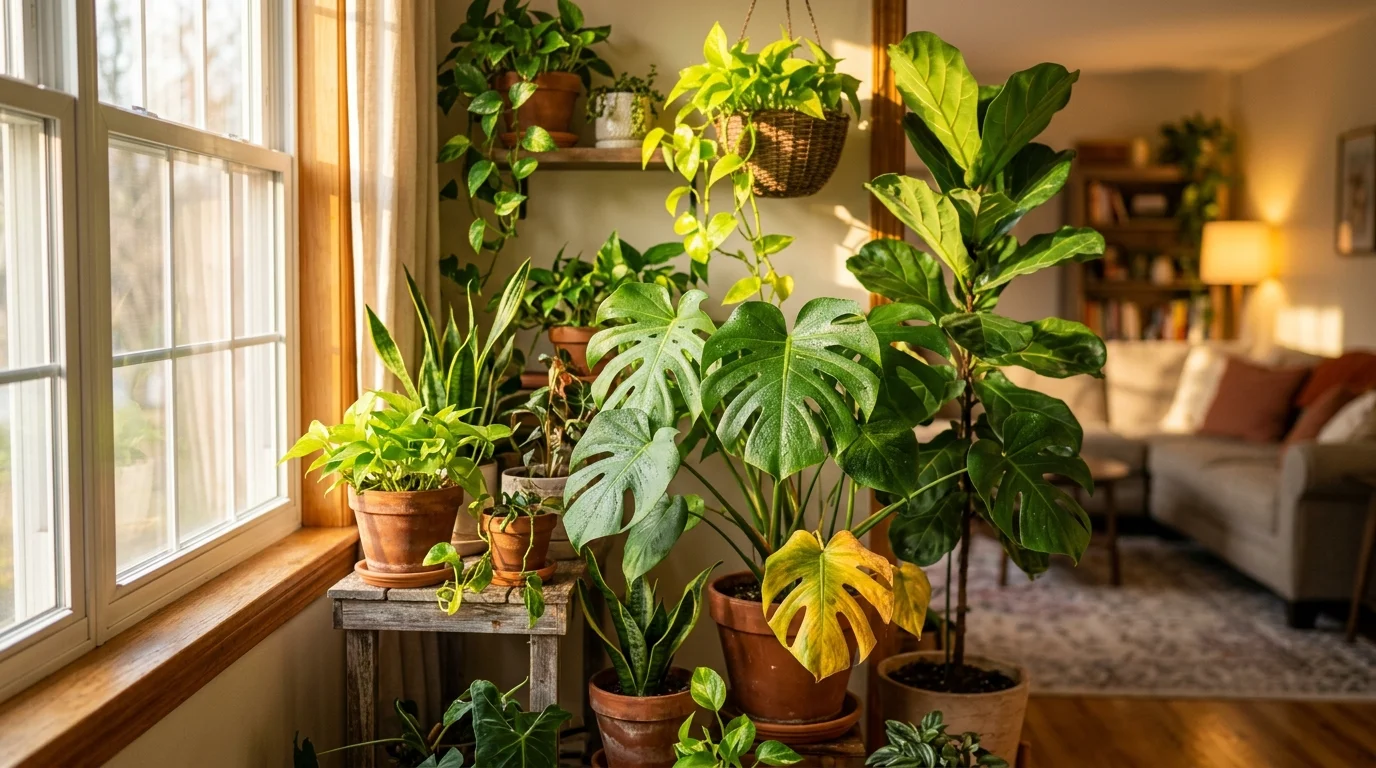
Finding your plant leaves turning yellow is one of the most common problems gardeners face. Scientifically known as chlorosis, yellowing occurs when foliage loses chlorophyll — the green pigment responsible for photosynthesis.
Yellow leaves are not a standalone disease; they’re a universal distress signal. Whether you’re caring for indoor houseplants, raised bed vegetables, or garden shrubs, your plant is signaling that something in its root zone, light environment, or nutritional balance is amiss.
Quick Answer: The most common causes of leaves turning yellow are overwatering (lower leaves turn limp), underwatering (tips turn crispy), nitrogen deficiency (older leaves fade evenly), iron chlorosis (yellow leaves with green veins), and poor lighting or cold drafts.
Diagnostic Chart: Why Leaves Turn Yellow
| Visual Symptom | Leaf Location | Most Likely Cause | Quick Fix |
|---|---|---|---|
| Uniform pale yellow, limp & soft | Lower/older leaves | Overwatering | Let soil dry; improve drainage |
| Yellow margins, crispy brown tips | Lower/outer leaves | Underwatering | Deep soak; mist foliage |
| Uniform yellow fading, stunted growth | Bottom, moves up | Nitrogen deficiency | Apply high-nitrogen fertilizer |
| Yellow leaf with dark green veins | Upper/new leaves | Iron chlorosis | Chelated iron spray; adjust pH |
| Yellowing between veins on older leaves | Lower leaves | Magnesium deficiency | Epsom salt solution |
| Mottled yellow speckles, sticky residue | Undersides | Sap-sucking pests | Neem oil or insecticidal soap |
| Sudden yellowing, rapid leaf drop | Entire plant | Cold drafts | Relocate away from AC/radiators |
| Pale bleached yellow patches | Sun-facing surfaces | Sunburn | Move to bright indirect light |
7 Reasons Leaves Turn Yellow and How to Fix Them
1. Overwatering — The #1 Cause
Overwatering is responsible for more yellow leaves than any other problem. When soil stays waterlogged, roots suffocate from lack of oxygen. The plant paradoxically shows signs of dehydration despite wet soil.
Symptoms: Lower leaves turn pale yellow, feel soft and limp, and may drop while still pliable. Soil stays damp for weeks, sometimes producing a sour odor.
How to fix yellow leaves from overwatering:
- Stop watering immediately. Check soil moisture 2 inches deep before adding water.
- Ensure the pot has drainage holes. Empty saucers of standing water within 15 minutes.
- If stems are mushy near the soil, inspect roots. Trim black or slimy root tissue, spray healthy roots with 3% hydrogen peroxide, and repot in fresh, well-draining soil with perlite.
2. Underwatering and Drought Stress
When a plant experiences drought, it sacrifices oldest outer leaves to protect new growth.
Symptoms: Leaves turn yellow-brown from edges inward, feeling dry, brittle, and papery.
How to fix yellow leaves from underwatering:
- Give the plant a deep, thorough watering until water flows freely from drainage holes.
- If soil has pulled away from pot edges (hydrophobic), bottom-water by placing the pot in lukewarm water for 30–45 minutes.
- Establish a consistent watering routine based on soil dryness, not a calendar.
3. Nitrogen Deficiency
Nitrogen is mobile in plants — when soil runs low, the plant moves nitrogen from older lower leaves to feed new upper leaves.
Symptoms: Lower leaves turn completely light yellow while upper leaves stay smaller and pale green.
How to fix nitrogen deficiency: Apply a balanced liquid fertilizer (fish emulsion, compost tea, or 10-10-10). Feed every 2–4 weeks during active growth.
4. Iron or Magnesium Chlorosis
Iron deficiency: New upper foliage develops bright yellow tissue while veins stay dark green. Caused by high soil pH (above 7.0) that locks up iron.
Fix: Apply chelated iron foliar spray. Test soil pH — if above 7.0, add elemental sulfur to lower it.
Magnesium deficiency: Older leaves show yellowing between veins with reddish or bronzed tips.
Fix: Dissolve 1 tablespoon Epsom salts (magnesium sulfate) in 1 gallon of water and drench the root zone.
5. Lighting Problems
Too little light: Plants in dim rooms shed inner and lower leaves that can’t produce enough energy. Leaves turn pale yellow and drop.
Fix: Move within 2–4 feet of a bright window, or supplement with a full-spectrum LED grow light for 10–12 hours daily.
Too much light (sunburn): Moving a shade-adapted plant into intense sun burns leaf tissue, creating bleached, white, or straw-yellow patches.
Fix: Move to bright indirect light or provide afternoon shade.
6. Sap-Sucking Pest Infestations
Insects like spider mites, aphids, thrips, scale, whiteflies, and mealybugs pierce leaf cells and suck out sap and chlorophyll.
Symptoms: Tiny yellow stippling or mottled yellow freckles across foliage, sticky honeydew residue, or fine webbing on leaf axils.
How to fix pest-related yellow leaves:
- Isolate the affected plant immediately.
- Wash foliage thoroughly with lukewarm water to dislodge insects.
- Spray all leaf surfaces (especially undersides) with cold-pressed neem oil or insecticidal soap every 5–7 days for 3 weeks.
7. Temperature Extremes and Cold Drafts
Tropical houseplants thrive at 65–80°F. Sudden temperature swings cause rapid cellular shock.
Symptoms: Leaves turn yellow across an entire side of the plant and drop without shriveling.
Common triggers: AC vents, heating radiators, frequently opened exterior doors.
Fix: Keep plants in draft-free locations with consistent humidity (40–60%). Group tropical plants together or use a humidifier in winter.
How to Fix Yellow Leaves on Tomato Plants
Tomato yellow leaves are most often caused by:
- Nitrogen deficiency — Feed with balanced tomato fertilizer
- Early blight — Prune bottom 12 inches of foliage, mulch soil to prevent splash
- Uneven watering — Maintain consistent moisture, water at the base
How to Fix Yellow Leaves on Indoor Plants
Indoor plants yellow from:
- Overwatering — Let soil dry 50% between waterings
- Low light — Move closer to a window or add grow light
- Dry winter air — Mist leaves or use a pebble tray
- Rootbound pot — Repot to a pot 2 inches wider
Should You Remove Yellow Leaves?
Yes. Once a leaf turns completely yellow, its chlorophyll has degraded permanently and cannot turn green again. Remove it so the plant can redirect energy to healthy foliage.
How to prune yellow leaves:
- Sterilize shears with 70% rubbing alcohol
- Cut the leaf stem (petiole) near the main stalk, leaving a 1/4-inch collar
- Discard if you suspect disease; compost if healthy
Prevention Checklist: How to Keep Leaves Green
- Check soil moisture with your finger 1–2 inches deep before watering
- Use pots with drainage holes — never plant in closed containers
- Provide consistent lighting matched to the plant’s needs
- Feed with balanced fertilizer every 2–4 weeks in spring and summer
- Wipe leaf dust monthly with a damp cloth
- Inspect leaf undersides weekly for early pest detection
Specific Plant Yellow Leaf Guide
| Plant | Most Common Cause | Solution |
|---|---|---|
| Tomato | Nitrogen deficiency, blight | Mulch, prune bottom leaves, balanced fertilizer |
| Pepper | Magnesium deficiency | Epsom salt drench |
| Zucchini | Powdery mildew | Ensure spacing and morning sun |
| Pothos | Overwatering or low light | Dry 50% between waterings; bright indirect light |
| Snake Plant | Root rot | Water only every 2–4 weeks; cactus soil |
| Monstera | Rootbound or low humidity | Repot 2 inches wider; mist aerial roots |
Frequently Asked Questions
How do you fix yellowing plant leaves?
Check soil moisture first — soggy means overwatering (stop watering, fix drainage), dry and crispy means underwatering (water deeply). Then check light levels, inspect for pests, and match the pattern to the diagnostic chart above.
Can leaves turning yellow turn green again?
No. Once a leaf turns fully yellow, its chlorophyll has broken down permanently. Remove fully yellowed leaves so the plant redirects energy to new growth.
What nutrient deficiency causes yellow leaves with green veins?
Iron, magnesium, or manganese deficiency — or alkaline soil pH above 7.0 that locks up micronutrients. Treat with chelated iron spray or Epsom salt and adjust pH to 6.0–6.8.
Why are older lower leaves turning yellow while new leaves look fine?
The plant is moving mobile nutrients (nitrogen, magnesium) from older leaves to feed new growth. It also happens with natural aging or overwatering. If many bottom leaves yellow at once, feed with balanced fertilizer and check drainage.
Should I water a plant if its leaves are turning yellow?
Do not water automatically. Check soil moisture 2 inches down first. If soggy, adding more water worsens root rot. Water only if soil is bone dry and yellow leaves feel crispy.
How do you fix yellow leaves from overwatering?
Stop watering, let the top 2 inches of soil dry, ensure drainage holes are clear, and increase air circulation. If roots are mushy, trim them, spray with hydrogen peroxide, and repot in fresh soil.