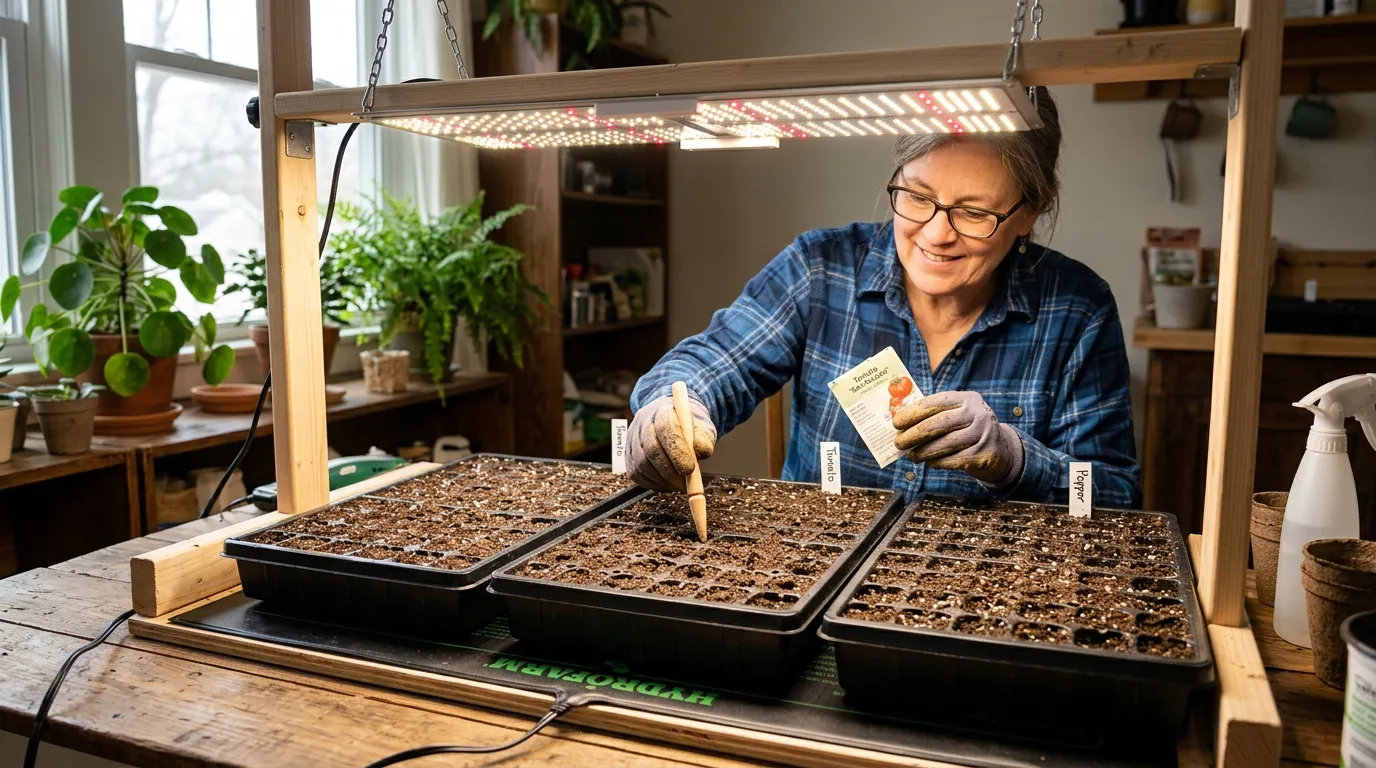
I learned to starting vegetable seeds indoors the way most of us do — with a bright March optimism and a tray that soon leaned like shy toddlers toward a dim window. A neighbor showed me to hold a palm two inches above leaves — close enough to feel? That changed everything. This guide is that habit, stretched into a calm, step-by-step plan you can start tonight with what you have, plus the few tiny upgrades that actually matter. The early details matter more than any later rescue.
Think of this as a walk together — practical and very doable.
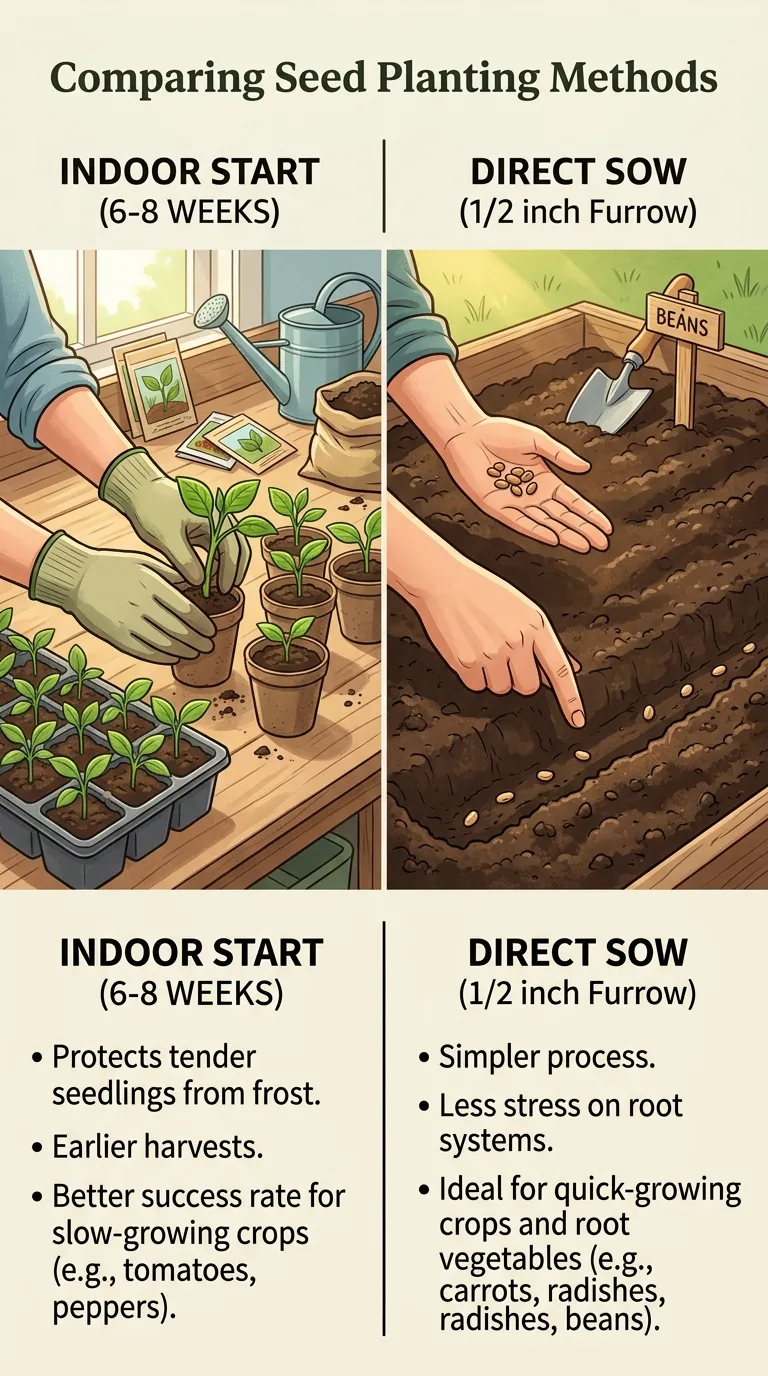
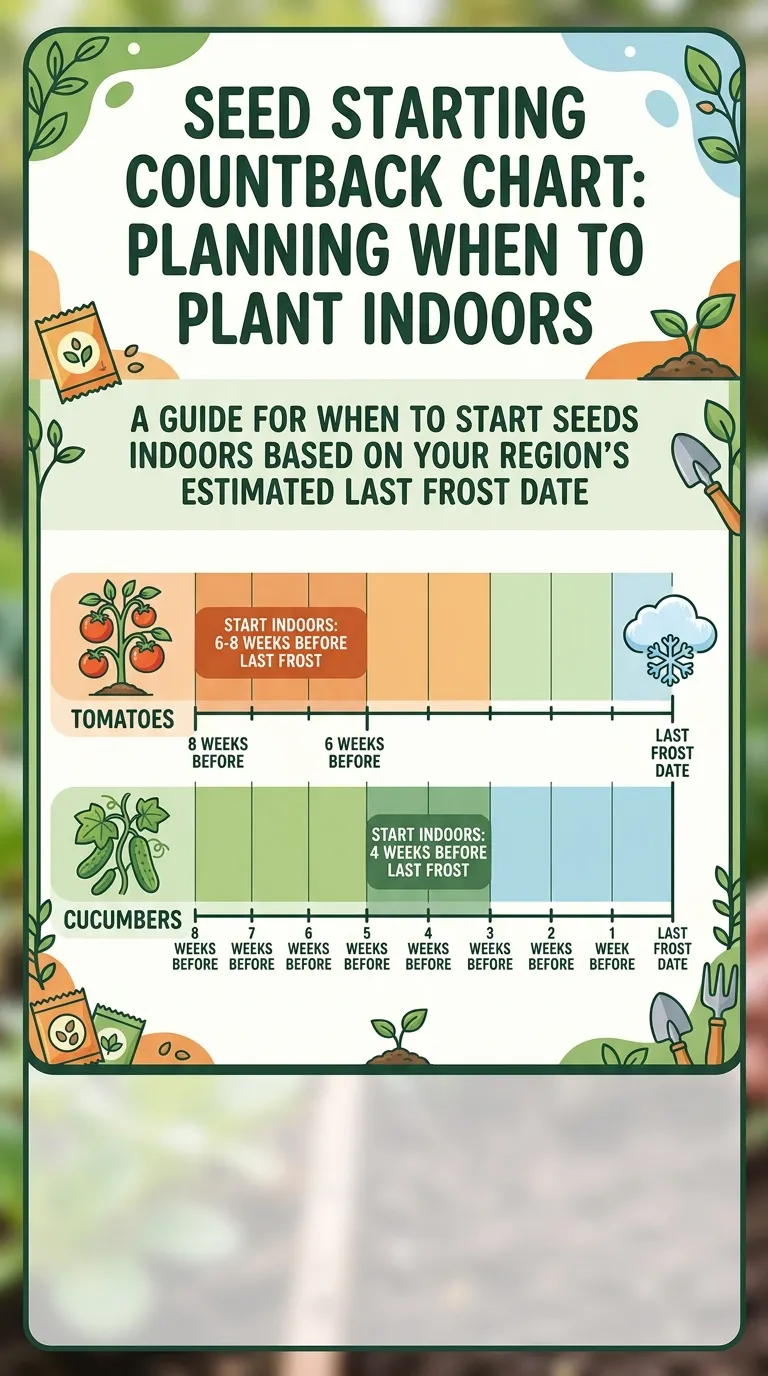
Quick Answer: Start vegetable seeds indoors 6 to 8 weeks before your last spring frost for tomatoes and peppers, 4 to 6 weeks for brassicas and lettuce, and just 3 to 4 weeks for cucumbers and squash. Sow in fresh, sterile seed-starting mix, keep soil at 65 to 85°F depending on crop, give 14 to 16 hours of bright light from 2 inches above as soon as seeds sprout, water from below so mix stays damp not soggy, thin to one strong seedling per cell at two true leaves, and harden off outdoors for 7 to 10 days before transplanting.
At a Glance
| Factor | Recommendation |
|---|---|
| Best timing | 6–8 weeks before last frost for tomatoes/peppers; 3–4 for cucumbers/squash |
| Light | 14–16 hrs, 2 inches above seedlings |
| Soil | Fresh sterile seed-starting mix, damp like wrung sponge |
| Temperature | 65–75°F cool crops, 75–85°F warm crops with heat mat |
| Water | Bottom-water, let top ½ inch dry slightly |
| Hardening | 7–10 days shade to sun |
| Difficulty | Easy with light; moderate without |
Why Starting Indoors Pays for Itself
That why starting indoors pays for itself moment is where the garden quietly decides. I used to rush it, thinking plants wouldn’t notice. They did — tighter roots and that deep satiny green showed up only when I slowed down and treated this step like a ten-minute ritual with tea warm beside me. Do you hear how soil sounds when it’s at the right dampness? Like a wrung sponge, not a puddle.
Steady beats splashy. Even moisture, gentle air, bright light at the right distance. My notebook proves it — one line a day, weather and leaf color, and patterns pop in two weeks. Your hands will learn faster than any calendar.
Variety and cost
I handle variety and cost by measuring once, then trusting senses. Pre-moisten mix like a wrung sponge, sow about twice seed thickness deep, label same day, snip weaker at soil level after two true leaves.
Northern season stretch
I handle northern season stretch by measuring once, then trusting senses. Pre-moisten mix like a wrung sponge, sow about twice seed thickness deep, label same day, snip weaker at soil level after two true leaves.
Control over timing
I handle control over timing by measuring once, then trusting senses. Pre-moisten mix like a wrung sponge, sow about twice seed thickness deep, label same day, snip weaker at soil level after two true leaves.
Give this step its own Sunday ten minutes. It looks slow the first week, but by week three roots have quietly doubled and leaves thicken. Quiet compounding beats quick fixes every time.
Quick tips for why starting indoors pays for itself:
- Do it in morning light when you can see true color.
- Keep tools clean — wipe with alcohol before cuts.
- Check again in 3 days; small corrections beat big rescues.
When to Start: The Backward Math That Saves Leggy Seedlings
That when to start: the backward math that saves leggy seedlings moment is where the garden quietly decides. I used to rush it, thinking plants wouldn’t notice. They did — tighter roots and that deep satiny green showed up only when I slowed down and treated this step like a ten-minute ritual with tea warm beside me. Do you hear how soil sounds when it’s at the right dampness? Like a wrung sponge, not a puddle.
Steady beats splashy. Even moisture, gentle air, bright light at the right distance. My notebook proves it — one line a day, weather and leaf color, and patterns pop in two weeks. Your hands will learn faster than any calendar.
Frost date math
I handle frost date math by measuring once, then trusting senses. Pre-moisten mix like a wrung sponge, sow about twice seed thickness deep, label same day, snip weaker at soil level after two true leaves.
Crop windows table
I handle crop windows table by measuring once, then trusting senses. Pre-moisten mix like a wrung sponge, sow about twice seed thickness deep, label same day, snip weaker at soil level after two true leaves.
Succession cheat
I handle succession cheat by measuring once, then trusting senses. Pre-moisten mix like a wrung sponge, sow about twice seed thickness deep, label same day, snip weaker at soil level after two true leaves.
Give this step its own Sunday ten minutes. It looks slow the first week, but by week three roots have quietly doubled and leaves thicken. Quiet compounding beats quick fixes every time.
Quick tips for when to start: the backward math that saves leggy seedlings:
- Do it in morning light when you can see true color.
- Keep tools clean — wipe with alcohol before cuts.
- Check again in 3 days; small corrections beat big rescues.
Your Seed-Starting Kit Without the Gadget Trap
That your seed-starting kit without the gadget trap moment is where the garden quietly decides. I used to rush it, thinking plants wouldn’t notice. They did — tighter roots and that deep satiny green showed up only when I slowed down and treated this step like a ten-minute ritual with tea warm beside me. Do you hear how soil sounds when it’s at the right dampness? Like a wrung sponge, not a puddle.
Steady beats splashy. Even moisture, gentle air, bright light at the right distance. My notebook proves it — one line a day, weather and leaf color, and patterns pop in two weeks. Your hands will learn faster than any calendar.
Trays and cells
I handle trays and cells by measuring once, then trusting senses. Pre-moisten mix like a wrung sponge, sow about twice seed thickness deep, label same day, snip weaker at soil level after two true leaves.
Mix versus soil
I handle mix versus soil by measuring once, then trusting senses. Pre-moisten mix like a wrung sponge, sow about twice seed thickness deep, label same day, snip weaker at soil level after two true leaves.
Lights that matter
I handle lights that matter by measuring once, then trusting senses. Pre-moisten mix like a wrung sponge, sow about twice seed thickness deep, label same day, snip weaker at soil level after two true leaves.
Heat and dome
I handle heat and dome by measuring once, then trusting senses. Pre-moisten mix like a wrung sponge, sow about twice seed thickness deep, label same day, snip weaker at soil level after two true leaves.
Give this step its own Sunday ten minutes. It looks slow the first week, but by week three roots have quietly doubled and leaves thicken. Quiet compounding beats quick fixes every time.
Quick tips for your seed-starting kit without the gadget trap:
- Do it in morning light when you can see true color.
- Keep tools clean — wipe with alcohol before cuts.
- Check again in 3 days; small corrections beat big rescues.
Sowing Step by Step — Moist, Depth, Label, Cover
That sowing step by step — moist, depth, label, cover moment is where the garden quietly decides. I used to rush it, thinking plants wouldn’t notice. They did — tighter roots and that deep satiny green showed up only when I slowed down and treated this step like a ten-minute ritual with tea warm beside me. Do you hear how soil sounds when it’s at the right dampness? Like a wrung sponge, not a puddle.
Steady beats splashy. Even moisture, gentle air, bright light at the right distance. My notebook proves it — one line a day, weather and leaf color, and patterns pop in two weeks. Your hands will learn faster than any calendar.
Pre-moisten
I handle pre-moisten by measuring once, then trusting senses. Pre-moisten mix like a wrung sponge, sow about twice seed thickness deep, label same day, snip weaker at soil level after two true leaves.
Depth rule
I handle depth rule by measuring once, then trusting senses. Pre-moisten mix like a wrung sponge, sow about twice seed thickness deep, label same day, snip weaker at soil level after two true leaves.
Labeling like future you
I handle labeling like future you by measuring once, then trusting senses. Pre-moisten mix like a wrung sponge, sow about twice seed thickness deep, label same day, snip weaker at soil level after two true leaves.
Give this step its own Sunday ten minutes. It looks slow the first week, but by week three roots have quietly doubled and leaves thicken. Quiet compounding beats quick fixes every time.
Quick tips for sowing step by step — moist, depth, label, cover:
- Do it in morning light when you can see true color.
- Keep tools clean — wipe with alcohol before cuts.
- Check again in 3 days; small corrections beat big rescues.
Light: 14 to 16 Hours Two Inches Away
That light: 14 to 16 hours two inches away moment is where the garden quietly decides. I used to rush it, thinking plants wouldn’t notice. They did — tighter roots and that deep satiny green showed up only when I slowed down and treated this step like a ten-minute ritual with tea warm beside me. Do you hear how soil sounds when it’s at the right dampness? Like a wrung sponge, not a puddle.
Steady beats splashy. Even moisture, gentle air, bright light at the right distance. My notebook proves it — one line a day, weather and leaf color, and patterns pop in two weeks. Your hands will learn faster than any calendar.
Why windows fail
I handle why windows fail by measuring once, then trusting senses. Pre-moisten mix like a wrung sponge, sow about twice seed thickness deep, label same day, snip weaker at soil level after two true leaves.
Timer routine
I handle timer routine by measuring once, then trusting senses. Pre-moisten mix like a wrung sponge, sow about twice seed thickness deep, label same day, snip weaker at soil level after two true leaves.
Raising the lamp
I handle raising the lamp by measuring once, then trusting senses. Pre-moisten mix like a wrung sponge, sow about twice seed thickness deep, label same day, snip weaker at soil level after two true leaves.
Give this step its own Sunday ten minutes. It looks slow the first week, but by week three roots have quietly doubled and leaves thicken. Quiet compounding beats quick fixes every time.
Quick tips for light: 14 to 16 hours two inches away:
- Do it in morning light when you can see true color.
- Keep tools clean — wipe with alcohol before cuts.
- Check again in 3 days; small corrections beat big rescues.
Water, Air and Food After Sprouting
That water, air and food after sprouting moment is where the garden quietly decides. I used to rush it, thinking plants wouldn’t notice. They did — tighter roots and that deep satiny green showed up only when I slowed down and treated this step like a ten-minute ritual with tea warm beside me. Do you hear how soil sounds when it’s at the right dampness? Like a wrung sponge, not a puddle.
Steady beats splashy. Even moisture, gentle air, bright light at the right distance. My notebook proves it — one line a day, weather and leaf color, and patterns pop in two weeks. Your hands will learn faster than any calendar.
Bottom watering
I handle bottom watering by measuring once, then trusting senses. Pre-moisten mix like a wrung sponge, sow about twice seed thickness deep, label same day, snip weaker at soil level after two true leaves.
Fan for strength
I handle fan for strength by measuring once, then trusting senses. Pre-moisten mix like a wrung sponge, sow about twice seed thickness deep, label same day, snip weaker at soil level after two true leaves.
First feeding
I handle first feeding by measuring once, then trusting senses. Pre-moisten mix like a wrung sponge, sow about twice seed thickness deep, label same day, snip weaker at soil level after two true leaves.
Give this step its own Sunday ten minutes. It looks slow the first week, but by week three roots have quietly doubled and leaves thicken. Quiet compounding beats quick fixes every time.
Quick tips for water, air and food after sprouting:
- Do it in morning light when you can see true color.
- Keep tools clean — wipe with alcohol before cuts.
- Check again in 3 days; small corrections beat big rescues.
Hardening Off for 7 to 10 Days
That hardening off for 7 to 10 days moment is where the garden quietly decides. I used to rush it, thinking plants wouldn’t notice. They did — tighter roots and that deep satiny green showed up only when I slowed down and treated this step like a ten-minute ritual with tea warm beside me. Do you hear how soil sounds when it’s at the right dampness? Like a wrung sponge, not a puddle.
Steady beats splashy. Even moisture, gentle air, bright light at the right distance. My notebook proves it — one line a day, weather and leaf color, and patterns pop in two weeks. Your hands will learn faster than any calendar.
Shade to sun ladder
I handle shade to sun ladder by measuring once, then trusting senses. Pre-moisten mix like a wrung sponge, sow about twice seed thickness deep, label same day, snip weaker at soil level after two true leaves.
Wind and shelter
I handle wind and shelter by measuring once, then trusting senses. Pre-moisten mix like a wrung sponge, sow about twice seed thickness deep, label same day, snip weaker at soil level after two true leaves.
Frost fallback
I handle frost fallback by measuring once, then trusting senses. Pre-moisten mix like a wrung sponge, sow about twice seed thickness deep, label same day, snip weaker at soil level after two true leaves.
Give this step its own Sunday ten minutes. It looks slow the first week, but by week three roots have quietly doubled and leaves thicken. Quiet compounding beats quick fixes every time.
Quick tips for hardening off for 7 to 10 days:
- Do it in morning light when you can see true color.
- Keep tools clean — wipe with alcohol before cuts.
- Check again in 3 days; small corrections beat big rescues.
Common Mistakes That Cost You Weeks
I have made each of these and paid the same tuition twice. Fix one at a time for a week; gardens forgive one weakness, not five half-fixes.
- Starting too early and nursing leggy seedlings. count backward from frost, not forward from excitement.
- Using garden soil in trays. too heavy and carries fungi
- Daily light sprinkles that keep leaves wet. bottom-water and water at soil in morning only.
- Leaving dome on after green loops show. remove dome and add gentle fan immediately.
- Forgetting to thin. snip to one strong seedling per cell at soil level.
- Moving seedlings straight outside. harden 7–10 days shade to sun, bring in if frost threatens.
- Feeding high nitrogen after flowers open. switch to low nitrogen higher potassium.
- Skipping mulch. add 2–3 inches after soil warms to 60°F, keep 2 inches from stem.
Which one feels familiar? Start there. Master it, then add the next.
Common Mistakes Revisited — The Subtle Ones
- Mulching too early when soil is still cold traps 48°F under a blanket. Warm to 60°F first, then tuck in.
- Watering on a clock not after rain — check the tuna can before you water.
- Feeding lawn food disguised as vegetable food — if first N number is 20+ and bag shows grass, put it down.
- Pruning wet — cuts stay open and invite bacteria. Prune on dry mornings 3–5 days after watering.
- Saving seed without tagging the winner — tie yarn at harvest on the plant that actually yielded.
Seasonal Calendar — When It Actually Happens
Tape this to the fridge. It turns am I late? into oh, next is that — this weekend.
- Late winter (8–10 weeks before last frost): Plan varieties, test old seed on damp paper towel.
- 6–8 weeks before: Sow tomatoes, peppers, eggplant indoors under lights; heat mat for warmth lovers.
- 4–6 weeks before: Sow brassicas, lettuce, herbs; start hardening earliest cool crops if sheltered.
- 2–3 weeks before: Direct sow peas, carrots, radish where soil is workable; keep thinning trays.
- At frost date: Harden warm crops 7–10 days, transplant when nights >50°F and soil 60°F.
- 2 weeks after transplant: Light side-dress if needed, mulch after soil warms, weekly scout.
- Midsummer: Even water at fruit swell, low-nitrogen feed at bloom, save notes.
- 4 weeks before first fall frost: Pinch new flowers, stop high nitrogen, let ripen.
- At frost warning: Harvest all mature, ripen green 65–75°F, cure storage crops, clean stakes with 10% bleach.
Shift a week either way with walls, shade and wind. Hands and thermometer beat calendar.
Seasonal Timeline — Week by Week
- Late April: Warm future bed with black plastic 7 days to nudge soil toward 60°F.
- Early May: Harden off trays a few hours daily; sow carrots in future alleys.
- Mid-May (after frost): Transplant deep, composted, staked, watered in; companions tucked 12 inches south.
- Late May–Early June: Keep top inch moist; purple stems usually mean cold, not starvation.
- Early–Mid June: First light side-dress, first pruning below bloom, mulch now after warm.
- Late June–Mid July: Flowers open, switch to low N, shake at midday, watch lower leaves.
- Mid-July–Mid Aug: Fruit swell peak thirst; even moisture plus second low N if vigorous.
- Late Aug–Sep: Taper water slightly to concentrate flavor; pinch new clusters.
- At frost: Harvest all, cure roots, wash cages, spread fall compost.
Troubleshooting Quick Fixes
Monday walk, flashlight and trowel, flip three leaves low-middle-high, check soil two inches down.
- Stretching and pale? Light too high or too short. Lower to 2 inches, 14–16 hrs, add fan.
- Yellow lower leaves, damp soil? Overwatering + cool. Let top ½ inch dry, pour off tray after 20 min.
- Pinched stem at soil, collapse? Damping off. Remove, discard mix, thin, airflow.
- Wilting midday even when moist? Pots too hot. Move to morning sun, double-pot, mulch.
- No germination after 10 days? Depth, temp or old seed. Warm crops need 75–85°F.
- Spots after rain? Soil splash. Mulch 3 inches, water at base before 10 a.m., trash worst leaves.
Troubleshooting Deep Dive — Real Garden Conversations
Q: “Leaves yellow from bottom but I did not overwater.” Have you checked nights? Cold below 55°F stalls roots like hunger. Warmth often greens next leaves without feed. Cover at night, wait ten days.
Q: “Watered evenly but fruits cracked after storm.” Mulch is the buffer between you and weather. Without 3 inches straw, even perfect watering cannot stop a 2-inch deluge splitting skins.
Q: “Cherry sets but slicer does not in same bed.” Heat sensitivity differs — cherries set at 92°F when slicers stall above 90°F nights >75°F. Grow both for insurance.
Behind the Scenes — Why Details Beat Gadgets
I used to think abundance came from the tallest transplant or shiniest feed. It came from physics I could feel. Pushing a finger two inches down and waiting when cool and damp saved a watering and a yellow leaf. Burying a stem deep where hairs become roots gave a second engine. Restraint is technique — not buying extra nitrogen after bloom, not buying a daily sprinkle when deep and less often does more.
Compost is a city — bacteria, fungi, earthworms glue crumbs that hold air and water together. Fall compost settles with frost; spring compost I work only top six inches. Less tillage, more surface blanket.
What I Keep in My Apron
- $8 soil thermometer — tells me 60°F is real, not guessed.
- Yarn to tag trusses or the plant that actually yielded.
- Timer for lights and another for soaker at 6:30 a.m.
- Tuna can nailed to stake as rain gauge — absurdly accurate.
- Pocket notebook: date, weather, what I did, leaf look. September shows next year plan.
Container vs Raised Bed vs In-Ground — How Steps Shift Slightly
Containers want potting mix, not garden soil, and feeding more often — half-strength liquid weekly during heavy fruiting because nutrients leach with daily watering. A 5-gallon pot dries by afternoon in July; check both morning and evening. Raised beds split the difference: they warm and drain faster than in-ground, so mulch from day one and expect to water every 2 to 3 days. In-ground beds hold nutrients longest and need that deep schedule only 2 to 3 times a week. Match your rhythm to your setup and you’ll stop fighting it.
- Containers (5–10 gal): Potting mix + daily check, liquid feed weekly at fruiting, move to chase 6–8 hrs sun.
- Raised beds (12–18 inches deep): Loose loam + 2–3 inch compost, mulch immediately, water every 2–3 days.
- In-ground beds: Native + compost top 6 inches, mulch after warm, deep 2×/week, test pH yearly.
- Balcony or small space: Choose determinate or bush types, one plant per 5 gal, add basil at edge for scent.
A Note on Microclimates — Your Garden Is Not My Garden
Your fence, your oak tree, your wind corridor between houses — they all tweak sun and airflow by an hour or two. That’s enough to shift watering needs by a full day. I now keep a $8 max-min thermometer at canopy height for a week in June. The night temperature I thought I had and the one my plants actually felt differed by 4°F. That 4°F was the difference between set and drop. So take any schedule here — mine included — and test it against your finger, your trowel, your tuna can. The schedule is a starting point. Your hands are the final authority. Have you checked your actual canopy temperature yet? Try it tomorrow.
- Morning sun 6–10 a.m. dries leaves fastest — priorities east-facing beds.
- South wall radiates heat at night +2–3°F — good for heat lovers, bad for lettuce.
- Wind tunnel between houses wicks moisture — add mulch and windbreak fabric.
- Low spot collects cold air and frost first — plant tender crops higher if you can.
Quick Field Checklist — Tape to Your Can
- Sunday: finger test 2 inches, prune one spotted leaf, note in book.
- Midweek: shake flowers at midday, check undersides, check tuna can after rain.
- After rain: skip watering if inch collected, pull mulch back if soggy.
- At first blush: pick promptly, leave a few to ripen fully for flavor test.
- Before frost: pinch new flowers 4 weeks out, stop feed, harvest greens.
Small Tools, Big Payoff
- Soil thermometer confirms 60°F real, not guessed.
- Yarn tags which truss you shook and which plant actually yielded.
- Cheap electric toothbrush for buzz pollination in still air.
- Tuna can rain gauge nailed to stake — humblingly accurate.
- Pocket notebook: one line per week saves next year’s guesswork.
Expanded Checklist — More Lines Without More Fuss
- Monday: check moisture 2 inches, look undersides.
- Tuesday: deep water if tuna can <1 inch.
- Wednesday: fan seedlings 30 min, rotate tray.
- Thursday: scout pests, remove one bad leaf.
- Friday: second deep water if hot or sandy.
- Saturday: harvest what blushes, note in book.
- Sunday: rest, plan next sowing, enjoy tea.
- Every 2 weeks: succession sow lettuce, carrots, beans.
- Monthly: side-dress light, refresh mulch, test pH.
- At bloom: switch to low N high PK, shake at midday.
- At fruit swell: keep even, avoid flood-drought swings.
- After storm: check drainage, pull mulch back 2 inches.
- Before frost: pinch tips, stop feed, gather green fruit.
- Fall: add 2–3 inch compost, clean stakes 10% bleach.
- Winter: review notes, order seed, test old germination.
- Spring: warm bed 7 days with plastic before planting.
Frequently Asked Questions
Q: When should I start vegetable seeds indoors for my zone?
A: Count backward from your average last spring frost date using the days-to-transplant on the seed packet. Tomatoes and peppers need 6 to 8 weeks indoors, eggplant 8 to 10 weeks, brassicas 4 to 6 weeks, and cucumbers or squash only 3 to 4 weeks because they grow fast and dislike root disturbance. Starting too early creates leggy, root-bound seedlings that stall after transplant, so a stocky 6-week-old plant beats a stretched 10-week-old one every time.
Q: Do vegetable seeds need light or darkness to germinate?
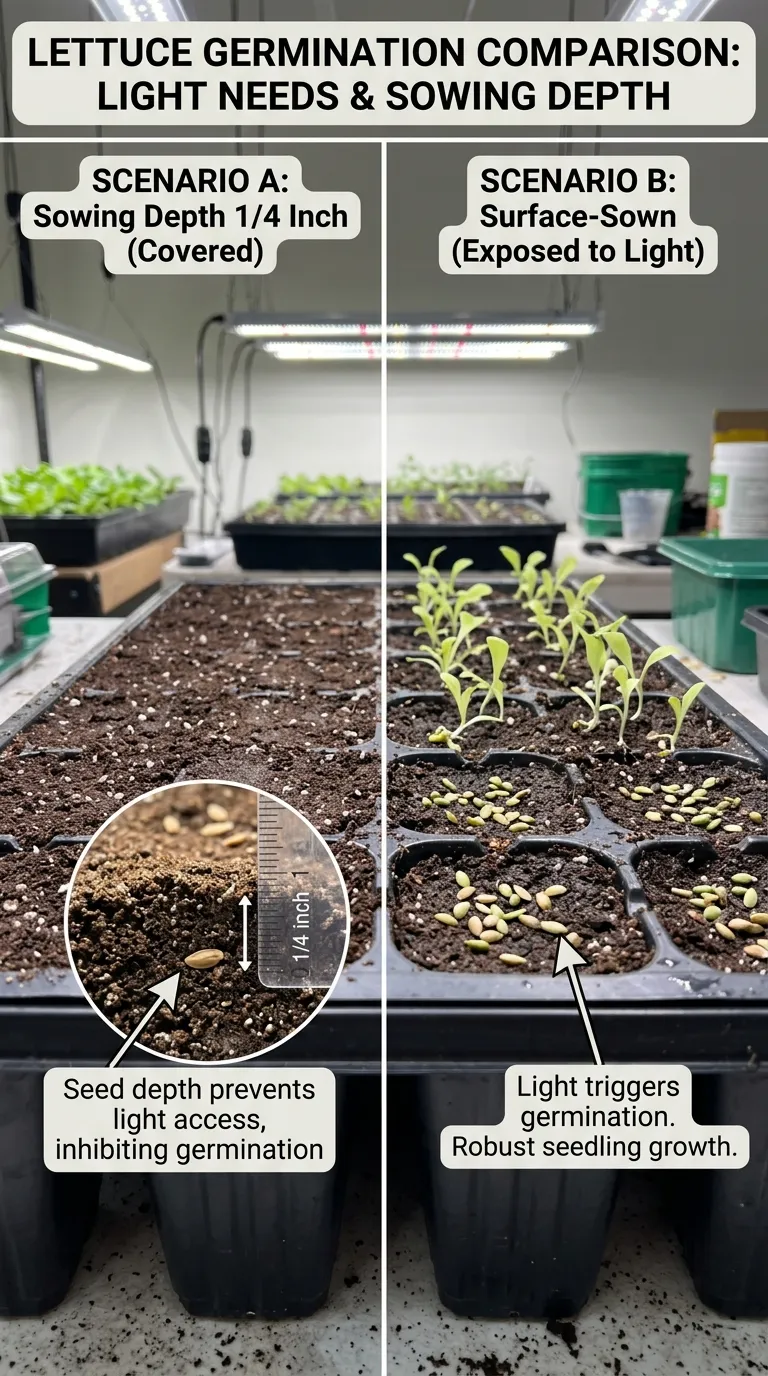
A: Most vegetable seeds germinate best in darkness, covered with mix about twice their own thickness, then need bright light the instant they sprout. A few exceptions like lettuce, celery and some herbs need light to germinate and should sit on the surface pressed gently into the mix. The moment you see the first loop of stem, remove the humidity dome and turn grow lights on 14 to 16 hours a day.
Q: How do I harden off seedlings before planting outside?
A: Harden off over 7 to 10 days by moving trays to shaded, sheltered outdoor spot for 1 to 2 hours on day one, adding an hour of sun and wind daily until they tolerate a full day outside. Bring them in if frost or strong wind threatens. Skipping this step sunburns tender leaves white and can kill up to half your seedlings from transplant shock even when nights seem mild.
Q: What is the best soil mix for starting seeds indoors?
A: Use a fine, sterile seed-starting mix made of peat or coco coir plus perlite and vermiculite, not garden soil or heavy potting soil. Garden soil is too dense, holds too much water and carries damping-off fungi that rot seedlings at the soil line. Fresh mix each year, dampened to a wrung-out sponge before sowing, gives roots air and keeps disease pressure low while seedlings are most vulnerable.
Related Articles
- When to Plant Vegetables: A Month-by-Month Guide
- How Often to Water Vegetables
- Best Soil for Vegetable Gardens
- Companion Planting Guide
- Vegetable Garden Pests: How to Identify and Control
- How to Test Soil pH
Sources & References
- University of Minnesota Extension — https://extension.umn.edu/yard-and-garden/vegetables
- Cornell Vegetables — https://www.vegetables.cornell.edu/
- Iowa State University Extension — https://hortnews.extension.iastate.edu/
- NC State Extension — https://content.ces.ncsu.edu/
- University of California IPM — https://ipm.ucanr.edu/