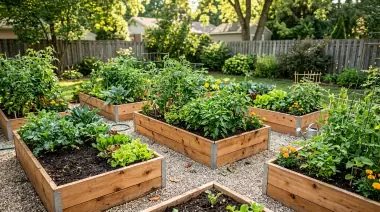
Raised bed gardening for beginners is simpler than it looks: build a box, fill it with good soil, and plant. Because the soil stays loose and drains well, vegetables grow faster, weeds are fewer, and you never have to dig into hard, compacted ground. This guide covers choosing a size, picking safe materials, and mixing a soil blend that keeps your beds productive for years. It is one chapter of our larger vegetable gardening guide.
Quick Answer: Start with a 4x4-foot or 4x8-foot raised bed that is at least 12 inches deep, built from cedar, metal, or untreated lumber. Put it where it gets 6-8 hours of direct sun, smother the grass underneath with cardboard, and fill it with a soil blend of about one-third compost, one-third aeration (perlite, vermiculite, or pumice), and one-third moisture-retaining material such as peat moss or coconut coir. Water more often than you would an in-ground garden, and top-dress with fresh compost every spring.
At a Glance
| Factor | Recommendation |
|---|---|
| Sun | 6-8 hours of direct sunlight per day |
| Soil | Loose, rich, well-draining blend (1/3 compost + 1/3 aeration + 1/3 moisture retention) |
| pH | 6.0 to 6.8 |
| Water | About 1 inch per week; check more often than in-ground beds |
| Bed size | 4x4 feet or 4x8 feet |
| Depth | 12 to 18+ inches |
| Difficulty | Beginner-friendly |
| Best first crops | Tomatoes, lettuce, beans, carrots, peppers |
What Is Raised Bed Gardening?
A raised bed is a framed box that holds soil above the surrounding ground, usually with an open bottom so plant roots can reach the native soil below. The frame can be wood, metal, stone, or concrete block. Because you fill the box yourself, you are not at the mercy of whatever dirt came with your yard - which is why the quality of your fill soil matters more than the frame itself.
Why Raised Beds Work So Well
Better Drainage
Waterlogged soil chokes plant roots, which is why gardens fail in heavy clay areas. Because a raised bed sits above the ground, excess water drains freely through the bottom instead of pooling. Extension services recommend raised beds for improving drainage in poor soils (Source: University of Minnesota Extension), and the looser soil also warms faster in spring.
Full Control Over Your Soil
You choose exactly what your plants grow in, down to the last handful: no digging, tilling, or amending heavy clay or sandy fill. This is the greatest advantage raised beds hold over in-ground plots, and it is why our how to prepare soil for planting guide describes the target you are building toward.
Less Weeding
Raised beds sit above ground level and start with clean soil, so far fewer weed seeds reach the surface, and any weed that appears pulls out of the loose mix in one easy tug. Fewer stressed, crowded plants also means fewer pest problems, but if pests do show up, our vegetable garden pest guide has solutions.
How to Set Up Your First Raised Bed
- Choose a sunny location. Most vegetables need 6-8 hours of direct sun, so watch the spot through the day before you commit.
- Choose a size and depth. See the guidance below.
- Build or buy the frame. See the materials guidance below.
- Smother the grass underneath with cardboard (details below).
- Fill the bed with a good soil mix. Use the thirds recipe below.
- Water the whole bed deeply, then plant. If you are new to this, our beginner vegetable garden guide covers choosing your first crops.
Bed Dimensions That Work for Beginners
A 4x4-foot bed lets you reach every plant from the edges without stepping on the soil, and a 4x8-foot bed doubles your growing space while staying reachable from the long sides. Depth matters just as much: most extension services recommend at least 12 inches of soil, and 18 inches or more for deep-rooted crops like tomatoes and carrots (Source: University of Minnesota Extension). Shallow 6-inch boxes work only for lettuce and herbs, and they dry out fast.
Safe Materials for Raised Bed Frames
- Cedar is naturally rot-resistant and the classic first choice. It is more expensive, but it lasts for years.
- Metal (galvanized or powder-coated steel) beds are long-lasting, rodent-resistant, and available as stackable panels you raise to any height.
- Untreated lumber such as pine is cheap and fine for a few seasons, especially if you line the inside.
Avoid two things: old CCA-treated lumber (the greenish wood from before 2004, which contains arsenic) and interior MDF or particleboard, which swells and falls apart in wet soil. Modern ground-contact treated lumber is generally considered safe, but many gardeners choose cedar or metal anyway.
What Goes Underneath: Cardboard Smothering
You do not need to dig out the grass first. Lay plain, uncoated cardboard over the lawn (remove tape and labels), overlap the pieces by several inches, and wet it down. Place the empty frame on top and fill it. The cardboard blocks light, the grass dies and composts in place, and worms work it into the soil below (Source: Oregon State University Extension).
The Classic Soil Recipe for Raised Beds
Many extension sources recommend filling raised beds with a simple thirds blend rather than plain bagged topsoil (Source: Iowa State University Extension). Mix equal parts in a wheelbarrow before you fill the bed.
- 1/3 compost. Rich, finished compost from your own pile or a bagged product feeds plants, holds moisture, and teems with the microbes that build healthy soil.
- 1/3 aeration. Perlite, coarse vermiculite, or pumice keeps the mix loose so roots push through and water drains.
- 1/3 moisture retention. Peat moss or coconut coir soaks up water and releases it slowly, stretching the time between waterings.
For deeper detail on proportions and refreshing tired beds, read our how to build raised bed soil guide.
Filling Your Beds Without Breaking the Bank
Filling a bed is the biggest surprise expense of raised bed gardening. Three tips keep it manageable:
- Buy in bulk, not bags. Bulk loose soil from a local landscape supply yard is dramatically cheaper than bagged “raised bed mix” for anything bigger than a small 4x4 bed.
- Mix your own. The thirds recipe from bagged compost, peat or coir, and aeration costs far less per cubic foot than pre-blended mixes, and you control the quality.
- Know what you are buying. “Garden soil” and “potting mix” are not interchangeable; our potting mix vs garden soil article explains the difference and which is right for your beds.
How Watering Is Different in Raised Beds
Anything that drains well also dries out faster. Raised beds warm sooner in spring but lose moisture more quickly than in-ground plots in summer, especially metal beds on hot days. Aim for about 1 inch of water per week, checking with your finger: if the top inch of soil feels dry, it is time to water. A 2-3 inch layer of straw or shredded-leaf mulch slows evaporation noticeably. For watering details and schedules, see our how often to water vegetables guide.
Annual Maintenance
Raised beds repay small annual effort with years of easy gardening (Source: University of Minnesota Extension).
- Top-dress with compost every year. Spread 1-2 inches of fresh compost over the surface in early spring or late fall and work it in gently. This replaces the nutrients last season’s vegetables pulled out of the soil; our vegetable garden fertilizer guide explains why compost-first beats synthetic fertilizers for beginners.
- Refill because soil settles. Expect the soil line to drop several inches in the first year as air pockets collapse and compost breaks down. Top the bed up each spring.
- Mulch in winter. Keep a layer of mulch or a cover crop over bare soil so winter rains do not compact it and weeds do not move in.
Common Mistakes
- Building the bed too shallow. A 6-inch box limits you to shallow crops and dries out fast. Fix: go 12 inches or deeper, especially for root crops.
- Filling with plain yard dirt or topsoil. It packs down and drains poorly. Fix: use the thirds recipe or a commercial raised bed mix.
- Using old treated lumber or interior MDF. Old CCA-treated wood can leach arsenic, and MDF falls apart in moisture. Fix: cedar, metal, or untreated lumber.
- Overwatering. Raised beds drain well, but many beginners water daily anyway. Fix: water deeply only when the top inch of soil is dry.
- Skipping the annual compost. Production drops as nutrients deplete. Fix: add 1-2 inches of compost every spring.
- Building the bed too wide. With a width over 4 feet, you will step into the bed and compact the soil. Fix: keep it at 4 feet or less.
Seasonal Considerations
- Spring: Raised beds warm up faster than ground soil, so you can plant a week or two earlier in many zones. Refill settled soil and work in fresh compost before planting.
- Summer: Expect faster drying, especially in metal beds. Mulch heavily or install a drip line.
- Fall and winter: After the last harvest, prune dead growth, top-dress with compost, and mulch to protect the soil.
Frequently Asked Questions
Q: How deep should a raised bed be?
A: At least 12 inches for most vegetables, and 18 inches or more for deep-rooted crops like tomatoes, peppers, and carrots. Very shallow beds (6 inches) work only for lettuce, herbs, and similar small crops.
Q: Should I line the bottom of my raised bed?
A: No liner is required. An open bottom lets roots reach native soil and lets excess water drain. On a hard surface, landscape fabric or cardboard blocks weeds without trapping water.
Q: Does a raised bed need drainage holes?
A: No. With a standard open-bottom frame over soil or cardboard, drainage is automatic. Only a bed with an impermeable bottom on solid concrete would need holes.
Q: Can I build a raised bed directly on grass?
A: Yes. Lay cardboard over the grass, set the frame on top, and fill it. The grass dies beneath the cardboard and breaks down into organic matter.
Q: How often should I water a raised bed?
A: Generally about 1 inch per week, but raised beds dry out faster than in-ground gardens. Check with your finger daily in hot weather and water when the top inch feels dry.
Q: Is it safe to use pressure-treated wood for vegetable beds?
A: Modern ground-contact treated lumber is generally considered safe for food gardens. To avoid the question entirely, use cedar, metal, or untreated lumber.
Related Articles
- How to Prepare Soil for Planting
- How to Build Raised Bed Soil
- Potting Mix vs Garden Soil
- How Often to Water Vegetables
- Vegetable Garden Fertilizer
- Vegetable Garden Pests
- How to Start a Vegetable Garden for Beginners
- Our Vegetable Gardening Guide