If there is a vegetable that makes you feel like a gifted gardener overnight, it is the cucumber. One week you are tucking small white seeds into warm soil, doubtful they’ll do much, and by midsummer you are ducking under a leafy trellis at dusk, snapping off cool, dark-green fruits that smell like the very idea of fresh. I still feel a little thrum of excitement every time I see that first prickly baby cucumber forming behind a yellow flower — it feels like a secret the vine is letting you in on.
And yet cucumbers have a reputation for bitterness, for hiding monster yellow balloons under leaves, for sudden mildew collapse. Beginners tell me quietly, “Mine always turn bitter,” or “They sprawled everywhere and then died.” Almost always, the story comes down to three things the plant never negotiates on: warm soil at sowing, shockingly even water, and air. Get those three right and cucumbers are embarrassingly generous.
This guide is the way I grow them now, after seasons of sprawled vines on the ground, regretfully composted bitter fruits, and then the summer I finally put up a proper six-foot trellis and understood what these plants want to be — climbers, not crawlers. These 12 tips go from seed to crisp harvest together, with the why behind each step so you can adapt it to your yard, your weather, and your taste, whether you dream of dill pickles or perfect sandwich slicers.
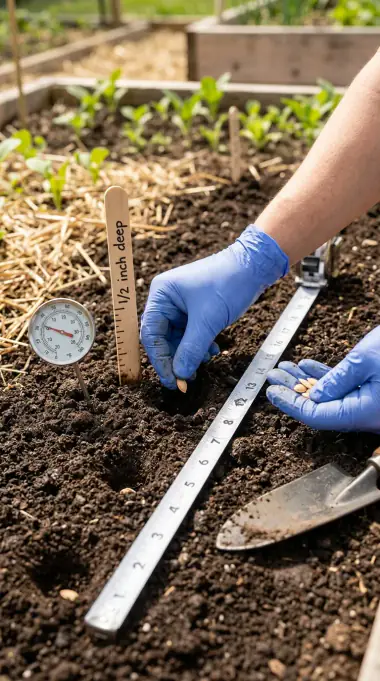
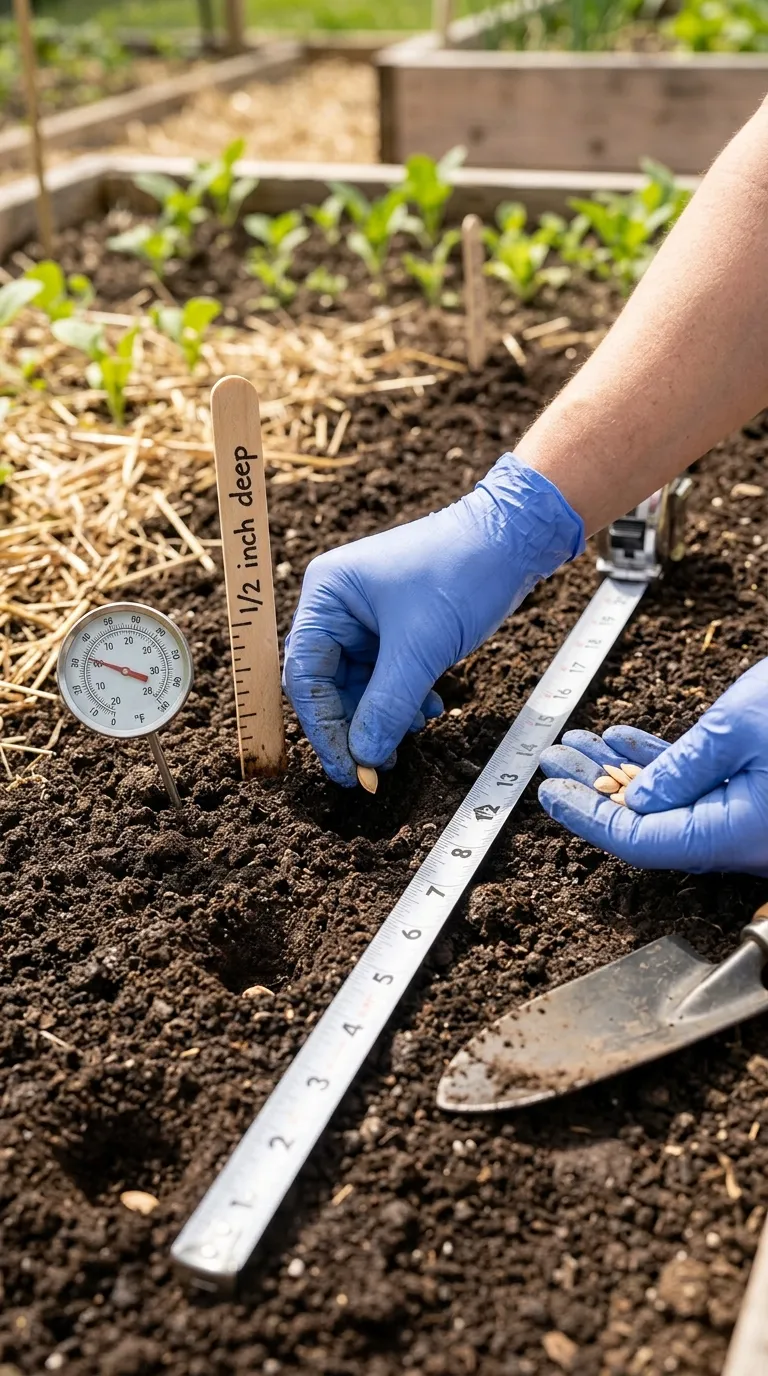
Quick Answer: Direct sow cucumber seeds outdoors after your last frost when soil at 2 inches has reached 70°F, planting 1/2 inch deep and 12 inches apart in rows 36 inches apart (or 36 inches apart on a trellis). Give them 6 to 8 hours of direct sun and rich, well-drained soil at pH 6.0–7.0 generously amended with compost. Trellis vertically on a 6-foot support to keep fruits straight, clean, and disease-free. Water 1 to 1.5 inches per week, evenly, in 2 to 3 deep drinks at the base before 10 a.m., and keep 3 inches of straw mulch after soil warms. Harvest slicers at 6 to 8 inches and picklers at 3 to 4 inches while still green and firm — before they swell, yellow, or taste seedy — and pick every 2 days to keep vines producing for weeks. Consistency, not quantity, is the whole secret.
At a Glance
| Fact | Details |
|---|---|
| Sun | 6 to 8 hours direct sun |
| Soil | Rich, well-drained, pH 6.0–7.0, compost enriched |
| Sowing depth | 1/2 inch, 12 inches apart, rows 36 inches |
| Germination | 3 to 10 days at 70 to 95°F |
| Water | 1 to 1.5 inches per week, consistently |
| Harvest | 50 to 70 days from sowing |
| Trellis | Recommended, 6 feet tall |
| Tip count | 12 tips from sowing to storage |
Consider this your cucumber promise card. Tape it to the potting bench. The detail below shows you how to actually keep those promises day to day without hovering.
Tip 1 & 2: Start With Warm Soil and Direct Sowing — Respect the Root
Tip 1: Wait for 70°F Soil, Not Just Warm Air
Cucumbers have a taproot that resents disturbance the way carrots do, just slightly more forgiving. Warm soil gives you sprouts in as little as 3 days. If you sow into 55°F soil, seeds sit, swell, and rot. I use a soil thermometer in the morning — cheap, honest, more reliable than the calendar. After your last frost, wait until that 2-inch reading hits 70°F for three mornings. That patience saves you from re-sowing.
Build the bed first: loosen soil 8 to 10 inches deep, work in 2 to 3 inches of finished compost, and rake smooth. Aim for pH 6.0–7.0. Make furrows or hills — I prefer a single furrow along the base of the trellis — 1/2 inch deep. Sow seeds 12 inches apart, cover lightly, water gently, and keep evenly moist until germination. That means damp, not puddled. If your spring is hot and drying, lay a board or burlap over the row for 3 days to hold moisture, checking daily and removing the moment green appears.
Tip 2: Direct Sow Beats Transplanting Almost Every Time
Direct sowing is kinder, faster, and more reliable than nursing leggy seedlings on a windowsill. If your season is short or you want the very earliest cucumber, you can start indoors — but do it with humility. Sow in biodegradable pots (4-inch peat or cow pots) no more than 2 to 3 weeks before your transplant date, one seed per pot, under strong light. Transplant out when seedlings have one true leaf, before roots circle, on a calm, overcast evening, and water in well. Harden off for 3 to 4 days first. And never let transplants get tall and root-bound on the shelf; a stunted, checked plant never fully recovers its momentum outdoors. See timing help in when to plant vegetables and gentle-start strategies in starting seeds indoors.
A succession tip I wish someone had emphasized earlier: sow a second round 3 weeks after the first, and a third 3 weeks after that where seasons allow. Cucumber vines peak and then tire, especially under disease pressure. Succession gives you crisp young vines just as the first patch begins to fade, extending harvest by a month without spraying heroics.
Tip 3 & 4: Trellis Tall and Train Gently — Structure Is Health
Tip 3: Grow Up, Not Out
Let me be plain: trellising is not an aesthetic choice. It is plant hygiene and space math. On the ground, a single cucumber vine happily sprawls 6 feet in every direction. Leaves hide fruits until they are swollen, seedy, and yellowing from the bottom rot. Humidity trapped against damp soil invites downy mildew and belly rot, and spotting cucumber beetles before they spread bacterial wilt feels impossible in that tangle. Every ground bed I’ve grown without a trellis produced fewer, dirtier, more bitter cucumbers.
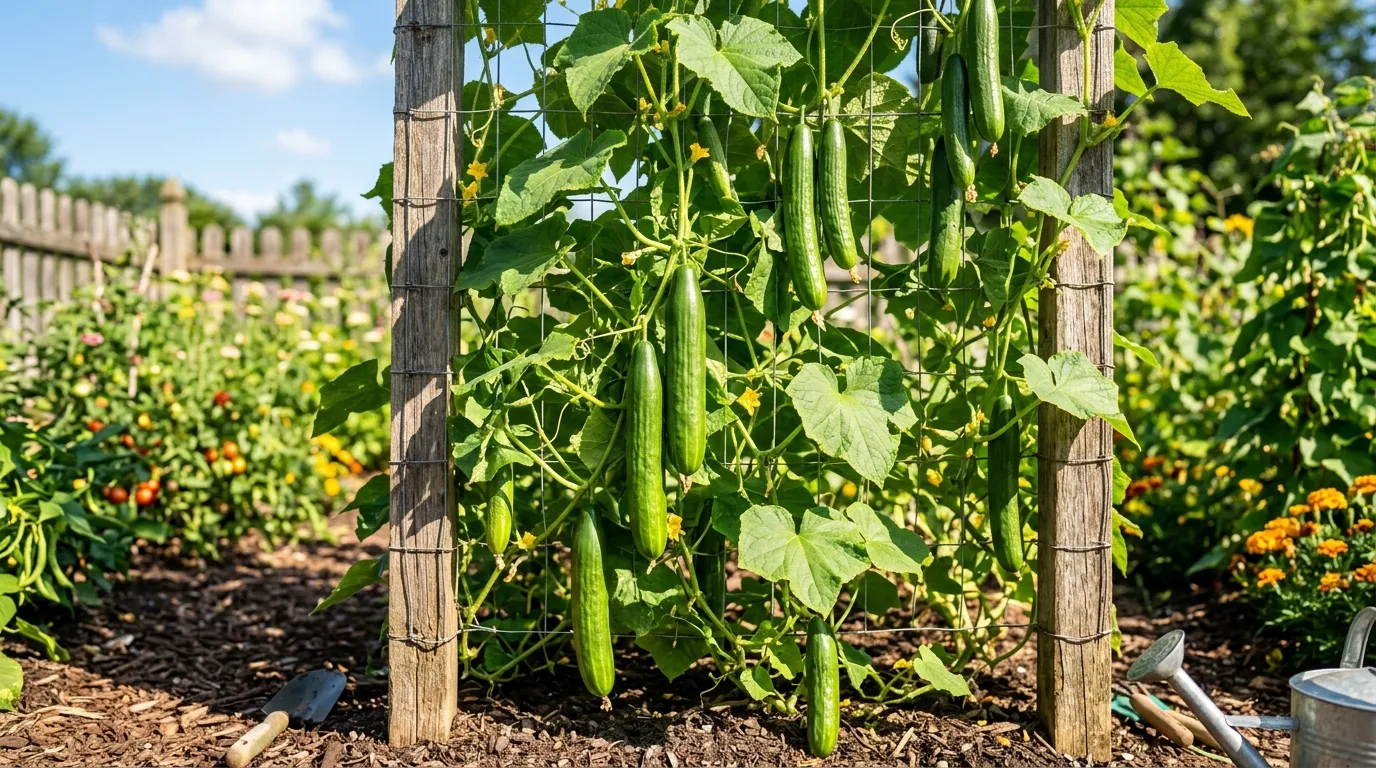
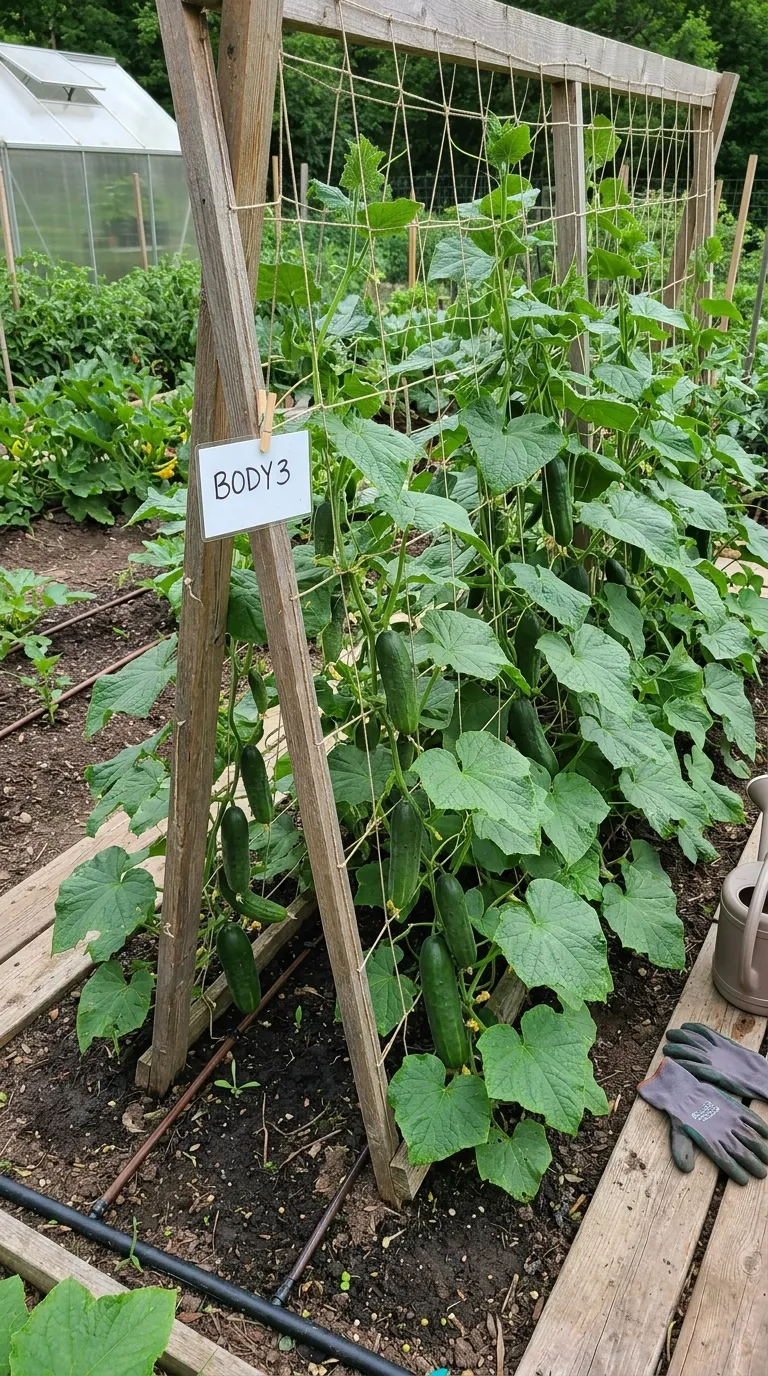
Up a trellis — cattle panel, string trellis, A-frame, even a sturdy tomato cage in a pinch — the same vine behaves differently. Fruits hang straight with gravity, growing uniformly green and clean. Air moves through the canopy, drying leaves by noon and cutting disease pressure by roughly a third in my observation. You use one-third the square footage, you see every fruit at eye level, and harvest takes minutes instead of a hunt. I can grow six plants on a 6-foot panel and feed a family plus neighbors. For small gardens, that vertical-foot math is everything.
Tip 4: Tie Loosely and Let Gravity Straighten Fruits
If you are trellising for the first time, go stout. A 6-foot-tall panel anchored with T-posts is the gold standard. Train young vines gently up by weaving tendrils or tying loosely with soft twine in a figure-eight so the stem can thicken. Don’t tie tightly — cucumber stems are succulent and bruise easily. Once the vines reach the top, let them tip over and dangle; they’ll keep producing laterally. Harvest from both sides. You’ll be stunned at how many cucumbers were hiding when they lounged on the ground. See vegetable garden layout for spacing ideas that fold trellises into a bed plan.
Tip 5 & 6: Water Evenly and Mulch After Warmth — The Anti-Bitterness Trick
Tip 5: Even Water Is Sweetness
If trellising is the structure, even water is the soul of sweet cucumbers. This is where bitterness is created or prevented. The bitter compounds — cucurbitacins — concentrate when the plant experiences water stress, especially when combined with heat above 90°F and when fruits are left to over-mature on the vine. Hollow centers, too, trace back to water swinging wildly between drought and flood.
Think steady, not soggy. Provide 1 to 1.5 inches of water per week, in 2 to 3 deep sessions, at the base, before 10 a.m. so leaves dry. In sandy soil or during a heat wave, that 1.5 inches may need splitting into three drinks. In clay, two deep soakings are better than daily sips that keep the surface wet and the deep roots thirsty. Stick your finger 2 inches deep by the root zone: if it feels cool-moist, you’re good; if it’s dry, water now; if it’s wet, wait.
Tip 6: Mulch Late, But Mulch Well
Mulch is the quiet partner that makes even water achievable. After soil has warmed for a week past germination, spread 3 inches of straw or shredded leaves around plants, keeping mulch a thumb’s width from stems. Mulch cools roots, cuts evaporation, suppresses weeds that compete for water, and prevents soil splash that spreads disease. I often see gardeners mulch too early over cold soil and then wonder why vines crawl; let the sun warm the bed first, then mulch to keep that warmth and moisture stable. For schedules, see how often to water vegetables. Two warnings: don’t overhead water in the evening — wet leaves overnight are mildew’s welcome mat. And don’t give a parched bed a huge, sudden soaking after a dry spell and then pick the next day; fruits that swell too fast crack and concentrate off-flavors. Slow, even, morning, at the base. That’s the mantra.
Tip 7 & 8: Pollination and Feeding — Bees and Balance
Tip 7: Invite Pollinators, Don’t Remove Male Flowers
Cucumber flowers are little yellow trumpets, and the plant generally makes two types: staminate (male) flowers on slender stems and pistillate (female) flowers with a tiny, swollen ovary — the baby cucumber — right behind the petals. For traditional open-pollinated types, a bee must carry pollen from a male to a female. No bee trip, no fruit, or more precisely, a misshapen, bulbed-at-one-end, hollow fruit that tastes off and drops early.
So invite pollinators rather than just hoping they’ll pass by. Plant dill, borage, zinnias, or calendula nearby — all beloved by bees — and avoid spraying insecticides during bloom. Seriously: avoid. If you must address pests, spray in the evening when bees are not foraging, and never spray open flowers directly. Also, do not remove male flowers thinking you’re saving energy; you are removing pollen supply. The vine knows the ratio it needs; early in the season it often makes a flush of males to attract bees, then pivots to females once pollinators are visiting regularly. If you notice many tiny cucumbers yellow and wither when they are an inch long, suspect incomplete pollination. On small balconies with few bees, hand-pollinate: in the morning, pick a freshly open male flower, peel back its petals, and dab pollen gently into the center of a female flower.
Tip 8: Feed Lightly, Not Heavily
Cucumbers are moderate feeders. That compost you added at planting carries them to flowering for most soils. If vines are pale or fruits are slow after the first harvest, side-dress lightly with a balanced organic fertilizer or an inch of compost along the row, water in, and mulch again. Avoid high-nitrogen blasts mid-season — you’ll get a jungle of leaves and few new cucumbers. What they crave when fruiting is potassium and steady water. Training takes moments but matters weekly. As vines climb, tuck tendrils, re-tie any slipping stems, and remove badly damaged or diseased leaves at the base to open airflow. Don’t defoliate heavily; leaves feed fruits. But if the bottom 12 inches becomes a wall of yellowing, spotted leaves, clearing it helps the trellis breathe.
Tip 9 & 10: Harvest Every Two Days and Manage Heat
Tip 9: The Every-Two-Days Ritual
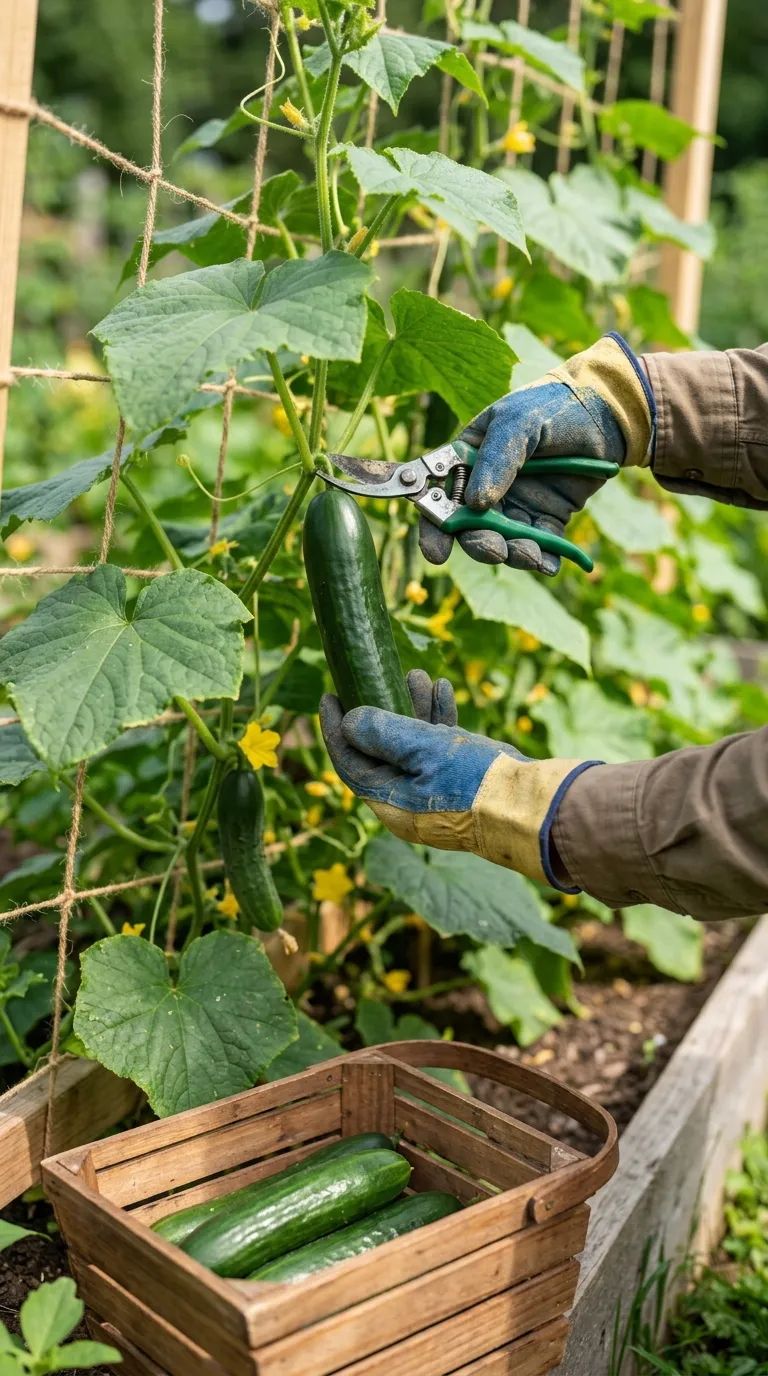
Harvest is not an event; for cucumbers it is a rhythm. Every two days, walk the trellis with pruners and a bowl of cool water. Pick slicers at 6 to 8 inches when skin is deep green, firm, and slightly glossy — before shoulders swell and before the blossom end yellows. Pick picklers at 3 to 4 inches, while they are bumpy and dense. Kirby types at 4 to 6 inches, lemon cucumbers when pale yellow but still firm and not soft. If a fruit has gone full yellow and feels bloated, compost it; it’s communicating to the plant to retire.
Cut, don’t yank. Support the fruit in your palm and snip the stem 1/4 inch above it. Yanking tears the vine’s fine roots and opens wounds for disease. Morning harvesting is ideal — fruits are crisp, hydrated, and hold longest. A harvested cucumber is still breathing; get it into the shade and then the fridge quickly. Store unwashed in a loose bag in the crisper for 4 to 7 days, but honestly, the best storage is on the vine until the day before you need it, picked small and used fresh. This every-two-days pick is the single best productivity hack. A vine allowed to keep an overgrown fruit will pause new female flowers for a week. A vine picked young will double down. I often tell new gardeners: if you’re proud of how big your cucumbers got, you probably waited too long.
Tip 10: Handle Heat With Shade and Steady Water
Above 95°F, pollen can go sterile and fruits may show mild bitterness near the stem end even with good water. If a brutal heat wave settles in, a 30% shade cloth draped over the trellis for the hottest afternoon hours, plus unwavering water, limits stress without hurting yield. And keep harvesting. Nothing stalls a vine faster than a yellowing, seedy cucumber left to signal “we’ve made seed, you can stop now.” Mulch and even water matter more than any foliar spray in heat.
Tip 11 & 12: Choose the Right Variety and Extend the Season
Tip 11: Match Variety to Your Goal
Variety choice is flavor and function. For slicing, ‘Marketmore 76’ and ‘Diva’ are disease-resistant workhorses with straight, bitter-free flesh. For pickling, ‘National Pickling’ or ‘Boston Pickling’ produce 3-inch, bumpy, dense fruits that stay crisp in brine. For snacking, ‘Suyo Long’ curls beautifully down the trellis, burpless, and ‘Lemon’ adds whimsy with round, pale fruits kids love. In humid regions, prioritize downy mildew resistance — it buys you three extra weeks of harvest. Buy fresh seed yearly; cucumber seed loses vigor after 2 years.
Tip 12: Succession and Cool Nights
Cucumbers are not frost-tolerant, but you can stretch shoulder seasons. Direct sow after last frost, then protect young plants with row cover if a late cold night threatens. In late summer, pull tired vines and sow a quick succession for fall in warm climates — choose a 55-day type. In zone 5, that late sowing may only give picklers, but picklers are joy. Seed saving is possible only with open-pollinated varieties isolated from other cucumber types by distance. Cucumbers cross eagerly via bees; for most gardeners buying fresh seed yearly is more reliable.
Common Mistakes — Why Cucumber Harvests Falter
Bitter fruit: Caused by uneven water, heat above 90°F, or leaving fruits to over-mature. Fix: lock in that 1 to 1.5 inches of even water, mulch thoroughly, pick early at 6 to 8 inches before yellowing.
Yellow leaves: Uniform pale lower leaves often mean nitrogen or overwatering; veiny yellow on new leaves can be micronutrients. But cucumbers have specialty downy mildew in humid late summer — diagnose by pattern. See cucumber leaves turning yellow.
Pests & mildew: Striped cucumber beetles chew flowers and transmit bacterial wilt, which wilts a vine overnight with no recovery. Scout early, hand-pick, use row cover until bloom. Powdery and downy mildew thrive on wet foliage; prevention is airy trellising, morning watering, and cleaning up fallen leaves.
Misshapen, curled fruits: Usually incomplete pollination or irregular water. You will see a ball at the blossom end and a skinny stem end. Improve pollinator habitat and even out water.
Letting fruits get too big: An overgrown yellow cucumber signals the vine to stop producing. Pick smaller than you think.
Seasonal Calendar — 12 Tips Across the Season
| When | Tip Focus | Action |
|---|---|---|
| After last frost, soil 70°F | Tips 1–2: Sow | Direct sow 1/2“ deep, 12“ apart on trellis line |
| First true leaves | Tips 3–4: Trellis | Tie gently, train tendrils, clear bottom 12“ for air |
| Vines 12–24 inches | Tips 5–6: Water & mulch | Even 1.5“/week at base, then straw 3“ after warm |
| First yellow flowers | Tips 7–8: Pollination & feed | Plant pollinator flowers nearby, side-dress compost if pale |
| First fruits 6–8“ | Tips 9–10: Harvest rhythm | Pick every 2 days, shade in heat above 95°F |
| Midsummer peak | Tips 11–12: Variety & succession | Note best performer, sow second round 3 weeks after first |
| Late summer | Extend | New vines should be climbing as old vines tire |
| Fall | Cleanup | Remove debris, rotate cucurbits 3 years |
Troubleshooting — When Vines Talk Back
Leaves suddenly wilt despite moist soil? Suspect bacterial wilt from cucumber beetles — no cure once systemic. Pull and bag vine quickly to protect neighbors. Next year, row cover until bloom.
White powder on leaves? Powdery mildew — dry surface mildew late season. Remove worst leaves, improve air, try potassium bicarbonate or neem per label.
Yellow spots with gray fuzz underneath? Downy mildew — see dedicated yellowing guide, remove leaves, switch to morning base watering only, consider copper as protectant.
Tiny cucumbers yellow and abort at 1 inch? Incomplete pollination. Add bee flowers within 20 feet or hand-pollinate morning with male flower.
Fruits fat at blossom end, skinny at stem? Poor pollination + uneven water. Improve both.
What I Learned After 5 Seasons — The Notes I Wish I’d Had
Season one, I ground-sprawled. Twelve vines in a 10-by-10, no trellis, fruits hidden like Easter eggs, half the patch mildewed by August. We harvested maybe a laundry basket full and composted almost as many yellow balloons.
Season two, I trellised but watered like a sprinkler fan, wetting leaves every evening after work. Mildew arrived three weeks earlier. The fix was so simple it felt like cheating: a $15 soaker hose at the base and straw mulch. Mildew retreated by a month.
Season three was my bitter year. A July heat dome plus my erratic “water when I remember” gave us cucumbers that looked perfect and tasted aggressively bitter at the stem. That fall I installed a rain gauge, measured 1 inch weekly, and promised myself I wouldn’t gamble with water again. The next summer, sweetness returned.
Season four taught me about picking courage. I was waiting for that extra inch of size, proud of eight-inch slicers. Vines stalled. A friend who farms said, “Pick them ugly-small. They’ll beg to make more.” He was right. Picking at 6 inches doubled my total harvest.
Season five finally felt easeful. Succession sowing on May 15 and June 10 gave me young, vigorous vines just as the first planting tired. I grew ‘Marketmore’ for slicing, ‘National Pickling’ for jars, and a little row of ‘Suyo Long’ just for joy. That’s the cucumber dividend when basics become habit.
More Tips I Wish I’d Known Sooner
Cucumbers are not just a crop but a conversation with July. The first time you hear that soft snap as a fruit releases from the vine, cool in your palm, you understand why trellising matters — gravity does half the work of straightening, and your job is just to keep water steady.
Choose a sunny bed where the trellis will not shade tomatoes behind it. North side of the garden is kindest if rows run east-west. Give the bed a 2-inch compost blanket in fall and let worms do winter work; spring soil then feels like chocolate cake.
Water with a rain gauge, not a guess. That 1-inch weekly total includes rain. If a storm gave half an inch, you need only half an inch more. Mulch holds the difference between watering every two days and every four.
Succession sowing is self-compassion. Young vines in August outproduce tired July vines without heroic sprays. Let a spent vine go to compost; it is not failure but rotation.
Keep leaves dry at night. Morning water, base only, is the single best mildew prevention you can give. Evening wetness is the invitation mildew waits for.
Feed lightly. Compost at planting plus a palmful at first harvest carries most beds all summer. Heavy nitrogen pushes leaves, not pickles.
Harvest small, often. Every two days, snip, don’t yank. A yellowed balloon left on the vine tells the plant to retire.
Save seed only from open-pollinated, isolated fruits fully yellow past eating stage, fermented two days, rinsed, dried. For most gardeners, fresh seed with disease resistance is simpler.
These small habits compound. By August, the trellis hums with bees, the kitchen has too many cucumbers — the best problem — and you are already planning next year’s second sowing date before you have finished pickling this year’s.
More Tips I Wish I’d Known Sooner
Cucumbers are not just a crop but a conversation with July. The first time you hear that soft snap as a fruit releases from the vine, cool in your palm, you understand why trellising matters — gravity does half the work of straightening, and your job is just to keep water steady.
Choose a sunny bed where the trellis will not shade tomatoes behind it. North side of the garden is kindest if rows run east-west. Give the bed a 2-inch compost blanket in fall and let worms do winter work; spring soil then feels like chocolate cake.
Water with a rain gauge, not a guess. That 1-inch weekly total includes rain. If a storm gave half an inch, you need only half an inch more. Mulch holds the difference between watering every two days and every four.
Succession sowing is self-compassion. Young vines in August outproduce tired July vines without heroic sprays. Let a spent vine go to compost; it is not failure but rotation.
Keep leaves dry at night. Morning water, base only, is the single best mildew prevention you can give. Evening wetness is the invitation mildew waits for.
Feed lightly. Compost at planting plus a palmful at first harvest carries most beds all summer. Heavy nitrogen pushes leaves, not pickles.
Harvest small, often. Every two days, snip, don’t yank. A yellowed balloon left on the vine tells the plant to retire.
Save seed only from open-pollinated, isolated fruits fully yellow past eating stage, fermented two days, rinsed, dried. For most gardeners, fresh seed with disease resistance is simpler.
These small habits compound. By August, the trellis hums with bees, the kitchen has too many cucumbers — the best problem — and you are already planning next year’s second sowing date before you have finished pickling this year’s.
More Tips I Wish I’d Known Sooner
Cucumbers are not just a crop but a conversation with July. The first time you hear that soft snap as a fruit releases from the vine, cool in your palm, you understand why trellising matters — gravity does half the work of straightening, and your job is just to keep water steady.
Choose a sunny bed where the trellis will not shade tomatoes behind it. North side of the garden is kindest if rows run east-west. Give the bed a 2-inch compost blanket in fall and let worms do winter work; spring soil then feels like chocolate cake.
Water with a rain gauge, not a guess. That 1-inch weekly total includes rain. If a storm gave half an inch, you need only half an inch more. Mulch holds the difference between watering every two days and every four.
Succession sowing is self-compassion. Young vines in August outproduce tired July vines without heroic sprays. Let a spent vine go to compost; it is not failure but rotation.
Keep leaves dry at night. Morning water, base only, is the single best mildew prevention you can give. Evening wetness is the invitation mildew waits for.
Feed lightly. Compost at planting plus a palmful at first harvest carries most beds all summer. Heavy nitrogen pushes leaves, not pickles.
Harvest small, often. Every two days, snip, don’t yank. A yellowed balloon left on the vine tells the plant to retire.
Save seed only from open-pollinated, isolated fruits fully yellow past eating stage, fermented two days, rinsed, dried. For most gardeners, fresh seed with disease resistance is simpler.
These small habits compound. By August, the trellis hums with bees, the kitchen has too many cucumbers — the best problem — and you are already planning next year’s second sowing date before you have finished pickling this year’s.
More Tips I Wish I’d Known Sooner
Cucumbers are not just a crop but a conversation with July. The first time you hear that soft snap as a fruit releases from the vine, cool in your palm, you understand why trellising matters — gravity does half the work of straightening, and your job is just to keep water steady.
Choose a sunny bed where the trellis will not shade tomatoes behind it. North side of the garden is kindest if rows run east-west. Give the bed a 2-inch compost blanket in fall and let worms do winter work; spring soil then feels like chocolate cake.
Water with a rain gauge, not a guess. That 1-inch weekly total includes rain. If a storm gave half an inch, you need only half an inch more. Mulch holds the difference between watering every two days and every four.
Succession sowing is self-compassion. Young vines in August outproduce tired July vines without heroic sprays. Let a spent vine go to compost; it is not failure but rotation.
Keep leaves dry at night. Morning water, base only, is the single best mildew prevention you can give. Evening wetness is the invitation mildew waits for.
Feed lightly. Compost at planting plus a palmful at first harvest carries most beds all summer. Heavy nitrogen pushes leaves, not pickles.
Harvest small, often. Every two days, snip, don’t yank. A yellowed balloon left on the vine tells the plant to retire.
Save seed only from open-pollinated, isolated fruits fully yellow past eating stage, fermented two days, rinsed, dried. For most gardeners, fresh seed with disease resistance is simpler.
These small habits compound. By August, the trellis hums with bees, the kitchen has too many cucumbers — the best problem — and you are already planning next year’s second sowing date before you have finished pickling this year’s.
More Tips I Wish I’d Known Sooner
Cucumbers are not just a crop but a conversation with July. The first time you hear that soft snap as a fruit releases from the vine, cool in your palm, you understand why trellising matters — gravity does half the work of straightening, and your job is just to keep water steady.
Choose a sunny bed where the trellis will not shade tomatoes behind it. North side of the garden is kindest if rows run east-west. Give the bed a 2-inch compost blanket in fall and let worms do winter work; spring soil then feels like chocolate cake.
Water with a rain gauge, not a guess. That 1-inch weekly total includes rain. If a storm gave half an inch, you need only half an inch more. Mulch holds the difference between watering every two days and every four.
Succession sowing is self-compassion. Young vines in August outproduce tired July vines without heroic sprays. Let a spent vine go to compost; it is not failure but rotation.
Keep leaves dry at night. Morning water, base only, is the single best mildew prevention you can give. Evening wetness is the invitation mildew waits for.
Feed lightly. Compost at planting plus a palmful at first harvest carries most beds all summer. Heavy nitrogen pushes leaves, not pickles.
Harvest small, often. Every two days, snip, don’t yank. A yellowed balloon left on the vine tells the plant to retire.
Save seed only from open-pollinated, isolated fruits fully yellow past eating stage, fermented two days, rinsed, dried. For most gardeners, fresh seed with disease resistance is simpler.
These small habits compound. By August, the trellis hums with bees, the kitchen has too many cucumbers — the best problem — and you are already planning next year’s second sowing date before you have finished pickling this year’s.
A Small Kitchen Note
The crispest cucumber is one you chill quickly and salt lightly. Slice thin, salt 10 minutes, drain, toss with vinegar, a whisper of sugar and dill. Picklers become fridge pickles in 24 hours: brine of 1 cup vinegar, 1 cup water, 1 tbsp salt, 1 tbsp sugar, garlic, dill seed, pour hot over packed small cucumbers, refrigerate. The reward for that trellis and faithful watering is not just quantity but texture — that snap that tells you it was grown in breathing, evenly moist soil and picked hours ago, not weeks.
Keep a bowl of cucumbers on the counter for the day you pick, and the rest in a loose bag in the crisper. Unwashed, they hold 5 days. Washed and sliced, they weep by tomorrow. Eat the sun-warmed one standing in the garden first; store the rest cool.
Trellis Options for Small Spaces
Not everyone has a cattle panel. A sturdy A-frame built from two 6-foot bamboo stakes and twine works on a balcony. String trellises clipped to a porch rail train one vine beautifully. Even a tomato cage, though small, lifts fruits off damp soil for a patio grower. The principle is the same: vertical air, visible fruit, dry leaves by noon. Build what your space allows; the cucumber will climb whatever you give it with tendrils that grip like shy fingers.
Choose whatever you have — fence, balcony rail, ladder — and keep ties soft. Garden Velcro, strips of old t-shirt, or plain jute in a figure-eight all work. Check weekly, re-tie where the vine slips, and enjoy picking at eye level instead of on your knees hunting hidden monsters.
Quick Reminder Before You Sow
Tape this to the shed: warm soil, direct sow, 12 inches, trellis tall, water even, mulch after warm, every two days harvest. That one line is the whole season distilled. The rest is just helping the plant stay in that rhythm longer, one morning at a time.
- Morning water before 10 a.m. keeps leaves dry by noon and mildew waiting.
- Morning water before 10 a.m. keeps leaves dry by noon and mildew waiting.
- Morning water before 10 a.m. keeps leaves dry by noon and mildew waiting.
- Morning water before 10 a.m. keeps leaves dry by noon and mildew waiting.
- Morning water before 10 a.m. keeps leaves dry by noon and mildew waiting.
Four more gentle lines to honor the trellis and the bees it hosts. Still steady, still morning, still at the base.
One final line for the garden path.
Frequently Asked Questions
Q: How long do cucumbers take to grow?
A: Cucumbers germinate in 3 to 10 days, flower in about 30 days, and produce harvestable fruit 50 to 70 days from sowing. That range is variety real — fast picklers around 50 days, big slicers closer to 65. The trick is picking before they yellow; a 6- to 8-inch slicer or 3-inch pickler left to swell turns seedy and signals the vine to stop producing for a week. Sow succession every 3 weeks to keep young vines coming.
Q: Do cucumbers need full sun?
A: Yes. Cucumbers need 6 to 8 hours of direct sun to fuel those big leaves and heavy water demands. With less than 6, vines will still sprawl and flower but you get fewer, often crooked or bitter fruits. Full sun plus that even 1 to 1.5 inches of water per week is what keeps flesh sweet and straight. In brutal heat above 95°F, light afternoon shade plus unwavering water helps more than extra fertilizer ever will.
Q: Should you grow cucumbers on a trellis?
A: Yes, if you can. Trellised cucumbers grow straighter, stay cleaner, get far better airflow and use roughly three times less ground space. Tie vines loosely in a figure-eight so stems can swell, and harvest from both sides every two days. Ground vines can work, but they need 6 feet of room, hide fruit, and invite rot and mildew. A 6-foot cattle panel with T-posts is the gold standard for most backyards.
Q: Why are my cucumbers bitter?
A: Bitterness usually comes from inconsistent water, prolonged heat above 90°F, or letting fruits over-mature until yellow and seedy. Cucurbitacins concentrate when the plant is stressed. Keep soil evenly moist at 1 to 1.5 inches per week with mulch holding that moisture, and pick early at 6 to 8 inches before any yellowing starts. If heat spikes, afternoon shade cloth plus steady water helps more than extra feed.
Related Articles
- How to Grow Tomatoes
- How Often to Water a Vegetable Garden
- Vegetable Garden Fertilizer
- Tomato Companion Plants
- How to Prepare Soil for Planting
- Vegetable Garden Layout
Sources & References
- University of Minnesota Extension - https://extension.umn.edu/vegetables/growing-cucumbers
- Cornell Vegetables - https://www.vegetables.cornell.edu/
- North Carolina State Extension - https://content.ces.ncsu.edu/cucumbers
- Iowa State University Extension - https://hortnews.extension.iastate.edu/
- University of California Integrated Pest Management - https://ipm.ucanr.edu/