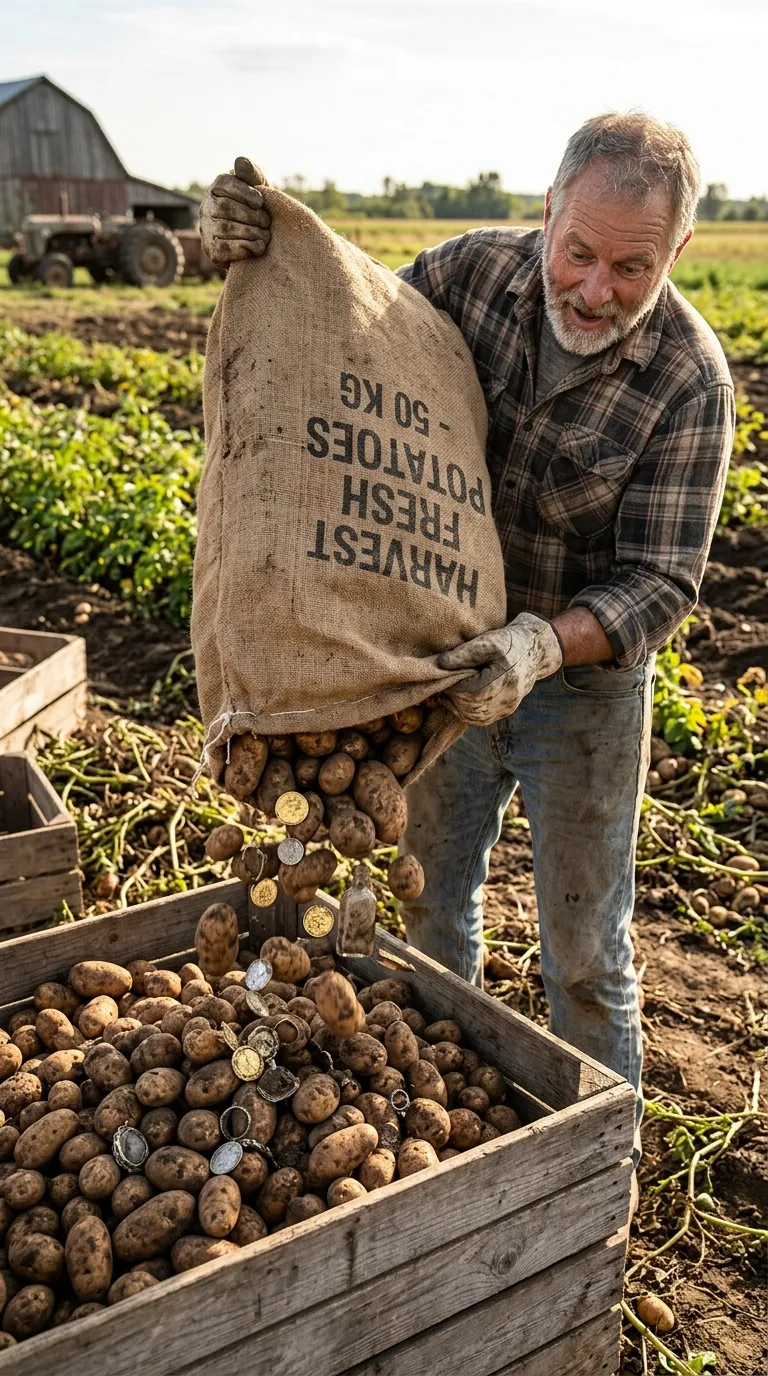
No vegetable hides its abundance quite like the potato. You plant a knobbly piece of last season’s crop, cover it with soil, and for two months you see only green — bushy, handsome leaves that look like they should be ornamental — and then you slide a fork into the soil and turn up a nest of them, pink or gold, still clinging to the root like treasure you buried and forgot. My kids call it the garden’s treasure hunt, and they are not wrong. The first time we grew potatoes in a small raised bed, we counted as we dug — 12, 20, 30 — from six seed pieces that cost less than a bag at the store.
Potatoes ask for a few things that feel old-fashioned: loose soil, cool weather, darkness for the tubers, and patience to let skins set before you store. Give them that, and a 4-by-8 bed can feed you for months. Rush them — plant in cold soggy soil, leave tubers exposed to green, or wash before storing — and you get rot, green bitter shoulders, and sprouts by December.
This is the way I grow them now, from selecting seed that hasn’t been sprayed to keep sprouts down, through chitting on the windowsill, planting at the right depth, hilling like tucking a blanket, watering evenly, and curing for winter. We’ll go from planting to storage together.
Quick Answer: Choose certified disease-free seed potatoes, chit 1 to 2 weeks in cool bright light until short green sprouts form, then cut large tubers into 1.5 to 2 ounce pieces each with 1 to 2 eyes and cure the cut for 24 hours. Plant 4 to 6 inches deep, 12 inches apart in rows 30 to 36 inches apart, sprouts up, when soil is 45 to 50°F and workable — about 2 to 4 weeks before last frost. Hill soil 4 to 6 inches when sprouts are 6 to 8 inches tall and again 2 weeks later to keep tubers dark; mulch lightly after hilling. Water 1 to 1.5 inches per week evenly at the base, more during tuber bulking, less as vines yellow. Harvest new potatoes at 70 to 80 days when flowers fade and tubers are egg-sized; harvest storage potatoes at 90 to 120 days when vines have yellowed and died, wait 10 to 14 days for skin set, dig on a dry day, dry 1 hour in shade — don’t wash — cure 10 to 14 days at 55 to 65°F dark and humid, then store 35 to 40°F dark and breathable.
At a Glance
| Fact | Details |
|---|---|
| Seed | Certified disease-free, 1.5–2 oz pieces, 1–2 eyes |
| Chitting | 1–2 weeks, cool bright 60–70°F, short green sprouts |
| Planting depth | 4–6 inches deep |
| Spacing | 12“ apart, rows 30–36“ |
| Soil | Loose, compost-rich, pH 5.0–6.0, well-drained |
| Water | 1–1.5“/week, even |
| Harvest new | 70–80 days, flowers fade, egg-sized |
| Harvest storage | 90–120 days, vines dead 10–14 days, skins set |
| Yield | 5–10 lbs per row foot, roughly 5:1 return |
Seed Selection and Chitting — Starting With Health
Grocery potatoes are often treated with sprout inhibitors and can carry hidden disease — use certified seed potatoes from a garden supplier. You’ll find categories: early (70–80 days, ‘Yukon Gold’, ‘Red Norland’), mid (80–100 days, ‘Kennebec’, ‘Red Pontiac’), late (100–120 days, ‘Russet Burbank’, ‘German Butterball’). Choose based on your season length; short-season gardens should lean early to mid.
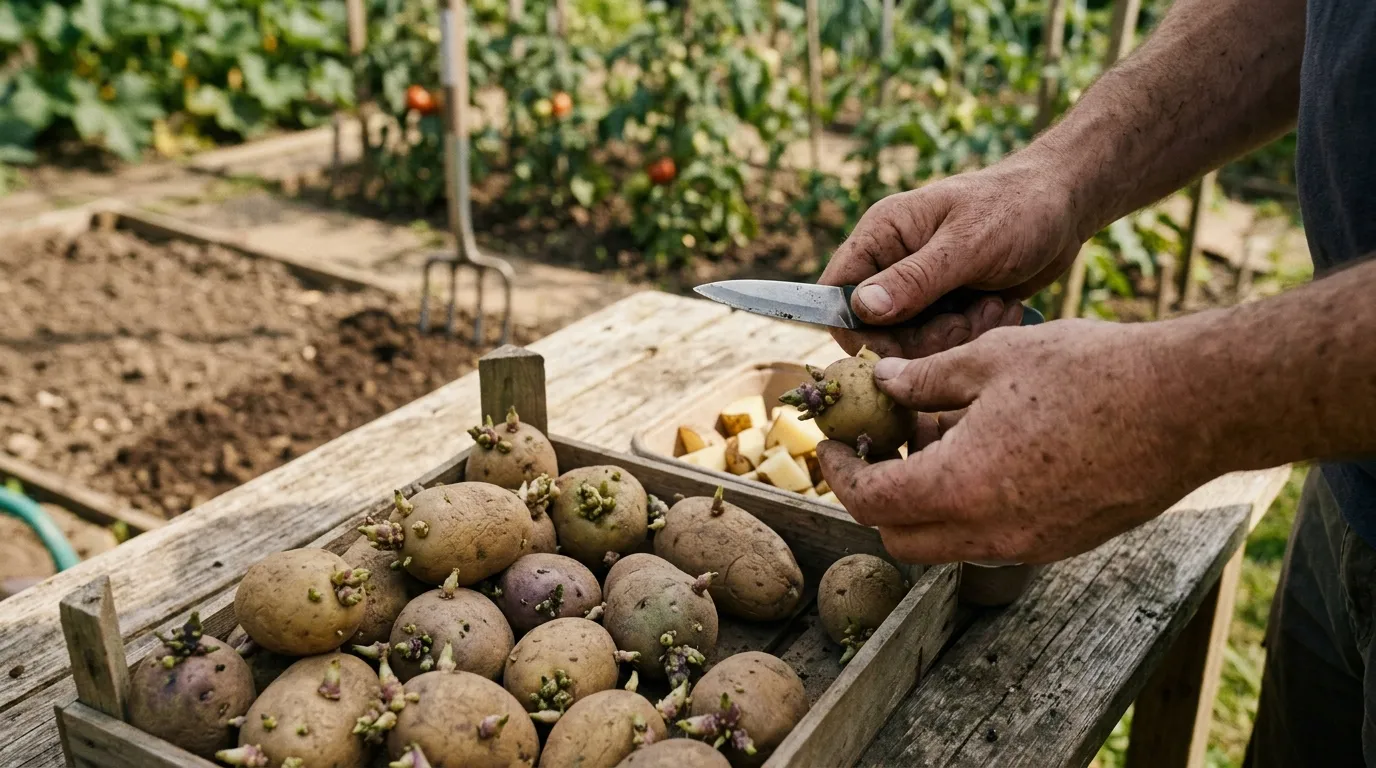
Chitting is optional but helpful. Set whole seed potatoes in a single layer in a cool, bright place — 60 to 70°F, indirect light, not direct sun — for 1 to 2 weeks. Short, stocky, green-purple sprouts 1/2 to 3/4 inch long form. Those sprouts get you emergence a week earlier and more uniform stands. Long, pale, tangled sprouts from a dark cupboard are weak — rub them off and chit again in light.
Large seed potatoes bigger than an egg? Cut them into 1.5 to 2 ounce pieces (about the size of a golf ball) each with 1 to 2 strong eyes. Let cut surfaces dry and cork over for 24 hours in air — this cures the wound so it doesn’t rot in cool soil. Small egg-sized whole seed potatoes can be planted whole without cutting. See more on seed starting in starting seeds indoors and soil prep in how to prepare soil.
Planting and Hilling — Depth, Darkness, and the Blanket
Plant when soil at 4 inches is 45 to 50°F and crumbles rather than smears — about 2 to 4 weeks before last frost. Potatoes tolerate a light frost on sprouts but not frozen seed. Loosen soil 10 to 12 inches deep, work in 2 to 3 inches of finished compost, and ensure drainage — soggy cold soil rots seed pieces before they sprout.
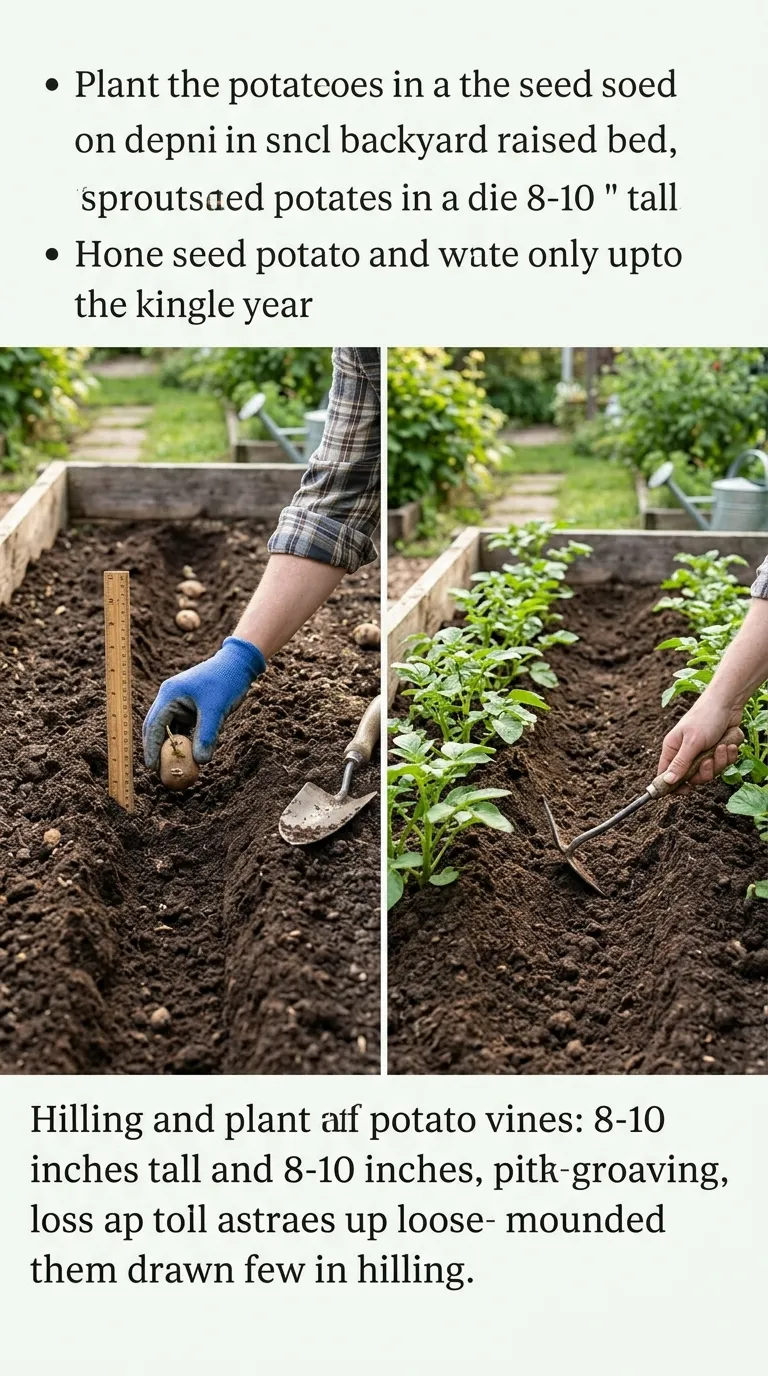
Dig a trench or hole 4 to 6 inches deep, set seed pieces sprouts up, 12 inches apart, rows 30 to 36 inches apart for walking and hilling. Cover with 4 inches of soil, water gently. If a late hard frost threatens after sprouts emerge, cover with 4 inches of straw or a row cover overnight; sprouts are tender at first.
Hilling is the heart of potato care. When sprouts are 6 to 8 inches tall, mound soil, compost, or straw 4 to 6 inches up around stems, burying the lower third but leaving top leaves exposed. Two weeks later, hill again. That blanket keeps developing tubers in complete darkness — light greens them, producing solanine that is bitter and mildly toxic — and gives them loose soil to swell into. It also suppresses weeds and keeps roots cool. In heavy clay, hilling with a mix of soil and straw is lighter and easier for tubers to expand. For small spaces, see how to grow potatoes in containers — the same hilling logic applies, just in a bag.
Watering, Feeding, and Care Through the Season
Water evenly, 1 to 1.5 inches per week, at the base. Potatoes are most thirsty during tuber bulking — roughly 4 to 6 weeks after flowering when tubers swell from marble to egg to fist. Irregular water at that stage gives knobby, cracked, or hollow hearts. Sandy soil needs 2 to 3 splits; clay needs one deep soak. Mulch lightly after the second hilling to hold moisture and keep soil cool. Stop or reduce watering as vines yellow and die — that natural die-back tells you bulking is done and skins are setting.
Feeding is modest. That compost at planting plus a balanced organic at half rate if soil is poor carries most beds. Avoid high-nitrogen late — it pushes leafy vines that delay tuber maturation. If vines are pale before flowering, a light side-dress of compost along the row, watered in, is enough. Keep pH slightly acidic, 5.0 to 6.0, which potatoes prefer and which also suppresses scab. Wood ash raises pH, so go easy if scab has been an issue; sulfur lowers pH per soil test.
Scout weekly: Colorado potato beetles are the classic pest — hand-pick adults and crush orange egg clusters on leaf undersides, or use neem if needed but avoid spraying open flowers at noon. Flea beetles make shothole leaves early — row cover helps until flowering. Keep the patch weeded until canopy closes; after that, leaves shade out weeds.
Harvesting, Curing, and Storing — The Two Weeks That Decide Winter
For new potatoes, watch the flowers. When blossoms fade and start to drop, about 70 days after planting, gently dig at the edge of one hill with your hands — not yanking the vine — and feel for smooth, thin-skinned potatoes the size of a golf ball. Those are waxy, creamy, perfect to boil and eat within days. No curing needed; in fact, curing would toughen what makes them special.
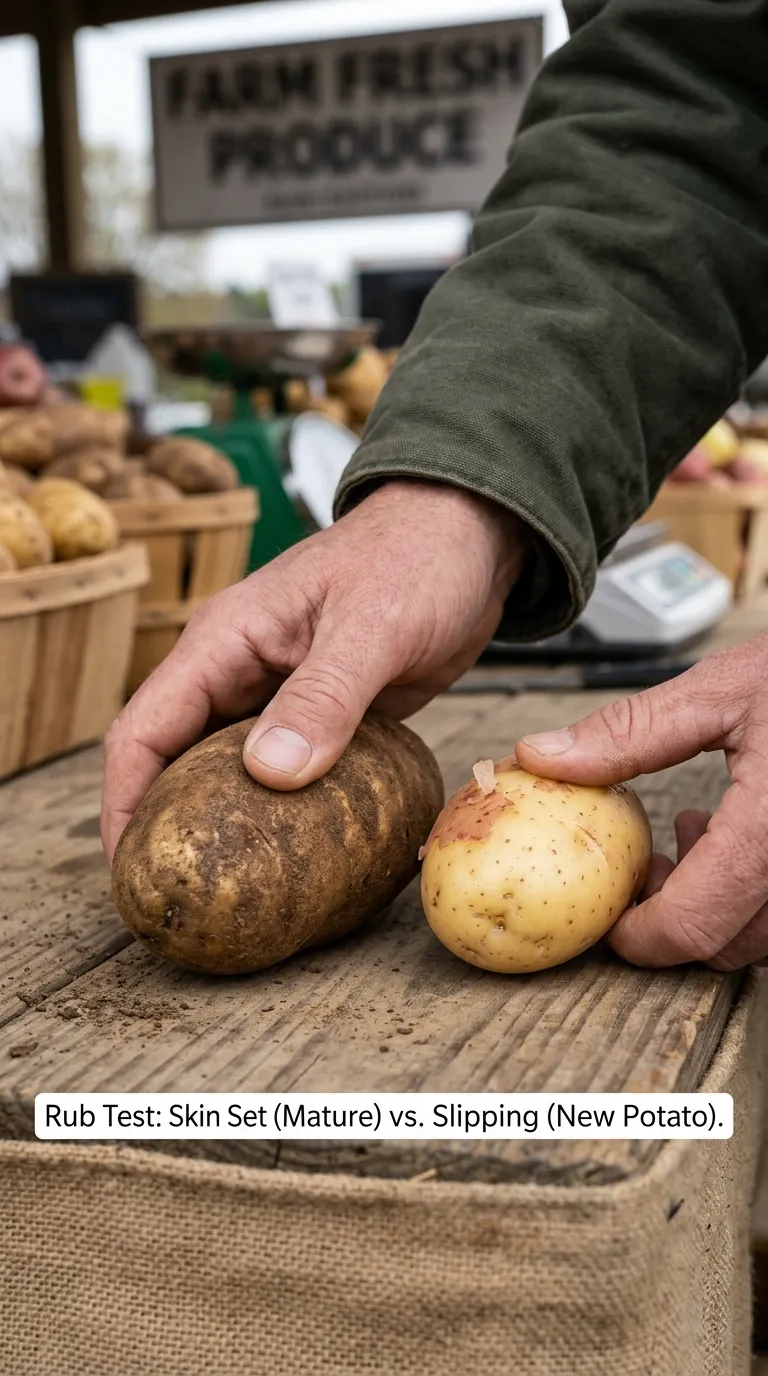
For storage potatoes, watch the vine. Lush green fades to yellow, then brown, then collapses flat — that is the plant pulling energy down and finishing, not necessarily disease. When the vine is fully dead, wait. Leave tubers in the ground 10 to 14 days after vine death so skins thicken and set — this skin set is what lets a potato heal over small scuffs and resist rot in storage. Cut vines to 2 inches after they yellow to start this clock if you want.
Dig on a dry day, after soil has dried slightly. Slide a garden fork 6 to 8 inches away from where the stem was, lever gently, and sift with hands. Work across the hill, not down through it. Every cut tuber matters — a sliced potato will never store; set it aside to eat first.
Let tubers dry briefly — 1 hour in shade and air, not sun — to let skins dry. Brush off soil gently by hand — do not wash, do not scrub. Washing before storage invites rot. Then cure storage potatoes 10 to 14 days in a dark, airy place at 55 to 65°F with humidity around 85% — a garage with a sheet draped over crates and a small fan works. Darkness is essential; light greens them. After curing, move to 35 to 40°F in complete darkness — a root cellar, cool basement, or paper sacks in a closet — in burlap or paper, never sealed plastic. Check monthly and remove any that soften. Cured potatoes stored this way keep 6 to 10 months; uncured sprout in weeks.
Common Mistakes That Cost You the Harvest
Planting grocery potatoes or cold wet soil. Treated grocery potatoes sprout weakly and carry disease. Cold soggy soil rots seed. Wait for 45°F soil that crumbles, use certified seed.
Not hilling — green shoulders and small yield. Tubers that see light turn green and bitter; shallow tubers stay small. Hill twice, 4 to 6 inches each time.
Washing before storage. The number one keeper-killer. Water trapped in eyes rots crates. Brush dry; wash only before cooking.
Leaving cut or bruised tubers in storage. One weeping potato rots neighbors in weeks. Eat damaged ones first; store only whole, firm, clean-skinned potatoes.
Storing in light or wrong temperature. Light greens them; too warm sprouts by December; freezing turns starch to sugar. Aim 35 to 40°F dark.
Leaving mature potatoes in wet fall ground too long. Once vines are dead, tubers sit. In wet October soil beyond 2 weeks, hollow heart, rot, and slugs move in. Harvest within 2 weeks especially if rain starts.
Planting too deep or too shallow. 4 to 6 inches is the band. Too shallow greens quickly; too deep sprouts rot or emerge late.
Seasonal Calendar — Planting to Storage
| Timing | Task | Notes |
|---|---|---|
| 2–3 weeks before planting | Chit seed, cut and cure large pieces 24 hrs | Short green sprouts, not pale strings |
| Soil 45–50°F, 2–4 weeks before last frost | Plant 4–6“ deep, 12“ apart | Compost-rich, well-drained, pH 5.0–6.0 |
| Sprouts 6–8“ tall | First hill 4–6“ | Cover lower stems, leave tops |
| 2 weeks later | Second hill | Keep tubers dark, weed-free |
| Flowering + 4–6 weeks | Tuber bulking, 1–1.5“/week water | Most thirsty stage — even water |
| Vines yellow/brown, collapse | Stop watering lightly | Decide new vs storage |
| Vines dead 10–14 days | Skin set, thumb test | Dig dry day, shade-dry 1 hr, don’t wash |
| Next 10–14 days | Cure 55–65°F dark humid | Single layer, airy, sheet over crates |
| After curing | Store 35–40°F dark breathable | Paper/burlap, check monthly |
Troubleshooting — What Your Plants Are Telling You
Seed rots, no sprouts, soil smells sour: Planted in cold wet soil or uncured cuts. Wait for workable 45°F soil, cure cuts 24 hrs, ensure drainage.
Spindly, pale sprouts under soil, no emergence: Planted too deep (over 6“) or soil crusted. Plant 4 to 6“, keep surface friable, don’t pack heavy mulch before emergence.
Hollow heart or knobby tubers: Irregular water and too much nitrogen during bulking. Keep 1.5“/week even, avoid high-N late, hill for cool roots.
Green shoulders on tubers: Light exposure. Hill higher, keep tubers covered 4 inches.
Scab — corky rough patches on skin: High pH plus dry. Keep pH 5.0–6.0, keep evenly moist during bulking, rotate, choose resistant varieties like ‘Russet Burbank’.
Colorado potato beetles defoliating: Hand-pick daily, crush egg clusters, row cover until bloom. Neem in evening if needed.
Vines yellow early but not dead? Could be early blight or overwatering — check soil moisture and spots vs natural decline. Natural decline is whole-plant fade after flowering, not spotted.
What I Learned After 5 Seasons
Year one I washed every potato gleaming and stored them damp in sealed plastic. By January they were sprouted, soft, and the crate smelled sweet-sour. I learned: dry, dark, paper, cool.
Year two I planted grocery sprouts from the pantry in cold March mud because I was impatient. Half rotted. Waiting until soil crumbled at 45°F and using certified seed gave me a perfect stand the next year.
Year three I didn’t hill. Harvest was a scattering of small green-topped tubers half-exposed, bitter shoulders, sunburned. One afternoon of hilling would have doubled yield. Now hilling day is a family ritual — kids mound with small shovels while I explain why potatoes need darkness.
Year four I left the late row a week too long after vine death because the weather was lovely and I was busy with tomatoes. Warm dry soil forgave me; the follow year I left them in wet October and found slug-hollowed centers. Now I harvest within 10 days of vine death if rain is forecast.
Year five I finally built the simple curing shelf in the garage — a slatted wooden rack with a dark sheet and a small fan on low. Those crates fed us until March, potatoes still firm, skins not slipping, sprouts tiny. That two-week cure is not fussy; it is the difference between November sprouts and March potatoes that still fry crisp.
More Human Notes From the Garden
A garden is not a factory. Carrots sweeten after a light frost because starch turns to sugar as the plant prepares for winter sleep. That cool-night candy happens without you doing anything except leaving the row a touch longer under straw.
Potatoes need darkness like carrots need softness. Hill them twice, 4 to 6 inches, and keep tubers 4 inches under. Green shoulders are sunburned and bitter — hill soil over them when rain washes tops.
Lettuce wants to be cut young. Thirty-day baby leaves picked at 7 a.m. are tender and mild; sixty-day oversized leaves after a hot week are bitter and tough.
Succession is not extra work; it is forgiveness. Sow a pinch every two weeks and the season forgives a bad sowing or a heat wave.
Mulch is the quiet helper. Straw after warm soil for cucumbers and peppers, light straw between carrots after thinning, straw over potatoes after hilling — same idea, different depth.
Water at the base, morning, before 10 a.m. Leaves that wake dry stay healthier four weeks longer than leaves that slept wet.
Taste as you go. A tiny orange carrot eaten standing in the path tells you more than a calendar about whether the row is ready.
Keep one line of notes: date, rain, water, what you harvested. That notebook teaches you more than any schedule.
Harvest with care. Cut cucumbers, don’t yank. Loosen carrots with a fork, then pull. Brush potatoes, don’t wash before storing. Snip lettuce, leave the center to regrow.
Share the surplus. A bowl of mixed lettuce, a handful of tiny carrots pickled with dill, a basket of new potatoes boiled with butter — these are the garden’s conversations with the kitchen.
These habits compound across seasons until the garden feels less like work and more like a rhythm you step into each morning.
More Human Notes From the Garden
A garden is not a factory. Carrots sweeten after a light frost because starch turns to sugar as the plant prepares for winter sleep. That cool-night candy happens without you doing anything except leaving the row a touch longer under straw.
Potatoes need darkness like carrots need softness. Hill them twice, 4 to 6 inches, and keep tubers 4 inches under. Green shoulders are sunburned and bitter — hill soil over them when rain washes tops.
Lettuce wants to be cut young. Thirty-day baby leaves picked at 7 a.m. are tender and mild; sixty-day oversized leaves after a hot week are bitter and tough.
Succession is not extra work; it is forgiveness. Sow a pinch every two weeks and the season forgives a bad sowing or a heat wave.
Mulch is the quiet helper. Straw after warm soil for cucumbers and peppers, light straw between carrots after thinning, straw over potatoes after hilling — same idea, different depth.
Water at the base, morning, before 10 a.m. Leaves that wake dry stay healthier four weeks longer than leaves that slept wet.
Taste as you go. A tiny orange carrot eaten standing in the path tells you more than a calendar about whether the row is ready.
Keep one line of notes: date, rain, water, what you harvested. That notebook teaches you more than any schedule.
Harvest with care. Cut cucumbers, don’t yank. Loosen carrots with a fork, then pull. Brush potatoes, don’t wash before storing. Snip lettuce, leave the center to regrow.
Share the surplus. A bowl of mixed lettuce, a handful of tiny carrots pickled with dill, a basket of new potatoes boiled with butter — these are the garden’s conversations with the kitchen.
These habits compound across seasons until the garden feels less like work and more like a rhythm you step into each morning.
More Human Notes From the Garden
A garden is not a factory. Carrots sweeten after a light frost because starch turns to sugar as the plant prepares for winter sleep. That cool-night candy happens without you doing anything except leaving the row a touch longer under straw.
Potatoes need darkness like carrots need softness. Hill them twice, 4 to 6 inches, and keep tubers 4 inches under. Green shoulders are sunburned and bitter — hill soil over them when rain washes tops.
Lettuce wants to be cut young. Thirty-day baby leaves picked at 7 a.m. are tender and mild; sixty-day oversized leaves after a hot week are bitter and tough.
Succession is not extra work; it is forgiveness. Sow a pinch every two weeks and the season forgives a bad sowing or a heat wave.
Mulch is the quiet helper. Straw after warm soil for cucumbers and peppers, light straw between carrots after thinning, straw over potatoes after hilling — same idea, different depth.
Water at the base, morning, before 10 a.m. Leaves that wake dry stay healthier four weeks longer than leaves that slept wet.
Taste as you go. A tiny orange carrot eaten standing in the path tells you more than a calendar about whether the row is ready.
Keep one line of notes: date, rain, water, what you harvested. That notebook teaches you more than any schedule.
Harvest with care. Cut cucumbers, don’t yank. Loosen carrots with a fork, then pull. Brush potatoes, don’t wash before storing. Snip lettuce, leave the center to regrow.
Share the surplus. A bowl of mixed lettuce, a handful of tiny carrots pickled with dill, a basket of new potatoes boiled with butter — these are the garden’s conversations with the kitchen.
These habits compound across seasons until the garden feels less like work and more like a rhythm you step into each morning.
More Human Notes From the Garden
A garden is not a factory. Carrots sweeten after a light frost because starch turns to sugar as the plant prepares for winter sleep. That cool-night candy happens without you doing anything except leaving the row a touch longer under straw.
Potatoes need darkness like carrots need softness. Hill them twice, 4 to 6 inches, and keep tubers 4 inches under. Green shoulders are sunburned and bitter — hill soil over them when rain washes tops.
Lettuce wants to be cut young. Thirty-day baby leaves picked at 7 a.m. are tender and mild; sixty-day oversized leaves after a hot week are bitter and tough.
Succession is not extra work; it is forgiveness. Sow a pinch every two weeks and the season forgives a bad sowing or a heat wave.
Mulch is the quiet helper. Straw after warm soil for cucumbers and peppers, light straw between carrots after thinning, straw over potatoes after hilling — same idea, different depth.
Water at the base, morning, before 10 a.m. Leaves that wake dry stay healthier four weeks longer than leaves that slept wet.
Taste as you go. A tiny orange carrot eaten standing in the path tells you more than a calendar about whether the row is ready.
Keep one line of notes: date, rain, water, what you harvested. That notebook teaches you more than any schedule.
Harvest with care. Cut cucumbers, don’t yank. Loosen carrots with a fork, then pull. Brush potatoes, don’t wash before storing. Snip lettuce, leave the center to regrow.
Share the surplus. A bowl of mixed lettuce, a handful of tiny carrots pickled with dill, a basket of new potatoes boiled with butter — these are the garden’s conversations with the kitchen.
These habits compound across seasons until the garden feels less like work and more like a rhythm you step into each morning.
Small Variations That Matter
Dappled afternoon shade for lettuce keeps it sweet two weeks longer than blazing sun.
Chantenay carrots in clay outgrow Imperator in clay every time — match variety to soil, not dream.
Yukon Gold new potatoes at 75 days eat better than late Russets dug early for storage.
Potato scab loves high pH — keep 5.0 to 6.0 and rotate three years.
Carrot rust fly finds scent — thin at dusk, cover with row fabric after, and the row stays cleaner.
Potato beetles patrol at 7 a.m. — hand-pick then with a jar of soapy water.
Lettuce tipburn is water swing, not lack of feed — even 1 inch weekly prevents brown edges.
Sow lettuce barely covered — light helps it wake.
Hill potatoes twice — darkness is flavor.
Thin carrots twice — space is size.
What I Keep on the Shed Wall
A handwritten card that says: warm soil, direct sow, 12 inches, thin twice to 2, even water, pick before yellow. For potatoes: 4 to 6 deep, hill twice, 1 to 1.5 even, dead vine wait 14 days, cure dark. For lettuce: barely cover, 4 inches, cool moist, morning cut, shade above 75. That card is the whole season distilled into a sentence you can read with muddy hands.
Tape your own card this weekend. The plants will teach the rest.
What I Keep on the Shed Wall
A handwritten card that says: warm soil, direct sow, 12 inches, thin twice to 2, even water, pick before yellow. For potatoes: 4 to 6 deep, hill twice, 1 to 1.5 even, dead vine wait 14 days, cure dark. For lettuce: barely cover, 4 inches, cool moist, morning cut, shade above 75. That card is the whole season distilled into a sentence you can read with muddy hands.
Tape your own card this weekend. The plants will teach the rest.
Certified seed is not a luxury — it is the cheapest disease insurance you can buy. Chit in cool bright light for short green sprouts; pale spaghetti sprouts from a dark cupboard are weak. Cure cut pieces 24 hours so the wound dries; wet cuts rot in cool soil. Soil at four inches should crumble, not smear — that is your planting window. A trench four to six inches deep keeps tubers dark and cool without burying sprouts too deep. Hill when sprouts are six to eight inches — bury a third, leave top leaves drinking sun. Second hilling two weeks later is the yield bump most new growers skip. Straw between hills after second hilling keeps soil 10°F cooler in July. Water most when tubers swell from marble to fist — that month decides size. Even 1.5 inches weekly prevents hollow heart and knobby shapes more than any fertilizer. Colorado potato beetles patrol at dawn — a jar of soapy water at 7 a.m. saves a row. Stop watering as vines yellow; that natural fade is ripening, not drought. Cut vines to two inches after yellowing and wait 14 days — skins set like a promise. Dig wide, six to eight inches out, with a fork not a shovel — spearing loses the best tubers. Dry one hour in shade, brush soil, never wash before storing. Cure in dark humid air at 55 to 65°F — garage with a sheet and a fan works beautifully. Store in paper or burlap at 35 to 40°F, never sealed plastic, check monthly. One sliced tuber stored damp can sour a whole crate — eat damaged first. Fall compost one inch on the bed feeds next year more than any bottle. Rotation — not peppers there for three years — keeps scab and wilt at bay. Hilling soil that is too wet compacts; hill when soil is moist-crumbly, not muddy. Container potatoes in grow bags hill with compost and straw the same way, just vertical. Kids love the treasure hunt — let them sift with hands after you lever. If soil is warm and dry, an extra week in ground forgives; if wet, dig sooner. A thumb rub that does not slip means ready to cure. Wood ash raises pH — go easy if scab has shown; keep 5.0 to 6.0. Green shoulders are bitter with solanine — hill soil over any light. Weed until canopy closes; after that leaves shade weeds for you. Label varieties — early for new potatoes, late for winter keepers. A curing shelf of slats and a dark sheet gave me March potatoes still firm. Wash only before cooking, months later, when you will eat that day. Patience at skin set is winter food; rush it and sprouts come by January. Plant sprouts up — the green tip knows where sun is. Loose compost-rich soil lets tubers swell without fighting clay. That two-week cure is not fussy; it is the difference between storage and sprout.
Frequently Asked Questions
Q: How long do potatoes take to grow?
A: Potatoes take 70 to 120 days depending on type and weather. Early new potatoes like ‘Yukon Gold’ are ready around 70 to 80 days when flowers fade and tubers are egg-sized — perfect for that waxy, creamy harvest you eat within days. Mid-season types finish around 80 to 100 days, late storage types like ‘Russet Burbank’ around 100 to 120 days when vines have yellowed and collapsed. Test-dig at the edge of one hill rather than pulling the vine; skin slipping means not yet set for storage.
Q: Do you need to chit potatoes before planting?
A: No, but chitting gives a 1 to 2 week head start and more uniform sprouting, especially for early varieties and short seasons. Set whole seed potatoes in a single layer in cool, bright, indirect light at 60 to 70°F for 1 to 2 weeks until short, stocky green-purple sprouts 1/2 to 3/4 inch form, then plant sprouts up. Long, pale, stringy sprouts from a dark cupboard are weak — rub them off and chit again in light. If you are already late to plant, skip chitting and plant directly.
Q: How deep do you plant potatoes?
A: Plant seed pieces 4 to 6 inches deep in loose, compost-rich soil, 12 inches apart in rows 30 to 36 inches apart, sprouts facing up. That depth protects from light-greening and keeps roots cool, but still shallow enough for sprouts to emerge vigorously. Cover with 4 inches of soil, then hill soil, compost, or straw 4 to 6 inches up around stems when sprouts are 6 to 8 inches tall, and again 2 weeks later to keep developing tubers in complete darkness where they stay tender and white, not green.
Q: When should you harvest potatoes?
A: Harvest new potatoes 70 to 80 days after planting when plants flower and then flowers fade and tubers are egg-sized while vines are still green — skins will be paper-thin and will rub off easily, which is exactly right for waxy new potatoes you eat within a week or two. Harvest storage potatoes 90 to 120 days after planting when vines have yellowed, withered, and died back; leave tubers in the ground 10 to 14 days after vine death so skins can set and not rub off with thumb pressure, then dig on a dry day and cure before storing.
Related Articles
- When to Harvest Potatoes
- How to Grow Potatoes in Containers
- How to Prepare Soil for Planting
- Vegetable Garden Layout
- How Often to Water Vegetables
- Best Soil for Vegetable Gardens
Sources & References
- University of Minnesota Extension - https://extension.umn.edu/vegetables/growing-potatoes
- Cornell Vegetables - https://www.vegetables.cornell.edu/
- North Carolina State Extension - https://content.ces.ncsu.edu/potatoes
- Iowa State University Extension - https://hortnews.extension.iastate.edu/
- University of Idaho Potato Extension - https://www.uidaho.edu/cals/potatoes