Lettuce is the garden’s most forgiving teacher. It germinates quickly, grows visibly each day, and lets you harvest with scissors weeks before a carrot even shows a shoulder. And it tastes like the season it was grown in — cool, sweet, tender in spring, a touch firmer and more robust in fall. The first time I grew a cut-and-come-again bowl of ‘Salad Bowl’ on a tiny balcony, I snipped leaves for a sandwich at lunch and watched them regrow by the weekend. That small miracle is what keeps even veteran gardeners tucking lettuce into every gap.
Lettuce does have one non-negotiable: it is a cool-weather plant that wants to bolt when days get long and hot. But that is not a flaw — it’s a calendar. Work with it, not against it, and you get crisp leaves for 8 months with almost no pest pressure. Fight it by sowing the same head lettuce in July sun with no shade, and you get bitter, tall, flowering stalks that even the rabbits eye suspiciously.
These are the easy tips I wish someone had written plainly when I started: how to sow so thinly you barely need to thin, how to keep it from going bitter, and how to succession sow so a handful of seeds every two weeks becomes a spring-to-fall salad bar.
Quick Answer: Sow lettuce directly outdoors 2 to 4 weeks before last frost when soil is 50 to 60°F, 1/8 to 1/4 inch deep, barely covered, in rich, well-drained soil with pH 6.0–7.0 and 6 hours of sun — but with afternoon shade in heat. Keep soil consistently moist, not soggy — about 1 inch per week, never letting the top inch fully dry — and mulch lightly to keep roots cool. Thin seedlings to 4 inches for leaf lettuce, 8 to 12 inches for heads, by snipping at the base. Harvest baby leaves at 30 days or heads at 45 to 60 days, cutting in the cool morning. Sow every 2 to 3 weeks in spring and again in late summer for fall, choose bolt-resistant or heat-tolerant varieties like ‘Jericho’ or ‘Muir’ for summer, and use 30% shade cloth when temperatures exceed 75°F to keep leaves sweet and crisp.
At a Glance
| Fact | Details |
|---|---|
| Sun | 6 hours, afternoon shade in heat >75°F |
| Soil | Rich, well-drained, pH 6.0–7.0, compost 2“ |
| Sowing depth | 1/8 to 1/4 inch, lightly covered |
| Germination | 7–10 days at 50–65°F |
| Spacing | Leaf 4“, heads 8–12“, rows 12“ |
| Water | 1“/week, consistently moist, never dry top inch |
| Harvest | Baby 30 days, heads 45–60 days |
| Succession | Every 2–3 weeks spring and fall |
Why Lettuce Bolts — And How Shade Is Sweetness
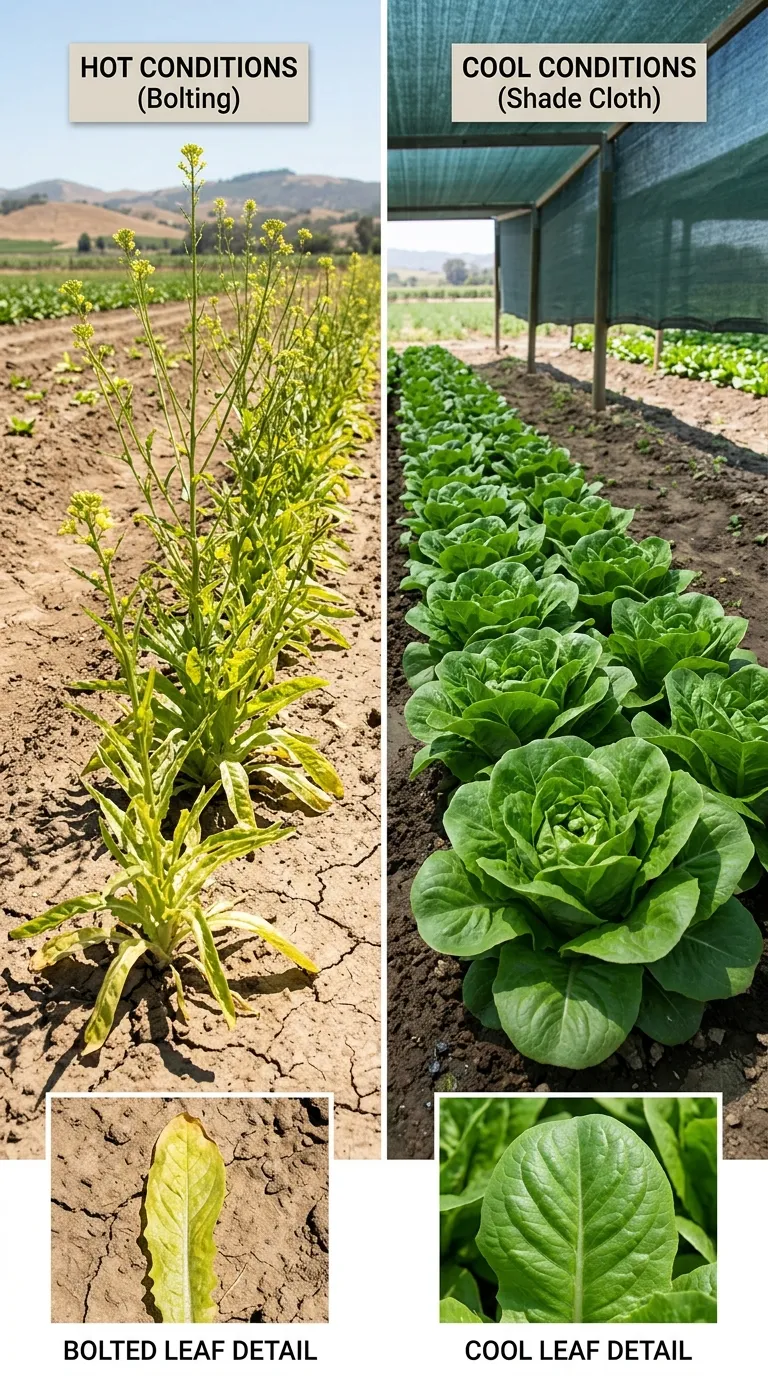
Lettuce is a long-day plant. As days lengthen past 14 hours and temperatures climb above 75°F, it hears a signal: “Summer is peaking, make seed now before you die.” That signal triggers bolting — the center stretches up, leaves get smaller and more bitter, milky sap appears, and a flower stalk shoots. Heat and inconsistent water accelerate it.
So we give lettuce what it wants: cool roots, even moisture, and protection from the harshest afternoon sun. Mulch keeps soil 5 to 8°F cooler. Consistent water keeps it from panicking. And 30% shade cloth draped over hoops from 12 to 5 p.m. in summer heat can keep leaves tender two weeks longer. I grow summer lettuce under the dappled afternoon shade of a trellised cucumber — a classic companion trick where the tall crop shelters the short one. For broader companion ideas, see companion planting and the heat-timing guide in when to plant vegetables.
Variety is also strategy. Looseleaf types like ‘Red Sails’ and ‘Black Seeded Simpson’ are fastest and most cut-and-come-again forgiving. Romaine like ‘Jericho’ bred in desert heat holds longer. Butterheads like ‘Buttercrunch’ are tender but bolt quicker. For summer, choose “bolt-resistant” or “heat-tolerant” on the packet — it matters.
Sowing and Thinning — Barely Cover, Barely Compete
Lettuce seed needs light to germinate. That 1/8 to 1/4 inch depth is literal — barely dusted. Sow directly where it will grow; lettuce transplants fairly well for head lettuce, but direct sow for leaf lettuce is simpler.
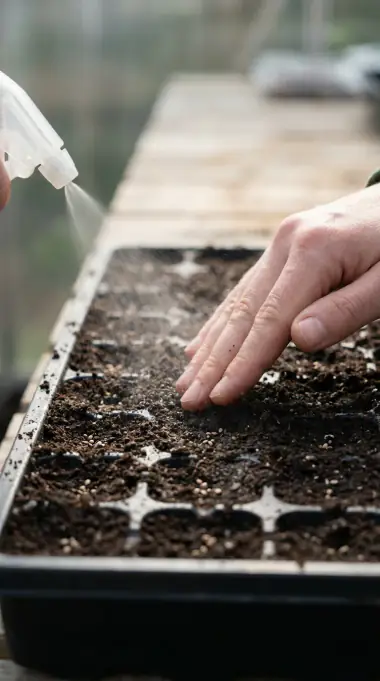
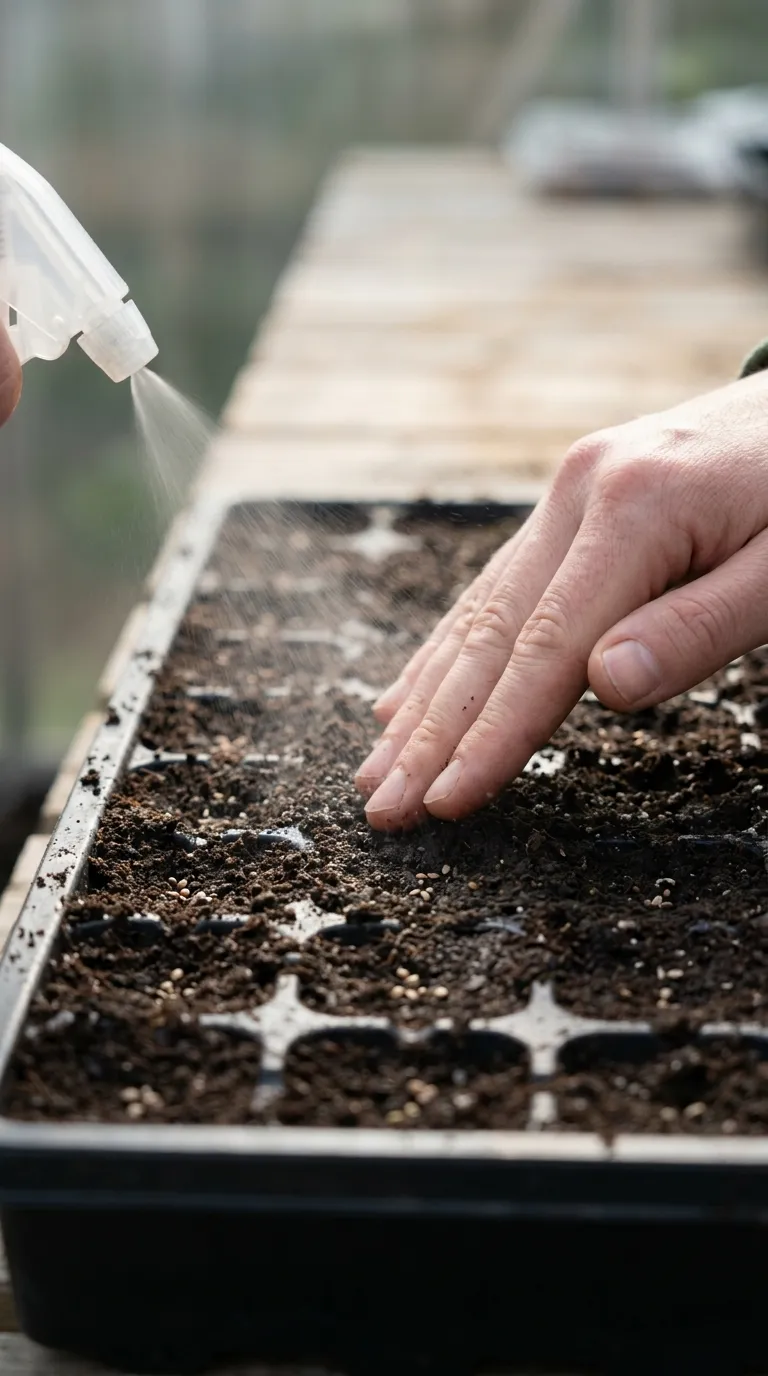
Rake the bed fine — no clods, no crust — work in 2 inches of finished compost, and water lightly first. Stretch a string for rows 12 inches apart. Sprinkle seeds thinly; mixing with sand helps you see where they fall and prevents the “salt shaker” dump that creates a carpet no one wants to thin. Cover whisper-lightly with sifted compost or vermiculite, mist gently, and keep moist for 7 to 10 days until emergence. In warm soil above 70°F, germination drops; pre-chill seed in the fridge for 2 days or sow in the cool of evening and shade the row with a board for 2 days, removing the moment green shows. Lettuce germinates best at 50 to 65°F soil — cool spring and fall are its happy windows.
Thinning is the kindness that prevents bitterness. Leaf lettuce: snip to 4 inches apart when seedlings are 1 to 2 inches tall. Head lettuce: 8 to 12 inches so heads can shape. Do it with small scissors at the base, not pulling that disturbs neighbors. Eat the thinnings — those first two-inch leaves are the tenderest you’ll ever taste. If you sow thickly and skip thinning, crowded lettuce stays small, leggy, and bolts faster because leaves shade each other and trap heat.
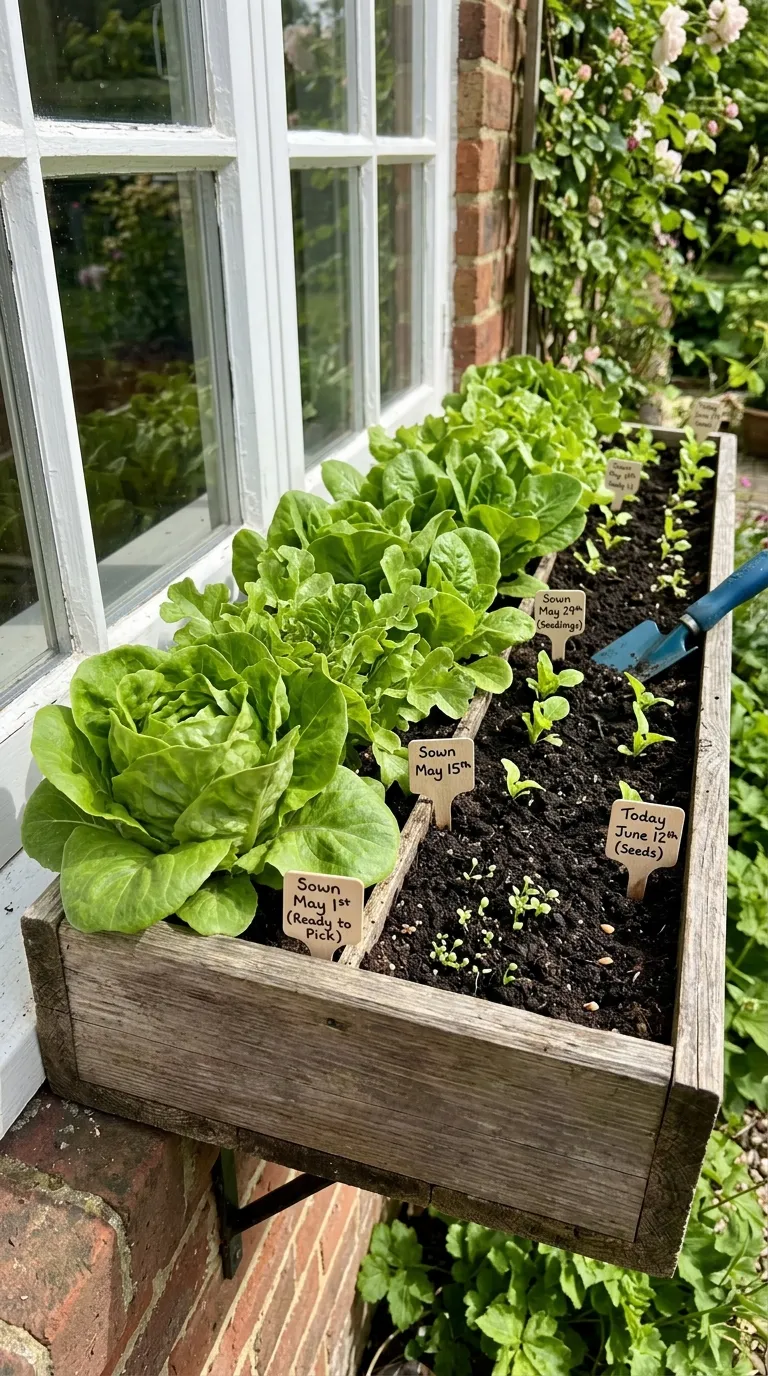
Succession is the quiet way to never be without. Sow a short row every 2 to 3 weeks in spring until 4 weeks before heat peaks, pause mid-summer except for heat-tolerant baby leaf under shade, then sow again in late summer for fall. Each sowing can be a different type — a red leaf, a romaine, a butterhead — so your bowl is always colorful and you learn which your garden loves. Label with date and variety; memory fades faster than lettuce grows.
Watering, Mulching, and Feeding — Shallow Roots, Steady Sips
Lettuce roots live in the top 4 to 6 inches and they want even moisture like a sponge that is always damp, never dripping. About 1 inch per week, split into 2 to 3 gentle waterings at the base, before 10 a.m. so leaves dry by noon, is the baseline. In sandy soil or during a warm spell, that may mean a light drink every 2 days; in cool spring, twice a week is enough. The finger test: top inch should feel cool-moist, not dry or soggy. If the top inch dries, lettuce wilts by afternoon and bitter compounds build.
Mulch lightly after seedlings are 2 to 3 inches tall — a whisper of straw or shredded leaves 1 to 2 inches, kept off crowns. Mulch cools roots, cuts evaporation, and suppresses weeds that compete for that shallow water. Avoid heavy mulching before seedlings establish; they need light at the surface.
Feeding is restrained. That 2 inches of compost at bed prep is usually enough for leaf lettuce. If leaves are pale or growth stalls after cut-and-come-again harvests, side-dress with a light balanced organic or fish emulsion at half strength, watered in, once mid-season. Heavy nitrogen pushes rapid, soft growth that is actually more prone to tipburn and bolting. Keep pH 6.0–7.0 so calcium and micronutrients stay available — lettuce tipburn, that brown dead edge on inner leaves, often traces to calcium uptake disrupted by water swings, not lack of fertilizer. Even water prevents it more than extra calcium.
Container lettuce is delightful and efficient: shallow 6 to 8 inch deep containers are fine because roots are shallow. Use light potting mix with 20% perlite, sow thinly, thin to 4 inches, and water so mix never fully dries but never soggy — containers may need water every 1 to 2 days in heat. Morning harvest keeps containers productive longest.
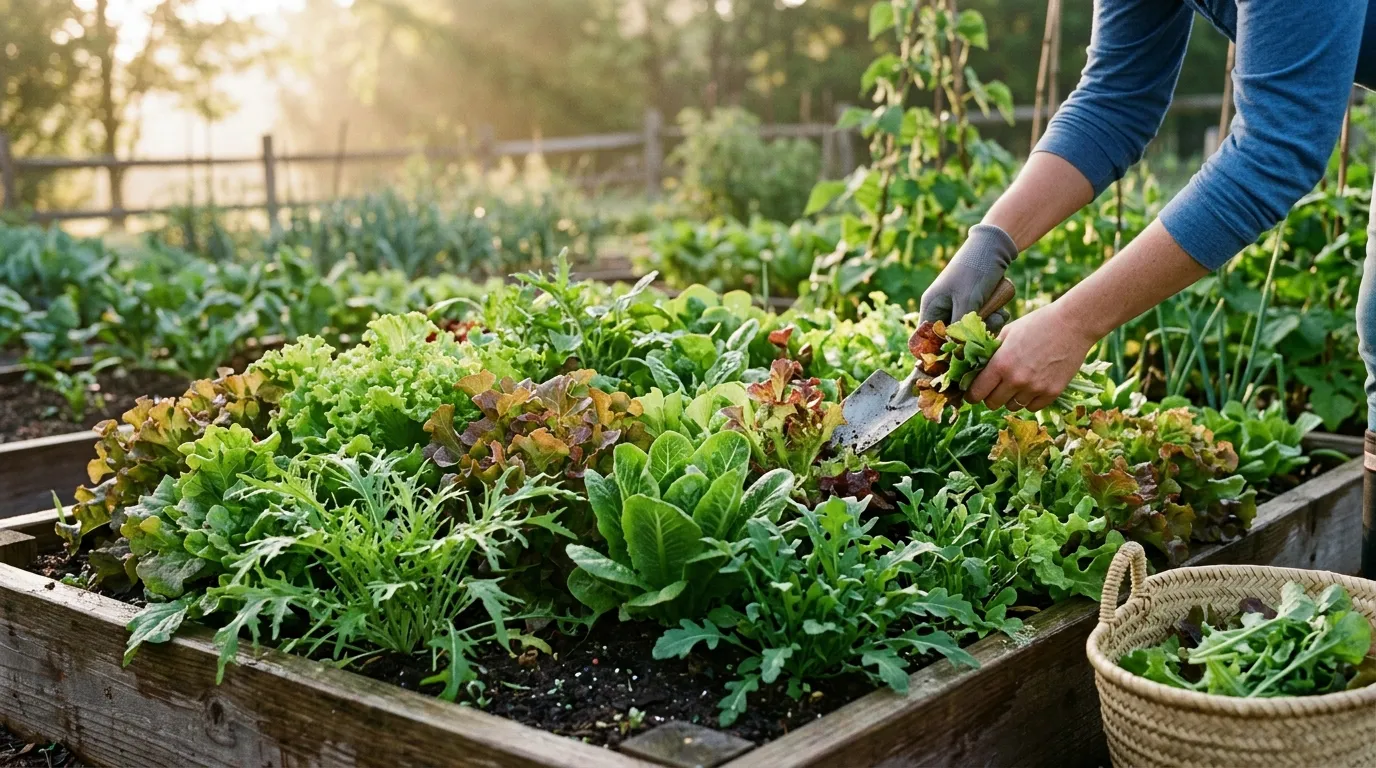
Harvesting Crisp Leaves — Cut-and-Come-Again and Head Harvest
There are two harvest styles, and both are satisfying.
Cut-and-come-again leaf lettuce: At 30 days after sowing, when leaves are 4 to 6 inches, cut the outer leaves with scissors, leaving the central 2 inches to regrow, or cut the whole plant to 1 to 2 inches above soil and let it regrow. Harvest in the cool of early morning when leaves are turgid and crisp — afternoon-picked lettuce wilts faster. A single sowing can give 2 to 3 harvests over 3 to 4 weeks before bolting pressure builds. Wash gently, spin dry, store in a loose bag in the crisper with a paper towel for 4 to 7 days.
Head lettuce: Wait 45 to 60 days until heads feel firm and full — butterheads soft and folded, romaines upright and dense. Cut at the base with a sharp knife in the morning. Don’t wait until the center elongates — that is bolting starting.
A tip that keeps leaves sweet: harvest more often, smaller. Young leaves are tender and mild; oversized, tough leaves that have sat through a hot week tend toward bitterness. Succession beats size. Keep sowing, keep cutting young.
For storage synergy and post-harvest handling, see harvesting and storing vegetables and fresh-herb handling in harvesting herbs.
Extending the Season — From First Frost to Last
Lettuce tolerates light frost — down to 28°F for mature heads, even 25°F for young leaf with row cover — and actually sweetens a touch after cool nights. For an early start, sow 2 to 4 weeks before last frost; seeds germinate at 35°F but best at 50 to 65°F. Protect with a row cover on frosty nights; remove by day so light reaches.
For summer, switch tactics: sow heat-tolerant varieties under 30% shade cloth, keep soil consistently moist, and harvest as baby leaves at 30 days before heat builds bitterness. Some gardeners pause head lettuce entirely in July and grow only red leaf baby lettuce in the coolest bed.
For fall, sowing 4 to 6 weeks before first frost gives you heads that mature in the sweet, cool 60°F days of September and October. Mulch a bit heavier, and you can often harvest until Thanksgiving with a low tunnel or a cold frame. My best lettuce is often my October lettuce — crisp, deeply colored, slow-grown, eaten with roasted potatoes from the same garden.
Common Mistakes That Turn Lettuce Bitter
Sowing too deep or into warm soil. Barely cover 1/8 to 1/4 inch, and sow when soil is 50 to 65°F. In heat, pre-chill seed and shade the row 2 days.
Not thinning. Crowded lettuce stays small, leggy, and bolts early. Snip to 4 inches leaf, 8 to 12 heads.
Letting the top inch dry. Shallow roots mean drought equals bitterness within days. Keep consistently moist, mulch after seedlings are 2 inches.
Heavy nitrogen pushes, then bolting. Compost at prep is enough; light side-dress only if pale.
Afternoon sun with no relief. Provide afternoon shade above 75°F — shade cloth, taller companion, or east-facing bed that gets morning sun, afternoon cool.
Waiting too long to harvest. Big, tough, canopy-shading leaves after a hot week are bitter. Harvest young, harvest often.
Harvesting in hot afternoon. Pick at 7 a.m. for crispness; afternoon leaves wilt in the bag.
Seasonal Calendar — Easy Tips Across the Year
| Season | Action | Why |
|---|---|---|
| Late winter indoors | Start head lettuce 4 weeks before last frost for transplant | Jump on cool window |
| 2–4 weeks before last frost | Direct sow 1/8“ deep, barely covered, keep moist | Cool germination = sweet leaves |
| Seedlings 1–2“ tall | Thin to 4“ leaf, 8–12“ heads, evening, scissors | Prevents legginess and bolting |
| Spring weekly | Sow succession every 2–3 weeks | Nonstop bowl |
| Late spring >75°F | Switch to heat-tolerant, add 30% shade afternoons | Keeps tender, not bitter |
| Summer | Harvest baby 30 days, cut-and-come-again | Beats heat by picking young |
| Late summer 4–6 weeks before frost | Sow again for fall heads | Cool sweet growth |
| Fall | Mulch heavier, harvest after light frost until cold | Best flavor of year |
| Winter low tunnel | Row cover or cold frame over fall sowing | Extends 4–6 weeks |
Troubleshooting — Read the Leaf
Tall center, small leaves, milky sap? Bolting — heat + long days. Harvest immediately, sow new row in shade, choose bolt-resistant next.
Brown dead edge on inner leaves? Tipburn — calcium uptake disrupted by water swings or heavy N. Even out water, don’t over-fertilize, keep mulched.
Leggy, pale, floppy? Too little sun + crowding. Move to 6 hrs sun, thin to 4“, space rows 12“.
Wilts by 3 p.m., recovers by evening? Heat coping, but check top inch — if dry, water morning deeply.
Washy, watery taste? Overwatered and shaded. Let top inch breathe slightly between drinks, ensure at least 6 hrs sun.
Pests — slugs, aphids? Slugs love damp mulch — pull mulch back 1 inch from crowns, beer trap or hand-pick at dusk, keep beds airy. Aphids blast with water jet, then insecticidal soap evenings.
What I Learned After 5 Seasons
Year one I sowed head lettuce in June full sun, full heat, no shade. It bolted at 5 inches, bitter, milky, and I composted the whole row. Lesson: cool season means cool season.
Year two I sowed too thickly and couldn’t bear to thin. The carpet stayed 2 inches tall, leggy, and bolted at the same time. One evening with scissors to 4 inches gave me the first real salad that July — space makes sweetness.
Year three I discovered shade cloth. A $12 piece over hoops from noon to 5 p.m. gave me July baby leaves that actually stayed sweet. I also tucked lettuce under the cucumber trellis — the cucumbers shaded them at 2 p.m., and both crops were happier.
Year four I learned to harvest at 7 a.m. The same row picked at 3 p.m. wilted by dinner; picked at dawn with a paper towel in the crisper, it stayed crisp 5 days.
Year five I built a low tunnel with bent wire and old window plastic over a late August sowing. We picked lettuce at Thanksgiving, sweet and deeply colored, while the first snow dusted the mulch. That fall window is now my favorite — slow, cool, flavorful leaves while the rest of the garden sleeps.
If you take one habit, let it be succession. A pinch of seed every two weeks, thin to 4 inches, water even, shade when hot, cut young. The bowl never empties.
More Human Notes From the Garden
A garden is not a factory. Carrots sweeten after a light frost because starch turns to sugar as the plant prepares for winter sleep. That cool-night candy happens without you doing anything except leaving the row a touch longer under straw.
Potatoes need darkness like carrots need softness. Hill them twice, 4 to 6 inches, and keep tubers 4 inches under. Green shoulders are sunburned and bitter — hill soil over them when rain washes tops.
Lettuce wants to be cut young. Thirty-day baby leaves picked at 7 a.m. are tender and mild; sixty-day oversized leaves after a hot week are bitter and tough.
Succession is not extra work; it is forgiveness. Sow a pinch every two weeks and the season forgives a bad sowing or a heat wave.
Mulch is the quiet helper. Straw after warm soil for cucumbers and peppers, light straw between carrots after thinning, straw over potatoes after hilling — same idea, different depth.
Water at the base, morning, before 10 a.m. Leaves that wake dry stay healthier four weeks longer than leaves that slept wet.
Taste as you go. A tiny orange carrot eaten standing in the path tells you more than a calendar about whether the row is ready.
Keep one line of notes: date, rain, water, what you harvested. That notebook teaches you more than any schedule.
Harvest with care. Cut cucumbers, don’t yank. Loosen carrots with a fork, then pull. Brush potatoes, don’t wash before storing. Snip lettuce, leave the center to regrow.
Share the surplus. A bowl of mixed lettuce, a handful of tiny carrots pickled with dill, a basket of new potatoes boiled with butter — these are the garden’s conversations with the kitchen.
These habits compound across seasons until the garden feels less like work and more like a rhythm you step into each morning.
More Human Notes From the Garden
A garden is not a factory. Carrots sweeten after a light frost because starch turns to sugar as the plant prepares for winter sleep. That cool-night candy happens without you doing anything except leaving the row a touch longer under straw.
Potatoes need darkness like carrots need softness. Hill them twice, 4 to 6 inches, and keep tubers 4 inches under. Green shoulders are sunburned and bitter — hill soil over them when rain washes tops.
Lettuce wants to be cut young. Thirty-day baby leaves picked at 7 a.m. are tender and mild; sixty-day oversized leaves after a hot week are bitter and tough.
Succession is not extra work; it is forgiveness. Sow a pinch every two weeks and the season forgives a bad sowing or a heat wave.
Mulch is the quiet helper. Straw after warm soil for cucumbers and peppers, light straw between carrots after thinning, straw over potatoes after hilling — same idea, different depth.
Water at the base, morning, before 10 a.m. Leaves that wake dry stay healthier four weeks longer than leaves that slept wet.
Taste as you go. A tiny orange carrot eaten standing in the path tells you more than a calendar about whether the row is ready.
Keep one line of notes: date, rain, water, what you harvested. That notebook teaches you more than any schedule.
Harvest with care. Cut cucumbers, don’t yank. Loosen carrots with a fork, then pull. Brush potatoes, don’t wash before storing. Snip lettuce, leave the center to regrow.
Share the surplus. A bowl of mixed lettuce, a handful of tiny carrots pickled with dill, a basket of new potatoes boiled with butter — these are the garden’s conversations with the kitchen.
These habits compound across seasons until the garden feels less like work and more like a rhythm you step into each morning.
More Human Notes From the Garden
A garden is not a factory. Carrots sweeten after a light frost because starch turns to sugar as the plant prepares for winter sleep. That cool-night candy happens without you doing anything except leaving the row a touch longer under straw.
Potatoes need darkness like carrots need softness. Hill them twice, 4 to 6 inches, and keep tubers 4 inches under. Green shoulders are sunburned and bitter — hill soil over them when rain washes tops.
Lettuce wants to be cut young. Thirty-day baby leaves picked at 7 a.m. are tender and mild; sixty-day oversized leaves after a hot week are bitter and tough.
Succession is not extra work; it is forgiveness. Sow a pinch every two weeks and the season forgives a bad sowing or a heat wave.
Mulch is the quiet helper. Straw after warm soil for cucumbers and peppers, light straw between carrots after thinning, straw over potatoes after hilling — same idea, different depth.
Water at the base, morning, before 10 a.m. Leaves that wake dry stay healthier four weeks longer than leaves that slept wet.
Taste as you go. A tiny orange carrot eaten standing in the path tells you more than a calendar about whether the row is ready.
Keep one line of notes: date, rain, water, what you harvested. That notebook teaches you more than any schedule.
Harvest with care. Cut cucumbers, don’t yank. Loosen carrots with a fork, then pull. Brush potatoes, don’t wash before storing. Snip lettuce, leave the center to regrow.
Share the surplus. A bowl of mixed lettuce, a handful of tiny carrots pickled with dill, a basket of new potatoes boiled with butter — these are the garden’s conversations with the kitchen.
These habits compound across seasons until the garden feels less like work and more like a rhythm you step into each morning.
More Human Notes From the Garden
A garden is not a factory. Carrots sweeten after a light frost because starch turns to sugar as the plant prepares for winter sleep. That cool-night candy happens without you doing anything except leaving the row a touch longer under straw.
Potatoes need darkness like carrots need softness. Hill them twice, 4 to 6 inches, and keep tubers 4 inches under. Green shoulders are sunburned and bitter — hill soil over them when rain washes tops.
Lettuce wants to be cut young. Thirty-day baby leaves picked at 7 a.m. are tender and mild; sixty-day oversized leaves after a hot week are bitter and tough.
Succession is not extra work; it is forgiveness. Sow a pinch every two weeks and the season forgives a bad sowing or a heat wave.
Mulch is the quiet helper. Straw after warm soil for cucumbers and peppers, light straw between carrots after thinning, straw over potatoes after hilling — same idea, different depth.
Water at the base, morning, before 10 a.m. Leaves that wake dry stay healthier four weeks longer than leaves that slept wet.
Taste as you go. A tiny orange carrot eaten standing in the path tells you more than a calendar about whether the row is ready.
Keep one line of notes: date, rain, water, what you harvested. That notebook teaches you more than any schedule.
Harvest with care. Cut cucumbers, don’t yank. Loosen carrots with a fork, then pull. Brush potatoes, don’t wash before storing. Snip lettuce, leave the center to regrow.
Share the surplus. A bowl of mixed lettuce, a handful of tiny carrots pickled with dill, a basket of new potatoes boiled with butter — these are the garden’s conversations with the kitchen.
These habits compound across seasons until the garden feels less like work and more like a rhythm you step into each morning.
Small Variations That Matter
Dappled afternoon shade for lettuce keeps it sweet two weeks longer than blazing sun.
Chantenay carrots in clay outgrow Imperator in clay every time — match variety to soil, not dream.
Yukon Gold new potatoes at 75 days eat better than late Russets dug early for storage.
Potato scab loves high pH — keep 5.0 to 6.0 and rotate three years.
Carrot rust fly finds scent — thin at dusk, cover with row fabric after, and the row stays cleaner.
Potato beetles patrol at 7 a.m. — hand-pick then with a jar of soapy water.
Lettuce tipburn is water swing, not lack of feed — even 1 inch weekly prevents brown edges.
Sow lettuce barely covered — light helps it wake.
Hill potatoes twice — darkness is flavor.
Thin carrots twice — space is size.
What I Keep on the Shed Wall
A handwritten card that says: warm soil, direct sow, 12 inches, thin twice to 2, even water, pick before yellow. For potatoes: 4 to 6 deep, hill twice, 1 to 1.5 even, dead vine wait 14 days, cure dark. For lettuce: barely cover, 4 inches, cool moist, morning cut, shade above 75. That card is the whole season distilled into a sentence you can read with muddy hands.
Tape your own card this weekend. The plants will teach the rest.
What I Keep on the Shed Wall
A handwritten card that says: warm soil, direct sow, 12 inches, thin twice to 2, even water, pick before yellow. For potatoes: 4 to 6 deep, hill twice, 1 to 1.5 even, dead vine wait 14 days, cure dark. For lettuce: barely cover, 4 inches, cool moist, morning cut, shade above 75. That card is the whole season distilled into a sentence you can read with muddy hands.
Tape your own card this weekend. The plants will teach the rest.
Barely cover lettuce seed — light helps it wake; quarter inch is enough. Mix seed with sand so you see where you have sprinkled and thin less later. Pre-chill seed two days in the fridge if soil is warm above 70°F. Thin to four inches leaf, eight to twelve heads — snip, don’t pull. Top inch cool-moist like a wrung sponge is the daily check. Mulch one to two inches after seedlings are two inches tall — cool roots, less bitter. Heavy nitrogen pushes soft growth that tipburns; compost is often enough. Shade cloth 30% from noon to five adds two weeks of sweetness in summer. Harvest at seven a.m. — leaves are turgid; afternoon picks wilt by dinner. Cut-and-come-again: leave two inches and watch it regrow in a week. Succession every two to three weeks means the bowl never empties. Tuck lettuce under cucumber trellis — tall shades short at the hottest hour. Fall lettuce sweetens after light frost; row cover extends to Thanksgiving. Fall sowing four to six weeks before first frost is my sweetest crop. Container lettuce in six-inch deep pots does beautifully with daily checks. Wash gently, spin dry, store with a paper towel — crisp five days. If center stretches tall and milky, it is bolting — harvest and sow anew. Brown inner edge is tipburn from water swing — even 1 inch weekly prevents it. A low tunnel of bent wire and plastic gifts lettuce into early winter. Red leaf, romaine, butterhead — rotate types so the bowl stays colorful. Label date and variety; succession blurs without it. A board over warm soil for two days holds moisture until green shows.
Frequently Asked Questions
Q: How long does lettuce take to grow?
A: Lettuce germinates in 7 to 10 days at 50 to 65°F and is ready as baby leaves in about 30 days, full heads in 45 to 60 days. Leaf types can be cut-and-come-again — cut the outer leaves or the whole plant to 1 to 2 inches and it regrows for 2 to 3 harvests. Sow every 2 to 3 weeks in cool spring and again in late summer for fall so you always have young, tender leaves before heat or frost pushes the plant to bolt.
Q: Why does lettuce bolt and turn bitter?
A: Lettuce bolts when days exceed 14 hours and temperatures climb above 75°F, especially with inconsistent water — it rushes to flower and leaves turn tall, narrow, milky, and bitter. Keep soil consistently moist like a wrung sponge, mulch to keep roots cool, and provide afternoon shade with 30 percent cloth or a taller companion. Choose bolt-resistant or heat-tolerant varieties like ‘Jericho’, ‘Muir’, or ‘Alkindus’ for summer, and plan your main sowings for spring and fall when cool, sweet growth is natural.
Q: Can you grow lettuce in summer?
A: Yes, if you give it cool roots and a little shade. Sow heat-tolerant romaine or butterhead varieties under 30 percent shade cloth, keep soil consistently moist with 1 inch per week split into 2 to 3 morning drinks, and harvest as baby leaves at 30 days before bitterness builds. Morning sun with afternoon shade — under a cucumber trellis or shade cloth from 12 to 5 p.m. — works better than full blazing sun. Container lettuce on a shaded patio with light potting mix also does well as a summer baby-leaf crop.
Q: How often should you water lettuce?
A: Keep soil consistently moist — never let the top inch dry completely — giving about 1 inch per week split into 2 to 3 gentle waterings at the base before 10 a.m. Lettuce has shallow roots in the top 4 to 6 inches and wilts quickly; even a few days of dry top soil makes leaves wilt by afternoon and builds bitterness. Mulch lightly 1 to 2 inches after seedlings are 2 to 3 inches tall to hold moisture and keep roots cool, and harvest in the cool early morning when leaves are most turgid for longest storage.
Related Articles
- How Often to Water Vegetables
- Companion Planting for Vegetables
- How to Prepare Soil for Planting
- Vegetable Garden Layout
- Best Vegetables for Beginners
- How to Grow Potatoes
Sources & References
- University of Minnesota Extension - https://extension.umn.edu/vegetables
- Cornell Vegetables - https://www.vegetables.cornell.edu/
- North Carolina State Extension - https://content.ces.ncsu.edu/lettuce
- Iowa State University Extension - https://hortnews.extension.iastate.edu/
- University of California Agriculture and Natural Resources - https://ucanr.edu/