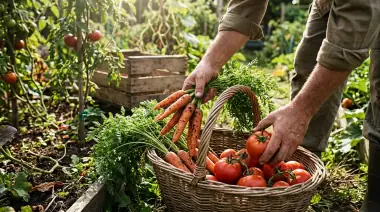
The day you start picking is the day all the watering and weeding pays off, but picking at the right moment is a skill of its own. Most vegetables taste best at one specific stage, and how you store them after that doubles - or halves - their life. This guide covers how to harvest and store vegetables so nothing you grew ends up in the compost bin, and it fits right into our full vegetable gardening guide.
Quick Answer: Harvest most vegetables in the morning when they are cool and full of water, and pick regularly - plants stop producing when overripe fruit is left behind. Store tomatoes at room temperature, root crops in a cool dark spot, and leafy greens in the fridge. For the long haul, freeze greens after blanching them in boiling water for 1-3 minutes.
At a Glance
| Fact | Detail |
|---|---|
| Best harvest time | Morning, before the heat of the day |
| Tomatoes | Pick at full color; finish ripening at room temperature |
| Zucchini | Harvest at 6-8 inches long |
| Green beans | Pick before seeds visibly bulge in the pod |
| Leafy greens | Cut-and-come-again: outer leaves, 1-2 inches above the crown |
| Root crops | Pull when tops are pencil- to thumb-thick |
| Tomatoes storage | Room temperature, never the fridge |
| Root crop storage | Cool 32-40°F, dark, and humid |
| Leafy green storage | Fridge, unwashed, loosely wrapped |
Why Harvest Timing Matters
Vegetables hit a flavor peak at a specific stage, then start declining - sugars turn to starch, seeds toughen, and texture turns woody [1] (Source: University of Minnesota Extension). Timing also drives production: a plant left with overripe fruit on it gets the signal to stop, while regular picking keeps it setting new fruit all season.
Harvest Signals by Crop
Each crop tells you when it is ready - you just need to know the sign.
Tomatoes. Pick when the fruit reaches its full color for the variety, not before. A tomato that is fully colored with a slight give to the touch is at its peak; fruit picked at first blush of color will finish ripening perfectly indoors on a counter. Our guide to growing tomatoes covers ripening, storage, and end-of-season green tomatoes in detail.
Peppers. Harvest when the fruit is full-sized and firm, at whatever color stage you prefer. Green peppers are simply unripe bell peppers; leaving them on the plant longer turns them red or yellow and sweeter, without losing firmness. If a pepper is soft or shriveled, it is past its prime.
Leafy greens. Use the cut-and-come-again method: snip the outer leaves 1-2 inches above the crown and the plant keeps producing from the center. Take no more than a third of the leaves at a time. This works for lettuce, spinach, chard, and kale.
Root crops. Harvest when the roots reach eating size - usually when the tops are pencil-thick for radishes and thumb-thick for carrots. Beets are ready at 1.5-2 inches across. Most root crops tolerate staying in the ground for weeks, so harvest them as you need them.
Green beans. Pick pods while they are slender and the seeds are barely visible through the pod wall. Once the seeds bulge, the pods get stringy and the plant slows down. Picking every 2-3 days keeps the harvest coming.
Zucchini. Harvest at 6-8 inches long, while the skin is still glossy and tender. A zucchini left to 12 inches is a seed-filled squash - and more importantly, leaving it halts production of new fruit on the plant.
Harvest in the Morning
Morning is the best time to pick almost everything. Plants are at their coolest and most water-filled after the night, so greens are crisp, fruit is firm, and everything wilts less on the way to the kitchen [2] (Source: North Carolina State Extension). If you must harvest later in the day, keep produce out of direct sun and get it into the kitchen or a cooler quickly.
Keeping Your Harvest Fresh
Storage is a matter of matching each crop to its happy place. As a general rule: wash just before eating, not before storing - moisture on stored produce invites rot [3] (Source: Oregon State University Extension).
| Crop | Storage | Shelf life |
|---|---|---|
| Tomatoes | Room temperature, out of direct sun | 5-7 days |
| Peppers | Fridge crisper drawer | 1-2 weeks |
| Leafy greens | Fridge, unwashed, in a loose bag or damp towel | 3-7 days |
| Carrots, beets | Cool 32-40°F, dark, humid (crisper drawer or root cellar) | 2-4 months |
| Zucchini, summer squash | Fridge crisper drawer | 1 week |
| Green beans | Fridge, unwashed | 3-5 days |
Keep tomatoes out of the fridge - cold turns their flesh mealy and kills the flavor. Keep potatoes and onions apart: they make each other sprout and rot faster. And check stored crops weekly, pulling anything soft before it spoils its neighbors.
Freezing Basics: Blanch Greens First
Freezing is the easiest way to keep a big harvest for the winter, but blanching comes first. Blancing - a brief boil followed by an ice bath - stops the enzymes that cause vegetables to lose color, flavor, and nutrition in the freezer [4] (Source: University of Wisconsin-Madison Extension).
- Bring a large pot of water to a rolling boil.
- Drop in clean vegetables, no more than a pound at a time.
- Boil for 1-3 minutes: about 2 minutes for spinach, chard, and green beans, 3 minutes for broccoli.
- Transfer immediately to a bowl of ice water for the same length of time.
- Drain well, pat dry, and pack into freezer bags, pressing out the air.
Blanched greens, beans, and peppers freeze well for 8-12 months. Corn off the cob freezes even better than canned, and blanched tomato chunks are perfect for winter soups.
Common Mistakes
- Letting zucchini turn into marrows. The fix: harvest at 6-8 inches and check the plants every couple of days in peak season.
- Leaving overripe fruit on the plant. The fix: pick regularly - it tells the plant to keep producing. A plant with old fruit is a plant that stops.
- Washing before storing. The fix: store produce dry and unwashed; wash right before eating.
- Refrigerating tomatoes. The fix: keep them on the counter; the fridge turns them mealy.
- Harvesting in the heat of the afternoon. The fix: pick in the morning, or get picked produce out of the sun fast.
- Skipping the blanch before freezing. The fix: 1-3 minutes in boiling water plus an ice bath protects color, flavor, and nutrition.
Troubleshooting and Seasonal Considerations
- Lettuce bolting in a heat wave? Harvest what is left immediately, even if small - once it bolts, the leaves turn bitter.
- First frost coming? Pick all tender fruit before the frost hits. Green tomatoes finish ripening indoors, and most root crops can stay in the ground through a light frost, getting sweeter as they do.
- Freezer overstuffed with zucchini? Share with neighbors, or shred and freeze it for baking - it thaws perfectly for breads and soups.
- Production slowing in August? It is often the heat, not the harvest. Keep up consistent watering, which you can fine-tune with our watering guide, and keep picking to encourage new fruit.
Frequently Asked Questions
Q: When is the best time of day to harvest vegetables?
A: Morning, before the heat builds. Plants are full of water, so greens are crisper and everything stores better.
Q: Do tomatoes ripen off the vine?
A: Yes. Tomatoes picked at the first sign of color finish ripening on the counter at room temperature, with flavor almost as good as vine-ripened.
Q: Should tomatoes go in the fridge?
A: No. Cold ruins their texture and flavor. Keep them at room temperature, out of direct sun, for up to a week.
Q: How do I store carrots for the winter?
A: Keep them cool (32-40°F), dark, and humid - a fridge crisper drawer works, and a root cellar is ideal. They can last 2-4 months this way.
Q: What does blanching mean?
A: Boiling vegetables briefly (1-3 minutes) and then plunging them into ice water. It stops the enzymes that ruin frozen produce, so your frozen greens keep color, flavor, and nutrition.
Q: Why did my zucchini turn into a giant gourd?
A: It was left on the plant too long. Zucchini is best at 6-8 inches; larger fruit gets woody, seedy, and tells the plant to stop producing.
Q: Why did my plant stop making fruit?
A: Overripe fruit left on the plant signals it to stop producing. Pick regularly and keep the plant well-watered, and most crops respond with a fresh flush of fruit.
Q: Can I freeze vegetables without blanching?
A: You can, but they will lose color, flavor, and texture much faster. Blanching is worth the extra five minutes for most vegetables.
Related Articles
- Vegetable Gardening Guide
- How to Start a Vegetable Garden for Beginners
- How to Grow Tomatoes
- How to Grow Peppers
- How Often to Water Vegetables
- When to Plant Vegetables
- Vegetable Garden Layout Planning
- Vegetable Garden Diseases