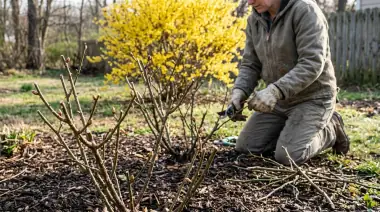
Pruning at the wrong time costs a season of flowers. Cut a once-blooming rose in March and you lose June blooms, cut hard in fall and regrowth freezes. This guide covers when to prune roses by type and how to cut, and pairs with our flower gardening for beginners guide.
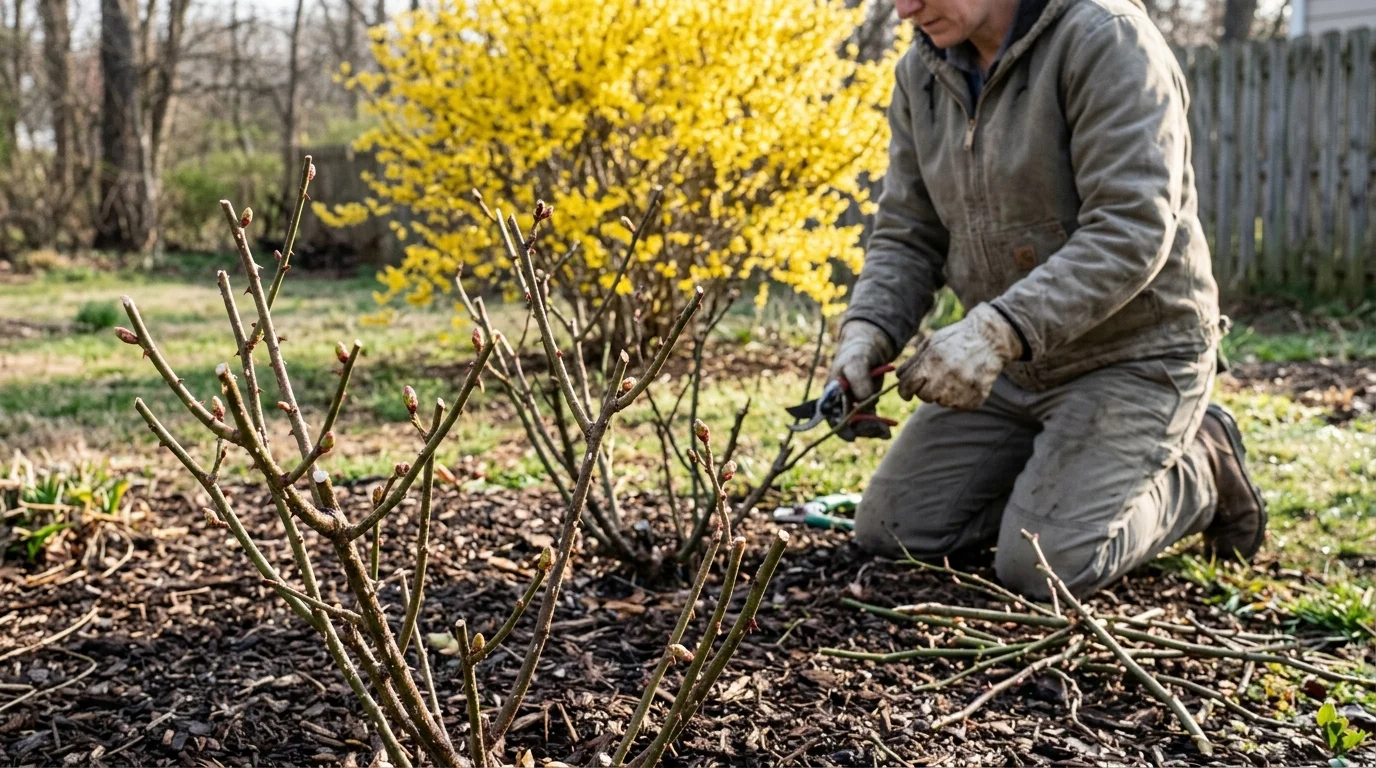
Quick Answer: When to prune roses is late winter to early spring, when buds swell and forsythia blooms before leaves emerge. Cut hybrid teas, grandifloras, and floribundas to 12-24 inches, shape shrubs lightly, and leave ramblers and heritage roses until after flowering. Deadhead repeat bloomers to a 5-leaflet leaf, stop 6-8 weeks before first frost, and in fall only trim long canes by one-third and clean leaves.
At a Glance
| Fact | Detail |
|---|---|
| Best time | Late winter to early spring, buds swelling, forsythia blooming |
| Hard prune | Hybrid tea, grandiflora, floribunda - to 12-24 inches, 3-5 canes |
| Light prune | Shrub roses - remove up to 1/3, shorten 6-12 inches |
| After flowering only | Ramblers, heritage roses - never hard prune in spring |
| Cut method | 45 degrees, 1/4 inch above outward bud, bypass pruners |
| Deadhead rule | To 5-leaflet leaf, stop 6-8 weeks before frost |
| Fall care | Trim long canes by 1/3, clean leaves against black spot |
| Sanitation | 70% alcohol or 1:9 bleach, 30 seconds between plants |
| Aftercare | 2-3 inch mulch, 1 inch water weekly, feed at 4-6 inch growth |
Why Pruning Time Matters
Roses store energy in roots and canes all winter, then push it into spring buds. Prune dormant and that energy goes to fewer, stronger shoots. Prune after leaves reach 2-3 inches and you waste energy already spent [1] (Source: Missouri Botanical Garden).
Bloom cycles decide timing:
- Repeat bloomers flower on new wood. Hybrid teas, floribundas, grandifloras, miniatures, and modern shrubs bloom on spring-grown stems. Hard spring pruning means more new wood and more June-to-October flowers.
- Once-bloomers flower on old wood. Ramblers, Gallicas, Damasks, and heritage climbers set buds on last year’s canes in late summer. A March cut removes June flowers.
- Cuts force 4-6 weeks of soft growth. A September hard cut pushes tender shoots that freeze by November, draining reserves and inviting canker.
An open vase of 3-5 canes dries fast after rain, cutting black spot. Like perennial flowers divided on time, roses repay scheduling.
Bloom Habits at a Glance
| Habit | Flowers on | Prune when |
|---|---|---|
| Modern bush, repeat | New wood | Late winter to early spring |
| Shrub, repeat | New wood plus framework | Light spring shaping |
| Heritage, once | Old wood | Right after flowering |
| Rambler, once yearly | Old wood | Within 3 weeks after bloom |
| Climber, repeat | Side shoots | Train spring, cut after first flush |
The Main Timing Rule
For most US gardens, prune when buds swell pea-size, forsythia blooms, and nights stay above 20°F (-7°C), before leaves emerge. If shoots stretch 3-4 inches, still prune [2] (Source: University of Missouri Extension).
Use three cues together:
- Swelling buds. Plump buds showing 1/4 inch green or red tip are ready. Flat brown buds mean wait 1-2 weeks.
- Forsythia bloom. It flowers within 7-10 days of rose time in most regions, responding to the same 40-50°F (4-10°C) stretch.
- Frost window. Target 2-4 weeks before average last frost. New growth tolerates about 28°F (-2°C), so shoots should emerge after hard freezes pass.
After a post-prune freeze below 25°F (-4°C), recut 1/2 inch below blackened tips once settled.
Rose Pruning Timing by Type
Modern bushes want hard spring cuts, ramblers and heritage roses wait until after bloom. Know your type first.
| Type | When | How much |
|---|---|---|
| Hybrid tea, grandiflora, floribunda | Late winter to early spring | To 12-24 inches, keep 3-5 canes |
| Shrub and landscape | Early spring shaping | Up to 1/3 off, shorten 6-12 inches |
| Climbing repeat | Train spring, cut after first flush | Sides to 2-3 buds, keep framework |
| Rambler | After flowering, June-July | 1-2 oldest canes to base yearly |
| Miniature | Early spring tidy | Trim 2-4 inches, clear twigs |
| Heritage once-blooming | After flowering only | Spent bloom plus 6-8 inches |
Hybrid Tea, Grandiflora, Floribunda
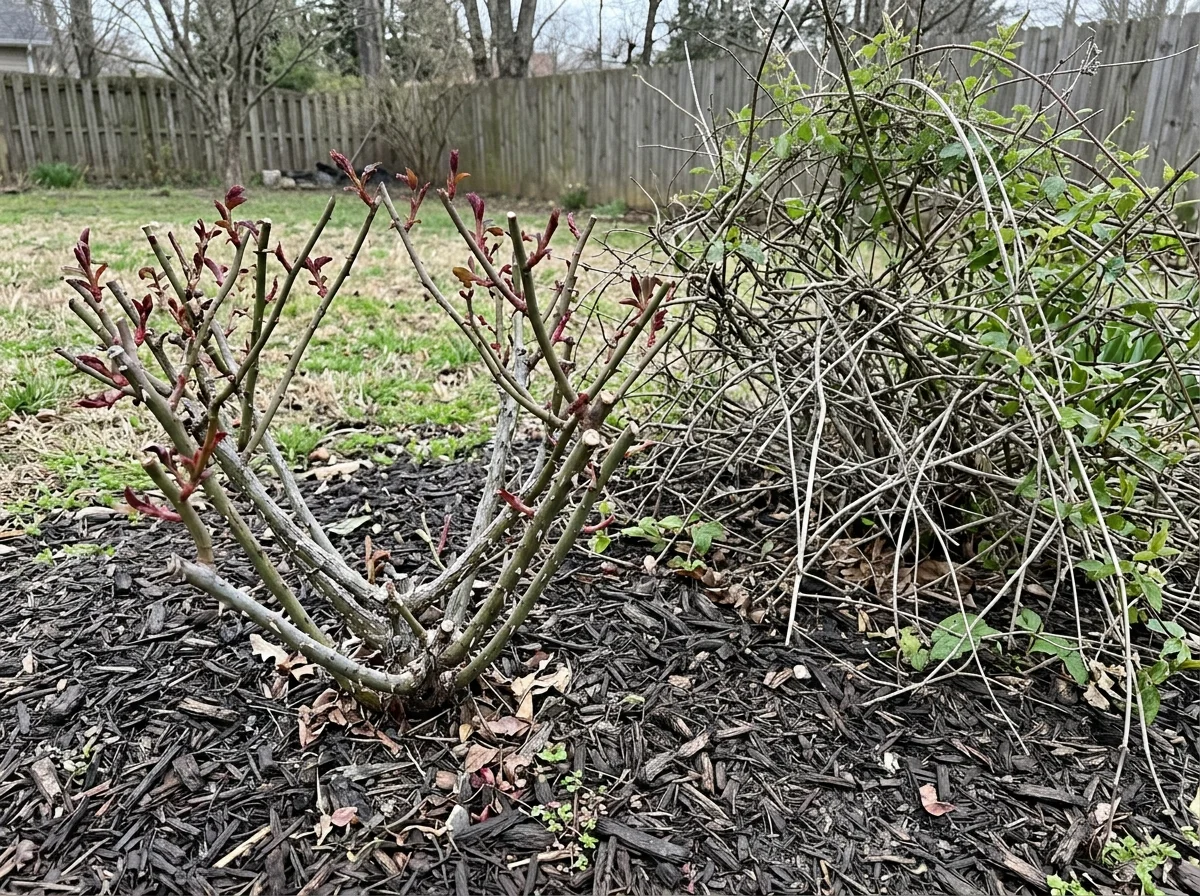
These need the hardest cut for long stems [3] (Source: Royal Horticultural Society). Remove winterkill to green pith in 2-inch steps until centers show creamy white-green. Keep 3-5 pencil-thick outward canes, remove the rest at the base, then shorten to 12-18 inches for hybrid teas and grandifloras, 18-24 inches for floribundas. Strip wood under 1/4 inch.
Shrub and Landscape Roses
Knock Out, Drift, and David Austin types keep a woody framework. In early spring remove damage and shorten 6-12 inches, never over one-third. If canes crowd, cut the 2 weakest at the base. Keep the arch; shearing into balls cuts bloom 30-40%.
Climbing Roses
Climbers bloom on side shoots from 4-6 permanent mains. In spring remove only dead and crossing wood, then tie new canes near-horizontal at 45-60 degrees for far more flowering shoots. After the June-July flush, shorten flowered sides to 2-3 buds. Yearly remove one oldest main at the base on plants over 3 years old.
Ramblers
Ramblers bloom once in June on year-old wood 10-20 feet long. Within 2-3 weeks after petals fall, cut flowered sides to 3-4 inches, saw 1-2 oldest canes to the ground, and tie in replacements. In spring take only dead tips.
Miniature Roses
Miniatures 8-18 inches tall need a haircut. In early spring trim 2-4 inches, clear brown interior twigs, and cut toothpick-thin canes at the base. Remove one old woody stem to soil if the center knots. They rebloom 5-6 weeks after deadheading.
Once-Blooming Heritage Roses
Gallicas, Damasks, Albas, and mosses bloom once in May-June on old wood. Prune after flowering only: deadhead plus 6-8 inches, take 1-2 oldest canes to the base if crowded, and leave new shoots that set next year’s buds by August.
How to Make the Cut
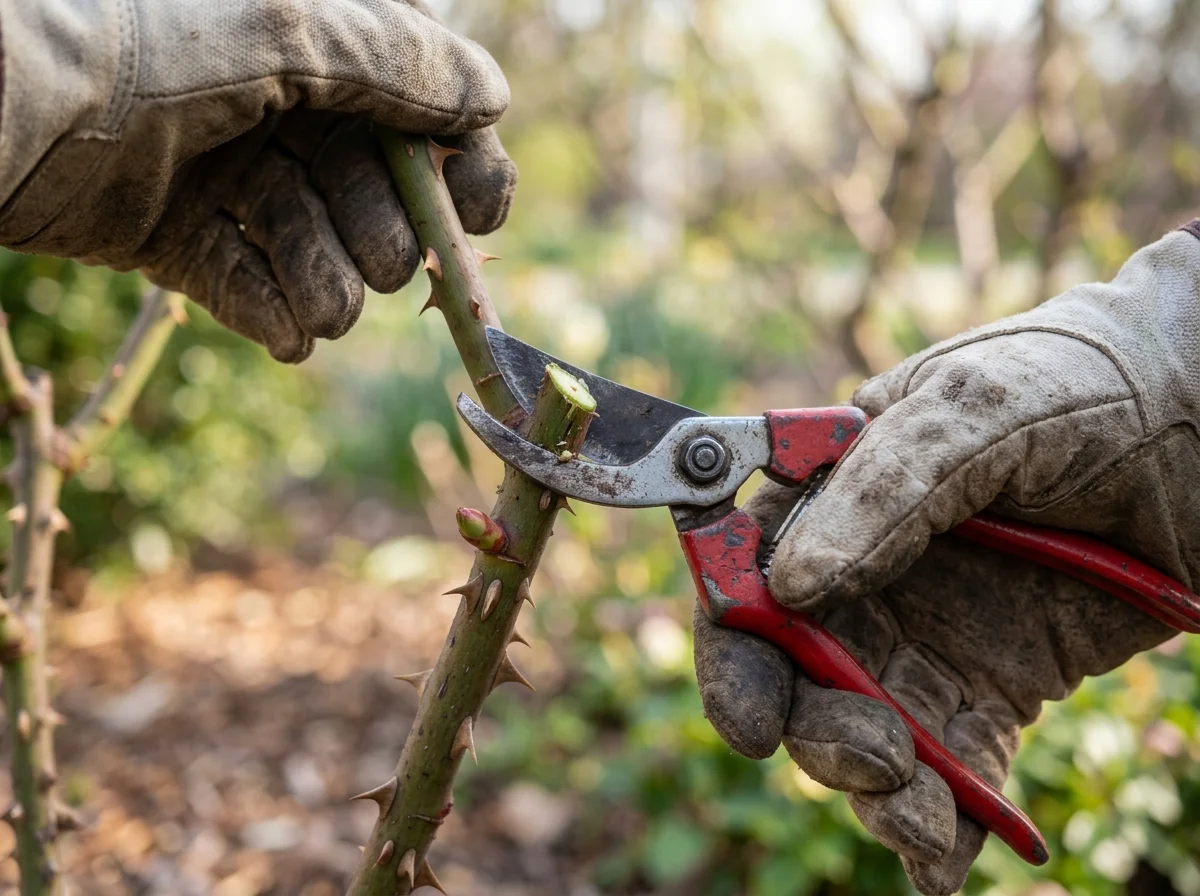
Cut in dry weather above 40°F (4°C). Angle cuts 45 degrees so water runs off; flat cuts pool and rot. Place cuts 1/4 inch above an outward-facing bud: closer than 1/8 inch injures the bud, beyond 1/2 inch leaves a rotting stub. Outward buds keep centers open to light and air.
Use sharp bypass pruners to 3/4 inch, loppers to 1-1/2 inches, and a fine saw above that. Our best pruning shears guide explains blades that hold an edge on woody canes. Cut to creamy green pith; tan means dead, so go 2 inches lower. Sealing is not needed; dry cuts callus in 7-10 days while sealants trap moisture [2] (Source: University of Missouri Extension). Steady the cane below the cut to stop tearing.
The 3 Ds Plus Two
Always start with dead, damaged, and diseased wood, regardless of type:
- Dead. Gray snapping canes, brown centers. Cut to base or green tissue.
- Damaged. Split or cracked canes. Cut 2 inches below wounds.
- Diseased. Cankered or spotted canes. Cut 4-6 inches below symptoms, disinfect after.
- Crossing canes. Rub wounds admit fungi. Keep the better-placed cane, remove the other.
- Suckers. Pale thorny shoots from below the graft, often 7 leaflets. Remove at the root; soil-level snips triple regrowth. Own-root roses do not sucker.
Leave a fist-width gap between 3-5 mains. Airy bushes in full sun show far less black spot, just as flowers for full sun beds need spacing.
Deadheading for Repeat Bloom
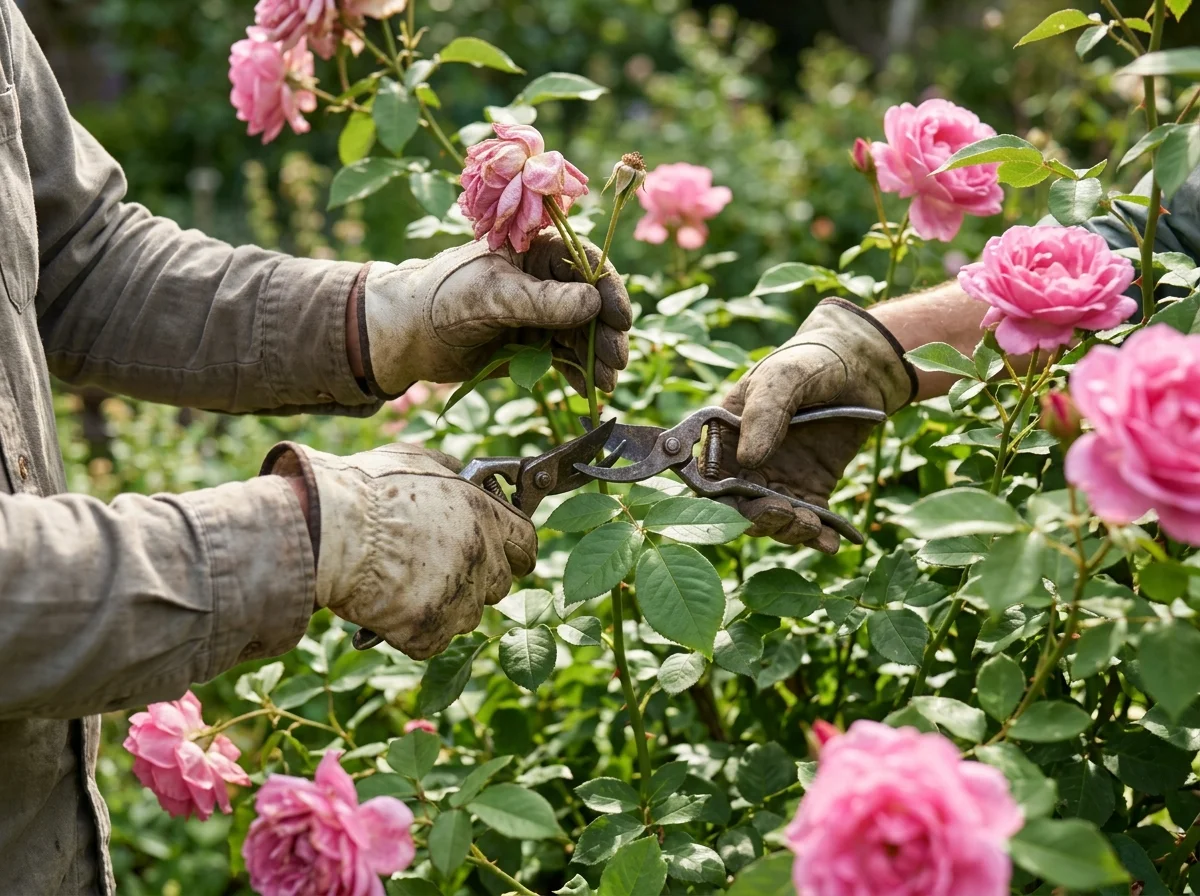
Snipping spent blooms before hips form pushes repeaters to rebloom; deadheaded floribundas can flower 30-50% more. Cut to the first strong 5-leaflet leaf, usually 6-8 inches down, 1/4 inch above it. Expect rebloom in 4-6 weeks at 70-80°F (21-27°C). A weekly June-August pass beats monthly overhauls.
Stop 6-8 weeks before first frost: late August in Zone 5, mid-September in Zone 6, early October in Zones 7-8. Ripening hips cue hardening; late cuts force freezable shoots. Once-bloomers will not rebloom; leave hips for birds.
Fall Care
Fall is protective, not productive. Never hard prune in October.
- Shorten wind whips by one-third. Cut 5-6 foot canes to 3-4 feet so wind does not rock roots or snap grafts. Final heights wait for spring.
- Rake and trash leaves. Black spot winters on debris and splashes back in spring. Never compost spotted leaves. A 2-inch bark mulch halves soil splash.
- Cut live disease only. Take cankered wood 4-6 inches into clean tissue; leave healthy structure.
- Tie climbers. Secure canes every 18-24 inches with soft ties against ice and wind snap.
Tools and Sanitation
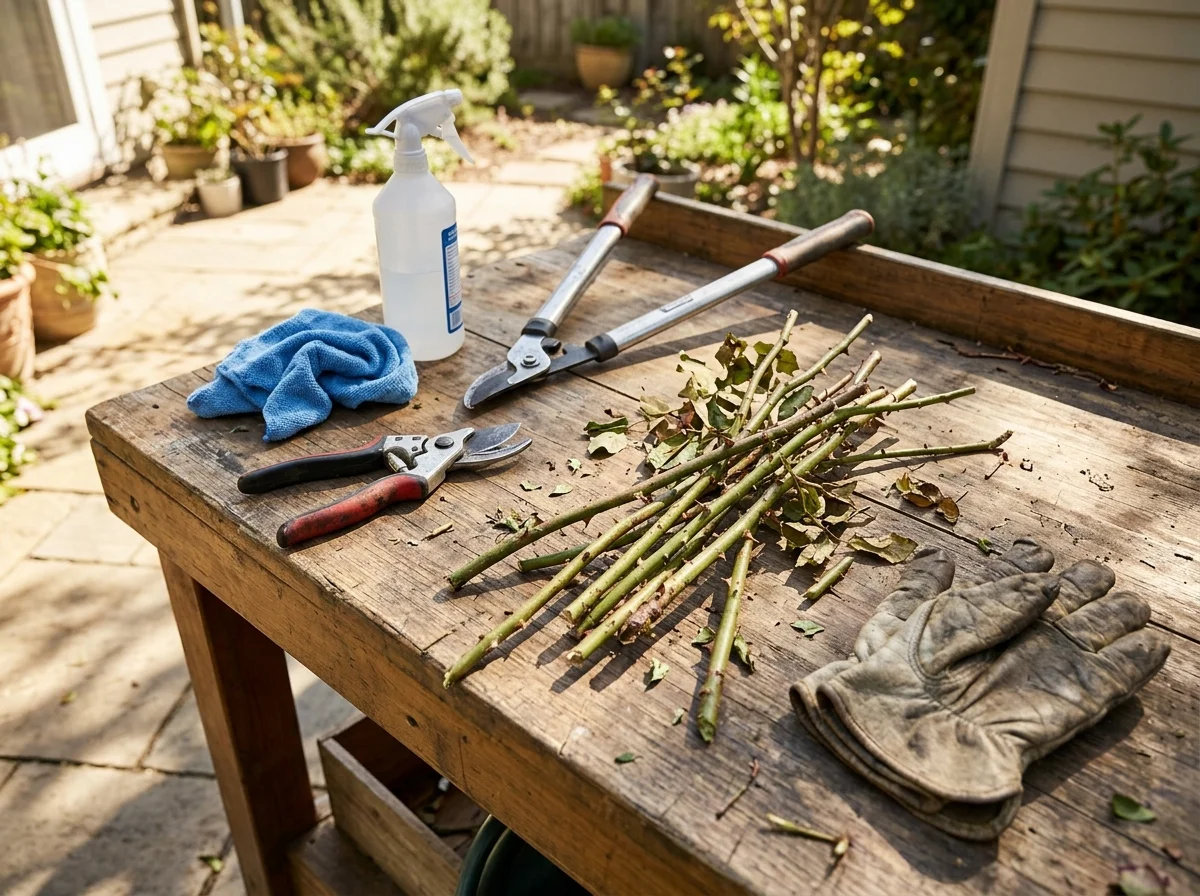
Dirty blades spread canker and black spot. Carry bypass pruners to 3/4 inch, loppers to 1-1/2 inches, and a saw for old bases, plus gauntlets. Wipe blades 30 seconds in 70% alcohol between plants, or 1 part bleach to 9 parts water for canker, then rinse and oil [4] (Source: Missouri Botanical Garden Roses Factsheet). Sharpen after every 2-3 bushes and oil pivots monthly.
After Spring Pruning
Feed regrowth, not stubs. Mulch 2-3 inches in a 24-36 inch ring, clear of the crown. Water 1 inch weekly at the base, soaking 12-18 inches deep; shoots stall if dry in the first 4 weeks. Once shoots reach 4-6 inches, feed balanced rose food at label rate, typically 1/2 to 1 cup per bush. In Zones 5 and below, mound 6-8 inches of soil over grafts until freezes pass. Watch tips for aphids 10-14 days out, using our garden pest identification guide to confirm.
Zones: Adjust Your Date
Forsythia cues work nationwide, but dates shift 8-10 weeks south to north.
| Zone | Window | Note |
|---|---|---|
| 8-10 | January to mid-February | Cut before growth passes 2 inches |
| 7 | Late February to mid-March | Delay if ice due within 7 days |
| 6 | Mid-March to early April | Forsythia bloom is the cue |
| 5 and below | April to early May | Expect 12-18 inches dieback |
In Zones 5 and below, plant grafts 2-4 inches deep and mulch 8-10 inches to survive -10°F (-23°C). In Zones 8-10, still rest-prune in January, with first flowers by late April.
Common Mistakes
- Spring hard-pruning a once-bloomer. The fix: if it blooms only May-June, prune within 3 weeks after petals fall.
- Dull anvil pruners. The fix: use sharp bypass pruners; crushed cuts heal twice as slow.
- Leaving 1-2 inch stubs. The fix: cut 1/4 inch above buds; stubs rot downward.
- Shearing to one height. The fix: keep 3-5 canes with open center for form and bloom.
- Fall hard prune plus feed. The fix: stop feeding 6 weeks before frost; save cuts for spring.
- Skipping sanitation. The fix: 30-second alcohol wipe between bushes stops spread.
Troubleshooting
| Symptom | Cause | Fix |
|---|---|---|
| No blooms | Spring-cut once-bloomer | Wait a year, prune only after bloom |
| Blind shoots | Frost, excess nitrogen, shade | Cut to 5-leaflet leaf, give 6+ hours sun |
| Leaves, few flowers | Nitrogen overload, crowding | Thin to 3-5 canes, balanced feed |
| Dieback below cuts | Early freeze, dull cut | Recut to green pith, disinfect |
| Leggy, top-only bloom | Wood over 3 years old | Remove 1-2 oldest canes yearly |
| Hips, no rebloom | No deadhead or once-type | Deadhead repeaters weekly |
- Leafy but flowerless: spring-cut once-bloomer or 7-leaflet rootstock sucker. Trace suckers to roots and remove.
- Weak regrowth: normal after winterkill. Water 1 inch weekly; green under bark means alive.
- Black tips: trim 1/2 inch into green once nights stay above freezing. No sealant.
Frequently Asked Questions
Q: When is the best time to prune roses in spring?
A: Prune in late winter to early spring when buds swell and forsythia blooms, before leaves emerge. In warm zones this is January to February, in cold zones March to April.
Q: Should you prune roses in fall?
A: Do only light fall cleanup, trimming long canes by one-third and removing fallen leaves. Save hard pruning for late winter to early spring to avoid stimulating tender growth before frost.
Q: How do you prune hybrid tea roses?
A: Cut hybrid teas back hard in spring to 12 to 24 inches, leaving 3 to 5 strong outward-facing canes. Make 45-degree cuts 1/4 inch above an outward-facing bud.
Q: Do climbing roses get pruned in spring?
A: Train main canes in spring but save major pruning until after the first flush of flowers. Shorten side shoots to 2 to 3 buds and remove only dead or crossing wood in spring.
Q: Should you deadhead roses in summer?
A: Yes, deadhead repeat bloomers through summer by cutting to the first 5-leaflet leaf to trigger rebloom in 4 to 6 weeks. Stop deadheading 6 to 8 weeks before first frost so hips form.
Q: What is the 45-degree cut rule for roses?
A: Cut at a 45-degree angle 1/4 inch above an outward-facing bud with sharp bypass pruners. The angle sheds water and the outward bud keeps the center open for air and light.
Q: Why is my rose not blooming after pruning?
A: The most common causes are pruning a once-bloomer in spring, cutting too late in summer, or leaving too much old wood. Feed, water 1 inch per week, and give full sun for recovery.
Q: Do you need to seal rose cuts after pruning?
A: No, sealing is not needed for most garden roses. Clean cuts in dry weather heal naturally, and sealants can trap moisture. Focus on sharp tools and sanitizing between plants instead.
Related Articles
- Flower Gardening for Beginners
- Perennial Flowers
- Flowers for Full Sun
- Flowers for Shade
- Low Maintenance Flower Gardens
- Cut Flower Garden
- Best Pruning Shears Guide
- Garden Pest Identification
