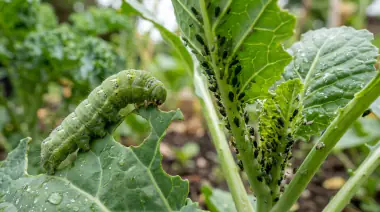
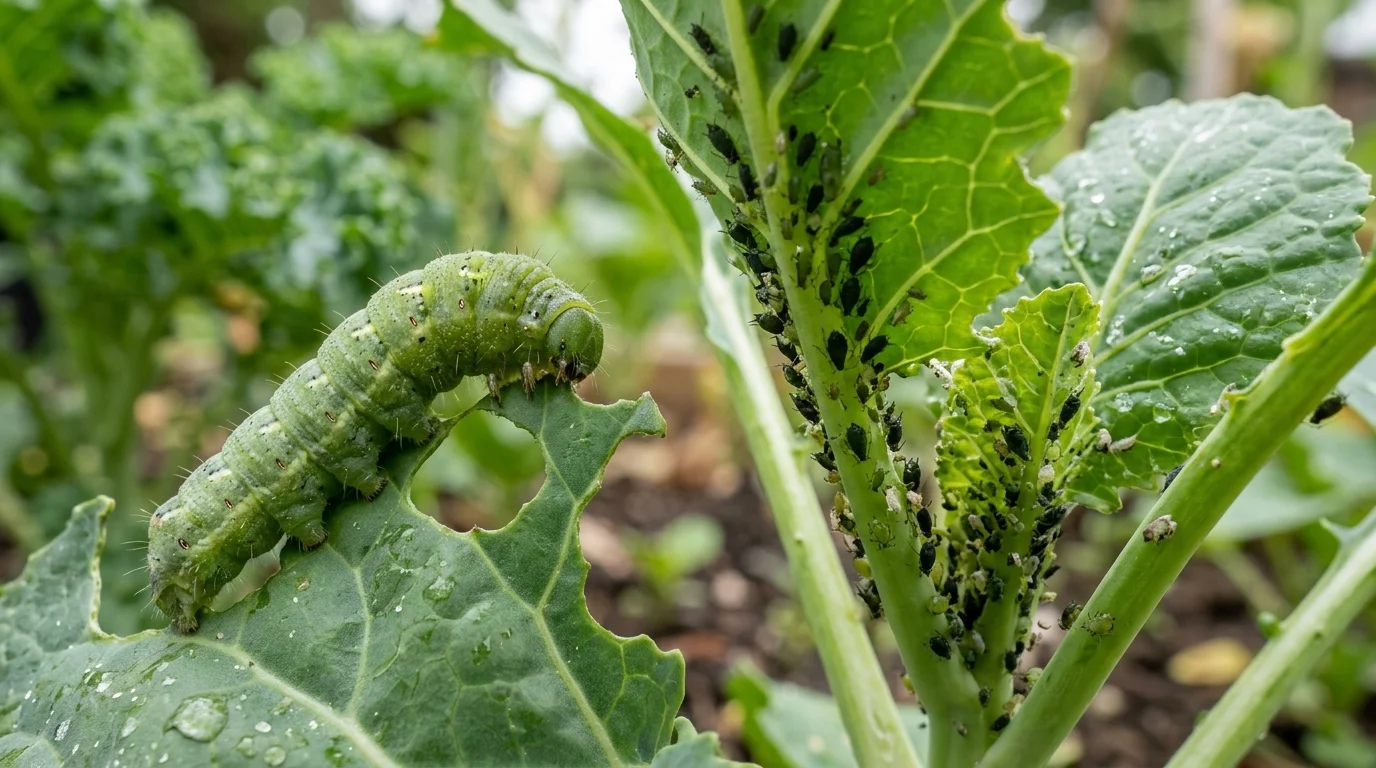
The summer I lost half my cabbage crop to worms, I did not even know what was eating them until the damage was catastrophic. I looked at the holes in the leaves, assumed slugs, put out beer traps, and watched happily as the holes got bigger every day. It was not until I flipped a leaf over and found a fat green caterpillar sitting there like he owned the place that I realized I had been fighting the wrong enemy entirely. That caterpillar was a cabbage looper, and he had been having a feast while I drank beer with the slugs.
Identifying garden pests is the single most important skill in pest management. You cannot solve a problem you cannot name. A hole in a leaf could be a caterpillar, a beetle, a rabbit, or wind damage. Yellow leaves could mean aphids, nutrient deficiency, overwatering, or disease. The ability to look at damage, find the culprit, and match it to a known pest with a proven solution is what separates gardeners who lose crops from gardeners who harvest them.
This guide covers 25 of the most common garden pests with clear identification descriptions, the damage they cause, and specific organic solutions that work. Each entry includes what the pest looks like, what damage it leaves, where to find it, and exactly how to stop it without reaching for chemical sprays.
Quick Answer: To identify garden pests, examine damage patterns (chewing holes, stippling, wilting, tunnels) and look for the culprit on leaf undersides, stems, and near the damage. Most common pests include aphids (clusters of tiny insects on new growth — spray off with water or use insecticidal soap), cabbage worms (green caterpillars on brassicas — hand-pick or apply Bacillus thuringiensis), tomato hornworms (large green caterpillars — hand-pick and destroy), squash bugs (brown shield-shaped bugs — hand-pick eggs and adults), and flea beetles (tiny jumping beetles — use row covers and diatomaceous earth).
At a Glance
| Fact | Details |
|---|---|
| Scouting frequency | Weekly minimum, daily during peak season |
| Best time to scout | Early morning or late evening when pests are active |
| First response | Hand-pick or spray with strong water jet |
| Organic sprays | Insecticidal soap, neem oil, Bacillus thuringiensis (Bt) |
| Prevention methods | Crop rotation, row covers, companion planting, healthy soil |
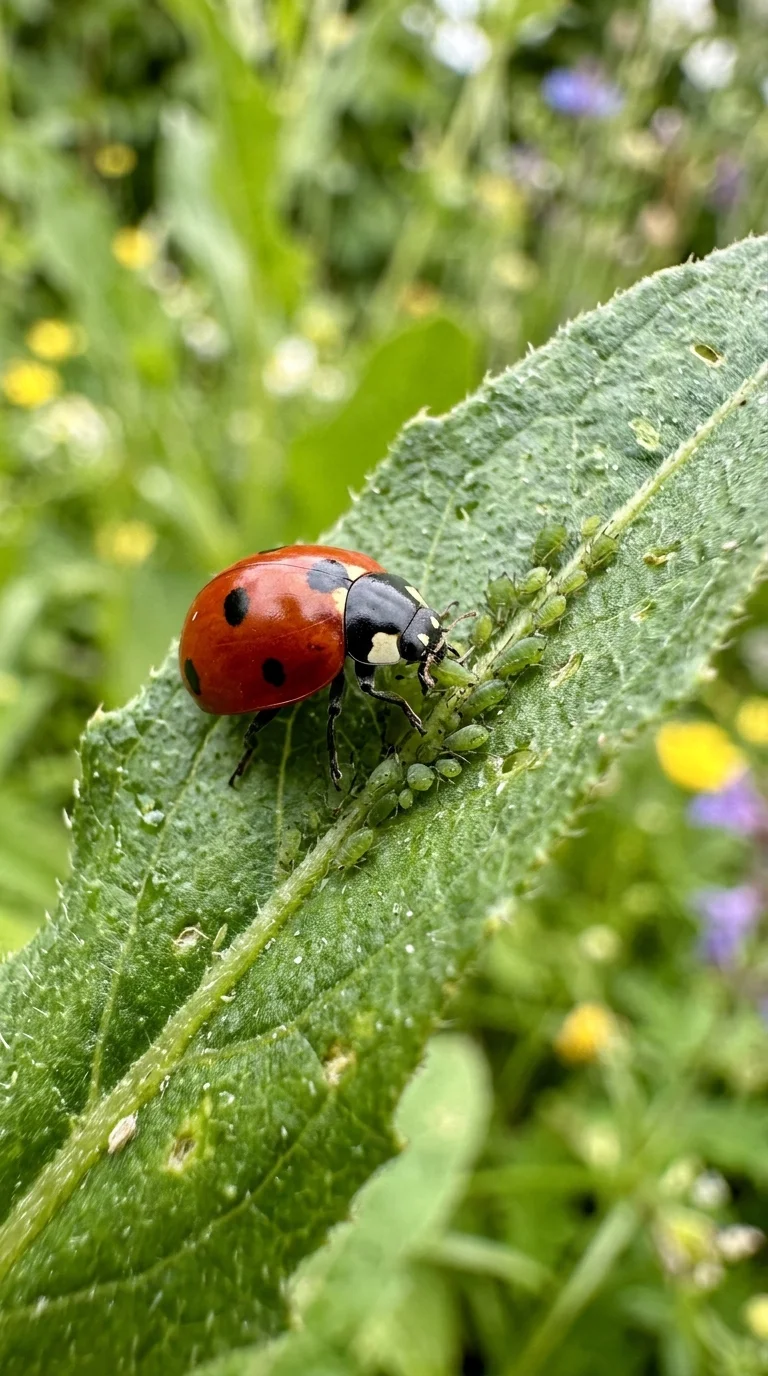
| Beneficial insects | Ladybugs, lacewings, parasitic wasps, hoverflies, ground beetles |
| Most damaging pests | Aphids, cabbage worms, hornworms, squash bugs, spider mites |
| Least harmful pests | Most bees, butterflies, earthworms, ground beetles, ladybug larvae |
How to Scout for Pests Like a Pro
Before diving into specific pests, learn the scouting routine that catches problems early. Walk your garden three times a week during growing season. Flip at least five leaves per plant — low, middle, and high. Check stems near the soil line. Look at the undersides of leaves where eggs and small insects hide. Examine new growth for aphids and mites.
The best time to scout is early morning when pests are sluggish from overnight cool or late evening when they settle in for the night. Midday scouting misses many pests that hide during peak sun. Carry a bucket of soapy water for hand-picking and a hand lens for spotting tiny pests like mites and thrips.
Tag a problem leaf with a piece of yarn or twist tie to monitor whether damage is spreading. One spotted leaf means action now. Ten spotted leaves means action a week ago.
The 25 Most Common Garden Pests — Identification and Solutions
1. Aphids
What they look like: Tiny (1/16 to 1/8 inch) soft-bodied insects in green, black, red, or white. They cluster in groups on new growth, leaf undersides, and flower buds. Some have wings; most do not. They leave behind a sticky honeydew residue and may attract ants.
Damage: Curled and distorted new growth, yellowing leaves, stunted plants. Heavy infestations weaken plants significantly and can transmit viruses.
Where to find them: Undersides of new leaves, flower buds, tender stem tips. Check roses, tomatoes, lettuce, and beans first.
Solution: Blast them off with a strong water spray from a hose nozzle. For persistent infestations, spray with insecticidal soap (1 tablespoon per quart of water). Encourage ladybugs and lacewings by planting dill, fennel, and sweet alyssum nearby. See how to get rid of aphids naturally for detailed methods.
2. Cabbage Worms and Cabbage Loopers
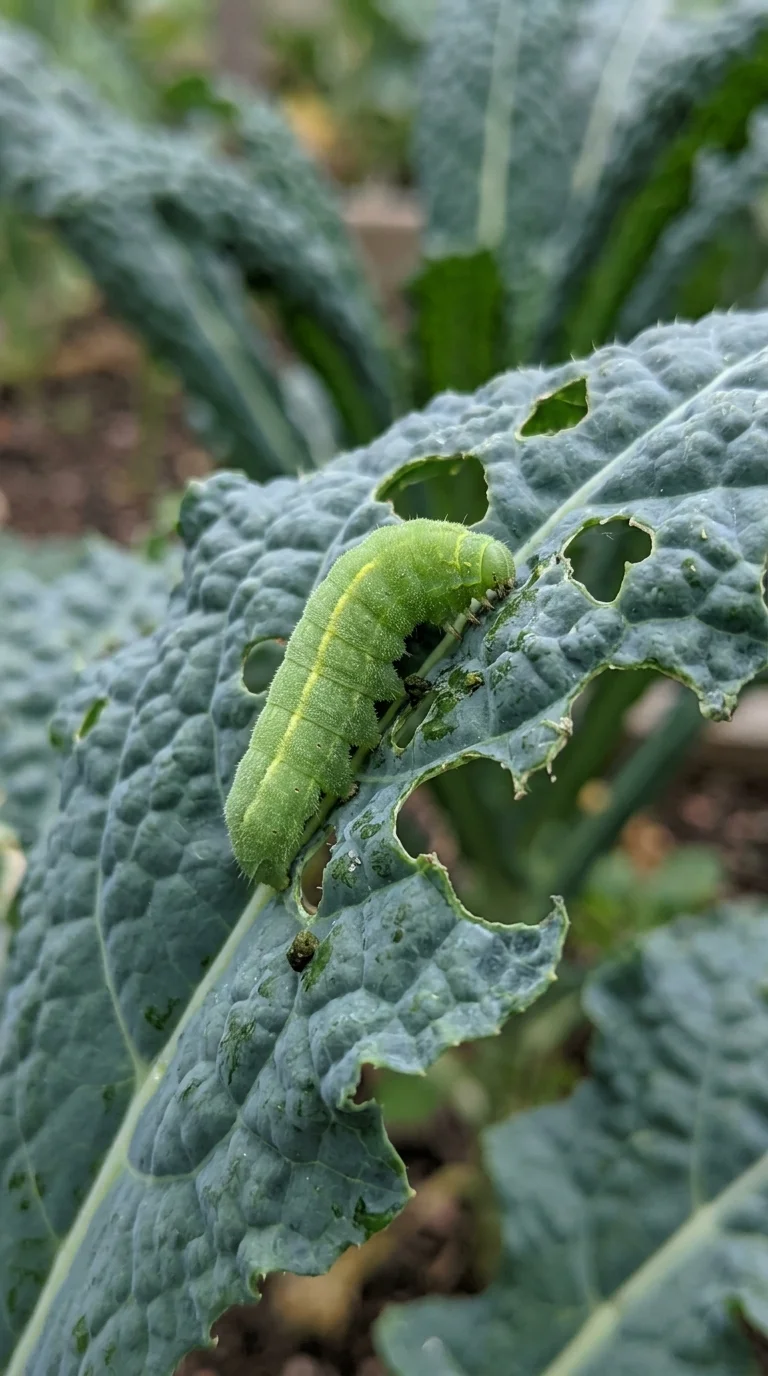
What they look like: Cabbage worms are velvety green caterpillars about 1 to 2 inches long with a faint yellow stripe down the back. Cabbage loopers are smooth, pale green caterpillars that move in a looping, inchworm fashion. Both are the larvae of white butterflies (cabbage worms) or brown moths (loopers).
Damage: Irregular holes chewed in brassica leaves (cabbage, broccoli, kale, cauliflower). Heavy infestations can skeletonize entire leaves. Dark green droppings (frass) are visible on leaves near the damage.
Where to find them: Undersides of brassica leaves, especially along the midrib and veins. Check the center of cabbage heads where worms hide from sight.
Solution: Hand-pick and drop into soapy water. Apply Bacillus thuringiensis (Bt) — a natural bacteria that kills caterpillars but is safe for humans and beneficial insects. Use floating row covers over brassicas from transplanting to prevent moths from laying eggs. See garden pest control for beginners for additional organic pest strategies.
3. Tomato Hornworm
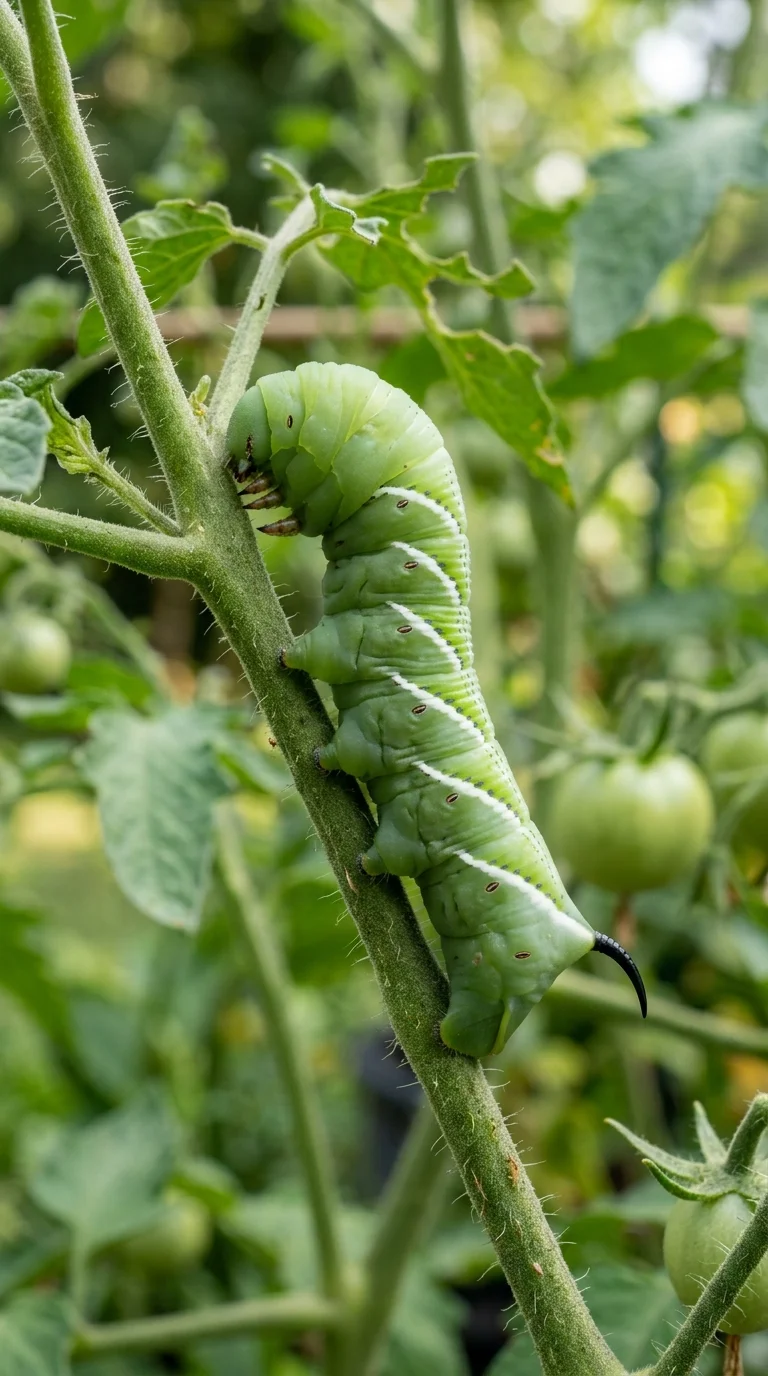
What it looks like: A large (3 to 4 inches) bright green caterpillar with white diagonal stripes and a horn-like projection on its rear end. Despite its intimidating appearance, it is harmless to touch. It is the larva of the sphinx moth.
Damage: Rapid defoliation of tomato, pepper, and eggplant. A single hornworm can strip a branch bare overnight. Droppings (large green pellets) are visible on leaves below the damage.
Where to find it: On stems and leaf undersides of tomato and pepper plants. Look for stripped branches and follow them to find the worm. They are excellent at camouflage — look for the white droppings first.
Solution: Hand-pick and destroy (drop into soapy water or feed to chickens). If you see a hornworm covered in small white cocoons, leave it — those are parasitic wasp eggs that will kill the hornworm and produce more wasps to eat other hornworms. See how to get rid of tomato hornworms for complete control methods.
4. Squash Bugs
What they look like: Shield-shaped insects, 5/8 inch long, brown to gray with bright orange eggs laid in clusters on leaf undersides. Adults have a distinctive triangular marking on their backs. Nymphs are gray with black legs and dark heads.
Damage: They suck sap from squash, pumpkin, and zucchini leaves, causing wilting, yellowing, and eventually vine death. They also transmit cucurbit yellow vine disease.
Where to find them: On squash and pumpkin vines, especially at the base of leaves and along stems. Check leaf undersides for bronze egg clusters.
Solution: Hand-pick adults and crush egg clusters (they look like tiny bronze bullets in neat rows). Place a board near squash vines at night — bugs congregate under it for warmth and you can collect them in the morning. Apply neem oil to nymphs. See garden pest control for beginners for detailed organic methods.
5. Spider Mites
What they look like: Nearly invisible (1/50 inch) arachnids, red or yellow. You usually notice their damage before you see them — stippled, yellowing leaves with fine webbing on undersides. Hold a white piece of paper under a damaged leaf and tap — tiny moving specks are mites.
Damage: Leaves develop a stippled, bronzed appearance from mites piercing cells and sucking contents. Heavy infestations produce visible webbing and can kill entire plants.
Where to find them: Leaf undersides, especially in hot, dry conditions. Check tomatoes, beans, cucumbers, and squash first. Mites explode in population during dry summer weather.
Solution: Spray plants with a strong water jet to knock mites off. Increase humidity by misting plants. Apply insecticidal soap or neem oil to leaf undersides. Release predatory mites (available from garden supply stores) for persistent infestations.
6. Flea Beetles
What they look like: Tiny (1/16 inch) black or bronze beetles that jump like fleas when disturbed. Their larvae feed on roots while adults chew leaves.
Damage: Small, round “shot holes” in leaves, especially on seedlings and young plants. Heavy infestations on young seedlings can kill them. Eggplant, brassicas, and radishes are most affected.
Where to find them: On leaves of susceptible plants, especially during warm weather. They are most active in late spring and early summer.
Solution: Use floating row covers on young plants until they are established. Apply diatomaceous earth around plant bases. Plant radishes as trap crops — flea beetles prefer radishes over other vegetables. See how to get rid of earwigs for additional barrier methods.
7. Japanese Beetles
What they look like: Metallic green and copper beetles, 1/2 inch long. They feed in groups and are most active on warm summer mornings.
Damage: Skeletonized leaves — they eat the tissue between veins, leaving a lace-like pattern. They also attack flowers, especially roses, and damage fruit.
Where to find them: On roses, grapes, beans, corn, and fruit trees. They congregate in groups and feed voraciously.
Solution: Hand-pick into soapy water early morning when they are sluggish. Apply milky spore or beneficial nematodes to lawn areas to kill grubs in the soil. Avoid bright-colored flowers near vegetable gardens — Japanese beetles are attracted to bright blooms.
8. Colorado Potato Beetle
What it looks like: Adults are 3/8 inch long with yellow and black striped wing covers. Larvae are humpbacked, red-orange with black heads, and as large as adults.
Damage: Defoliates potatoes, eggplants, and tomatoes. Both adults and larvae chew leaves aggressively.
Where to find them: On potato and eggplant leaves, especially in late spring and summer. Check leaf undersides for clusters of bright orange eggs.
Solution: Hand-pick adults and crush egg clusters. Apply Bacillus thuringiensis (Bt) var. tenebrionis to larvae. Rotate potato crops annually — do not plant potatoes in the same bed two years in a row. Plant basil near potatoes to repel beetles.
9. Cutworms
What they look like: Plump, smooth, gray or brown caterpillars that curl into a C-shape when disturbed. They live in soil and feed at night.
Damage: Cut young seedlings off at the soil line overnight. You find toppled transplants with stems cleanly severed in the morning.
Where to find them: In the top inch of soil near damaged seedlings. Dig gently around freshly cut stems to find the culprit.
Solution: Place cardboard collars (cut from toilet paper rolls) around seedling stems at soil level. The collar prevents cutworms from reaching the stem. Apply Bt to soil surface around seedlings. Till soil in fall to expose overwintering larvae to predators and cold.
10. Slugs and Snails
What they look like: Slugs are soft-bodied, slimy, shell-less mollusks in gray, brown, or black. Snails carry spiral shells. Both leave silvery slime trails.
Damage: Irregular holes chewed in leaves, especially low-growing crops like lettuce, hostas, and strawberries. They feed at night and hide in moist, dark places during the day.
Where to find them: Under boards, pots, and debris near damaged plants. Check in early morning after overnight feeding.
Solution: Set beer traps (shallow dishes sunk to soil level filled with beer — slugs are attracted and drown). Apply diatomaceous earth around plants. Copper tape around raised bed edges repels slugs. Hand-pick at dusk or dawn. See how to get rid of slugs for complete slug control methods.
11. Whiteflies
What they look like: Tiny (1/16 inch) white flying insects that flutter up in clouds when disturbed from plant foliage. They resemble miniature moths.
Damage: Suck sap from leaves, causing yellowing and stunting. They secrete honeydew that promotes sooty mold growth. Heavy infestations weaken plants significantly.
Where to find them: Leaf undersides of tomatoes, peppers, cabbage, and ornamental plants. They prefer warm, sheltered conditions.
Solution: Hang yellow sticky traps near affected plants. Spray with insecticidal soap. Release parasitic wasp (Encarsia formosa) for greenhouse or enclosed balcony gardens. Remove heavily infested leaves.
12. Tomato Fruitworm (Corn Earworm)
What it looks like: A tan to green caterpillar, 1 to 2 inches long, with alternating light and dark bands. It is the same insect known as the corn earworm.
Damage: Bores into tomato fruits, leaving Entry holes filled with dark droppings. Also attacks corn ears, peppers, and beans.
Where to find it: Inside tomato fruits or at the silk end of corn ears. Look for frass (droppings) near entry holes.
Solution: Apply Bt to plants when moths are observed flying at dusk. Harvest tomatoes promptly when ripe — overripe fruit is more susceptible. Remove and destroy damaged fruits.
13. Leafhoppers
What they look like: Small (1/4 inch), wedge-shaped insects that jump and fly when disturbed. They are green, yellow, or brown with distinctive pointed wings.
Damage: Suck sap from leaves, causing stippling and yellowing. They also transmit bacterial diseases that cause leaf curling and yellowing.
Where to find them: On leaf undersides of beans, potatoes, tomatoes, and grapes. They are most active in warm weather.
Solution: Spray with insecticidal soap. Reflective mulch (aluminum foil or silver plastic) repels leafhoppers. Avoid broad-spectrum insecticides that kill their natural predators.
14. Thrips
What they look like: Tiny (1/20 inch) slender insects, yellow to black, that are difficult to see without magnification. They rasp leaf surfaces and suck the released fluids.
Damage: Silver or bronze streaks on leaves, distorted new growth, and black specks of excrement. They can transmit viruses.
Where to find them: Inside flowers and on leaf undersides. Check onions, peppers, and ornamentals first.
Solution: Apply insecticidal soap or spinosad. Blue sticky traps attract thrips better than yellow. Keep garden free of debris where thrips overwinter.
15. Vine Borers
What they look like: A white caterpillar with a dark head, up to 1 inch long, found inside squash and pumpkin stems. Adults are moths with orange and black abdomens that mimic wasps.
Damage: Borers tunnel inside squash stems, causing sudden wilting of entire vines. Fresh sawdust-like frass at the base of stems indicates active infestation.
Where to find it: Inside stems of squash, pumpkin, and zucchini plants. Look for entry holes near the soil line with frass coming out.
Solution: Wrap stem bases with aluminum foil or nylon stockings to prevent egg-laying. Inject Bt into stems where frass is visible using a syringe. Plant resistant varieties like butternut squash, which are less susceptible than summer squash.
16. Earwigs
What they look like: Dark brown insects, 1/2 to 1 inch long, with distinctive pincers (cerci) on their rear end. They are nocturnal and hide during the day.
Damage: Chew irregular holes in leaves, flowers, and fruit. They also eat seedlings. They are beneficial in small numbers as they eat aphids and decaying organic matter.
Where to find them: Under boards, pots, debris, and in tight, moist spaces during the day. Active at night.
Solution: Set oil traps (tuna cans with vegetable oil). Remove hiding places near garden beds. Apply diatomaceous earth around plant bases. See how to get rid of earwigs for complete control methods.
17. Grasshoppers
What they look like: Large (1 to 3 inches) jumping insects with powerful hind legs. They are green, brown, or yellow with distinctive chewing mouthparts.
Damage: Devour leaves, stems, and flowers of virtually any plant. Heavy infestations can strip a garden completely.
Where to find them: On grasses, vegetables, and ornamentals. Most active in hot, dry weather in late summer.
Solution: Use floating row covers on vulnerable crops. Apply Nosema locustae bait (a natural grasshopper-specific pathogen) to affected areas. Encourage birds — they are the best natural grasshopper predators.
18. Caterpillars (General)
What they look like: Various sizes and colors of worm-like larvae of moths and butterflies. Most are green, brown, or striped and feed on leaves.
Damage: Chewed holes in leaves, skeletonized foliage, and sometimes fruit damage. Specific identification depends on the species.
Where to find them: On leaf surfaces and undersides, inside rolled leaves, or in fruit.
Solution: Hand-pick large caterpillars. Apply Bacillus thuringiensis (Bt) for small or numerous caterpillars. Use row covers to prevent egg-laying. Attract parasitic wasps with dill, fennel, and yarrow.
19. Sowbugs and Pillbugs (Roly-Polys)
What they look like: Gray, oval-shaped, segmented crustaceans, 1/2 inch long. Pillbugs curl into a ball when disturbed. Sowbugs cannot curl.
Damage: Chew holes in seedlings, low-growing fruit (strawberries), and tender plant stems. They are primarily decomposers but attack young plants.
Where to find them: Under boards, pots, and mulch during the day. Active at night and on cloudy days.
Solution: Reduce hiding places near seedlings. Set beer traps. Diatomaceous earth around plant bases. Hand-pick at night with a flashlight.
20. Ants in the Garden
What they look like: Small to medium-sized insects, black, brown, or red, that move in trails. They farm aphids for honeydew.
Damage: Ants themselves rarely damage plants directly. However, they protect aphids from natural predators and may disturb soil around seedlings.
Where to find them: On trails between aphid colonies and their nests. In soil near plant bases.
Solution: Control ants by addressing the aphid problem — when aphids are gone, ants lose interest. Diatomaceous earth trails deter ant movement. Food-grade diatomaceous earth around plant bases creates a barrier.
21. Root Maggots
What they look like: Small, white, legless larvae (1/4 inch) that feed on plant roots. Adults are small, dark flies.
Damage: Wilting, yellowing, and stunting of plants, especially brassicas, onions, and carrots. Plants pull out easily because roots are destroyed.
Where to find them: In the soil around roots of affected plants. Dig gently around wilting seedlings to find larvae.
Solution: Use floating row covers to prevent adult flies from laying eggs. Apply beneficial nematodes to soil. Rotate crops and avoid planting brassicas in the same spot two years in a row.
22. Nematodes (Plant-Parasitic)
What they look like: Microscopic, transparent roundworms in soil that feed on plant roots. You cannot see them without a microscope, but you can see their damage.
Damage: Stunted growth, yellowing, and galled or knotted roots (visible when plants are pulled). Entire beds may decline over seasons.
Where to find them: In soil, especially warm, sandy soils. Most active in summer.
Solution: Rotate crops. Plant marigolds as a cover crop — marigold roots release compounds toxic to nematodes. Add organic matter to soil to encourage beneficial nematodes that prey on plant-parasitic species. Solarize soil by covering with clear plastic for 6 weeks in summer.
23. Rabbits
What they look like: Small mammals, 1 to 2 pounds, with long ears and cotton tails. They are most active at dawn and dusk.
Damage: Cleanly clipped stems and leaves at a 45-degree angle. They prefer beans, peas, lettuce, carrots, and broccoli.
Where to find them: In brush, tall grass, or under structures near the garden. They create burrows near feeding areas.
Solution: Install 2- to 3-foot chicken wire fencing around the garden, buried 6 inches underground to prevent digging. Place hardware cloth around individual plants. Apply blood meal around bed borders as a scent deterrent.
24. Deer
What they look like: Large mammals, 100 to 300 pounds, with long legs and (on males) antlers. They browse at dawn and dusk.
Damage: Browsed plants with ragged, torn edges (not cleanly cut like rabbit damage). They eat almost any vegetable, fruit, or ornamental.
Where to find them: In wooded areas near gardens. They follow trails and return to the same feeding spots nightly.
Solution: Install 8-foot fencing (deer can jump 6 to 8 feet easily). Use deer-repellent sprays on garden perimeters. Plant deer-resistant species like lavender, rosemary, and ornamental grasses as a border. Motion-activated sprinklers startle and deter deer.
25. Chipmunks and Ground Squirrels
What they look like: Small rodents, 3 to 6 ounces, with striped backs and bushy tails. Chipmunks are smaller; ground squirrels are slightly larger and more social.
Damage: They dig up seeds and bulbs, eat low-hanging fruit, and gnaw on stems. They also dig burrows that undermine plant roots.
Where to find them: Near brush piles, stone walls, and structures with entry holes. They create extensive burrow systems.
Solution: Cover seed beds with hardware cloth laid on the soil surface — seedlings grow through the mesh but rodents cannot dig. Fence garden areas with hardware cloth buried 12 inches underground. Use live traps to relocate problem animals where legal.
Organic Pest Control Methods — The Complete Toolkit
Physical Controls
Hand-picking is the most immediate and effective control for large pests. Drop caterpillars, beetles, and slugs into a bucket of soapy water. Do this in early morning when pests are sluggish.
Row covers (floating fabric draped over hoops) prevent flying pests from reaching plants. Use lightweight fabric for summer protection and heavier fabric for frost protection. Remove covers when plants need pollination — squash, cucumbers, and melons require bee access.
Diatomaceous earth (food-grade) is a powder made from fossilized algae that damages insect exoskeletons, causing dehydration. Dust plants and soil surfaces when dry. Reapply after rain. It is harmless to mammals but lethal to soft-bodied insects.
Biological Controls
Bacillus thuringiensis (Bt) is a naturally occurring bacteria that kills caterpillars when they eat treated foliage. It is specific to caterpillars and does not harm beneficial insects, mammals, or birds. Apply to leaf surfaces where caterpillars feed.
Beneficial nematodes are microscopic roundworms applied to soil that parasitize and kill grubs, cutworms, and other soil-dwelling pests. Water them into soil in evening when UV light is low.
Parasitic wasps (Trichogramma, Encarsia) lay eggs inside pest eggs or larvae, killing them before they become adults. Release them in garden areas with persistent pest problems.
Chemical Organic Sprays
Insecticidal soap (potassium salts of fatty acids) kills soft-bodied insects on contact by disrupting their cell membranes. Spray directly on aphids, whiteflies, and spider mites. It is safe for humans and most beneficial insects once dry.
Neem oil disrupts insect feeding, growth, and reproduction. It works on aphids, caterpillars, beetles, and many other pests while also controlling fungal diseases. Apply in evening to avoid harming bees.
Pyrethrin (derived from chrysanthemums) is a fast-acting, broad-spectrum insecticide. It kills on contact but breaks down quickly in sunlight. Use as a last resort because it kills beneficial insects along with pests.
Building a Pest-Resistant Garden From the Start
The best pest control is prevention. A healthy, diverse garden with good soil, proper spacing, crop rotation, and beneficial insect habitat experiences far fewer pest problems than a stressed, monoculture garden.
Healthy soil grows healthy plants. Amend soil with compost annually. Test pH and adjust as needed. Healthy plants resist pest damage better than stressed ones.
Diversity confuses pests. Monoculture beds (a single crop in a large area) make it easy for pests to find and overwhelm their host plant. Interplanting herbs, flowers, and different vegetables creates a diverse landscape that slows pest spread.
Crop rotation prevents buildup. Do not plant the same family in the same bed year after year. Pests that specialize on one crop family overwinter in soil and emerge next season ready to attack. Rotating bed assignments disrupts this cycle.
Companion planting deters pests. Marigolds, basil, chives, and nasturtiums repel or confuse many common pests when planted throughout the garden. See my companion planting chart for specific pairings.
Related Articles
- How to Get Rid of Aphids Naturally
- How to Get Rid of Slugs
- How to Get Rid of Tomato Hornworms
- How to Get Rid of Fungus Gnats
- How to Get Rid of Earwigs
- Garden Pest Control for Beginners
- Companion Planting Chart
Sources & References
- University of California IPM — https://ipm.ucanr.edu/
- University of Minnesota Extension — https://extension.umn.edu/
- Cornell University IPM — https://discoveripm.cals.cornell.edu/
- Missouri Botanical Garden — https://www.missouribotanicalgarden.org/
- Royal Horticultural Society — https://www.rhs.org.uk/
