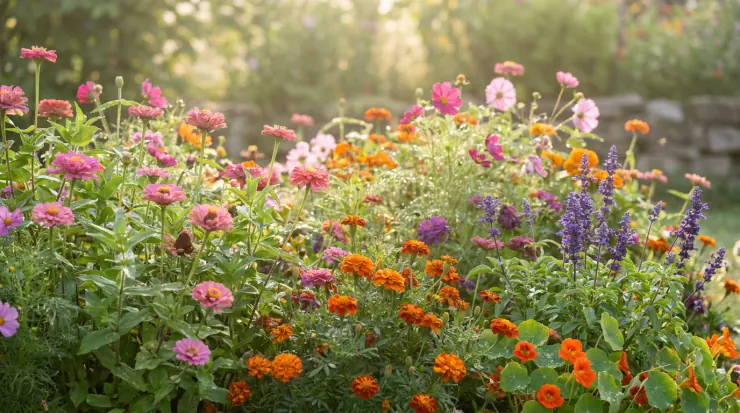
Do you want to turn your yard into a bright, colorful paradise that makes your neighbors stop and smile? Many homeowners struggle with patchy flower beds, fading colors, and plants that wither away as soon as the summer heat sets in. In this guide, we will show you how to choose, plant, and care for annual flowers so your garden stays vibrant from spring until the very first winter frost.
Quick Answer: To get the most out of your annual flowers, plant them after the last spring frost in healthy, well-draining soil. Choose sun-loving varieties for bright spots and shade-tolerant plants for dark corners, and water them regularly to keep them blooming all season.
The Best Annual Flowers for Full Sun to Beat the Summer Heat
When the dog days of summer arrive, the heat can feel heavy and dry. Many plants start to look tired, droopy, and stressed under the baking sun.
Fortunately, there are several wonderful plants that do not just survive the heat. They actually thrive when the temperature rises.
Let us look at some of the best annual flowers for full sun that you can plant in your garden beds, patio pots, and window boxes.
Heart to Heart Caladiums
You might think of caladiums as shade plants. However, these special tropical beauties love the sunshine.
Their large, heart-shaped leaves come in amazing shades of pink, red, white, and green. They do not mind the heat at all. In fact, they grow faster and look brighter when it gets hot outside.
Many gardeners find that their colors change slightly as the season goes on. This makes them a fun, shifting canvas in your garden. They grow about 15 to 20 inches tall. They work beautifully as a middle-of-the-pot filler.
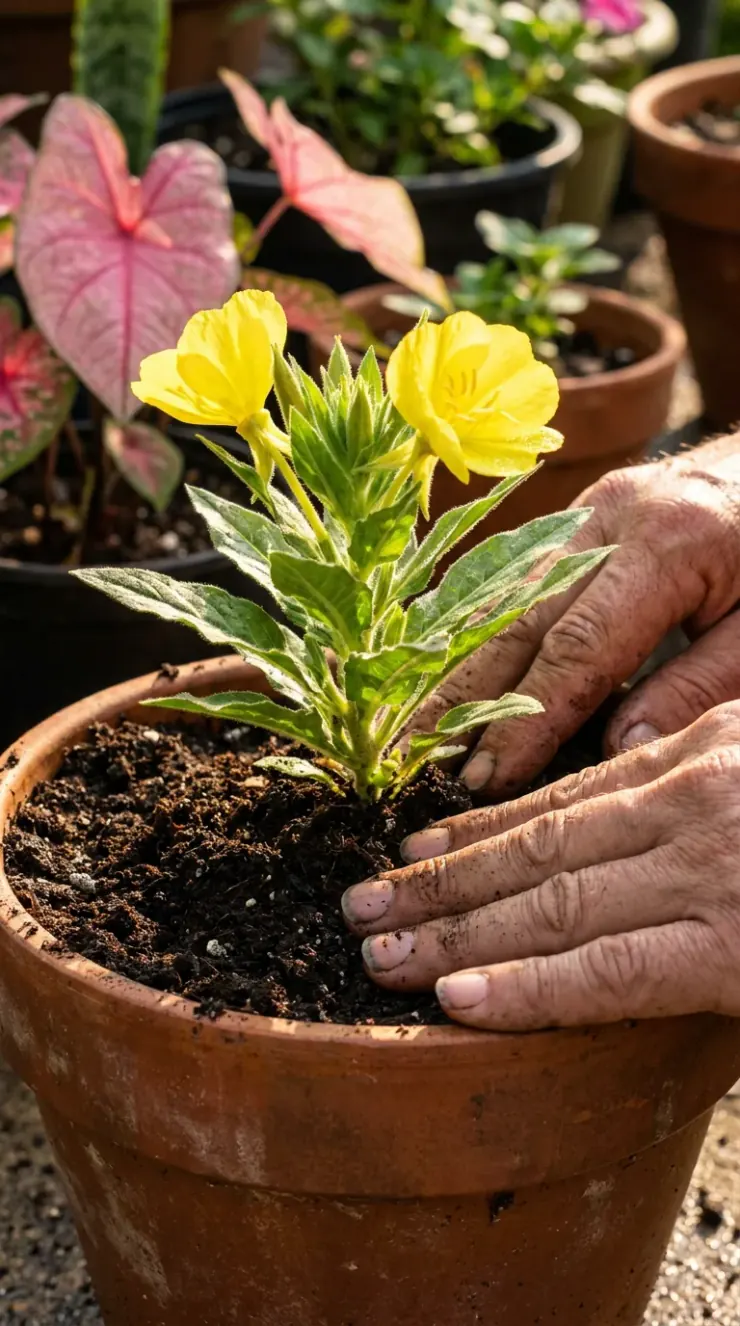
Ladybird Calylophus (Texas Primrose)
This tough little plant is native to the sunny, dry areas of the American Southwest. It is built to handle dry soil and intense sunlight.
It features delicate, frilly green leaves and bright yellow flowers. The flowers look like cheerful little cups of sunshine.
It stays quite low to the ground, usually growing only 4 to 8 inches tall. However, it can spread up to 20 inches wide. It is perfect for the edges of hot walkways or sunny rock gardens.
Augusta Lavender Heliotrope
If you love sweet scents in the garden, this plant is for you. When the sun shines on its purple flowers, it releases a lovely fragrance.
It is very tough and does not mind high humidity. It grows in a neat, mounded shape.
You can plant it in pots where it will drape gently over the edges. Just keep in mind that this plant is toxic if eaten, so keep it away from curious pets.
Safari Jamesbrittenia (South African Phlox)
This is a newer garden favorite that comes all the way from South Africa. It loves hot, sunny weather.
The flowers are unique because they often have two colors on each bloom. They look wonderful in hanging baskets on your porch.
They grow up to 12 inches tall and love to spread out. They keep blooming even during the hottest weeks of July and August.
Meteor Shower Verbena
This plant looks like a tiny burst of purple fireworks. It is a native plant from the southern United States.
It does not stop blooming when the weather gets hot and dry. It grows in a tall, airy shape up to 18 inches high.
Bees and butterflies love to visit these purple clusters. It is very easy to care for and does not need constant attention.
Angelface Angelonia (Summer Snapdragon)
If you love the look of classic snapdragons but live in a hot climate, try angelonia. They are often called summer snapdragons.
They produce tall spikes of flowers in shades of blue, pink, and white. They do not need you to pinch off old flowers to keep blooming.
They are very tough. If you forget to water them for a day or two, they generally bounce right back.
Diamond Mountain Euphorbia
This plant looks like a cloud of tiny white flowers. It is very vigorous and can grow up to three feet tall.
It acts like baby’s breath in a flower bouquet. It fills in empty spaces and makes neighboring plants look even brighter.
It handles dry soil very well. It is a great choice for large landscape beds.
Truffula Pink Gomphrena (Globe Amaranth)
This plant produces cute, hot-pink flowers that look like little cotton balls. It is incredibly easy to grow.
Pollinators like bees and butterflies will flock to your yard for these blooms. The flowers last a long time in water.
You can also dry them to use in indoor crafts. They keep their bright pink color even after they are dry.
Sweet Caroline Medusa Green Sweet Potato Vine
Sometimes you need beautiful leaves to balance out your bright flowers. This ornamental sweet potato vine has unique, hand-shaped leaves.
It has a compact, mounded shape. It will not grow wild and choke out its neighbors.
It is very tough and does not wilt easily when the afternoon sun gets hot.
Luscious Lantana
Lantana is a classic choice for a reason. It produces clusters of tiny, colorful flowers that attract hummingbirds.
It loves full sun and dry conditions. These plants are bred to produce very few seeds, which means they put all their energy into making flowers.
They grow into beautiful, bushy mounds that look great all summer.
Rockin’ Salvia
If you want to see hummingbirds in your yard, plant this salvia. It features deep, tubular flowers with dark stems.
The plants grow into large, upright clumps of dark green leaves. They look great in the back of your flower beds.
They are very sturdy and do not flop over in the wind.
Whirlwind Scaevola (Fan Flower)
This plant comes from the dry bush country of Australia. Its flowers look like tiny, delicate fans.
It is extremely tough. It tolerates heat, dry air, and salty wind.
It works wonderfully as a ground cover or trailing down the side of a hanging basket.
Toucan Cannas
For a bold, tropical look, try canna lilies. They grow very fast and produce large, broad leaves.
They are topped with bright flowers in shades of yellow, red, and orange. They love hot weather and moist soil.
They are too big for small window boxes, but they look amazing in large patio pots.
Senorita Cleome (Spider Flower)
Older types of cleome had thorns and sticky stems. These newer varieties have none of those problems.
They grow up to five feet tall and are covered in soft, cloud-like flowers. They look beautiful swaying in the summer breeze.
They are rarely bothered by pests or diseases.
Vermillionaire Cuphea (Firecracker Plant)
This plant produces dozens of bright orange, tube-shaped flowers. It looks like a tiny bush covered in firecrackers.
It is a favorite food source for hummingbirds. It is very low maintenance.
It grows well in both pots and garden beds.
Blue My Mind Evolvulus (Dwarf Morning Glory)
True blue flowers can be hard to find in the summer. Many blue flowers do not like the heat.
This plant is the exception. It produces sky-blue flowers all summer long.
It loves the hottest, sunniest spots in your yard.
ColorBlaze Coleus
Coleus is famous for its colorful leaves. These varieties are bred to grow well in full sun without burning.
They come in shades of red, gold, lime green, and near-black. They rarely bloom, which keeps their leaves looking fresh and full.
Mojave Portulaca (Purslane)
This is a flowering succulent. It has thick, fleshy leaves that store water.
It produces bright, neon-colored flowers that open in the sunshine. It is the perfect choice for dry, sandy soil where other plants struggle.
Lemon Coral Sedum
This plant has bright, chartreuse-yellow foliage that looks like soft spikes. It is very soft to the touch.
It loves hot, dry spots. It looks wonderful trailing over the edge of a stone wall or container.
Easy Annuals to Grow from Seed to Save Money
Buying started plants from a nursery can get expensive. Growing your own flowers from seed is a budget-friendly way to fill your yard with color.
It is also a wonderful project to do with children. There is nothing quite like watching a tiny green shoot pop up from the dark soil.
When looking for easy annuals to grow from seed, you have two main choices. You can start them indoors in small pots, or you can sow them directly into your garden soil.
Direct sowing is the easiest method. You simply pat the seeds into the ground, keep them moist, and let nature do the rest.
Here is a list of some of the easiest annual flowers to grow from seed:
- Zinnias: Zinnias are famous for being easy to grow. Their seeds are large and easy to handle. They sprout in just a few days and grow very quickly. They come in almost every color of the rainbow and make excellent cut flowers for your kitchen table.
- Marigolds: Marigolds are classic garden favorites. Their seeds look like tiny black and white needles. They sprout quickly and produce bright yellow, orange, and red flowers. Many gardeners find that the scent of marigolds helps keep unwanted garden pests away from their vegetables.
- Cosmos: Cosmos have delicate, feathery leaves and daisy-like flowers. They thrive in poor, sandy soil where other plants might fail. If your soil is too rich, they will grow lots of leaves but very few flowers. They sway beautifully in the wind and self-seed easily, meaning they may come back on their own next year.
- Sunflowers: Sunflowers are a joy to grow. Their large seeds are perfect for little hands to plant. You can watch them grow taller than you in just a few months. They produce cheerful yellow faces that follow the sun across the sky.
- Nasturtiums: Nasturtiums produce round, shield-shaped leaves and warm-colored flowers. Both the leaves and the flowers are edible. They have a spicy, peppery taste that adds a fun kick to summer salads. They grow very well in poor soil and do not need much fertilizer.
- Sweet Peas: Sweet peas are cool-season flowers that produce highly fragrant blooms. They love to climb up trellises or fences. You should plant them in the early spring while the soil is still cool.
To succeed with seeds, you must pay attention to planting depth. A good rule of thumb is to plant a seed twice as deep as it is wide.
Very small seeds should be scattered on top of the soil and pressed down gently. They often need light to sprout.
Keep the soil damp but not soggy. If the soil dries out even once while the seeds are sprouting, the tiny plants may not survive.
Once your seedlings grow their second set of leaves, they may need thinning. This means pulling out some of the weaker plants so the strongest ones have room to grow.
It can be hard to pull up healthy little plants. However, giving them space now will lead to much larger, healthier flowers later on.
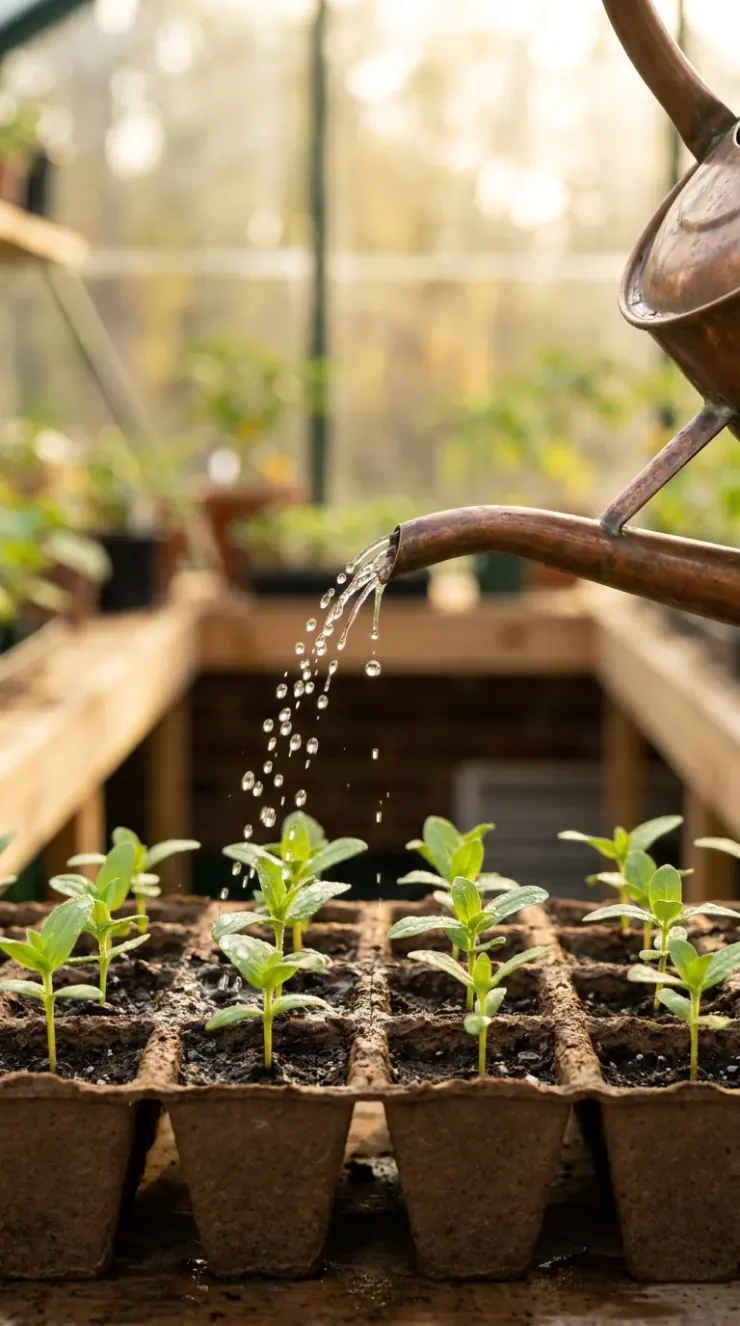
When to Plant Annual Flowers for the Best Results
Timing is everything when it comes to planting annual flowers. If you plant them too early, a late frost can kill them in a single night.
If you plant them too late, they may not have enough time to grow strong roots before the summer heat arrives.
To find the perfect time, you need to understand your local climate and frost dates.
Your last frost date is the average date in spring when your area has its last freezing temperature. You can find this date by asking local gardeners or checking online weather resources.
Annual flowers are generally split into two main groups: cool-season annuals and warm-season annuals.
Cool-season annuals prefer cool air and mild soil. They can tolerate a light frost without dying.
You can plant these in the early spring, often a few weeks before your last frost date. Examples include pansies, violas, snapdragons, and sweet alyssum.
Warm-season annuals love the heat. They will be damaged or killed by any frost.
You must wait to plant them until all danger of frost has passed and the soil has warmed up. Examples include zinnias, marigolds, petunias, and impatiens.
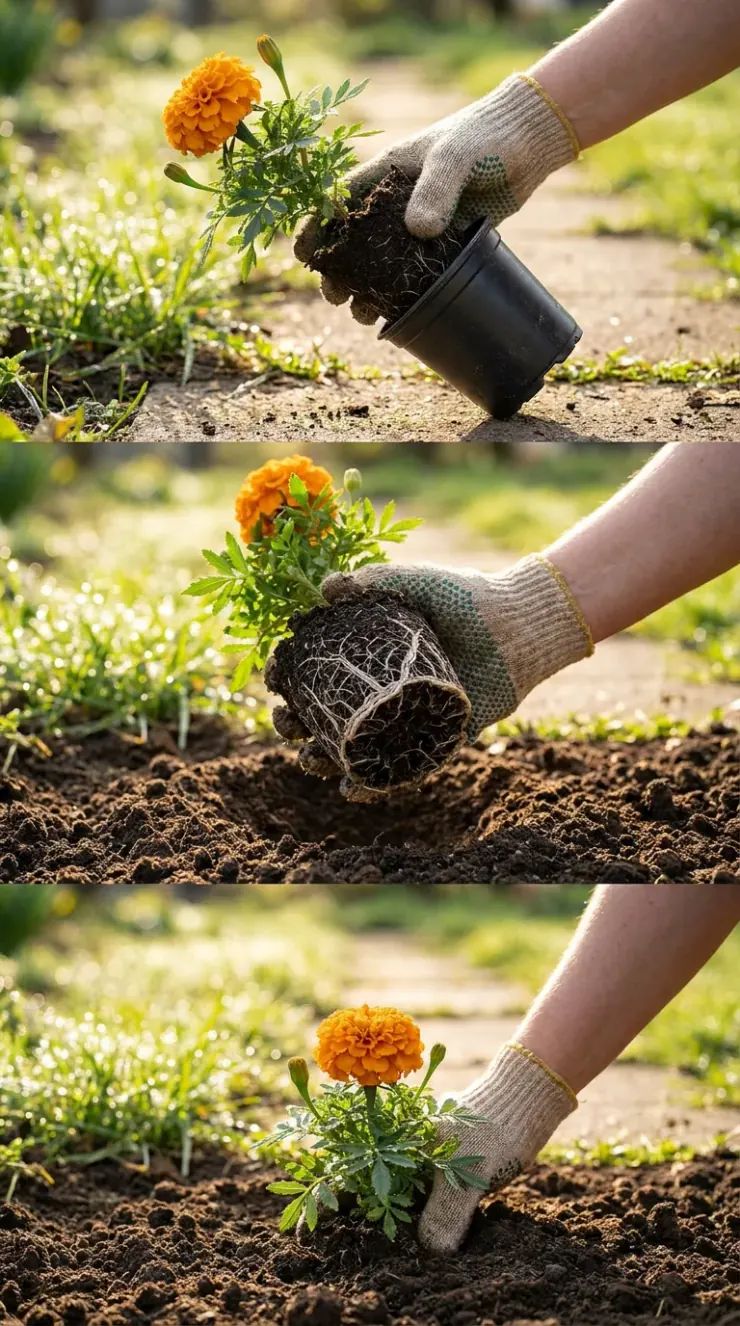
Here is a step-by-step guide on how to plant your annual flowers:
- Check the weather: Look at your local ten-day forecast. Make sure there are no freezing temperatures or cold storms predicted.
- Prepare the soil: Loosen the soil in your garden bed with a shovel or garden fork. Mix in some organic compost to give your new plants plenty of nutrients.
- Harden off your plants: If you grew your plants from seed indoors, or bought them from a warm greenhouse, you must get them used to the outdoors. Set them outside in a shady, protected spot for a few hours each day. Slowly increase their time in the sun over a week.
- Dig the holes: Dig a hole for each plant that is slightly wider than the pot it is currently in. The depth should be the same as the pot.
- Gently remove the plant: Squeeze the sides of the plastic pot to loosen the roots. Slide the plant out gently. If the roots are tightly wound in a circle, use your fingers to gently loosen them up.
- Place and fill: Set the plant in the hole. Fill in the empty space with soil, pressing down gently with your hands to remove any air pockets.
- Water deeply: Give your new plants a long, slow drink of water. This helps settle the soil around their roots.
- Add mulch: Spread a two-inch layer of shredded bark or leaves around your plants. This helps keep moisture in the soil and stops weeds from growing.
By following these steps and waiting for the right weather, your plants will have the best start possible. They will grow strong roots and reward you with beautiful blooms all summer long.
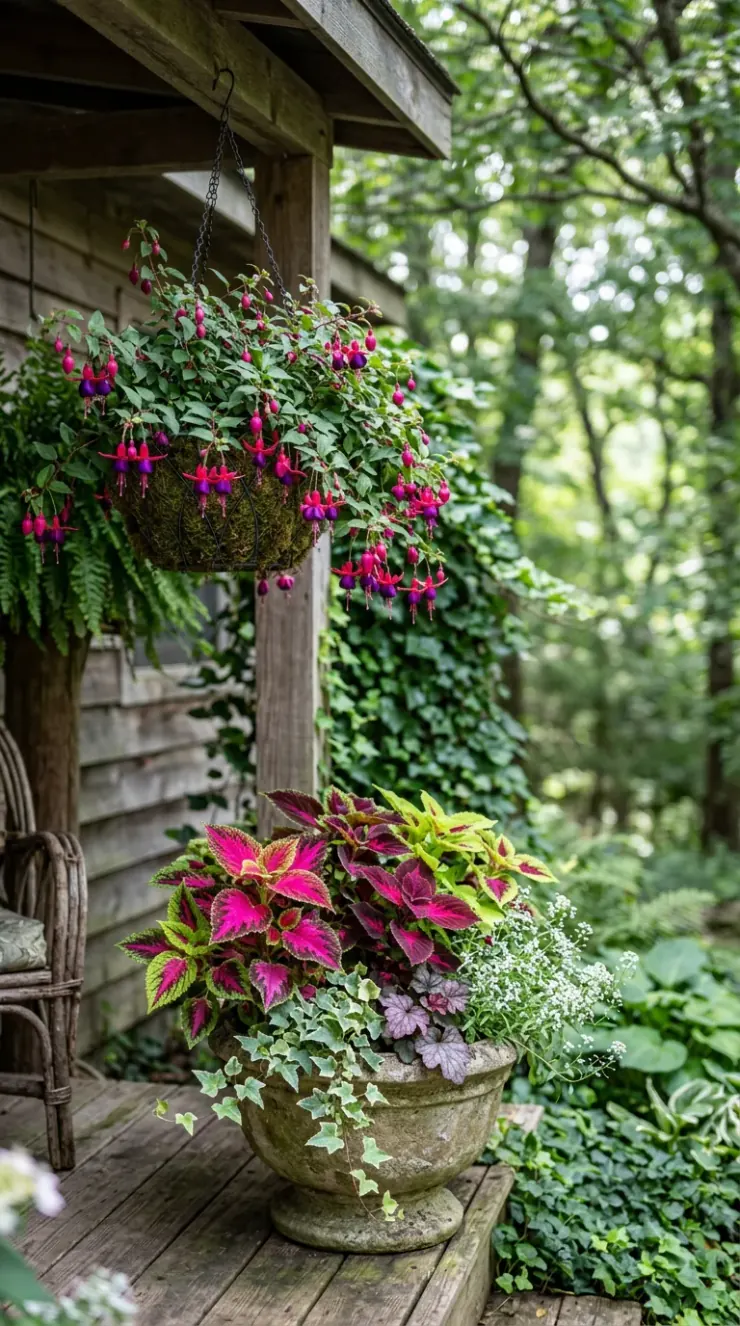
Beautiful Annual Flowers for Shade and Low-Light Spots
Do you have a dark corner under a large tree or a shady porch that looks a bit bare? You do not have to settle for plain green grass or empty mulch.
There are many wonderful annual flowers for shade that will bring bright color to the darker parts of your yard.
Before you choose your plants, it helps to understand the different types of shade.
- Dappled shade: This is the light found under trees with thin leaves. The sunlight filters through, creating a moving pattern of light and shadow on the ground.
- Partial shade: This means an area gets direct sun for only a few hours a day, usually in the morning or afternoon.
- Deep shade: This is found under dense evergreen trees or next to tall walls. Very little direct sunlight ever reaches these spots.
One of the biggest mistakes beginners make is overwatering shade plants. Because the sun does not shine directly on these areas, the soil stays wet much longer than it does in sunny spots.
Always feel the soil with your finger before watering. If it feels damp, wait a day or two before watering again.
Here are some of the best annual flowers to light up your shady spaces:
Coleus
While some newer coleus can handle sun, most varieties absolutely love the shade. They are grown for their stunning leaves rather than their flowers.
The leaves come in wild patterns of neon pink, lime green, deep purple, and bright orange. They look like glowing jewels in dark corners.
They grow very easily and can be trimmed back if they get too tall.
Begonias
Begonias are incredibly tough shade plants. They have waxy leaves and produce clusters of red, pink, or white flowers.
They do not mind high humidity and can handle dry soil better than most shade plants.
They look wonderful in pots on a shady porch or planted in mass groupings under trees.
Impatiens
Impatiens are the classic choice for shady garden beds. They produce simple, flat flowers in almost every color you can think of.
They grow into soft, low mounds that look like a colorful carpet.
They need regular moisture to stay happy. If they dry out, they will wilt quickly, but they usually bounce back after a good drink.
Caladiums
As we mentioned earlier, some caladiums can handle sun, but they truly shine in the shade. Their large, paper-thin leaves reflect the light and make dark areas look brighter.
They pair beautifully with fine-textured ferns and hostas.
Fuchsia
Fuchsias produce some of the most unique flowers in the garden. They look like tiny, hanging lanterns or elegant ballerinas in pink and purple skirts.
They are a favorite food source for hummingbirds.
They grow best in hanging baskets where the flowers can dangle down for you to see. They prefer cool, moist shade and do not like intense afternoon heat.
Lobelia
Lobelia produces masses of tiny, intense blue flowers. True blue is a rare color in the garden, making this plant very special.
It grows well in cool, partial shade.
It has a trailing habit, making it a beautiful choice for the edges of shady window boxes or hanging pots.
By mixing different leaf textures and flower colors, you can turn a dark, boring corner into your favorite spot in the yard. Shady gardens often feel cool, calm, and peaceful during the hot summer months.
Strategic Garden Layout & Spacing Canvas
When you design your flower garden, it helps to think about how your plants will grow together over time. In permaculture, which is a way of designing gardens that copy natural systems, we often use clever layouts to get the most out of our space.
Instead of planting in straight, boring rows, you can try planting in soft curves, blocks, or even keyhole patterns. A keyhole garden has a small path leading into the center, allowing you to reach all your plants easily without stepping on the soil and packing it down.
When you plant your annual flowers, pay close attention to the spacing instructions on their labels. It can be tempting to plant them very close together so your garden looks full right away.
However, plants need room for air to blow through their leaves. If they are packed too tightly, their leaves will stay wet, which can lead to mold and other plant diseases.
By giving them room to grow, they will fill out naturally into strong, healthy mounds.
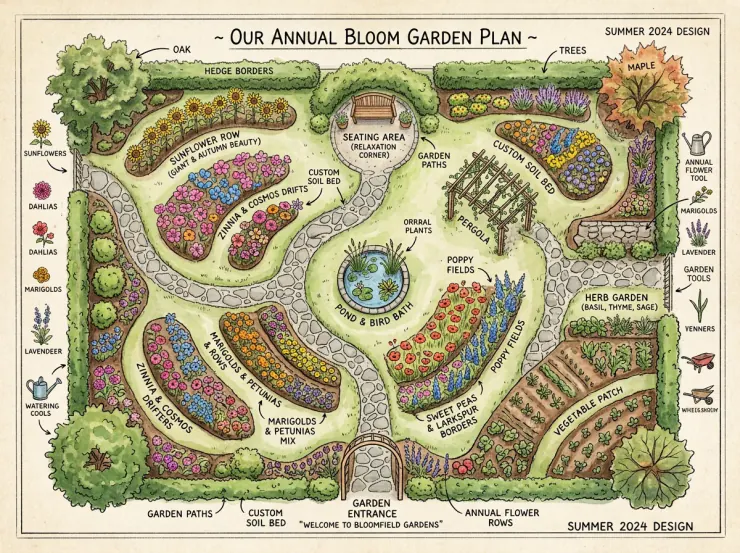
Companion planting tip: Plant your tomatoes near aromatic basil and golden marigolds to deter pests naturally and enhance yields!
Nutrient Optimization & Organic Feeding Guide
To keep your annual flowers blooming non-stop all season, you need to feed them well. Annuals put a huge amount of energy into creating flowers.
Because of this, they are often called “heavy feeders.” This simply means they need more nutrients than many other plants.
However, instead of using harsh chemical fertilizers that can wash away into our water systems, it is much better to build healthy, living soil.
Think of your soil as a busy city. It is full of tiny, helpful organisms like bacteria, fungi, and earthworms.
This is called the soil food web. When you feed these tiny creatures, they break down organic matter and feed your plants naturally.
Here are some of the best organic ways to feed your annual flowers:
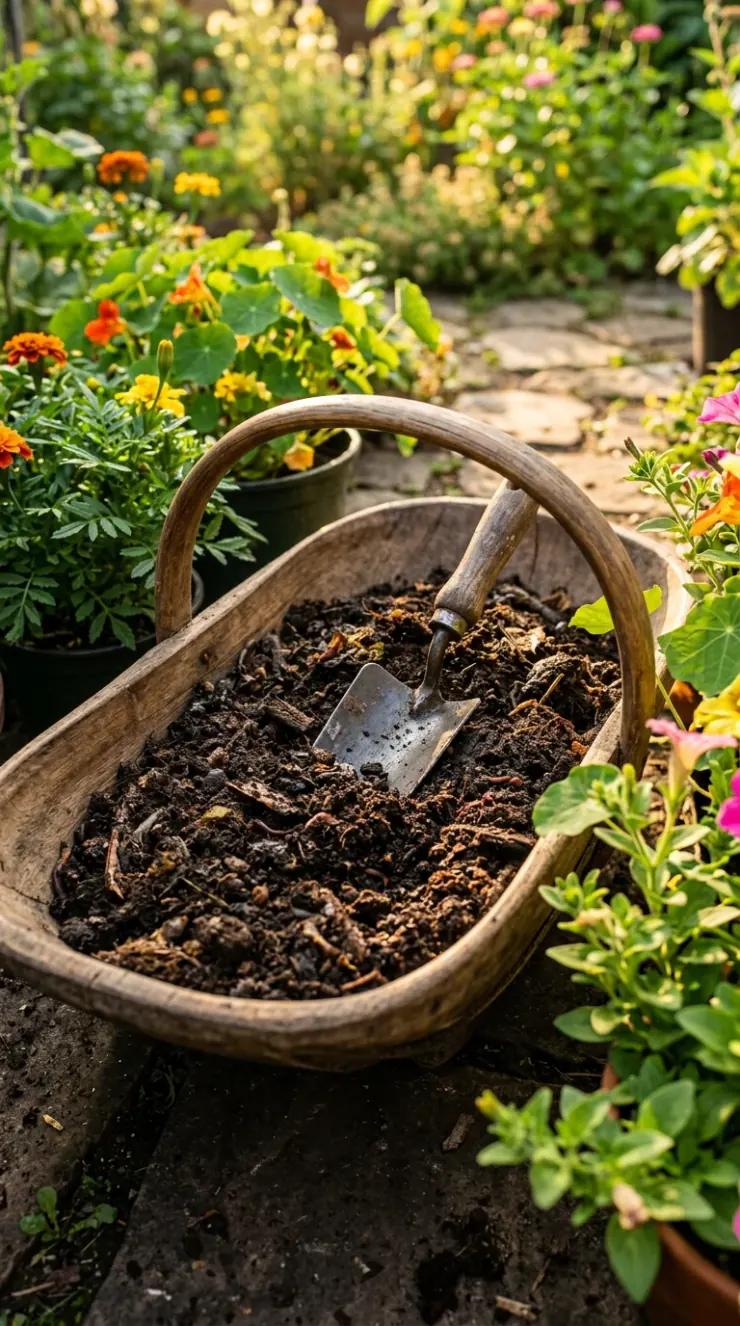
- Organic Compost: Compost is often called “black gold” by gardeners. It is made from decayed leaves, grass clippings, and kitchen scraps. Mixing a thick layer of compost into your soil before planting improves its structure, helps it hold water, and provides a gentle, steady supply of nutrients.
- Worm Castings: Worm castings are simply earthworm poop. They are packed with rich nutrients and helpful microbes. You can add a handful of worm castings to the hole when you plant your flowers, or scatter them on top of the soil during the summer.
- Seaweed and Fish Fertilizer: This is a liquid fertilizer made from ocean plants and fish. It has a strong, earthy smell, but it works wonders. You mix it with water in your watering can and pour it over your plants. It provides a quick boost of nutrients that helps your flowers grow strong and bright.
- Compost Tea: This is made by soaking compost in water, like a giant tea bag. It is full of helpful bacteria and fungi. Watering your plants with compost tea helps protect them from diseases and strengthens their roots.
When feeding your annuals, try to avoid fertilizers that have a very high amount of nitrogen. Nitrogen is great for growing big, green leaves.
However, if you give your flowers too much nitrogen, they will grow lots of leaves but very few blooms. Look for organic fertilizers that are formulated for flowers, which will have more phosphorus to help produce lots of bright blossoms.
Ultimate Harvesting & Seasonal Blooms Rewards
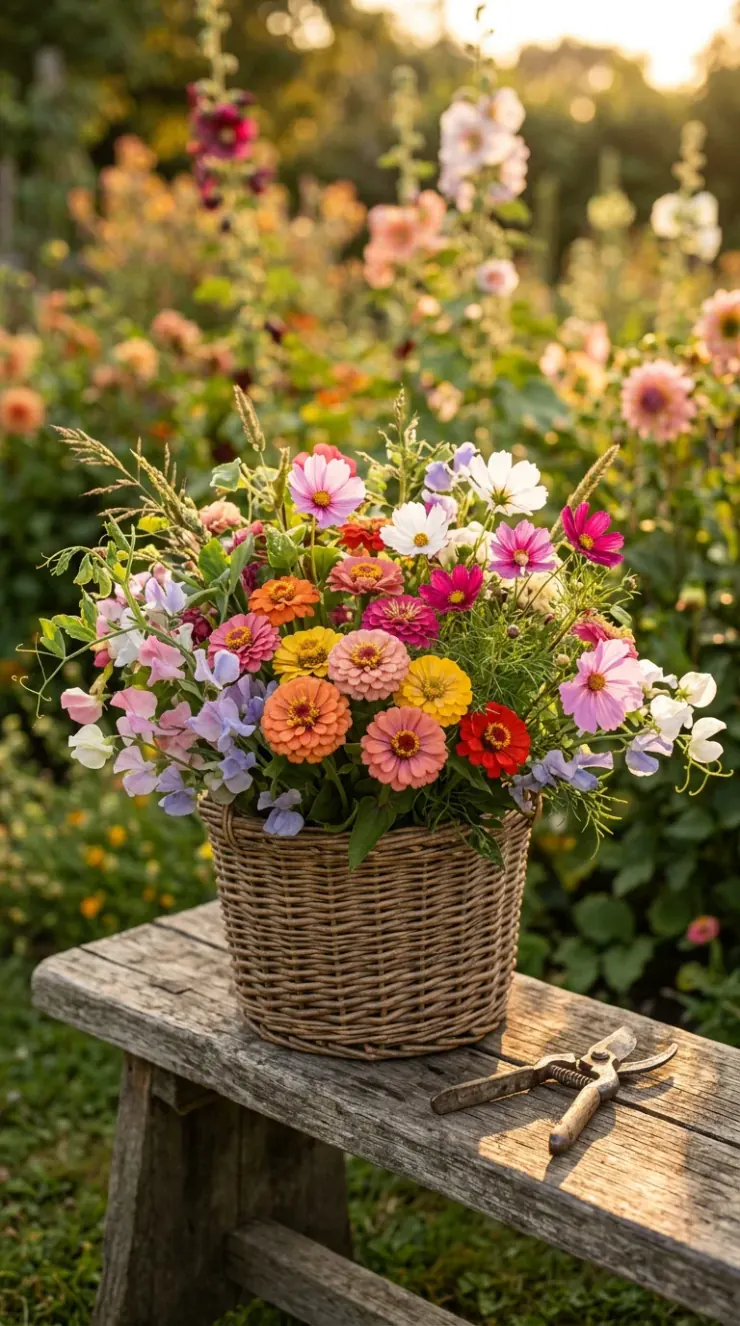
One of the greatest joys of growing annual flowers is being able to harvest them. Bringing a fresh bouquet of colorful flowers inside your home is a wonderful reward for your hard work.
The more you harvest many types of annual flowers, the more they will bloom. This is because harvesting acts like a gentle haircut.
It stops the plant from making seeds and encourages it to grow new, fresh stems and flowers.
When you harvest your flowers, try to do it in the cool of the morning or late evening. During the heat of the day, plants lose water and can wilt quickly.
Use clean, sharp scissors or garden shears. Cut the stems at an angle, and place them immediately into a bucket of cool water.
Strip off any leaves that will be below the water line in your vase. If leaves sit in the water, they will rot and make the water smelly, which shortens the life of your flowers.
Another important task is deadheading. This is a gardening word that simply means pinching or cutting off old, faded flowers.
When a flower starts to fade, the plant begins to make seeds. Making seeds takes a lot of energy.
By removing the old flowers, you tell the plant to stop making seeds and focus on making more beautiful blossoms instead.
As the summer comes to an end and the cool autumn air arrives, you can start saving seeds for next year. Let a few of your favorite flowers go to seed on the plant.
Wait until the flower heads turn brown and dry. Gently shake the seeds into a paper envelope.
Store them in a cool, dry place over the winter. Next spring, you can plant them and start the beautiful cycle all over again.
Growing annual flowers is a wonderful journey. It teaches us to slow down, pay attention to the seasons, and appreciate the simple beauty of nature.
Whether you have a large backyard or a few pots on a sunny balcony, you can create a beautiful, blooming space to enjoy all season long.
Frequently Asked Questions
Q: Do annual flowers come back every year?
A: No, annual flowers generally complete their entire life cycle in a single growing season. They sprout, grow, flower, set seed, and die all in one year. However, some varieties may drop seeds that sprout on their own the following spring.
Q: How often should I water my annual flowers?
A: It often depends on the weather and your soil, but many gardeners find that watering deeply once or twice a week is best. Pots and hanging baskets dry out much faster than garden beds and may need watering every day during hot summer weeks. Always check the soil with your finger first.
Q: Can I grow annual flowers in pots?
A: Yes, annual flowers grow wonderfully in containers, window boxes, and hanging baskets. Just make sure your pots have drainage holes in the bottom so excess water can escape. Using a high-quality potting mix will help your plants thrive.
Q: Do I need to remove dead flowers from my plants?
A: In most cases, removing faded flowers helps the plant produce more blooms. This simple chore is called deadheading. Some newer varieties are self-cleaning, meaning they drop their old flowers on their own and do not need this extra care.
Q: What is the difference between annuals and perennials?
A: Annual flowers live for only one season and must be replanted every year. Perennials are plants that die back in the winter but grow back from their roots every spring. Mixing both types in your garden beds can give you a beautiful, easy-care yard.
Q: Why are my annual flowers turning yellow?
A: Yellow leaves can be a sign of several different things. In many cases, it is caused by overwatering or soil that does not drain well. It can also mean your plants are hungry and need a gentle dose of organic fertilizer to help them grow.