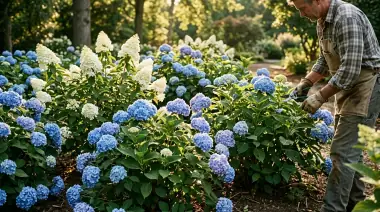
Nothing stings like a healthy hydrangea with leaves but no flowers. Almost always the cause is timing: it was pruned in the wrong month. This guide covers the one concept that prevents that mistake - old wood vs new wood - plus the exact calendar for every type. Pair it with our flower gardening for beginners guide.
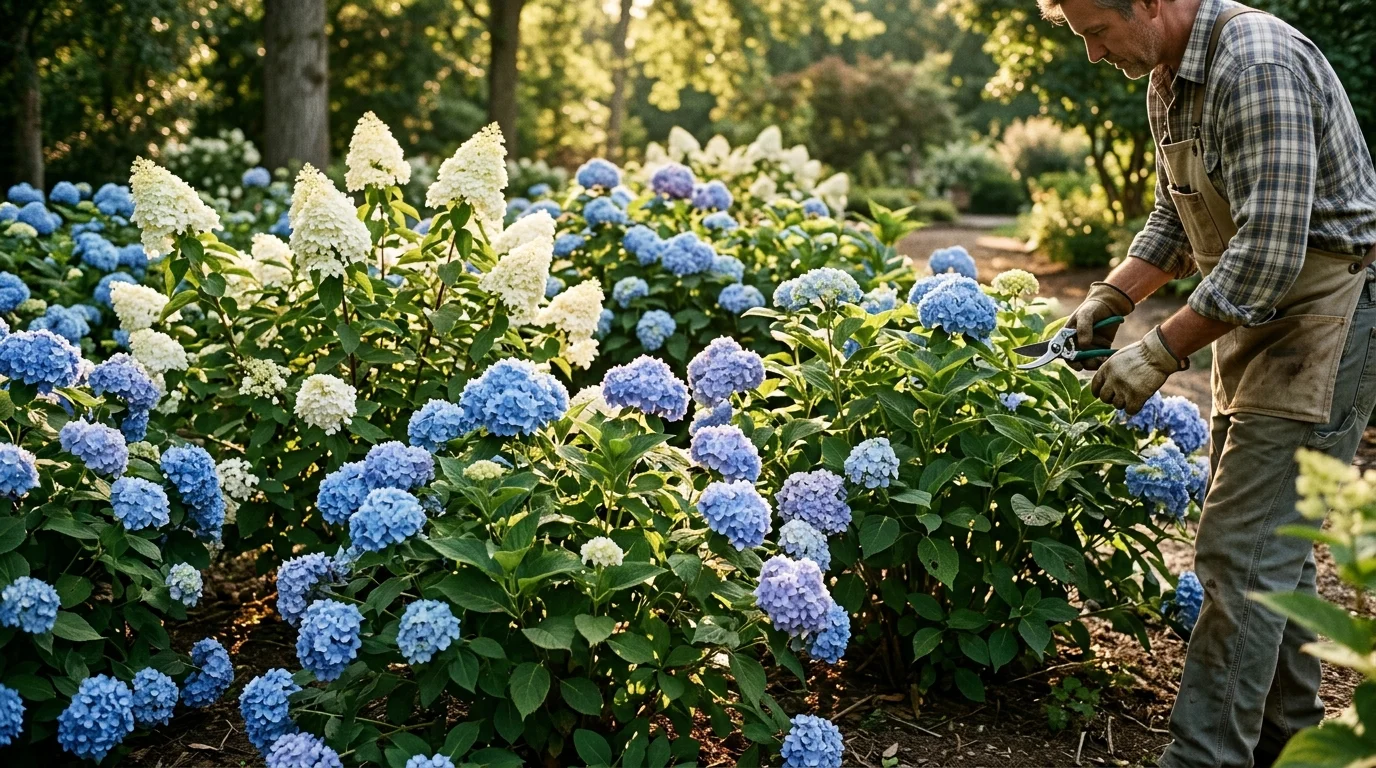
Quick Answer: Prune old-wood bloomers - bigleaf, mountain, oakleaf, and climbing - lightly right after summer flowering (July to early August in most US zones), never in fall, winter, or spring. Prune new-wood bloomers - panicle and smooth - in late winter or early spring while dormant. When in doubt, skip pruning for a year and only deadhead.
At a Glance
| Fact | Detail |
|---|---|
| #1 rule | Old wood blooms summer-pruned; new wood blooms late-winter pruned |
| Old-wood types | Bigleaf/mophead and lacecap, mountain, oakleaf, climbing |
| Old-wood window | After flowering, July to early August |
| New-wood types | Panicle, smooth/Annabelle |
| New-wood window | Late winter, February to March |
| Deadheading | Anytime - flower stem only |
| Rejuvenation | 1/3 of oldest stems yearly |
| Safe default | Unsure? Deadhead only for a season |
Old Wood vs New Wood: The Concept That Prevents No Blooms
Old wood is last year’s hardened stems; new wood is this season’s soft growth. Which wood carries buds sets the whole calendar [1] (Source: North Carolina State University Extension).
Old-wood bloomers build next year’s buds in late summer, 4 to 6 weeks after flowering. Those buds overwinter on the stems, so pruning a bigleaf in October or April removes flowers that took eight months to form. The plant still leafs out, but that season’s blooms are gone.
New-wood bloomers do the reverse: panicle and smooth types grow stems each spring and bud on that same growth, so a late-winter cut costs nothing and yields bigger, sturdier blooms.
Rebloomers like Endless Summer bud on both woods, so new-wood flowers arrive even if old-wood buds freeze - but still prune lightly after the first flush, never in fall or spring.
Old Wood vs New Wood at a Glance
| Feature | Old-wood bloomers | New-wood bloomers |
|---|---|---|
| Types | Bigleaf, mountain, oakleaf, climbing | Panicle, smooth/Annabelle |
| Buds form | Late summer on last year’s stems | Spring on current year’s growth |
| Prune when | Right after flowering, summer | Late winter/early spring, dormant |
| Prune wrong | Zero blooms next year | Smaller, floppier blooms |
| Winter risk | Buds can freeze in zones 5 and colder | No buds yet, nothing to freeze |
Identify Your Hydrangea Type First
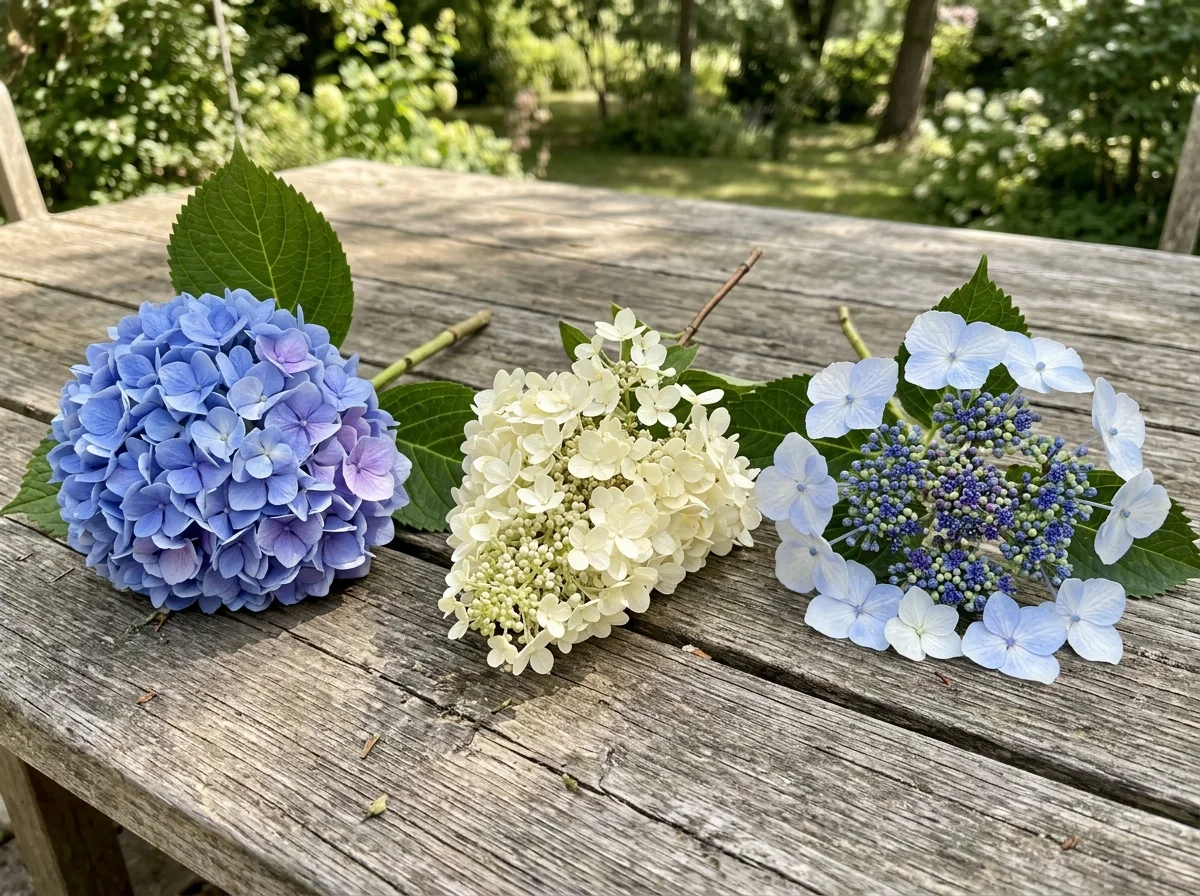
Combine bloom shape with leaves before cutting - one clue misleads, two rarely do [2] (Source: Clemson University Cooperative Extension).
- Round mophead balls (pink, blue, purple): bigleaf (Hydrangea macrophylla). Early to midsummer, old wood. Broad, glossy, serrated leaves.
- Flat lacecap rings: also bigleaf, old wood, same summer window.
- Cones (white turning pink, 8-12 inches): panicle (H. paniculata, Limelight). Midsummer to fall, new wood. Smaller matte leaves.
- Floppy white balls on thin stems: smooth (H. arborescens, Annabelle). Midsummer, new wood.
- Oak-shaped leaves, white cones, red fall color: oakleaf (H. quercifolia). Late spring, old wood. Peeling bark.
- Small mopheads on 2-4 foot plants: mountain (H. serrata). Old wood, like bigleaf.
- Vine on a wall, white clusters: climbing (H. petiolaris). Old wood, light trim after bloom.
Identification Cheat Sheet
| What you see | Likely type | Blooms on | Prune when |
|---|---|---|---|
| Round pink/blue balls | Bigleaf mophead | Old wood | After flowering, summer |
| Flat ring, tiny center | Bigleaf lacecap | Old wood | After flowering, summer |
| White/pink cones | Panicle | New wood | Late winter/early spring |
| Floppy white balls | Smooth/Annabelle | New wood | Late winter/early spring |
| Oak-shaped leaves | Oakleaf | Old wood | After flowering, minimal |
| Small mopheads, compact | Mountain | Old wood | After flowering, summer |
| Clinging vine | Climbing | Old wood | After flowering, light |
Still unsure? Take the “do nothing” year below. Meanwhile, our flowers for shade guide can help you read the bed.
When to Prune Hydrangeas by Type
Dates shift two weeks earlier in zones 8-9 and later in zones 4-5; the order never changes.
| Type | When to prune | How much to cut |
|---|---|---|
| Bigleaf mophead/lacecap | After flowering, July to early August | Tips only, to top buds |
| Mountain | After flowering, July to early August | Light shaping, like bigleaf |
| Oakleaf | After flowering, June to July | Minimal: deadhead plus crossing stems |
| Climbing | After flowering, midsummer | Light shaping |
| Panicle | Late winter/early spring, February to March | Cut back 1/3 to 1/2, keep framework |
| Smooth/Annabelle | Late winter/early spring, February to March | Cut to 6-12 inches |
| Reblooming bigleaf | After first flush fades, midsummer | Light trim plus deadhead |
Bigleaf and Lacecap: Summer Only
Within 2 to 3 weeks after flowers fade - typically July, never past early August in zones 5-7 - cut each flowered stem to the topmost plump buds and remove gray hollow canes at the base. Next June’s buds are already forming by mid-August [1] (Source: North Carolina State University Extension).
Mountain: Like Bigleaf
Same summer window, tips only. Bonus: buds hardy enough for many zone 5 winters where bigleaf buds freeze.
Panicle: Late Winter, Cut Hard
In February to March, shorten last year’s growth by one-third to one-half above outward-facing buds and remove sub-pencil twigs. Tree-form Limelight types keep 3 to 5 limbs with laterals at 2 to 3 bud pairs.
Smooth and Annabelle: Cut to 6-12 Inches
Cut all stems to 6 to 12 inches each late winter, leaving 2 to 3 bud pairs per stump. If blooms flop, leave 18 to 24 inches for stiffer growth.
Oakleaf: Minimal, After Flowering
Deadhead plus dead or rubbing branches in June or July. Plants reach 6 to 8 feet wide - a hard-cut oakleaf can sit bloomless for 2 years. Plan companions with our perennial flowers guide.
Climbing: Light Shaping After Bloom
Slow for 3 to 5 years while rooting - normal. Then trim wayward shoots after bloom without detaching clinging stems.
The “Do Nothing” Year: Safest When Unsure
If you lost the tag, do not prune for one full year. Deadhead spent blooms, remove dead wood after leaf-out, and note bloom month, shape, and whether flowers sit on old stems or fresh shoots. One season identifies the type, and every bud survives.
Deadheading vs Pruning: What You Can Do Anytime
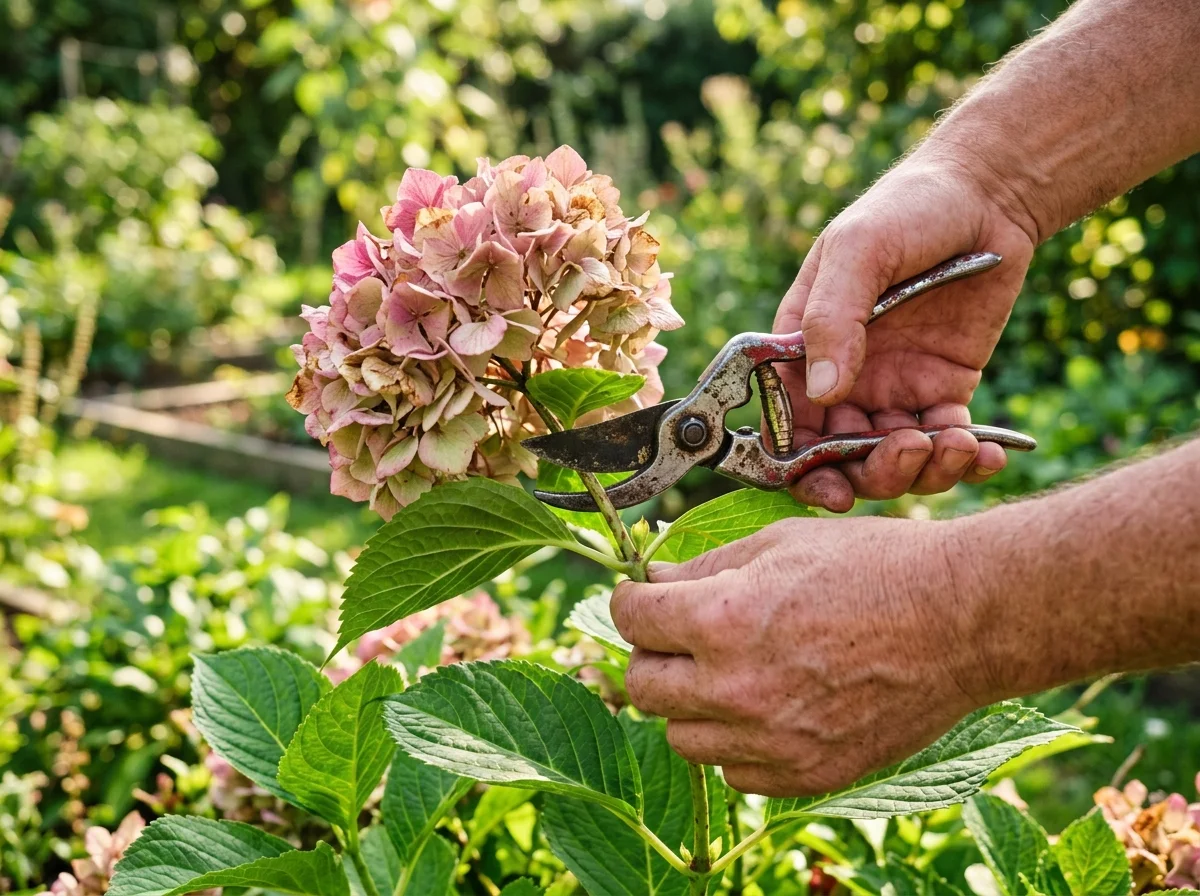
Deadheading is safe on every type all season. Follow the faded stem to the first healthy leaves and cut just above them, leaving woody stems and buds intact. On bigleaf types the flower stem is soft new growth while next year’s buds sit lower on last year’s wood, so a shallow deadhead never touches them.
After September, leave the last dried blooms on bigleaf, mountain, and oakleaf types - they shield buds in zones 5-6. Use sharp, clean shears (see our best pruning shears guide) with a disinfectant wipe between plants.
How to Cut: Angles, Buds, and Clean Tools
Work on a dry morning so cuts heal fast, and make every cut deliberate.
- Cut 1/4 inch above a bud pair, angled slightly so the stub dries cleanly.
- Pick outward-facing buds on panicle and smooth types to open the center.
- Cut dead wood to the base - gray snapping canes go flush at ground level.
- Never leave long stubs - a 3-inch dead stub invites rot into living wood.
- Thin, don’t shear - remove weak stems at the base instead of hedging the surface.
- Water after hard cuts - 1 inch weekly plus a light feed as shoots emerge.
Rejuvenation Pruning for Old, Overgrown Plants
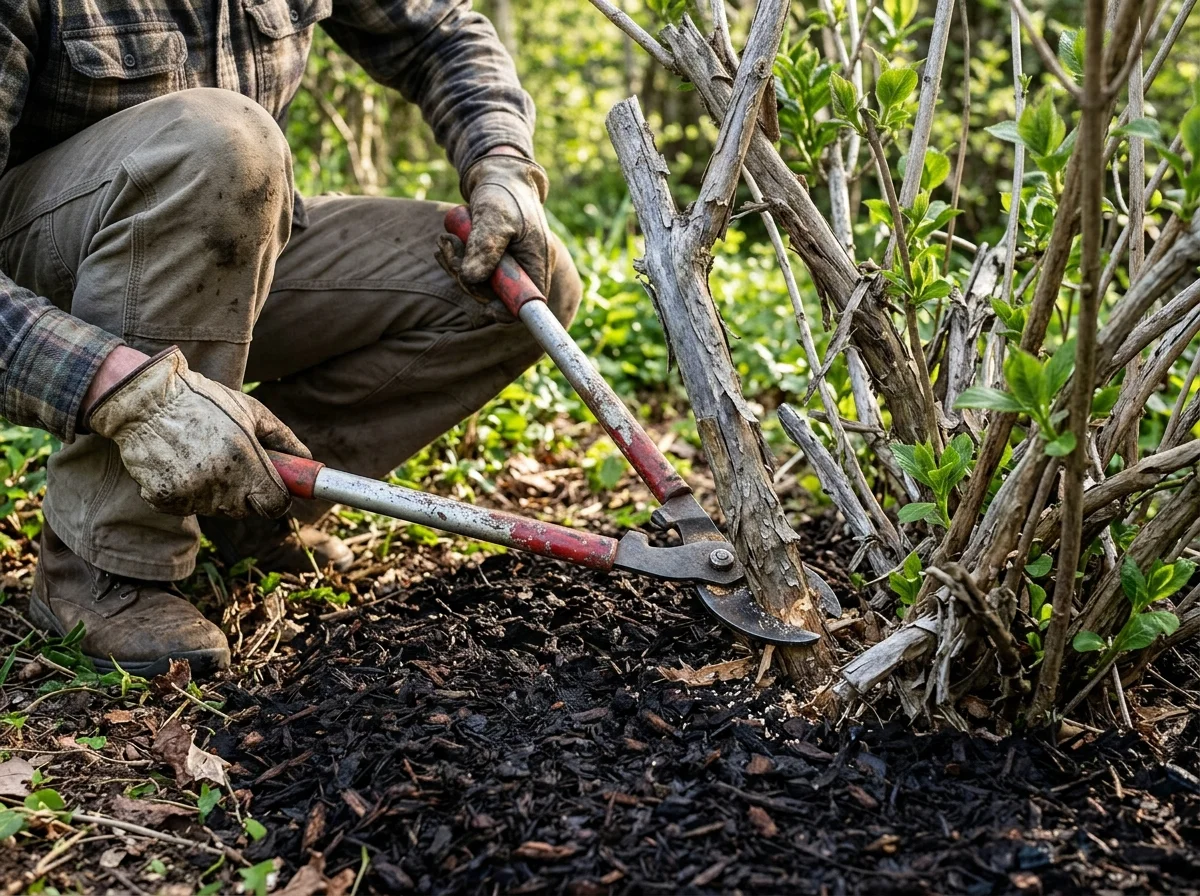
A 10-year-old tangle with small blooms needs renewal. On established plants of any type, remove up to one-third of the oldest stems at ground level each year for three years (loppers over 3/4 inch). Summer cuts for old-wood types, late winter for panicle and smooth. Never take more at once - buzz-cutting old-wood types erases blooms for two years. Finish with 2 inches of mulch kept 3 inches off stems.
Winter Protection for Bigleaf Buds
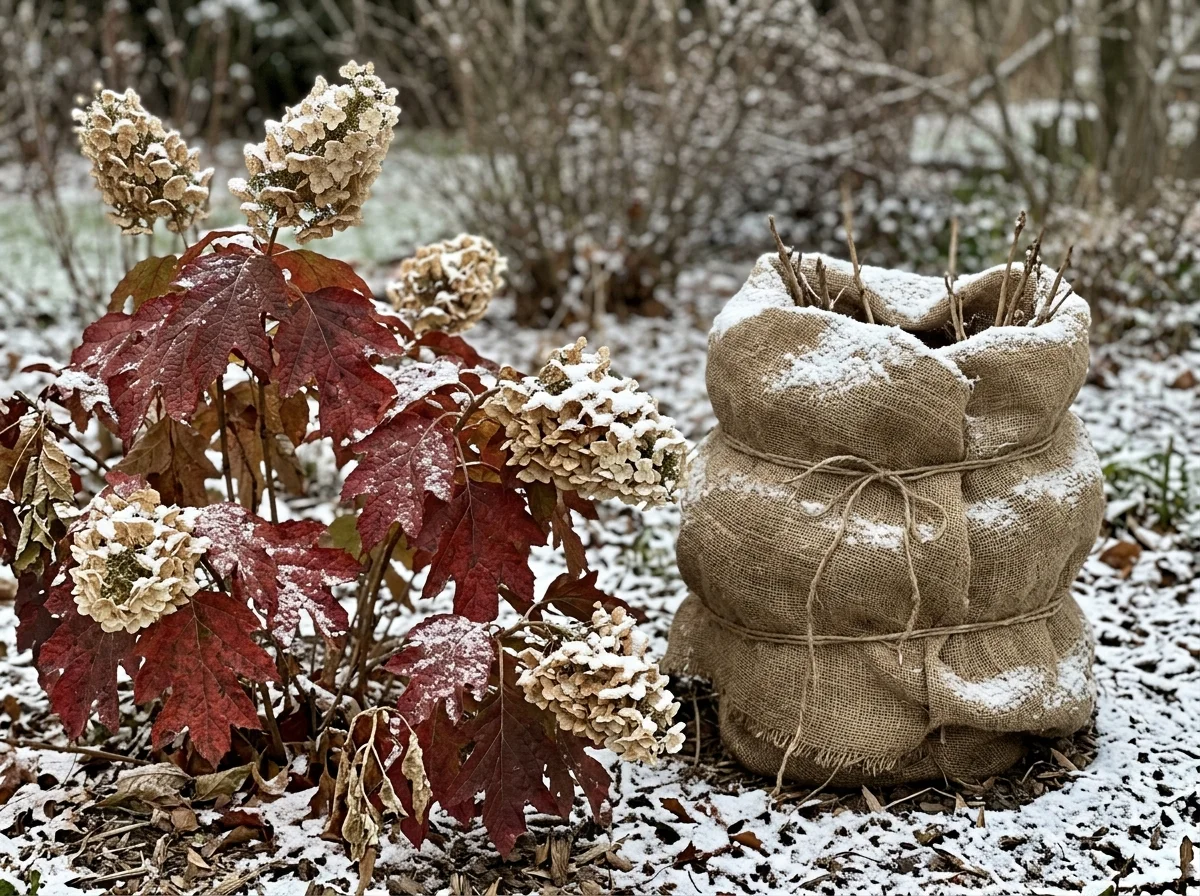
In zones 5 and 6, cold rivals bad pruning. Old-wood buds die near -10 to -15°F, and a January thaw plus hard freeze hurts more than steady cold [3] (Source: University of Minnesota Extension).
- Mulch 3 to 4 inches around the base, kept 3 inches off stems.
- Cage with leaves after the first hard frost: stakes plus burlap, filled with dry leaves. Skip plastic, which cooks buds.
- Leave dried blooms on - they shield the buds beneath them.
- Screen windward wind with burlap against desiccation.
- Uncover in April after hard frosts, before shoots stretch pale inside.
- Shelter the site - east exposures plus windbreaks beat any wrap, and reblooming varieties insure against total loss.
What Never to Do
- Never prune old-wood types in fall, winter, or spring - every cut removes set buds.
- Never shear with hedge trimmers in spring. Shearing deletes buds, forces weak twigs.
- Never cut an unknown hydrangea hard. Take the do-nothing year first.
- Never overfeed nitrogen. Lawn fertilizer drift grows 5-foot leafy stems with zero flowers.
- Never prune in heat or drought. Wait for cool weather; water the day before.
Zone Notes Across the US
- Zones 4-5: Grow panicle and smooth types freely; bigleaf only as reblooming varieties with leaf-cage protection.
- Zones 6-7: The sweet spot. Prune bigleaf after the July bloom; cut panicle and smooth types in late February to March. See our low-maintenance flower gardens guide for companions.
- Zones 8-9: Shift 2 to 3 weeks earlier. Afternoon shade and mulch beat cold protection; oakleaf and panicle types take heat best.
- All zones: Microclimate beats zone number - sheltered plants out-bloom exposed ones.
Common Mistakes
- Fall cleanup of bigleaf types. The fix: stop after early August.
- Spring “shaping” before bloom. The fix: remove only dead wood after leaf-out.
- Shearing into balls. The fix: thin whole stems at the base.
- Cutting smooth types too high. The fix: cut to 6-12 inches each late winter.
- Starving new-wood types after hard cuts. The fix: 1 inch of water weekly plus a light feed.
- Blaming the plant after one bloomless year. The fix: check timing, frost, shade, nitrogen.
- Pruning climbers like shrubs. The fix: establish 3-5 years, then trim lightly.
Troubleshooting
| Symptom | Likely cause | Fix |
|---|---|---|
| Leaves, zero blooms | Old-wood type cut in fall/winter/spring | Stop pruning; wait one season |
| No blooms after cold winter | Buds froze below -10°F | Cage with leaves and burlap next November |
| Small blooms, leggy stems | Under 3 hours of morning sun | Open canopy; aim for 3-5 hours sun |
| Giant leaves, no flowers | Excess nitrogen | Keep lawn fertilizer 5+ feet away |
| Blooms flop over | Smooth type cut too high | Cut to 6-12 inches; add ring supports |
Frequently Asked Questions
Q: When is the best time to prune hydrangeas?
A: Prune bigleaf, mountain, oakleaf, and climbing types right after summer flowering; prune panicle and smooth types in late winter while dormant.
Q: Why is my hydrangea not blooming after pruning?
A: You likely cut an old-wood bloomer in fall, winter, or spring and removed its buds. Frozen buds, deep shade, and excess nitrogen are the other top causes.
Q: Can I prune hydrangeas in fall or spring?
A: Never for bigleaf, mountain, oakleaf, or climbing types. Only panicle and smooth types take late-winter or early-spring pruning.
Q: How do I tell if my hydrangea blooms on old wood or new wood?
A: Mophead balls and lacecaps are bigleaf on old wood; cones are panicles on new wood; floppy white balls are smooth on new wood; oak-shaped leaves mean oakleaf.
Q: Should I deadhead hydrangeas?
A: Yes - snip only the faded stem back to the first healthy leaves. Stay out of live woody stems and next year’s buds are safe.
Q: How far back can I cut panicle and smooth hydrangeas?
A: Cut smooth Annabelle types to 6 to 12 inches each late winter; cut panicles back one-third to one-half, keeping a strong framework.
Q: Do reblooming hydrangeas like Endless Summer need different pruning?
A: Prune lightly after the first flush fades in summer. They bloom on old and new wood, so light trims plus deadheading protect both flushes.
Q: How do I protect bigleaf hydrangea buds in winter?
A: Mulch 3 to 4 inches, cage with burlap and dry leaves after the first hard frost, and leave dried blooms on until spring.
Related Articles
- Flower Gardening for Beginners
- Perennial Flowers
- Flowers for Shade
- Low-Maintenance Flower Gardens
- Pollinator Garden Flowers
- Flowers for Full Sun
- Best Pruning Shears Guide
