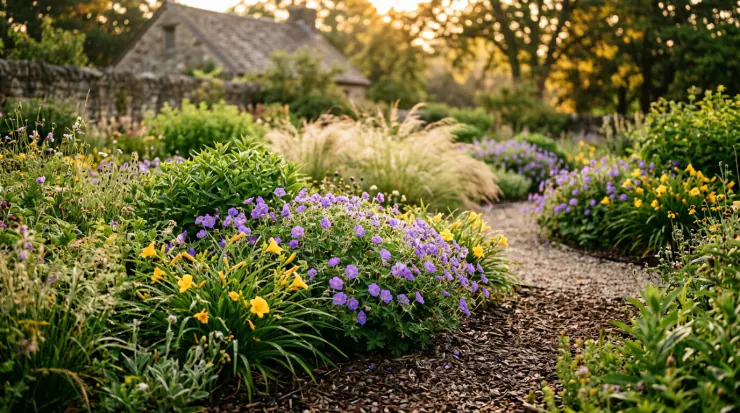
Do you love the look of a colorful yard but hate the idea of spending every weekend pulling weeds? Many of us want a gorgeous outdoor space but simply do not have hours of free time to spend working in the dirt. In this complete guide, I will show you how to design and grow stunning low maintenance flower gardens that practically take care of themselves.
Quick Answer: You can easily build low maintenance flower gardens by choosing tough perennial plants, packing your beds tightly to block out weeds, and using thick layers of organic mulch. Selecting native species and drought-tolerant varieties will also save you hours of watering and feeding every single week.
How to Choose and Grow Easy Perennial Flowers Full Sun
If your yard gets a lot of bright, direct sunlight, you might think you need to water your plants constantly. Fortunately, there are many tough plants that absolutely love the heat and light. When you are planning your yard, you want to look for perennials.
Perennials are plants that live for many years. Unlike annuals, which die when the winter cold arrives, perennials go to sleep in the winter and grow back every spring. This saves you both money and time because you do not have to replant them every year.
When you look for easy perennial flowers full sun, you want to find plants that do not need to be babied. They should have strong stems that do not flop over in the wind. They should also be able to handle a few hot days without drooping.
Let us look at some of the best choices for your sunny garden beds. These are plants that many gardeners find to be very reliable and simple to grow.
+------------------+-------------------+--------------------+
| Plant Name       | Bloom Color       | Best Feature       |
+------------------+-------------------+--------------------+
| Hardy Geranium   | Pink, Blue, Purple| Great ground cover |
| Geum             | Orange, Red, Yellow| Long bloom time    |
| Aster            | Purple, Pink, Blue| Late autumn color  |
| Daylily          | Yellow, Orange, Red| Extremely tough    |
+------------------+-------------------+--------------------+
Hardy geraniums, also called cranesbill, are a wonderful place to start. Do not confuse these with the tender geraniums you see in hanging pots at the grocery store. Hardy geraniums are tough ground covers.
They form low mounds of pretty green leaves. In the late spring, they burst into lovely shades of blue, pink, or purple. They are excellent for filling in empty spaces around taller plants.
Once they finish blooming, you can simply shear them back with garden scissors. This takes only a minute and often coaxes them to grow a fresh set of leaves and flowers.
Geums are another fantastic choice for sunny spots. They produce bright, cup-shaped flowers on thin, sturdy stems. They often start blooming in late spring and keep going for several weeks.
They do not mind a bit of dry soil once they are settled. Bees and butterflies love them, which is a wonderful bonus for your yard.
If you want color in the late summer and autumn, asters are a must-have. These daisy-like flowers open up just when other plants are starting to fade. They come in beautiful shades of purple and pink.
Many gardeners find that asters do not need any deadheading. Deadheading is a fancy word for cutting off old flowers. You can leave the dry flower heads on the plant all winter. They look beautiful in the frost and provide seeds for hungry winter birds.
Daylilies are perhaps the toughest perennials of all. They have long, grass-like leaves and big, trumpet-shaped flowers. Each individual flower only lasts for one day, but the plant produces dozens of buds.
They can grow in almost any type of soil, including heavy clay. They do not mind heat, drought, or cold. Once you plant them, you can mostly ignore them, and they will still bloom beautifully year after year.
The Best Drought Tolerant Flowers for Full Sun Yards
Watering the garden can feel like a full-time job during the hot summer months. If you want to cut down on your water bill and save your weekends, you need plants that do not mind dry soil. Choosing drought tolerant flowers for full sun is one of the smartest things you can do.
These plants have special ways of saving water. Some have deep roots that reach far down into the earth. Others have fuzzy or thick leaves that hold onto moisture.
When you first plant them, you will need to water them regularly for a few weeks. This helps them grow deep, strong roots. Once they are established, they can survive on very little rainfall.
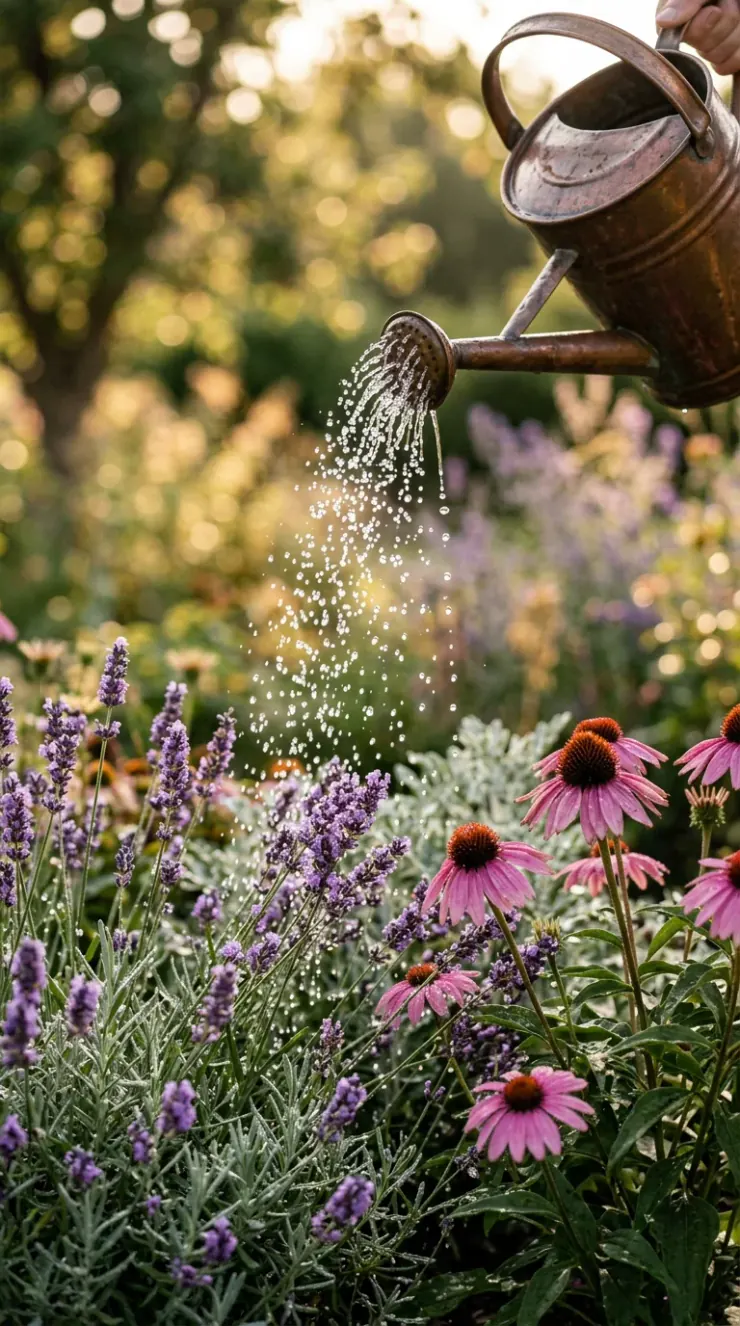
Lavender is a classic favorite for dry, sunny areas. It has beautiful silver-green leaves and highly scented purple flowers. Lavender actually prefers poor, sandy soil and very little water.
If you water lavender too much, its roots can rot. The biggest secret to keeping lavender happy is to plant it in a spot where water drains away quickly. You can prune it lightly in the spring to keep it from getting too woody.
Ornamental grasses are another secret weapon for busy gardeners. While they do not have bright flowers, they add wonderful movement and texture to your yard. They are incredibly tough and rarely get any plant diseases.
- Feather Reed Grass (Calamagrostis ‘Karl Foerster’): This grass grows in tall, neat clumps. It has lovely golden plumes that look great all winter.
- Mexican Feather Grass (Stipa tenuissima): This is a very soft, airy grass that moves beautifully in the slightest breeze.
- Blue Fescue (Festuca glauca): A small, mound-forming grass with striking blue-grey leaves.
You only have to do one chore for these grasses. Once a year, in the early spring, you cut them down close to the ground. They will quickly grow back bigger and better than before.
Coneflowers, also known as Echinacea, are native wildflowers that love the sun. They have large, daisy-like flowers with raised centers. They come in bright pink, purple, white, and yellow.
Their deep roots help them find water even during long dry spells. Butterflies adore them, and the dry seed heads look beautiful in the winter snow.
Black-eyed Susans are another tough native choice. They have bright yellow petals and dark brown centers. They bloom for weeks on end during the hottest part of the summer.
They do not need rich soil or extra fertilizer to thrive. They look wonderful when planted in big groups next to ornamental grasses.
Sedum, or stonecrop, is a succulent plant that stores water in its thick leaves. The variety called ‘Autumn Joy’ is incredibly popular for a reason. It has pale green leaves that look like little cabbages.
In the late summer, it produces large flat flower heads that start pink and turn a deep copper-red in autumn. It is completely hands-off and thrives in hot, dry spots where other plants would wither.
Smart Low Maintenance Flower Bed Ideas to Save You Time
Designing a garden bed can feel overwhelming if you do not know where to start. However, using a few simple design tricks can save you hours of work later. Here are some of my favorite low maintenance flower bed ideas to help you plan.
The first rule of easy gardening is to stop planting annual bedding plants. While those flat trays of colorful flowers at the nursery look tempting, they are a lot of work. You have to plant them, water them daily, cut off the dead flowers, and then dig them up at the end of the year.
Instead, focus on perennials, grasses, and shrubs. They will do the work for you year after year.
Another great trick is to plant your flowers very close together. In traditional gardening, people often leave wide spaces of bare dirt between plants. This bare dirt is an open invitation for weed seeds to land and grow.
If you pack your plants in tightly, their leaves will touch and shade the soil. This blocks the sunlight that weed seeds need to grow. It also keeps the soil cool and stops water from evaporating too quickly.
Let us look at a simple, step-by-step way to create a low-maintenance flower bed from scratch.
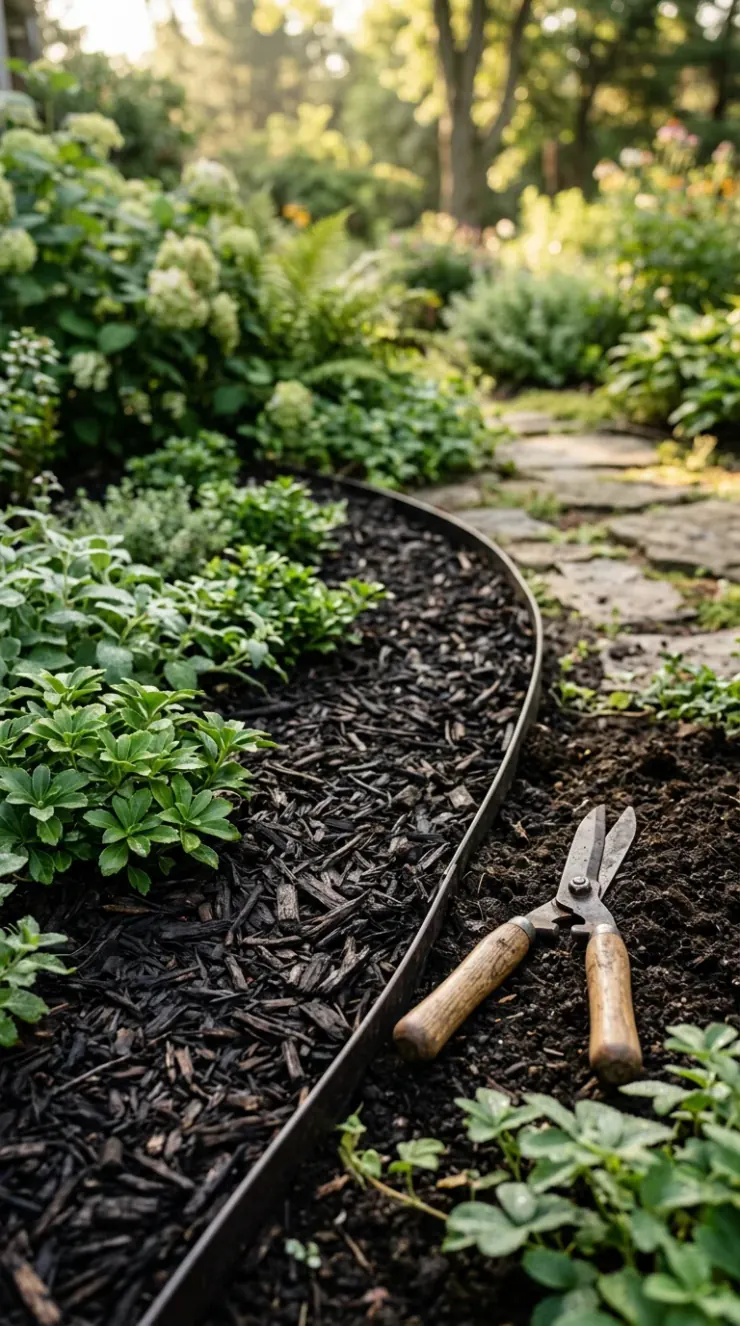
- Mark Your Bed: Use a garden hose to layout a nice, curved shape on your lawn. Curved lines look more natural and are much easier to mow around than sharp corners.
- Clear the Grass: You do not need to dig up the turf. Simply cover the grass with several layers of newspaper or cardboard. Wet it thoroughly with your hose. This will smother the grass and weeds naturally.
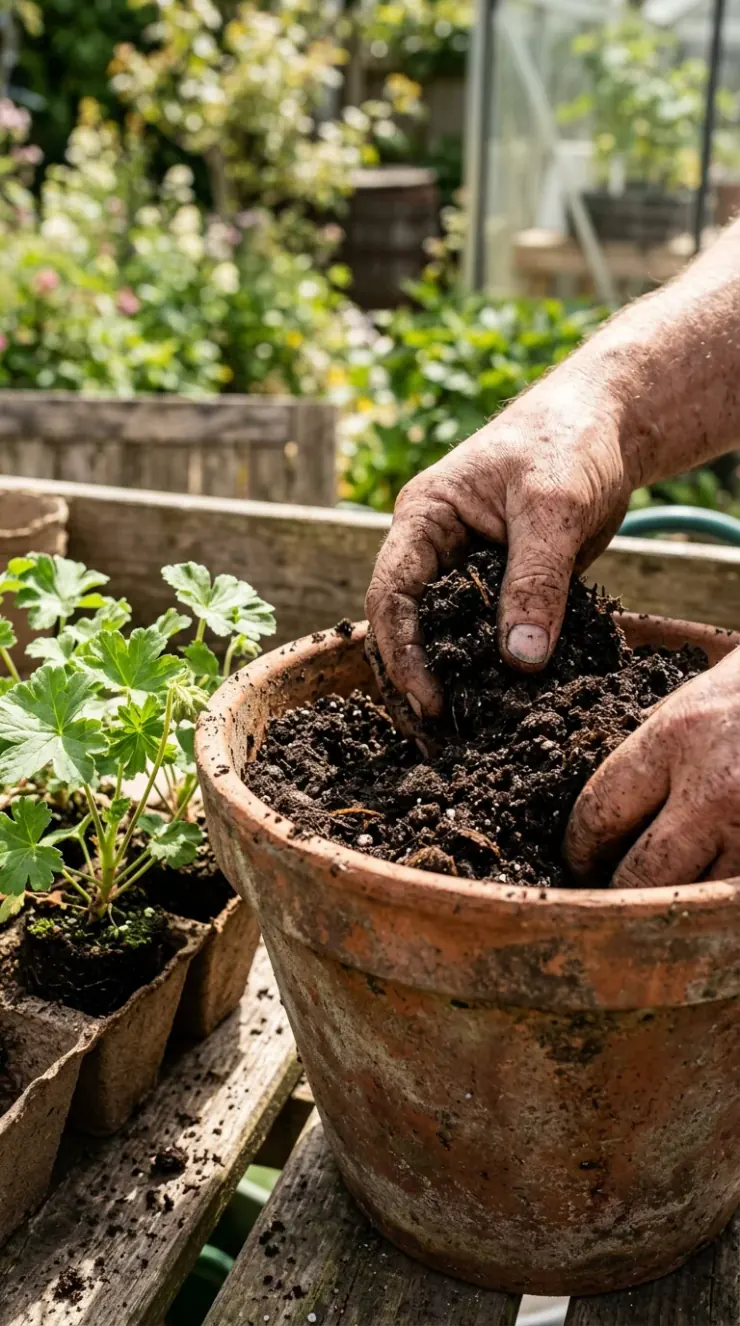
- Add Compost: Spread a three-inch layer of rich compost directly on top of the cardboard. This will break down over time and feed your new plants.
- Arrange Your Plants: Place your potted plants on top of the bed before you dig any holes. Put the tallest plants in the back and the shortest ones in the front. Group the same types of plants together in odd numbers, like threes or fives, for a natural look.
- Plant and Water: Dig a hole for each plant that is slightly wider than its pot. Gently loosen the roots, place the plant in the hole, and firm the soil around it. Give the entire bed a deep watering.
- Mulch Heavily: Spread a two-inch layer of shredded bark mulch over the entire bed. Keep the mulch a couple of inches away from the stems of your plants. Mulch is your best friend because it stops weeds and keeps moisture in the soil.
You should also try to plant right up to the edge of your garden paths. If you leave a gap of bare soil between your lawn and your flower bed, weeds will quickly move in. Planting low ground covers like creeping thyme or hardy geraniums right at the edge will keep the borders looking neat and tidy.
Another great idea is to reduce the number of different plant species you use. It is easy to get excited at the garden center and buy one of everything. However, a garden with too many different plants can look messy and is harder to care for.
Instead, choose five or six tough varieties and plant them in large blocks. This looks very stylish and makes maintenance much simpler. If one plant gets a little tatty, it will not be as noticeable in a large, healthy group.
Beautiful and Hardy Shrubs for Low Maintenance Gardens
While flowers bring beautiful color, shrubs are the true backbone of any garden. Shrubs are woody plants that stay in your yard all year. They provide structure, shade, and winter interest.
Using shrubs for low maintenance gardens is a wonderful way to fill large spaces with very little effort. Once a shrub is established, it needs almost no daily care.
A common mistake that beginner gardeners make is choosing shrubs that grow too large for their space. This forces you to prune them constantly to keep them from blocking windows or paths.
Always check the plant tag to see how tall and wide a shrub will get when it is fully grown. Choosing a shrub that naturally fits your space means you will rarely have to pick up your pruning shears.
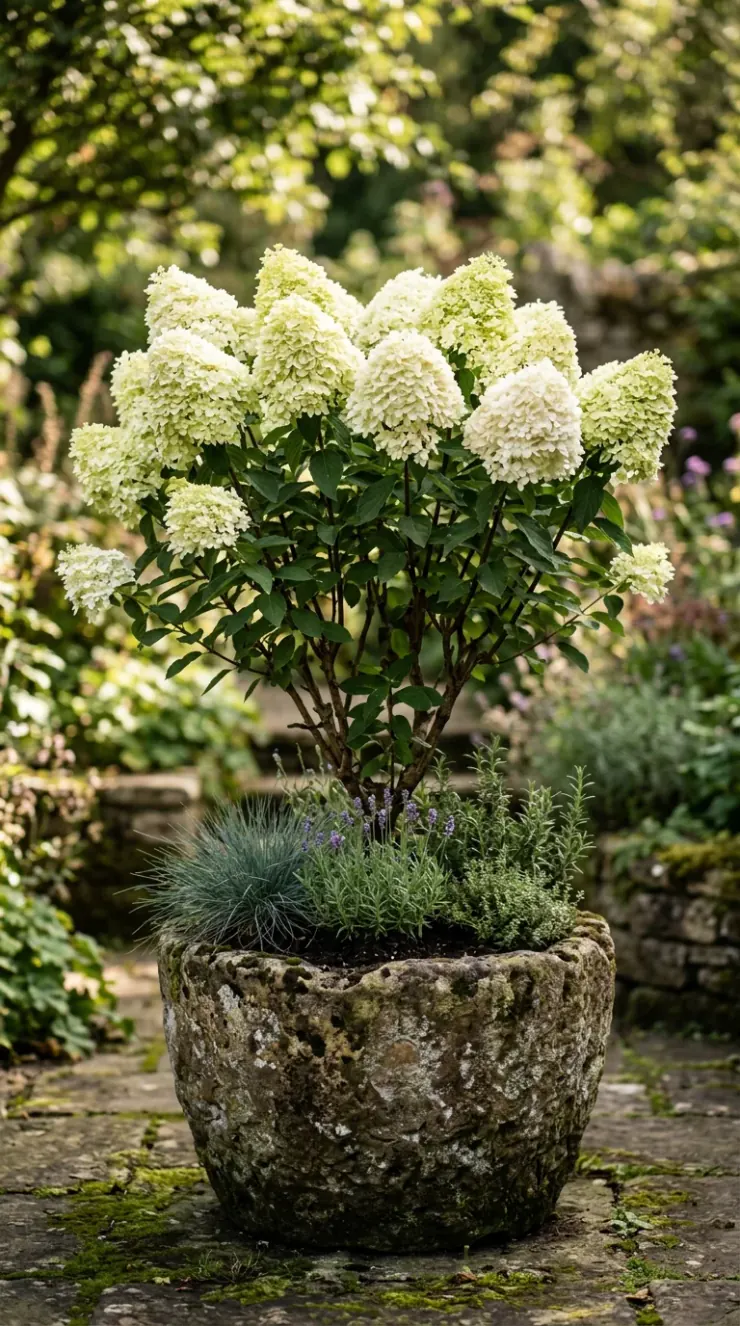
Hydrangeas are a fantastic choice for many yards. They have huge, beautiful flower heads that last for months. Many varieties, like the panicle hydrangea, are incredibly easy to grow.
They do not mind cold winters and will bloom beautifully even if you prune them at the wrong time. You can leave the dried flower heads on the plant all winter for a lovely rustic look.
For shady spots, evergreen shrubs are incredibly helpful. Evergreen means the plant keeps its green leaves all through the winter.
Mahonia is a wonderful evergreen shrub that thrives in dry shade. It has tough, holly-like leaves and bright yellow flowers in the winter when nothing else is blooming. Birds love the blue berries that follow the flowers.
Fuchsias are another excellent choice, especially for coastal or damp areas. Hardy fuchsias grow into lovely, bushy shrubs that are covered in dangling, bell-shaped flowers all summer long.
They do not need any special pruning. You can simply cut them back to the ground in the early spring, and they will shoot up with fresh, flower-filled stems.
+--------------------+-------------------+--------------------+
| Shrub Name         | Sun Requirement   | Key Benefit        |
+--------------------+-------------------+--------------------+
| Panicle Hydrangea  | Full Sun to Part  | Huge, long-lasting |
|                    | Shade             | blooms             |
| Mahonia            | Full Shade to     | Winter flowers,    |
|                    | Part Shade        | evergreen leaves   |
| Hardy Fuchsia      | Part Shade to     | Non-stop summer    |
|                    | Full Sun          | bell flowers       |
| Dwarf Conifers     | Full Sun          | Zero pruning,      |
|                    |                   | year-round shape   |
+--------------------+-------------------+--------------------+
Dwarf conifers are also wonderful for low-maintenance yards. These are miniature pine, spruce, or juniper bushes. They grow very slowly and keep their neat shapes without any trimming.
They come in many beautiful colors, including deep green, blue-grey, and bright gold. They look wonderful planted next to ornamental grasses and large stones.
If you are worried about pets or young children, it is a good idea to teach them not to eat garden plants. Many common garden shrubs can be mildly toxic if eaten.
Supervising toddlers in the yard is always the safest bet, as they will encounter these plants in parks and other public spaces too. Creating a safe, beautiful environment is easy when you choose the right plants for your family.
Strategic Garden Layout & Spacing Canvas
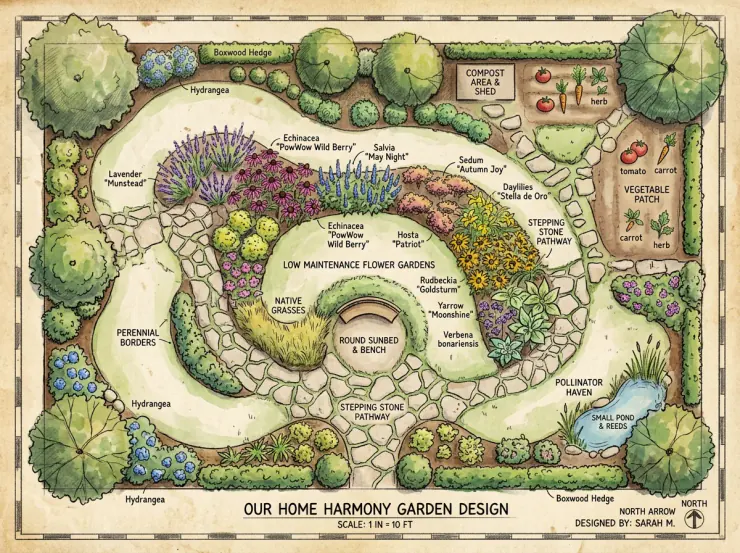
When you are planning your new garden layout, it helps to think like nature does. In permaculture, which is a way of designing gardens that mimic natural ecosystems, we look at how plants interact. Using smart spacing and paths can make your garden much easier to manage.
One popular layout is the keyhole garden. This is a circular bed with a small walkway leading to the center. It allows you to reach every single plant without ever stepping on the soil.
Stepping on your garden soil packs it down, which makes it hard for plant roots to breathe and grow. By creating permanent paths and beds, you keep your soil loose, healthy, and full of life.
Companion planting tip: Plant your tomatoes near aromatic basil and golden marigolds to deter pests naturally and enhance yields!
Nutrient Optimization & Organic Feeding Guide
To keep your low-maintenance garden thriving, you need to focus on your soil. Many people think they need to buy expensive chemical fertilizers to get beautiful flowers.
However, chemical fertilizers can actually harm the tiny, helpful creatures that live in your dirt. Instead, you want to feed the soil, and let the soil feed your plants.
This system is called the soil food web. It is made up of earthworms, beneficial fungi, and millions of tiny microbes.
When you add organic matter to your garden, these creatures eat it and break it down. This turns the organic matter into natural plant food that your flowers can easily absorb. Healthy soil creates strong plants that can easily resist pests and diseases.
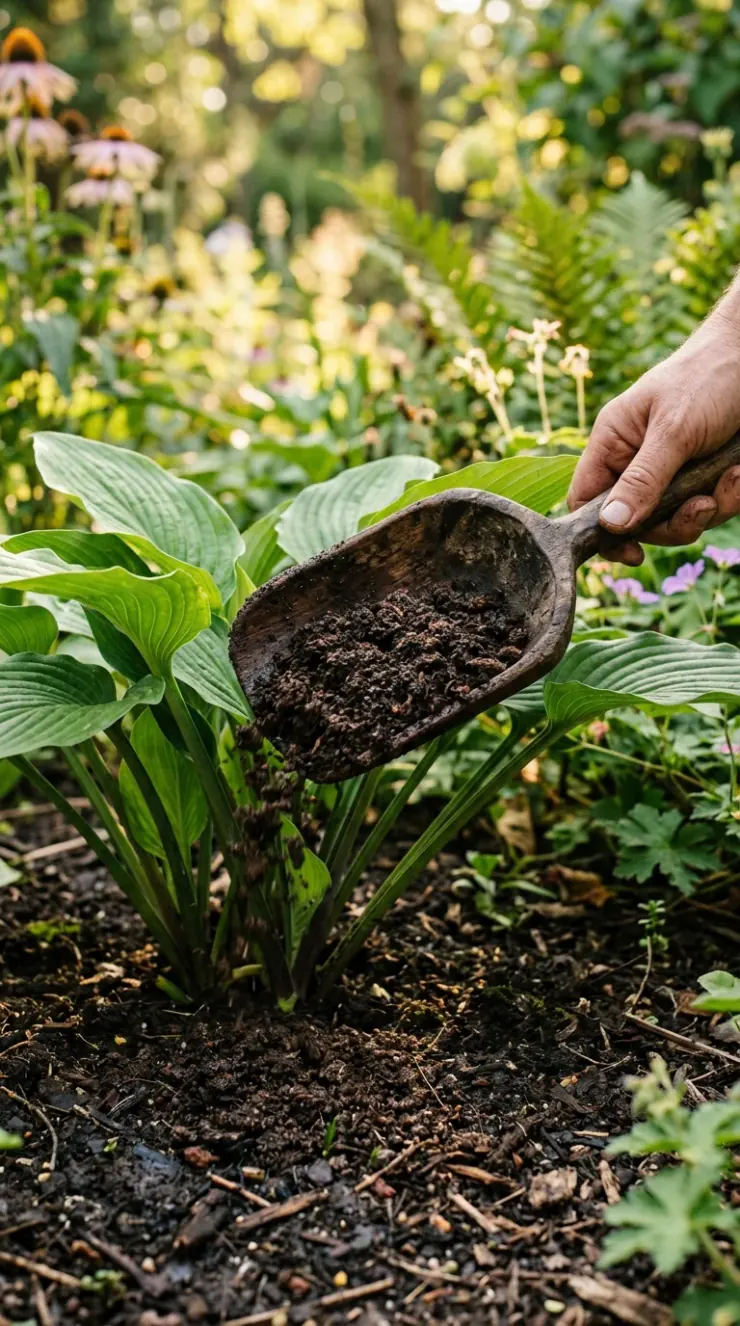
One of the best organic fertilizers you can use is compost. Compost is simply decayed plant material, like old leaves, grass clippings, and vegetable scraps.
Adding a layer of compost to your garden beds once a year is like giving them a slow-release vitamin. It improves the texture of your soil, helps it hold onto water, and provides all the nutrients your plants need.
Another wonderful organic option is worm castings. Worm castings are a fancy word for worm poop!
They are incredibly rich in nutrients and gentle on plant roots. You can sprinkle a handful of worm castings around the base of your plants in the spring to give them a healthy boost.
Liquid seaweed fertilizer is also a fantastic tool for busy gardeners. Seaweed is packed with trace minerals and natural growth hormones.
You can mix a small amount of liquid seaweed with water in your watering can. Splash it over your plants’ leaves and roots every few weeks during the summer. It helps plants handle heat stress and encourages them to grow more flowers.
+--------------------+-------------------+--------------------+
| Fertilizer Type    | How to Apply      | Why It Works       |
+--------------------+-------------------+--------------------+
| Organic Compost    | Spread 1-2 inches | Improves soil      |
|                    | on top of beds    | structure and food |
| Worm Castings      | Sprinkle around   | Gentle, rich in    |
|                    | plant bases       | helpful microbes   |
| Seaweed Extract    | Mix with water    | Helps plants handle|
|                    | and spray leaves  | heat and drought   |
+--------------------+-------------------+--------------------+
By using these organic methods, you will save yourself a lot of time. Chemical fertilizers often cause plants to grow very quickly, which makes them weak and floppy.
Organic feeding leads to slow, steady, and strong growth. This means your plants will not need to be staked, and they will be much healthier overall.
Ultimate Harvesting & Seasonal Blooms Rewards
One of the greatest joys of having a garden is being able to enjoy the beautiful flowers you have grown. Even in a low-maintenance yard, you can harvest gorgeous blooms to bring inside your home.
Knowing when and how to cut your flowers will keep your garden looking beautiful and help your cut flowers last longer in a vase.
The best time of day to cut flowers is in the cool of the morning or late evening. During the heat of the day, plants lose water through their leaves and can get slightly dehydrated.
If you cut them when it is hot, they will quickly wilt in your vase. Use clean, sharp scissors or garden snips to make a clean cut at a forty-five-degree angle. This helps the stem absorb water easily.
When you are harvesting, look for flowers that are just starting to open. If a flower is already fully open, it will not last very long inside.
Plunge the cut stems into a bucket of cool water immediately. Remove any leaves that will be underwater in your vase, as these leaves can rot and make the water smelly.
*   **Morning Harvest:** Cut flowers early when they are full of moisture.
*   **Angle Cut:** Cut stems at an angle so they do not sit flat on the bottom of the vase.
*   **Clean Water:** Change the vase water every two days to keep it fresh.
*   **Leave Some Behind:** Always leave plenty of flowers for the bees and butterflies.
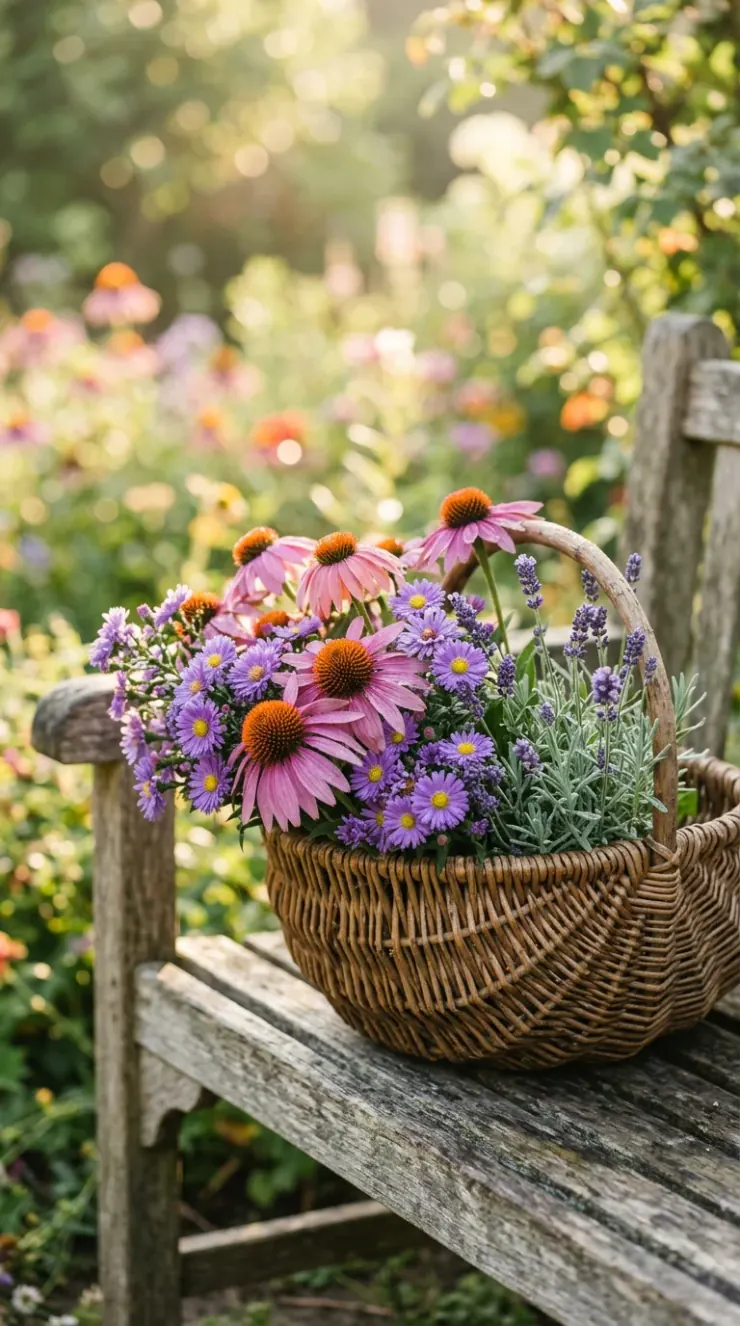
If you want to save money on next year’s garden, you can also harvest seeds from your easy perennials. Many plants, like coneflowers and asters, produce large seed heads after the petals fall off.
Let the seed heads dry completely on the plant. Once they are brown and dry, you can gently shake the seeds into a paper envelope. Store them in a cool, dry place until spring, and you will have free plants to share with your neighbors!
Remember, a low-maintenance garden does not have to be perfect. A relaxed yard with a few weeds is actually much better for local wildlife.
By choosing tough plants, protecting your soil, and letting nature do most of the work, you can spend less time working and more time relaxing in your beautiful outdoor space.
Frequently Asked Questions
Q: What are the best low maintenance flowers for beginners?
A: Many gardeners find that hardy geraniums, daylilies, and coneflowers are the easiest flowers for beginners. These plants are very tough, do not mind a bit of neglect, and will come back year after year without any special care.
Q: How often do I need to water a drought-tolerant garden?
A: Generally, you will need to water your new plants once or twice a week for the first summer. Once their roots are deep and strong, most drought-tolerant plants can survive on normal rainfall alone, unless there is a very long heatwave.
Q: Do I need to cut back my perennials in the winter?
A: In most cases, you can leave your perennials alone during the winter. The dry stems and seed heads look beautiful in the frost and provide food for birds. You can simply tidy them up and cut them back in the early spring.
Q: How do I stop weeds from growing in my flower beds?
A: The best way to stop weeds is to plant your flowers close together so they shade the soil. You should also apply a thick, two-inch layer of organic mulch, like shredded bark, over any bare dirt to block out the sunlight.
Q: Can I grow a low-maintenance garden in clay soil?
A: Yes, many tough plants like daylilies and ornamental grasses do very well in clay soil. Adding a good layer of organic compost to your soil before planting will also help loosen the clay and make it easier for roots to grow.
Q: Do low-maintenance plants need fertilizer?
A: Most hardy perennials and shrubs do not need heavy feeding. Spreading a thin layer of compost or worm castings around your plants once a year in the spring is usually more than enough to keep them happy and blooming.