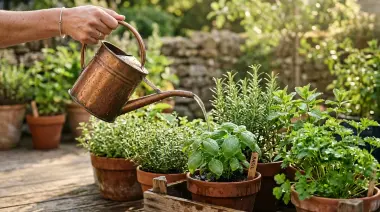
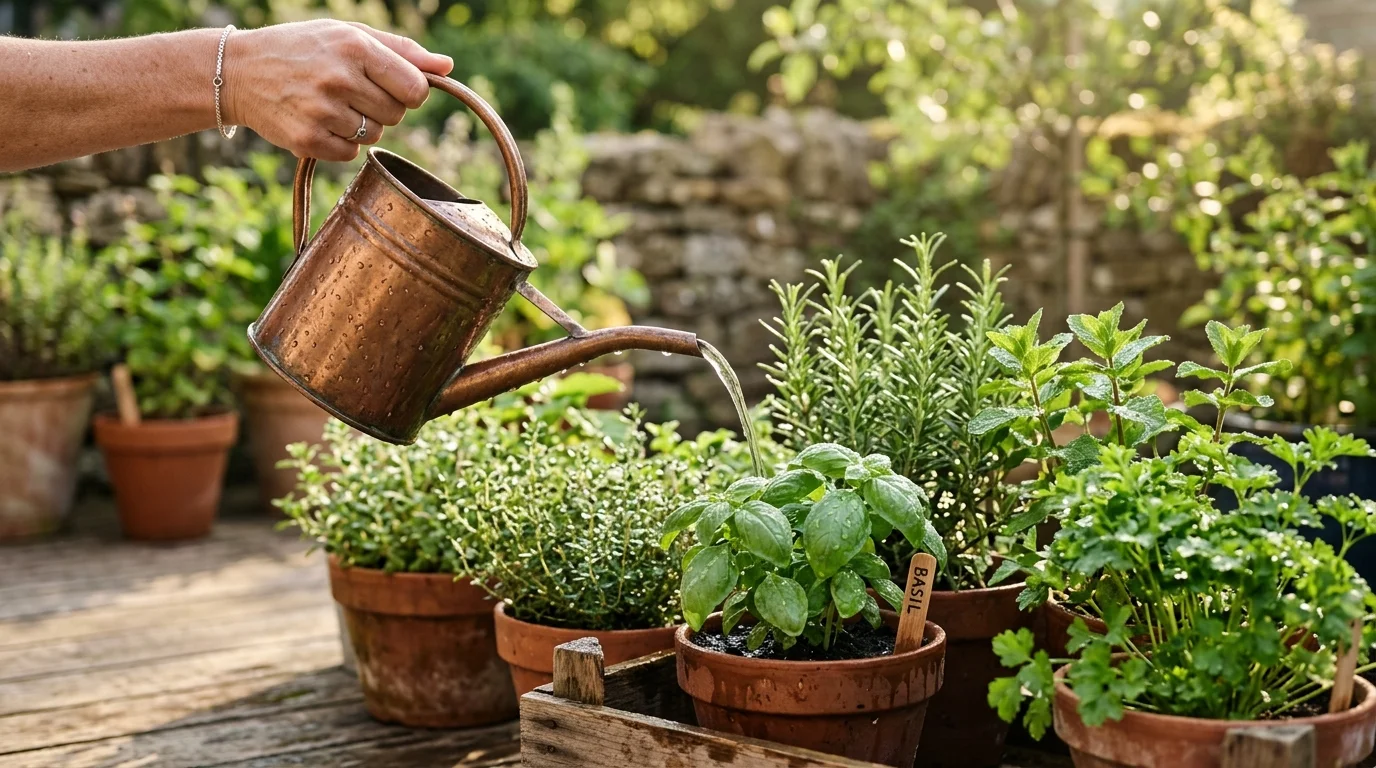
Watering is the single most important factor in keeping your herb garden healthy, yet it is also the area where most gardeners make costly mistakes. Overwatering kills more herbs than underwatering, and understanding how to water herbs properly requires knowing that not all herbs have the same moisture needs. The key to a thriving herb garden lies in matching your watering technique to each herb type, adjusting for the season, and reading the signals your plants are sending you.
Quick Answer: Water herbs when the top inch of soil feels dry. Mediterranean herbs like rosemary, thyme, and oregano prefer drier conditions and should be watered less frequently, while tropical herbs like basil and parsley need consistently moist soil. Always water in the morning at the base of plants, not over the leaves.
Why Watering Technique Matters for Herbs
Herbs are not one-size-fits-all plants when it comes to water. A rosemary bush adapted to the dry, rocky hillsides of the Mediterranean will quickly develop root rot if given the same watering schedule as basil, which thrives in the warm, humid conditions of tropical Indonesia. Getting watering wrong leads to yellowing leaves, stunted growth, fungal diseases, and ultimately dead plants. Getting it right produces vigorous, flavorful herbs with the concentrated essential oils that give them their distinct taste and aroma.
Mediterranean Herbs: Less Water Is More
The Mediterranean group includes some of the most popular culinary herbs, and they all share a preference for drier conditions. These herbs evolved in hot, dry climates with well-draining, often rocky or sandy soil.
- Rosemary: Water deeply but infrequently, allowing the soil to dry out completely between waterings. In summer, this may mean once every 7 to 10 days outdoors. Rosemary is extremely sensitive to wet roots and will develop root rot quickly in soggy soil.
- Thyme: One of the most drought-tolerant herbs. Thyme prefers to stay on the dry side. Water only when the soil is completely dry an inch or two down. Overwatering thyme causes leggy growth and reduces the concentration of its essential oils.
- Oregano: Like thyme, oregano thrives with minimal water. Allow the soil to dry between waterings. In containers, ensure the pot has excellent drainage and never let the plant sit in a saucer of water.
- Lavender: Lavender demands sharp drainage and infrequent watering. It is native to the Mediterranean coast where soil is often poor and dry. Water deeply but let the soil dry out fully between sessions.
These herbs share a critical rule: it is always better to underwater than overwater. If you are unsure whether to water, wait another day.
Tropical and Moisture-Loving Herbs: Keep Them Hydrated
On the opposite end of the spectrum, tropical and moisture-loving herbs need consistently moist (but not waterlogged) soil to flourish.
- Basil: Basil is a thirsty herb that wilts dramatically when dry. Water when the top inch of soil feels dry, which may mean daily in hot weather. Consistent moisture keeps basil producing tender, flavorful leaves.
- Mint: Mint is vigorous and moisture-loving. It tolerates wetter conditions better than most herbs and will quickly signal thirst by drooping. Keep the soil evenly moist, especially in containers which dry out faster than garden beds. For tips on containing mint’s aggressive spread, see our guide on how to grow mint without spreading.
- Parsley: Parsley prefers steady moisture. Letting the soil dry out causes the leaves to turn yellow and the plant to bolt prematurely. Water regularly and consider mulching to retain soil moisture. Learn more in our guide on how to grow parsley in pots.
- Cilantro/Coriander: Like parsley, cilantro needs consistent moisture and will bolt quickly in hot, dry conditions. Regular watering helps delay bolting and extends your harvest window.
- Chives: Chives are relatively easygoing but prefer evenly moist soil. They tolerate brief dry spells but produce the best growth with consistent watering. See our complete guide on how to grow chives from seed.
How to Tell if You Are Overwatering or Underwatering
One of the most common garden mistakes is confusing the symptoms of overwatering with underwatering. Both can cause wilting, but the underlying causes and solutions are opposite.
Signs of Overwatering
- Yellowing leaves, especially lower leaves
- Soft, mushy stems at the soil line
- Mold or algae growing on the soil surface
- A foul, musty smell coming from the soil
- Wilting despite soil that is clearly wet
- Root rot (brown, mushy roots instead of white, firm ones)
Signs of Underwatering
- Dry, crispy leaf edges
- Wilting that improves immediately after watering
- Soil pulling away from the edges of the pot
- Slow growth and small leaves
- Flowering or bolting as a stress response
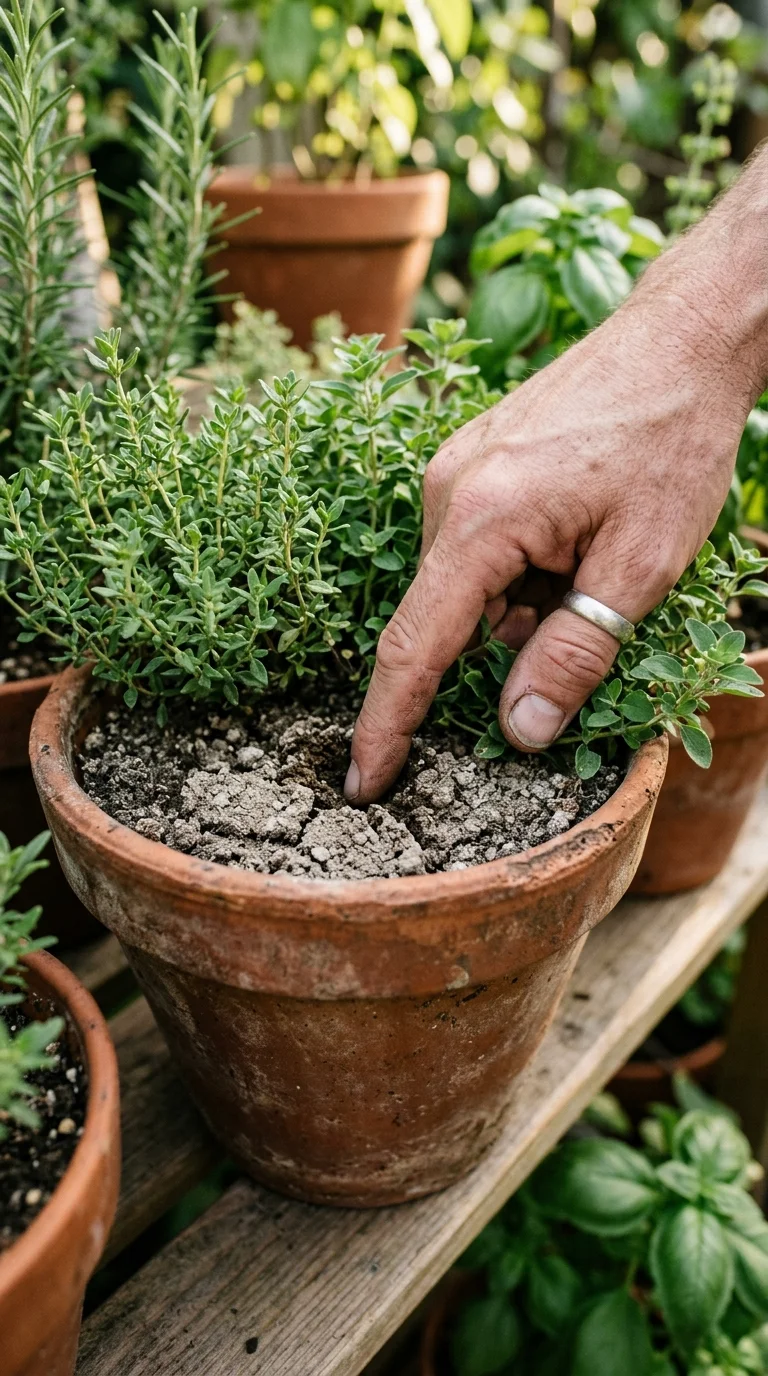
The simplest test is the finger test: push your finger into the soil up to the first knuckle. If it feels dry, water. If it feels moist, wait.
Container vs. Ground Watering: What Changes
Where your herbs grow significantly affects how you should water them. Container herbs and ground-planted herbs have very different watering needs.
Container Herbs
- Soil in pots dries out much faster than ground soil, especially in terracotta pots which wick moisture away
- Containers need more frequent watering, sometimes daily in summer
- Always check drainage holes are not blocked
- Consider self-watering containers for consistently thirsty herbs like basil
- Group pots by water needs so you can water efficiently
Ground-Planted Herbs
- Garden beds retain moisture longer than containers
- Water deeply and less frequently to encourage deep root growth
- A 2 to 3 inch layer of mulch helps retain moisture and regulate soil temperature
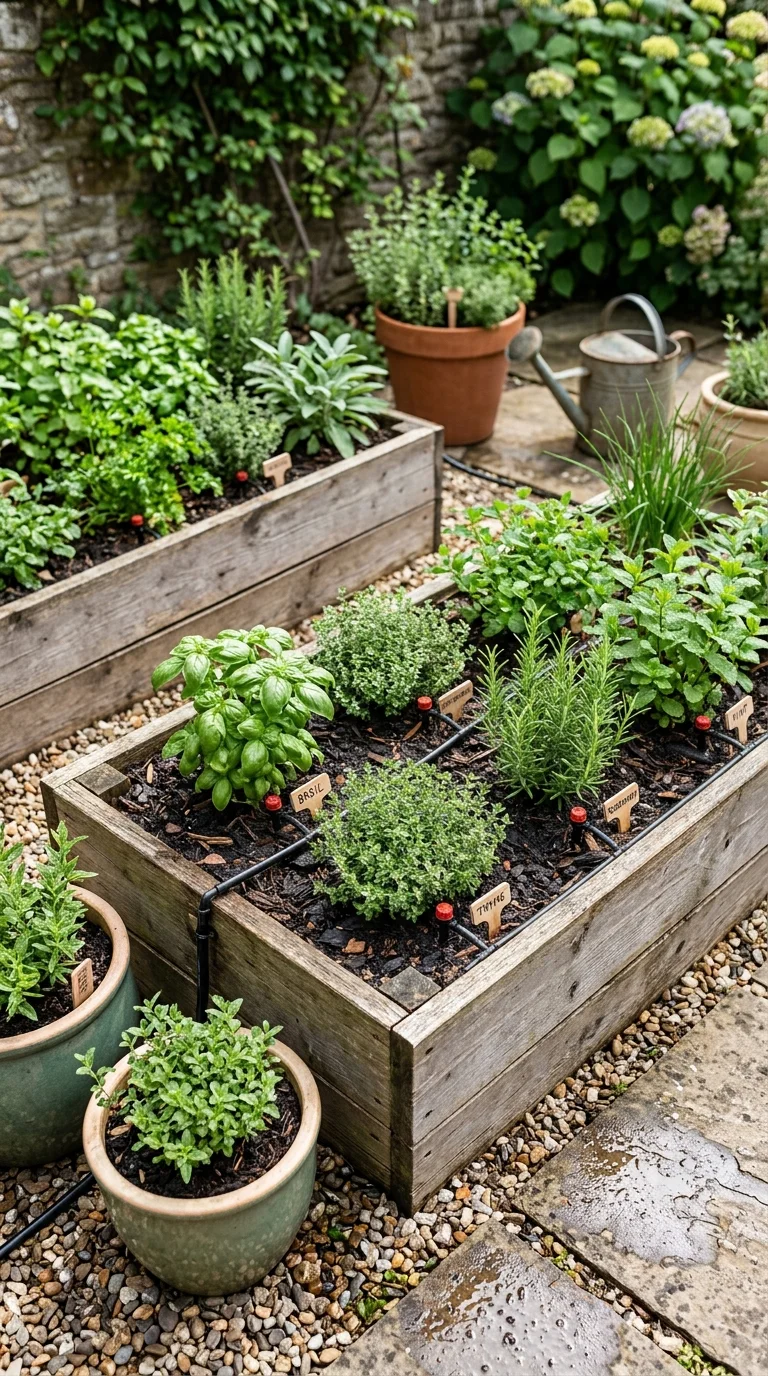
- Drip irrigation or soaker hoses are ideal for delivering water directly to roots
For a comprehensive beginner guide to starting your herb garden in any setting, check out our article on how to grow herbs at home.
Morning vs. Evening Watering: When Should You Water?
Timing matters almost as much as quantity when it comes to watering your herb garden. The best time to water most herbs is in the morning, between 6 and 10 AM.
Why Morning Watering Is Ideal
- Water has time to soak into the soil before the heat of the day causes evaporation
- Foliage has time to dry in the sun, reducing fungal disease risk
- Plants are most active in the morning and can absorb water efficiently
- Cooler temperatures mean less water loss to evaporation
Why Evening Watering Can Be Problematic
- Leaves stay wet overnight, creating conditions for powdery mildew and other fungal diseases
- Slugs and snails are more active at night and are attracted to moist conditions
- Soil may not dry sufficiently before nighttime temperature drops
If morning watering is not possible, water in the late evening but direct water only to the soil, avoiding the leaves entirely.
Seasonal Watering Adjustments
Your watering schedule should change with the seasons as temperature, humidity, and plant growth rates shift throughout the year.
Spring
- Increase watering as plants emerge from dormancy and begin active growth
- Watch for late frosts that can damage tender new growth
- Spring rains may provide adequate moisture; adjust accordingly
Summer
- This is peak watering season. Hot temperatures and active growth mean maximum water demand
- Water deeply and more frequently, checking daily for container plants
- Mulch to conserve moisture and keep roots cool
- Morning watering is essential to prevent afternoon wilting
Autumn
- Gradually reduce watering as temperatures cool and growth slows
- Many herbs begin to go dormant and need less moisture
- Reduce watering frequency but do not stop completely until hard frost
Winter
- Most herbs need minimal water during dormancy
- Overwatering in winter is a major cause of herb death
- Indoor herbs may still need regular watering depending on heating and light conditions
- Check soil moisture weekly rather than watering on a schedule
Drip Irrigation and Watering Systems
For larger herb gardens, a drip irrigation system can save time and deliver water more efficiently than hand watering. Drip systems deliver water slowly and directly to the root zone, reducing waste and keeping foliage dry.
Benefits of drip irrigation for herb gardens include reduced water waste, consistent moisture delivery, less fungal disease from wet leaves, and time savings. You can purchase simple drip kits at most garden centers or build a basic system with soaker hoses and a timer. For container herb gardens, self-watering pots with built-in reservoirs are an excellent low-maintenance option that keeps moisture consistent.
Frequently Asked Questions
Q: How often should I water my herb garden?
A: Most herbs need watering when the top inch of soil feels dry, typically every 2 to 3 days for outdoor gardens and every 1 to 2 days for containers. Mediterranean herbs like rosemary and thyme prefer drier soil, while tropical herbs like basil and parsley like consistently moist conditions.
Q: How much water do herbs need per week?
A: Herbs generally need about 1 inch of water per week from rainfall or manual watering. Container herbs may need more, especially in hot weather, as pots dry out faster than garden beds.
Q: Is it better to water herbs in the morning or evening?
A: Morning watering is best because it gives foliage time to dry before evening, reducing fungal disease risk. Evening watering can trap moisture on leaves overnight, creating conditions for mildew.
Q: What are the signs of overwatering herbs?
A: Yellowing leaves, soft mushy stems, mold on soil, a musty smell, and wilting despite wet soil are all signs of overwatering. Root rot is a serious consequence that can kill the plant.
Q: Can I use tap water for my herb garden?
A: Tap water is generally fine. However, very hard water with high mineral content can cause salt buildup in container soil over time. If you notice white crust on the soil, consider using filtered or rainwater occasionally.
Q: Should I water herbs differently in summer versus winter?
A: Yes. Herbs need significantly more water in summer due to increased evaporation and growth. In winter, most herbs go dormant and need much less frequent watering. Reduce watering to prevent soggy soil in cold months.
Q: Do herbs need more water in clay pots or plastic pots?
A: Terracotta and clay pots wick moisture away from soil and dry out faster, requiring more frequent watering. Plastic and glazed ceramic pots retain moisture longer. Choose your pot material based on your herb’s water preferences.
