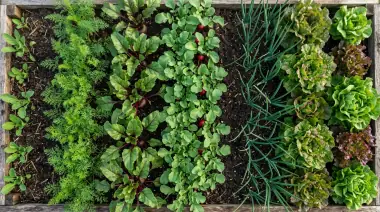
Root vegetables are the quiet workers of the vegetable garden, but they have specific needs many gardeners ignore. Pick the right neighbors and you get straighter, sweeter roots with fewer pests. Pick wrong and you get forked carrots, bolted beets, and a shared pest bed. This guide covers the best and worst companions for every common root crop, which claims hold up to science, and which are folklore, and fits into our full vegetable gardening guide.
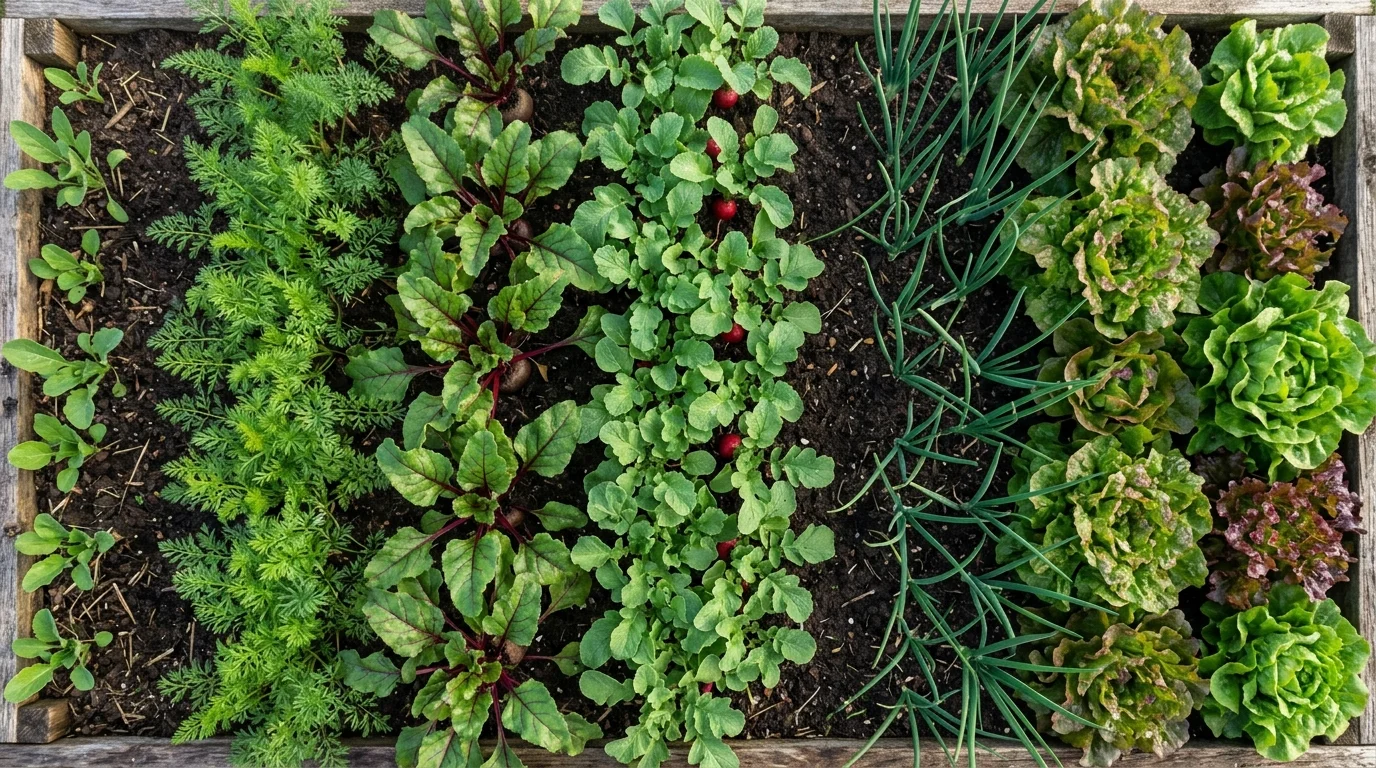
Quick Answer: Plant carrots with onions, leeks, chives, lettuce, and radish, but keep dill, parsnips, and celery away. Beets love onions, garlic, lettuce, cabbage, and bush beans but dislike pole beans. Radishes pair well with lettuce, spinach, carrots, cucumbers, and nasturtium. Never plant onions and garlic with beans, peas, or asparagus, and keep potatoes away from tomatoes, cucumbers, and sunflowers. The onion family is the most useful companion group because its sulfur compounds confuse the very pests that attack roots.
At a Glance
| Fact | Detail |
|---|---|
| Best pest defense | Onion family (onions, leeks, chives, garlic) - confuses carrot fly and onion fly |
| Carrot best partners | Onions, leeks, chives, lettuce, radish, tomatoes, beans |
| Carrot worst neighbors | Dill, parsnips, celery |
| Beet partners | Onions, garlic, lettuce, cabbage, mint, bush beans |
| Radish partners | Lettuce, spinach, carrots, cucumbers, nasturtium |
| Parsnip partners | Onions, garlic, peas |
| Potato enemies | Tomatoes, cucumbers, sunflowers |
| Golden rule | Roots need room below ground - spacing beats companionship |
| Allelopathy warning | Dill and fennel release compounds that slow carrots |
| Success check | Test one pairing per bed; do not trust tradition blindly |
How Companion Planting Actually Works
Companion planting gets credited with triple yields and disappearing pests, so let’s be honest about what is real. Research supports three mechanisms. First, scent confusion: the sulfur compounds in onions, garlic, and leeks mask the smell of neighbors, making it harder for pests like carrot fly (Psila rosae) and onion fly (Delia antiqua) to find their hosts [1] (Source: Cornell University). Second, layering: shallow-rooted lettuce and deep-rooted carrots use different soil zones and are harvested at different times, so they rarely compete. Third, physical effects: tall crops shade cool-season roots in summer, and nasturtiums act as living mulch.
What is not supported is the claim that all traditional pairings boost yield. The Royal Horticultural Society notes much companion evidence is anecdotal and results vary by soil, weather, and pest pressure [2] (Source: Royal Horticultural Society). Use pairings with real mechanisms, test claims in your own garden, and never sacrifice spacing for a companion that crowds your roots.
Why Root Vegetables Are Different
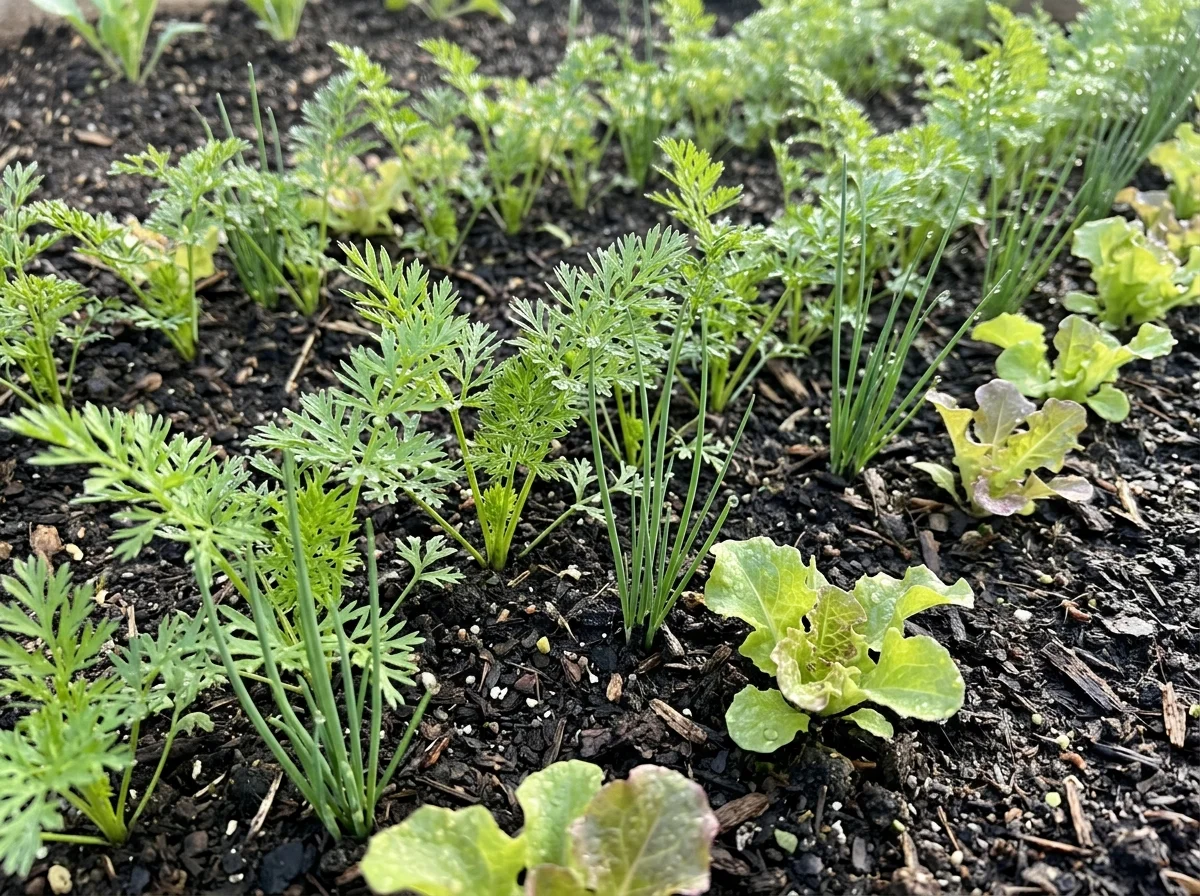
Most companion charts were written for fruiting crops like tomatoes, which is why root crops get shortchanged. Roots care as much about what happens below ground as above it. Any neighbor with aggressive roots - dill, celery, squash - competes directly for the same 6-12 inches of soil. Root crops also hate compacted or high-nitrogen soil; too much feeding gives forked roots and huge tops. A vigorous, crowded companion can ruin the harvest even with a clean pest record. If your carrots come up small or hairy, our guide on why carrots grow small usually has the answer.
Master Companion Chart for Root Vegetables
| Root crop | Best companions | Avoid planting with |
|---|---|---|
| Carrots | Onions, leeks, chives, lettuce, radish, tomatoes, beans | Dill, parsnips, celery |
| Beets | Onions, garlic, lettuce, cabbage, mint, bush beans | Pole beans |
| Radishes | Lettuce, spinach, carrots, cucumbers, nasturtium | Hyssop |
| Turnips & rutabaga | Peas, onions, lettuce, spinach, nasturtium | Other brassicas too thick |
| Parsnips | Onions, garlic, peas | Carrots |
| Onions & garlic | Carrots, beets, lettuce, tomatoes | Beans, peas, asparagus |
| Potatoes | Beans, corn, cabbage, horseradish, marigolds | Tomatoes, cucumbers, sunflowers |
Carrots: The Most Popular Root Crop
Carrots are shallow browsers with fine roots, so neighbors matter. The best partners either repel the carrot fly or use different soil layers.
- Onions, leeks, and chives - the classic trio. Their scent masks carrot smell that draws carrot fly; mixed plantings can cut infestation by about half compared to solid rows [3] (Source: University of California IPM).
- Lettuce and radish - fast, shallow crops harvested before carrots mature, acting as living mulch.
- Tomatoes - foliage reportedly deters carrot fly and shades the soil.
- Beans - legumes fix nitrogen, but too rich a patch encourages hairy roots.
Avoid dill, parsnips, and celery. Dill and fennel are allelopathic - their roots release chemicals that inhibit carrot seedlings, and dill also attracts carrot fly. Parsnips share the carrot fly with carrots, doubling pest risk in one bed. Celery’s heavy roots compete for moisture and nutrients in the same zone [1] (Source: Cornell University).
Spacing notes: thin to 2-3 inches apart in rows 12-16 inches wide; companions should never crowd those channels. Our carrot growing guide covers thinning in detail.
Beets: Sweet Roots, Simple Rules
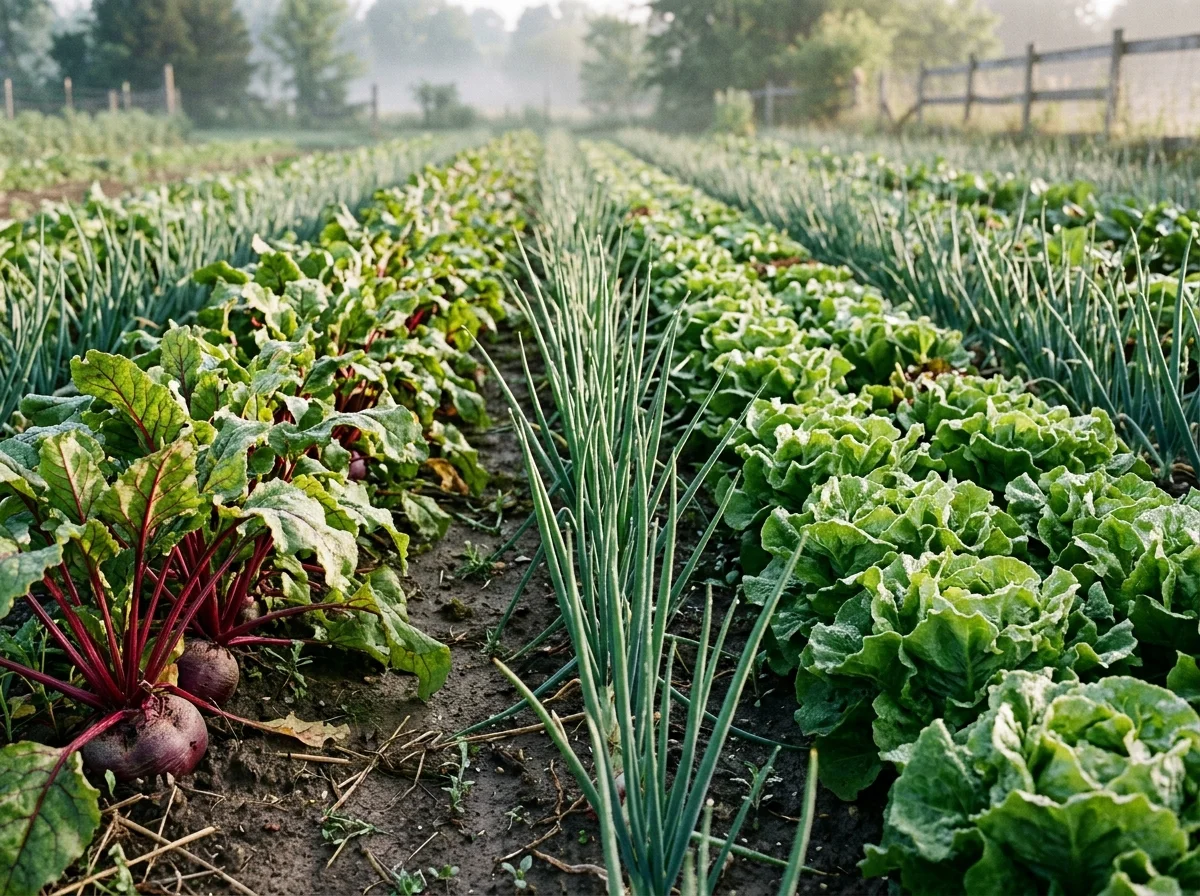
Beets are cool-season crops that tolerate partial shade and sweeten after light frosts. Their best neighbors are alliums and low growers.
- Onions and garlic - same pest confusion as with carrots; onion fly and aphids are deterred.
- Lettuce - shallow, quick, and edible mulch between slower beets.
- Cabbage family - broccoli and kohlrabi have different pest profiles and neighbor well.
- Mint - deters aphids and flea beetles; keep it in a pot or it takes over.
- Bush beans - compact and quick, they fit between beet rows without shading.
Avoid pole beans. Traditional sources claim they stunt beet roots, and the practical problem is real: pole beans on a trellis shade beets and their roots compete. Keep them on a fence away from the bed.
Spacing notes: thin to 3-4 inches; each ‘seed’ is a cluster of 2-4 seedlings.
Radishes: The Sprinters of the Root World
Radishes mature in 20-30 days and double as markers for slow carrot seedlings and trap crops.
- Lettuce and spinach - cool-weather friends radishes spike up through.
- Carrots - radish seeds mark rows of slow carrots and cool the soil so carrots emerge evenly.
- Cucumbers - radish deters cucumber beetles best as a border.
- Nasturtium - draws aphids away from radishes.
Avoid hyssop. It is thought to slow radish growth and attracts cabbage moths that later move to brassicas. Give it its own border.
Spacing notes: 1 inch apart in rows 6 inches apart; thin to 2 inches for large types. Radishes are the perfect filler between slower roots.
Turnips and Rutabaga: Underused Brassicas
Turnips and rutabaga are brassicas, so they share pests with cabbage, kale, and broccoli.
- Peas and beans - nitrogen fixers lighten the soil for the next planting.
- Onions and lettuce - same pest-confusing scent benefits; lettuce shades the soil.
- Nasturtium or thyme - deter flea beetles and cabbage whites.
Avoid other brassicas. Too many in one spot concentrate root maggot and disease load. Rotate turnips to a new bed every 3-4 years.
Spacing notes: 4-6 inches apart in rows 12-18 inches wide; thin aggressively.
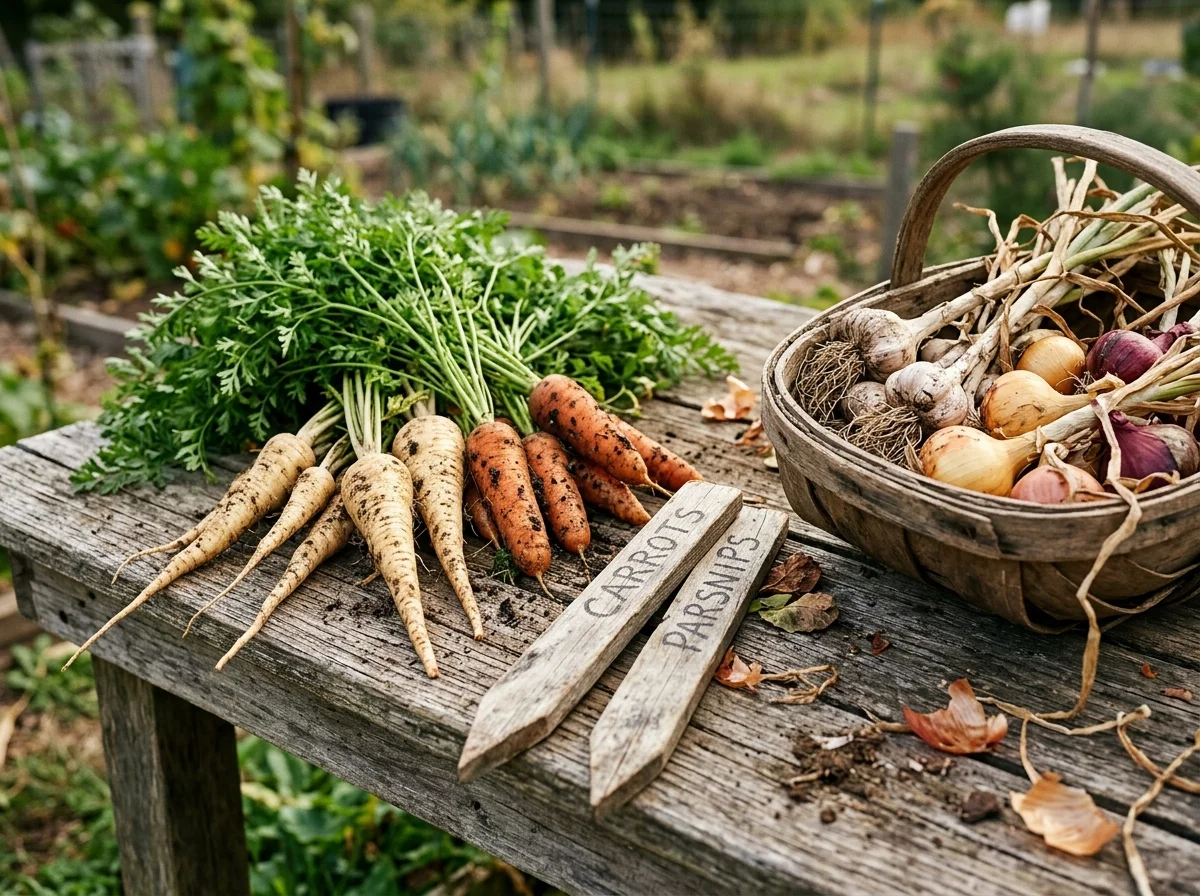
Parsnips: Carrot’s Trickier Cousin
Parsnips take 120-180 days and often overwinter in the bed, so neighbors must stay small and clear out early.
- Onions and garlic - mask the parsnip scent from carrot fly.
- Peas - fix nitrogen and clear out by midsummer, before parsnips peak.
Never plant parsnips next to carrots. Both attract the same carrot fly larvae, which move freely between them and can wipe out both crops. Put a row of onions between them, or grow them in separate beds.
Spacing notes: thin to 3-5 inches in rows 18-24 inches wide; parsnips are slow, so mark rows with radish seeds.
Onions and Garlic: The Garden’s Bodyguards
No root crop defends its neighbors like the alliums. Their sulfur volatiles work against a wide range of pests.
- Carrots, beets, lettuce, tomatoes - all benefit from allium scent confusion.
Avoid beans, peas, and asparagus. Alliums are said to stunt legumes by inhibiting the nitrogen-fixing bacteria on their roots. Asparagus establishes poorly when alliums share its bed [4] (Source: University of Minnesota Extension).
Spacing notes: onions 4-6 inches apart in rows 12 inches wide; garlic cloves 4-6 inches apart, planted in fall.
Potatoes: Nightshades with Big Appetite
Potatoes are hungry, sprawling crops with their own pest list: Colorado potato beetle, scab, and late blight.
- Beans and corn - classic Three Sisters-style pairing; beans fix nitrogen, corn shades soil.
- Cabbage family - different pests, no shared diseases.
- Horseradish - said to deter potato bugs; plant at the bed edge.
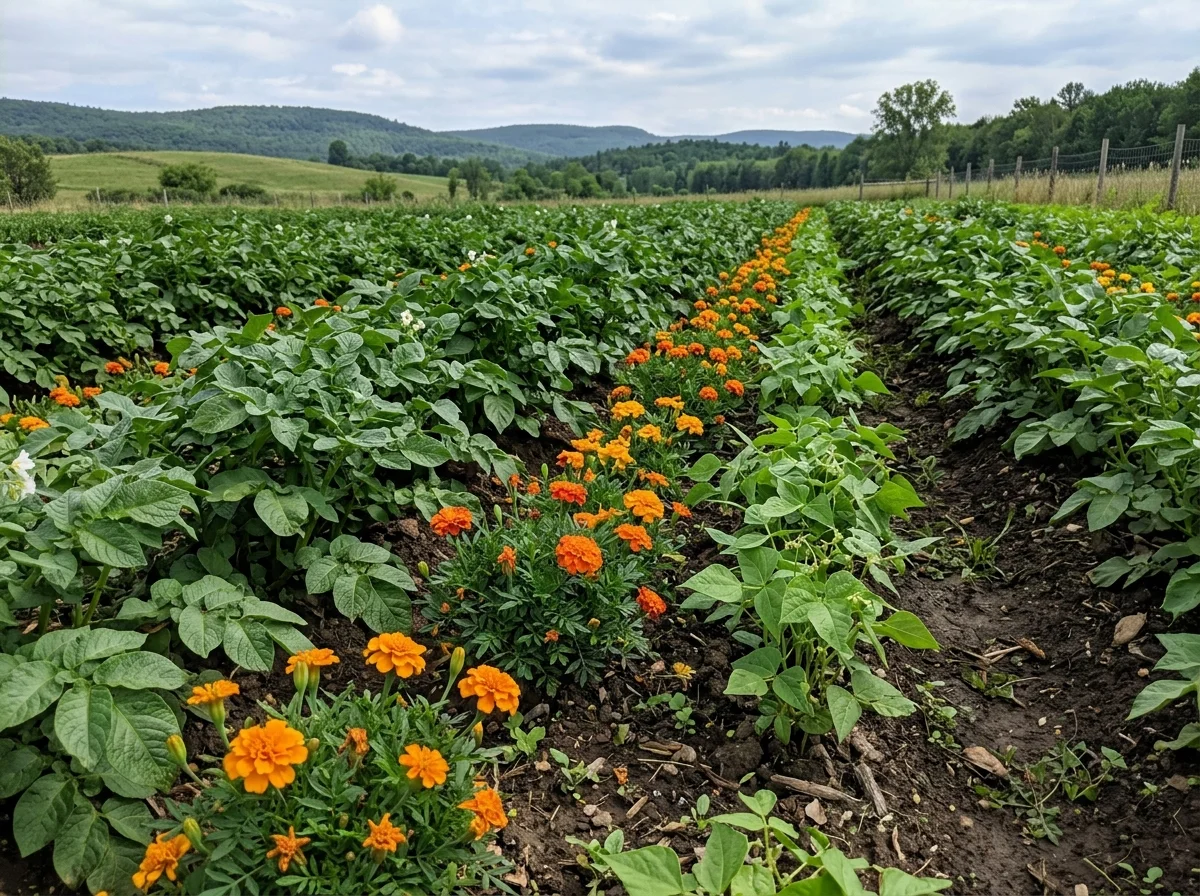
- Marigolds - their roots suppress nematodes, and a border deters some beetles.
Avoid tomatoes, cucumbers, and sunflowers. Potatoes and tomatoes share late blight, so one spore can devastate both. Cucumbers host bacterial wilt vectors, and sunflowers are allelopathic - their roots suppress many crops, including potatoes [5] (Source: University of Nebraska-Lincoln Extension).
Spacing notes: 12-15 inches apart in rows 30-36 inches wide, hilled as they grow.
What the Science Says - and What It Doesn’t
The strongest evidence supports allium scent confusion, trap crops like nasturtium, and rotation for disease. Intercropping trials commonly show pests dropping 30-50% when alliums are mixed with susceptible crops [6] (Source: USDA Agricultural Research Service). Claims that rosemary “improves carrot flavor” or mint “sweetens beets” are folklore. Give roots room and treat flavor claims as an experiment, not a guarantee.
A Note on Allelopathy
Allelopathy is when one plant releases biochemicals that inhibit another. Fennel and walnut trees are the famous offenders, but dill and sunflower also show it. The dose matters: one dill plant in a big bed is a curiosity; a row beside carrots is trouble. Keep fennel, dill, and sunflowers in their own beds.
Trap Crops: The Diversion Play
A trap crop is something you sacrifice to save the main crop. Nasturtiums draw aphids and cabbage whites away from brassicas; early radishes draw flea beetles away from eggplant. Harvest or spray the trap crop just as pests build up, or they migrate back - a neglected trap crop becomes a pest nursery.
Spacing: The Companion That Matters Most
No neighbor list fixes bad spacing. Root crops compete below ground, and only distance solves that. Expect 2-6 inches between plants, 12-18 inches between rows, and loose soil worked to twice their mature length. High nitrogen is the other silent killer - it makes forked, hairy, or woody roots. A crowded bed needs no companions, just wider spacing; our spacing guide has a full chart.
A Simple Testing Plan
Do not rearrange the whole garden on trust. Pick one or two pairings per bed, label them, compare the harvest to a control row, and record pests, root quality, and yield. After one season you will know what works in your soil.
Common Mistakes
- Crowding companions too close. The fix: keep the spacing chart for each crop and treat companions as border plants, not infill.
- Ignoring rotation. The fix: move brassicas and root crops to a new bed every 3-4 years to break pest cycles.
- Planting dill or fennel near carrots. The fix: isolate them in a separate bed.
- Putting potatoes next to tomatoes. The fix: separate all nightshades and rotate beds yearly.
- Planting alliums with beans or peas. The fix: give legumes their own row.
- Letting mint roam. The fix: grow mint in a buried pot.
- Trusting every claim. The fix: test one pairing per season and record results.
- Over-fertilizing around root crops. The fix: compost lightly and skip nitrogen; our fertilizer guide shows what to feed instead.
Troubleshooting
- Carrots forked and hairy: over-fertilized or crowded; skip nitrogen, thin to 2-3 inches.
- Beets all tops, no root: too much nitrogen; side-dress with compost only.
- Radishes sharp and pithy: hot weather or uneven water; mulch and grow as a cool-season crop.
- Parsnips with black, rotting crowns: carrot fly; remove, rotate, interplant onions.
- Potatoes with dark, sunken spots: late blight; remove foliage and never plant near tomatoes again.
Frequently Asked Questions
Q: What are the best companion plants for carrots?
A: Onions, leeks, chives, lettuce, radish, tomatoes, and beans grow well next to carrots. Avoid dill, parsnips, and celery nearby.
Q: What should I plant with beets?
A: Plant beets with onions, garlic, lettuce, cabbage, mint, and bush beans. Keep pole beans away, as they are said to stunt beet growth.
Q: What grows well with radishes?
A: Lettuce, spinach, carrots, cucumbers, and nasturtium are good radish companions. Avoid planting hyssop near radishes.
Q: Are onions and garlic good companion plants for root vegetables?
A: Yes. Their strong scent helps confuse root pests like carrot fly and onion fly, and they grow well with carrots, beets, lettuce, and tomatoes. Avoid beans, peas, and asparagus nearby.
Q: Do companion plants really improve root vegetables?
A: Some pairings have solid evidence - onion family scents do repel carrot fly - but many traditional claims are folklore. Root vegetables also need low competition below ground, so spacing and soil matter more than companions.
Q: What should I avoid planting with parsnips?
A: Keep parsnips away from carrots. Both attract carrot fly and other shared pests, and they compete for the same deep root channels. Onions, garlic, and peas are better neighbors.
Q: Can I plant potatoes with tomatoes?
A: No. Potatoes and tomatoes are both nightshades and share blight diseases, so planting them together spreads infection. Avoid cucumbers and sunflowers too.
Q: Why do carrots grow small and misshapen next to other plants?
A: Root vegetables need loose, uncrowded soil. Nearby roots from heavy feeders compete for room and moisture, and high nitrogen pushes top growth instead of roots. Give carrots 2-3 inches between plants.
Related Articles
- Vegetable Gardening Guide
- Companion Planting Guide
- Companion Planting Chart
- How to Grow Carrots
- Why Are My Carrots Small?
- Vegetable Garden Spacing Guide
- How to Grow Garlic
- Vegetable Garden Fertilizer
