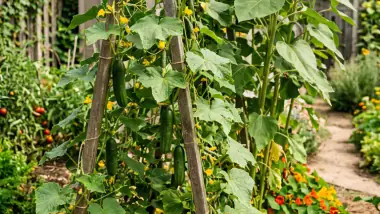
Cucumber Companion Plants: 15 Best Picks and What to Avoid

Companion planting with cucumbers improves pollination, deters pests, and maximizes garden space. The right neighbors attract bees for better fruit set, trap aphids away from vines, and provide living mulch that keeps soil cool and moist.
Cucumbers are heavy feeders that need steady moisture, full sun, and good airflow. The best companion plants support these needs without competing for the same resources.
Quick Answer: Plant cucumbers with sunflowers, beans, peas, corn, nasturtiums, marigolds, borage, dill, carrots, beets, lettuce, spinach, radish, oregano, and chives. Keep potatoes, sage, mint, melons, and walnut trees away from cucumbers.
15 Best Cucumber Companion Plants
1. Sunflowers — Bee Magnets
Sunflowers attract pollinators from far distances, boosting cucumber fruit set. Plant them on the north side of cucumber rows so they don’t shade the vines. Sturdy sunflower stalks also provide natural trellis support for climbing cucumber varieties.
Spacing: 18–24 inches from cucumber vines
2. Beans — Nitrogen Fixers
Bush beans and pole beans fix atmospheric nitrogen into the soil through rhizobia bacteria on their roots. Cucumbers benefit from this natural fertility boost. Pole beans can share a trellis with cucumbers, saving vertical space.
Spacing: 12 inches from cucumber plants
3. Peas — Cool-Season Nitrogen Boost
Early-season peas planted before cucumbers fix nitrogen and improve soil structure. By the time cucumber transplants go in, peas are harvested and the soil is enriched.
Spacing: 12 inches from cucumber rows
4. Corn — Natural Windbreak and Trellis
Corn provides a windbreak that protects cucumber vines from drying winds. Tall stalks can support climbing cucumber varieties, and the three Sisters method (corn, beans, squash/cucumber) is a time-tested combination.
Spacing: 12–18 inches from cucumber plants
5. Nasturtiums — Trap Crop for Aphids
Nasturtiums lure aphids away from cucumber vines. Plant them at the bed perimeter where aphids will find them first. Bonus: nasturtium flowers and leaves are edible with a peppery flavor.
Spacing: 12–18 inches from cucumber vines, at bed edges
6. Marigolds — Pest Confusion
French marigolds repel nematodes and confuse aphids with their strong scent. Their flowers attract beneficial insects that prey on cucumber beetles.
Spacing: Plant at corners and edges of cucumber beds, 12 inches from vines
7. Borage — Pollinator Powerhouse
Borage flowers are irresistible to bees. Plant one or two borage plants near cucumber rows to dramatically increase pollinator visits. Borage also accumulates potassium and adds trace minerals to the soil.
Spacing: 18–24 inches from cucumber plants
8. Dill — Wasp Habitat
Dill attracts parasitic wasps that prey on cucumber beetles and aphids. Let a few dill plants flower near your cucumber bed for natural pest control.
Spacing: 12–18 inches from cucumber vines
9. Carrots — Underground Companions
Carrots grow downward while cucumbers spread upward, making them perfect space-sharing partners. Carrots loosen soil around cucumber roots, improving drainage and aeration.
Spacing: 6–12 inches from cucumber plants
10. Beets — Root Zone Diversity
Beets occupy a different soil zone than cucumber roots and don’t compete for nutrients. Their shallow roots help break up compacted soil.
Spacing: 6–12 inches from cucumber plants
11. Lettuce — Living Mulch
Fast-growing lettuce shades soil between cucumber rows, keeping roots cool and retaining moisture. Harvest lettuce before cucumber vines spread and need the full space.
Spacing: 6–12 inches from cucumber plants
12. Spinach — Early Season Filler
Spinach grows quickly in cool spring soil and can be harvested before cucumber transplants need the full bed space. Its roots improve soil structure.
Spacing: 6–8 inches from cucumber rows
13. Radish — 21-Day Harvest
Radishes germinate in 3 days and mature in 21 days. Plant them between young cucumber transplants for an early harvest before vines fill the space.
Spacing: 4–6 inches from cucumber plants
14. Oregano — Living Mulch
Low-growing oregano shades soil, retains moisture, and releases aromatic oils that may confuse pests. It’s perennial and drought-tolerant once established.
Spacing: 12 inches from cucumber plants
15. Chives — Scent Disguise
Chives produce onion-family volatile oils that confuse aphids and other pests navigating by scent. Their purple flowers attract bees. Plant a clump at the corner of your cucumber bed.
Spacing: 12 inches from cucumber plants
Cucumber Companion Plants Chart
| Companion | Role | Distance from Cucumbers |
|---|---|---|
| Sunflowers | Pollinator attractor | 18–24 inches |
| Beans/Peas | Nitrogen fixers | 12 inches |
| Corn | Windbreak/trellis | 12–18 inches |
| Nasturtiums | Aphid trap crop | 12–18 inches (perimeter) |
| Marigolds | Pest confusion | 12 inches (edges) |
| Borage | Pollinator magnet | 18–24 inches |
| Dill | Wasp habitat | 12–18 inches |
| Carrots/Beets | Root zone diversity | 6–12 inches |
| Lettuce/Spinach | Living mulch | 6–12 inches |
| Radish | Quick harvest filler | 4–6 inches |
| Oregano/Chives | Scent disguise | 12 inches |
What NOT to Plant Near Cucumbers
Potatoes
Potatoes compete for the same nutrients and spread blight that can infect cucumber vines. Keep at least 10 feet apart or use separate beds.
Sage
Sage’s strong aromatic oils can stunt cucumber growth. Keep sage in a separate herb bed away from the vegetable garden.
Mint
Mint is aggressively invasive and will overtake cucumber roots. Always grow mint in containers, never in-ground near cucumbers.
Melons and Squash
All cucurbits (cucumbers, melons, squash) attract the same pests — cucumber beetles and squash bugs. Planting them together concentrates pest pressure. If you must grow them near each other, leave at least 3–4 feet between them for airflow.
Walnut Trees
Walnut trees produce juglone, a chemical that is toxic to cucumber plants. Never plant cucumbers within the drip line of walnut trees.
How to Space Cucumber Companion Plants
On a trellis: Give cucumber vines 12–18 inches of trellis space. Plant companions 6–12 inches off the vine crowns.
In raised beds: Leave 3–4 feet between cucumber rows to accommodate vine spread and companion plantings.
In containers: One cucumber plant per 5-gallon pot. Add one companion herb (basil, oregano, or chives) at the edge.
Companion Planting for Better Cucumber Pollination
Cucumbers need bees for pollination. Without adequate pollination, fruits misform or don’t develop at all. Attract pollinators by planting:
- Borage within 3 feet of cucumber rows
- Sunflowers on the north edge of the bed
- Dill allowed to flower near the bed
- Marigolds at bed corners
Keep flowering companions within 3 feet so bees visit both crops in one flight path.
When to Plant Cucumber Companions
| Timing | What to Plant |
|---|---|
| 4 weeks before cucumber transplants | Peas, lettuce, spinach, radish |
| At cucumber transplant time | Beans, carrots, beets, marigolds |
| After cucumber vines establish | Borage, dill, sunflowers, oregano, chives |
| Perimeter (anytime) | Nasturtiums, chives, marigolds |
Container Cucumber Companion Planting
Limited to containers? These combinations work:
- 5-gallon pot: 1 cucumber + 1 basil or oregano at the edge
- 10-gallon pot: 1 cucumber + 1 bush bean + 1 marigold
- Trellis on balcony: Cucumber on trellis + nasturtiums cascading below + chives at the base
Frequently Asked Questions
What grows best with cucumbers for more pollination?
Sunflowers, borage, dill, and marigolds dramatically increase bee visits and fruit set. Grow beans and peas on the same trellis to feed vines lightly, and let nasturtiums trap aphids at the edge.
Can I plant cucumbers and tomatoes together?
You can, but give them generous space — at least 24–36 inches apart with trellises for both. Both share some wilt pathogens, so good airflow and watering at the base are essential.
What should never be planted near cucumbers?
Avoid potatoes, sage, mint, melons/squash (same pest pressure), and walnut trees (juglone toxicity). Keep at least 3 feet between cucumbers and antagonists.
How far apart should cucumber companions be?
Plant companions 6–12 inches off cucumber vine crowns. Leave 3–4 feet between cucumber and other cucurbits for airflow.
Do cucumber companion plants really work?
Companion planting provides proven benefits: marigolds suppress nematodes, nasturtiums trap aphids, and borage attracts pollinators. Results vary by garden conditions, but companions consistently outperform monoculture.
