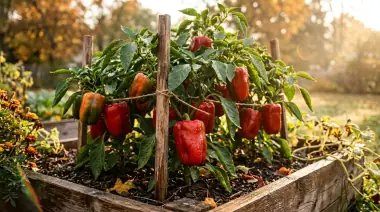
Most gardeners treat peppers as disposable - the bed gets ripped out in October and a season of experience composts away with it. Overwintering lets you skip that reset. Instead of starting from seed in spring, you keep mature plants alive through the off-season and put them back out a month or two ahead of schedule, a head start our how to grow peppers guide shows is worth 8-12 weeks of extra harvest.
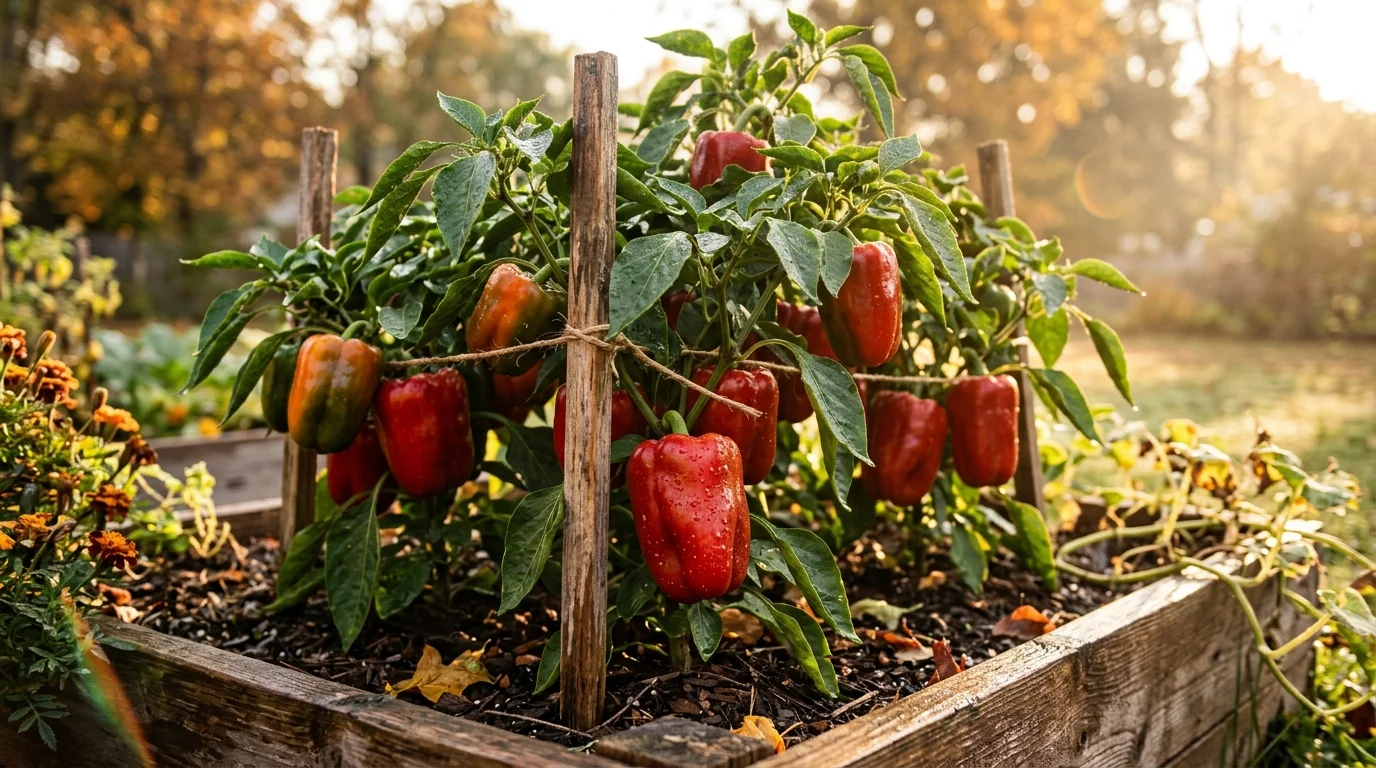
Quick Answer: To overwinter peppers, dig up a healthy, disease-free plant 6-8 weeks before your first frost (or when nights drop below 50F), prune it back to a 6-12 inch Y-shaped stub, remove every leaf and fruit, and pot it in fresh mix. Keep it at 60-70F days, 55-65F nights, water only when the top inch of soil dries, and feed nothing until new growth appears in late winter. In spring, give it bright light, resume watering and feeding, harden off for 7-10 days, and transplant after your last frost.
At a Glance
| Fact | Detail |
|---|---|
| Best candidates | Compact sweet and hot varieties; hot peppers generally outlive sweet bells |
| First-year timing | Dig up 6-8 weeks before first frost, or when nights fall below 50F |
| Prune to | 6-12 inches tall, leaving a Y of two or three main branches |
| Strip off | All leaves, flowers, and fruit before moving indoors |
| Pot | Fresh, well-draining potting mix - never reuse garden soil |
| Day temperature | 60-70F; nights 55-65F |
| Water | Only when the top inch of soil is dry - usually every 10-14 days |
| Fertilizer | None until spring; resume when new leaves appear |
| Hardening off | 7-10 days of outdoor exposure before transplanting |
| Zones | True perennials outdoors in USDA 9-11; annuals elsewhere unless overwintered |
Why Overwintering Matters
In their native Central America peppers live for years, and a well-kept second- or third-year plant flowers within weeks of warming up - while your neighbor’s seed-started plants are still filling their first true leaves. Gardeners who keep plants through winter routinely pick ripe fruit a month earlier than anyone buying the same starts in May.
The payoff:
- 8-12 week head start. A mature root system skips the slow seedling stage.
- Earlier, bigger second-year harvest. Fruit sets within weeks, not months.
- Free plants. One overwintered plant replaces a six-dollar six-pack - or gives you cuttings.
- Insurance. Your best producer carries on, so a seedling death or late frost cannot erase the crop.
The trade-offs are real but manageable: windowsill or garage space for four to six months, weekly pest checks, and occasionally smaller plants. For most growers the earlier peppers are worth it [1] (Source: University of Minnesota Extension).
Which Peppers Overwinter Best
Almost any pepper can be coaxed through winter, but some are far better candidates.
| Type | Overwintering outlook |
|---|---|
| Hot peppers (jalapeno, habanero, cayenne, Thai) | Easiest; tolerate cool rooms and often outlive bell plants by years |
| Compact sweet types (Mini Bell, Lunch Box) | Good; small root systems fit pots and rebound quickly |
| Standard sweet bells (California Wonder) | Possible but finicky; prune harder and expect lower survival |
| Large-fruited specialty types | Workable if healthy; pots need room for the root mass |
| Frost-damaged or diseased plants | Skip them - they rarely recover and can carry pathogens indoors |
Hot types win partly because the plant keeps energy in the woody stem instead of ripening peppers in September. A compact plant also means a smaller pot, and less soil means fewer fungus gnats. When choosing between two, always pick the healthier one - one aphid-heavy or yellowing plant is not worth the space [2] (Source: University of Missouri Extension). Our pepper companion plants guide can help you keep beds pest-free at digging time.
When to Bring Peppers In
Timing is the biggest factor. Dig too early and the plant sits indoors for months; wait for frost and the crown may already be damaged.
- Ideal: 6-8 weeks before your first frost, or when nights consistently fall below 50F.
- Acceptable: at the first light frost, if plants still look green and firm.
- Too late: after a hard frost (28F or below) - stems blacken and the plant rarely rebounds.
Check overnight lows, not daytime highs. Peppers set fruit poorly below 50F anyway, so easing them into dormancy works with the biology.
Method 1: Dig Up and Pot Your Plant
This is the highest-yield approach.
- Prep the pot. Use a container as wide as the plant’s spread, at least 8-10 inches deep, with drainage. Fill with fresh, well-draining mix - never reuse garden soil.
- Dig wide. Slide a fork in 6-8 inches from the stem and lift the whole root ball.
- Root-prune gently. Trim black, mushy, or circling roots back to firm white tissue. Cut away at most a third of the root mass.
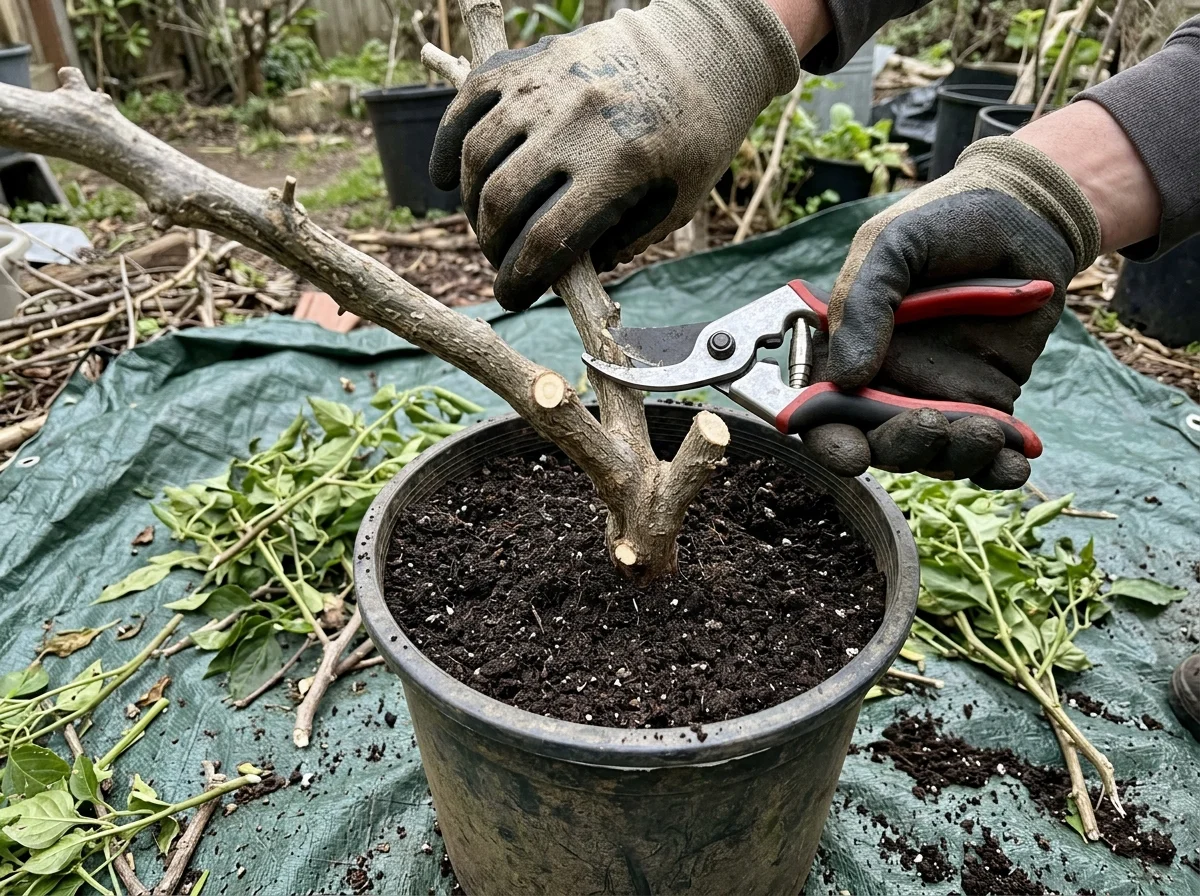
- Cut the top back hard. Reduce stems to 6-12 inches, leaving a Y of two or three main branches.
- Strip completely. Remove every leaf, flower, and fruit - bare stems need little water and hide no pests.
- Pot on. Set the plant at its original depth, firm the mix, water once, and move it to a cool, bright spot.
Method 2: Overwinter as an Active Houseplant
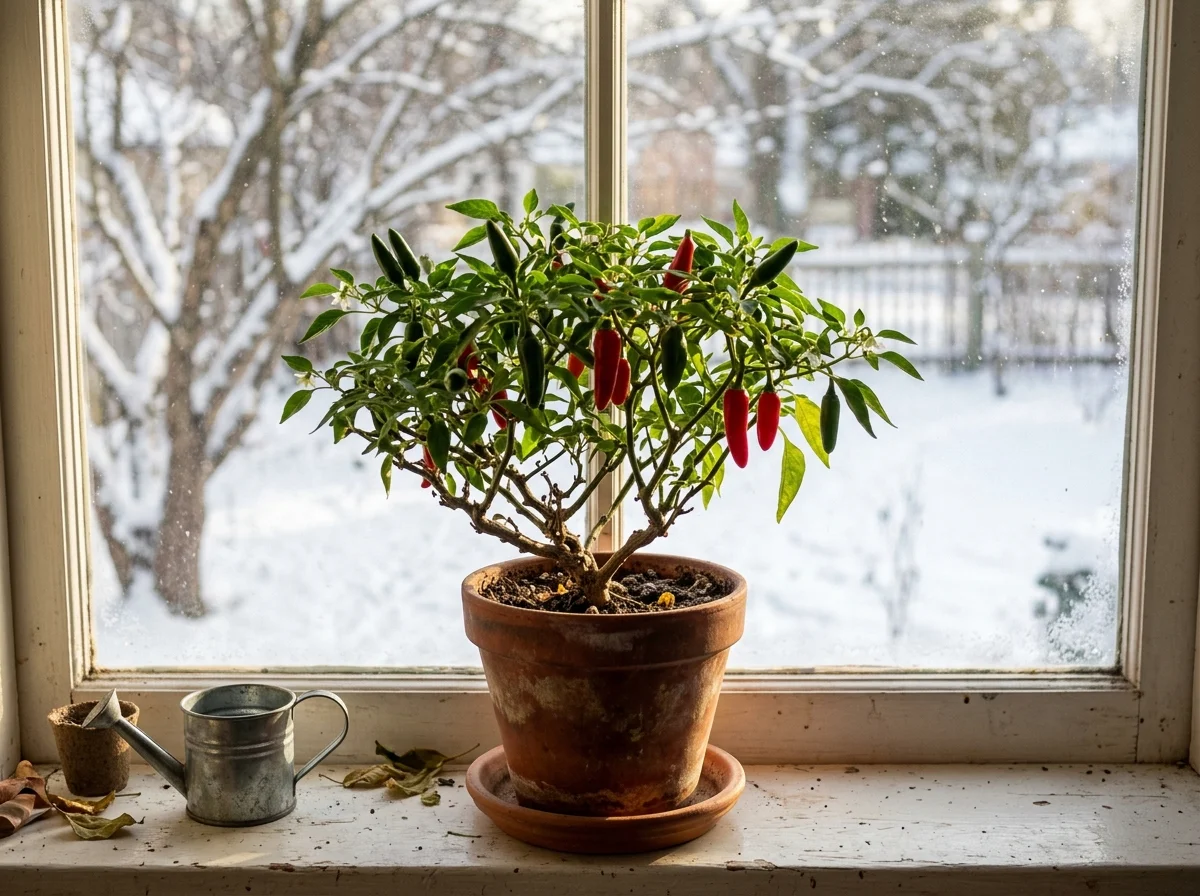
If you have a bright window and want peppers year-round, treat the plant as a houseplant instead of a dormant one.
- Give it the brightest south-facing window, ideally 6-8 hours of direct light daily.
- In winter, top up with a full-spectrum grow light for 12-14 hours a day - natural window light is rarely enough in northern states.
- Keep temperatures at 60-70F in the day and 55-65F at night; cold drafts from windows are the main killer.
- Prune back by roughly half its summer height to keep it bushy, and expect fewer fruit - the goal is plant survival, not a full crop.
- If you keep any foliage, strip and eat the fruit rather than letting it pile up on the plant.
Method 3: Take Cuttings in Late Summer
Cuttings are the insurance policy of overwintering - cheap, compact, and easy to keep.
Take 4-6 inch stem cuttings in late August or early September, before nights cool. Snip below a leaf node, strip lower leaves, and root in water or perlite-peat. Roots form in 2-4 weeks. Pot them up like small Method 2 plants: bright light, cool room, sparing water. Cuttings carry no garden soil pests, and one parent can yield a dozen backups.
Indoor Conditions That Keep Plants Alive
| Factor | Target | Why it matters |
|---|---|---|
| Day temperature | 60-70F | Warm enough for roots to stay viable, cool enough to limit growth |
| Night temperature | 55-65F | Cooler nights push the plant toward dormancy and conserve energy |
| Light | Bright indirect, 6-8+ hours | Prevents pale, stretched, weak growth |
| Water | When top inch is dry | Wet, cold roots rot faster than any pest can kill a plant |
| Fertilizer | None until late winter | Feeding dormant plants grows soft, disease-prone tissue |
| Humidity | 40-60% | Dry winter air invites spider mites; a pebble tray or weekly mist helps |
| Airflow | Gentle and steady | Stagnant humid air invites fungus and mold on the potting mix |
Water sparingly - usually every 10-14 days in a cool room - and empty the saucer. Overwatering kills more overwintered peppers than cold does. Our how often to water pepper plants guide covers the same top-inch test.
The Dormancy Spectrum: Full Dormancy vs Semi-Active Growth
There are two legitimate ways to winter a pepper, and the difference matters for care.
| Full dormancy | Semi-active growth | |
|---|---|---|
| Location | Cool garage, basement, or root cellar, 45-55F | A living room at 60-70F with bright window or grow light |
| Light | Minimal - a dark corner is fine | 6-8 hours, natural or artificial |
| Leaves | All stripped | Reduced to a sparse handful, or kept full |
| Water | Monthly or less, just enough to keep roots alive | When the top inch dries out |
| New growth | None until February-March | Slow, steady trickle all winter |
| Pest risk | Low | Higher - inspect weekly |
| Spring payoff | Needs 4-6 weeks to wake up | Already halfway to full growth |
Dormant plants are “set it and forget it” for a chilly garage - asleep, using almost nothing. Semi-active plants need more attention but emerge ahead. Either way, the goal is the same - keep the crown and root system alive - so match the method to the space you have [3] (Source: Penn State Extension).
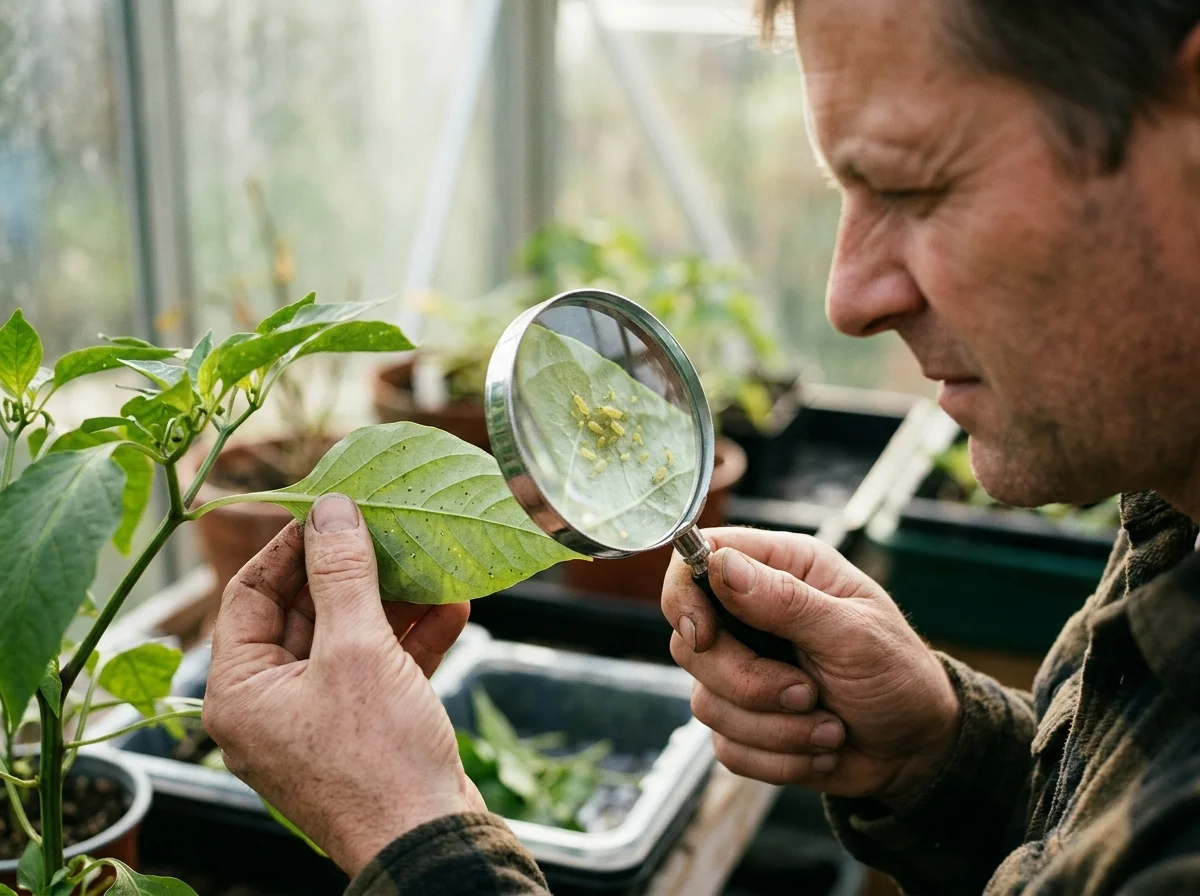
Pest Watch: Your Weekly 15-Minute Inspection
Indoor peppers attract the same pests as houseplants, and the closed environment lets populations explode.
- Quarantine every plant for two weeks before it joins other houseplants. Catch an infestation here, not in February.
- Inspect weekly, especially leaf undersides and the stem-to-soil junction. Look for webbing, sticky residue, white cotton tufts, or a fine dust of scale.
- Aphids colonize new growth; blast off with a sink sprayer or swab with insecticidal soap.
- Spider mites love dry winter air; look for stippled yellow leaves, raise humidity, and spray with water or miticidal soap.
- Whiteflies lift in a white cloud when shaken; yellow sticky cards catch adults.
- Fungus gnats breed in overwatered soil; let the top inch dry, use sticky traps, and see our what are fungus gnats guide.
Treat a weakened overwintered plant gently at pest sight - it has less reserve to rebound than a summer plant in the bed.
Spring Revival: Waking the Plant Back Up
How and when you wake a dormant plant decides how well it performs next season.
- Move to light in late winter - around February-March, 6-8 weeks before your last frost.
- Water more, then fertilize. Water when the top inch dries; once new leaves appear, feed a diluted balanced liquid every two weeks. Our best fertilizer for peppers guide covers summer ratios.
- Repot if roots are circling. Move up one pot size with fresh mix.
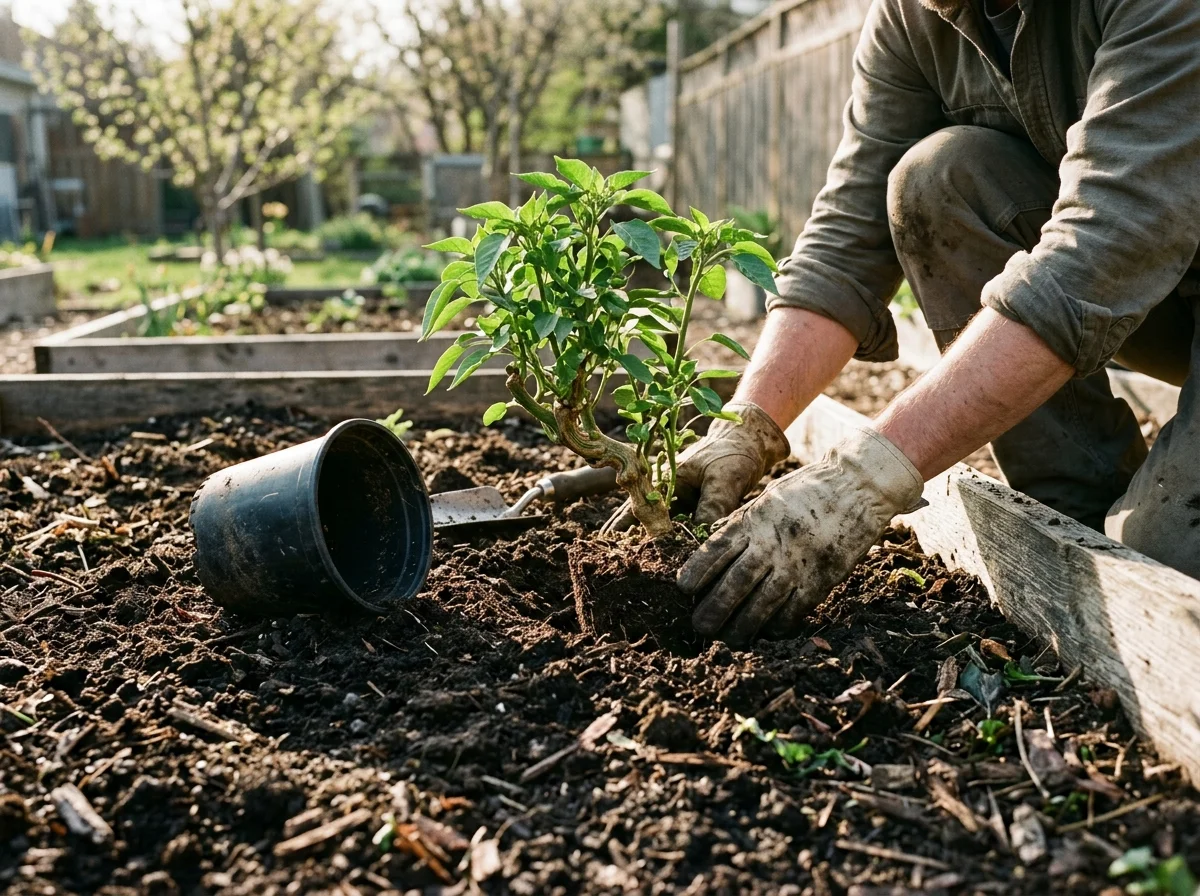
- Harden off 7-10 days. Start with an hour in shade, adding direct sun and time outdoors daily - skipping this causes yellowing or sunscald.
- Transplant after your last frost, once nights hold above 50F steadily. Give the new plant sheltered warm days before full garden duty.
A flush of new leaves over one to two weeks is normal, not a failure.
Zone Notes: Perennial or Annual?
Peppers are true perennials throughout USDA zones 9-11: leave them mulched with frost cloth on cold nights and they flush back in spring. In zone 8, a hard winter usually kills them, though a protected, mulched south wall can carry plants through. Zone 7 and colder: treat peppers as annuals or use indoor overwintering [4] (Source: Ohio State University Extension).
Expected Results in Year Two
A typical second-year plant:
- Flowers earlier - two to four weeks after transplanting, versus six to ten for seed-grown plants.
- Sets fruit sooner - ripe peppers 6-12 weeks ahead of seed-started neighbors.
- Stays smaller but sturdier - often 18-30 inches, stocky and well-branched.
- Produces a similar or slightly smaller crop, but earlier and concentrated at the front of the season.
- Fruits at full quality, occasionally sweeter on hot varieties.
Some gardeners keep the same plants for three or more years, especially compact habaneros and cayennes, pruning them back each spring. Others treat overwintered plants as a year-two bridge and start fresh each season - both work.
Common Problems and Fixes
| Problem | Likely cause | Fix |
|---|---|---|
| Leaves turn yellow and drop after bringing indoors | Shock from light and humidity change | It is often normal; give it dimmer light the first week and trim spreading yellowing |
| Stems turn black from the base | Overwatering or cold, wet feet | Cut back to firm green stem; if the crown is black, the plant may not survive |
| Leggy, pale, stretched growth | Not enough light | Move closer to a south window or add a grow light for 12-14 hours |
| Plant never puts out new leaves after winter | Kept too cold or too dry | Warm it to 60-70F, water lightly, and be patient 3-4 weeks |
| White fuzz on potting mix | Too much moisture, poor airflow | Let the surface dry, scrap off the fuzz, and improve air circulation |
| Aphid or mite outbreaks | Quarantine skipped or dry air | Insecticidal soap spray; raise humidity |
| Flowers but no fruit indoors | No pollinators | Flick or tap flowers, or hand-pollinate with a small brush |
| Plant wilts despite wet soil | Root rot | Unpot, cut black roots away, repot in fresh dry mix, and withhold water a week |
Troubleshooting
- Leaves falling off in fall: usually normal acclimation, not a disease; as long as stems are firm, do not panic.
- Leggy limp growth: not enough light; the first sign is stems that bend sideways toward the window.
- No buds in spring: the plant needs warmth and more feeding; once it sees 60-70F days and receives a diluted feed every two weeks, buds usually follow in a month.
- Rotten smell from the pot: root rot; repot into fresh, barely moist mix and monitor.
- Sticky leaves: check for whitefly or aphid honeydew and treat the plant source-to-soil.
Frequently Asked Questions
Q: Can peppers really survive the winter indoors?
A: Yes. Peppers are tender perennials, and a healthy plant kept at 60-70F with modest light and almost no water can live through winter and resume growth in spring.
Q: How late can I dig up my pepper plants?
A: Bring them in 6-8 weeks before your first frost, or as soon as night temperatures fall below 50F. A light frost-nipped plant usually recovers less well.
Q: Do I really have to remove all the leaves and fruit?
A: Yes for dormant overwintering. Stripping leaves and fruit stops the plant from wasting energy and removes hiding spots for aphids and spider mites on the stems you keep.
Q: Will second-year pepper plants produce as well as first-year plants?
A: Usually yes on fruit quality, and often better on timing. They flower and set fruit 8-12 weeks earlier, but the plant itself is sometimes smaller and sets a slightly smaller total crop.
Q: Can I just bring a potted pepper plant inside without pruning?
A: You can for the active houseplant method, but expect leggy, pest-prone growth. Even an active overwintered plant benefits from cutting back to roughly half its height and pinching heavy-feeding fruit.
Q: What temperature should I keep overwintering peppers at?
A: Aim for 60-70F during the day and 55-65F at night. Cool and steady beats warm and swinging, and a cool garage at 45-55F works only if the plant is fully dormant.
Q: How do I prevent pests on overwintering peppers?
A: Quarantine every plant for two weeks after bringing it in, inspect the undersides of leaves weekly, and treat aphids, spider mites, whiteflies or fungus gnats at the first sign rather than waiting.
Q: Can I overwinter peppers outside in cold weather?
A: Only in USDA zones 9-11, where pepper is a perennial and mulched plants survive winter outdoors. Gardeners in zone 8 and colder need winter protection like row covers or must bring plants inside.
Related Articles
- Vegetable Gardening Guide
- How to Grow Peppers
- Best Fertilizer for Peppers
- How Often to Water Pepper Plants
- Pepper Companion Plants
- How to Start Vegetable Seeds Indoors
- Harvesting & Storing Vegetables
- What Are Fungus Gnats?
