
I learned to pepper companion plants the way most of us do — with a bright March optimism and a tray that soon leaned like shy toddlers toward a dim window. The second spring a neighbor named Marta showed me how to hold my palm two inches above the leaves and ask, is this light close enough to feel? That one gesture changed everything. This guide is that habit, stretched into a calm, step-by-step plan you can start tonight with what you have, plus the few tiny upgrades that actually matter. The early details matter more than any later rescue.
Think of this as a walk through the bed together — sensorial, practical, a little messy, and very doable.
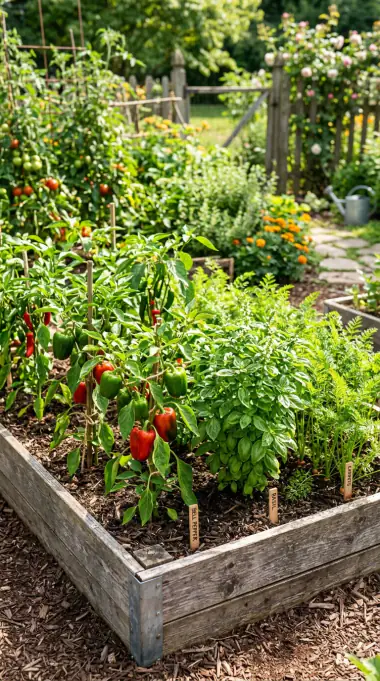
Quick Answer: Plant basil, carrots, spinach, lettuce, chives, garlic, marigolds, nasturtiums, dill, cilantro and beans near peppers. Low greens and carrots save space and mulch soil, aromatic herbs and flowers deter aphids and attract beneficials, and beans add a little nitrogen when spaced properly. Avoid fennel, brassicas, corn, potatoes and shading sunflowers, and keep 18 to 24 inches between pepper and companion crowns for airflow.
At a Glance
| Companion | Role | Distance |
|---|---|---|
| Basil | Scent deters aphids/whitefly | 12 inches |
| Marigold | Nematode + pest confusion | Corners/ends |
| Nasturtium | Aphid trap crop | Edge, away from fruit |
| Borage/Dill | Pollinator + wasp habitat | Within 2–3 feet |
| Carrot/Beet/Lettuce | Low living mulch | 6–12 inches |
11 Best Pepper Neighbors Ranked
That 11 best pepper neighbors ranked moment is where the garden quietly decides. I used to rush it, thinking plants wouldn’t notice. They did — tighter roots and that deep satiny green showed up only when I slowed down and treated this step like a ten-minute ritual with tea warm beside me. Do you hear how soil sounds when it’s at the right dampness? Like a wrung sponge, not a puddle.
The principle is simple: steady is better than splashy. Even moisture, gentle air, bright light at the right distance. My notebook proves it — one line a day, weather and leaf color, and patterns pop in two weeks. Your hands will learn faster than any calendar.
Basil aphid shield
I handle basil aphid shield by measuring once, then trusting senses. Pre-moisten mix like a wrung sponge, sow about twice seed thickness deep, label same day, snip weaker at soil level after two true leaves.
Carrot loosener
I handle carrot loosener by measuring once, then trusting senses. Pre-moisten mix like a wrung sponge, sow about twice seed thickness deep, label same day, snip weaker at soil level after two true leaves.
Spinach mulch
I handle spinach mulch by measuring once, then trusting senses. Pre-moisten mix like a wrung sponge, sow about twice seed thickness deep, label same day, snip weaker at soil level after two true leaves.
Lettuce
I handle lettuce by measuring once, then trusting senses. Pre-moisten mix like a wrung sponge, sow about twice seed thickness deep, label same day, snip weaker at soil level after two true leaves.
Chive garlic
I handle chive garlic by measuring once, then trusting senses. Pre-moisten mix like a wrung sponge, sow about twice seed thickness deep, label same day, snip weaker at soil level after two true leaves.
Marigold nematodes
I handle marigold nematodes by measuring once, then trusting senses. Pre-moisten mix like a wrung sponge, sow about twice seed thickness deep, label same day, snip weaker at soil level after two true leaves.
Nasturtium trap
I handle nasturtium trap by measuring once, then trusting senses. Pre-moisten mix like a wrung sponge, sow about twice seed thickness deep, label same day, snip weaker at soil level after two true leaves.
Dill cilantro beneficials
I handle dill cilantro beneficials by measuring once, then trusting senses. Pre-moisten mix like a wrung sponge, sow about twice seed thickness deep, label same day, snip weaker at soil level after two true leaves.
Beans nitrogen
I handle beans nitrogen by measuring once, then trusting senses. Pre-moisten mix like a wrung sponge, sow about twice seed thickness deep, label same day, snip weaker at soil level after two true leaves.
Radish beetle lure
I handle radish beetle lure by measuring once, then trusting senses. Pre-moisten mix like a wrung sponge, sow about twice seed thickness deep, label same day, snip weaker at soil level after two true leaves.
Give this step its own Sunday ten minutes. It looks slow the first week, but by week three roots have quietly doubled and leaves thicken. Quiet compounding beats quick fixes every time.
Quick tips for 11 best pepper neighbors ranked:
- Do it in morning light when you can see true color.
- Keep tools clean — wipe with alcohol before cuts.
- Check again in 3 days; small corrections beat big rescues.
Spacing That Keeps Peppers Sunny and Airy
That spacing that keeps peppers sunny and airy moment is where the garden quietly decides. I used to rush it, thinking plants wouldn’t notice. They did — tighter roots and that deep satiny green showed up only when I slowed down and treated this step like a ten-minute ritual with tea warm beside me. Do you hear how soil sounds when it’s at the right dampness? Like a wrung sponge, not a puddle.
The principle is simple: steady is better than splashy. Even moisture, gentle air, bright light at the right distance. My notebook proves it — one line a day, weather and leaf color, and patterns pop in two weeks. Your hands will learn faster than any calendar.
18-24 inch crown gap
I handle 18-24 inch crown gap by measuring once, then trusting senses. Pre-moisten mix like a wrung sponge, sow about twice seed thickness deep, label same day, snip weaker at soil level after two true leaves.
6-8 hour need
I handle 6-8 hour need by measuring once, then trusting senses. Pre-moisten mix like a wrung sponge, sow about twice seed thickness deep, label same day, snip weaker at soil level after two true leaves.
Give this step its own Sunday ten minutes. It looks slow the first week, but by week three roots have quietly doubled and leaves thicken. Quiet compounding beats quick fixes every time.

Quick tips for spacing that keeps peppers sunny and airy:
- Do it in morning light when you can see true color.
- Keep tools clean — wipe with alcohol before cuts.
- Check again in 3 days; small corrections beat big rescues.
Bad Pepper Neighbors to Skip
That bad pepper neighbors to skip moment is where the garden quietly decides. I used to rush it, thinking plants wouldn’t notice. They did — tighter roots and that deep satiny green showed up only when I slowed down and treated this step like a ten-minute ritual with tea warm beside me. Do you hear how soil sounds when it’s at the right dampness? Like a wrung sponge, not a puddle.
The principle is simple: steady is better than splashy. Even moisture, gentle air, bright light at the right distance. My notebook proves it — one line a day, weather and leaf color, and patterns pop in two weeks. Your hands will learn faster than any calendar.
Fennel
I handle fennel by measuring once, then trusting senses. Pre-moisten mix like a wrung sponge, sow about twice seed thickness deep, label same day, snip weaker at soil level after two true leaves.
Brassicas
I handle brassicas by measuring once, then trusting senses. Pre-moisten mix like a wrung sponge, sow about twice seed thickness deep, label same day, snip weaker at soil level after two true leaves.
Nightshade repeats
I handle nightshade repeats by measuring once, then trusting senses. Pre-moisten mix like a wrung sponge, sow about twice seed thickness deep, label same day, snip weaker at soil level after two true leaves.
Give this step its own Sunday ten minutes. It looks slow the first week, but by week three roots have quietly doubled and leaves thicken. Quiet compounding beats quick fixes every time.
Quick tips for bad pepper neighbors to skip:
- Do it in morning light when you can see true color.
- Keep tools clean — wipe with alcohol before cuts.
- Check again in 3 days; small corrections beat big rescues.
Succession After Pepper Harvest
That succession after pepper harvest moment is where the garden quietly decides. I used to rush it, thinking plants wouldn’t notice. They did — tighter roots and that deep satiny green showed up only when I slowed down and treated this step like a ten-minute ritual with tea warm beside me. Do you hear how soil sounds when it’s at the right dampness? Like a wrung sponge, not a puddle.
The principle is simple: steady is better than splashy. Even moisture, gentle air, bright light at the right distance. My notebook proves it — one line a day, weather and leaf color, and patterns pop in two weeks. Your hands will learn faster than any calendar.
Fall carrots
I handle fall carrots by measuring once, then trusting senses. Pre-moisten mix like a wrung sponge, sow about twice seed thickness deep, label same day, snip weaker at soil level after two true leaves.
Garlic after
I handle garlic after by measuring once, then trusting senses. Pre-moisten mix like a wrung sponge, sow about twice seed thickness deep, label same day, snip weaker at soil level after two true leaves.
Give this step its own Sunday ten minutes. It looks slow the first week, but by week three roots have quietly doubled and leaves thicken. Quiet compounding beats quick fixes every time.

Quick tips for succession after pepper harvest:
- Do it in morning light when you can see true color.
- Keep tools clean — wipe with alcohol before cuts.
- Check again in 3 days; small corrections beat big rescues.
Expanded Checklist — More Lines Without More Fuss
- Monday: check moisture 2 inches, look undersides.
- Tuesday: deep water if tuna can <1 inch.
- Wednesday: fan seedlings 30 min, rotate tray.
- Thursday: scout pests, remove one bad leaf.
- Friday: second deep water if hot or sandy.
- Saturday: harvest what blushes, note in book.
- Sunday: rest, plan next sowing, enjoy tea.
- Every 2 weeks: succession sow lettuce, carrots, beans.
- Monthly: side-dress light, refresh mulch, test pH.
- At bloom: switch to low N high PK, shake at midday.
- At fruit swell: keep even, avoid flood-drought swings.
- After storm: check drainage, pull mulch back 2 inches.
- Before frost: pinch tips, stop feed, gather green fruit.
- Fall: add 2–3 inch compost, clean stakes 10% bleach.
- Winter: review notes, order seed, test old germination.
- Spring: warm bed 7 days with plastic before planting.

Frequently Asked Questions
Q: What should I plant next to peppers to reduce pests?
A: Basil deters aphids, spider mites and thrips near peppers, marigolds suppress nematodes and whiteflies at row ends, and nasturtiums lure aphids away as trap companions. Dill and cilantro flowers host hoverflies and lacewings that eat aphids, while radishes can distract flea beetles early. Plant companions 8 to 12 inches from pepper stems to keep airflow open.
Q: Can carrots and peppers grow together well?
A: Carrots are excellent pepper neighbors because they loosen soil below without competing heavily above, since peppers grow upright and carrots stay low. Sow carrots 6 inches from pepper transplants after peppers establish so you do not disturb pepper roots. You harvest carrots just as peppers hit peak in late summer, keeping the same bed productive longer without extra space.
Q: What should not be planted with peppers?
A: Avoid fennel near peppers because it inhibits growth of many vegetables, and keep brassicas like cabbage at a distance because they compete for similar nutrients and water. Corn can share pests, potatoes and eggplant trade nightshade diseases, and shade-heavy sunflowers to the south starve peppers of the 6 to 8 hours they crave. Rotate peppers yearly even when companions seemed friendly.
Related Articles
- When to Plant Vegetables: A Month-by-Month Guide
- How Often to Water Vegetables
- Best Soil for Vegetable Gardens
- Companion Planting Guide
- Vegetable Garden Pests: How to Identify and Control
- How to Test Soil pH
Sources & References
- University of Minnesota Extension — https://extension.umn.edu/yard-and-garden/vegetables
- Cornell Vegetables — https://www.vegetables.cornell.edu/
- Iowa State University Extension — https://hortnews.extension.iastate.edu/
- NC State Extension — https://content.ces.ncsu.edu/
- University of California IPM — https://ipm.ucanr.edu/