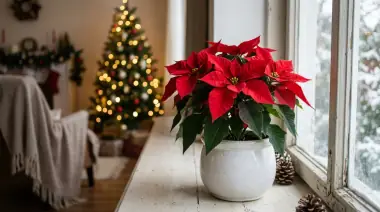
Most poinsettias die from a cold ride home, a waterlogged foil wrapper, or a drafty spot by the front door. Learn how to care for a poinsettia correctly and yours can hold color 8 to 12 weeks, live on as a houseplant, and bloom again next Christmas.
This guide covers buying, holiday light and temperature, poinsettia watering, toxicity facts, spring pruning, summer care, cuttings, and the October rebloom program.
Quick Answer: Give your poinsettia 6 or more hours of bright indirect light, 65 to 75°F days with 60 to 65°F nights, and water only when the top inch feels dry, typically every 4 to 7 days. Water until it drains, then empty the foil-covered saucer so roots never sit in water. Avoid drafts, heating vents, and exterior doors, skip fertilizer until bracts fade, and give 14 hours of uninterrupted darkness nightly from October 1 for 8 to 10 weeks to rebloom it.
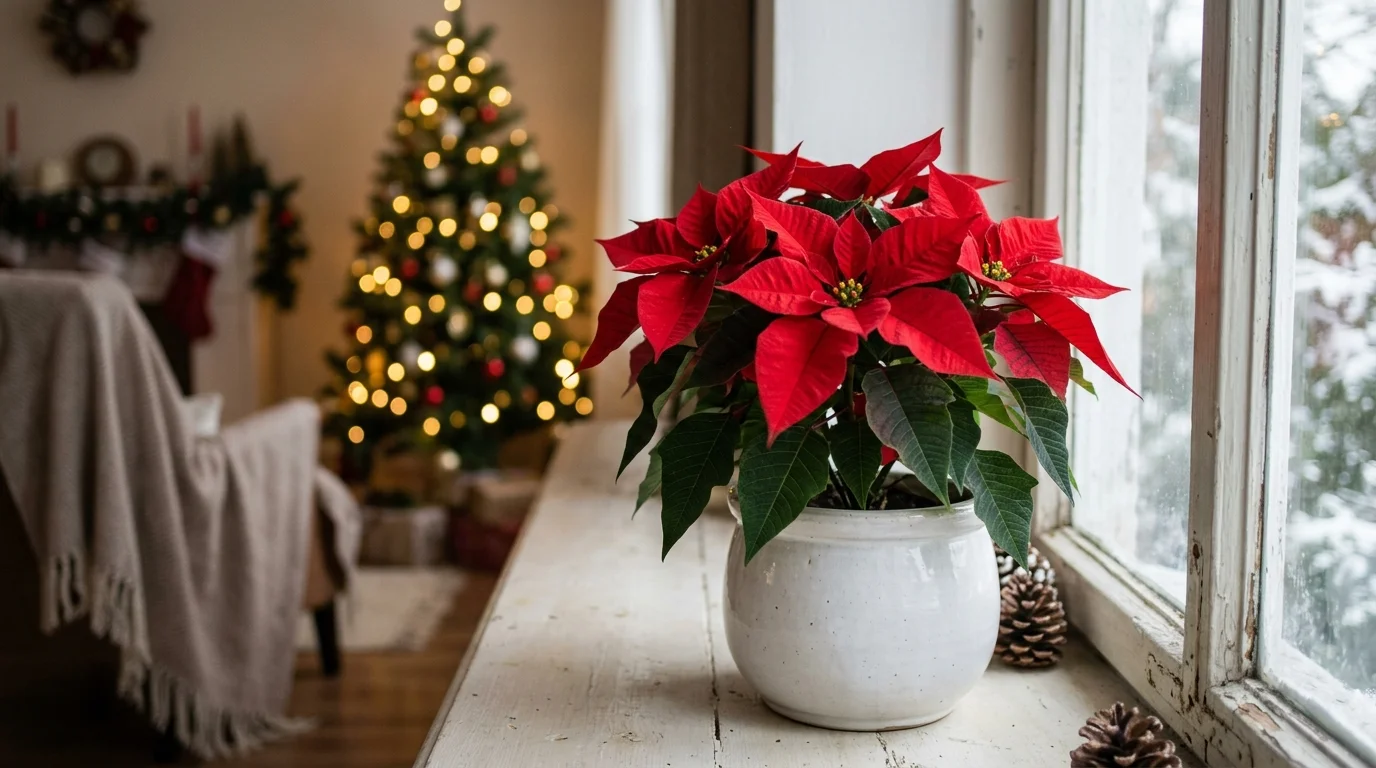
At a Glance
| Fact | Detail |
|---|---|
| Plant | Euphorbia pulcherrima, tropical shrub from Mexico |
| Color parts | Bracts (modified leaves), not petals; true flowers are tiny yellow centers |
| Holiday light | 6+ hours bright indirect light daily |
| Temperature | 65 to 75°F days, 60 to 65°F nights; never below 50°F |
| Watering | When top inch is dry, every 4 to 7 days; drain fully, empty saucer |
| Humidity | 40 to 60 percent; pebble tray, never mist bracts |
| Fertilizer | None during holidays; half-strength monthly spring to August |
| Rebloom | 14 hours total darkness nightly, 8 to 10 weeks from October 1 |
What the Colored Parts Really Are
The red, white, or pink show is not petals. Those are bracts, modified leaves that color up to attract pollinators to the tiny true flowers in the center [1] (Source: University of Florida IFAS Extension).
Check the small buds in the middle. Tight, closed buds with no yellow pollen mean a fresh plant with weeks of color ahead. Open buds dusty with yellow pollen mean the display is already aging.
Because the plant holds colored leaves rather than true blooms, it needs steady light but zero fertilizer during the show.
Buying the Right Plant
Half of success happens before you pay. Transport the plant in a heated car and check each candidate:
- Dark green leaves to the base with no yellowing or bare stems, which signal overwatering or cold stress.
- Closed center buds with yellow pollen centers still shut, not open and dusty, for the longest color life.
- Even color and full shape with firm bracts and balanced growth on all sides.
- No pests. Inspect leaf undersides for whiteflies, sticky residue, or cottony mealybugs. The habits in our guide to getting rid of aphids naturally catch most greenhouse pests early.
- Lightly moist soil, never pots sitting in puddles, which signals root rot already underway.
- Sleeve protection in cold. Below 50°F, the plant needs a paper sleeve for the trip outside. Cold shock drops leaves days later. Remove the sleeve indoors.
Holiday Light, Temperature, and Placement
Poinsettias come from the mountains of Mexico, so think bright and mild, never hot and never cold [2] (Source: Clemson University Cooperative Extension).
Holiday Care Targets
| Need | Target | How |
|---|---|---|
| Light | 6+ hours bright indirect | East window or south window with sheer curtain |
| Days / nights | 65 to 75°F / 60 to 65°F | Normal rooms; cooler nights extend color |
| Keep away | Drafts, heat, cold | 3+ feet from exterior doors, vents, fireplaces |
| Humidity | 40 to 60 percent | Pebble tray or humidifier; never mist bracts |
Under 4 hours of good light, expect dull color and leaf drop within 2 to 3 weeks. Keep pots off cold panes, away from doors that open constantly, and clear of heating vents. A cool bedroom window near 60 to 65°F at night often beats a hot mantel. For companions sharing that sill, see our best low-maintenance indoor plants.
How to Water a Poinsettia
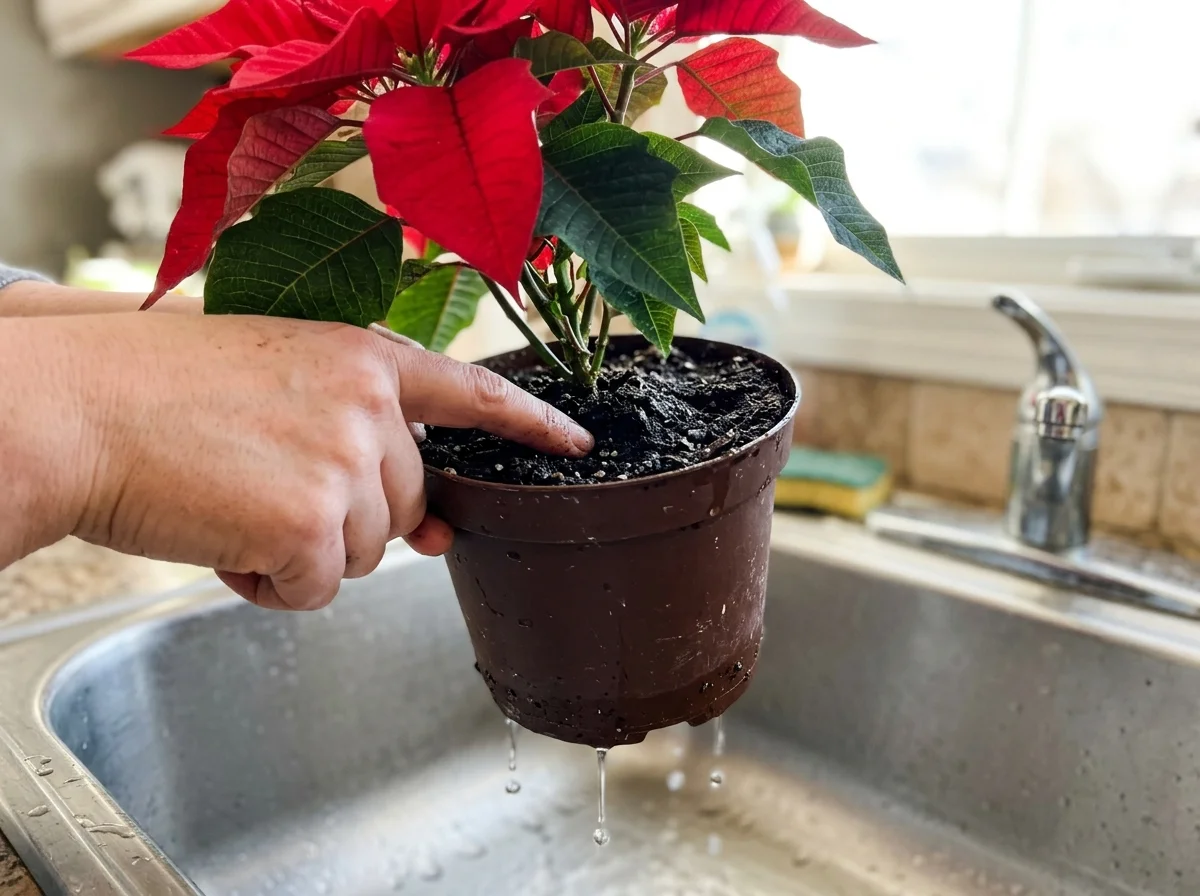
Bad watering kills more poinsettias than everything else combined. Roots want even moisture with air, and sealed foil is the main trap. Follow our how to water houseplants method plus one strict rule: never let the pot sit in water.
- Check the top inch every 2 to 3 days and water only when dry.
- Water until it drains, about 1 to 2 cups for a 6-inch pot, and let it drain 10 to 15 minutes.
- Empty the saucer every time. Roots standing in water for 24 hours can rot; yellow lower leaves that fall at a touch are the first sign.
- Fix the foil on day one. Remove it or punch 6 to 8 holes in the bottom so the pot drains freely.
- Expect every 4 to 7 days at 68 to 72°F. Hot rooms shorten it to 4 to 5 days; cool rooms stretch it to 7 to 10 days. Always trust the finger test, not the calendar.
- Use room-temperature water, since cold water shocks tropical roots.
Wilting with dry soil means underwatering and usually resolves within hours of a soak. Wilting with wet, sour-smelling soil means root rot, so let the top 2 inches dry and read our guide to fixing an overwatered plant before watering again.
Humidity and Holiday Fertilizer
Heated January homes often run 15 to 25 percent humidity, far under the preferred 40 to 60 percent. Set the pot on a pebble tray with water just below the pebble tops, or run a small humidifier at 40 to 50 percent. Never mist bracts directly, since spots mark color and wetness invites gray mold.
Skip all fertilizer while bracts look fresh. Growers preload the mix with slow-release feed that covers the 8 to 12-week display [3] (Source: Iowa State University Extension). Extra feed now burns roots and shortens color. Start feeding only after bracts fade in late winter.
Are Poinsettias Poisonous?
They are not deadly. That myth traces to an unconfirmed 1919 case in Hawaii, yet it returns every December.
The milky latex sap is mildly irritating. A child chewing a leaf may get nausea or a stomachache; a pet chewing stems may drool or vomit once. Serious poisoning is extraordinarily rare [4] (Source: ASPCA Animal Poison Control). Still, keep plants on high tables away from toddlers and chewers, wear gloves when pruning, rinse skin if sap contacts it, and call Poison Control at 1-800-222-1222 or your vet if more than a nibble is eaten.
After the Holidays: Keeping It Alive
Bracts fade naturally between February and March after 8 to 12 weeks. Keep the plant as a green houseplant rather than tossing it.
Year-Round Care Calendar
| Time | Care |
|---|---|
| January to March | Bright indirect light, 60 to 72°F. Water when top inch dries. No fertilizer. |
| April | Prune stems to 4 to 6 inches with 2 to 3 leaves each. Repot if rootbound, up 1 to 2 inches. |
| May to August | Monthly half-strength 20-20-20 feed. Outside to bright shade after nights pass 50°F. Pinch tips once at 6 inches. |
| September | Bring in before nights fall below 50°F. Sunniest window. Stop pinching so buds form. |
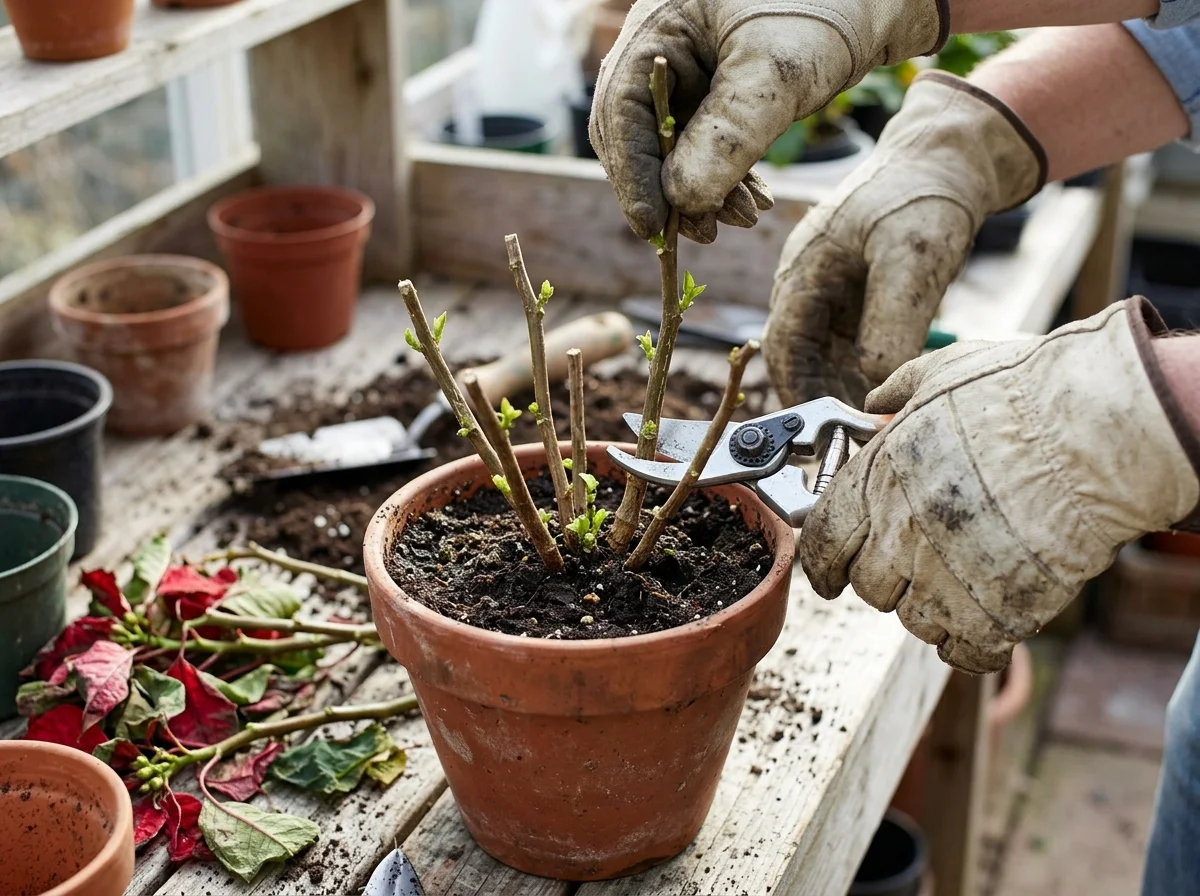
April pruning prevents tall, leggy plants with color only at the tips, forcing 2 to 3 side shoots per stem instead. Wear gloves, use clean pruners, and expect brief sap dripping. Outdoors, harden off with 3 to 4 days of full shade, then morning sun only. If roots circle the pot, follow our steps for how to repot indoor plants and size up just 1 to 2 inches.
How to Rebloom It for Next Christmas
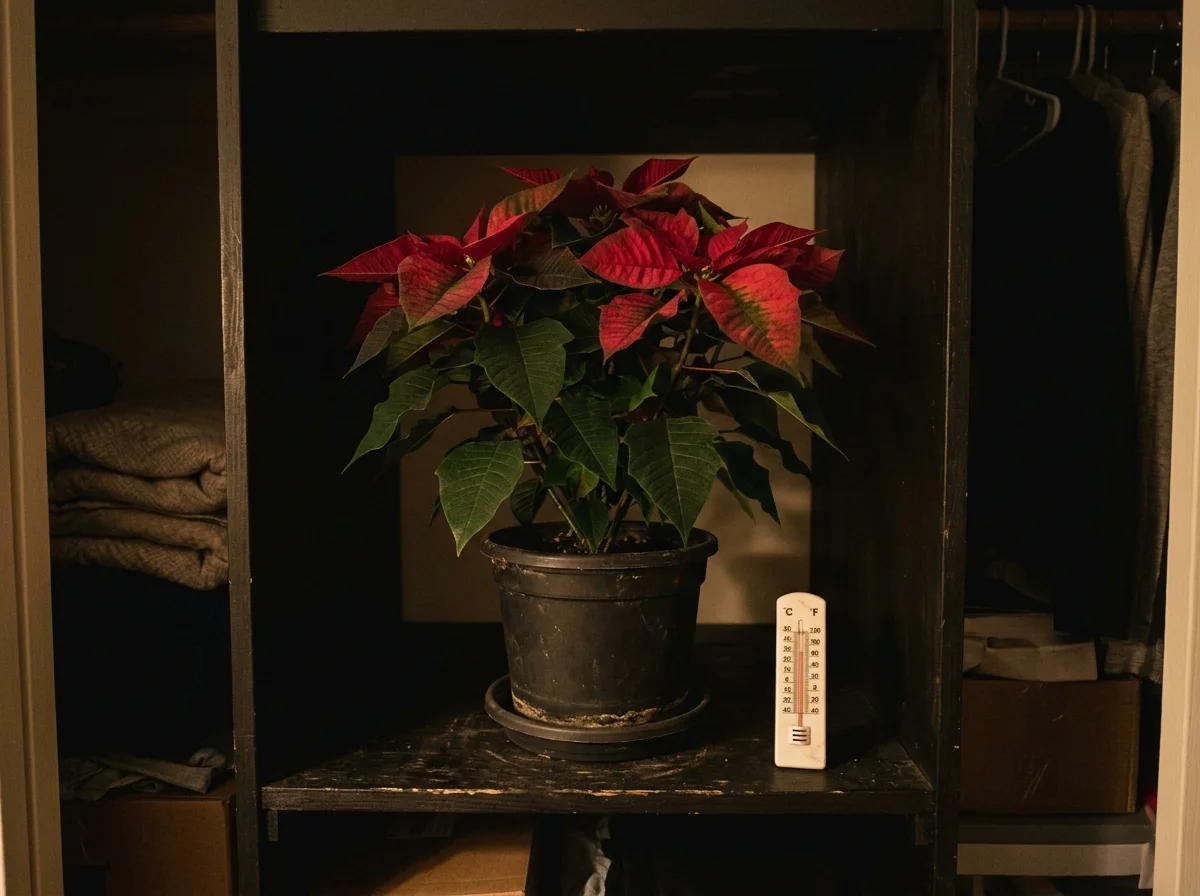
Reblooming needs total darkness. Poinsettias set buds only with long, uninterrupted nights, and even streetlight or TV glow through a window can stall coloring [2] (Source: Clemson University Cooperative Extension).
Starting October 1, give 14 hours of uninterrupted darkness nightly for 8 to 10 weeks, such as 5 p.m. to 7 a.m. in a closet. No peeking and no light cracks; 5 minutes of lamp light can delay bracts by 2 weeks. Return the plant to its sunniest window for the other 10 hours, hold days below 70°F with nights at 60 to 65°F, water normally, and stop fertilizing. Do not prune or repot after September 1.
Bract edges tint around weeks 4 to 5 with full color by weeks 8 to 10. Then display normally. If it stays green, suspects are light leaks, nights above 70°F, or late pruning. The plant still makes a healthy foliage plant for another try next year.
Cuttings and Color Varieties
Take 4 to 6-inch tip cuttings in June or July from shoots with 3 to 4 leaves. Wearing gloves, cut below a node, rinse sap 30 seconds, dip in rooting hormone, and insert 1 to 1.5 inches into moist perlite or a 50-50 perlite and peat mix under a vented bag. Hold at 70 to 75°F in bright indirect light; roots form in 21 to 28 days, then pot into 4-inch pots.
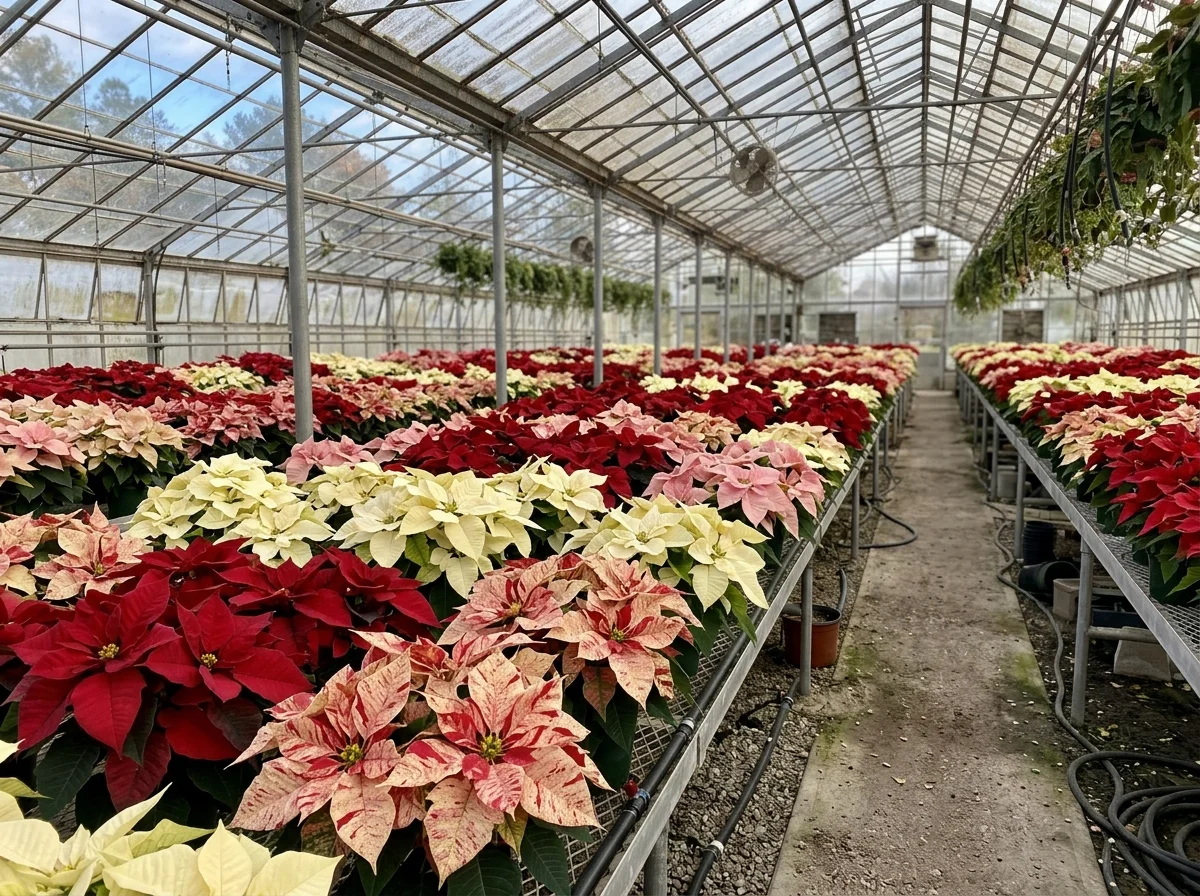
Red holds about three-quarters of sales, but all colors need identical care.
Popular Poinsettia Colors
| Group | Look | Best for |
|---|---|---|
| Classic red | Deep velvety red | Traditional mantels and gifts |
| White and cream | Ivory to soft cream | Modern and wedding decor |
| Pink and rose | Soft pink to coral | Pastel trees and kids rooms |
| Marble and glitter | Swirled or speckled bracts | Single-plant centerpieces |
Pink and white types show cold damage first, so give them the warmest bright spot on frosty nights.
Common Mistakes
- Sealed foil with no drainage. The fix: remove it or punch 6 to 8 holes on day one, and empty standing water after 15 minutes.
- Unprotected cold trip home. The fix: sleeve the plant and warm the car. Damage below 50°F drops leaves days later.
- Spot by the door or vent. The fix: keep 3 or more feet from exterior doors and heating vents.
- Watering by calendar. The fix: test the top inch every 2 to 3 days; most pots need water every 4 to 7 days.
- Holiday fertilizer. The fix: feed nothing until bracts fade, then half-strength monthly through August.
- Breaking October darkness. The fix: 14 hours total darkness from 5 p.m. to 7 a.m. for 8 to 10 weeks with zero interruptions. Yellow leaves usually mean wet feet or drafts first, so check our guide to fixing yellow leaves before feeding.
Troubleshooting
- Leaves drop days after purchase: cold shock or drafts. Move to steady 65 to 72°F away from doors.
- Yellow lower leaves: overwatering in sealed foil. Empty the saucer and let the top 2 inches dry.
- Wilting, dry soil: underwatered. Soak until draining and check every 2 days.
- Wilting, wet soil, soft stems: root rot. Stop watering, drain fully, remove mushy leaves.
- Crisp brown bract edges: dry heat or sun scorch. Move back from glass and add a pebble tray.
- Stays green in December: light leaks or warmth. Seal darkness fully, hold days below 70°F, extend 2 weeks.
Frequently Asked Questions
Q: How often should I water my poinsettia?
A: Check the top inch of soil every 2 to 3 days and water when it feels dry, typically every 4 to 7 days. Water thoroughly until it drains from the bottom, then empty the saucer so the pot never sits in standing water.
Q: How do I keep my poinsettia alive after Christmas?
A: Give it bright indirect light, water when the top inch dries, and keep rooms at 65 to 75 degrees. In April prune stems back to 4 to 6 inches, repot if rootbound, and move it outside to bright shade after night temperatures stay above 50 degrees.
Q: How do I make my poinsettia turn red again?
A: Starting October 1, give it 14 hours of complete uninterrupted darkness every night for 8 to 10 weeks, such as 5 p.m. to 7 a.m. in a closet. Keep daytime temperatures below 70 degrees and water normally. Even brief light from a lamp can delay coloring.
Q: Are poinsettias poisonous to cats and dogs?
A: Poinsettias are mildly irritating rather than deadly. The milky sap can cause mouth irritation, drooling, nausea, or mild vomiting if chewed. Serious poisoning is extremely rare, but keep plants out of reach of pets and children and call your vet if symptoms persist.
Q: Why are my poinsettia leaves falling off?
A: Leaf drop is usually cold shock, drafts, or overwatering. Exposure below 50 degrees, placement near exterior doors or heating vents, and pots sitting in waterlogged foil covers are the most common triggers. Fix the placement, let the top inch dry, and avoid further stress.
Q: How much light does a poinsettia need indoors?
A: Poinsettias need at least 6 hours of bright indirect light daily during the holidays. Place yours near a sunny east or south window with a sheer curtain. Too little light causes leggy stems and leaf drop, while harsh direct afternoon sun can scorch the bracts.
Q: Should I fertilize my poinsettia during the holidays?
A: No. Do not fertilize while the colorful bracts look fresh. Start feeding only after the bracts fade in late winter or spring, using a balanced houseplant fertilizer at half strength once a month through summer, then stop when the fall rebloom program begins.
Q: Can I plant my poinsettia outside?
A: Only for summer in most of the United States. Move it outside to bright shade once nights stay above 50 degrees, then bring it back indoors before nights drop below 50. It survives year-round outdoors only in frost-free zones 9 to 11.
Related Articles
- Best Low-Maintenance Indoor Plants
- How to Water Houseplants
- How to Repot Indoor Plants
- How to Fix Yellow Leaves
- How to Fix an Overwatered Plant
- Common Plant Problems
- Get Rid of Aphids Naturally
- Garden Pest Control for Beginners
