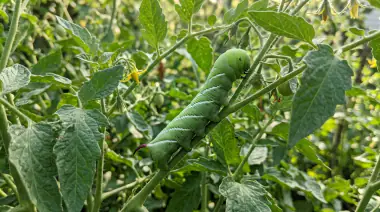
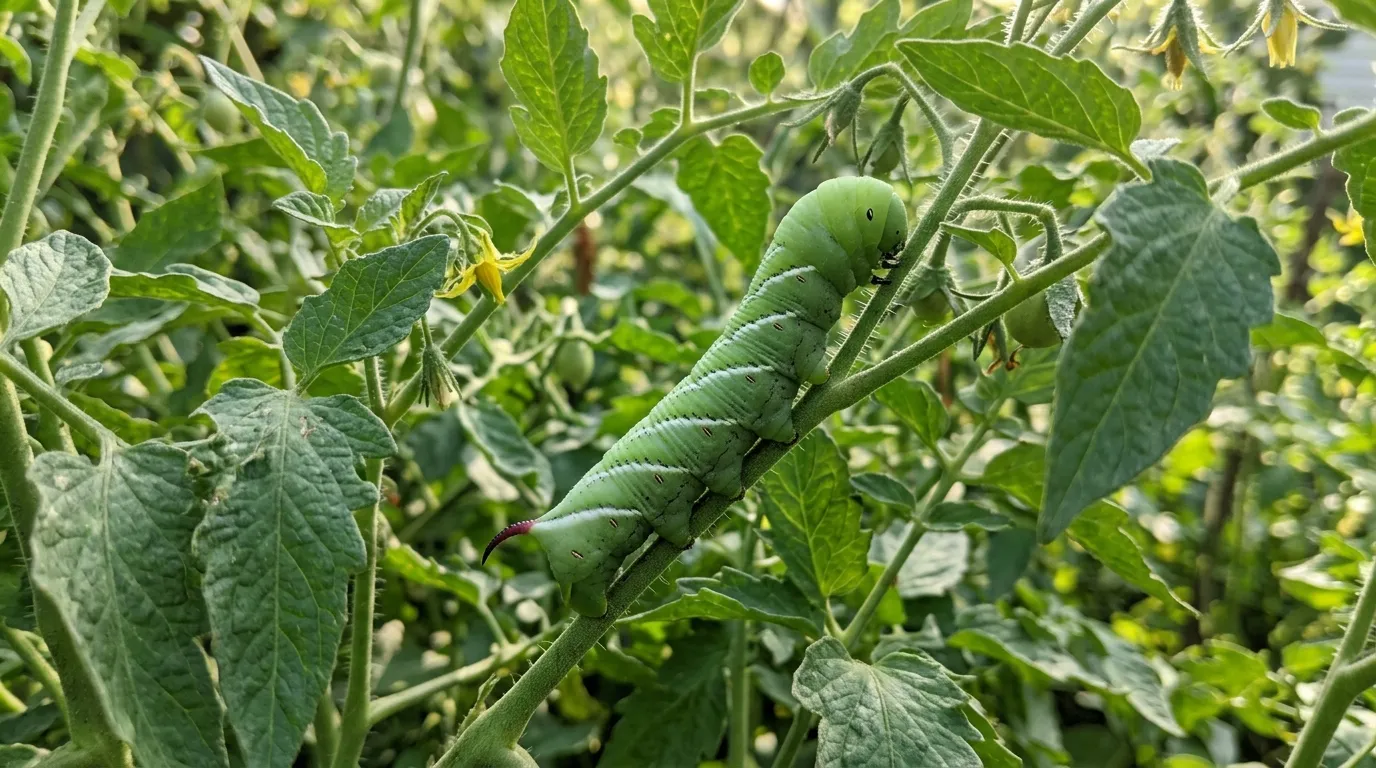
I learned to how to get rid tomato hornworms the way most of us do — with a bright March optimism and a tray that soon leaned like shy toddlers toward a dim window. The second spring a neighbor named Marta showed me how to hold my palm two inches above the leaves and ask, is this light close enough to feel? That one gesture changed everything. This guide is that habit, stretched into a calm, step-by-step plan you can start tonight with what you have, plus the few tiny upgrades that actually matter. The early details matter more than any later rescue.
Think of this as a walk through the bed together — sensorial, practical, a little messy, and very doable.
Quick Answer: Hand-pick hornworms nightly into soapy water, spray B.t. kurstaki on young caterpillars at dusk, leave white-cocoon-covered worms for parasitic wasps, and scout weekly for droppings and missing leaflets. Till lightly in fall and rotate tomatoes, grow basil and marigold to attract wasps, and repeat patrols every 3 to 4 days through August when moths are most active.
At a Glance
| Sign | Action |
|---|---|
| Black droppings, stripped leaflets | Search 12 inches above droppings |
| UV glow at night | Hand-pick to soapy water |
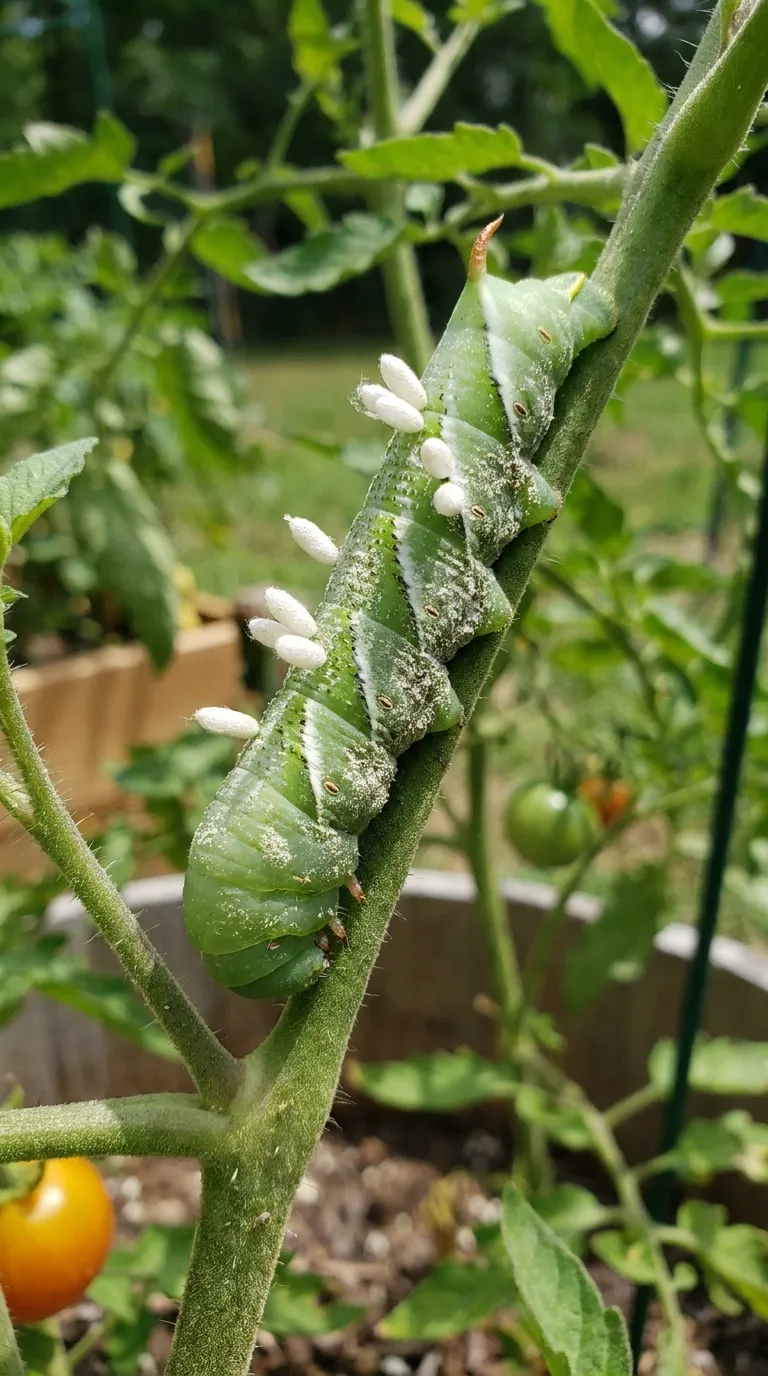
| White cocoons on back | Leave — parasitic wasps |
| Young green worms | B.t. kurstaki at dusk on foliage |
Know Your Caterpillar — Horn vs Lookalikes
That know your caterpillar — horn vs lookalikes moment is where the garden quietly decides. I used to rush it, thinking plants wouldn’t notice. They did — tighter roots and that deep satiny green showed up only when I slowed down and treated this step like a ten-minute ritual with tea warm beside me. Do you hear how soil sounds when it’s at the right dampness? Like a wrung sponge, not a puddle.
The principle is simple: steady is better than splashy. Even moisture, gentle air, bright light at the right distance. My notebook proves it — one line a day, weather and leaf color, and patterns pop in two weeks. Your hands will learn faster than any calendar.
Size and horn color
I handle size and horn color by measuring once, then trusting senses. Pre-moisten mix like a wrung sponge, sow about twice seed thickness deep, label same day, snip weaker at soil level after two true leaves.
Blue-white stripes
I handle blue-white stripes by measuring once, then trusting senses. Pre-moisten mix like a wrung sponge, sow about twice seed thickness deep, label same day, snip weaker at soil level after two true leaves.
Give this step its own Sunday ten minutes. It looks slow the first week, but by week three roots have quietly doubled and leaves thicken. Quiet compounding beats quick fixes every time.
Quick tips for know your caterpillar — horn vs lookalikes:
- Do it in morning light when you can see true color.
- Keep tools clean — wipe with alcohol before cuts.
- Check again in 3 days; small corrections beat big rescues.
Hand-Picking and UV Hunts
That hand-picking and uv hunts moment is where the garden quietly decides. I used to rush it, thinking plants wouldn’t notice. They did — tighter roots and that deep satiny green showed up only when I slowed down and treated this step like a ten-minute ritual with tea warm beside me. Do you hear how soil sounds when it’s at the right dampness? Like a wrung sponge, not a puddle.
The principle is simple: steady is better than splashy. Even moisture, gentle air, bright light at the right distance. My notebook proves it — one line a day, weather and leaf color, and patterns pop in two weeks. Your hands will learn faster than any calendar.
Droppings clue
I handle droppings clue by measuring once, then trusting senses. Pre-moisten mix like a wrung sponge, sow about twice seed thickness deep, label same day, snip weaker at soil level after two true leaves.
UV glow
I handle uv glow by measuring once, then trusting senses. Pre-moisten mix like a wrung sponge, sow about twice seed thickness deep, label same day, snip weaker at soil level after two true leaves.
Give this step its own Sunday ten minutes. It looks slow the first week, but by week three roots have quietly doubled and leaves thicken. Quiet compounding beats quick fixes every time.
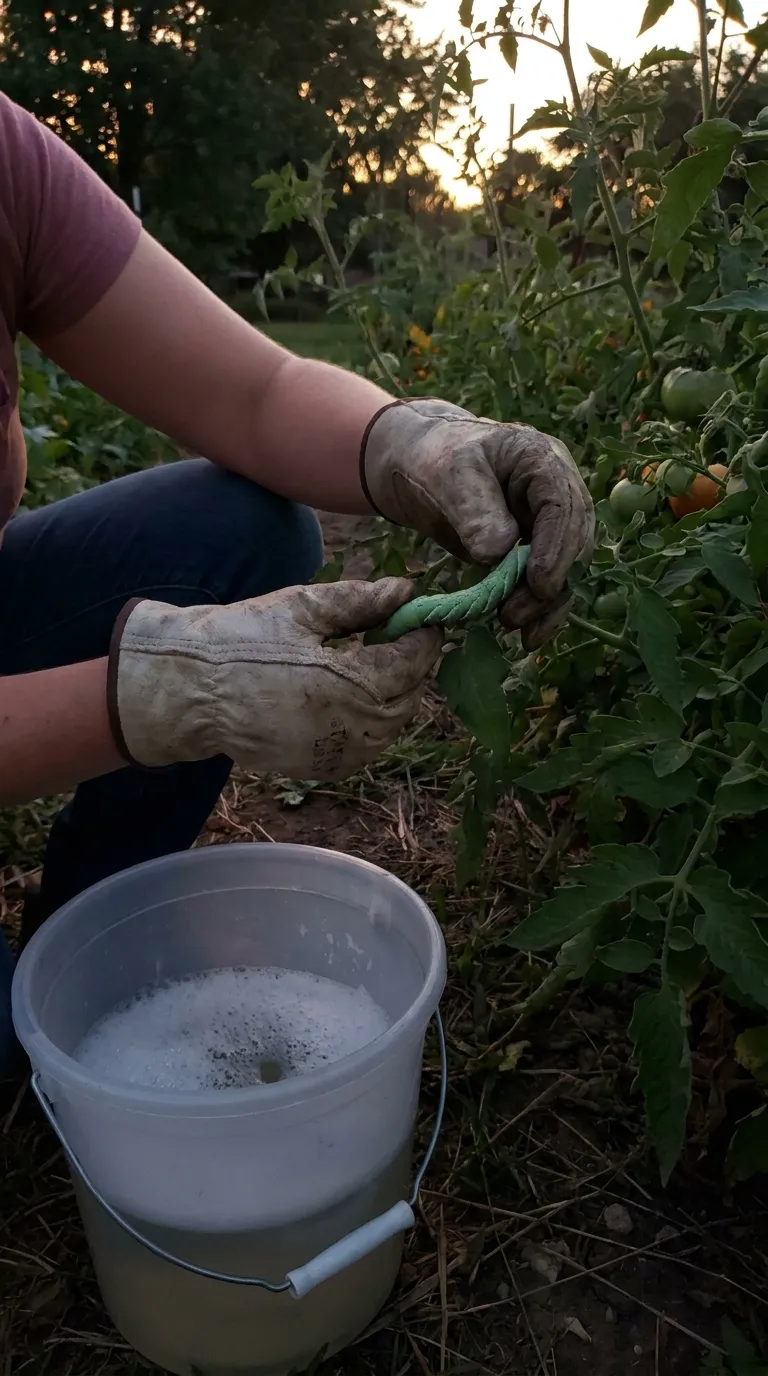
Quick tips for hand-picking and uv hunts:
- Do it in morning light when you can see true color.
- Keep tools clean — wipe with alcohol before cuts.
- Check again in 3 days; small corrections beat big rescues.
B.t. Kurstaki for Young Worms
That b.t. kurstaki for young worms moment is where the garden quietly decides. I used to rush it, thinking plants wouldn’t notice. They did — tighter roots and that deep satiny green showed up only when I slowed down and treated this step like a ten-minute ritual with tea warm beside me. Do you hear how soil sounds when it’s at the right dampness? Like a wrung sponge, not a puddle.
The principle is simple: steady is better than splashy. Even moisture, gentle air, bright light at the right distance. My notebook proves it — one line a day, weather and leaf color, and patterns pop in two weeks. Your hands will learn faster than any calendar.
What B.t. does
I handle what b.t. does by measuring once, then trusting senses. Pre-moisten mix like a wrung sponge, sow about twice seed thickness deep, label same day, snip weaker at soil level after two true leaves.
Dusk spray
I handle dusk spray by measuring once, then trusting senses. Pre-moisten mix like a wrung sponge, sow about twice seed thickness deep, label same day, snip weaker at soil level after two true leaves.
Give this step its own Sunday ten minutes. It looks slow the first week, but by week three roots have quietly doubled and leaves thicken. Quiet compounding beats quick fixes every time.
Quick tips for b.t. kurstaki for young worms:
- Do it in morning light when you can see true color.
- Keep tools clean — wipe with alcohol before cuts.
- Check again in 3 days; small corrections beat big rescues.
Braconid Wasps — Leave the White Cocoons
That braconid wasps — leave the white cocoons moment is where the garden quietly decides. I used to rush it, thinking plants wouldn’t notice. They did — tighter roots and that deep satiny green showed up only when I slowed down and treated this step like a ten-minute ritual with tea warm beside me. Do you hear how soil sounds when it’s at the right dampness? Like a wrung sponge, not a puddle.
The principle is simple: steady is better than splashy. Even moisture, gentle air, bright light at the right distance. My notebook proves it — one line a day, weather and leaf color, and patterns pop in two weeks. Your hands will learn faster than any calendar.
Cocoons are allies
I handle cocoons are allies by measuring once, then trusting senses. Pre-moisten mix like a wrung sponge, sow about twice seed thickness deep, label same day, snip weaker at soil level after two true leaves.
Flower help
I handle flower help by measuring once, then trusting senses. Pre-moisten mix like a wrung sponge, sow about twice seed thickness deep, label same day, snip weaker at soil level after two true leaves.
Give this step its own Sunday ten minutes. It looks slow the first week, but by week three roots have quietly doubled and leaves thicken. Quiet compounding beats quick fixes every time.
Quick tips for braconid wasps — leave the white cocoons:
- Do it in morning light when you can see true color.
- Keep tools clean — wipe with alcohol before cuts.
- Check again in 3 days; small corrections beat big rescues.
Tillage, Rotation and Companions
That tillage, rotation and companions moment is where the garden quietly decides. I used to rush it, thinking plants wouldn’t notice. They did — tighter roots and that deep satiny green showed up only when I slowed down and treated this step like a ten-minute ritual with tea warm beside me. Do you hear how soil sounds when it’s at the right dampness? Like a wrung sponge, not a puddle.
The principle is simple: steady is better than splashy. Even moisture, gentle air, bright light at the right distance. My notebook proves it — one line a day, weather and leaf color, and patterns pop in two weeks. Your hands will learn faster than any calendar.
Fall pupae
I handle fall pupae by measuring once, then trusting senses. Pre-moisten mix like a wrung sponge, sow about twice seed thickness deep, label same day, snip weaker at soil level after two true leaves.
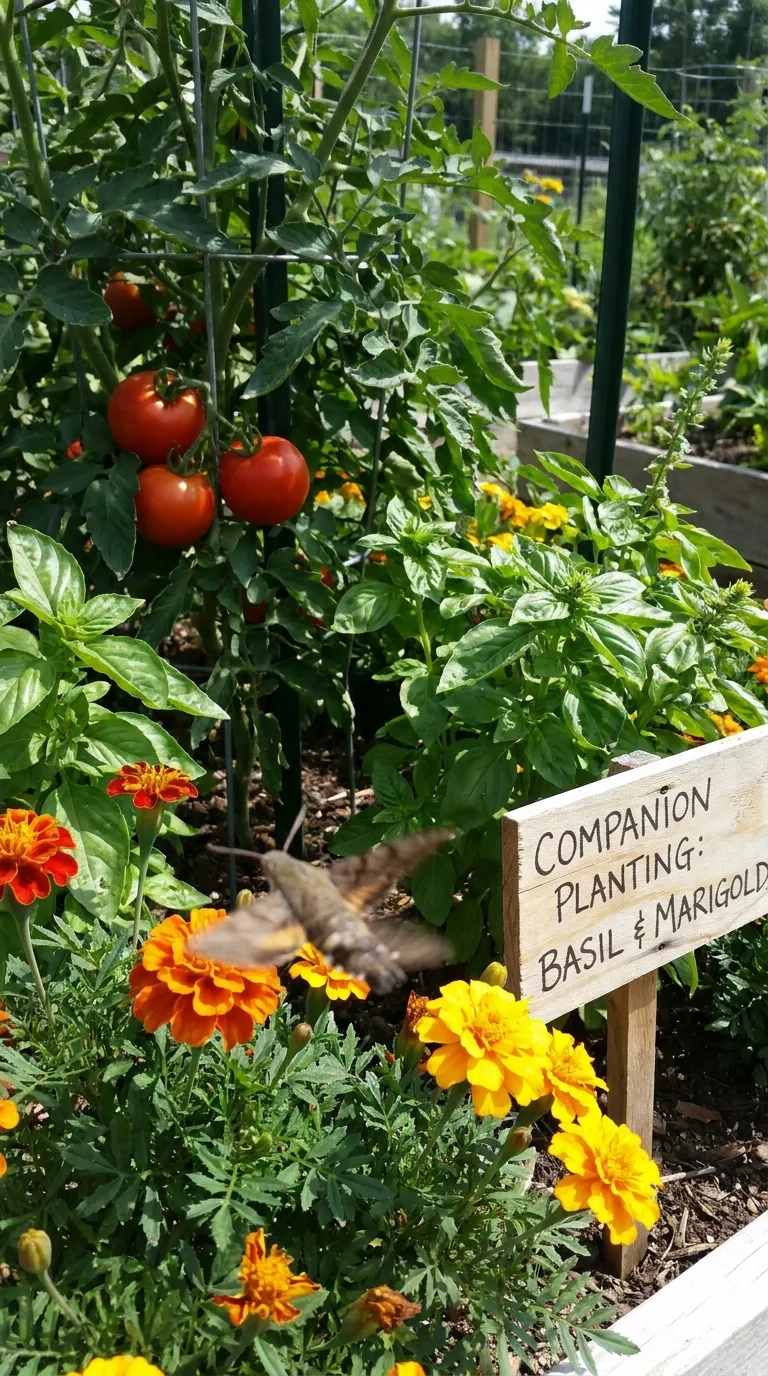
Basil marigold
I handle basil marigold by measuring once, then trusting senses. Pre-moisten mix like a wrung sponge, sow about twice seed thickness deep, label same day, snip weaker at soil level after two true leaves.
Give this step its own Sunday ten minutes. It looks slow the first week, but by week three roots have quietly doubled and leaves thicken. Quiet compounding beats quick fixes every time.
Quick tips for tillage, rotation and companions:
- Do it in morning light when you can see true color.
- Keep tools clean — wipe with alcohol before cuts.
- Check again in 3 days; small corrections beat big rescues.
Extra Tip — Don’t Skip the Second Pass
- Second pass catches hatchlings.
- Check north side where dew lingers.
- Flip leaf, look, breathe, then act.
- Small daily looks beat big weekend rescues.
Frequently Asked Questions
Q: How do I find tomato hornworms hiding on plants?
A: Hornworms hide by being bright green with diagonal stripes that match stems, so look for black barrel-shaped droppings on leaves and stripped leaflets overnight. Search at dusk or dawn with a flashlight, checking leaf undersides and stem crotches, and bring UV flashlight after dark — hornworms glow eerily under UV. Once you spot droppings, the worm is usually within 12 inches above.
Q: Can I get rid of hornworms without chemicals?
A: Hand-picking into soapy water is immediate and effective for a home garden, especially when done weekly from midsummer on. Bacillus thuringiensis kurstaki spray on foliage targets young caterpillars while sparing bees when applied at dusk. Welcome parasitic braconid wasps — leave white-cocoon-covered worms alone because those cocoons hatch guardians that hunt future hornworms.
Q: Will companion plants stop hornworms?
A: Companion plants like basil, marigold and dill help indirectly by attracting parasitic wasps and by making tomatoes harder to find by scent, but they will not stop a determined moth alone. Use companions as part of a layered defense with weekly scouting, tilling spent soil lightly in fall to expose pupae, and rotating nightshades so pupae do not emerge under last year’s plants.
Related Articles
- How to Grow Tomatoes
- Tomato Companion Plants
- Best Fertilizer for Tomatoes
- How to Prune Tomato Plants
- Tomato Leaves Turning Yellow
- When to Harvest Potatoes
Sources & References
- University of Minnesota Extension — https://extension.umn.edu/yard-and-garden/vegetables
- Cornell Vegetables — https://www.vegetables.cornell.edu/
- Iowa State University Extension — https://hortnews.extension.iastate.edu/
- NC State Extension — https://content.ces.ncsu.edu/
- University of California IPM — https://ipm.ucanr.edu/