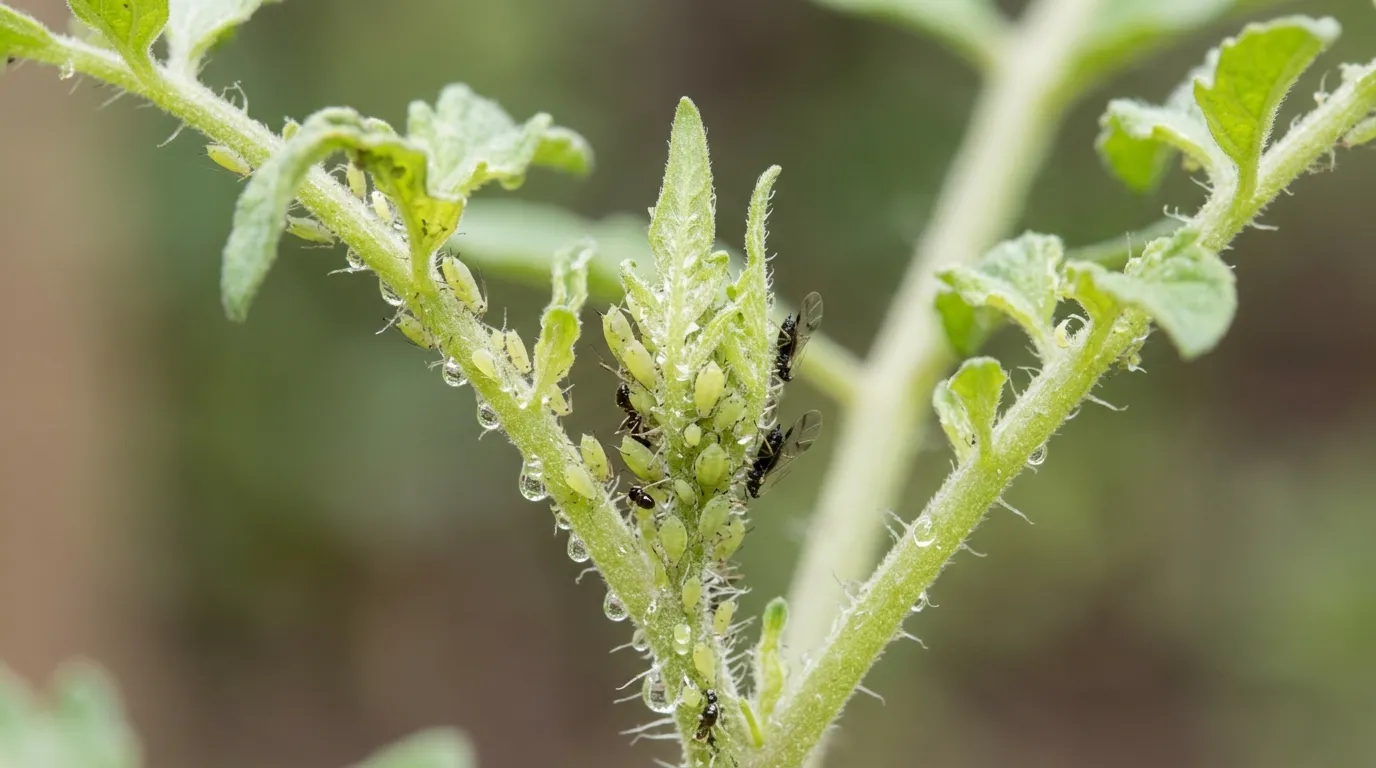
I learned to aphids vegetable plants the way most of us do — with a bright March optimism and a tray that soon leaned like shy toddlers toward a dim window. The second spring a neighbor named Marta showed me how to hold my palm two inches above the leaves and ask, is this light close enough to feel? That one gesture changed everything. This guide is that habit, stretched into a calm, step-by-step plan you can start tonight with what you have, plus the few tiny upgrades that actually matter. The early details matter more than any later rescue.
Think of this as a walk through the bed together — sensorial, practical, a little messy, and very doable.
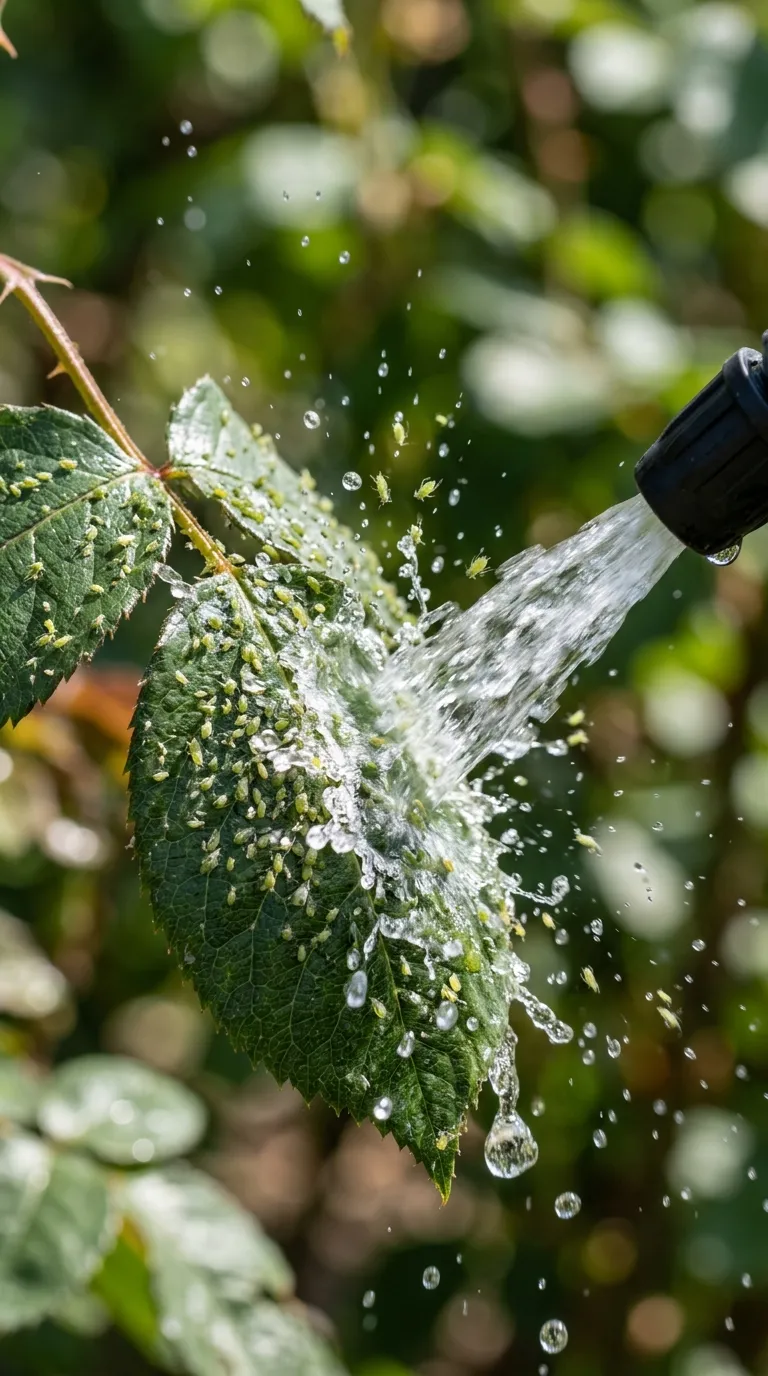
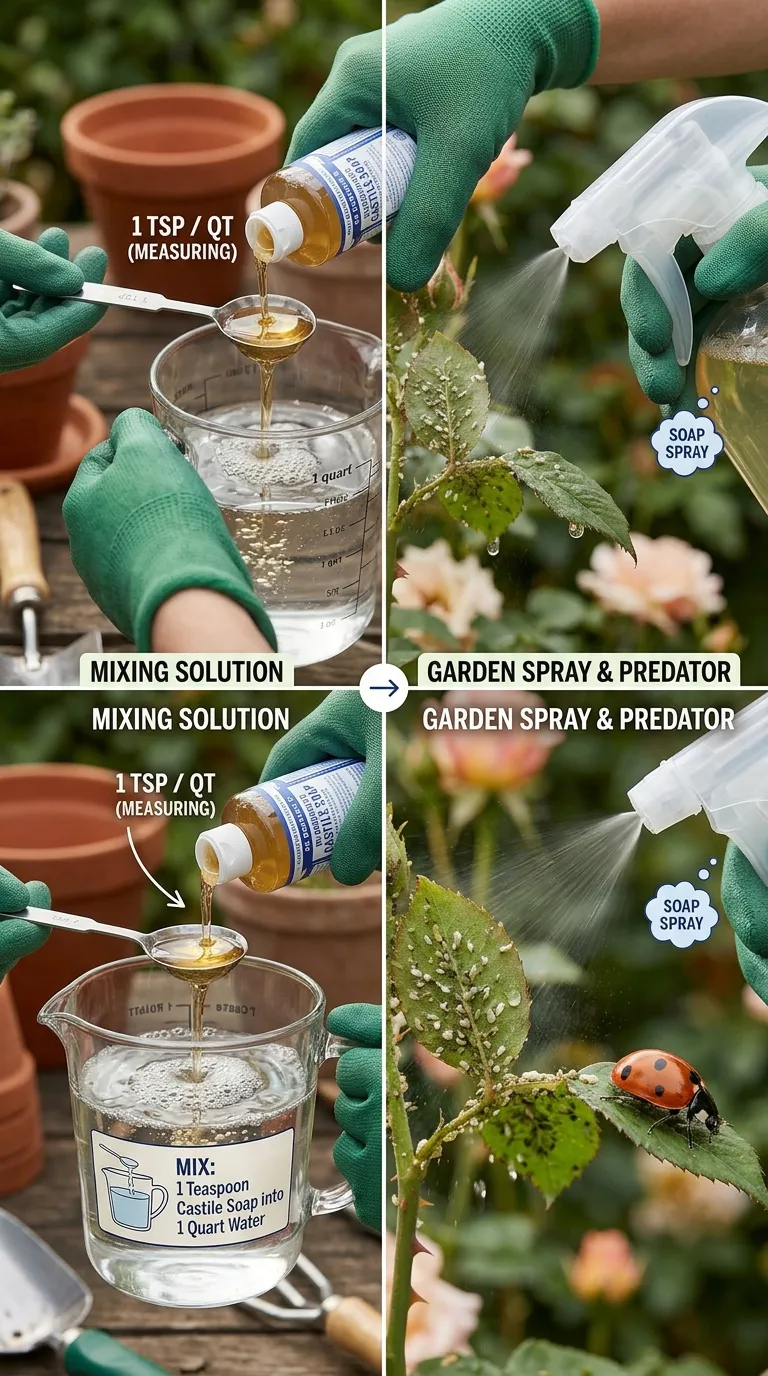
Quick Answer: Blast aphids off with a strong water jet, then spray insecticidal soap 1 percent thoroughly on undersides every 3 to 4 days for two weeks, prunes worst tips into soapy water, and invite ladybugs and lacewings with dill and fennel nearby. Neem oil 0.5 to 1 percent at dusk smothers remaining colonies, but water plus soap does 80 percent of the work without chemicals. Act early before curling leaves shelter colonies.
At a Glance
| Method | How It Works | When |
|---|---|---|
| Strong water jet | Blasts colonies off | Midday, every 3–4 days |
| Insecticidal soap 1% | Suffocates on contact | Evening, undersides |
| Neem 0.5–1% | Disrupts feeding | Evening, 7-day repeat |
| Beneficials | Ladybugs eat 50+ daily | Season-long habitat |
| Ants control | Stops aphid farming | With soap/water |
Meet the Aphid — Why Numbers Explode
That meet the aphid — why numbers explode moment is where the garden quietly decides. I used to rush it, thinking plants wouldn’t notice. They did — tighter roots and that deep satiny green showed up only when I slowed down and treated this step like a ten-minute ritual with tea warm beside me. Do you hear how soil sounds when it’s at the right dampness? Like a wrung sponge, not a puddle.
The principle is simple: steady is better than splashy. Even moisture, gentle air, bright light at the right distance. My notebook proves it — one line a day, weather and leaf color, and patterns pop in two weeks. Your hands will learn faster than any calendar.
Birth without mating
I handle birth without mating by measuring once, then trusting senses. Pre-moisten mix like a wrung sponge, sow about twice seed thickness deep, label same day, snip weaker at soil level after two true leaves.
Honeydew clue
I handle honeydew clue by measuring once, then trusting senses. Pre-moisten mix like a wrung sponge, sow about twice seed thickness deep, label same day, snip weaker at soil level after two true leaves.
Give this step its own Sunday ten minutes. It looks slow the first week, but by week three roots have quietly doubled and leaves thicken. Quiet compounding beats quick fixes every time.
Quick tips for meet the aphid — why numbers explode:
- Do it in morning light when you can see true color.
- Keep tools clean — wipe with alcohol before cuts.
- Check again in 3 days; small corrections beat big rescues.
9 Easy Controls Ranked
That 9 easy controls ranked moment is where the garden quietly decides. I used to rush it, thinking plants wouldn’t notice. They did — tighter roots and that deep satiny green showed up only when I slowed down and treated this step like a ten-minute ritual with tea warm beside me. Do you hear how soil sounds when it’s at the right dampness? Like a wrung sponge, not a puddle.
The principle is simple: steady is better than splashy. Even moisture, gentle air, bright light at the right distance. My notebook proves it — one line a day, weather and leaf color, and patterns pop in two weeks. Your hands will learn faster than any calendar.
Water jet
I handle water jet by measuring once, then trusting senses. Pre-moisten mix like a wrung sponge, sow about twice seed thickness deep, label same day, snip weaker at soil level after two true leaves.
Prune tips
I handle prune tips by measuring once, then trusting senses. Pre-moisten mix like a wrung sponge, sow about twice seed thickness deep, label same day, snip weaker at soil level after two true leaves.
Soap 1%
I handle soap 1% by measuring once, then trusting senses. Pre-moisten mix like a wrung sponge, sow about twice seed thickness deep, label same day, snip weaker at soil level after two true leaves.
Neem
I handle neem by measuring once, then trusting senses. Pre-moisten mix like a wrung sponge, sow about twice seed thickness deep, label same day, snip weaker at soil level after two true leaves.
Beneficials
I handle beneficials by measuring once, then trusting senses. Pre-moisten mix like a wrung sponge, sow about twice seed thickness deep, label same day, snip weaker at soil level after two true leaves.
Ants
I handle ants by measuring once, then trusting senses. Pre-moisten mix like a wrung sponge, sow about twice seed thickness deep, label same day, snip weaker at soil level after two true leaves.
Companions
I handle companions by measuring once, then trusting senses. Pre-moisten mix like a wrung sponge, sow about twice seed thickness deep, label same day, snip weaker at soil level after two true leaves.
Reflective mulch
I handle reflective mulch by measuring once, then trusting senses. Pre-moisten mix like a wrung sponge, sow about twice seed thickness deep, label same day, snip weaker at soil level after two true leaves.
Row cover
I handle row cover by measuring once, then trusting senses. Pre-moisten mix like a wrung sponge, sow about twice seed thickness deep, label same day, snip weaker at soil level after two true leaves.
Give this step its own Sunday ten minutes. It looks slow the first week, but by week three roots have quietly doubled and leaves thicken. Quiet compounding beats quick fixes every time.
Quick tips for 9 easy controls ranked:
- Do it in morning light when you can see true color.
- Keep tools clean — wipe with alcohol before cuts.
- Check again in 3 days; small corrections beat big rescues.
Soap and Neem — Mix and Spray Right
That soap and neem — mix and spray right moment is where the garden quietly decides. I used to rush it, thinking plants wouldn’t notice. They did — tighter roots and that deep satiny green showed up only when I slowed down and treated this step like a ten-minute ritual with tea warm beside me. Do you hear how soil sounds when it’s at the right dampness? Like a wrung sponge, not a puddle.
The principle is simple: steady is better than splashy. Even moisture, gentle air, bright light at the right distance. My notebook proves it — one line a day, weather and leaf color, and patterns pop in two weeks. Your hands will learn faster than any calendar.
Recipe
I handle recipe by measuring once, then trusting senses. Pre-moisten mix like a wrung sponge, sow about twice seed thickness deep, label same day, snip weaker at soil level after two true leaves.
Evening timing
I handle evening timing by measuring once, then trusting senses. Pre-moisten mix like a wrung sponge, sow about twice seed thickness deep, label same day, snip weaker at soil level after two true leaves.
Give this step its own Sunday ten minutes. It looks slow the first week, but by week three roots have quietly doubled and leaves thicken. Quiet compounding beats quick fixes every time.
Quick tips for soap and neem — mix and spray right:
- Do it in morning light when you can see true color.
- Keep tools clean — wipe with alcohol before cuts.
- Check again in 3 days; small corrections beat big rescues.
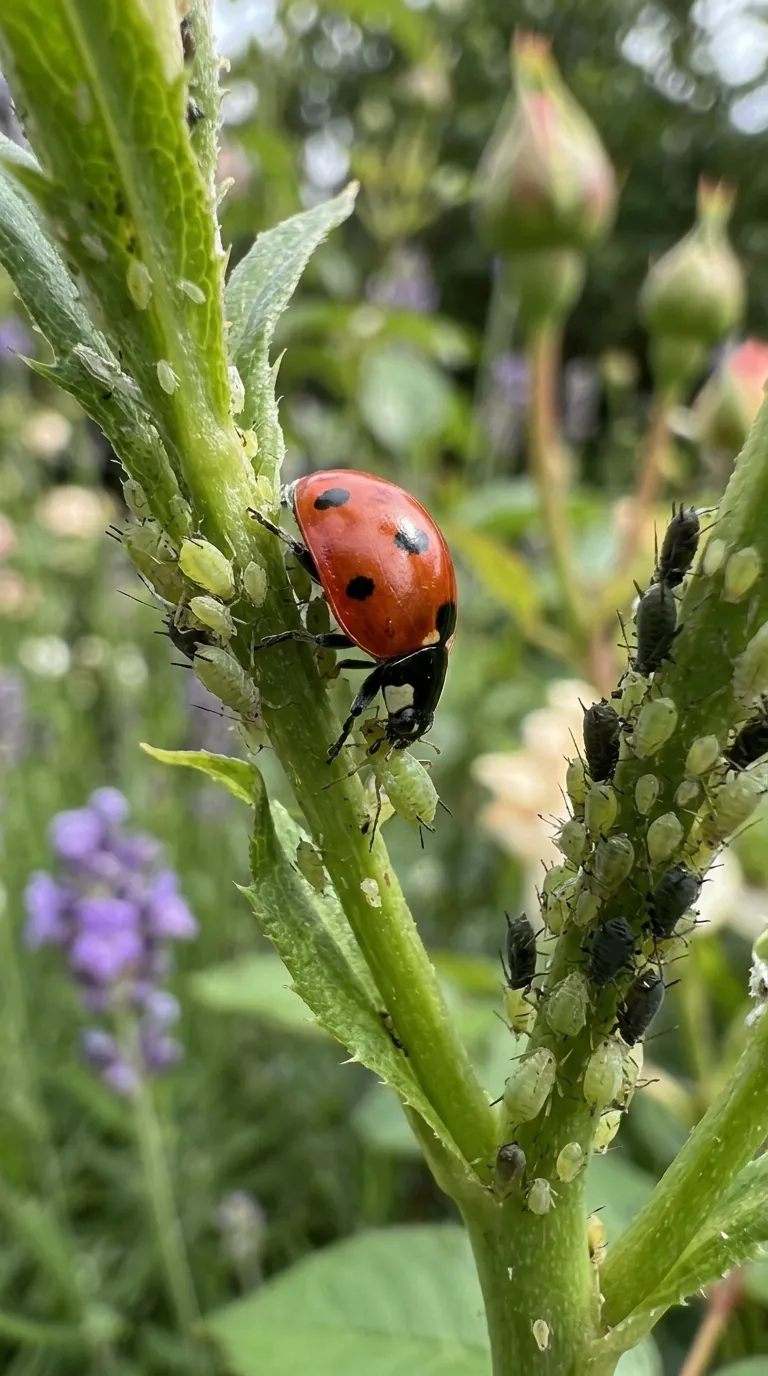
Beneficial Insects You Want to Keep
That beneficial insects you want to keep moment is where the garden quietly decides. I used to rush it, thinking plants wouldn’t notice. They did — tighter roots and that deep satiny green showed up only when I slowed down and treated this step like a ten-minute ritual with tea warm beside me. Do you hear how soil sounds when it’s at the right dampness? Like a wrung sponge, not a puddle.
The principle is simple: steady is better than splashy. Even moisture, gentle air, bright light at the right distance. My notebook proves it — one line a day, weather and leaf color, and patterns pop in two weeks. Your hands will learn faster than any calendar.
Ladybug larvae
I handle ladybug larvae by measuring once, then trusting senses. Pre-moisten mix like a wrung sponge, sow about twice seed thickness deep, label same day, snip weaker at soil level after two true leaves.
Lacewing eggs
I handle lacewing eggs by measuring once, then trusting senses. Pre-moisten mix like a wrung sponge, sow about twice seed thickness deep, label same day, snip weaker at soil level after two true leaves.
Hoverfly
I handle hoverfly by measuring once, then trusting senses. Pre-moisten mix like a wrung sponge, sow about twice seed thickness deep, label same day, snip weaker at soil level after two true leaves.
Give this step its own Sunday ten minutes. It looks slow the first week, but by week three roots have quietly doubled and leaves thicken. Quiet compounding beats quick fixes every time.
Quick tips for beneficial insects you want to keep:
- Do it in morning light when you can see true color.
- Keep tools clean — wipe with alcohol before cuts.
- Check again in 3 days; small corrections beat big rescues.
Prevention That Beats Spray
That prevention that beats spray moment is where the garden quietly decides. I used to rush it, thinking plants wouldn’t notice. They did — tighter roots and that deep satiny green showed up only when I slowed down and treated this step like a ten-minute ritual with tea warm beside me. Do you hear how soil sounds when it’s at the right dampness? Like a wrung sponge, not a puddle.
The principle is simple: steady is better than splashy. Even moisture, gentle air, bright light at the right distance. My notebook proves it — one line a day, weather and leaf color, and patterns pop in two weeks. Your hands will learn faster than any calendar.
Balanced feed
I handle balanced feed by measuring once, then trusting senses. Pre-moisten mix like a wrung sponge, sow about twice seed thickness deep, label same day, snip weaker at soil level after two true leaves.
Weekly flip
I handle weekly flip by measuring once, then trusting senses. Pre-moisten mix like a wrung sponge, sow about twice seed thickness deep, label same day, snip weaker at soil level after two true leaves.
Give this step its own Sunday ten minutes. It looks slow the first week, but by week three roots have quietly doubled and leaves thicken. Quiet compounding beats quick fixes every time.
Quick tips for prevention that beats spray:
- Do it in morning light when you can see true color.
- Keep tools clean — wipe with alcohol before cuts.
- Check again in 3 days; small corrections beat big rescues.
Expanded Checklist — More Lines Without More Fuss
- Monday: check moisture 2 inches, look undersides.
- Tuesday: deep water if tuna can <1 inch.
- Wednesday: fan seedlings 30 min, rotate tray.
- Thursday: scout pests, remove one bad leaf.
- Friday: second deep water if hot or sandy.
- Saturday: harvest what blushes, note in book.
- Sunday: rest, plan next sowing, enjoy tea.
- Every 2 weeks: succession sow lettuce, carrots, beans.
- Monthly: side-dress light, refresh mulch, test pH.
- At bloom: switch to low N high PK, shake at midday.
- At fruit swell: keep even, avoid flood-drought swings.
- After storm: check drainage, pull mulch back 2 inches.
- Before frost: pinch tips, stop feed, gather green fruit.
- Fall: add 2–3 inch compost, clean stakes 10% bleach.
- Winter: review notes, order seed, test old germination.
- Spring: warm bed 7 days with plastic before planting.
Frequently Asked Questions
Q: How do I get rid of aphids without harming edible vegetables?
A: Start with a strong jet of water at midday to blast colonies off leaf undersides, then follow with insecticidal soap at 1 percent applied to undersides in cool evening hours. Repeat water plus soap every 3 to 4 days for two weeks to catch newborns. Invite ladybugs, lacewings and hoverflies by planting dill, fennel and marigolds, and prune only the most infested tips into soapy water.
Q: Will aphids kill my vegetable plants?
A: Aphids rarely kill established vegetables but they stunt growth, transmit viruses and coat leaves with sticky honeydew that grows sooty mold. Seedlings and new growth suffer most because aphids inject saliva while feeding. Act early when you spot curling leaves or clusters along stems; a week of neglect turns a small colony into hundreds because females give birth without mating during warm weather.
Q: Do ants make aphid infestations worse?
A: Ants farm aphids for honeydew, protecting them from predators and moving them to fresh growth. If ants stream up stems, wash aphids off first, then wrap stems with sticky bands or apply a boric dough away from edibles for ants. Reducing ant traffic lets lady beetle larvae and other beneficials actually reach and clean up the aphids.
Q: Can I prevent aphids from returning next season?
A: Prevention is easier than cure. Grow vigorous plants with balanced feeding and even moisture, mulch to keep stress low, interplant strong-scent companions like basil and marigold, and clean up spent brassicas where aphids overwinter. Scout weekly by flipping three leaves per plant from spring on, and order or attract beneficials before numbers explode rather than after.
Related Articles
- When to Plant Vegetables: A Month-by-Month Guide
- How Often to Water Vegetables
- Best Soil for Vegetable Gardens
- Companion Planting Guide
- Vegetable Garden Pests: How to Identify and Control
- How to Test Soil pH
Sources & References
- University of Minnesota Extension — https://extension.umn.edu/yard-and-garden/vegetables
- Cornell Vegetables — https://www.vegetables.cornell.edu/
- Iowa State University Extension — https://hortnews.extension.iastate.edu/
- NC State Extension — https://content.ces.ncsu.edu/
- University of California IPM — https://ipm.ucanr.edu/