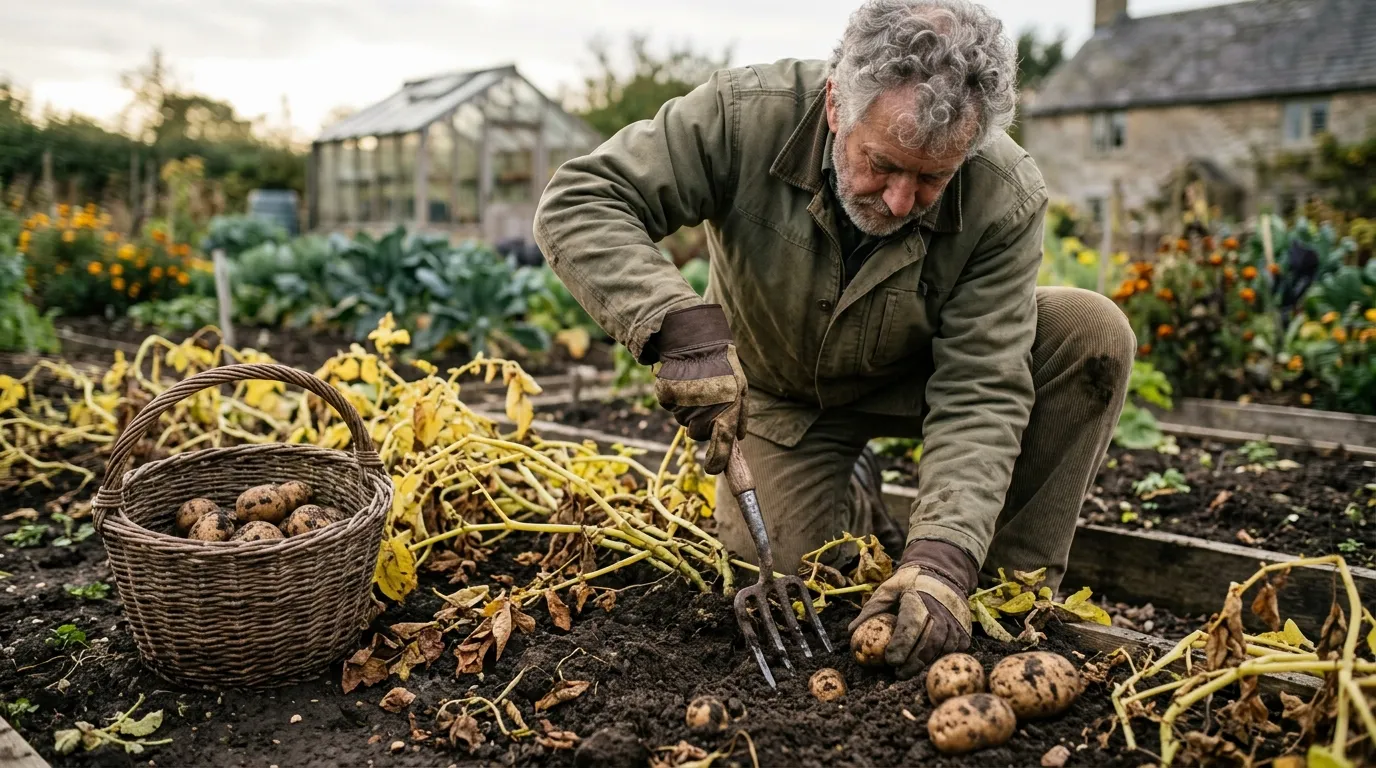
There is a particular pleasure in harvesting potatoes — that blind, hopeful digging with your hands, soil cool against your wrists, and suddenly the fork turns up a nest of them, pink or gold, still clinging to the root like treasure. No other vegetable hides its abundance quite like this. But that hidden habit is also what makes timing tricky. Potatoes do not blush like tomatoes or swell visibly like zucchini. They tell you they are ready with quieter signs: flowers that fade, vines that yellow, skins that no longer slip under your thumb.
Learn to read those signs once and you will never anxiously dig too early again, nor leave a perfect crop to rot in wet October soil. There are really only two harvests to understand — new potatoes for eating now, and mature storage potatoes for eating all winter — and everything, from when you cut the vines to how you cure, flows from which one you want. These 7 signs give you the full picture.
Quick Answer: Harvest new potatoes 70 to 80 days after planting when plants flower and then flowers fade and tubers are egg-sized — skins will be paper-thin and will rub off easily; eat these within 2 weeks. Harvest storage potatoes 90 to 120 days after planting when vines have yellowed, withered, and died back; leave tubers in the ground 10 to 14 days after vine death so skins can set (they should not rub off with thumb pressure), then dig on a dry day, let dry 1 hour in shade, brush off soil — do not wash — and cure 10 to 14 days at 55 to 65°F in dark, humid, airy conditions before storing at 35 to 40°F in the dark in breathable sacks. New potatoes = green vines + thin skins. Storage potatoes = dead vines + set skins. The 7 signs below tell you which you have.
At a Glance
| Sign # | Sign | What Ready Looks Like | Days | Skin Test |
|---|---|---|---|---|
| 1 | Flowers fade | Blossoms drop, plant still green | 70–80 | Skins rub off — new potato |
| 2 | Vine yellows | Lower leaves yellow, top still green | 80–90 | Transition — test edge dig |
| 3 | Vine dies | Whole vine brown, collapsed | 90–120 | Wait 10–14 days |
| 4 | Skin set | Thumb rub doesn’t slip | 10–14 days after death | Ready for storage |
| 5 | Tuber size | Egg to fist, variety dependent | Varies | Dig test hill |
| 6 | Soil dryish | Crumbly, not muddy | Harvest window | Dry 2–3 days after rain |
| 7 | Weather forecast | Rain/frost coming? | Decision | Dig sooner if wet cold coming |
The 7 Signs They’re Ready — Read in Order
Sign 1: Flowers Fade — New Potato Signal
Most potato varieties flower about 60 to 70 days after planting — small white or lavender blossoms that are easy to miss if you are not looking. When those blossoms fade and start to drop, new potatoes are forming just below, about egg-sized. The vine itself will still be vigorous and green. That contrast — faded flowers + green vine + small but shapable tubers — is your cue. Gently dig at the edge of one hill with your hands, do not yank the vine, and feel. If you find smooth, thin-skinned potatoes the size of a golf ball, you have new potatoes ready for that buttery, waxy harvest.
Sign 2: Lower Leaves Yellow — The Transition
About 80 to 90 days after planting for mid-season types, the lower leaves yellow while the top is still green. The plant is beginning to pull energy down. This is the in-between window: you can still dig for new potatoes if you want waxy texture, but if you want storage, wait. Stop watering lightly now; let the plant finish.
Sign 3: Whole Vine Yellows, Then Browns, Then Collapses — Storage Clock Starts
The vine will tell you it is done: lush green fades to yellow, then to brown, then collapses flat. That is not disease — though disease can look similar — it is the plant finishing. When the vine is fully dead, wait. This patience is the difference between potatoes that store until March and potatoes that sprout in November. Leave tubers in the ground 10 to 14 days after vine death so skins thicken and set. This is called skin set, and it is what lets a potato heal over small scuffs and resist rot in storage.
Sign 4: Thumb Test — Skin Does Not Slip
On harvest day, rub the skin of a test tuber with your thumb with moderate pressure. If skin slips or rubs off, it is not set — cover it back and wait 4 to 5 more days. If skin stays firm and does not peel, skins are set and you can dig. I still do this test every time, even after years. Soil temperature, rain, and variety all shift the calendar by a week or two, but skin never lies.
Sign 5: Tuber Size — Egg vs Fist
New potatoes are egg to golf ball, thin skins, waxy. Storage potatoes are fist-sized or larger, thick skins. Test-dig one hill at the edge — not the center — and count. If most are marble-sized, wait. If egg-sized and you want new potatoes, they’re ready. If fist-sized with set skins, storage is ready. Size alone doesn’t tell you without vine and skin, but it confirms.
Sign 6: Soil Is Dryish and Crumbly — Not Muddy
Dig on a dry day, after soil has dried slightly. Wet soil clings, skins slip, and you invite rot. If recent rain has soaked the bed, wait 2 to 3 dry days. Morning is ideal, so tubers are not sunbathing at noon. Barely moist and crumbly is perfect; slick mud is not.
Sign 7: Forecast — Rain or Frost Coming?
If the forecast is a week of cold rain after vine death, treat it as your signal to dig within days, not weeks — slightly less-set skins store better than rotted potatoes. Sweet potatoes, often harvested alongside, must be dug before soil drops below 55°F, but true potatoes are more forgiving of cool. Still, in a wet fall, sooner is better. In a dry warm fall, you have a longer window.
New vs Storage Harvest: Different Goals, Different Handling
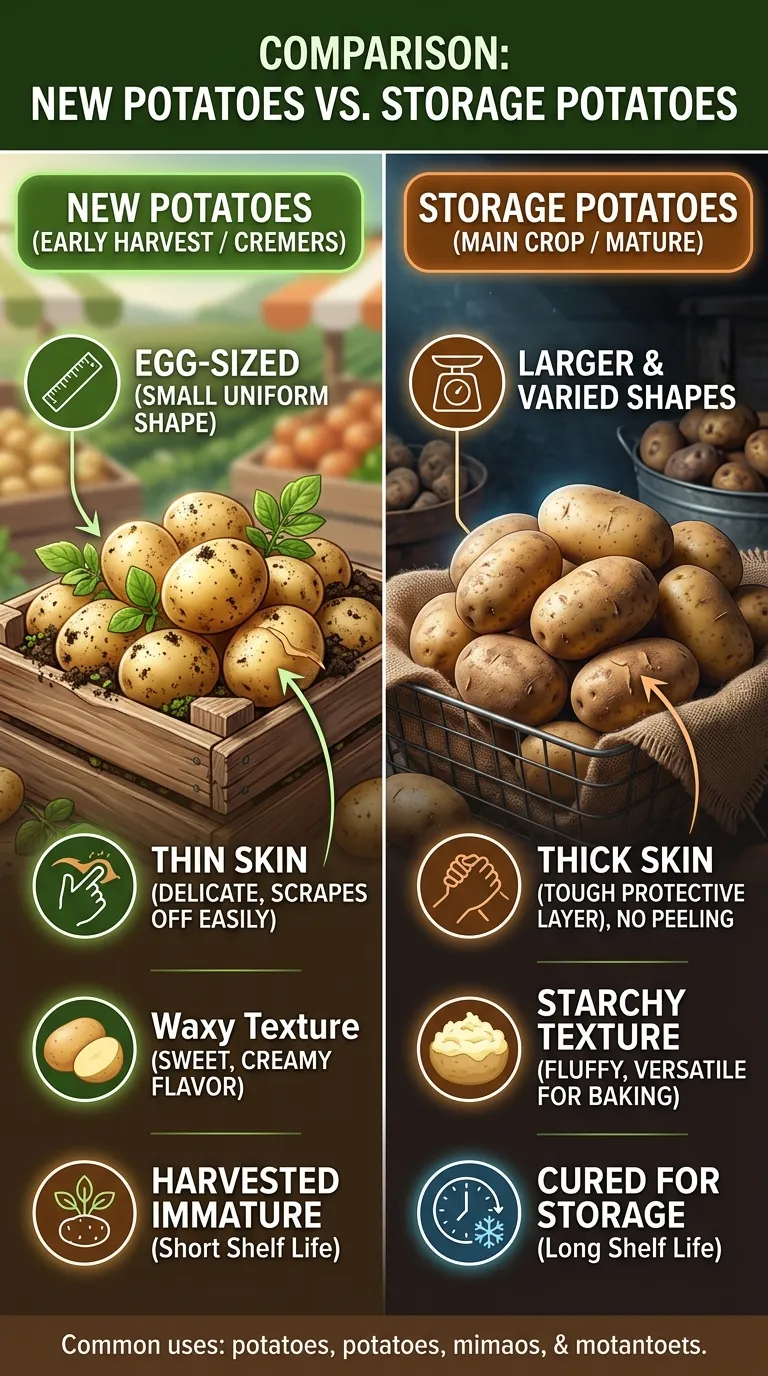
These are not just different times — they are different potatoes in texture and purpose.
New Potatoes: The Tender Harvest
Think of new potatoes as the garden’s early gift. Thin skins, waxy flesh that holds together when boiled, a creamy sweetness that store potatoes lose. Harvest while vines are still green for that texture. No curing needed — in fact, curing would toughen what makes them special.
How to dig: Choose a dryish day, slide your hands or a fork 6 inches away from the stem so you do not spear them, and lift gently. Brush off loose soil and bring them into the kitchen. Eat within a week or two, refrigerated is actually okay for new potatoes short-term, though cool and dark is still better. They will not store; their skins are too thin.
My favorite garden lunch: new potatoes boiled until just tender, tossed still warm with salt, butter, dill, and a squeeze of lemon while the next hill waits in the soil. You only need one plant for a meal.
Storage Potatoes: The Winter Keepers
Storage potatoes are all about thickness — thick skins, starchy flesh, the ability to sit in the dark for months. Russets, Yukon Golds grown to maturity, Kennebecs, Red Pontiacs — when grown to full vine death, they develop that papery skin that protects them.
The crucial step most new gardeners skip: cut the vines 2 weeks before digging. For storage potatoes, clip or mow vines down to 2 inches once they have yellowed or died. Leave the tubers undisturbed in the soil for 10 to 14 days. That waiting period toughens skins remarkably; small cuts and scuffs skin over and the potato becomes a much better keeper, extending storage by months. For new potatoes, skip this entirely and dig while vines are green and proud.
Then dig carefully. A garden fork is kinder than a shovel. Start 6 to 8 inches out from where the stem was, lever gently, and sift with hands. Work across the hill, not down through it. Every cut tuber matters — a sliced potato will never store; set it aside to eat first.
Digging & Curing: The Two Weeks That Decide Winter
How you handle potatoes in the first hour after digging determines whether they keep until spring or sprout by December. It is the most hands-on and sensory part.
1. Dig on a dry day, after soil has dried slightly. Wet soil clings, skins slip, and you invite rot. If recent rain has soaked the bed, wait 2 to 3 dry days. Morning is ideal, so tubers are not sunbathing at noon.
2. Let them dry briefly — in shade, not sun. After lifting, leave tubers on the soil surface or on newspaper for about 1 hour in shade and air to let skins dry. Not in direct sun — sun greens them (solanine, bitter and mildly toxic) and can scald. Brush off soil gently with hands after that hour — do not wash, do not scrub. Washing before storage is the fastest way to invite rot. If you must clean, wait until just before cooking.
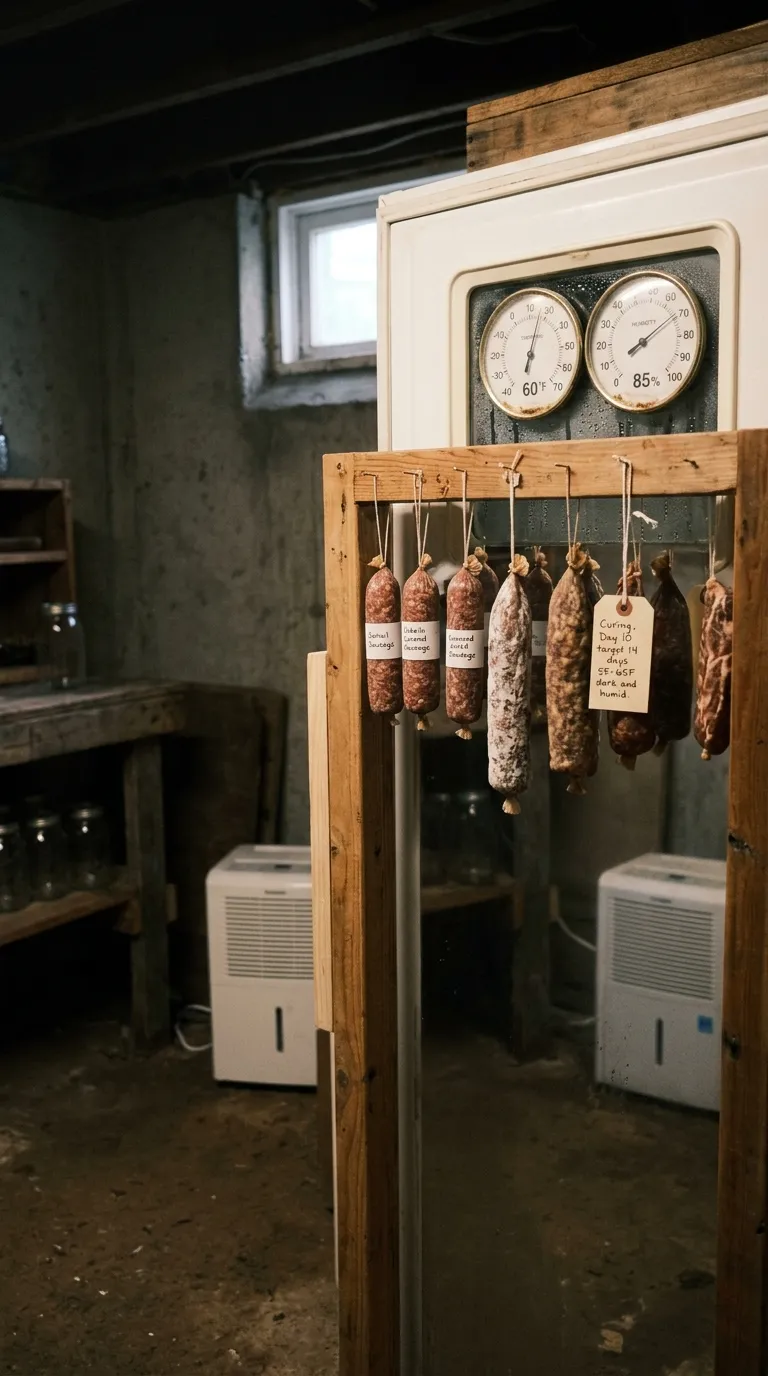
3. Cure storage potatoes 10 to 14 days. Spread them in a single layer in a dark, airy place at 55 to 65°F with humidity around 85 percent. A garage with a sheet draped over crates, a covered porch, or a basement with a fan works. Darkness is essential; light greens them. Humidity heals. Good air movement prevents mold. Small cuts will cork over and skins will toughen. New potatoes skip curing — take them straight to the kitchen.
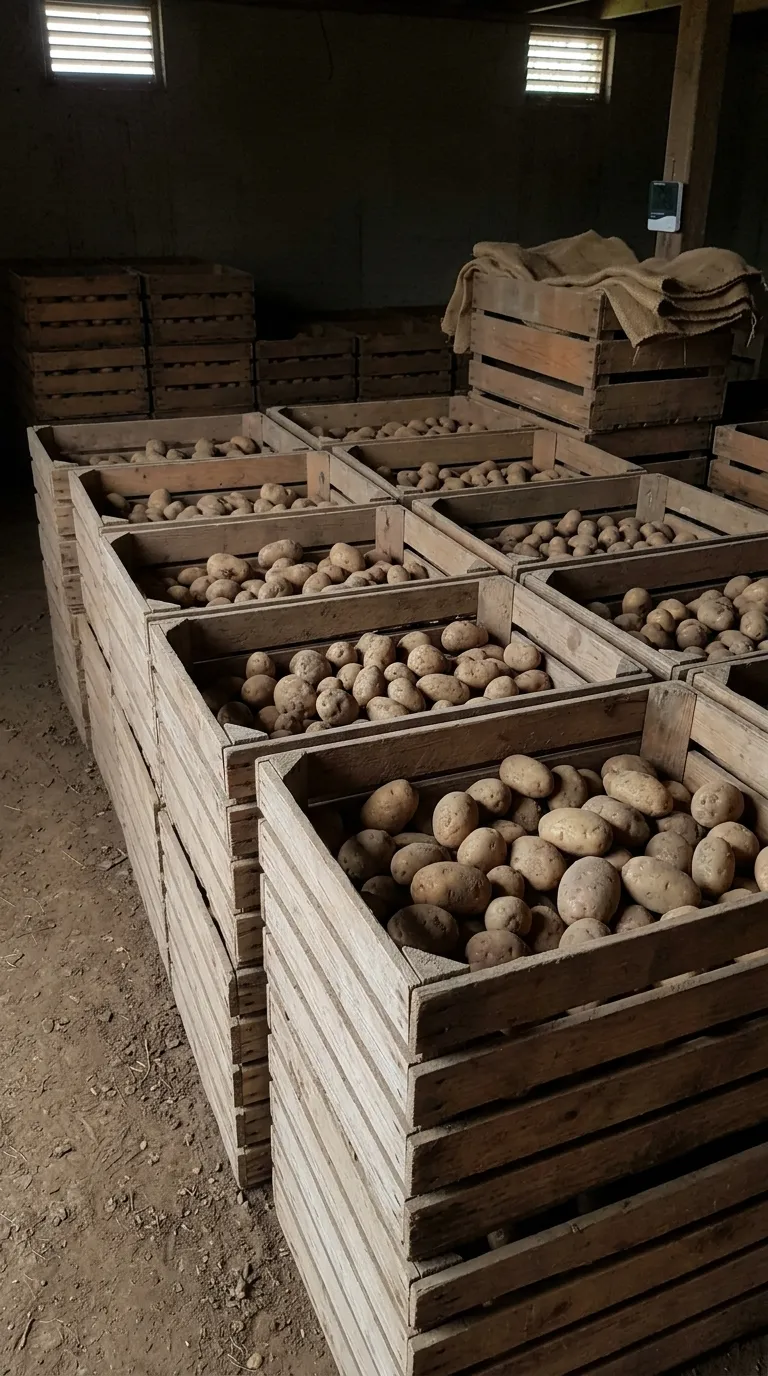
4. Store cured potatoes cold, dark, and breathable. After curing, move to 35 to 40°F in complete darkness — a root cellar, an unheated basement, or paper sacks inside a cool closet. Use burlap, paper, or perforated plastic — never sealed plastic. Check monthly and remove any that soften. Cured potatoes stored this way keep 6 to 10 months. Uncured ones sprout in weeks and sweeten unpleasantly.
For a fuller picture of keeping the rest of the garden too, see harvesting and storing vegetables.
Timing by Potato Type
Early, Mid, and Late Varieties
- Early (new potato) types — 70 to 80 days: ‘Yukon Gold’, ‘Red Norland’, ‘Irish Cobbler’. Plant these if you want fast new potatoes. They naturally stay smaller and mature quickly. Harvest new at flowering fade; if left to full vine death they will be mature but modest in size.
- Mid-season — 80 to 100 days: ‘Kennebec’, ‘Red Pontiac’, ‘Chieftain’. The best all-rounders for new or storage. Watch vines closely at 90 days.
- Late storage — 100 to 120 days: ‘Russet Burbank’, ‘Katahdin’, ‘German Butterball’. These need the full season to size up. Do not be tempted to dig before vines die — you will lose both size and keepability.
Sweet potatoes note: Though not true potatoes, they are often grown alongside. Harvest before first frost when leaves yellow and roots are sizable, but while soil is still above 60°F. Cure differently — warm and humid at 80 to 85°F for 7 to 10 days — then store at 55 to 60°F (not colder). If your soil is already cool and damp, dig sweet potatoes promptly; they sulk in cold soil.
Seasonal Calendar for Potatoes
| Timing | Sign / Task | What to Do |
|---|---|---|
| Planting + 60 days | Plants bushy, early flowers appearing | Do not dig yet; hill to keep tubers covered |
| Planting + 70–80 days | Flowers fading, vine still green | Test dig at edge for new potatoes, golf ball+ |
| Planting + 80–90 days | Vines starting to yellow, lower leaves browning | Stop watering lightly; decide new vs storage |
| Vine yellows/browns | Vine collapse beginning | For storage: cut vines to 2“, wait 10–14 days |
| 10–14 days after vine death | Thumb test: skins firm, soil dryish | Dig dry day, shade-dry 1 hr, brush — don’t wash |
| Next 10–14 days | Curing window | Dark, 55–65°F, humid, airy — single layer |
| After curing | Long storage | Move to 35–40°F dark breathable sacks, check monthly |
Common Mistakes That Cost You the Harvest
1. Washing before storage — the number one keeper-killer. I know it feels tidy to hose them gleaming. But water trapped in eyes and tiny cuts is an invitation to soft rot that can take a whole crate. Brush dry. Wash only before cooking, months later, when you will use them that day.
2. Leaving cut or bruised tubers in storage. One sliced potato can weep and rot and spoil its neighbors in a few weeks. Be ruthless at sorting after curing. Eat damaged ones first — they are still delicious — and store only whole, firm, clean-skinned potatoes.
3. Storing in light. Even a little light turns potatoes green and bitter (solanine). That is not just color; it is chemistry. Keep cured potatoes in complete darkness — closed paper bags inside a closet counts if you lack a cellar.
4. Harvesting when soil is wet. Skins slip, tubers bruise, and you carry half the bed with you as mud. Wait for soil to be barely moist and crumbly. If you must dig in damp conditions, let tubers air-dry longer in shade with a fan before curing.
5. Digging too close to the stem. Spearing the best potatoes with the fork is a rite of passage, but it loses the very tubers you worked for. Start wide — 6 to 8 inches out — and work inward with your hands. Feel before you lever.
6. Leaving mature potatoes in the ground too long in wet fall. A common hope: leave them safe underground until needed. In dry, warm soil a few extra weeks is forgiving. In cool, wet October soil with dead vines, that same delay invites hollow heart, rot, and slug damage. Harvest within 2 weeks of vine death, especially if fall rains have started.
7. Storing at the wrong temperature. Too warm (above 50°F) and potatoes sprout by December. Too cold near freezing and starch turns to sugar unpleasantly; below 32°F they freeze and collapse. That 35 to 40°F dark band is worth chasing with a thermometer.
A Little Story From the Fork
Last October I left one row a week too long after vine death because the weather was beautiful and I was busy with tomatoes. The soil was warm and dry, and I thought I was being clever — underground storage, no effort. When I finally dug, the top of the bed was innocent, the vines long gone. Six inches down, the first forkful came up with three gorgeous ‘Yukon Golds’ and one that was perfectly fine until I turned it over and found a soft, hollowed center and a slug that had moved in like a tenant. The rains had come midweek. That was the row’s way of telling me: we were ready last week; we waited, but not happily.
I dug the rest that afternoon, cured them properly in the garage with a dark sheet and a small fan, and those careful crates did feed us until March. That 10 days of curing is not fussy — it is the difference between a November sprout and a March potato that still fries crisp.
Quick Decision Flow on Harvest Day
Ask in order:
Are vines still green and flowers just faded? → New potato harvest. Dig gently at edge for tonight’s dinner.
Are vines yellow/brown and beginning to collapse? → If you want new potatoes, dig now before skins set. If you want storage, cut vines to 2 inches and wait 10 to 14 days.
Are vines fully dead for 2 weeks and skins firm? → Storage harvest window. Dig on next dry day, cure, then store dark and cold.
Is the forecast a week of cold rain and vines are dead? → Dig now even if 10 days have not passed. Slightly tender skins store better than rotted potatoes.
More Human Notes From the Garden
A garden is not a factory. Carrots sweeten after a light frost because starch turns to sugar as the plant prepares for winter sleep. That cool-night candy happens without you doing anything except leaving the row a touch longer under straw.
Potatoes need darkness like carrots need softness. Hill them twice, 4 to 6 inches, and keep tubers 4 inches under. Green shoulders are sunburned and bitter — hill soil over them when rain washes tops.
Lettuce wants to be cut young. Thirty-day baby leaves picked at 7 a.m. are tender and mild; sixty-day oversized leaves after a hot week are bitter and tough.
Succession is not extra work; it is forgiveness. Sow a pinch every two weeks and the season forgives a bad sowing or a heat wave.
Mulch is the quiet helper. Straw after warm soil for cucumbers and peppers, light straw between carrots after thinning, straw over potatoes after hilling — same idea, different depth.
Water at the base, morning, before 10 a.m. Leaves that wake dry stay healthier four weeks longer than leaves that slept wet.
Taste as you go. A tiny orange carrot eaten standing in the path tells you more than a calendar about whether the row is ready.
Keep one line of notes: date, rain, water, what you harvested. That notebook teaches you more than any schedule.
Harvest with care. Cut cucumbers, don’t yank. Loosen carrots with a fork, then pull. Brush potatoes, don’t wash before storing. Snip lettuce, leave the center to regrow.
Share the surplus. A bowl of mixed lettuce, a handful of tiny carrots pickled with dill, a basket of new potatoes boiled with butter — these are the garden’s conversations with the kitchen.
These habits compound across seasons until the garden feels less like work and more like a rhythm you step into each morning.
More Human Notes From the Garden
A garden is not a factory. Carrots sweeten after a light frost because starch turns to sugar as the plant prepares for winter sleep. That cool-night candy happens without you doing anything except leaving the row a touch longer under straw.
Potatoes need darkness like carrots need softness. Hill them twice, 4 to 6 inches, and keep tubers 4 inches under. Green shoulders are sunburned and bitter — hill soil over them when rain washes tops.
Lettuce wants to be cut young. Thirty-day baby leaves picked at 7 a.m. are tender and mild; sixty-day oversized leaves after a hot week are bitter and tough.
Succession is not extra work; it is forgiveness. Sow a pinch every two weeks and the season forgives a bad sowing or a heat wave.
Mulch is the quiet helper. Straw after warm soil for cucumbers and peppers, light straw between carrots after thinning, straw over potatoes after hilling — same idea, different depth.
Water at the base, morning, before 10 a.m. Leaves that wake dry stay healthier four weeks longer than leaves that slept wet.
Taste as you go. A tiny orange carrot eaten standing in the path tells you more than a calendar about whether the row is ready.
Keep one line of notes: date, rain, water, what you harvested. That notebook teaches you more than any schedule.
Harvest with care. Cut cucumbers, don’t yank. Loosen carrots with a fork, then pull. Brush potatoes, don’t wash before storing. Snip lettuce, leave the center to regrow.
Share the surplus. A bowl of mixed lettuce, a handful of tiny carrots pickled with dill, a basket of new potatoes boiled with butter — these are the garden’s conversations with the kitchen.
These habits compound across seasons until the garden feels less like work and more like a rhythm you step into each morning.
More Human Notes From the Garden
A garden is not a factory. Carrots sweeten after a light frost because starch turns to sugar as the plant prepares for winter sleep. That cool-night candy happens without you doing anything except leaving the row a touch longer under straw.
Potatoes need darkness like carrots need softness. Hill them twice, 4 to 6 inches, and keep tubers 4 inches under. Green shoulders are sunburned and bitter — hill soil over them when rain washes tops.
Lettuce wants to be cut young. Thirty-day baby leaves picked at 7 a.m. are tender and mild; sixty-day oversized leaves after a hot week are bitter and tough.
Succession is not extra work; it is forgiveness. Sow a pinch every two weeks and the season forgives a bad sowing or a heat wave.
Mulch is the quiet helper. Straw after warm soil for cucumbers and peppers, light straw between carrots after thinning, straw over potatoes after hilling — same idea, different depth.
Water at the base, morning, before 10 a.m. Leaves that wake dry stay healthier four weeks longer than leaves that slept wet.
Taste as you go. A tiny orange carrot eaten standing in the path tells you more than a calendar about whether the row is ready.
Keep one line of notes: date, rain, water, what you harvested. That notebook teaches you more than any schedule.
Harvest with care. Cut cucumbers, don’t yank. Loosen carrots with a fork, then pull. Brush potatoes, don’t wash before storing. Snip lettuce, leave the center to regrow.
Share the surplus. A bowl of mixed lettuce, a handful of tiny carrots pickled with dill, a basket of new potatoes boiled with butter — these are the garden’s conversations with the kitchen.
These habits compound across seasons until the garden feels less like work and more like a rhythm you step into each morning.
More Human Notes From the Garden
A garden is not a factory. Carrots sweeten after a light frost because starch turns to sugar as the plant prepares for winter sleep. That cool-night candy happens without you doing anything except leaving the row a touch longer under straw.
Potatoes need darkness like carrots need softness. Hill them twice, 4 to 6 inches, and keep tubers 4 inches under. Green shoulders are sunburned and bitter — hill soil over them when rain washes tops.
Lettuce wants to be cut young. Thirty-day baby leaves picked at 7 a.m. are tender and mild; sixty-day oversized leaves after a hot week are bitter and tough.
Succession is not extra work; it is forgiveness. Sow a pinch every two weeks and the season forgives a bad sowing or a heat wave.
Mulch is the quiet helper. Straw after warm soil for cucumbers and peppers, light straw between carrots after thinning, straw over potatoes after hilling — same idea, different depth.
Water at the base, morning, before 10 a.m. Leaves that wake dry stay healthier four weeks longer than leaves that slept wet.
Taste as you go. A tiny orange carrot eaten standing in the path tells you more than a calendar about whether the row is ready.
Keep one line of notes: date, rain, water, what you harvested. That notebook teaches you more than any schedule.
Harvest with care. Cut cucumbers, don’t yank. Loosen carrots with a fork, then pull. Brush potatoes, don’t wash before storing. Snip lettuce, leave the center to regrow.
Share the surplus. A bowl of mixed lettuce, a handful of tiny carrots pickled with dill, a basket of new potatoes boiled with butter — these are the garden’s conversations with the kitchen.
These habits compound across seasons until the garden feels less like work and more like a rhythm you step into each morning.
Small Variations That Matter
Dappled afternoon shade for lettuce keeps it sweet two weeks longer than blazing sun.
Chantenay carrots in clay outgrow Imperator in clay every time — match variety to soil, not dream.
Yukon Gold new potatoes at 75 days eat better than late Russets dug early for storage.
Potato scab loves high pH — keep 5.0 to 6.0 and rotate three years.
Carrot rust fly finds scent — thin at dusk, cover with row fabric after, and the row stays cleaner.
Potato beetles patrol at 7 a.m. — hand-pick then with a jar of soapy water.
Lettuce tipburn is water swing, not lack of feed — even 1 inch weekly prevents brown edges.
Sow lettuce barely covered — light helps it wake.
Hill potatoes twice — darkness is flavor.
Thin carrots twice — space is size.
What I Keep on the Shed Wall
A handwritten card that says: warm soil, direct sow, 12 inches, thin twice to 2, even water, pick before yellow. For potatoes: 4 to 6 deep, hill twice, 1 to 1.5 even, dead vine wait 14 days, cure dark. For lettuce: barely cover, 4 inches, cool moist, morning cut, shade above 75. That card is the whole season distilled into a sentence you can read with muddy hands.
Tape your own card this weekend. The plants will teach the rest.
What I Keep on the Shed Wall
A handwritten card that says: warm soil, direct sow, 12 inches, thin twice to 2, even water, pick before yellow. For potatoes: 4 to 6 deep, hill twice, 1 to 1.5 even, dead vine wait 14 days, cure dark. For lettuce: barely cover, 4 inches, cool moist, morning cut, shade above 75. That card is the whole season distilled into a sentence you can read with muddy hands.
Tape your own card this weekend. The plants will teach the rest.
Flowers fade, vine still green — new potatoes are waxy and ready at egg size. Lower leaves yellow at 80 days — you are in transition; decide new vs storage. Whole vine collapsed brown — the clock for skin set has started. Thumb test never lies: if skin slips, wait four days and test again. Test-dig at the edge, not the center — the center holds your best keepers. Dryish crumbly soil lifts tuber clean; mud clings and bruises. Morning digging lets skins dry in shade, not sun that greens them. Brush, don’t wash — water in eyes invites rot in storage. One hour in shade is enough; sun scalds and greens in an hour. Cure only mature storage potatoes; new potatoes go straight to the kitchen. Dark, humid, airy at 55 to 65°F — that cures small cuts in 14 days.
Frequently Asked Questions
Q: How do you know when potatoes are ready to harvest?
A: Watch the vine first, then test the skin. For new potatoes, harvest about 70 days after planting when flowers fade and tubers are egg-sized while vines are still green — skins will be whisper-thin and will rub off easily, which is exactly right for waxy new potatoes. For mature storage potatoes, wait 90 to 120 days until vines yellow, wither, and die completely, then leave tubers 10 to 14 days to let skins set. A gentle thumb rub tells the truth: if skin does not slip, they are mature and ready to cure. When in doubt, test-dig one plant at the edge rather than pulling the vine.
Q: Can you leave potatoes in the ground too long?
A: Yes, and wet soil makes it costly. Once vines have died, the tubers are no longer growing and are simply sitting, waiting to be dug. Leaving mature potatoes in cool, wet October soil beyond 2 weeks after vine death invites soft rot, hollow heart, and slug damage. If soil is warm and dry, a few extra weeks is more forgiving, but in a wet fall dig sooner rather than later. If a stretch of cold rain is forecast right after vine death, treat it as your signal to dig within days, not weeks — slightly less-set skins are a far better problem than rot.
Q: Should you cut potato vines before harvesting?
A: For storage potatoes, yes — and the timing matters. Once vines have yellowed or died, cut or mow them down to about 2 inches above soil level and leave tubers undisturbed for 10 to 14 days. That pause lets skins thicken and scuffs skin over, which is what gives you 6 to 10 months of storage instead of a few weeks. For new potatoes, do the opposite: skip cutting and dig while vines are still green and flowering has just faded. New potatoes are valued for their thin, tender skins, and toughening them defeats the purpose.
Q: How do you cure potatoes for storage?
A: Cure only mature, storage potatoes — new potatoes go straight to the kitchen. After digging on a dry day, let tubers air-dry about an hour in shade, brush off soil (do not wash), and spread in a single layer in complete darkness at 55 to 65°F with about 85 percent humidity and good air circulation for 10 to 14 days. A dark garage with a sheet over crates and a small fan is perfect. That humid, airy, dark rest heals small cuts and toughens skins. After curing, move potatoes to 35 to 40°F in breathable paper or burlap sacks, still in darkness, and check monthly.
Related Articles
- How to Grow Potatoes
- How to Grow Potatoes in Containers
- How to Prepare Soil for Planting
- Vegetable Garden Layout
- How Often to Water Vegetables
- Best Soil for Vegetable Gardens
Sources & References
- University of Minnesota Extension - https://extension.umn.edu/vegetables
- Cornell Vegetables - https://www.vegetables.cornell.edu/
- North Carolina State Extension - https://gardening.ces.ncsu.edu/
- Iowa State University Extension - https://hortnews.extension.iastate.edu/
- University of Idaho Potato Extension - https://www.uidaho.edu/cals/potatoes