Earwigs are the midnight snackers of the garden. During the day you will not see them, but at night they come out in force to chew ragged holes in your lettuces, beans, and favorite flowers. They are rarely the worst pest you can have - and they even do useful work eating aphids - but when their numbers explode, they can strip young plants overnight. This guide shows you exactly how to get rid of earwigs naturally, without reaching for chemical sprays.
Quick Answer: To get rid of earwigs, remove their hiding places (mulch, weeds, boards, dense ground cover) so they have nowhere to shelter in the day, and set rolled-up cardboard or newspaper traps at dusk near damaged plants. Shake the trapped earwigs into soapy water each morning, and repeat nightly for one to two weeks to break the population. Protect precious plants with a band of dry diatomaceous earth or petroleum-jelly-coated stems.
What Are Earwigs and Why Are They in Your Garden?
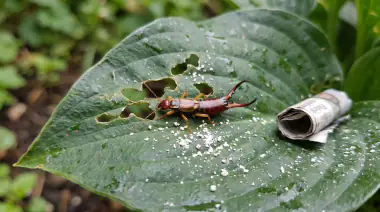
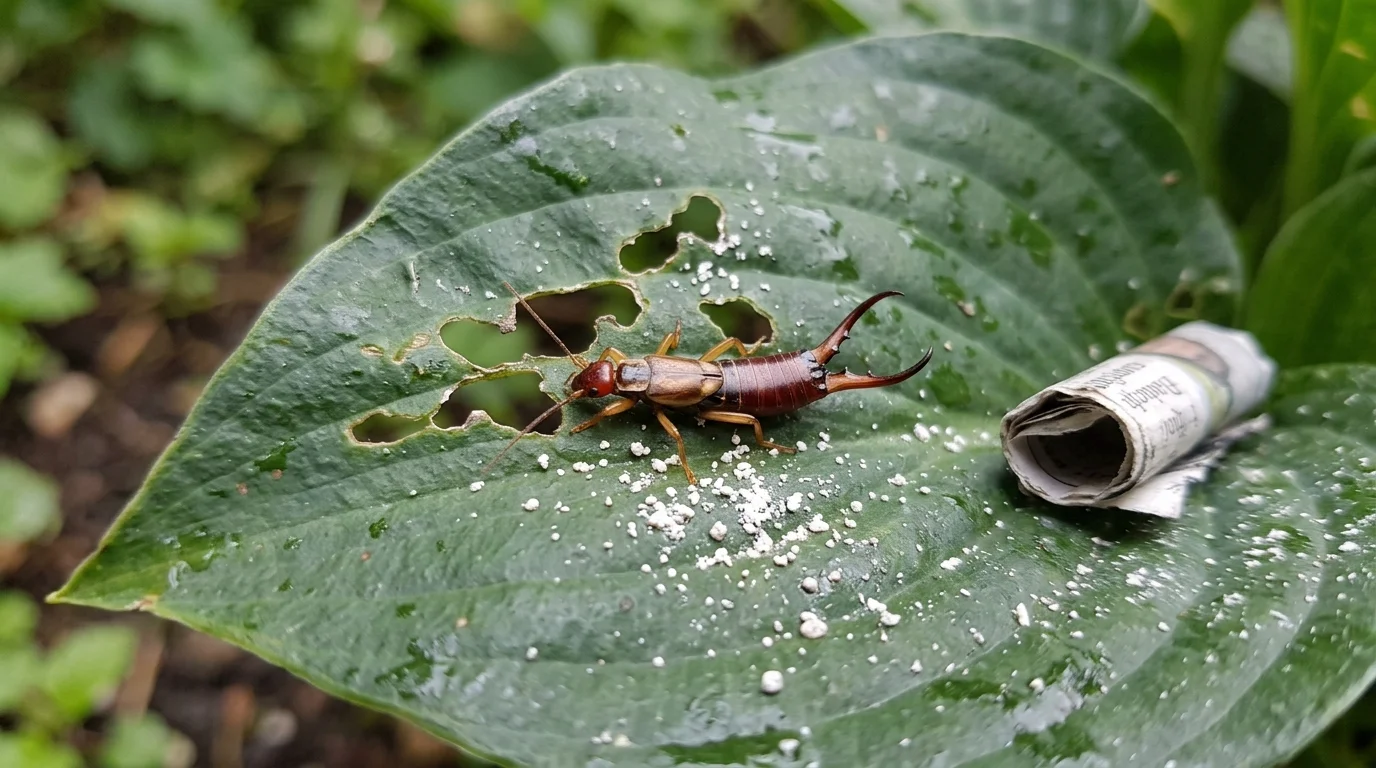
Earwigs are dark brown, flattened insects with a distinctive pair of pincer-like forceps on the tip of their abdomen. Adults measure about half to three-quarters of an inch long. Despite their intimidating look, they are not dangerous to people or pets: the pincers are used for defense, mating, and food handling, and they almost never break human skin.
Earwigs are nocturnal. By day they squash themselves into any cool, damp, tight space they can find - under flower pots, in rolled-up leaves, beneath loose mulch, inside hollow plant stems, and along the damp edges of raised beds. At night they emerge to feed, which is why you see fresh damage every morning but never catch the culprit at work.
The good news is that earwigs are not all bad. They are omnivores that happily eat aphids, young caterpillars, slugs and their eggs, and other soft-bodied insects. A handful of earwigs in a healthy garden is genuinely helpful. The problem starts when conditions favor them - lots of moist mulch, dense plantings, and mild nights - and the population balloons to the point where they cause visible damage every night.
How to Tell Earwig Damage Apart From Slugs and Caterpillars
Earwig feeding looks confusingly similar to slug and caterpillar damage, but a few details give the culprit away:
| Damage sign | Earwigs | Slugs | Caterpillars |
|---|---|---|---|
| Hole shape | Ragged, irregular holes | Ragged holes with smooth, slimy edges | Clean holes or stripped skeletons |
| Slime trails | None | Shiny slime trails | None |
| Damage timing | Appears overnight | Appears overnight or after rain | Visible during the day |
| Preferred plants | Flowers, beans, corn silk, seedlings | Everything low to the ground | Specific host plants |
| Where the pest is found | Under pots and mulch by day | In the soil and under stones | On the plant itself |
If you want to confirm earwigs are the culprit, take a flashlight out an hour after sunset and inspect the edges of the damage. If dozens of small reddish-brown insects scatter from the plants and the mulch, you have your answer. You will rarely see earwigs during the day, even on heavily damaged plants.
Step 1: Remove Their Hiding Places
Earwig control starts with home removal. Every dark, damp hiding spot you eliminate removes dozens of earwigs from your garden, and it costs nothing. Go through the garden and clear:
- Loose mulch. Mulch is earwig paradise, especially thick organic mulch right against plant stems. Pull mulch back 4 to 6 inches from the base of vulnerable plants, and keep mulch layers under 2 inches deep.
- Debris and boards. Old pots, planks, bricks, garden ornaments, and cardboard lying on the soil are earwig hotels. Store pots upside down or indoors, and clear clutter from the base of the house, fence lines, and the greenhouse.
- Dense weedy corners. Long grass, dense weeds, and ivy along the edges of the garden shelter thousands of pests. Cut back overgrowth and keep a clean cultivated margin around your beds.
- Leaf litter and fallen fruit. Rotting plant matter is both shelter and food. Rake it up promptly, especially in fall.
- Hollow stems and climbing structures. Old sunflower and bean stems can be full of earwigs; cut them down at the end of the season rather than leaving them standing over winter.
Do not forget the house itself. Earwigs wander indoors at night, especially into kitchens, bathrooms, and basements. Seal gaps under doors with weatherstripping, caulk cracks in the foundation, and keep a dehumidifier running in damp basements.
Step 2: Trap Them With Cardboard Rolls and Newspaper
Trapping is the fastest way to bring a heavy earwig population under control, and it relies on their favorite habit: squeezing into dark, narrow spaces. You make a perfect earwig hotel, wait one night, and then destroy everyone who checked in.
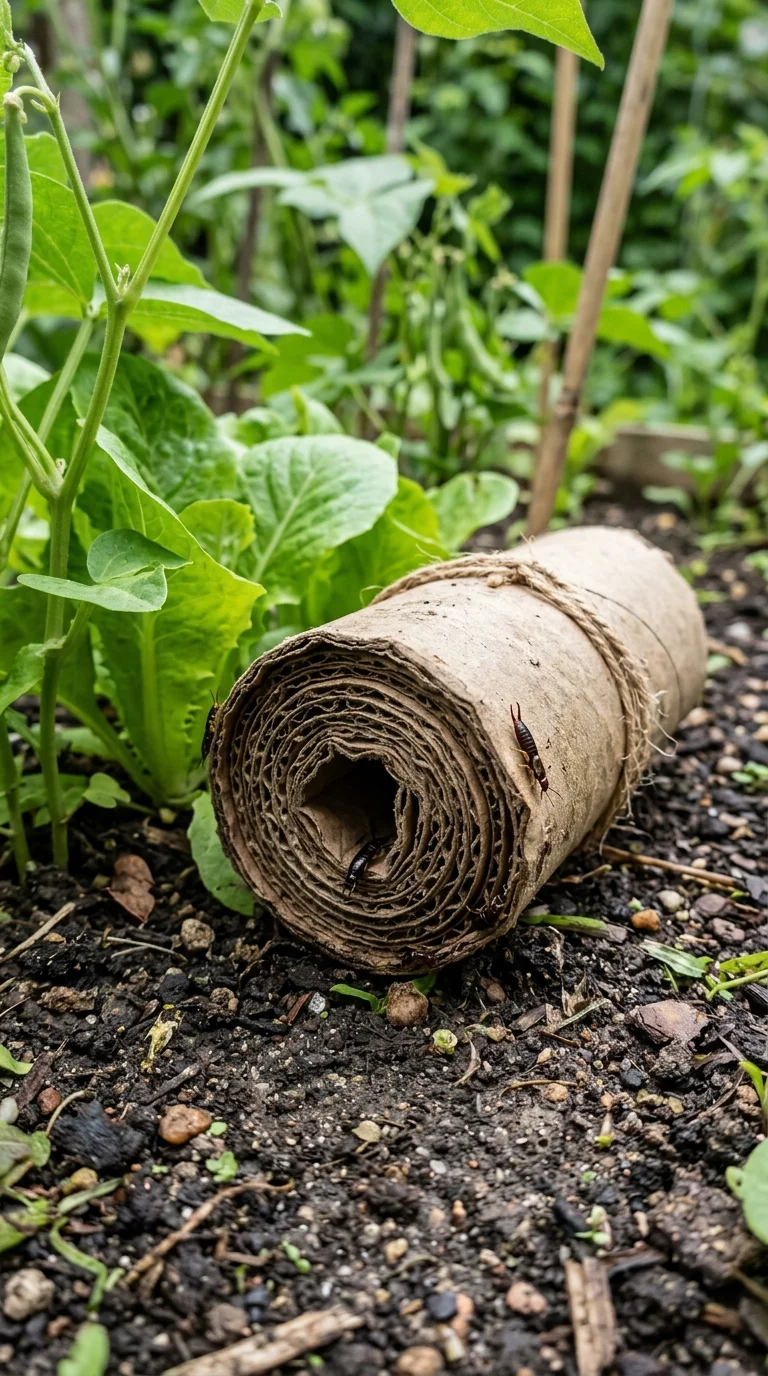
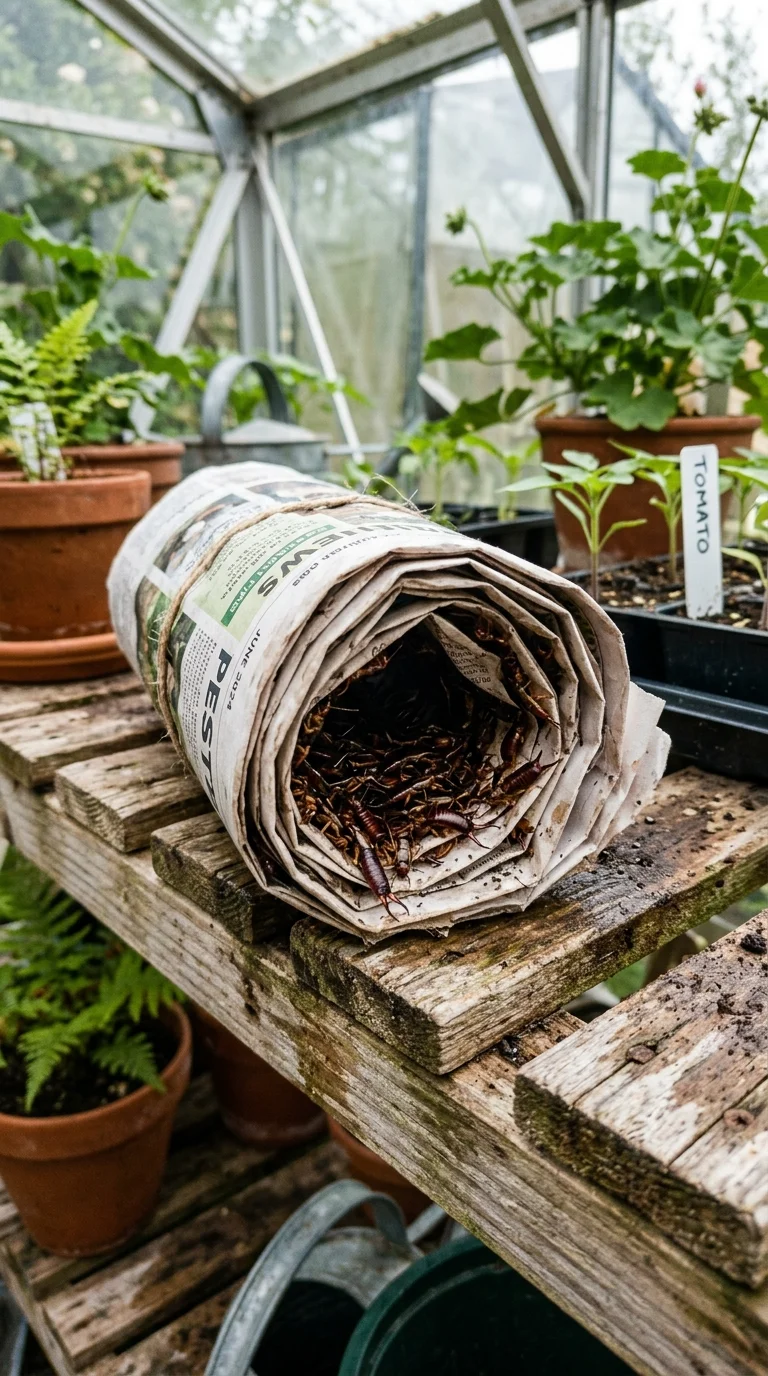
Roll a sheet of newspaper or a piece of corrugated cardboard into a loose tube about 1 to 1.5 inches wide. You can bind it with a rubber band or piece of string. Lightly dampen it - earwigs prefer slightly moist shelter - and lay it on the soil right next to the damaged plants, ideally in the evening.
By morning, each tube can hold dozens or even a hundred earwigs. Carry the tube to a bucket of soapy water and drop it in (shake it to release the insects). The soap breaks the surface tension of the water, so they sink and die instantly. Repeat every night, laying the tubes in new spots near fresh damage, and the population collapses within one to two weeks.
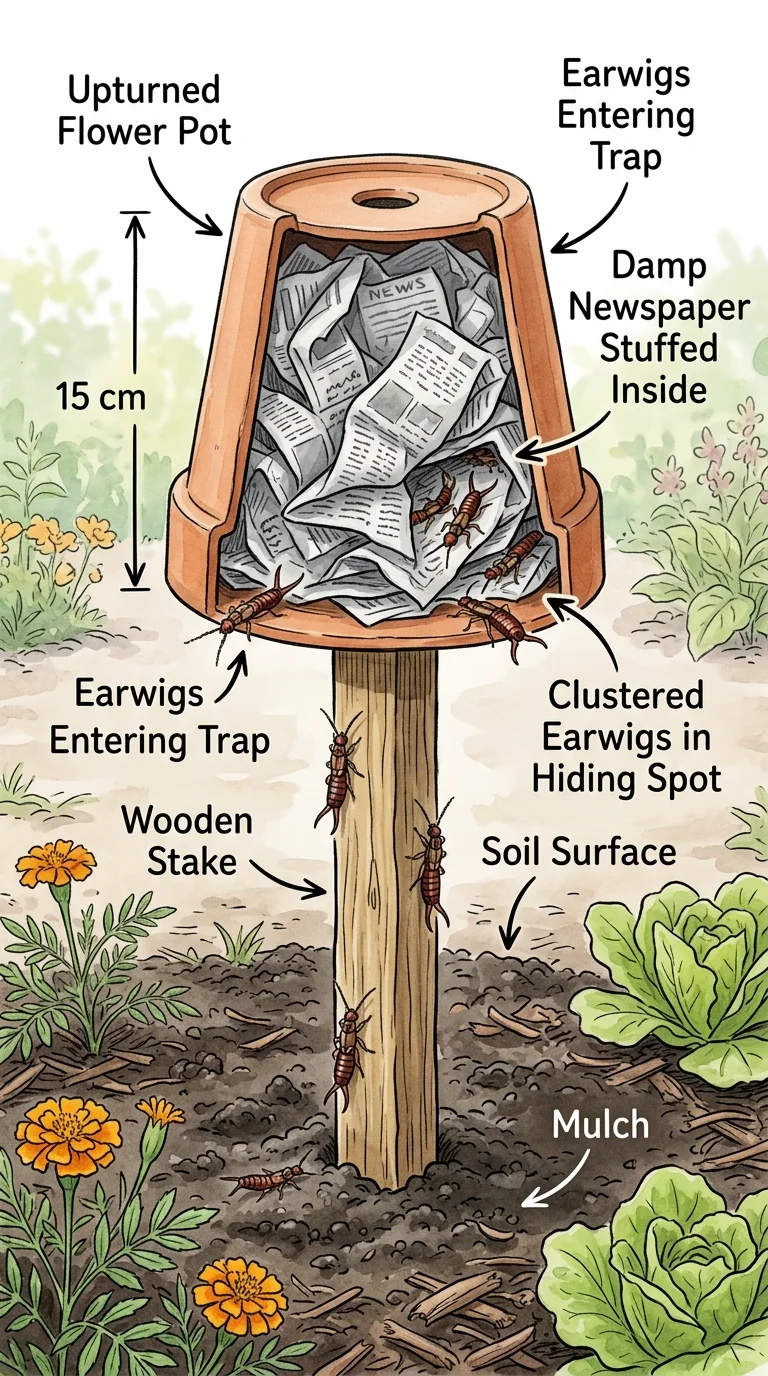
For particularly bothered plants, you can upgrade to the professional trick: a flower pot stuffed with straw or crumpled newspaper, upturned on a stake a few inches above the ground. Earwigs love nesting in it, and you can empty it into soapy water every morning and reuse it for the whole season.
Step 3: Create Barriers They Cannot Cross
While the traps reduce the population, barriers protect your prized plants immediately. Earwigs are crawlers, so a barrier only needs to be uncomfortable - not deadly - to work.
- Diatomaceous earth. Sprinkle a thin band of food-grade diatomaceous earth around vulnerable plants, or around the rim and base of pots. The powder is microscopically sharp and cuts into earwig bodies as they crawl through it, causing them to dehydrate and die. It only works when dry, so reapply after rain, watering, and heavy dew. Wear a simple dust mask when laying it, and do not use pool-grade DE, which is toxic to breathe.
- Petroleum jelly on stems. On plants with smooth stems - dahlias, chrysanthemums, and fruit trees - smearing a thin ring of petroleum jelly around the base stops climbing earwigs at the ring. It works for several weeks and is easy to remove at the end of the season.
- Sticky barriers. Double-sided sticky tape or tree grease bands on trunks and stakes trap earwigs and other crawling pests in one shot.
- Raise pots off the ground. Earwigs climb in from below through the drainage holes. Standing pots on feet, gravel, or saucers filled with water creates a moat they will not cross.
Step 4: Use Simple Natural Sprays Where Needed
If you need an immediate knockdown on a badly infested plant, a few natural sprays work well without harming the rest of the garden.
- Soapy water spray: Mix 1 to 2 tablespoons of pure liquid soap (castile soap is best) per quart of water and spray infested plants in the late evening. The soap disrupts earwigs’ waxy coating and kills on contact. It has no residual effect, so repeat nightly while the infestation lasts, and wash it off leafy vegetables you plan to eat within the day.
- Neem or horticultural oil: A light spray of neem oil on foliage deters earwigs from staying on the plant and also cleans up aphids - another reason earwigs gather there. Spray in the evening so the oil does not burn leaves in the sun.
- Garlic or chili spray: A homemade spray of crushed garlic and a pinch of chili in water, strained and sprayed around plants, makes leaf surfaces unappealing to earwigs. It breaks down fast, so reapply after rain.
Keep in mind that these sprays also affect beneficial insects on the plant, so target only the damaged plants rather than spraying the whole garden. Earwigs are mobile; the real long-term answer is the shelter removal and the traps, not the spray bottle.
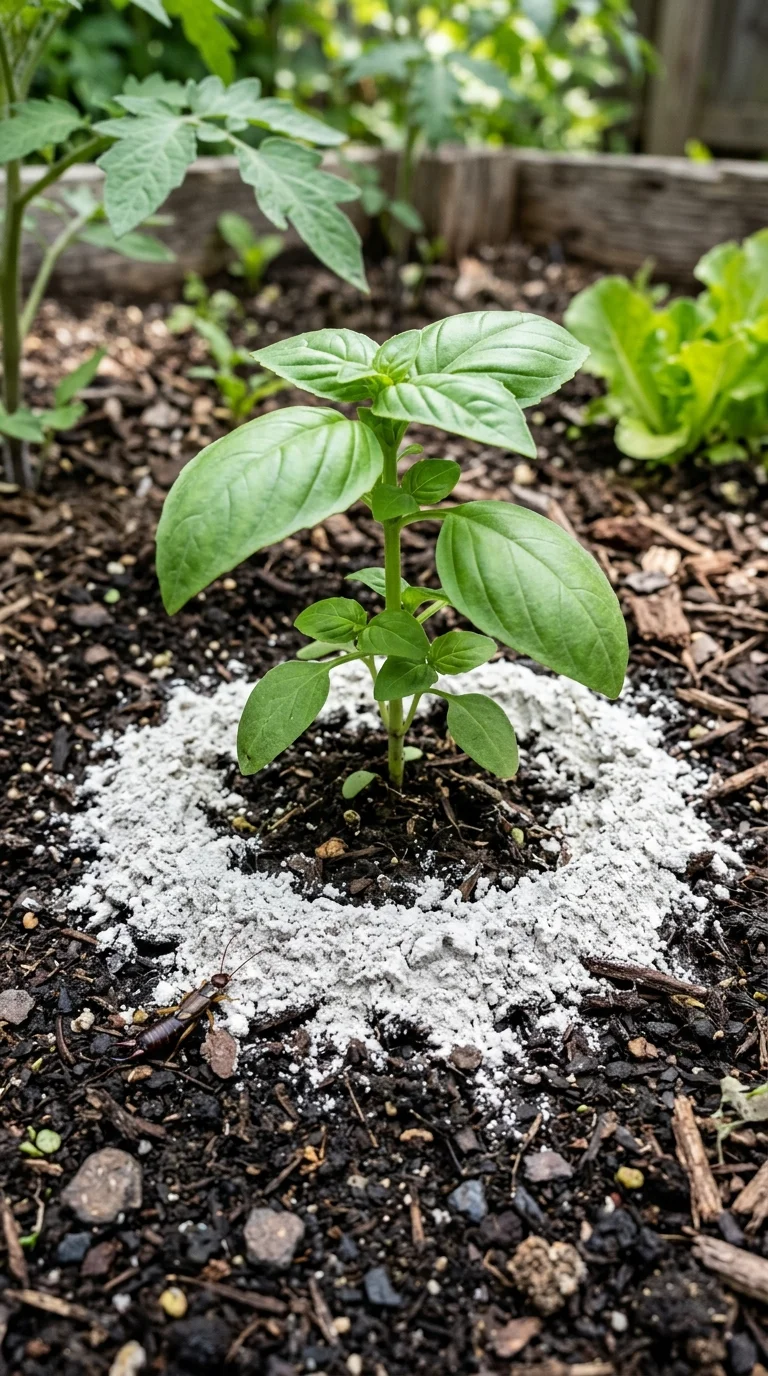
Step 5: Keep Plants Away From Their Comfort Zone
Prevention is the final layer, and it is all about denying earwigs the damp, crowded conditions they love:
- Water in the morning, not the evening. A soggy bed at dusk is an open invitation, and evening watering keeps the surface damp all night exactly when earwigs come out.
- Space out your plants. Thick, overlapping foliage creates the cool, humid environment earwigs adore. Follow the spacing distances on your seed packets.
- Harvest ripe fruit promptly. Strawberries touching the soil, fallen peaches, and overripe squash are feeding stations. Pick early, pick often, and clear fallen fruit every day.
- Tidy supports and trellises. Dense vines, old netting, and folded fabric row covers all hide earwigs. Check folds and shake them out when you harvest.
- Reduce watering in late season. When flowers and vegetables are nearly done, let beds dry out more between waterings. Earwigs and other pests breed fastest in permanently moist soil.
Know the Earwig Life Cycle
Understanding the earwig’s life cycle explains why you suddenly have hundreds in July and why trapping is most effective at specific times. Earwigs overwinter in the soil as adults, tucked into any sheltered crack. In early spring they emerge, and the females dig shallow nests in the soil where they lay eggs - remarkable among insects because the mother guards the eggs until they hatch, rolling and cleaning them to stop mold.
The young, called nymphs, hatch in late spring and look like miniature versions of the adults without wings. They molt several times as they grow, and the whole cycle from egg to adult takes about seven weeks. Adult earwigs fly only rarely and only on warm summer evenings, which is when a new breeding swarm can drift in from neighboring gardens - the reason populations seem to double out of nowhere in midsummer.
Two practical facts come out of the life cycle. First, early spring is the best time to hit them: trap and remove the overwintering adults before any eggs are laid, and your summer problem shrinks dramatically. Second, the nymphs that hatch in late spring are exactly the insects that fill your rolled-cardboard traps all summer, so the traps work on the breeding population itself, not just a few wanderers.
Earwigs in the Greenhouse, Raised Beds, and Containers
Greenhouses and containers have their own earwig quirks worth knowing. In a greenhouse, earwigs hide under pots, benches, and staging, and at night they climb into young seedlings and trays of plug plants, working overnight through a whole tray of tender transplants. The fix is to raise trays off the greenhouse floor on staging, keep the floor clear of debris and old pots, and lay a few cardboard traps under the staging - where the earwigs shelter - rather than only beside the plants. Sticky traps around the staging legs add a second line of defense, and a light dusting of diatomaceous earth around tray edges stops most climbing entirely.
In raised beds and containers, earwigs hide in the gap under bed walls, in the hollow sections of bamboo canes, and in the folds of slug mats you laid so happily last week. Check canes: tap them, or push a length of dowel into hollow canes to block them. Containers sit on the ground where earwigs can climb straight in through the drainage holes; standing pots on feet, bricks, or gravel lifts them beyond the reach of most earwigs and greatly reduces overnight damage to your potted strawberries and herbs.
How Earwigs Fit Into Your Garden Ecosystem
Earwigs are not an enemy to eliminate - they are a pest to balance. Removing every single earwig also removes a useful aphid hunter from your garden, and it is nearly impossible anyway, since adults can fly in the summer evenings when temperatures are warm. The realistic goal is a small population, one that eats plenty of aphids but never builds to plague proportions.
The best long-term pest strategy is the same one we recommend for every garden pest: healthy soil, diverse plantings, and natural predators. Birds, toads, hedgehogs, and ground beetles all eat earwigs. Ground beetles in particular are worth encouraging, because they hunt earwigs at the same time of night. You can invite them in with a few flat stones or a small log pile in a quiet corner of the garden - a stone or two that the earwigs can also hide under sounds counterproductive, but the beetles usually win the turf war, and you can check under the stones daily and drop any earwigs you find into soapy water.
For a complete natural pest-control approach across your whole garden, see our guide to garden pest control for beginners, and if other insects are in your beds, our guides on aphids and fungus gnats cover those next.
Frequently Asked Questions
Q: Do earwigs eat plants at night only?
A: Almost always. Earwigs feed at night and shelter during the day. If you see damage appearing between evening and morning, and the damage has no slime trails, earwigs are a strong suspect - check under nearby pots and mulch to confirm.
Q: Will vinegar or essential oils repel earwigs?
A: Strong-smelling sprays deter earwigs temporarily, and a vinegar-water spray can repel them from entry points around the house. However, repellants wash off quickly outdoors, so they are a weak tool compared with trapping and shelter removal. They work best as an extra layer on windowsills and thresholds.
Q: Should I worry about earwigs in the vegetable garden?
A: Only if they are numerous. A few earwigs are harmless and even helpful in the vegetable garden, but heavy populations will eat bean seedlings, nibble lettuces, and bore into corn ears. Protect young seedlings with barriers until they establish.
Q: How long does earwig season last?
A: Earwigs are most active between late spring and early fall, peaking in mid-summer when nights are warm. They breed in spring, and juvenile earwigs appear in early summer, which is why populations seem to explode in June and July.