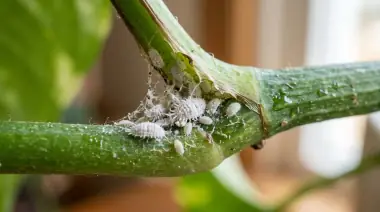
You bring home a healthy pothos and three weeks later spot white cottony bugs on plants in the leaf joints. They look like wet cotton, do not fly, and smear yellow when poked. Those are mealybugs on houseplants, and indoors they multiply fast. Here is how to get rid of mealybugs, from fast ID to the repeat schedule that kills every hatch, and it fits into our guide to common plant problems.
Quick Answer: For mealybugs on houseplants, isolate the plant, dab white clusters with 70% rubbing alcohol, then drench leaves, joints, and stems with insecticidal soap or neem oil. Repeat every 7 to 10 days for 3 to 4 cycles, check roots and rims, and quarantine new plants 2 weeks.
At a Glance
| Fact | Detail |
|---|---|
| What they are | Soft white cottony sap-sucking scale insects, 1/16 to 1/8 inch |
| Common species | Citrus mealybug and longtailed mealybug |
| Key signs | Cottony clusters, sticky honeydew, black sooty mold, stunted curling growth |
| Hiding spots | Leaf joints, leaf undersides, stem crevices, buds, roots, pot rims |
| Spot-kill | 70% rubbing alcohol on cotton swab, dabbed on each bug |
| Full treatment | Insecticidal soap or neem oil, full coverage, every 7-10 days, 3-4 cycles |
| Egg hatch | 7-14 days indoors; repeats are mandatory |
| Prevention | 2-week quarantine, inspect before buying, avoid over-fertilizing, control ants |
What Mealybugs Are and the Damage They Do
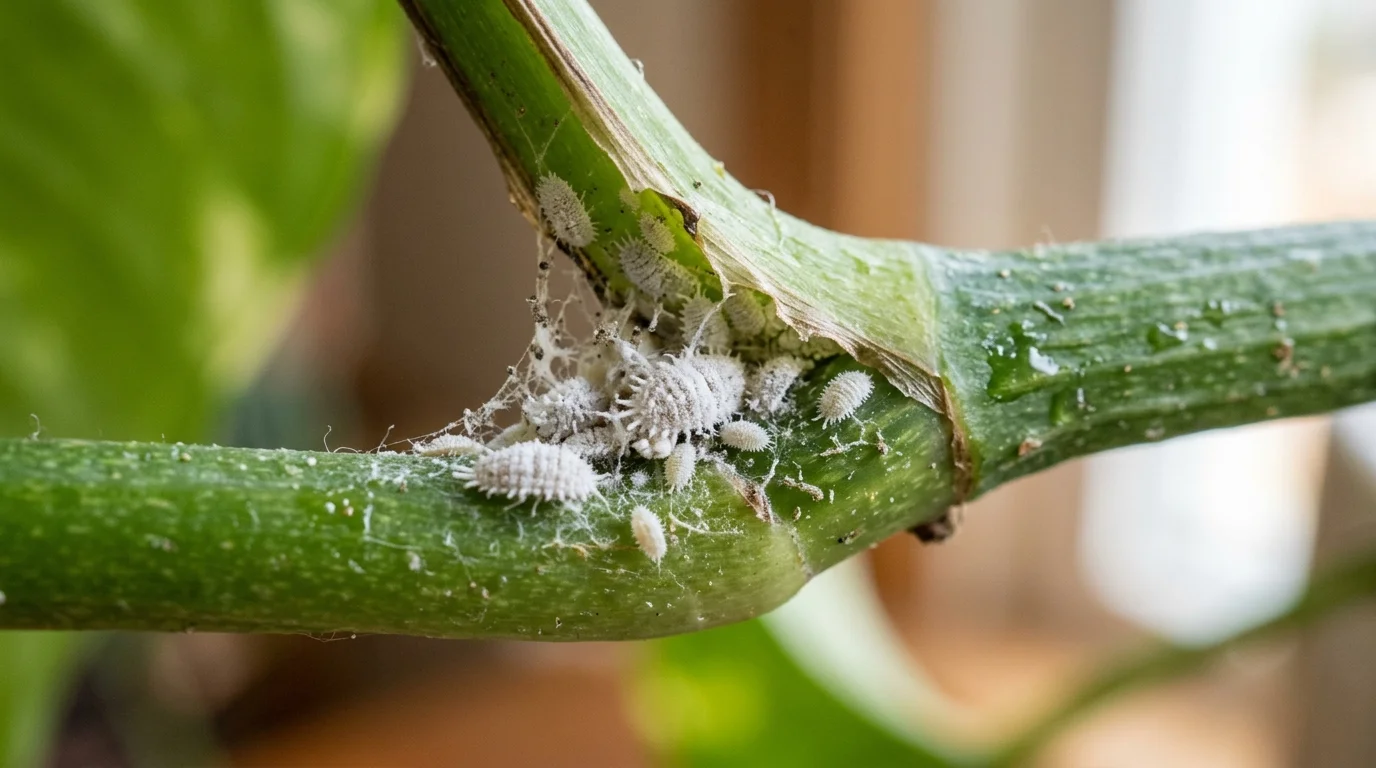
Mealybugs are soft scale insects wrapped in white waxy cotton. Adults are only 1/16 to 1/8 inch, but fluffy egg sacs look like tiny cotton balls on stems [1] (Source: University of California IPM).
Indoors you will mostly meet the citrus mealybug, which lays hundreds of eggs in sacs, and the longtailed mealybug, which bears live crawlers and spreads faster. When you see long tails, inspect the whole shelf.
They feed by piercing leaves and draining sap. Colonies excrete sticky honeydew that feeds black sooty mold and attracts ants. New leaves emerge small and curled, buds drop, and spikes stall. After 2 to 3 months unchecked, mealy bugs houseplants colonies can defoliate stressed plants [2] (Source: Clemson Extension).
Houseplants are ideal hosts: constant warmth, low airflow, no predators. Soft, over-fertilized growth is most attractive, so feed lightly.
Where Mealybugs Hide
Mealybugs avoid open leaf tops and wedge into creases where sprays miss. Grab a flashlight and check in this order:
- Leaf joints: the V where leaf meets stem — spot number one on pothos and fiddle leaf fig.
- Leaf undersides: especially along the midrib. Flip every leaf.
- Stem crevices: rough bark on jade and citrus.
- Buds and unfurling leaves: orchid bracts and hoya peduncles.
- Roots and soil line: white powder on roots and pots. Suspect them when plants wilt in moist soil.
- Rims, saucers, stakes, moss poles: eggs survive in dried honeydew under rims and clips.
Dab a suspect tuft with alcohol: mealybugs turn yellow-brown; dust does not.
Most Affected Houseplants
Any indoor plant can host mealybugs, but thick-leaved or sweet-sapped plants hide colonies longest.
| Plant | Why it is vulnerable | Check first |
|---|---|---|
| Pothos and philodendron | Dense nodes and trailing stems | Leaf nodes, aerial root nubs |
| Jade and succulents | Fleshy leaves, bark-like stems | Leaf axils, stem forks |
| Hoya | Waxy leaves, permanent flower spurs | Peduncles, new vines, leaf undersides |
| Orchids | Tender spikes and bracts | Inside bracts, spike nodes, crown |
| Indoor citrus | Sweet sap, year-round growth | New flush, fruit stems, trunk creases |
| Fiddle leaf fig | Deep veins, hard-to-reach buds | Midrib undersides, new buds |
When one plant shows bugs, inspect the whole shelf — crawlers walk far. Our list of best low-maintenance indoor plants notes which varieties tolerate treatment best.
Identification: Mealybugs vs Look-Alikes
White cottony bugs are usually mealybugs, but three look-alikes need different treatment.
| Pest | What it looks like | Key difference | Treatment shift |
|---|---|---|---|
| Mealybugs | Cottony 1/8-inch clumps with oval segmented bodies | Sits in joints, sticky honeydew | Alcohol + soap or neem, 3-4 cycles |
| Soft brown scale | Smooth brown domes on stems, little cotton | Hard shell, immobile | Scrape off + horticultural oil |
| Woolly aphids | Fluffy clusters on new tips, scatter when poked | Active, feathery | Water blast + insecticidal soap |
| Root mealybugs | White powder on roots and pot walls | Wilts in moist soil | Bare-root wash + repot in fresh mix |
| Powdery mildew | Flat dusty white film on leaf surface | No insects inside, fungal | Airflow + fungicide, not insecticide |
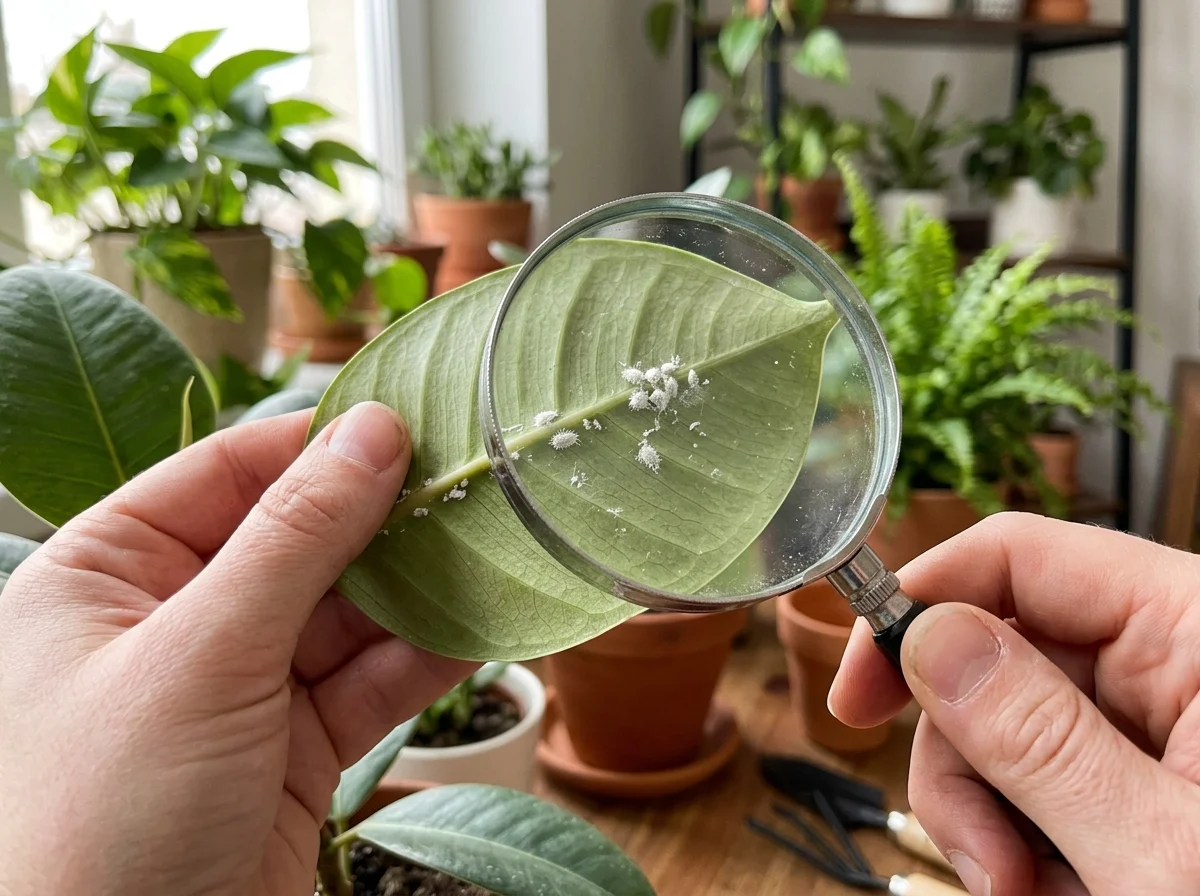
A 10x hand lens settles it: mealybugs show segments and wax filaments and smear yellow when crushed; aphids run; scale never moves [3] (Source: University of Minnesota Extension).
Root mealybugs live only below the soil, so you see just decline — yellowing and wilting in damp mix that mimics overwatering. Compare with our guide to how to fix an overwatered plant, then slide the root ball out. White crust on roots or pot walls confirms it.
The Kill Routine That Actually Works
Mealybug treatment indoor plants need three steps: spot-kill, wash, check soil. One spray never works because wax repels liquid and eggs keep hatching.
1. Isolate and Spot-Kill With 70% Rubbing Alcohol
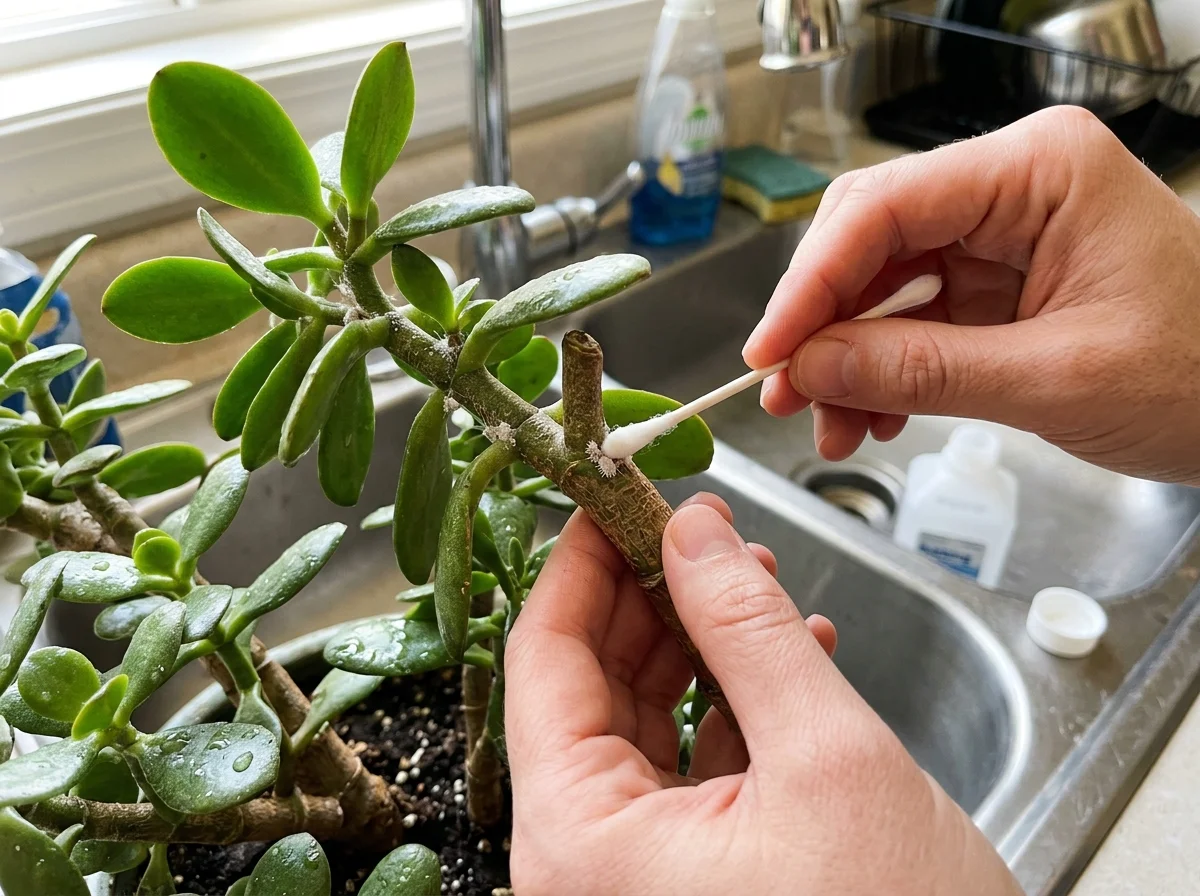
Move the plant 6 feet from others to a sink or tub. Dip a cotton swab in 70% isopropyl alcohol — not 90%, which burns leaves — and dab every cluster. Alcohol dissolves wax and kills on contact. Use fresh swabs.
Work top to bottom: buds, joints, stem forks. Keep treated plants out of sun for 24 hours and rinse fuzzy plants lightly [1] (Source: University of California IPM). Bag swabs and wash hands before touching other plants.
2. Full Wash With Insecticidal Soap or Neem Oil
Spot-killing misses tiny crawlers and eggs in cotton. The next day, drench the plant:
- Insecticidal soap: 2 to 3 tablespoons per gallon or ready-to-use. Kills on contact.
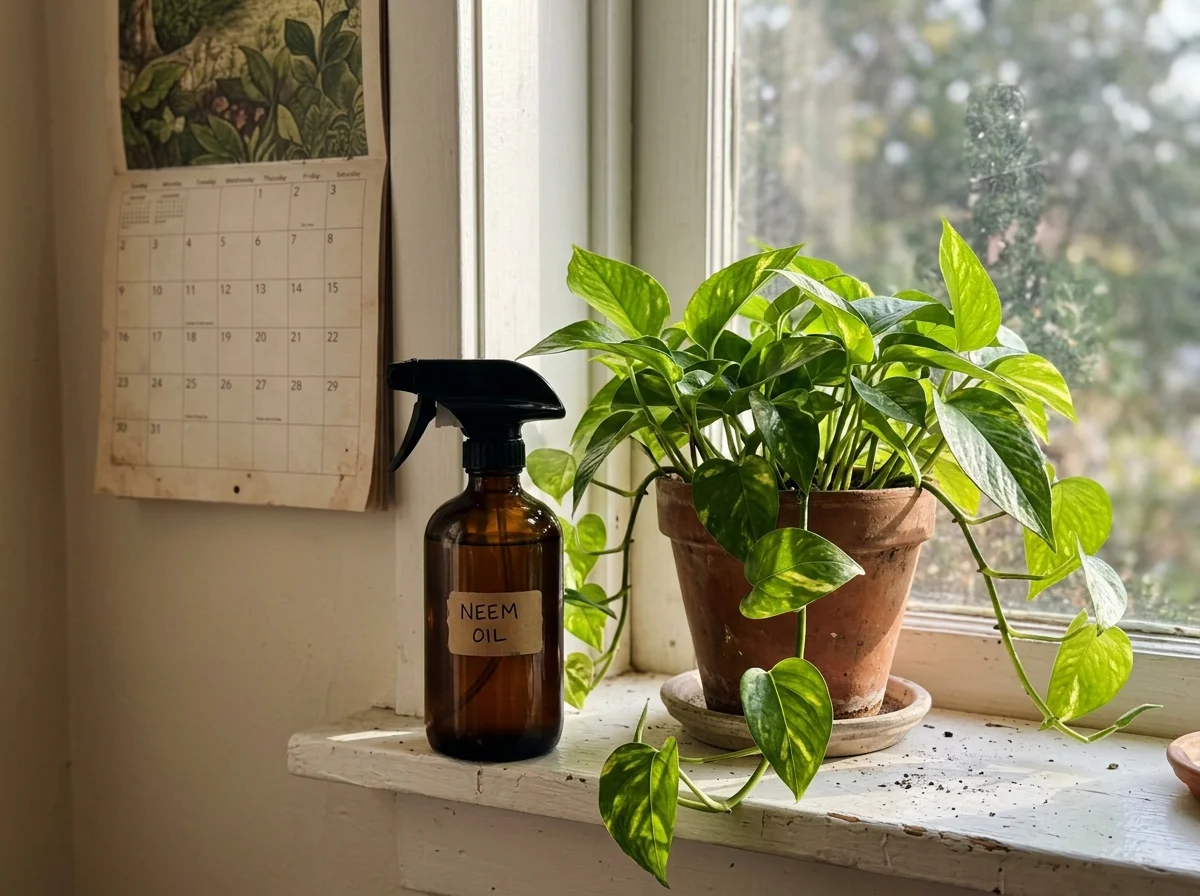
- Neem oil 0.5% to 1%: 1 to 2 tablespoons per gallon plus mild soap, shaken and sprayed fresh.
- Pre-rinse: lukewarm shower first to remove honeydew.
Spray until runoff from both leaf sides, stems, buds, and the top inch of soil. Aim upward into undersides and joints — misting from above misses most bugs. Test 2 to 3 leaves first and wait 48 hours.
Repeat every 7 to 10 days for 3 to 4 cycles, even if you see nothing after round two. Never mix alcohol and oil, and never spray a wilted plant.
3. Soil Check and Repot If Needed
Unpot over newspaper if the plant wilts in moist soil or shows white crust at drainage holes. Shake off mix, rinse roots, dab waxy patches with alcohol, soak roots 5 minutes in soap solution, and repot in fresh sterile mix. Our guide to how to repot indoor plants covers mix and sizing. Hold fertilizer 2 weeks and isolate 14 more days. Trash old soil.
Treatment Comparison
No single product kills eggs through wax, so combine methods.
| Method | Best for | Pros | Cons | Frequency |
|---|---|---|---|---|
| Alcohol dab | 10-20 visible bugs | Instant, precise, cheap | Tedious, can spot leaves | Each inspection |
| Insecticidal soap | Crawlers on leaves | Low toxicity, no oily residue | Contact only, needs coverage | Every 7-10 days x3-4 |
| Neem oil | Crawlers + prevention | Smothers, mild residual | Smell, can spot flowers | Every 7-10 days x3-4 |
| Water rinse | Pre-wash | Free, removes honeydew | Kills nothing alone | Before each spray |
| Pruning | Coated tips | Removes eggs fast | Loses growth | Once, then treat |
| Systemic granules | Severe cases, if labeled | Kills hidden feeders | Slow, not for edibles | Once per label |
For most homes, alcohol plus soap wins: fast, low odor, safe once dry. Neem suits homes fighting gnats or mites. Reserve systemics for a valuable ornamental that fails 4 weeks of contact treatment — never on indoor citrus you eat. See our garden pest control for beginners for rotating methods.
How Long Until They Are Gone?
At 70 to 75°F, females lay 200 to 600 eggs in cotton over 1 to 2 weeks; eggs hatch in 7 to 14 days into barely visible crawlers [2] (Source: Clemson Extension). Sprays kill crawlers but barely penetrate egg sacs — so round one kills live bugs and rounds two to four catch each hatch.
Expect: week 1, adults gone but leaves sticky; weeks 2 to 3, crawlers reappear — normal; weeks 4 to 5, no new cotton — one final spray; week 6, after 2 bug-free weeks, return the plant but inspect weekly. Log dates and counts.
Heavy Infestations: Prune, Repot, or Toss?
For a plant coated stem to soil, triage fast to protect the rest of your collection.
Prune: cut the worst 20 to 30% to clean tissue, bag cuttings for trash, disinfect shears with alcohol, then treat regrowth.
Repot: do a bare-root wash when roots show white wax, the plant wilts after watering with no yellowed leaves, or honeydew returns on the saucer after sprays.
Toss: bag the whole plant before carrying it past others if over 50% stays coated after 4 weeks, stems shrivel black with mold and growth stalls 6+ weeks, or root mealybugs return a third time. A cheap pothos is not worth risking a prized collection. Wipe the shelf and quarantine neighbors.
Prevention: Stop Them Coming Back
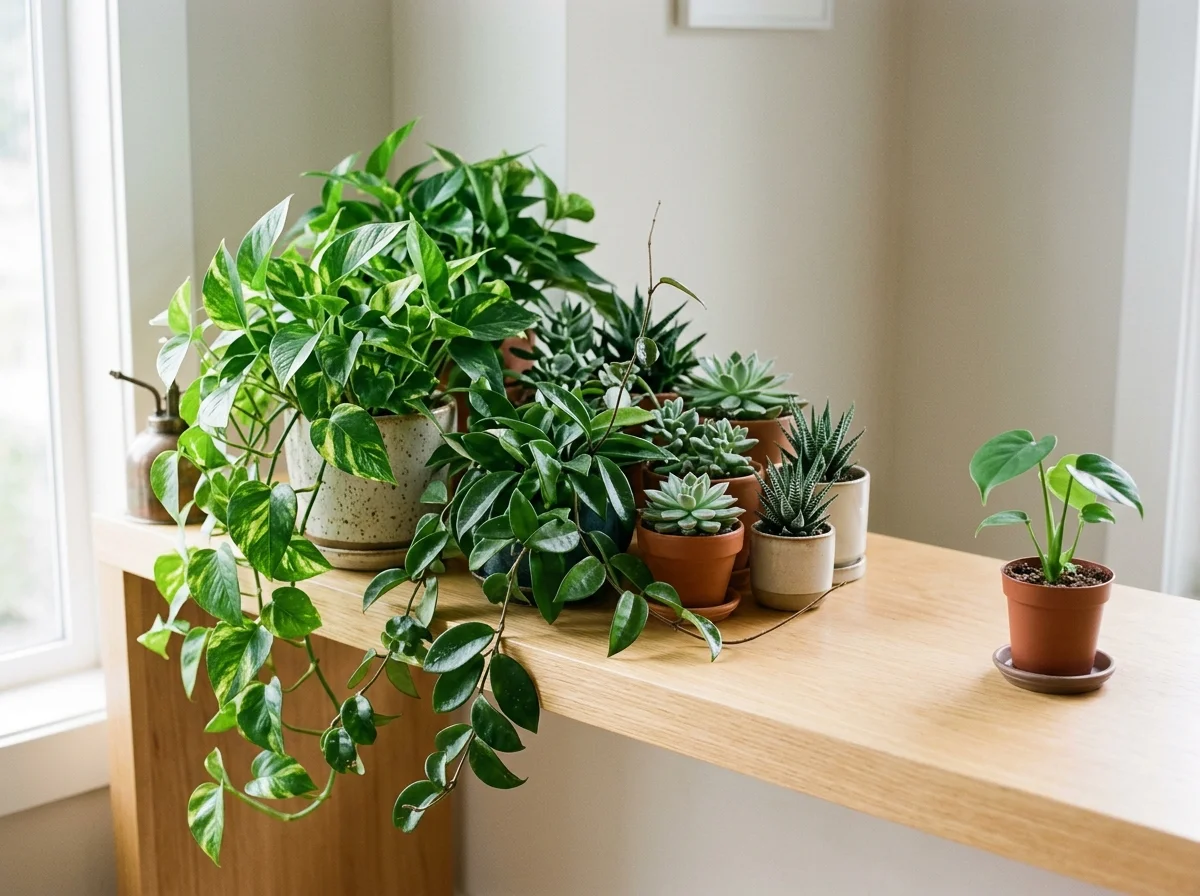
- Quarantine new plants 2 weeks in a separate room; inspect joints twice weekly. Most outbreaks trace to a new arrival.
- Inspect before buying: skip plants with joint cotton, sticky leaves, or ants. Check under pot rims.
- Break ant partnerships: ants farm honeydew and ferry crawlers. Wipe honeydew and block indoor trails.
- Feed for steady growth: bright indirect light, water when the top 1 to 2 inches dry, half-strength fertilizer only. Pair this with correct how to water houseplants habits.
- Clean gear: wash reused pots hot and soapy, wipe tools with alcohol, do not share saucers.
- Space and inspect: leave 2 to 3 inches between pots and check monthly, especially when plants come inside for winter and in spring flush.
Common Mistakes
- One treatment and done. The fix: book all 3 to 4 sprays on day one.
- Misting from above. The fix: flip leaves, spray into joints until runoff.
- Using 90% alcohol or vinegar straight. The fix: 70% isopropyl on bugs only; shade 24 hours.
- Tossing too soon — or too late. The fix: allow 4 weeks; then toss fast if half stays coated.
- Reusing soil or dirty pots. The fix: trash mix, scrub pots, repot fresh.
- Over-fertilizing recovery. The fix: wait 2 weeks after repot, then half-strength.
- Forgetting rims and neighbors. The fix: wipe rims; quarantine neighbors 2 weeks.
Troubleshooting
- Fluff returns in 5 days: scheduled hatch; continue cycle, improve coverage.
- Yellow spots after spray: too strong or midday spray; dilute, spray evenings.
- Sticky but no bugs: old honeydew or hidden roots; wash leaves, check rims and root ball.
- Black soot: mold on honeydew; wipe with damp cloth, kill remaining bugs.
- Wilts in damp soil: likely root mealybugs; bare-root wash and fresh mix.
- Ants indoors: farming honeydew; remove honeydew, block trails.
- Orchid buds blast: blooms are sensitive; dab buds only, spray foliage.
Frequently Asked Questions
Q: How do I get rid of mealybugs on houseplants for good?
A: Isolate the plant, dab visible bugs with 70% rubbing alcohol, then spray leaf joints and undersides with insecticidal soap or neem oil every 7 to 10 days for 3 to 4 cycles. Check roots and repot if root mealybugs appear.
Q: Does rubbing alcohol kill mealybugs?
A: Yes. Dab 70% isopropyl alcohol directly on each cottony cluster with a cotton swab. It dissolves their waxy coating and kills adults and crawlers on contact. Keep treated plants out of direct sun for a day.
Q: Will neem oil kill mealybugs and their eggs?
A: Neem kills crawlers and juveniles and disrupts feeding, but it does not reliably kill eggs in cottony sacs. Reapply every 7 to 10 days for 3 to 4 weeks to catch each new hatch.
Q: How did my indoor plant get mealybugs?
A: Almost always from a new plant, used potting mix, or eggs on pot rims and tools. They also crawl from neighboring plants or are carried by ants. Quarantine new plants for 2 weeks.
Q: Are mealybugs harmful to humans or pets?
A: Mealybugs do not bite people or pets and are not poisonous, but they weaken plants and leave sticky honeydew that grows black sooty mold. Wash hands after handling and keep sprays away from pets.
Q: Can a plant recover from mealybugs?
A: Yes, if caught early. Light infestations recover in 4 to 6 weeks with consistent treatment. Prune badly coated tips, finish all spray cycles, and give bright indirect light and steady water.
Q: What is the white cottony stuff — mealybugs or mold?
A: Mealybugs form 1/8-inch cottony clumps with oval segmented bodies inside, usually in leaf joints. Mildew is a flat dusty film on leaf surfaces, while woolly aphids cluster on new tips and move when poked.
Q: Should I throw away a plant with mealybugs?
A: Not after one sighting. Discard it only if over half the plant stays coated after 4 weeks of correct treatment, stems shrivel with sooty mold, or root mealybugs keep returning.
Related Articles
- Common Plant Problems
- How to Fix an Overwatered Plant
- How to Repot Indoor Plants
- Best Low-Maintenance Indoor Plants
- Garden Pest Control for Beginners
- How to Fix Yellow Leaves
- How to Water Houseplants
