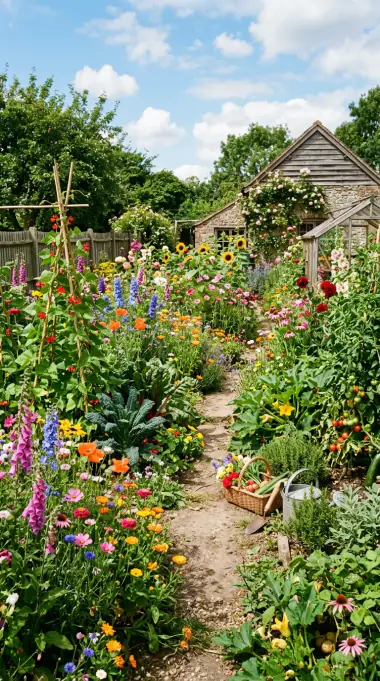

Somewhere between a cottage garden and a meadow lies chaos gardening - the fastest-growing, lowest-effort movement in modern gardening. The idea is beautifully simple: instead of planning rows, digging beds, and spacing seedlings, you buy or mix a packet of seeds, throw them loosely across a patch of ground, and let the plants argue it out among themselves. The strongest seedlings win, the bees and butterflies get a feast, and you get a wildly colorful garden you planted in roughly twenty minutes. This guide explains exactly how to start a chaos garden, what to expect, and how to avoid the few mistakes that turn chaos into a mess.
Quick Answer: To start a chaos garden, pick a sunny patch of ground, clear away thick or tall weeds, spread a loose mix of hardy flower, vegetable, and herb seeds by tossing handfuls across the surface, then press them in with your feet or a light rake. Water gently, sow in spring after the last frost or in late fall, and do almost nothing else. Cut the patch back once at the end of the season and scatter a few more seeds next year.
Why Chaos Gardening Is Taking Over Gardens in 2026
Gardening fashions move in cycles, and the current one is moving hard toward less work and more life. Search interest in how to start a chaos garden has been climbing month after month, and it is easy to see why. Traditional gardening asks a lot: tilling, weeding, thinning, staking, rotating, and anxieties about every critter that looks at your beds twice. Chaos gardening asks for almost none of that.
The movement draws from three older gardening traditions:
- Seed bombing, the guerrilla practice of lobbing clumps of seeds and compost at unused urban land.
- No-dig gardening, which protects the soil food web by never disturbing it with heavy digging.
- Meadow-style and wildlife planting, where the goal of a garden is supporting insects, birds, and soil rather than neatness.
What chaos gardening adds is the casual attitude: you are not designing a garden, you are starting a conversation with your soil. You scatter, nature responds, and the result is always a surprise. Psychologically, it is liberating - there is no failure mode, because nothing about a chaos patch can really be “wrong.”
The Real Benefits of a Chaos Garden
Beyond the joy factor, a chaos garden delivers genuinely useful results:
- Huge pollinator value. A mixed patch of flowering plants in bloom from early summer to frost is a buffet for bees, butterflies, hoverflies, and other pollinators. Diversity of bloom shapes and colors is exactly what garden insects need most, and chaos gardens deliver it in spades.
- Better soil health. Soil that is never dug keeps its structure, its fungal networks, and its earthworm populations intact. The dense root network of a mixed planting also improves water infiltration and carbon storage.
- Natural pest balance. A wild variety of plants attracts predatory insects that keep pest populations in check. Marigolds and herbs in the mix add natural pest-deterrence on top.
- Less water, less fuss. Established chaos plantings shade the soil and keep it cooler and moister, cutting summer watering dramatically.
- Food with zero planning. Radishes, peas, squash, and herbs scattered in the mix give you real harvests without rows, cages, or stakes.
- Guilt-free gardening. If some area of your yard has been a weedy no-man’s-land, a chaos garden converts it into something productive in one afternoon, with almost no cost.

Step 1: Choose Your Spot
Chaos gardens do not need perfection, but they do need light. Pick a patch that gets at least 5 to 6 hours of direct sun a day - most of the flowers and vegetables in a standard mix will sulk or flop in full shade. Nearly any ground works beyond that: builder’s clay, tired lawn, a mulched bed, or a neglected corner of the yard.
If you are sowing over an existing lawn or thick grass, mow it short first. If you are sowing over a weedy patch, cut the weeds to the ground and remove the biggest clumps, but do not dig the soil. A thin layer of cardboard over tough grass a month before sowing will smother the grass and turn it into mulch - the no-dig classic - but you can also scatter straight onto short grass and let your flowers compete.
Do not sow where children or pets constantly trample the patch, and keep the area clearly marked so nobody mows it in a moment of confusion. A ring of stones or a few bamboo stakes with string is enough.
Step 2: Make Your Seed Mix
The magic of a chaos garden is in the mix. You want a balance of:
- Hardy annual flowers - they sprout fast, bloom long, and establish quickly. Calendula, cosmos, marigolds, poppies, cornflowers, nasturtiums, sunflowers, and borage are chaos-garden classics.
- Easy vegetables - pick crops that grow without support or fuss: radishes, peas, beans, squash and pumpkins, salad leaves, and potatoes left to sprout from last year’s bag all perform well in mixed chaos plantings.
- Herbs - basil, dill, cilantro, chamomile, and parsley scatter happily and self-seed for years once established.
- Native wildflowers - add seeds of your local natives for the biggest pollinator boost. A regional wildflower mix is the easiest way.
- A few “zinger” plants - ornamental grasses, a climbing vine for a fence, or a dramatic annual like amaranth add structure and surprise.
Avoid invasive species - that includes common garden escapees that take over natural areas in your region. Check the invasive list for your state or country before buying anything labeled “wildflower mix,” especially cheap imported mixes that can contain aggressive species.
Amount: roughly a pinch of seeds per square foot of ground is plenty. Chaos gardening is about throwing seeds, not burying them.

Step 3: Scatter and Press In
Scattering is the fun part, and there are a few tricks to make it work:
- Mix large and small seeds together. If you throw pea-size seeds and dust-size seeds in the same handful, the dust seeds choke the patch. Mixing them with sand or fine vermiculite first distributes everything evenly.
- Throw in overlapping arcs. Toss one handful per step as you walk across the patch, rather than dumping all the seed in one spot.
- Press the seeds in. Most of these seeds need soil contact to germinate. A light raking, or simply walking over the patch in flat shoes, presses them into the surface. Do not bury small seeds - 1/8 inch of soil contact is plenty for most flowers.
- Mark the edges. A quick border of stakes or string tells you where the patch stops and the lawn begins.
If you are sowing over mulched beds, rake the mulch aside in patches first so the seeds land on soil. If a bird-proofing step is needed in your yard, a few crossed strings or a light netting over the patch for the first two weeks keeps sparrows from harvesting your seed investment.
Step 4: Water Gently
Watering is the one piece of real work in the first weeks. The soil surface must stay moist until germination, which for most of these species is 7 to 21 days.
Water with a gentle spray so the seeds are not washed into a clump. Morning watering is best, so the surface does not stay wet all night and invite fungus. In hot, dry weather, a light daily spray may be needed for the first few weeks. What the wind and birds do not carry away, you can protect with a thin straw mulch scattered very lightly over part of the patch - the seeds will grow through it.
Once the seedlings are two to four inches tall, stop babying them. From then on, nature takes over: strong seedlings rise, weak ones fade, and the patch establishes itself.

Step 5: Do Almost Nothing - And Know What to Watch
Here is the hardest part of chaos gardening: resisting the urge to fix things. Through the season you should:
- Water only in extended dry spells. A chaos patch in its second month can handle a week of drought better than a traditional bed, because the dense mixed planting shades the soil.
- Thin only if absolutely needed. If twenty sunflowers are elbow-to-elbow in one spot, remove a few of the weakest to give the rest room. Otherwise, let everything compete.
- Pull nothing you did not plant. Self-seeded volunteers - “weeds” - are part of the design. Leave them unless they are genuinely invasive.
- Deadhead very little. Let flowers go to seed: the seedheads feed birds, the spent stems shelter insects over winter, and next year’s patch re-seeds itself for free.
- Harvest for fun. Pick radishes, lettuces, and early pods as they appear. Cut flowers freely for vases; most annuals produce more for the cutting.
The one real decision point is late summer, when the first flush of annuals finishes. Your choices: leave the patch standing through fall and winter for the wildlife (best option), or cut it back in early fall and scatter a fresh round of seeds for a late show.
What to Expect at Each Stage
| Stage | When | What you see |
|---|---|---|
| Seed scatter | Spring or late fall | Bare ground, markers |
| Germination | 1–3 weeks after sowing | Cotyledon leaves everywhere |
| Establishment | Weeks 4–8 | True leaves, plants racing upward |
| First blooms | Weeks 8–12 | Calendula, poppies, radishes flowering |
| Peak chaos | Mid-summer | Waist-high mixed bloom, heavy bee traffic |
| Seed set | Late summer | Seedheads, birds, self-seeding |
| Autumn cut | First frosts | Patch cut back, mulch in place |
As the weeks pass, your patch gradually becomes predictable in its unpredictability: patches of color appear, tall plants stake claim to the sunny edges, and vegetables appear where you vaguely threw their seeds. It is the closest gardening gets to a lottery ticket that keeps paying out all summer.
Common Chaos Garden Mistakes (and How to Avoid Them)
- Sowing on raw, hard-packed soil. Seeds need at least loose surface soil. If the ground is total concrete-hard clay, break the top inch or add a shallow layer of compost before sowing.
- Burying seeds too deep. Small flower seeds buried half an inch are gone. Press them in, never cover them.
- Sowing too early. Cold soil will freeze germination and invite rot. Wait for your last frost date or use the fall-sow option.
- Choosing a shady patch. A chaos garden in the shade is a fern garden. It will still grow, but the flowers and vegetables from the classic mix will not.
- Using an all-vegetable mix. Vegetables alone without flowers are just a lazier vegetable bed. The pollinator value and the visual magic come from the flowers.
- Being too tidy. Constant weeding and deadheading defeats the point. The chaos garden is two-thirds patience and one-third attention.
- Sowing everything at once in a single season. The first year of a chaos patch is the seediest and most unpredictable. Plan for a two-year settling period, and add a few fresh packets every spring rather than expecting one throw to last forever.
- Choosing all “pretty” flowers and no food. A chaos garden with nothing edible in the mix still looks lovely, but part of the joy - and the trend’s appeal to beginners - is the surprise dinner. Keep radishes, peas, and squash in the blend.
- Giving up in year one. The first season can look scrappy if germination is patchy or birds strike early. Year two, with self-seeding plants already in place, is when chaos gardens come into their own. Persist past the first summer.
The Chaos Garden Over Winter: Nature Does the Cleaning
The true beauty of chaos gardening reveals itself at the end of the season, because you do nothing. The spent stems stand through fall and winter, holding seeds that feed finches and chickadees, sheltering hibernating insects, and catching snow. Frost heaves and rain press the fallen seeds into the soil. If you want a bit of structure, cutting the patch in late winter and raking the stems into a corner composter is perfectly fine - but completely unnecessary.
Then spring arrives, and the magic of self-seeding does the work. Many of your annuals will germinate at exactly the right time in exactly the right places, as if they had planned the garden themselves. You simply walk out in late spring, scatter a few fresh seeds into the thin spots, and wait. That is the chaos garden cycle: scatter, wait, enjoy, repeat.

Frequently Asked Questions
Q: Can I chaos-garden in a container or on a balcony?
A: Yes. Use a large pot, tub, or planter and scatter a small mix of compact annuals (nasturtiums, calendula, dwarf cosmos), herbs, and even dwarf radishes. Balcony chaos gardens are perfect for cutting flowers and teas, on a smaller scale.
Q: Will a chaos garden look messy to my neighbors?
A: It can, if it becomes a chest-high tangle against a manicured lawn. Choose species with loose, airy growth, keep the patch edges defined, and do one midsummer trim around the edges. A defined patch of mixed color reads as a deliberate meadow rather than a weedy lot.
Q: How much seed do I need for a 100 square foot chaos garden?
A: About a quarter to half a pound of mixed seed, depending on the blend. Wildflower mixes often recommend 4 to 8 ounces per 1,000 square feet; you can be more generous for a denser early look, but slightly less is fine since the plants will self-seed in year two.
Q: Do I need to mow or cut a chaos garden every year?
A: No. The classic low-care routine is one end-of-season cut, or a winter cutback in late winter. Some chaos gardeners never cut at all, letting the patch gradually mature toward a shrubby meadow. One annual cut, however, keeps the patch fresh and re-seeding reliably.
Q: Will squash and cucumbers sprawl over everything else?
A: Almost certainly. Large cucurbit seeds germinate early and smother low neighbors. If you want neatness, plant the big sprawlers at the edges of the patch, or simply accept the sprawl - that is the chaos contract.
Q: How do I keep birds from eating all the seed?
A: Scatter seeds just before rain if possible (the water glues them to the soil), press them in well, and cover the fresh patch with light netting or crisscrossed string for the first two to three weeks. Most years the birds only take a share you can afford.