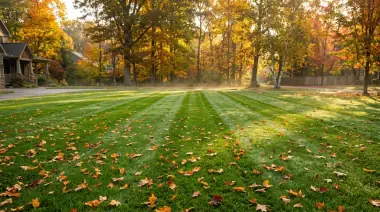
Crisp air, golden leaves, and a lawn that still looks tired from summer - sound familiar? Most people treat spring as the big lawn season, but turf professionals know better: the real work happens in autumn. A proper fall lawn care schedule fixes summer damage, builds deep roots, and sets your grass up to green up thick and early next year.
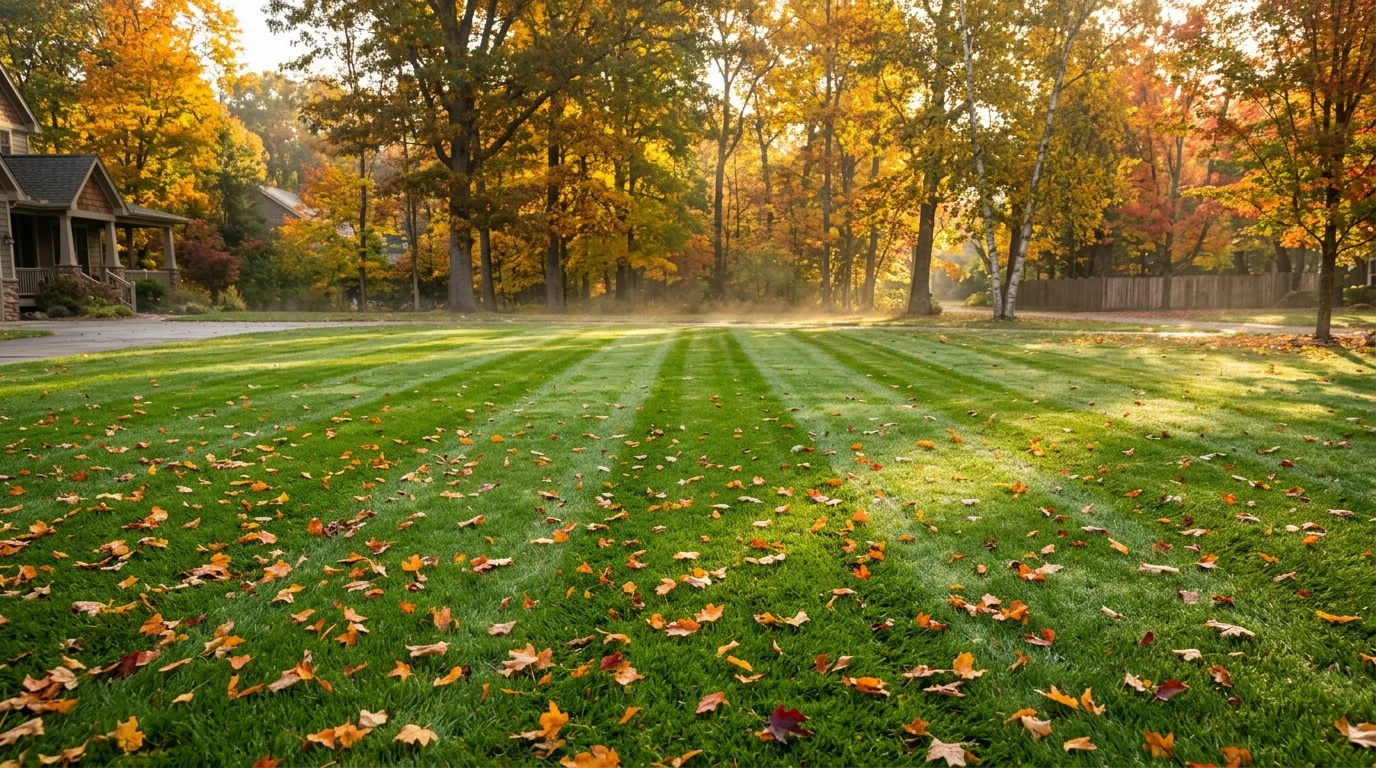
Quick Answer: The fall lawn care schedule is simple: test your soil, mow and clean up in early September, aerate and overseed by mid-September (cool-season grass), apply 0.75-1 lb of nitrogen per 1,000 sq ft in late September to October, keep mowing and watering 1 inch per week until dormancy, and do a final cleanup and mower winterization in November. Warm-season grasses follow a lighter, later version of the same calendar.
At a Glance
| Fact | Detail |
|---|---|
| Most important season | Fall: cool air, warm soil, active roots |
| Cool-season grasses | Fescue, Kentucky bluegrass, ryegrass - peak fall work September-October |
| Warm-season grasses | Bermuda, zoysia, St. Augustine - light touch in fall, big work in spring |
| Soil test | Every 2-3 years; aim for pH 6.0-7.0 |
| Aerate | Early fall for cool-season; spring for warm-season |
| Overseeding rates | Tall fescue 6-8 lb, bluegrass 3-4 lb, ryegrass 5-8 lb per 1,000 sq ft |
| Fall fertilizer | 0.75-1 lb N per 1,000 sq ft, 4-6 weeks before freeze |
| Mowing height | Hold 2.5-3.5 inches; never remove more than one-third of the blade |
| Watering | About 1 inch per week until dormancy |
| Last feedings stop | Before ground freezes - late October to mid-November |
Why Fall Is the Most Important Lawn Season
Ask any extension agent when a lawn is made, and they will point to autumn. The biology is perfect: air temperatures cool into the 60s and 70s while the soil stays warm from summer, and that combination is ideal for roots [1] (Source: Purdue University Extension). Grass shoots slow down, but roots keep pushing deeper and stronger well past the first frost.
Fall also hands you three gifts that spring never does. First, seed germinates beautifully in warm soil with cool air, so overseeding success rates are much higher than in spring [2] (Source: University of Minnesota Extension). Second, summer’s weed pressure fades, so your seed has less competition. Third, diseases like brown patch and dollar spot back off as nights cool.
Cool-Season vs Warm-Season Grass: Two Different Calendars
Your grass type changes nearly every date in the schedule. If it stayed green through winter it is cool-season; if it turned completely straw-brown and woke up late, it is warm-season.
| Grass type | Examples | Fall plan |
|---|---|---|
| Cool-season | Tall fescue, Kentucky bluegrass, perennial ryegrass | Full fall program: aerate, overseed, fertilize |
| Warm-season | Bermuda, zoysia, St. Augustine | Minimal: keep mowing, final feed before dormancy, winterize |
Cool-season grasses enter their growth surge in September, so your heavy lifting - aeration, overseeding, and the main fertilization - happens September through mid-October. Warm-season grasses are winding down; they want one last light feeding four to six weeks before dormancy, a final cut slightly lower than usual, and then rest [3] (Source: Texas A&M AgriLife Extension). If you are unsure which you have, our Bermuda grass and lawn care for beginners guides cover identification.
Month-by-Month Fall Lawn Care Calendar
| Task | September | October | November |
|---|---|---|---|
| Soil test | Take samples, apply lime if needed | Apply lime if test said so | - |
| Mowing | Hold 2.5-3.5 in, weekly | Gradually lower last cuts | Final cut before dormancy |
| Dethatching | Early month if thatch > 0.5 in | - | - |
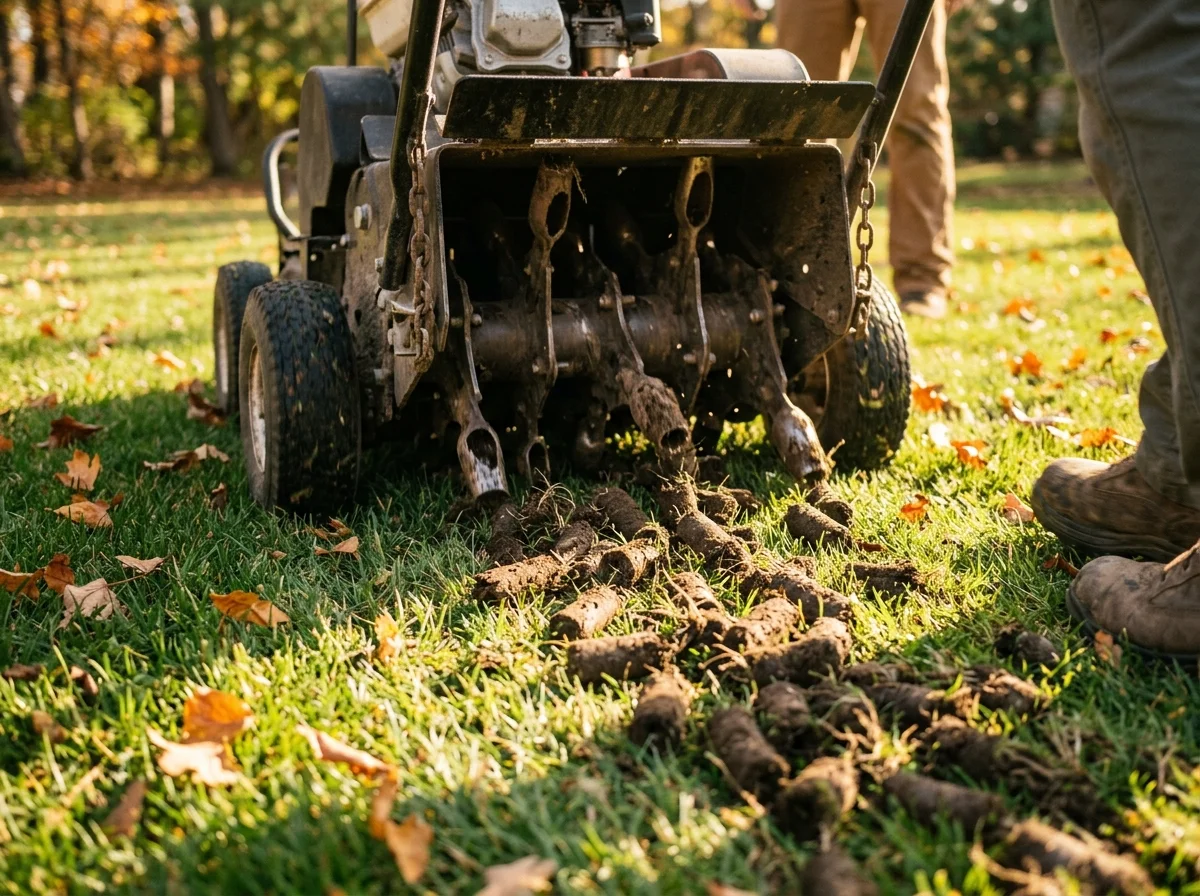
| Aeration | Core aerate, first two weeks | Spot-aerate thin areas | - |
| Overseeding | Mid-month, cool-season only | Early month in cold zones | Too late for seed |
| Fertilizing | Main feeding late month | Second feeding early-mid month | “Winterizer” 4-6 weeks before freeze |
| Weed control | Post-emergent broadleaf control | Fall weed killer on actively growing weeds | Too late for post-emergent |
| Watering | 1 inch/week | 1 inch/week until rain suffices | Stop irrigation at shutdown |
| Leaves | Mulch-mow weekly | Mulch-mow, remove deep layers | Final leaf cleanup |
| Warm-season lawns | Light feed, mow on | Final feed, scalp slightly | Winterize irrigation and mower |
| Equipment | Service mower | Winterize mower, blow out irrigation | Store equipment dry |
September: Repair and Feed
September is the engine of the whole schedule for cool-season lawns. Mow back to 2.5-3 inches, dethatch if it exceeds half an inch, then core aerate - twice over compacted spots. Immediately overseed thin patches so the holes give seed perfect soil contact. Finish with 0.75-1 lb of nitrogen per 1,000 sq ft and water lightly several times a day until germination, typically 7-14 days for ryegrass and fescue, up to 30 for bluegrass.
Warm-season lawns get a light, potassium-focused feeding and ordinary mowing. Do not overseed them - dormancy is weeks away.
October: The Nitrogen Window
October is feeding month. Apply your main fall nitrogen feeding - slow-release is ideal - at roughly 0.75-1 lb of actual nitrogen per 1,000 sq ft [4] (Source: University of Georgia Extension), and water in with about half an inch. Also: mow weekly at 2.5-3.5 inches, mulch-mow leaves, water 1 inch per week, and spot-treat broadleaf weeds like dandelions and clover while they are still growing (clover is a separate topic if you actually want it).
In colder zones (USDA 3-5), overseeding ended in early October. South of zone 7, you still have one more window.
November: Wind Down and Winterize
November is cleanup and preservation. Apply a high-potassium “winterizer” four to six weeks before the ground freezes solid, never after. Keep mowing until growth stops, with the last cut around 2 inches. Bag the last deep leaf layers. Warm-season lawns: drain irrigation and winterize the mower now.
Soil Test, pH, and Lime
Everything starts with knowing what you have. A soil test every 2-3 years tells you pH and nutrient levels, and it is the only way to avoid guessing [5] (Source: Ohio State University Extension). Most turfgrasses do best at a pH of 6.0-7.0. If the test comes back acidic, apply lime in fall, since lime needs months to react with the soil. Follow the test’s exact poundage per 1,000 sq ft; more is not better.
Dethatching vs Aerating: Know the Difference
| Issue | Tool | When | How to know |
|---|---|---|---|
| Thatch layer > 0.5 in | Dethatcher / verticutter | Early fall, before overseeding | Squeeze a plug: brown spongy mat between soil and green blades |
| Hard, compacted soil | Core aerator | Early fall, same window as overseeding | Screwdriver barely pushes in; water pools |
| Both | Dethatch, then aerate | September | Both symptoms present |
These two are often confused, and they fix different problems. Thatch is a layer of dead roots and stems choking the surface. When it passes half an inch it blocks water and nutrients. Aeration pulls 2-4 inch cores out of the soil, relieving compaction so roots, water, and oxygen all penetrate. If your lawn is merely spongy, dethatch. If it is hard, aerate. One pass with a rented core aerator covers 7,000-10,000 sq ft per hour.
Overseeding: Step by Step
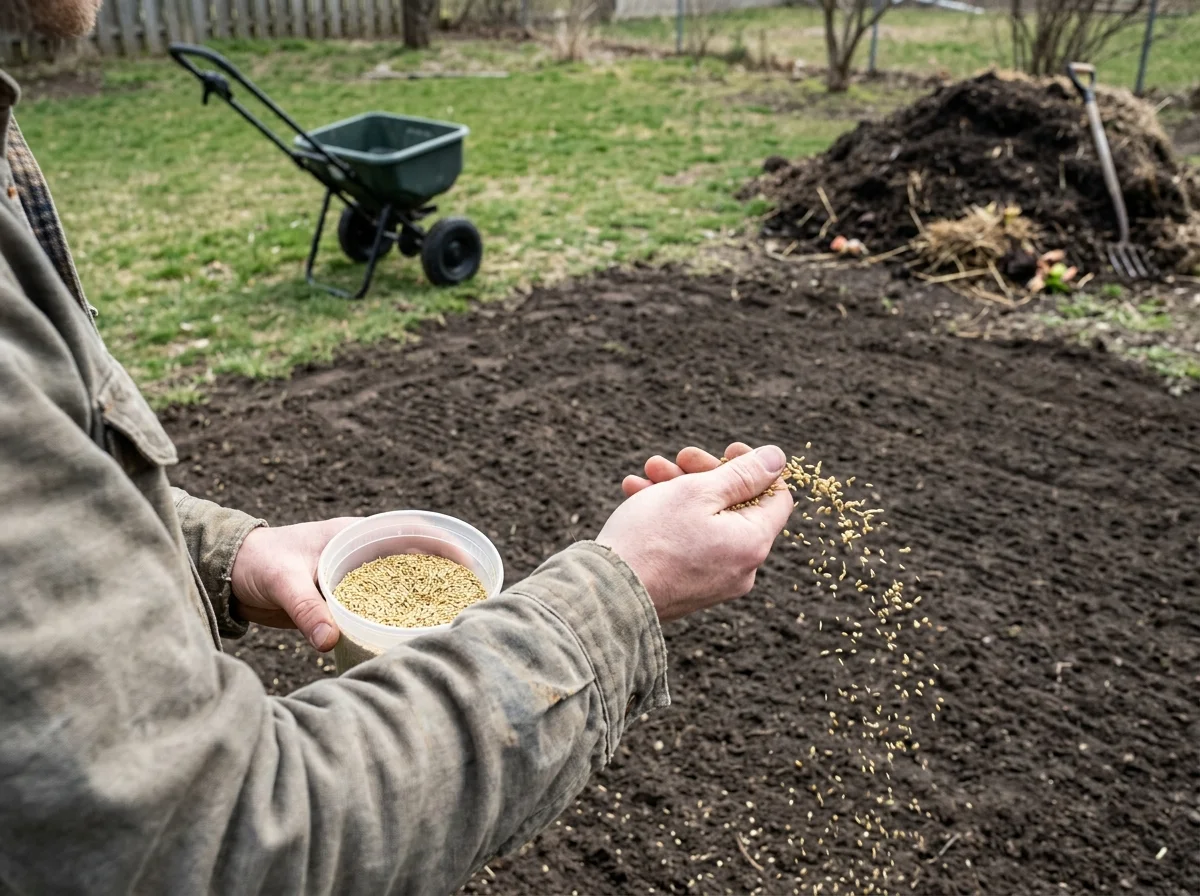
Overseeding fills in thin, patchy lawns and crowds out weeds. Do it right and you will not need half the spring repairs.
- Mow low and bag. Cut to 1.5-2 inches and remove clippings.
- Dethatch or aerate first. Seed needs contact with soil, not thatch.
- Spread seed evenly. Tall fescue 6-8 lb, Kentucky bluegrass 3-4 lb, perennial ryegrass 5-8 lb per 1,000 sq ft.
- Rake lightly at 1/4 inch deep and roll or tamp for contact.
- Water lightly, several times daily. Keep the top half-inch moist - not soggy - until seedlings hit 2 inches.
- First mow at 3 inches once new grass reaches about 3 inches, never removing more than one-third.
- Wait on pre-emergent. Do not apply it until new seedlings have survived 3-4 mowings.
Fall Fertilizing: The Year’s Most Important Feeding
Most lawn experts agree the fall feeding matters more than any spring feeding [6] (Source: The University of Tennessee Extension). The target is 0.75-1 lb of actual nitrogen per 1,000 sq ft, in a slow-release product, followed by a high-potassium “winterizer” in November. Never push past 1 lb N at once, and always water it in. A 20-0-5 bag at 5 lb per 1,000 sq ft delivers 1 lb of N; our how to fertilize lawn guide breaks down the bag math.

Mowing Height and Leaf Management
Keep mowing until the grass stops growing, holding cool-season grasses at 2.5-3.5 inches - taller grass shades soil, stores root energy, and resists weeds [7] (Source: Clemson University Cooperative Extension). For warm-season grasses, bring the last two cuts down slightly so blades dry fast and snow mold has less to feed on. Never remove more than one-third of the blade at once, keep blades sharp, and alternate mowing patterns.
The biggest fall mowing decision is leaves:
- Mulch in place. Mow over dry leaves so a mulching blade chops them into confetti that breaks down by winter, adding organic matter.
- Bag and compost. If leaves pile thick, bag them - do not let a wet mat smother the lawn.
- Blow into beds. Use a blower/vac to shuttle leaves to garden beds, where they make excellent free mulch.
A lawn covered by a thick, wet blanket of leaves will suffocate by spring, so decide weekly.
Fall Weed Control Timing
Fall is the best time to kill broadleaf weeds. Cool-season weeds like dandelions and clover are actively moving food to their roots, so post-emergent herbicides travel with that flow and kill the whole plant. Treat on a mild day above 55°F (13°C) with no rain for 24 hours.
Pre-emergent timing flips to late summer: apply it in late August to early September, before soil temperatures drop below about 70°F (21°C) for several days [8] (Source: Iowa State University Extension). Never apply pre-emergent where you plan to overseed - it will kill your new grass seed too.
Watering Through Fall
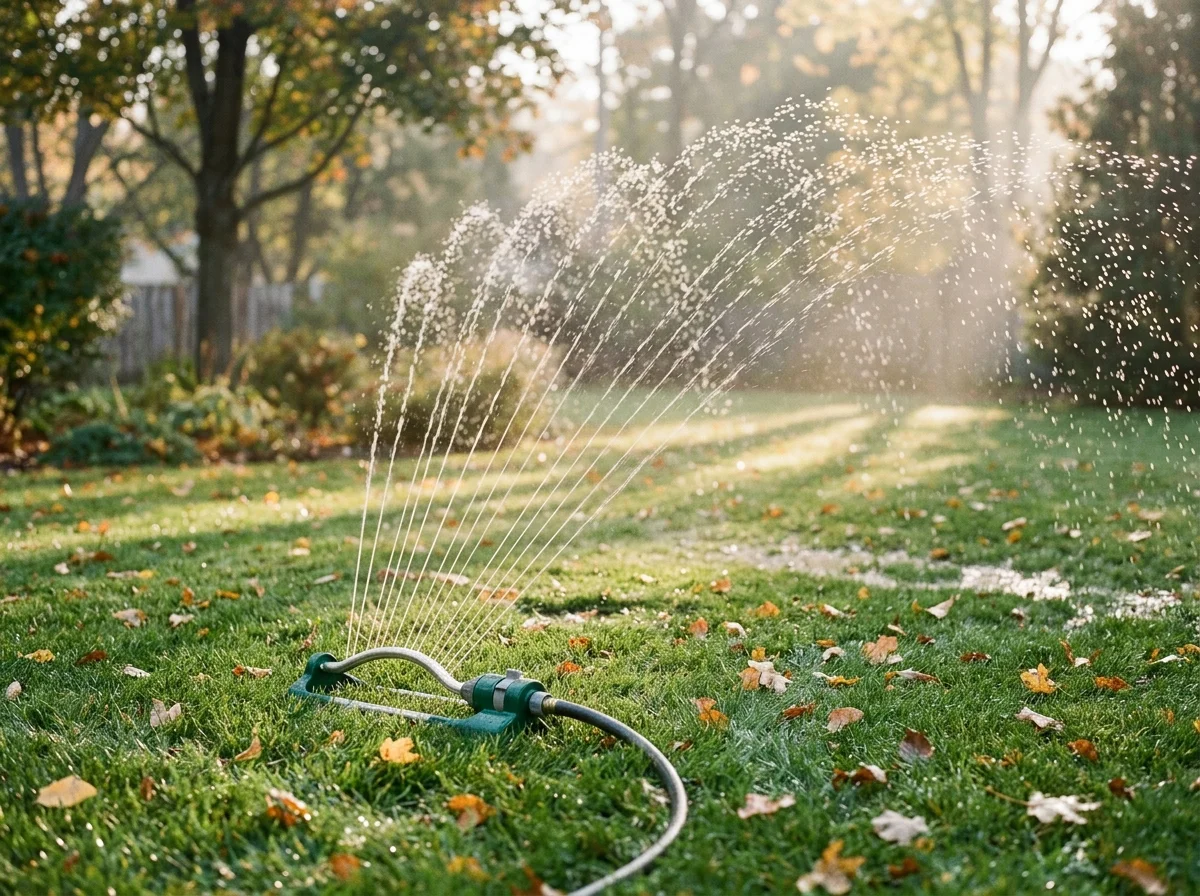
Lawns still need about 1 inch of water per week until they go dormant. As air cools, cut irrigation gradually - usually one deep soaking every 7-10 days by mid-October. Two exceptions: newly overseeded areas need light, frequent watering until seedlings establish, and warm-season lawns need one deep watering before the first hard freeze.
Winterizing: Mower, Irrigation, and Equipment
- Mower: change oil and air filter, sharpen the blade, add fuel stabilizer or run the tank dry, store dry.
- Irrigation: shut off the supply, drain lines, and blow out sprinkler heads where winters freeze.
- Spreader and hand tools: rinse, dry, and oil moving parts.
Common Mistakes
- Fertilizing too late. The fix: last feeding 4-6 weeks before the ground freezes, never on frozen ground.
- Scalping before winter. The fix: hold 2.5-3.5 inches; the last cut may dip to 2 inches at most.
- Overseeding without soil contact. The fix: aerate or dethatch first, rake seed to 1/4 inch, and water lightly daily.
- Ignoring shade. Grass in shade needs less nitrogen and more water; do not apply full sun rates under trees.
- Letting leaves mat down. The fix: mulch-mow weekly or bag and compost.
- Applying pre-emergent over new seed. The fix: Overseed first, pre-emergent only after 3-4 mowings.
- Skipping the soil test. The fix: test every 2-3 years and lime only if the report says so.
Troubleshooting
- Brown patches after overseeding: usually under- or over-watering; keep top half-inch moist, not soggy.
- Yellowing after final feeding: fertilizer burn or late nitrogen; water deeply to dilute and stop feeding.
- Weeds returning in spring: fall post-emergent timing missed; treat broadleaf weeds in early fall next year.
- Thin lawn despite overseeding: seed never touched soil; core aerate and reseed.
- Snow mold in spring: mowing too low or leaves left matted; fix fall mowing and leaf habits.
Seasonal Fall Lawn Care Checklist
Copy this list and check items off:
- Take soil sample, send to lab (early September)
- Mow to 2.5-3.5 in, bag clippings (September)
- Dethatch if thatch > 0.5 in (early September)
- Core aerate (first two weeks September)
- Overseed with correct rate (mid-September)
- Apply main nitrogen feeding, 0.75-1 lb N/1,000 sq ft (late September-October)
- Mulch-mow leaves weekly (September-November)
- Post-emergent broadleaf weed control on mild days (September-October)
- Water 1 inch/week until dormancy (through October)
- Apply winterizer fertilizer 4-6 weeks before freeze (late October-mid-November)
- Final mow around 2 in (November)
- Winterize mower and irrigation (November)
Frequently Asked Questions
Q: Why is fall the most important season for lawn care?
A: Cool air and warm soil trigger strong root growth, seed germinates easily, and fewer weeds compete with grass, so fall work pays off all next year.
Q: When should I aerate my lawn in fall?
A: Aerate in early fall, ideally September for cool-season grasses, so holes heal while soil is still warm. Warm-season grasses get their main aeration in late spring instead.
Q: What is the best overseeding mix for fall?
A: Match your existing grass: tall fescue at 6-8 lb per 1,000 sq ft, Kentucky bluegrass at 3-4 lb per 1,000 sq ft, or perennial ryegrass at 5-8 lb per 1,000 sq ft.
Q: How much nitrogen should I apply in fall?
A: Apply 0.75 to 1 lb of actual nitrogen per 1,000 sq ft as the main fall feeding, roughly 4-6 weeks before the ground freezes.
Q: Should I keep mowing in the fall?
A: Yes. Keep mowing until growth stops, holding cool-season grasses around 2.5-3.5 inches. Mulch fallen leaves by mowing over them instead of bagging.
Q: When should I stop fertilizing in the fall?
A: Stop before the ground freezes, typically late October to mid-November depending on your region. Fertilizing too late can push tender growth that winter kills.
Q: Can I overseed and apply pre-emergent at the same time?
A: No. Pre-emergent herbicides stop grass seed from germinating. Seed first, and wait until new seedlings have been mowed 3-4 times before any pre-emergent.
Q: How much water does a lawn need in the fall?
A: About 1 inch of water per week from rain or irrigation until the grass goes dormant. New seed needs light watering several times a day until it sprouts.
Related Articles
- Lawn Care for Beginners
- How to Fertilize Your Lawn
- Bermuda Grass Guide
- How to Grow a Clover Lawn
- How to Test Soil pH
- How to Prepare Soil for Planting
- Vegetables to Plant in Fall
- Vegetable Garden Watering Schedule
Sources & References
- Purdue University Extension - Turfgrass Science
- University of Minnesota Extension - Lawn Care
- Texas A&M AgriLife Extension - Turfgrass
- Penn State Extension - Lawn Fertilization
- Ohio State University Extension (Ohioline)
- Clemson University Cooperative Extension - Mowing Lawns
- Iowa State University Extension - Lawn Weeds
- University of Georgia Extension
- University of Tennessee Extension
