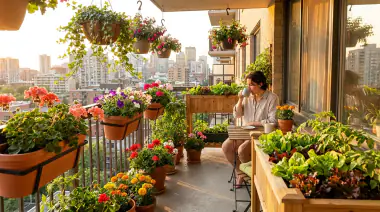
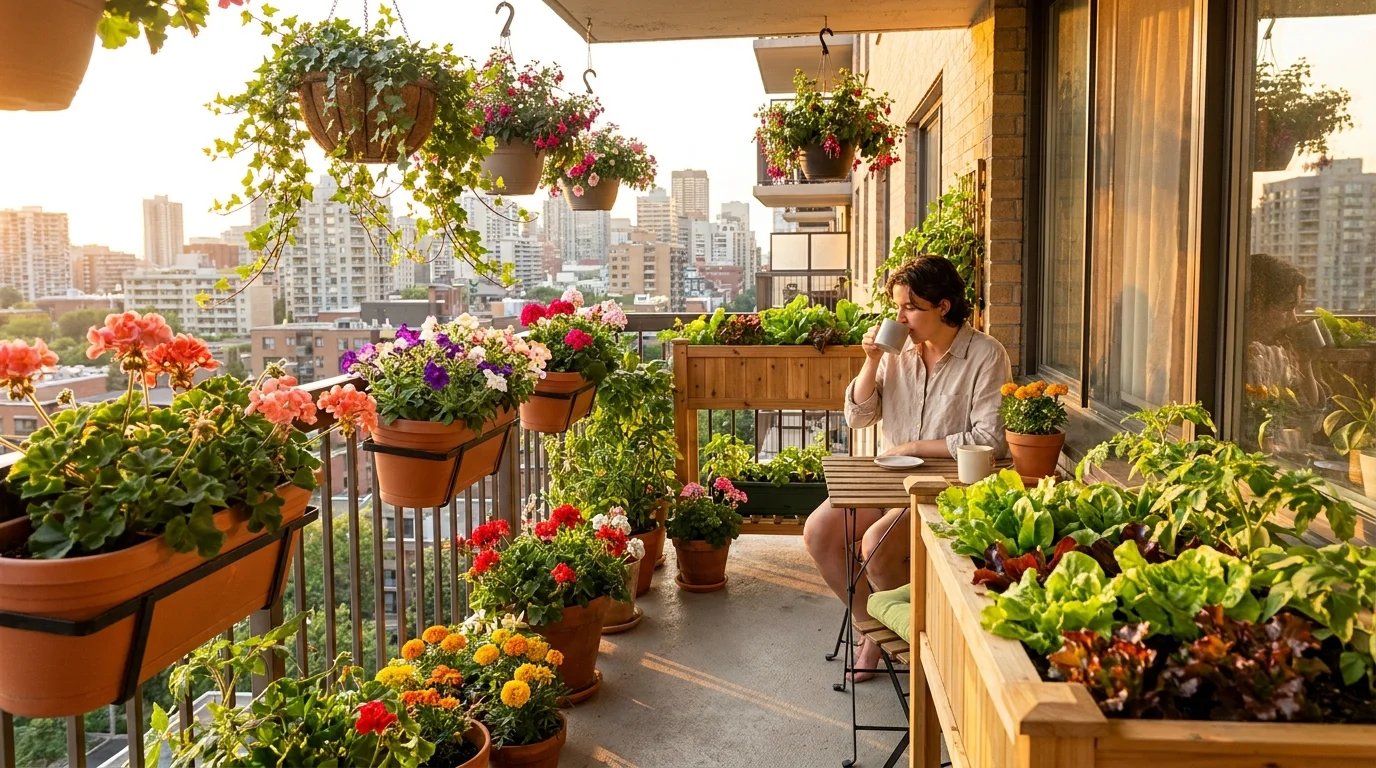
The first spring I had a balcony, it was concrete and sadness. Twelve feet by four feet of gray slab facing east, overlooked by three neighbors, and exposed to whatever wind funneled between the apartment buildings. I stood at the door with a coffee and thought, this is not a garden. This is a parking spot for air conditioners.
Three months later, that same balcony held thirty-six pots, two hanging baskets, a railing planter bursting with lettuce, and a dwarf tomato plant that gave me seventeen tomatoes by August. The neighbors stopped looking past it and started asking what I was growing. The wind still funneled through. The concrete still got hot. But something shifted the moment I stopped seeing limitations and started seeing possibilities.
Balcony gardening is not a lesser version of real gardening. It is a different kind of garden — one that demands creativity, rewards experimentation, and brings green life into spaces that concrete forgot. Whether you have a closet-sized balcony in a studio apartment or a sprawling terrace, these ideas will help you build a garden that thrives in your exact conditions.
Quick Answer: Start a balcony garden by assessing your sun exposure (south-facing gets the most, north-facing the least), then choose containers with drainage holes and lightweight potting mix. Place sun-loving herbs, tomatoes, and peppers in the brightest spots, and lettuce, spinach, and shade-tolerant plants in shadier corners. Use vertical space with wall planters and hanging baskets, railing planters for herbs and greens, and shelves or tiered stands to multiply growing area without using floor space. Water regularly since containers dry faster than ground soil, and feed with diluted fertilizer every 2 to 4 weeks.
At a Glance
| Fact | Details |
|---|---|
| Minimum space needed | 2 by 3 feet for a few containers |
| Sun requirements | 4 to 8 hours depending on crops chosen |
| Containers | Drainage holes mandatory, lightweight preferred |
| Soil | Potting mix, not garden soil |
| Weight limit | Check building specs; typically 40 to 50 lbs/sq ft |
| Best plants | Herbs, lettuce, radishes, compact tomatoes, flowers |
| Watering | Daily in summer, every 1 to 2 days in cooler months |
| Budget to start | $50 to $150 for basic setup |
Assessing Your Balcony — Sun, Wind, and Space
Before buying a single pot, spend a day observing your balcony. Track where the sun hits and for how long. South-facing balconies get the most direct sun — often 6 to 8 hours — making them ideal for tomatoes, peppers, and sun-loving herbs. East-facing balconies get gentle morning light, perfect for leafy greens and herbs that scorch in intense afternoon sun. North-facing balconies receive minimal direct sun, so focus on shade-tolerant plants like lettuce, spinach, mint, and ferns.
Wind is the silent saboteur of balcony gardens. High-floor balconies and those between buildings experience gusts that topple lightweight pots, dry soil rapidly, and snap tender stems. If your balcony is windy, weigh down containers with heavy stones at the bottom, choose sturdy square or rectangular pots over round ones that roll, and position delicate plants behind windbreaks like shelving units or taller, hardier plants.
Measure your actual growing space. A standard apartment balcony is roughly 4 by 8 feet — 32 square feet of potential garden. That is enough room for 15 to 20 containers of various sizes, plus vertical space on walls and railings. Even a 2-by-3-foot micro-balcony can hold a tiered shelf with six to eight pots.
For container selection guidance, see my vegetables to grow in containers for depth and width requirements by crop.
Container Garden Ideas — The Foundation
1. Railing Planters
Railing planters hook over your balcony railing and grow outward, using zero floor space. They are ideal for herbs, lettuce, strawberries, and trailing flowers. Look for planters at least 6 inches deep with built-in drainage saucers. Fill with lightweight potting mix and plant densely — railing planters dry quickly, so consistent watering matters more here than in larger pots.
2. Tiered Plant Stands
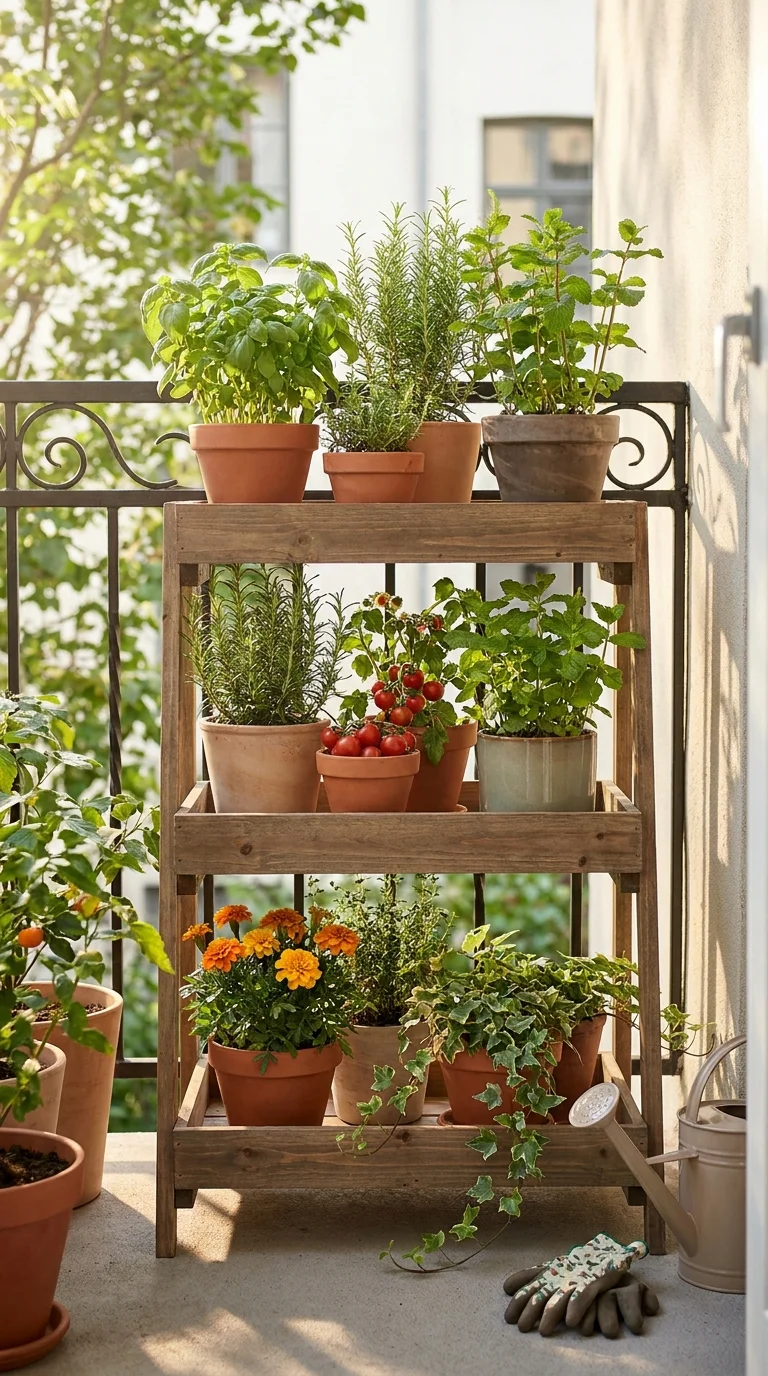
A three-tier plant stand near a sunny wall multiplies your growing area by three without expanding the footprint. Place sun-hungry plants on the top tier closest to light, and shade-tolerant herbs on lower tiers. Metal or wooden stands with open shelves allow light to filter through, preventing lower plants from being shaded out.
3. Window Box Planters
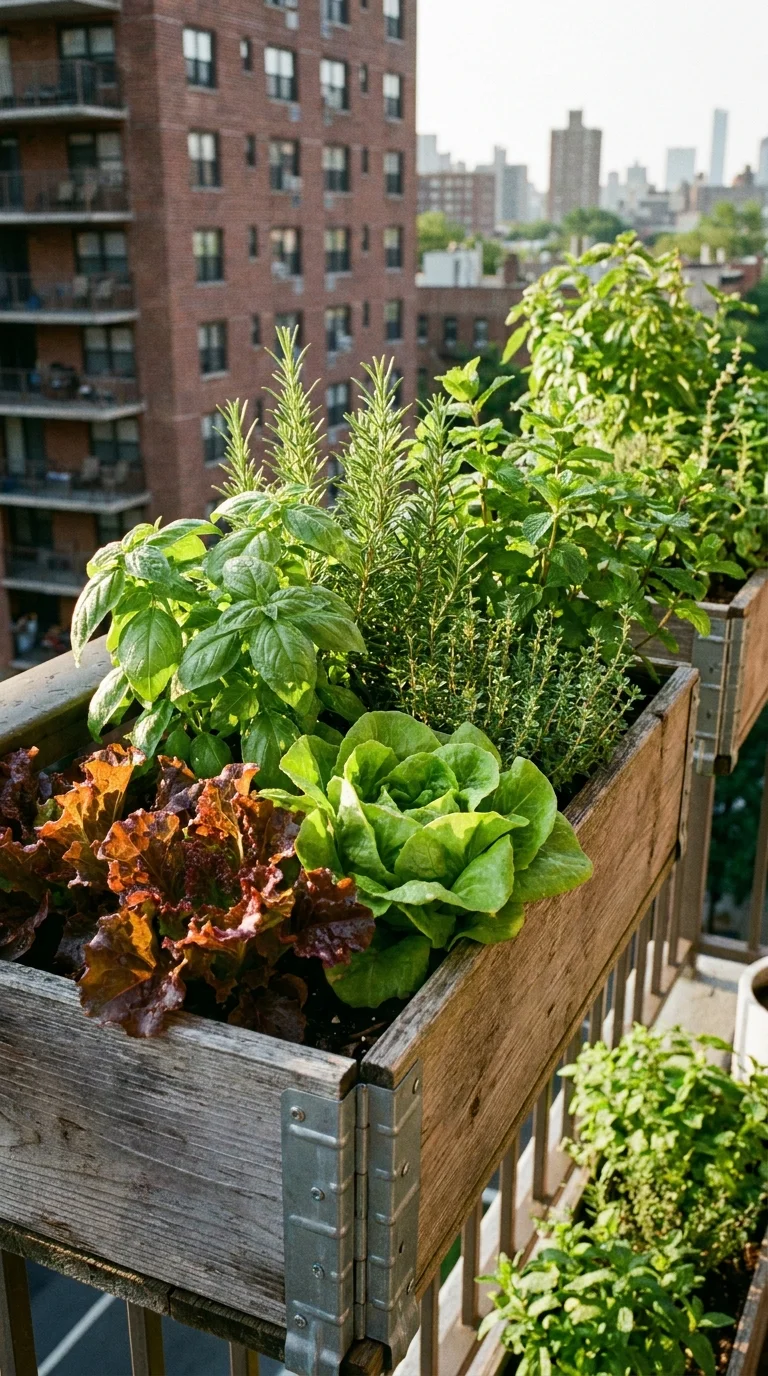
Long, narrow window boxes mounted on balcony walls or set on the floor hold rows of lettuce, spinach, or herbs. They create a clean, organized look and are easy to water with a single pour. Line them with landscape fabric before adding soil to prevent mix from washing through drainage holes.
4. Fabric Grow Bags
Fabric pots are lightweight, fold flat for storage, and promote healthy root growth through air pruning. They come in sizes from 1 gallon (herbs) to 20 gallons (tomatoes or peppers). The breathable fabric prevents root circling and overwatering, making them forgiving for beginners. They are also significantly lighter than ceramic or terracotta — important if weight is a concern.
5. Hanging Baskets
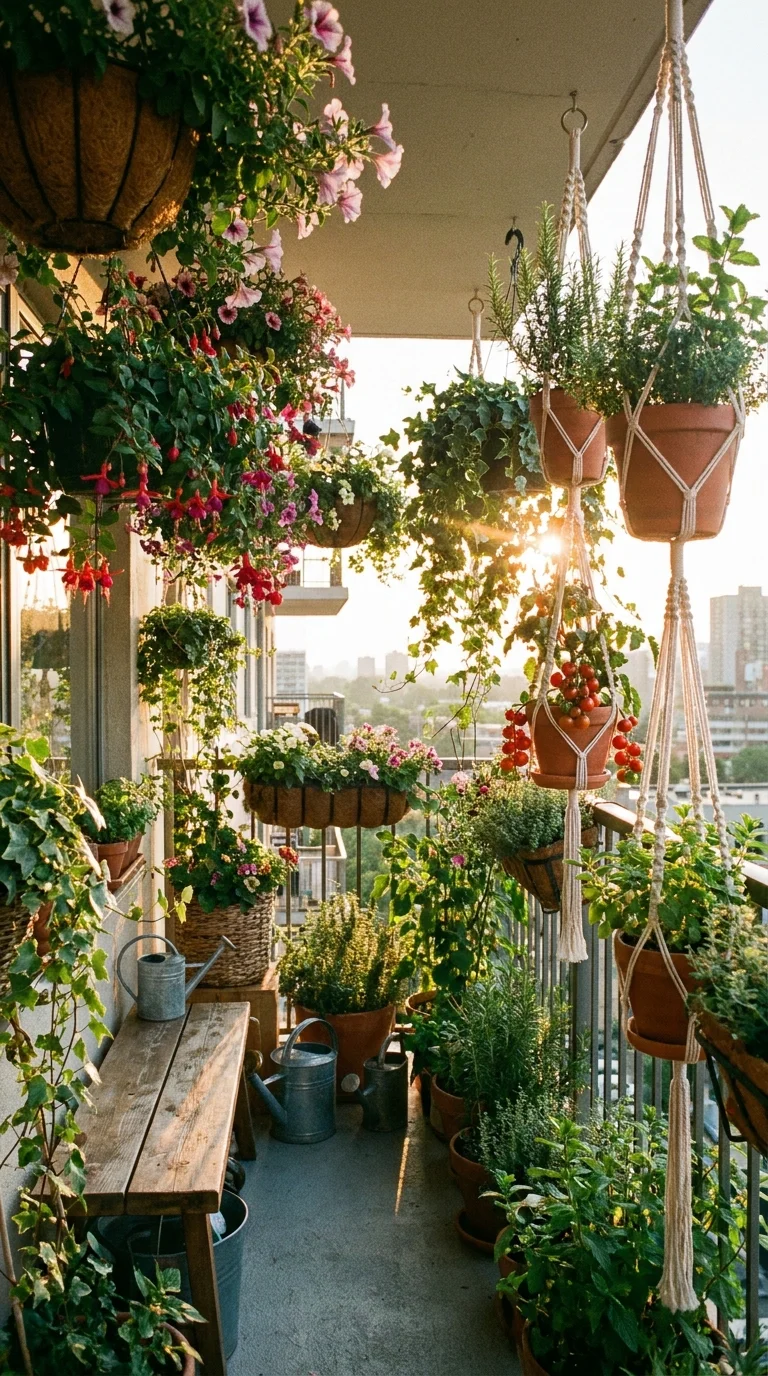
Suspend hanging baskets from ceiling hooks or shepherd’s hooks attached to railings. They are perfect for cherry tomatoes, trailing herbs like thyme, and flowering plants like petunias and fuchsias. Hanging baskets dry fast in sun and wind, so choose self-watering varieties or check moisture daily.
6. Repurposed Containers
Old wooden crates, metal buckets, colanders, and even clean food containers can become planters with a few drainage holes drilled in the bottom. Vintage colanders make charming herb planters — the existing holes provide drainage naturally. Wooden crates lined with burlap hold soil while allowing air circulation to roots.
Vertical Garden Ideas — Growing Up, Not Out
7. Wall-Mounted Pocket Planters
Fabric or felt wall planters with multiple pockets mount on any wall or fence and grow herbs, strawberries, or small flowers. They transform blank walls into living tapestries. Water from the top pocket and let moisture wick downward through the layers. These work particularly well on north-facing walls where ground-level light is limited.
8. Trellis Systems
Attach a trellis to a wall or railing and train climbing plants like peas, beans, or small cucumbers upward. Vertical climbing saves floor space and improves air circulation around foliage, reducing disease risk. A simple bamboo trellis or metal grid panel costs under twenty dollars and dramatically expands what you can grow.
9. Ladder Shelves
A leaning ladder shelf against a wall creates a tiered display that holds pots of increasing size from top to bottom. Place small herbs on upper rungs and larger tomato or pepper pots on lower rungs where weight is better supported. The open design allows light to reach all levels.
10. Magnetic Planters
Magnetic planters attach to metal surfaces — railings, metal wall panels, or even the side of a metal storage cabinet. They hold small herbs and succulents and turn otherwise unused metal surfaces into growing space. Check that magnets are strong enough to hold the weight of wet soil.
11. PVC Pipe Vertical Garden
Cut a length of 4-inch PVC pipe horizontally, drill drainage holes in the bottom of each section, and mount it on a wall or railing. Fill each section with potting mix and plant herbs or lettuce. This DIY system is lightweight, inexpensive, and creates a striking modern look.
Creative Container Ideas — Beyond Basic Pots
12. Tiered Strawberry Planters
Strawberry planters with multiple pockets or tiers are designed for strawberries but work beautifully for herbs and small flowers. The cascading growth of strawberries makes these planters visually dramatic while the tiered design maximizes vertical space.
13. Colander Planters
Kitchen colanders are built for drainage. Line with landscape fabric, fill with potting mix, and plant herbs. The perforated metal sides allow excellent air circulation to roots. Hang them from ceiling hooks or place them on shelves for a quirky, functional garden accent.
14. Watering Can Planters
Vintage or decorative watering cans with the spout removed make charming planters for trailing plants like ivy, creeping thyme, or trailing rosemary. Drill a drainage hole in the bottom if the can does not have one. They add personality to a balcony while holding a surprising amount of soil.
15. Bookshelf Garden
An old wooden bookshelf placed against a wall becomes a multi-level garden station. Each shelf holds different crops — herbs on top, lettuce in the middle, radishes on the bottom. Paint the shelf to match your decor and line shelves with plastic trays to catch water runoff.
16. Gutter Garden
Mount old rain gutters horizontally on a wall at staggered heights. Fill with potting mix and plant lettuce, herbs, or strawberries. Gutter gardens are lightweight, inexpensive, and produce impressive yields in a narrow footprint. Drill drainage holes every 6 inches along the bottom.
17. Egg Carton Seed Starters
Save cardboard egg cartons for starting seeds. Fill each cell with moist potting mix, sow one seed per cell, and place on a tray. When seedlings are ready to transplant, tear off individual cells and plant them directly in larger containers — the cardboard decomposes in soil.
Vegetable and Herb Ideas for Balcony Gardens
18. Salad Garden
Dedicate a corner or shelf to a salad garden: loose-leaf lettuce, spinach, arugula, and herbs like dill and chives. Plant in a wide, shallow container and harvest outer leaves as needed. One 18-inch container of lettuce can provide weekly salads for a household from spring through fall.
19. Salsa Garden
Group tomato, pepper, cilantro, and onion plants together for a salsa garden. A dwarf tomato like ‘Tiny Tim’ in a 5-gallon pot, a jalapeño pepper in a 3-gallon pot, and cilantro and green onions in smaller pots beside them give you everything for fresh salsa from your balcony.
20. Herb Spiral
Build a small herb spiral using stacked pots or stones arranged in a spiral pattern on a flat container. Plant rosemary and thyme at the top (they prefer drier conditions), basil and parsley in the middle, and mint and chives at the bottom where moisture collects. The spiral creates microclimates that suit different herbs in one compact display.
21. Tea Garden
Grow herbs for homemade tea: mint, chamomile, lemon balm, and lavender. Mint needs its own pot to prevent spreading. Chamomile grows easily from seed and produces cheerful daisy-like flowers. Harvest leaves and flowers, dry them on a screen, and store in glass jars for year-round tea.
22. Edible Flower Garden
Combine nasturtiums, marigolds, violas, and borage for a garden that feeds both eyes and plate. Nasturtium leaves and flowers taste peppery in salads. Marigold petals add color to dishes. Violas crystallize beautifully for desserts. Borage flowers taste like cucumber and garnish cocktails.
Flower and Ornamental Ideas
23. Pollinator Garden
Even a small balcony can attract bees and butterflies with the right flowers. Plant lavender, salvia, zinnias, and cosmos in sunny spots. Avoid pesticides — let a few aphids live to feed ladybugs. A small water dish with pebbles gives pollinators a place to drink safely.
24. Fragrance Garden
Fill your balcony with scent: jasmine on a trellis, lavender in pots, rosemary along the railing, and gardenias in a sheltered corner. Fragrance gardens turn evening relaxation into a sensory experience. Place fragrant plants near seating areas where you can brush past them and release their perfume.
25. Color Theme Garden
Choose one color family and plant accordingly. An all-white garden with white petunias, white alyssum, and white roses feels elegant and calm. A red-and-orange garden with marigolds, red geraniums, and orange nasturtiums feels energetic and warm. Monochromatic planting creates visual impact even in small spaces.
26. Night Garden
Plant white-flowered and fragrant species that bloom or smell best in evening: moonflower vines, nicotiana, evening primrose, and white stock. A night garden transforms your balcony into an evening retreat, especially with string lights woven through the plants.
Functional and Space-Saving Ideas
27. Privacy Screen
Use tall plants or trellised vines to create a living privacy screen from neighboring balconies. Bamboo, ornamental grasses, or climbing jasmine on a tall trellis block views while adding greenery. Place the screen along the railing that faces the most direct neighbor exposure.
28. Mini Greenhouse
A small cold frame or cloche on your balcony extends the growing season by protecting plants from early fall frosts and late spring chills. Clear plastic over a wooden frame traps heat and creates a warm microclimate for starting seeds early or keeping herbs producing into November.
29. Drip Irrigation System
A simple drip irrigation kit with a battery-operated timer eliminates daily watering chores. Run tubing from a reservoir bucket to each pot, set the timer for early morning, and let the system water while you sleep. This is especially valuable for balconies that dry quickly in sun and wind.
30. Compost Bin
A small vermicomposting bin on your balcony turns kitchen scraps into nutrient-rich compost without odor. Red wigglers in a sealed bin with ventilation holes process fruit and vegetable scraps, coffee grounds, and eggshells into worm castings that feed your plants. The bin fits under a chair or in a corner.
31. Seating and Garden Combo
Integrate seating with your garden. A bench with built-in planters on each end serves double duty. Hanging baskets above a bistro table create a dining area surrounded by greenery. A window box along the base of a chair rail adds herbs within arm’s reach of your morning coffee spot.
Seasonal Balcony Garden Ideas
32. Spring Container Meadow
Mix wildflower seeds with potting mix in a wide, shallow container and let them grow naturally. A spring meadow in a pot requires minimal care — just water and watch. Cosmos, poppies, cornflowers, and daisies create a cottage-garden feel on a modern balcony.
33. Summer Tropical Display
Tropical plants thrive in summer heat and create a vacation feel. Cannas, elephant ears (colocasia), and banana plants grow in large pots and produce dramatic foliage. Bring them indoors before first frost and overwinter them in a cool, dark space for replanting next spring.
34. Fall Harvest Display
Grow ornamental kale, purple cabbage, and chrysanthemums for a fall display that is both beautiful and edible. Ornamental kale tastes mild when young and looks spectacular in deep purples and pinks. Arrange with mini pumpkins and dried cornstalks for a harvest celebration.
35. Winter Interest Garden
Even in cold climates, balcony containers can hold winter interest. Evergreen herbs like rosemary and thyme stay green year-round. Ornamental grasses hold their structure through snow. Winterberry holly in a pot provides red berries against gray skies. A balcony garden does not hibernate — it transforms.
Common Balcony Gardening Mistakes
- Overwatering. Containers drain faster than garden beds, so beginners often water too frequently. Check soil moisture daily — if the top inch is dry, water thoroughly. If damp, wait.
- Using the wrong soil. Garden soil compacts in pots and suffocates roots. Always use potting mix designed for containers.
- Ignoring weight limits. Water-saturated soil is heavy. A 10-gallon pot of wet soil can weigh over 50 pounds. Distribute weight, use lightweight containers, and check your building’s load limits.
- Neglecting drainage. Pots without drainage holes cause root rot within weeks. If you love a decorative pot without holes, use it as an outer shell for a plastic pot with drainage.
- Planting too much too soon. Start with 5 to 8 containers, learn what thrives in your conditions, then expand. An overwhelmed balcony becomes a chore instead of a joy.
Budget-Friendly Balcony Garden Ideas
You do not need to spend a fortune to create a beautiful balcony garden. Start with seeds instead of transplants — a $2 packet of lettuce seeds produces dozens of plants. Repurpose containers from your kitchen or find free pots on local marketplaces. DIY trellises from bamboo stakes and twine cost nearly nothing. A bag of potting mix, a handful of herb starts, and a sunny afternoon are enough to begin.
The real investment is attention, not money. Water consistently, feed monthly, harvest regularly, and adjust as you learn what your specific balcony needs. A $50 balcony garden that receives daily care will outperform a $500 garden that is ignored.
Related Articles
- Indoor Vegetable Gardening
- Vegetables to Grow in Containers
- Best Low Maintenance Indoor Plants
- How to Grow Herbs in Pots
- Flower Gardening for Beginners
- Best Fertilizer for Vegetable Garden
- How Often to Water Vegetables
Sources & References
- University of Illinois Extension — Small Space Gardening — https://extension.illinois.edu/
- Missouri Botanical Garden — Container Gardening — https://www.missouribotanicalgarden.org/
- Royal Horticulture Society — Balcony Gardening — https://www.rhs.org.uk/
- Cornell University — Container Vegetable Production — https://www.grow vegetables.cornell.edu/
- American Society for Horticultural Science — Urban Container Gardening — https://www.ashs.org/
