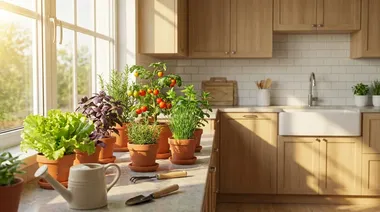
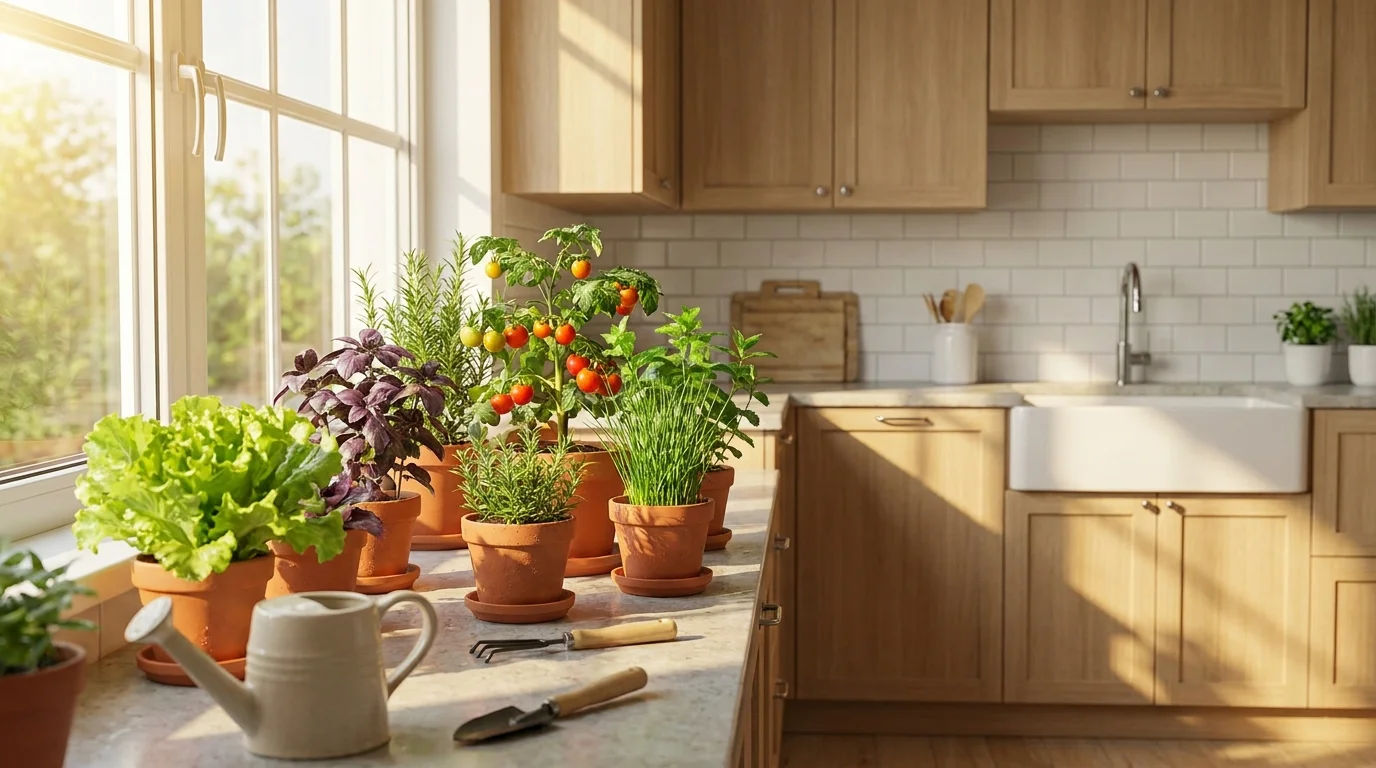
The first time I grew lettuce on my kitchen windowsill, I expected nothing. It was January, snow was piled against the glass, and I had tucked three tiny spinach seeds into a shallow terracotta pot on a whim. Three weeks later, I was pinching leaves for a salad that tasted like spring — crisp, sweet, and impossibly green for the middle of winter. That small pot changed how I thought about food, space, and seasons. If you have a window, a countertop, or even a corner with a lamp, you have a garden waiting to happen.
Indoor vegetable gardening is not a compromise or a hobby for people without yards. It is a legitimate, rewarding way to grow fresh food twelve months a year. With the right containers, a decent potting mix, and either a sunny window or a simple grow light, you can harvest salads, herbs, and even tomatoes without stepping outside. This guide covers everything you need to know — from choosing the right vegetables to troubleshooting the indoor problems that trip up beginners.
Quick Answer: To grow vegetables indoors, choose a location with 6 to 8 hours of direct sunlight or set up a full-spectrum grow light for 12 to 16 hours daily. Use containers with drainage holes, fill them with sterile potting mix (not garden soil), and plant varieties suited to containers — lettuce, spinach, herbs, radishes, green onions, compact tomatoes, and peppers. Water when the top inch of soil is dry, feed with diluted liquid fertilizer every 2 to 4 weeks, and maintain temperatures between 60 and 75°F for most crops.
At a Glance
| Fact | Details |
|---|---|
| Sun / Light | 6 to 8 hours direct sun or 12 to 16 hours under grow lights |
| Temperature | 60 to 75°F (15 to 24°C) for most vegetables |
| Containers | 6 to 12 inches deep, drainage holes required |
| Soil | Sterile potting mix, lightweight and well-draining |
| Water | When top inch is dry, every 2 to 4 days |
| Fertilizer | Half-strength liquid every 2 to 4 weeks |
| Best Vegetables | Lettuce, spinach, herbs, radishes, green onions, compact tomatoes, peppers |
| Difficulty | Beginner-friendly with basic supplies |
Why Indoor Vegetable Gardening Works Better Than You Think
The biggest myth about indoor gardening is that it does not produce real food. People imagine sad, leggy herbs on a windowsill and dismiss the idea. But consider what plants actually need: light, water, nutrients, warmth, and air. Every single one of those can be provided indoors, and often more consistently than outdoors where weather, pests, and drought create chaos you cannot control.
Indoor gardening gives you control. You decide the temperature. You decide the water. You decide the soil quality and the light schedule. No aphids drifting in from the neighbor’s roses, no surprise frost in May, no rabbits nibbling your lettuce to stubble. For people in apartments, condos, or homes with small or nonexistent yards, indoor vegetable gardening turns dead space into a living pantry.
The economics make sense too. A single packet of lettuce seeds costs two dollars and produces dozens of harvests over months. A potted herb at the grocery store runs four to six dollars and wilts within a week. Indoor gardening pays for itself within the first season, and the flavor of a just-picked leaf of basil beats anything in a plastic clamshell.
If you are new to gardening altogether, my how to start a vegetable garden for beginners covers foundational skills that transfer directly indoors — soil preparation, watering technique, and understanding what plants need to thrive.
The Best Vegetables to Grow Indoors (And What to Skip)
Not every vegetable works indoors. Potatoes need deep trenches, watermelons need sprawling vines, and corn needs wind pollination. But a surprising number of crops do beautifully in containers on a sunny counter or under a modest grow light setup.
Leafy Greens — The Indoor Garden Champions
Lettuce, spinach, kale, arugula, and Swiss chard are the easiest indoor vegetables. They have shallow root systems, tolerate cooler temperatures, mature quickly (harvest in 30 to 45 days), and actually prefer the 60 to 70°F range most homes maintain in winter. Loose-leaf varieties let you cut outer leaves continuously while inner leaves keep growing — one plant feeds you for weeks.
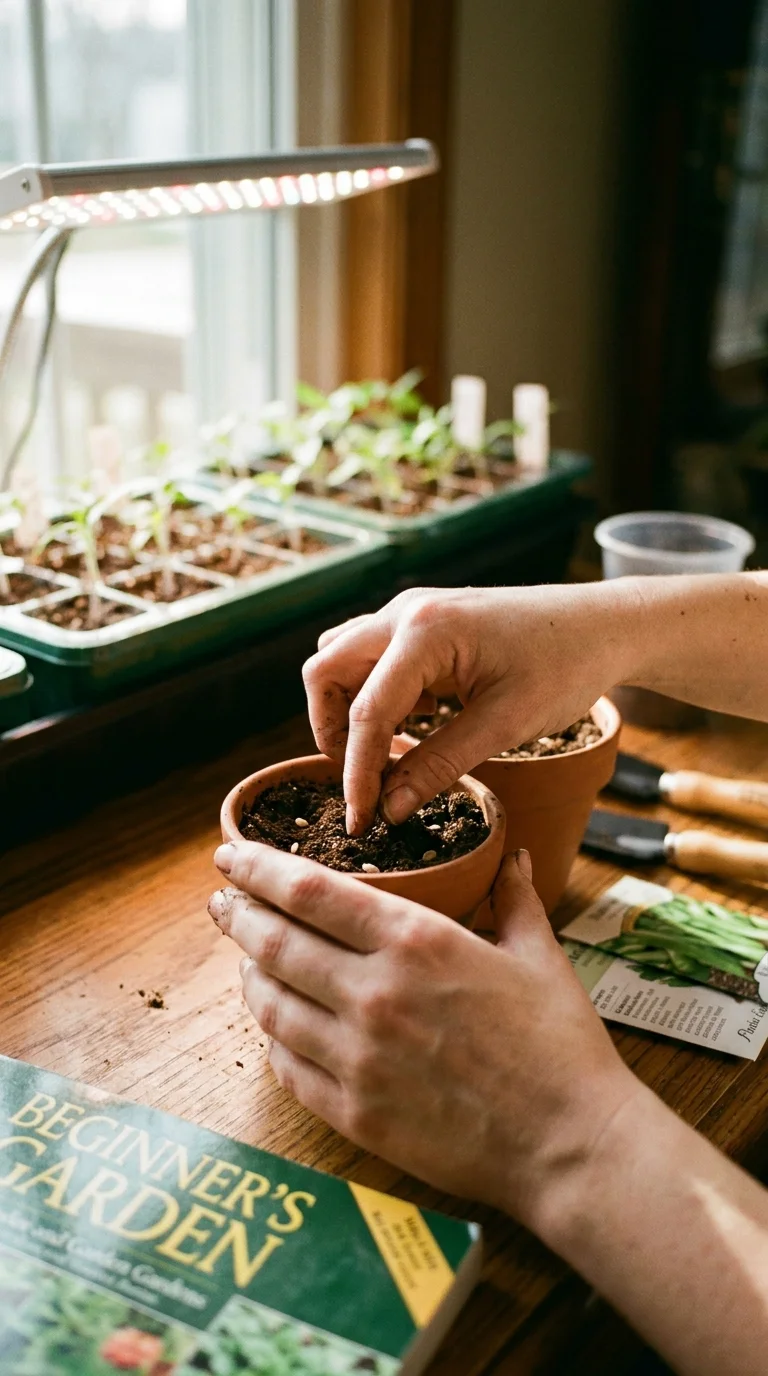
Plant spinach seeds ¼ inch deep, thin to 3 inches apart, and harvest baby leaves in three weeks or full leaves in five. Lettuce mixes do well in shallow containers — a 6-inch-deep window box can hold a row of lettuce that gives you salad every few days from about a month after sowing.
Herbs — The Flavor Multiplier
Basil, parsley, cilantro, chives, thyme, mint, and oregano thrive indoors. They take minimal space, produce continuously, and transform home cooking. Basil wants warmth and the most light — a south-facing window or grow light for 14 hours keeps it bushy. Mint is nearly indestructible but needs its own pot since it spreads aggressively. Cilantro bolts quickly in heat, so keep it cool and succession-sow every three weeks for a steady supply.
My how to grow basil at home and how to grow mint without spreading walk through indoor-specific herb techniques in detail.
Radishes — The Speed Demon
Radishes go from seed to harvest in 25 to 30 days, making them the fastest indoor crop. They need a container at least 6 inches deep, loose soil, and consistent moisture. Plant seeds ½ inch apart, thin to 1 inch, and pull when roots are about 1 inch in diameter. French Breakfast and Cherry Belle varieties do particularly well in pots.
Green Onions — The Regrow King
Green onions are almost impossible to fail at. Plant sets (tiny bulbs) 1 inch apart in a shallow pot, or regrow scraps from grocery store bunches by placing roots in water for a few days then transferring to soil. Harvest when tops are 6 to 8 inches tall, cutting just above the soil line. They regrow repeatedly from the same base.
Compact Tomatoes and Peppers — The Ambitious Indoor Crop
Fruiting vegetables need more light, warmth, and patience, but dwarf and patio varieties like ‘Tiny Tim,’ ‘Red Robin,’ and ‘Patio Princess’ tomatoes do well indoors with a grow light. Peppers, especially compact hot pepper varieties, tolerate indoor conditions better than most fruiting crops — they want warmth and light but do not need the massive energy requirements of large tomatoes.
Expect smaller yields than outdoor plants, but the satisfaction of picking a ripe tomato you grew under a desk lamp is worth every watt.
Vegetables to Skip Indoors
Potatoes, sweet potatoes, corn, squash, cucumbers (unless you have a trellis and lots of space), melons, and large varieties of beans and peas all need too much room, light, or pollination assistance to be practical indoors. Focus your limited space on the crops that give you the most return per square inch.
Setting Up Your Indoor Garden Space
Location, Location, Light
The single most important factor for indoor vegetables is light. A south-facing window in the Northern Hemisphere provides the most direct sun — typically 4 to 6 hours even in winter. East-facing windows give gentle morning light suitable for leafy greens. North-facing windows rarely provide enough direct sun for vegetables without supplemental lighting.
Track your light for a full day before committing plants to a spot. Mark the hours of direct sun on a piece of tape on the windowsill. Most vegetables need 6 to 8 hours of direct sun, but 10 to 12 hours under grow lights compensates when natural light falls short.
Grow Lights — The Indoor Gardener’s Secret Weapon
If your windows do not deliver enough sun, grow lights solve the problem permanently. Modern LED grow lights are affordable, energy-efficient, and produce the full spectrum of light plants need. Look for lights rated at 2,000 to 3,000 lumens per square foot for leafy greens and 3,000 to 5,000 lumens for fruiting vegetables.
Position lights 6 to 12 inches above plants and use a timer to run them 12 to 16 hours daily. Plants need darkness too — a consistent day-night cycle prevents stress. A simple shop light with two fluorescent tubes or a dedicated LED panel works well for small setups. See my starting seeds indoors for detailed light recommendations.
Containers — Drainage Is Non-Negotiable
Every indoor vegetable container needs drainage holes. No exceptions. Without them, water pools at the bottom, roots suffocate, and rot sets in within days. If you find a beautiful pot without holes, drill them yourself or use it as a decorative outer pot with a plastic nursery pot inside.
Container depth depends on the crop. Lettuce, herbs, and radishes do fine in 6-inch-deep pots. Tomatoes, peppers, and larger plants need 12 inches or more. Self-watering containers reduce the daily watering burden and maintain more consistent moisture — worth the investment for fruiting crops that are sensitive to drying out.
The Soil Question — Never Use Garden Soil Indoors
Garden soil compacts in containers, drains poorly, and may harbor pests or diseases you do not want inside your home. Use a sterile, lightweight potting mix designed for containers. Look for mixes containing peat moss or coco coir, perlite, and vermiculite. This combination holds moisture while allowing air to reach roots.
For a nutrient boost, mix in a handful of worm castings or compost per gallon of potting mix. This feeds plants slowly without the burn risk of concentrated fertilizers. Refresh potting mix each season — nutrients deplete, and the structure collapses over time.
Watering Indoor Vegetables — The Balance That Matters
Overwatering kills more indoor plants than any other cause. The potting mix should feel moist but not soggy — stick your finger 1 inch into the soil. If it is dry, water thoroughly until it drains from the bottom. If it is damp, wait another day or two.
Water quality matters more indoors than out. Tap water with high chlorine or fluoride content can cause brown leaf tips on sensitive plants like lettuce and spinach. Let tap water sit uncovered overnight to dissipate chlorine, or use filtered water. Room-temperature water avoids shocking roots — cold water from the tap in winter can stall growth.
During winter, indoor heating dries the air and accelerates soil moisture loss. Check containers daily and adjust your watering rhythm. In summer, humidity may be higher and plants may need less frequent watering. There is no universal schedule — the finger test is your most reliable guide.
Feeding Indoor Vegetables — Less Is More
Potting mix contains some nutrients, but vegetables are hungry plants that deplete their soil faster than houseplants. Feed with a diluted liquid fertilizer — half the recommended strength — every 2 to 4 weeks during active growth. A balanced fertilizer like 10-10-10 works for leafy greens. For fruiting crops like tomatoes and peppers, use a higher-phosphorus formula like 5-10-10 once flowers appear.
Over-fertilizing causes salt buildup in containers, which burns roots and causes leaf tip browning. If you see white crust on the soil surface, flush the container with plain water until it drains clear, then resume feeding at half strength. Organic options like fish emulsion, seaweed extract, or compost tea work well and are forgiving for beginners.
Common Indoor Gardening Problems and Solutions
Leggy, Stretched Growth
If your plants are reaching desperately toward the light, stretching tall with few leaves, they need more light. Move them closer to the window, add a grow light, or reduce the distance between the light and the plant tops. Leggy plants are weaker and produce less — correcting light early prevents permanent stretching.
Yellowing Leaves
Yellow leaves usually mean one of three things: overwatering (check drainage and let soil dry more between waterings), underwatering (the soil may be bone dry at the root level even if the surface looks damp), or nutrient deficiency (feed with diluted fertilizer). Bottom leaves yellowing first often indicates nitrogen deficiency. Leaves yellowing evenly throughout the plant usually points to water issues.
Pests Indoors
Yes, indoor plants get pests. Fungus gnats love consistently moist potting mix — let the surface dry between waterings and use yellow sticky traps. Aphids may appear on new growth — wipe them off with a damp cloth or spray with diluted insecticidal soap. Spider mites thrive in dry indoor air — mist plants occasionally and check leaf undersides for fine webbing.
My what are fungus gnats and how to get rid of fungus gnats cover indoor pest solutions in detail.
Bolting and Bitterness
Leafy greens bolt (send up flower stalks and turn bitter) when temperatures climb above 75°F or when daylight hours stretch long. Keep greens in the coolest part of your home, away from heat vents and sunny afternoon windows. Succession-sow every 2 to 3 weeks so you always have young, sweet leaves ready before older plants bolt.
Indoor Gardening Systems — From Simple to Sophisticated
The Windowsill Garden
The simplest indoor garden uses containers on a sunny windowsill. Shallow pots for herbs, deeper pots for lettuce, and a tomato in the sunniest corner. This works for beginners with south-facing windows and requires no equipment beyond pots, soil, and seeds.
Hydroponic countertop systems
Commercial hydroponic systems like AeroGarden, Click & Grow, or similar countertop units grow herbs and small vegetables in water with added nutrients, under built-in LED lights. They eliminate soil entirely and accelerate growth — herbs can be ready in 3 to 4 weeks. The upfront cost ranges from 100 to 300 dollars, but the convenience and speed appeal to people who want results without soil management.
DIY Grow Light Shelves
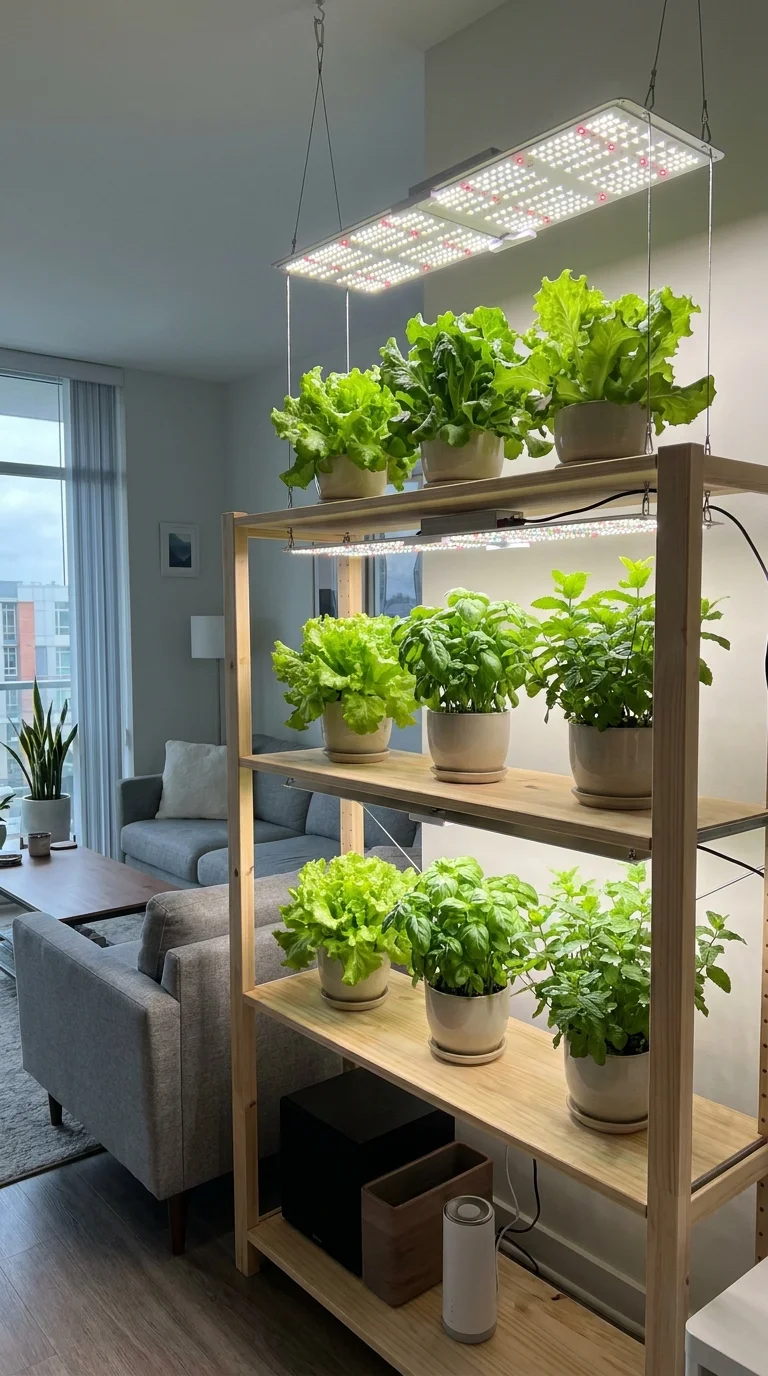
For serious indoor gardeners, a wire shelving unit with LED grow lights attached to each shelf creates a vertical growing system. Each shelf holds multiple containers, lights are on timers, and you can grow dozens of plants in a 2-by-4-foot footprint. This scales up production dramatically and works well for starting seeds, growing salad greens, and maintaining herbs year-round.
For detailed seed-starting techniques, see my starting vegetable seeds indoors guide.
Seasonal Indoor Gardening — What to Grow When
Fall and Winter (September to February)
This is peak indoor gardening season. Outdoor gardens are done, and the desire for fresh greens peaks. Start lettuce, spinach, and herb seeds in September and October for harvests through winter. Grow lights compensate for short days. Winter is also ideal for starting tomato and pepper seeds indoors for spring transplants — see when to start vegetable seeds for timing in your zone.
Spring (March to May)
Transition indoor seedlings outdoors gradually through hardening off. Keep herb pots on the windowsill for kitchen access while outdoor gardens establish. Sow succession plantings of lettuce and radishes indoors for continuous harvest even as outdoor beds come online.
Summer (June to August)
Indoor gardening shifts to herbs for kitchen convenience and heat-sensitive crops like lettuce that bolt outdoors. A north-facing window or air-conditioned room keeps greens producing when outdoor temperatures soar. This is also a good time to experiment with growing microgreens on your counter — they mature in 7 to 14 days and require nothing more than a shallow tray, seeds, and a bit of moisture.
Maximizing Your Harvest in Small Spaces
Vertical Thinking
Stack containers on shelves, hang planters from curtain rods, or use a tiered plant stand to multiply your growing area without using more floor space. A three-tier stand near a south-facing window can hold a dozen pots and produce a steady supply of salad greens and herbs.
Succession Planting
Sow a new batch of lettuce or radish seeds every 2 to 3 weeks so you always have young plants maturing as you harvest mature ones. This prevents the feast-or-famine cycle where everything ripens at once and then nothing is ready for weeks.
Cut-and-Come-Again Harvesting
For leafy greens, cut outer leaves when they reach 4 to 6 inches tall, leaving the center growing point intact. The plant keeps producing new leaves from the middle, giving you multiple harvests from a single planting. This works for lettuce, spinach, kale, chard, and most herbs.
Indoor Vegetable Gardening for Kids and Families
Indoor gardening teaches children where food comes from in a way no book or video can match. A child who watches a seed sprout, grows a lettuce leaf, and eats it in a salad gains a relationship with food that lasts a lifetime. Start with fast-germinating seeds like radishes (sprouts in 3 to 5 days) or beans in a clear jar so roots and shoots are visible.
Give kids their own pot and let them water it daily. The responsibility and the visible results build patience and confidence. A countertop herb garden also teaches cooking skills — snipping basil into pasta sauce or mint into tea connects the garden to the kitchen in a delicious way.
Related Articles
- How to Start a Vegetable Garden for Beginners
- Starting Seeds Indoors
- Best Low Maintenance Indoor Plants
- How to Water Houseplants
- How to Repot Indoor Plants
- Vegetables to Grow in Containers
- Best Fertilizer for Vegetable Garden
Sources & References
- University of California Agriculture and Natural Resources — Indoor Vegetable Gardening — https://anr.ucanr.edu/
- Missouri Botanical Garden — Growing Vegetables Indoors — https://www.missouribotanicalgarden.org/
- Iowa State University Extension — Indoor Gardening — https://hortnews.extension.iastate.edu/
- Cornell University Growing Guide — Indoor Vegetables — https://www.grow vegetables.cornell.edu/
- Royal Horticultural Society — Growing Vegetables Indoors — https://www.rhs.org.uk/
