15 Best Low Maintenance Indoor Plants You Can’t Kill
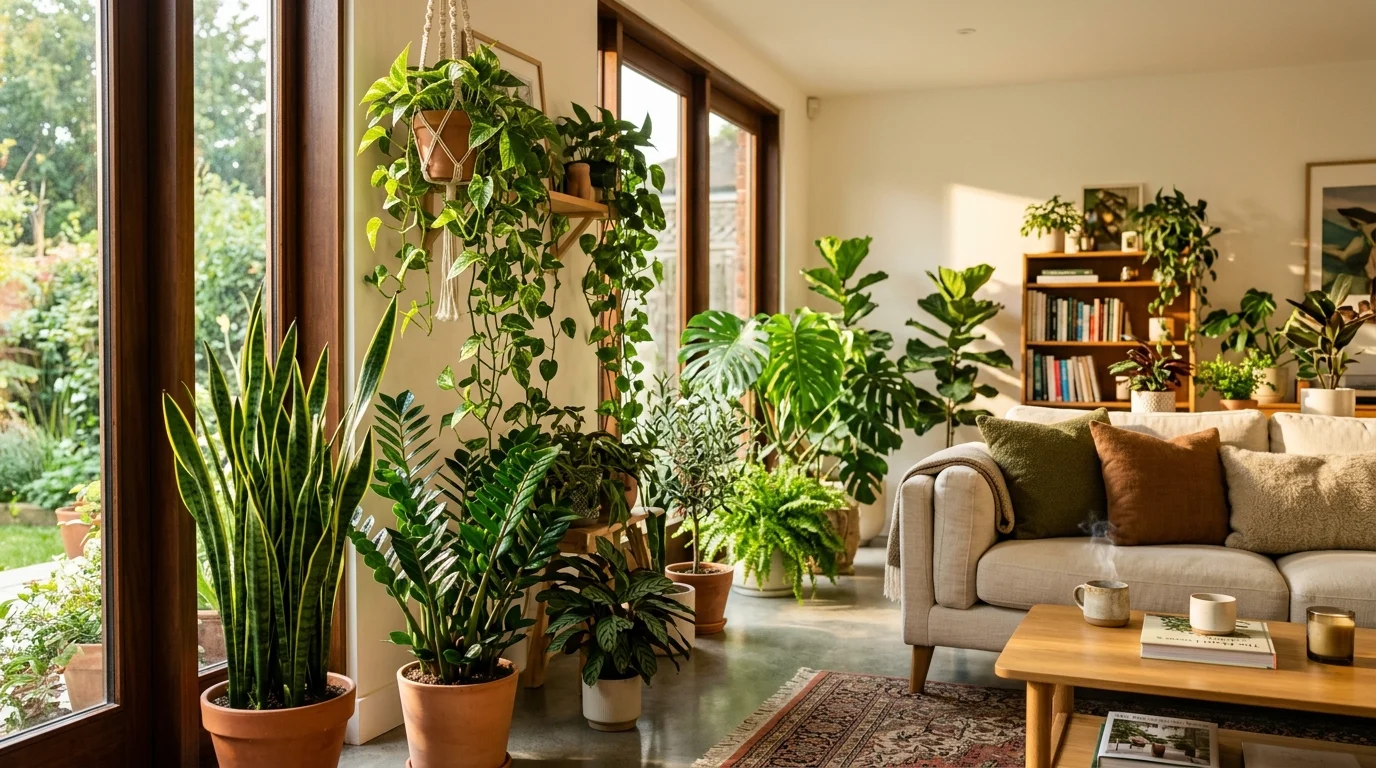
Low maintenance indoor plants — also called easy-care houseplants or hard-to-kill houseplants — are the perfect solution if you love greenery but have a busy schedule, forget to water regularly, or only have low light.
If you searched for indoor plants with low maintenance varieties that survive neglect, these 15 picks thrive with water only every 1–4 weeks and tolerate north-facing rooms, dry air, and missed care.
Quick Answer: The top three low maintenance indoor plants are the snake plant, pothos, and ZZ plant. All three survive irregular watering, tolerate low light, and resist most common pests. If you want the easiest houseplant that needs the least water, start with a snake plant or ZZ plant — both go 3–6 weeks without water.
15 Low Maintenance Indoor Plants at a Glance
| # | Plant | Light | Water Every | Pet Safe? | Best For |
|---|---|---|---|---|---|
| 1 | Snake Plant | Low to bright indirect | 2–6 weeks | No | Easiest plant; dark bedrooms |
| 2 | Pothos | Low to bright indirect | 1–2 weeks | No | Hanging baskets; trailing shelves |
| 3 | ZZ Plant | Low to medium | 2–4 weeks | No | Dark offices; frequent travelers |
| 4 | Spider Plant | Indirect to medium | 1–2 weeks | Yes | Pet owners; hanging baskets |
| 5 | Heartleaf Philodendron | Low to medium | 1–2 weeks | No | Low-light shelves; beginners |
| 6 | Peace Lily | Low to medium | 1–2 weeks | No | Low-light rooms that need flowers |
| 7 | Cast Iron Plant | Very low to medium | 2–3 weeks | Yes | Deep shade; hallways |
| 8 | Rubber Plant | Medium to bright | 1–2 weeks | No | Living-room statement plant |
| 9 | Aloe Vera | Bright to direct | 3–4 weeks | No | Sunny sills; first-aid plant |
| 10 | Jade Plant | Bright to some direct | 2–3 weeks | No | Sunny desks; lives for decades |
| 11 | Calathea | Low to medium | 1–2 weeks | Yes | Patterned leaves; pet homes |
| 12 | Chinese Evergreen | Low to medium | 1–2 weeks | No | Colourful foliage; low light |
| 13 | Parlor Palm | Low to medium | 1–2 weeks | Yes | Classic palm look; cats & dogs |
| 14 | Peperomia | Low to medium | 1–2 weeks | Yes | Small desks; windowsills |
| 15 | Ponytail Palm | Bright to direct | 3–4 weeks | Yes | Statement succulent; least water |
Pet owners: Choose spider plant, cast iron plant, calathea, parlor palm, peperomia, or ponytail palm — all six are non-toxic to cats and dogs. Keep pothos, snake plants, and ZZ plants on high shelves.
Dark room with no windows? Start with a ZZ plant, snake plant, or cast iron plant.
1. Snake Plant (Dracaena trifasciata)
The snake plant is the gold standard of low maintenance indoor plants. Its stiff, upright leaves tolerate almost every indoor condition — dim corners, dry air, and weeks without water.
| Care Factor | Requirement |
|---|---|
| Light | Low to bright indirect |
| Water | Every 2–6 weeks (let soil dry completely) |
| Humidity | Any — tolerates very dry air |
| Toxic to pets | Yes (mildly) |
Why it wins: A snake plant in a north-facing room can go a full month without water and still look healthy.
2. Pothos (Epipremnum aureum)
Pothos is the most popular low maintenance indoor plant in the world. Its trailing vines grow vigorously even in low light, and it droops visibly when thirsty so you always know when to water.
| Care Factor | Requirement |
|---|---|
| Light | Low to bright indirect |
| Water | Every 1–2 weeks |
| Humidity | Any |
| Toxic to pets | Yes (mildly) |
Best for: Shelves, hanging baskets, or trailing down a bookcase.
3. ZZ Plant (Zamioculcas zamiifolia)
The ZZ plant has thick, waxy leaves and underground rhizomes that store water like a camel’s hump. It’s genuinely one of the hardest low maintenance houseplants to kill — surviving months of drought and very low light.
| Care Factor | Requirement |
|---|---|
| Light | Low to medium indirect |
| Water | Every 2–4 weeks |
| Humidity | Low to average |
| Toxic to pets | Yes (mildly) |
Best for: Dark offices, windowless bathrooms, or anyone who travels frequently.
4. Spider Plant (Chlorophytum comosum)
Spider plants are a top choice if you have pets — they’re non-toxic to cats and dogs. They produce cascading “spiderettes” you can propagate easily, and they thrive in average household conditions.
| Care Factor | Requirement |
|---|---|
| Light | Indirect to medium bright |
| Water | Every 1–2 weeks |
| Humidity | Average |
| Toxic to pets | No — pet safe |
5. Heartleaf Philodendron (Philodendron hederaceum)
Philodendrons are often confused with pothos and share a similarly easy-going nature. The heartleaf variety trails beautifully and tolerates low light.
| Care Factor | Requirement |
|---|---|
| Light | Low to medium indirect |
| Water | Every 1–2 weeks |
| Humidity | Any |
| Toxic to pets | Yes (mildly) |
6. Peace Lily (Spathiphyllum spp.)
The peace lily is one of the few low maintenance indoor plants that flowers reliably in low light, producing elegant white blooms once or twice a year.
| Care Factor | Requirement |
|---|---|
| Light | Low to medium indirect |
| Water | Every 1–2 weeks (water when it droops slightly) |
| Humidity | Average to high |
| Toxic to pets | Yes (moderately) |
7. Cast Iron Plant (Aspidistra elatior)
The cast iron plant earns its name. It tolerates deep shade, temperature swings, irregular watering, and even dust accumulation. It grows slowly but lives for decades.
| Care Factor | Requirement |
|---|---|
| Light | Very low to medium |
| Water | Every 2–3 weeks |
| Humidity | Any |
| Toxic to pets | No — pet safe |
8. Rubber Plant (Ficus elastica)
The rubber plant brings a bold, architectural look to any room. Its large, glossy leaves thrive in bright indirect light and need watering only every 1–2 weeks.
| Care Factor | Requirement |
|---|---|
| Light | Medium to bright indirect |
| Water | Every 1–2 weeks (less in winter) |
| Humidity | Any |
| Toxic to pets | Yes (mildly) |
9. Aloe Vera (Aloe barbadensis miller)
Aloe vera is both decorative and a natural first-aid remedy for minor burns. Treat it like a cactus: bright light and very infrequent watering.
| Care Factor | Requirement |
|---|---|
| Light | Bright indirect to direct |
| Water | Every 3–4 weeks |
| Humidity | Low — prefers dry air |
| Toxic to pets | Yes (toxic if ingested) |
10. Jade Plant (Crassula ovata)
Jade plants are slow-growing succulents that can live for 50–100 years with basic care. They store water in plump, coin-shaped leaves.
| Care Factor | Requirement |
|---|---|
| Light | Bright indirect to some direct |
| Water | Every 2–3 weeks |
| Humidity | Low |
| Toxic to pets | Yes (mildly toxic) |
11. Calathea (Calathea spp.)
Calatheas stand out for their dramatic, patterned leaves — and they’re completely non-toxic to pets.
| Care Factor | Requirement |
|---|---|
| Light | Low to medium indirect |
| Water | Every 1–2 weeks (keep soil lightly moist) |
| Humidity | Medium to high |
| Toxic to pets | No — pet safe |
12. Chinese Evergreen (Aglaonema spp.)
Chinese evergreens come in a stunning range of leaf colours and handle low-light and dry conditions with ease.
| Care Factor | Requirement |
|---|---|
| Light | Low to medium indirect |
| Water | Every 1–2 weeks |
| Humidity | Any |
| Toxic to pets | Yes (mildly) |
13. Parlor Palm (Chamaedorea elegans)
If you want a palm that won’t demand constant misting and bright light, the parlor palm is your answer. It’s safe for cats and dogs.
| Care Factor | Requirement |
|---|---|
| Light | Low to medium indirect |
| Water | Every 1–2 weeks |
| Humidity | Average |
| Toxic to pets | No — pet safe |
14. Peperomia (Peperomia spp.)
Peperomias are compact, slow-growing plants with semi-succulent leaves that store moisture. Also non-toxic to pets.
| Care Factor | Requirement |
|---|---|
| Light | Low to medium indirect |
| Water | Every 1–2 weeks |
| Humidity | Any |
| Toxic to pets | No — pet safe |
15. Ponytail Palm (Beaucarnea recurvata)
The ponytail palm stores a large reservoir of water in its swollen base. It only needs watering every 3–4 weeks.
| Care Factor | Requirement |
|---|---|
| Light | Bright indirect to direct |
| Water | Every 3–4 weeks |
| Humidity | Low |
| Toxic to pets | No — pet safe |
How to Care for Low Maintenance Indoor Plants: 4 Essential Rules
Rule 1 — Check Soil Before Watering
Push your finger 1–2 inches into the soil:
- Damp → wait 2–4 more days
- Dry → water thoroughly until it drains from the bottom
This prevents root rot, which kills more houseplants than drought.
Rule 2 — Use Pots with Drainage Holes
Every plant on this list needs drainage. Standing water creates waterlogged roots and root rot.
Rule 3 — Match Plant to Your Light
- Bright indirect: 1–2 meters from south/west window
- Medium indirect: 2–3 meters from window
- Low light: No direct window view
Rule 4 — Avoid Drafts and Heating Vents
Keep plants away from AC vents, radiators, and drafty windows. Stable temperatures of 60–80°F suit virtually every plant on this list.
Low Maintenance Indoor Plants by Room
Bedroom
Best choices: Snake plant, peace lily, pothos — low-light tolerant with calming aesthetics.
Home Office (Low Light)
Best choices: ZZ plant, Chinese evergreen, cast iron plant — survive windowless or north-facing rooms.
Kitchen
Best choices: Pothos, aloe vera, spider plant — tolerate humidity fluctuations.
Bathroom
Best choices: Peace lily, calathea, spider plant — all enjoy added humidity from showers.
Living Room (Statement Plant)
Best choices: Rubber plant, ponytail palm, philodendron — bold foliage for focal-point placement.
Common Problems with Low Maintenance Indoor Plants
| Symptom | Likely Cause | Fix |
|---|---|---|
| Yellow leaves | Overwatering | Let soil dry completely; check drainage |
| Brown leaf tips | Low humidity or underwatering | Mist leaves or use pebble tray |
| Drooping/wilting | Underwatering or root rot | Check soil moisture; repot if soggy |
| Leggy, sparse growth | Insufficient light | Move closer to window or add grow light |
| Pale/bleached leaves | Too much direct sun | Move to bright indirect light |
| Tiny black flies around soil | Fungus gnats from soggy soil | Let top soil dry; use sticky traps |
Frequently Asked Questions
What is the easiest low maintenance indoor plant to keep alive?
The snake plant (Dracaena trifasciata) tolerates near-total neglect — poor light, infrequent watering, and dry air — and recovers quickly even after extended periods of being forgotten.
Which low maintenance indoor plant needs the least water?
The ZZ plant and ponytail palm need the least water — both can go 3–4 weeks between waterings. Aloe vera and jade plants come close, needing water only every 3 weeks.
Can low maintenance indoor plants survive in a room with no windows?
ZZ plants, snake plants, and cast iron plants can survive in very low artificial light for extended periods. Adding a basic LED grow light for 10–12 hours daily keeps most low maintenance plants healthy.
Which easy-care houseplants are best for dark offices?
ZZ plant, snake plant, cast iron plant, and Chinese evergreen. All four tolerate fluorescent light and north-facing rooms, need water only every 2–4 weeks.
Which low maintenance houseplants are safe for cats and dogs?
Spider plant, parlor palm, cast iron plant, calathea, peperomia, and ponytail palm are non-toxic to cats and dogs. Keep pothos, snake plant, ZZ plant, and jade plant out of reach.
Do low maintenance indoor plants need fertiliser?
A balanced liquid fertiliser (10-10-10 NPK) applied once a month during spring and summer is sufficient. Do not fertilise in autumn or winter when growth slows.
What are the best low maintenance indoor plants for beginners?
Snake plant, pothos, ZZ plant, spider plant, and cast iron plant. All tolerate low light, irregular watering, and dry indoor air — nearly impossible to kill.
