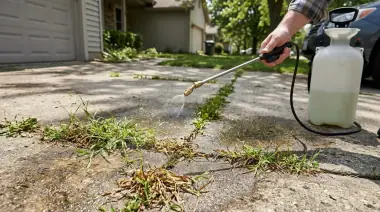
Vinegar is one of the most repeated home remedies in gardening: spray it on, watch the grass shrivel, job done. The reality is more complicated, and knowing the difference saves you money and a lawn full of brown patches that green right back up. This guide gives you the honest answer to does vinegar kill grass, which strength works, and when to skip vinegar entirely.
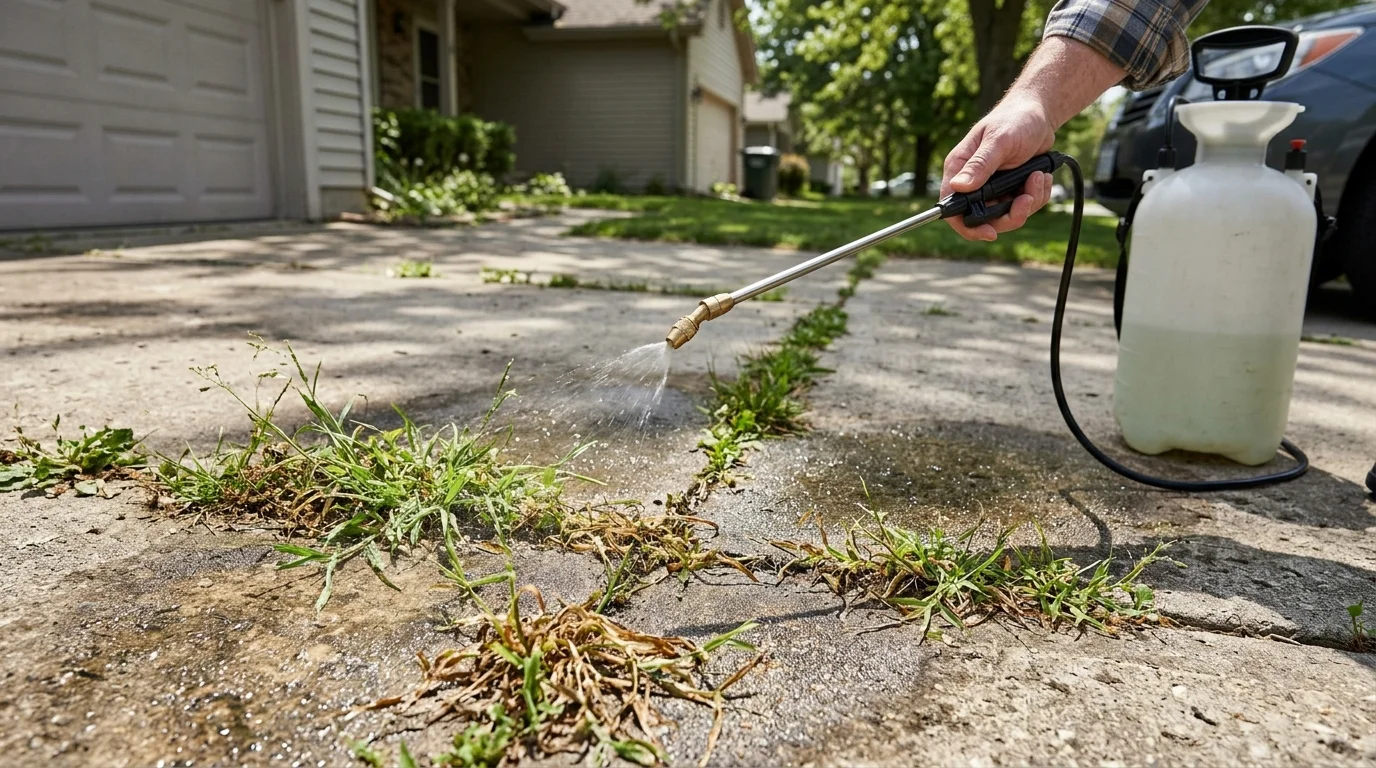
Quick Answer: Yes, vinegar kills grass - but only the top growth it touches. Household 5% vinegar browns blades on contact but rarely kills established roots, so grass usually regrows in 2 to 4 weeks. For a real kill, use 20% horticultural vinegar plus a tablespoon of dish soap per gallon, sprayed on a calm, sunny day above 70F and repeated every 2 to 3 weeks. Vinegar shines on driveway cracks, path edges, and paver joints; it is a poor choice for clearing large lawn areas or deep-rooted grasses like Bermuda.
At a Glance
| Fact | Detail |
|---|---|
| What vinegar kills | Top growth of grass and weeds it directly contacts |
| What survives | Roots, crowns, and rhizomes of established grass |
| Household vinegar (5%) | Browns blades; weak on established turf; fine for seedlings |
| Horticultural vinegar (20%) | Burns foliage fast; effective with repeat applications |
| Basic recipe | 1 gallon vinegar + 1 tablespoon plain dish soap |
| Best conditions | Sunny, 70F+, calm wind, no rain for 24-48 hours |
| Visible results | Wilting in 24 hours; brown top growth in 2-3 days |
| Regrowth window | 2-4 weeks from established crowns |
| Typical applications | 2-4 treatments, 2-3 weeks apart |
| Reseeding wait | About 2 weeks after the grass is fully dead |
How Vinegar Actually Kills Grass
Vinegar is a contact herbicide. Its active ingredient, acetic acid, dissolves the waxy cuticle on leaf surfaces and pulls moisture out of plant cells, which is why treated grass collapses and browns so fast [1] (Source: Oregon State University Extension).
Here is the catch: vinegar does not move inside the plant. Systemic herbicides like glyphosate travel from the leaves down into the roots and kill the whole plant. Vinegar burns what it touches and stops there. Grass stores energy in its crown (the growing point at soil level) and in its roots or rhizomes, and as long as those survive, the plant pushes up fresh blades. That is why the honest answer to “does vinegar kill grass permanently” is almost always no for established turf - and why most gardeners see dramatic browning in 48 hours, then green shoots reappearing 2 to 4 weeks later.
Vinegar Strengths: 5% vs 20% vs 30%+
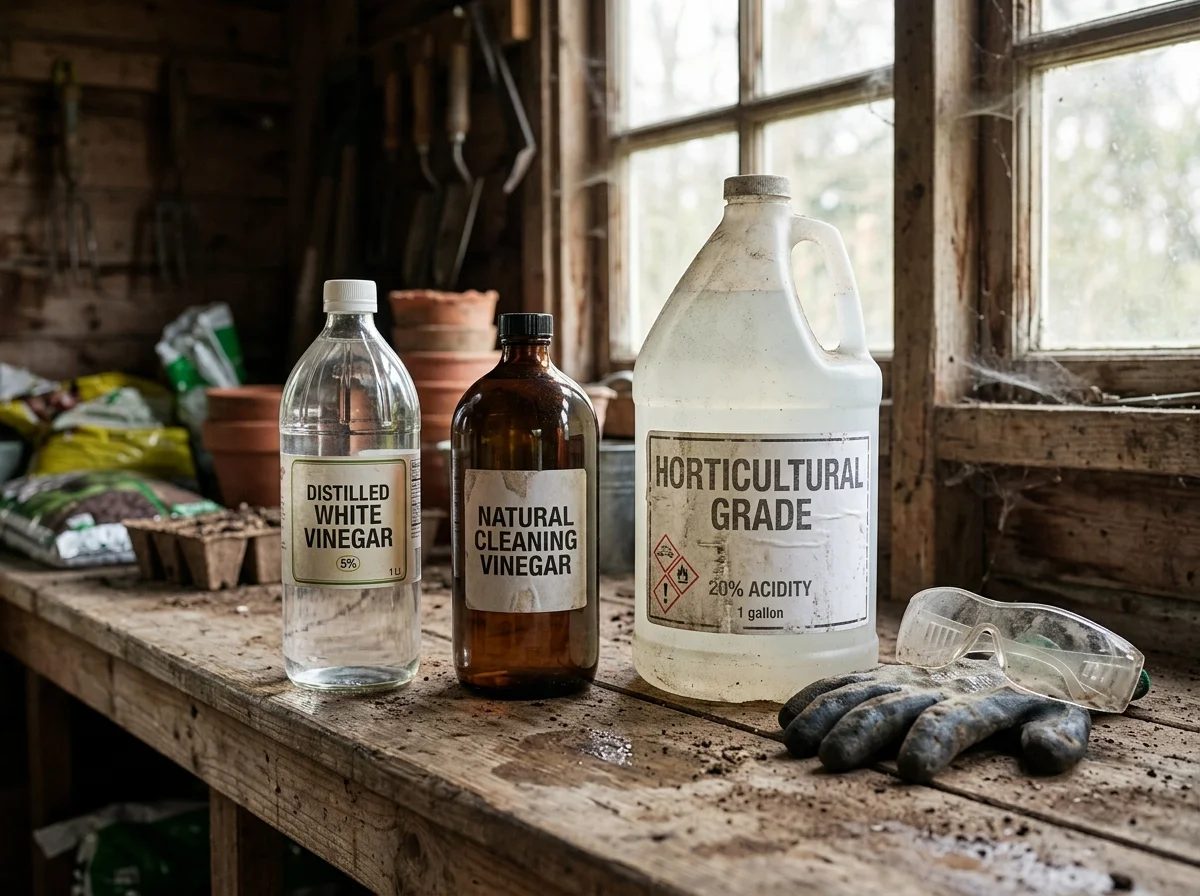
Not all vinegar is the same product. The acetic acid percentage on the label changes both what it can do and how carefully you handle it.
| Vinegar type | Acetic acid | What it does to grass | Handling |
|---|---|---|---|
| Household white vinegar | 5% | Browns young blades and seedlings; weak on mature turf | Kitchen-safe; still avoid eyes |
| Horticultural vinegar | 20% | Rapid, thorough top kill; standard for weed and grass control | Gloves and eye protection required |
| Industrial vinegar | 30-45% | Severe burn on contact; used in commercial organic farming | Full protective gear; high injury risk |
Household 5% vinegar is what most people start with, and it is why so many report that vinegar “doesn’t work.” At 5%, acetic acid scorches tender new seedlings but established perennial grasses shrug it off. USDA research found 5% vinegar controlled only very young weeds; older plants needed stronger concentrations [2] (Source: USDA Agricultural Research Service).
Horticultural 20% vinegar is the realistic choice for killing grass. Four times stronger than kitchen vinegar, it burns foliage aggressively in sunlight and is the concentration used in university weed trials. It is also genuinely hazardous: it can burn skin and permanently damage eyes, so treat it like any strong garden chemical.
30% and higher concentrates offer little practical advantage - the added burn speed is marginal while the injury risk and cost climb steeply. Skip these.
What Vinegar Kills and What It Doesn’t
Vinegar is non-selective, so it damages every green plant it touches - grass, weeds, and prized perennials alike. The real question is whether the damage is permanent.
| Plant type | Result with 20% vinegar | Permanent kill? |
|---|---|---|
| Grass seedlings (under 2 weeks old) | Complete collapse in 1-2 days | Usually yes |
| Young annual weeds (chickweed, crabgrass seedlings) | Fast browning and death | Often yes |
| Established lawn grass (fescue, bluegrass, rye) | Top kill in 2-3 days | No - regrows from crown |
| Bermuda grass and other rhizome grasses | Top burn only | No - regrows aggressively |
| Perennial weeds with taproots (dandelion) | Leaf burn; root survives | No - repeat needed |
| Clover in lawns | Leaves brown; stolons survive | Rarely |
If your real target is broadleaf weeds rather than turf, our guide on does vinegar kill weeds breaks down weed-by-weed results. The short version: vinegar for killing grass and weeds works permanently only on young plants with small root systems. Anything with a crown, taproot, rhizome, or stolon needs repeat treatments - or a different method entirely.
The Best Vinegar Spray Recipes
Dish soap matters more than most recipes admit. Acetic acid beads up on waxy grass blades and rolls off; a surfactant makes the spray spread and stick. Use plain liquid dish soap - not degreaser, not detergent with bleach.
| Recipe | Mix | Best for |
|---|---|---|
| Light seedling spray | 1 gallon 5% vinegar + 1 tablespoon dish soap | Grass seedlings, tiny annual weeds, paver joints |
| Standard kill spray | 1 gallon 20% horticultural vinegar + 1 tablespoon dish soap | Established grass patches, driveway cracks, path edges |
| Salt boost (paths only) | Standard recipe + 1 cup table salt per gallon | Gravel drives and cracks where nothing should ever grow |
A note on the salt boost: salt persists in soil and can leach sideways into lawns and beds, sterilizing ground for a season or more. Use it only where you want permanent bare ground. Internet recipes that add essential oils or citrus add cost without real benefit; vinegar plus soap is the combination backed by extension research [3] (Source: Penn State Extension).
Where Vinegar Works Best (and Where It Fails)
Vinegar for killing grass earns its keep in specific spots. Knowing which is which prevents most disappointment.
Best uses:
- Driveway and sidewalk cracks - the single best use. Enclosed cracks limit drift, roots are shallow in compacted gravel, and one or two applications per season keeps them clean.
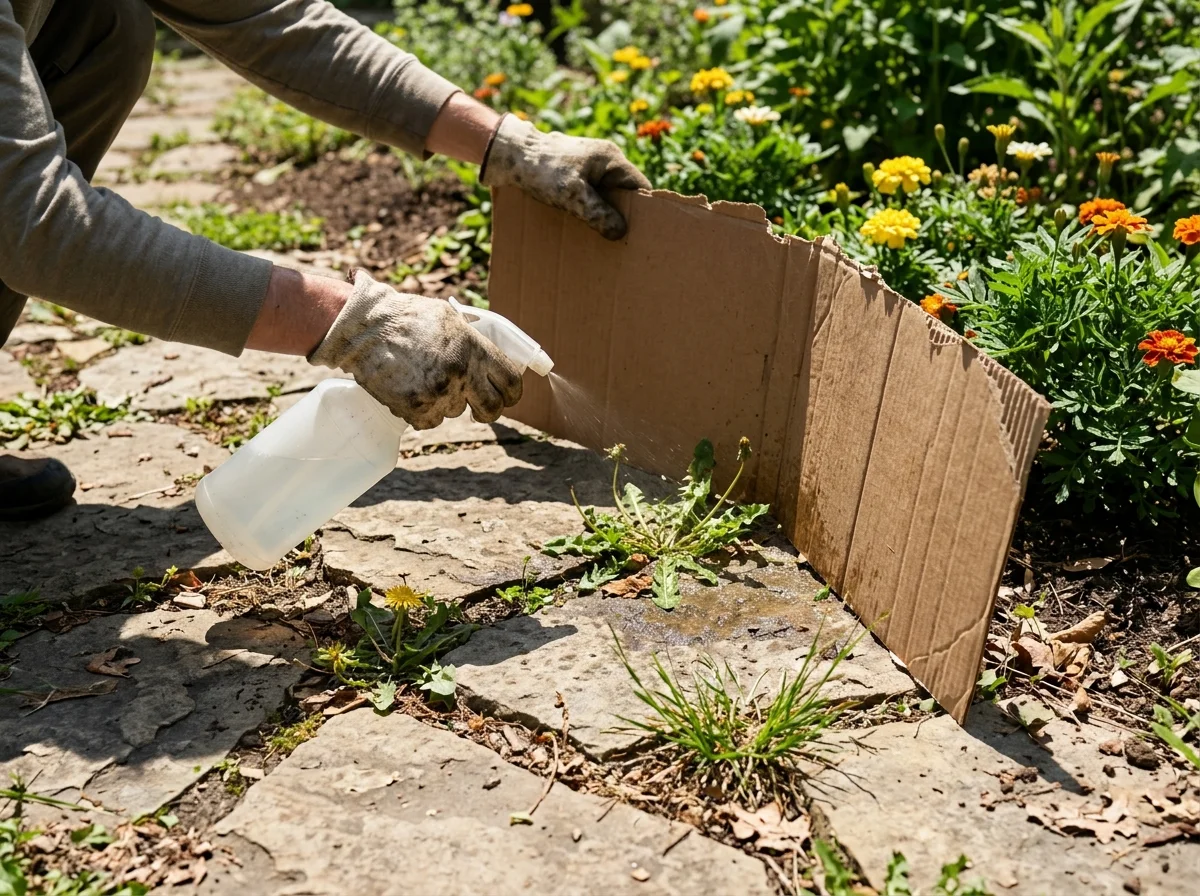
- Path and patio edges - crisp edges where grass creeps over walkways. A cardboard shield makes spot work precise.
- Between pavers and flagstones - shallow soil pockets mean shallow roots, so vinegar often kills outright here.
- Mulch bed intruders - grass runners invading a bed. Pull back mulch from the target, spray the foliage, and re-cover once dry.
- Fence lines - strips where mowing is awkward and a little bare ground is acceptable.
Where it fails:
- Clearing a full lawn for renovation. Dozens of gallons and multiple rounds cost more than sod-cutting or solarization. Vinegar is a spot tool, not an acreage tool.
- Bermuda grass. Its deep rhizomes store enormous energy; vinegar burns the top and Bermuda returns, sometimes thicker. Our Bermuda grass guide covers options that reach the roots.
- Large patches of mature turf. Even 20% vinegar with repeats rarely exhausts an established crown before your patience runs out.
- Anything on a windy day. Drift burns lawn, flowers, and shrubs just as reliably - vinegar does not distinguish wanted from unwanted plants.
How to Apply Vinegar for the Best Kill Rate
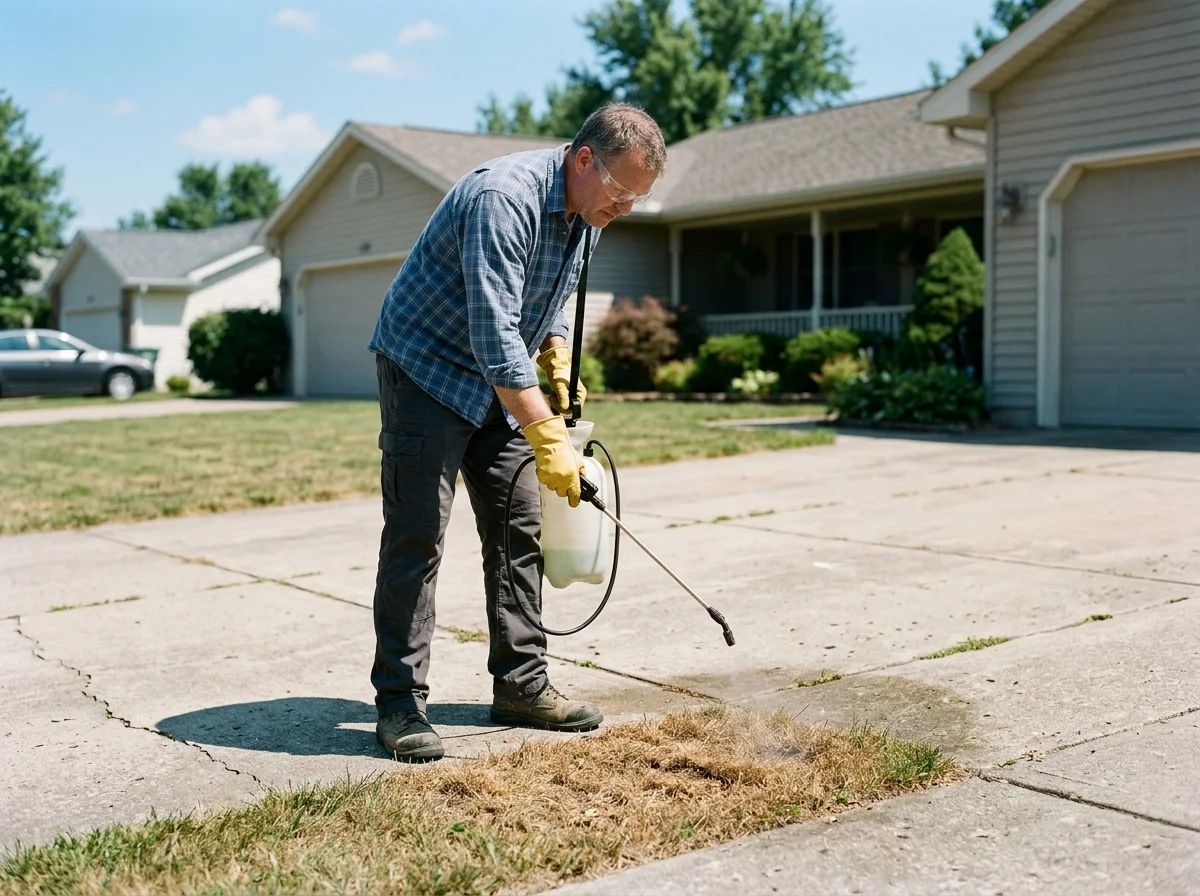
Technique decides whether vinegar works or disappoints. Follow these steps exactly.
1. Pick the right day. Sun is your multiplier - acetic acid works far better when ultraviolet light helps break down leaf tissue [1] (Source: Oregon State University Extension). Aim for sunny, above 70F, calm (wind under 5 mph), with no rain forecast for 24 to 48 hours. Late morning, after dew dries, is the sweet spot.
2. Gear up. For 20% vinegar: chemical-resistant gloves, wraparound eye protection, long sleeves, and closed shoes. Keep pets and kids inside until the spray dries, about 2 to 4 hours, and keep a hose nearby for accidental contact.
3. Mix fresh. Combine 1 gallon of vinegar with 1 tablespoon of plain dish soap in a pump sprayer, mixing only what you will use that day; the solution weakens in storage and can corrode sprayer seals.
4. Spray to wet, not to puddle. Coat every blade until it glistens and just begins to drip - missed blades become regrowth points. Shield wanted plants with cardboard, and never spray on a breezy day.
5. Watch, wait, and repeat. Expect wilting within 24 hours and full browning in 2 to 3 days. Established grass pushes regrowth in 2 to 4 weeks, so retreat every 2 to 3 weeks. Most patches die for good after 2 to 4 applications - each round forces the roots to spend stored energy on new leaves that you then destroy.
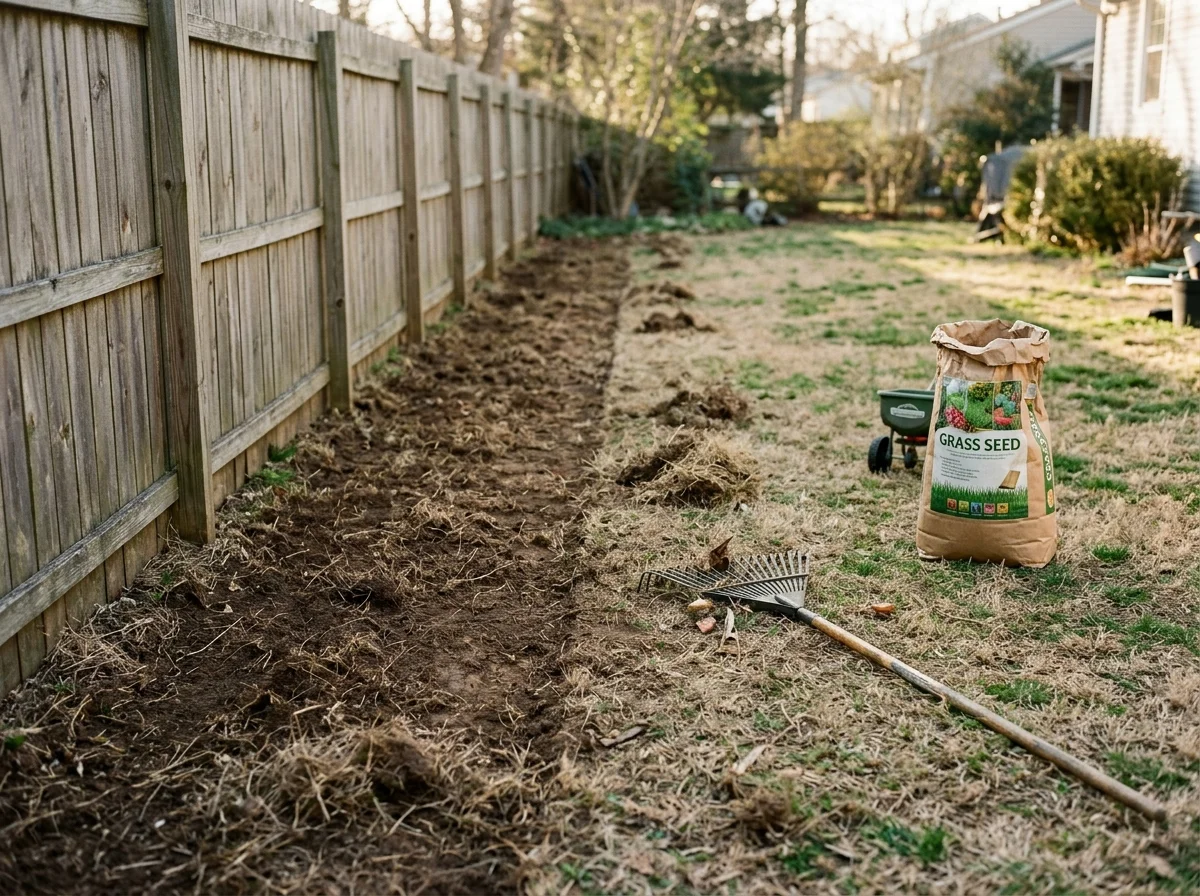
6. Reseed at the right time. Vinegar breaks down within days, so its effect on soil pH is shallow and temporary [3] (Source: Penn State Extension). Once the grass is fully dead - no green at the crown when you scratch it - wait about 2 weeks, rake out the thatch, and reseed. If you are replanting the strip instead, our lawn care for beginners guide covers soil prep, and a clover lawn is a low-maintenance alternative for sunny patches.
Why Vinegar Often Fails on Established Lawns
When gardeners ask “does vinegar harm grass enough to kill it,” failure usually traces to one of six causes:
- Weak concentration. Household 5% vinegar cannot overcome a mature crown. Step up to 20% horticultural vinegar.
- Deep-rooted grass species. Bermuda, zoysia, and tall fescue hold large root and rhizome reserves; vinegar top-kills them without reaching the storage organs.
- Bad timing. Cool, cloudy, or humid conditions cut vinegar’s burn dramatically. Below about 60F, results drop off sharply.
- Rain too soon. A shower within 24 hours dilutes the acid before it finishes. Always check the 48-hour forecast.
- No surfactant. Without dish soap, spray beads and runs off waxy blades, so little acid contacts the leaf.
- Quitting after one application. One spray almost never kills established grass. The kill comes from starving the roots through repeated defoliation - plan on three rounds from the start.
Vinegar vs Roundup: An Honest Comparison
Gardeners frame this as natural versus chemical, but the practical difference is mechanical: contact versus systemic.
| Factor | Vinegar (20% horticultural) | Glyphosate (Roundup) |
|---|---|---|
| How it kills | Burns foliage on contact; non-systemic | Absorbed and moves to roots; systemic |
| Speed of visible results | 24 hours | 7-14 days |
| Kills established roots | Rarely; needs 2-4 repeat applications | Yes, usually in 1-2 applications |
| Reseeding wait | About 2 weeks | Typically 7-14 days per label |
| Risk to user | Acid burns to skin and eyes | Low acute toxicity when label is followed |
| Drift damage | Burns any foliage contacted | Kills any plant contacted, to the root |
| Best role | Spot treatment of cracks, edges, pavers | Clearing established turf and perennial weeds |
The honest verdict: for a weedy driveway or paver patio near kids and pets, vinegar is a reasonable first choice - fast, residue-free, and effective with repeats. For an established lawn, Bermuda grass, or deep taprooted perennials, glyphosate does in one pass what vinegar struggles to do in four. Match the tool to the job. For a broader framework, our gardening tips for beginners guide covers the fundamentals of working with your yard’s conditions.
Safety, Soil, and Side Effects
Personal safety. Horticultural vinegar at 20% can permanently damage eyes in seconds. Goggles and gloves are not optional. Spray on calm days, keep the nozzle low, and wash any skin contact immediately with plenty of water.
Pets and kids. Once the spray dries - typically 2 to 4 hours in sun - treated areas are safe for foot traffic, paws included; the acid does not persist. Until dry, keep everyone off the area, and store concentrate bottles locked away.
Spray drift. Vinegar harms grass and garden plants equally. A gust onto your lawn leaves brown polka dots that take weeks to grow out. Use a coarse droplet setting, a cardboard shield, and a calm day.
Soil pH. A single application briefly acidifies the top fraction of an inch of soil, but acetic acid degrades rapidly and soil buffers neutralize the change within days to about two weeks [3] (Source: Penn State Extension). Before reseeding, a simple soil test confirms conditions are back in the 6.0-7.0 range turf prefers.
Common Mistakes
- Using kitchen vinegar on mature turf. The fix: reserve 5% for seedlings and paver joints; use 20% horticultural vinegar for anything established.
- Skipping the dish soap. The fix: add 1 tablespoon per gallon so the spray wets the blade instead of beading off.
- Spraying at dusk or on cloudy days. The fix: spray late morning in full sun at 70F or warmer.
- Not checking the forecast. The fix: require a 24-48 hour dry window before you mix a single drop.
- Declaring victory after one spray. The fix: schedule 2-4 treatments 2-3 weeks apart and follow through.
- Spraying near wanted plants with no shield. The fix: hold cardboard over anything you want to keep, and spray only when wind is under 5 mph.
- Adding salt near lawns or beds. The fix: keep salt mixes strictly on gravel that drains away from planted areas.
- Reseeding too soon. The fix: wait until the crown is dead (no green when scratched) plus about 2 weeks.
Troubleshooting
- Grass browned, then greened back in 3 weeks: normal on established turf; retreat at 20% strength every 2-3 weeks until the root reserves give out.
- Barely any browning after spraying: concentration too weak, day too cool, or no surfactant; switch to 20% vinegar with soap in full sun above 70F.
- Brown spots scattered across my good lawn: spray drift; water deeply, let them grow out over 2-4 weeks, and shield plants next time.
- Bermuda grass keeps returning no matter what: its rhizomes are beyond vinegar’s reach; dig it out, solarize, or use a systemic herbicide per the label.
- Weeds in cracks return every few weeks: seeds keep blowing in; spray promptly and consider polymeric sand in paver joints.
- Skin or eye contact with 20% vinegar: flush with clean water for 15 minutes and seek medical care for any eye exposure.
Frequently Asked Questions
Q: Does vinegar kill grass permanently?
A: Usually no. Vinegar burns the top growth it touches but does not travel to the roots. Young seedlings may die completely, but established grass almost always regrows from the crown within 2 to 4 weeks. Permanent control takes repeated 20% horticultural vinegar applications or physical removal.
Q: Will regular household vinegar kill grass?
A: Household 5% vinegar browns and shrivels grass blades it directly contacts, especially in full sun, but it rarely kills an established lawn. It works best on very young seedlings and as a repeat spot treatment in driveway cracks. Established patches usually regrow within a few weeks.
Q: How long does it take for vinegar to kill grass?
A: Expect wilting and browning within 24 hours on a hot, sunny day, and complete top kill in 2 to 3 days. Roots usually survive, though, so regrowth from the crown often appears in 2 to 4 weeks, requiring a second or third application.
Q: What is the best vinegar recipe for killing grass?
A: The most reliable recipe is 1 gallon of 20% horticultural vinegar mixed with 1 tablespoon of plain dish soap. Spray on a calm, sunny day above 70F with no rain forecast for 24 to 48 hours, wetting foliage until it drips. Repeat every 2 to 3 weeks until the root reserves are exhausted.
Q: Is vinegar better than Roundup for killing grass?
A: It depends on the goal. Vinegar is fast-acting and leaves no lasting residue, making it good for spot work near kids and pets. Glyphosate kills to the root in one or two applications, so it is far more effective on established turf and deep-rooted perennial weeds. Vinegar often needs three or more treatments to match that result.
Q: Is vinegar safe to use around pets and kids?
A: Once the spray dries - about 2 to 4 hours - treated areas are generally safe for pets and children. Horticultural vinegar at 20% or higher is a strong acid that can burn skin and eyes on contact, so store it locked away and wear gloves and eye protection when spraying.
Q: Does vinegar change soil pH?
A: Only briefly, and only in the top fraction of an inch of soil. Vinegar breaks down quickly into water and carbon dioxide, so any pH drop fades within days to a couple of weeks. You can reseed treated areas about 2 weeks after the grass is fully dead.
Q: Why did vinegar not kill my grass?
A: The common reasons are weak 5% household vinegar, a deep-rooted grass like Bermuda, spraying on a cool or cloudy day, rain within 24 hours, or quitting after one application. Switch to 20% horticultural vinegar, spray in full sun above 70F, add dish soap, and repeat every 2 to 3 weeks until regrowth stops.
Related Articles
- Does Vinegar Kill Weeds?
- Lawn Care for Beginners
- How to Grow a Clover Lawn
- Bermuda Grass Guide
- How to Fertilize Your Lawn
- Gardening Tips for Beginners
- Garden Pest Control for Beginners
