Clover is having a serious moment. For decades, gardeners sprayed and weeded it out of their lawns as an unwanted invader. Now it is the most popular no-mow alternative in the country, with searches for “clover lawn” exploding as homeowners retire their mowers, drop their fertilizer bags, and hand the yard back to the bees. And the best part? Clover is easier to grow than almost anything you can plant - it feeds itself, waters itself, and never demands the weekly mow. This guide walks you through exactly how to grow a clover lawn from scratch or overseed the one you already have.
Quick Answer: To grow a clover lawn, sow white clover or microclover seed in early spring or early fall at 2 to 4 ounces per 1,000 square feet, pressing it into the soil and keeping it moist for the first 10 to 14 days. Mow rarely or not at all, never fertilize, and enjoy a soft, green, bee-friendly lawn that fixes its own nitrogen and stays green through dry summer weeks.
Why Grow a Clover Lawn?
The clover lawn movement is not just nostalgia for pre-emergence-era lawns - it answers real problems that grass lawns create. Here is what you actually gain by letting clover take over:
- No fertilizer ever again. Clover pulls nitrogen from the air with bacteria living in its roots, and it shares that nitrogen with the soil. A lawn with 10 to 20 percent clover needs no synthetic fertilizer, and grass planted alongside it stays greener with fewer inputs.
- Drought tolerance. Clover’s root system grows deeper than most lawn grass varieties, letting it drink from soil moisture reserves. During the hottest, driest weeks of summer, a clover lawn stays green while neighboring grass lawns turn straw.
- Minimal mowing. White clover is a low, creeping plant that never races toward the sky the way grass does. With a clover lawn, you trade the Saturday mow for one or two quick pass-throughs a year.
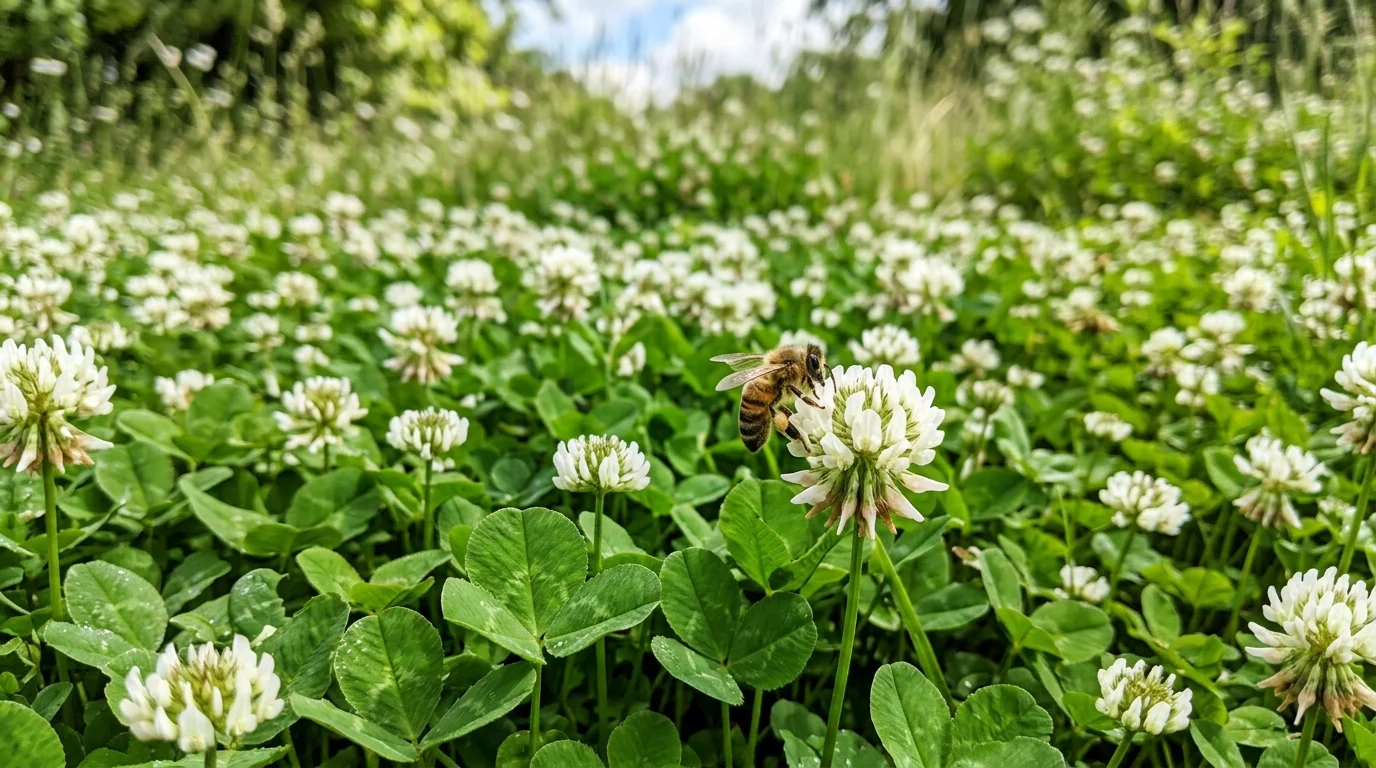
- Bee and pollinator food. Clover flowers are a favorite of honeybees and native bees, which have lost a huge share of their forage to manicured lawns. A clover yard is a genuine conservation action on your own property.
- Soft, forgiving turf. Clover blades are soft and springy, and they bounce back quickly from foot traffic. Children and pets find it comfortable, and it keeps dust down in dry yards.
- Fewer weeds. A dense clover mat crowds out most weeds, and clover itself never needs the herbicide that a perfect grass yard does.
- Great in thin, poor soil. Clover grows where grass fights: shady corners, sandy patches, compacted strips beside paths, and steep banks that mowers struggle to reach.
| Feature | Grass lawn | Clover lawn |
|---|---|---|
| Mowing | Weekly in season | 0–2 times per year |
| Fertilizer | Annual applications needed | Never needed |
| Watering in dry summers | Frequent | Rare |
| Bee-friendly flowers | None | Yes, all summer |
| Nitrogen fixation | No | Yes |
| Winter appearance | Brown/green | Stays green longer |
| Foot traffic tolerance | Good | Good, recovers fast |
| Maintenance cost | High | Near zero |
Choose the Right Clover for Your Lawn
Almost all clover lawns are one of two types:
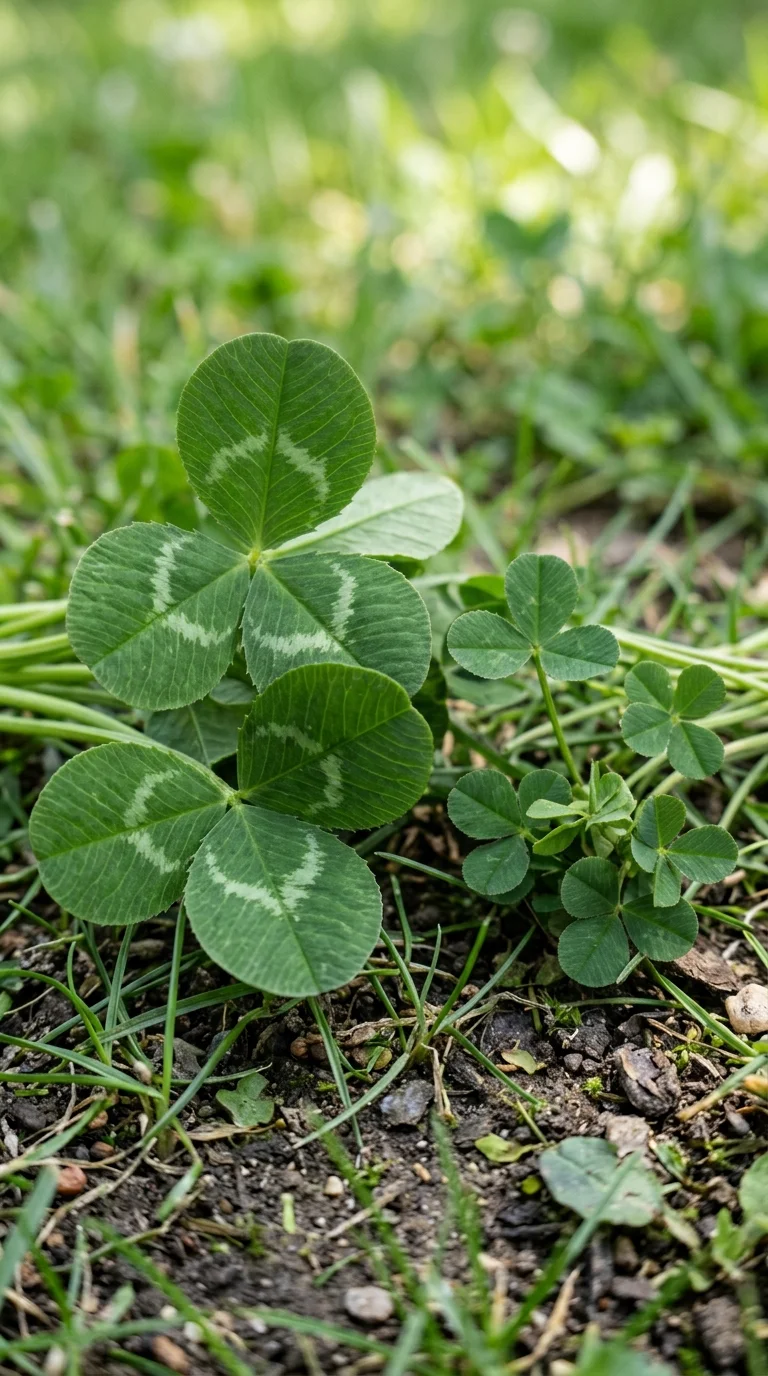
- White clover (Trifolium repens) is the classic choice. It is a vigorous, spreading perennial that handles foot traffic, cold winters, and summer heat. The standard “Dutch white” varieties bloom heavily with white flowers - lovely for bees, though the blooms are the most visible part of the lawn during peak flowering.
- Microclover (Trifolium repens var. micropurpureum) is a fine-leafed white clover bred specifically for lawns. It grows even lower, blooms much less, and blends with grass almost invisibly while still fixing nitrogen. It is the right pick if you want a mostly-grass look with clover’s benefits, or a richer, dark-green clover-only lawn.
A mix of both is unharmed. If you want the lowest possible maintenance and the strongest bee food source, go all-white-clover. If you want a neat, traditional-looking lawn that simply needs less work, overseed grass with microclover.
You can also add other clovers as accents - crimson clover is a gorgeous annual that blooms early and dies back, ideal for a spring bee bonanza in a wilder patch of the yard.
When to Plant Clover
Clover likes cool, moist germinating conditions and hates the heat of high summer. The two perfect windows are:
- Early spring, once the ground thaws and frost is mostly behind you - typically 4 to 6 weeks before your last frost date. Spring-planted clover establishes through the mild months and is strong by summer.
- Early fall - 6 to 8 weeks before the first hard frost. Fall is widely considered the best time: warm soil, cooler air, and reliable autumn rain get clover off to a fast start, and it returns full speed the following spring.
Avoid planting in the heat of summer or in deep winter. In hot climates with mild winters, treat early fall or late winter as your season. If you are overseeding an existing lawn, aim to seed right around the same windows, when competition from the turf is lowest.
How to Plant a Clover Lawn From Scratch
If you are starting on bare soil - a tired lawn you have removed, a new plot, or a weedy patch you want to convert - here is the step-by-step:
Step 1: Prepare the surface. Remove the existing turf or mow an existing sward as short as possible. Rake the surface to loosen the top half-inch of soil and remove debris. Clover seed needs only the lightest contact - it will not germinate if buried.
Step 2: Correct the pH (only if needed). Clover grows in most soils but prefers a pH between 6.0 and 7.0. A quick soil test will tell you if lime is needed. Do not add fertilizer - nitrogen will make grass and weeds race ahead of your clover.
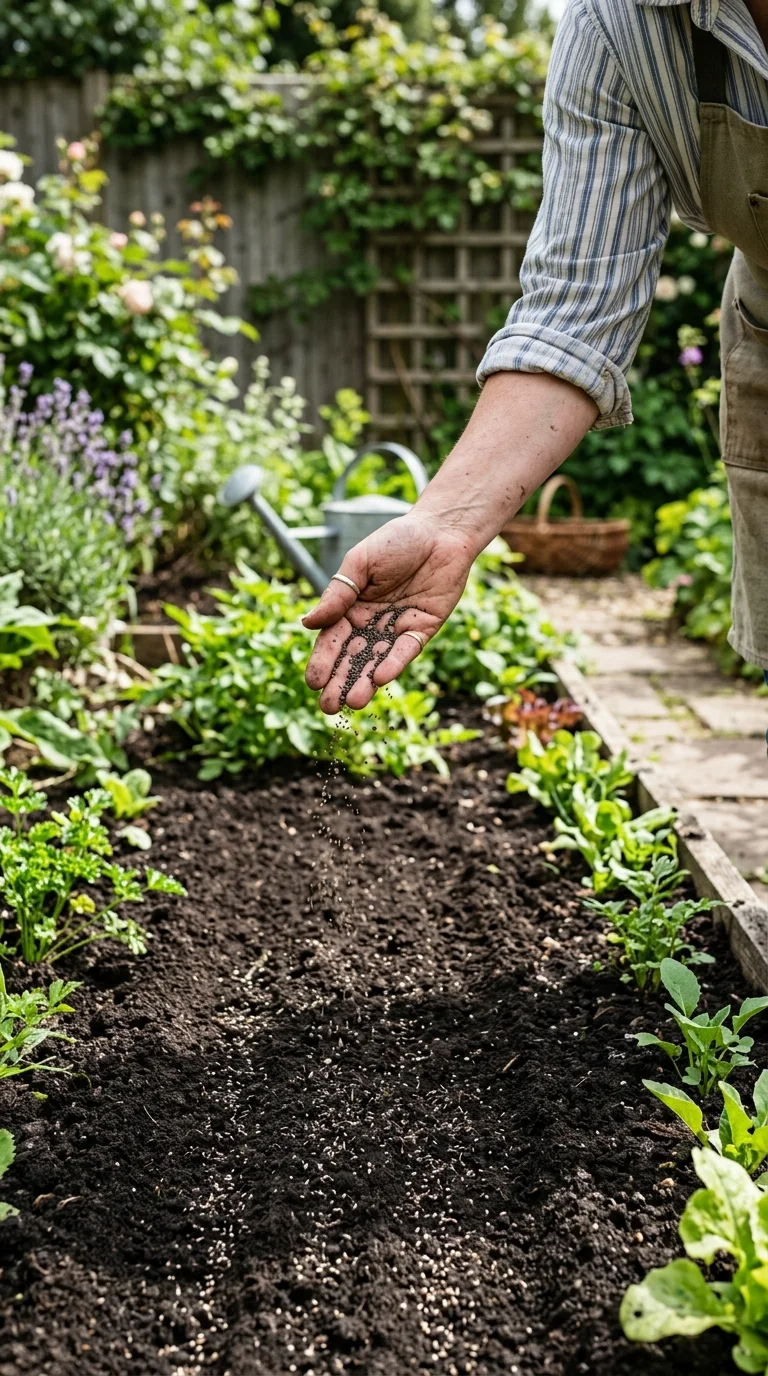
Step 3: Spread the seed. Use a broadcast spreader or a hand seeder at a rate of 2 to 4 ounces of seed per 1,000 square feet for a full clover lawn (more toward 4 ounces for a dense, low-grow lawn; less for a lacy look). For better spread, mix the seed with dry sand at a 1:1 ratio.
Step 4: Press it in. Walk over the area in flat shoes, or use a lawn roller, to press the seed into firm contact with the soil. Do not cover it with soil - light is fine and often beneficial for clover germination.
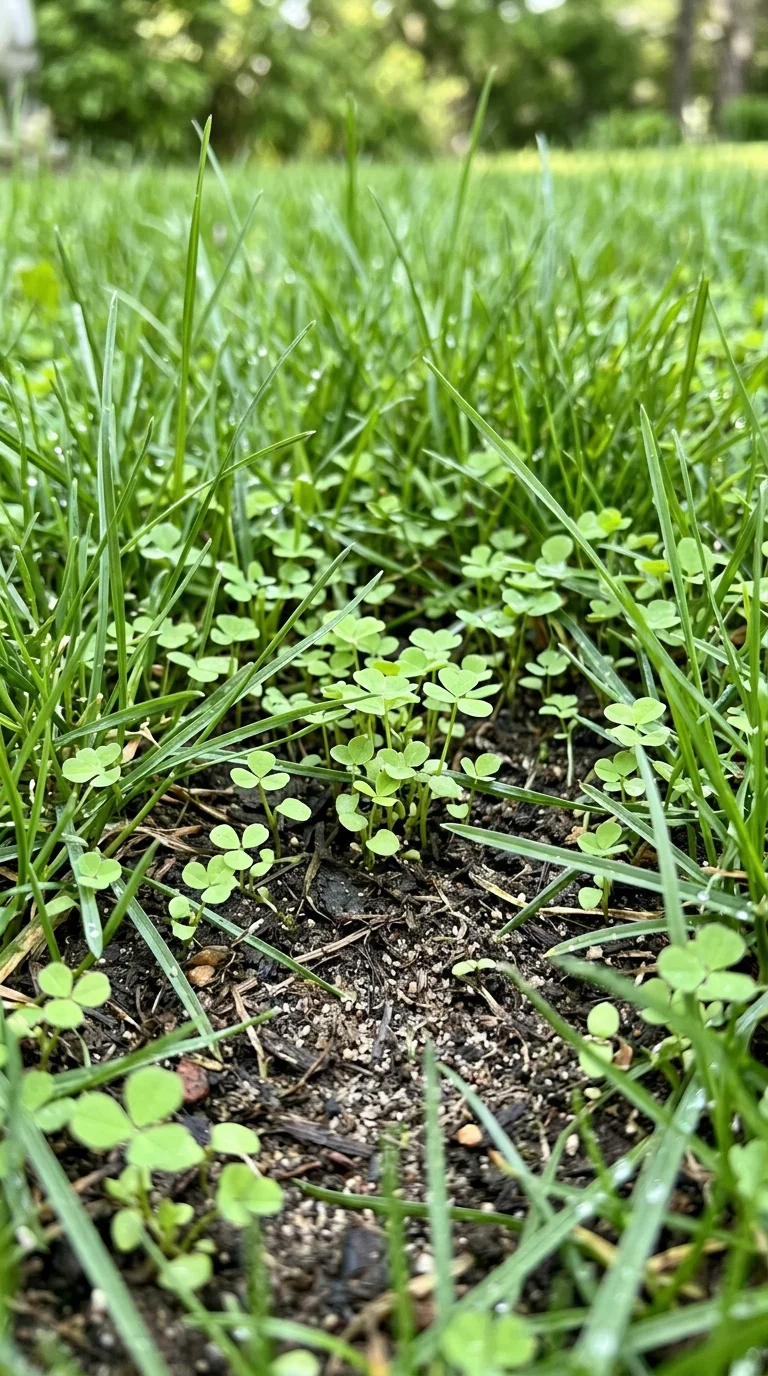
Step 5: Water faithfully. Keep the surface moist with light daily waterings for the first 10 to 14 days. Germination usually starts within 5 to 10 days and completes over two to three weeks. Guard against birds: light netting or a floating row cover over the new seed does wonders in the first two weeks.
Step 6: Let it establish. Clover grows slowly for the first month or two while it puts down roots. Keep competing weeds in check by hand-pulling in the first weeks, water in dry spells, and resist the urge to mow until the plants are about 4 inches tall. After that, a single gentle mow at 3 inches tips it into creeping, spreading mode.
How to Overseed Clover Into an Existing Lawn
Most people are not starting from scratch - they have a tired grass lawn full of bare patches and want to bring clover into the mix. This is the easiest route of all:
- Mow short. Cut the existing lawn down to about 1.5 to 2 inches in early fall or early spring, and remove the clippings.
- Rake the bare spots. Scratch the thin and bald patches to expose soil. These are where your clover will establish first and thicken the lawn.
- Scatter the seed. Spread microclover or white clover seed at 2 to 4 ounces per 1,000 square feet over the whole lawn, or focus it on the bare and weak areas if you prefer a lighter touch.
- Water it in. The same 10-to-14-day moisture window applies. Rain does the job if it arrives within a day or two of sowing.
- Wait through one season. Clover and grass blend gradually. Seed in fall and your lawn will visibly shift toward clover through spring. By the second season, the balance you want is typically in place.
For the classic 10 to 20 percent clover blend - the one that feeds the grass and keeps the lawn mostly traditional - one fall overseed followed by a second overseed a year later is the reliable recipe.
Caring for a Clover Lawn (Hint: It’s Almost Nothing)
Once established, a clover lawn asks for almost nothing. Here is the entire maintenance playbook:
- Mow 0 to 2 times a year. Mow once in mid-spring at 3 inches to tidy the seedheads of the previous year, and optionally once in late summer. Clover will happily live at 3 to 4 inches and rarely needs more. If you keep a grass-clover mix, mow as you always have but higher - 3 inches minimum - so the clover can flower and feed the soil.
- Never fertilize. Clover fixes its own nitrogen. A clover lawn with synthetic fertilizer grows too fast, blooms less, and shoves out its own flowers.
- Water only in its first season and in long droughts. Once deep roots establish, a clover lawn is one of the most drought-savvy yards you can have. On the hottest weeks, a sagging appearance is just it being economical with water - it bounces back after rain.
- Leave the flowers most of the season. The white blooms feed bees for weeks. If you want a low-flower look for a party or a holiday, mow a few days before - the flowers regrow within a couple of weeks.
- Let clippings fall if you mow. They feed the soil food web, but clover grows so slowly that clippings are rarely an issue.
Clover for Slopes, Shade, and Hard Spots
Clover earns its place well beyond the main lawn. It is one of the best ground covers for the awkward corners that defeated your grass:
- Steep slopes and banks. Grass struggles to hold steep soil and is a misery to mow anyway. Clover’s deep roots knit soil together far better than shallow grass roots, and because you never mow it, the slope becomes zero-maintenance. Plant it straight into a cleared bank and it spreads over two or three seasons into a stable, erosion-proof green mat.
- Shady side strips. The thin, dry strips along fences, under eaves, and beside paths where grass always thins out are clover’s natural territory. It tolerates the dry shade and occasional foot traffic better than most grasses.
- Between pavers and stepping stones. Clover seeded into the gaps of patios and walkways creates soft green mortar that stays low, smells fresh when walked on, and needs no weeding because the clover outcompetes the weeds.
- Bee strips and orchard ground. Under fruit trees and around berry patches, a clover understory feeds the bees that pollinate your harvest and enriches the soil the trees feed from. It is the single most productive thing you can plant in a fruit-tree circle.
- Temporary cover on building sites. If you have disturbed, raw soil from construction or landscaping, clover is one of the fastest, cheapest ways to hold it in place and rebuild the soil while you decide what the final planting will be.
In each of these situations, the rule is the same as for the lawn itself: sow 2 to 4 ounces per 1,000 square feet in spring or fall, press in, water for two weeks, and then let it run.
Common Clover Lawn Problems and Fixes
| Problem | Cause | Fix |
|---|---|---|
| Patchy establishment | Seed surface dried out at germination | Resow in fall with light daily watering; clover self-seeds to fill gaps over two years |
| Clover looks yellow | Poor drainage or very acid soil | Check pH; add lime if under 5.5; improve drainage |
| Weeds crowding in | Thin cover in year one | Overseed the thin zones; clover dense cover outcompetes weeds in year two |
| Clover dying in mid-summer | Extreme heat and drought combined | Water deeply once; it bounces back after rain or a cooler week |
| Grass takes over | Too much nitrogen from fertilizer or neighbor overspray | Stop fertilizing; overseed clover again in fall |
| Clover patch in a grass lawn suddenly gone | Heavy foot traffic during establishment | Restrict foot traffic the first month; overseed bare spots |
| Moles or aerator damage | Loose soil attracts digging | Roll it back flat; clover recolonizes quickly |
One real note of caution: clover is not a super-turf for every use. It does not stand up to the heavy pounding of a football-practice lawn or high-traffic dog racing circles as well as a strong grass mix, and it can look subdued in deep shade. For a family lawn, a grass-clover blend handles the middle ground best: tough enough for play, low enough for weekends off.
Clover Lawns and the Garden Beyond
A clover lawn is also a gift to everything else you grow. Its nitrogen feeding enriches the topsoil where beds and borders meet your lawn, so fruit trees, vegetables, and flowers near the edge all reap the benefit. The flowers pull in pollinators that visit your garden beds, raising yields on squashes, tomatoes, and soft fruit. And because a clover lawn never needs feeding, you save yourself the fertilizer bill and the run-off worries that come with a thirsty grass yard.
If you are ready to try other low-maintenance transitions, clover pairs beautifully with a low-maintenance flower garden, and its pollinator payoff multiplies when your flower borders welcome beneficial insects. Keep the edges defined, mow a crisp line between lawn and bed, and you get the wild benefit without the wild look.
Frequently Asked Questions
Q: How long does clover take to fill in a lawn?
A: With fall planting and light moisture, clover germinates in about 5 to 14 days and fills in over the first season. A denser, established clover carpet generally happens by the second spring, helped by clover’s self-seeding.
Q: Is white clover invasive?
A: White clover is a naturalized plant in the United States, and it spreads but does not usually smother natural areas the way some exotics do. In most regions it is a welcome lawn plant; check your local extension office for any regional cautions.
Q: Will clover grow in the shade?
A: Clover tolerates partial shade but is happiest with at least 4 to 6 hours of sun. In deep, all-day shade under dense trees, keep grass or use a shade-adapted mix, because clover will thin out.
Q: Can I walk barefoot on a clover lawn?
A: Absolutely. Clover is soft, dense, and cool underfoot, and it does not have the sharp blades of some grasses. Children playing barefoot find it very comfortable, though as with any lawn, watch for bees when the flowers are in full bloom.