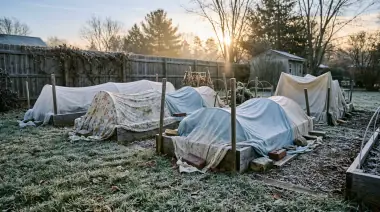
One cold night can undo a whole season of gardening. The forecast drops into the 30s, and every tomato, pepper, and basil plant in your yard is suddenly at risk. The good news: learning how to protect plants from frost is simple, cheap, and mostly about timing. Here are the temperature thresholds to watch, which plants need help, and seven methods that work - a core skill from our gardening tips for beginners collection.
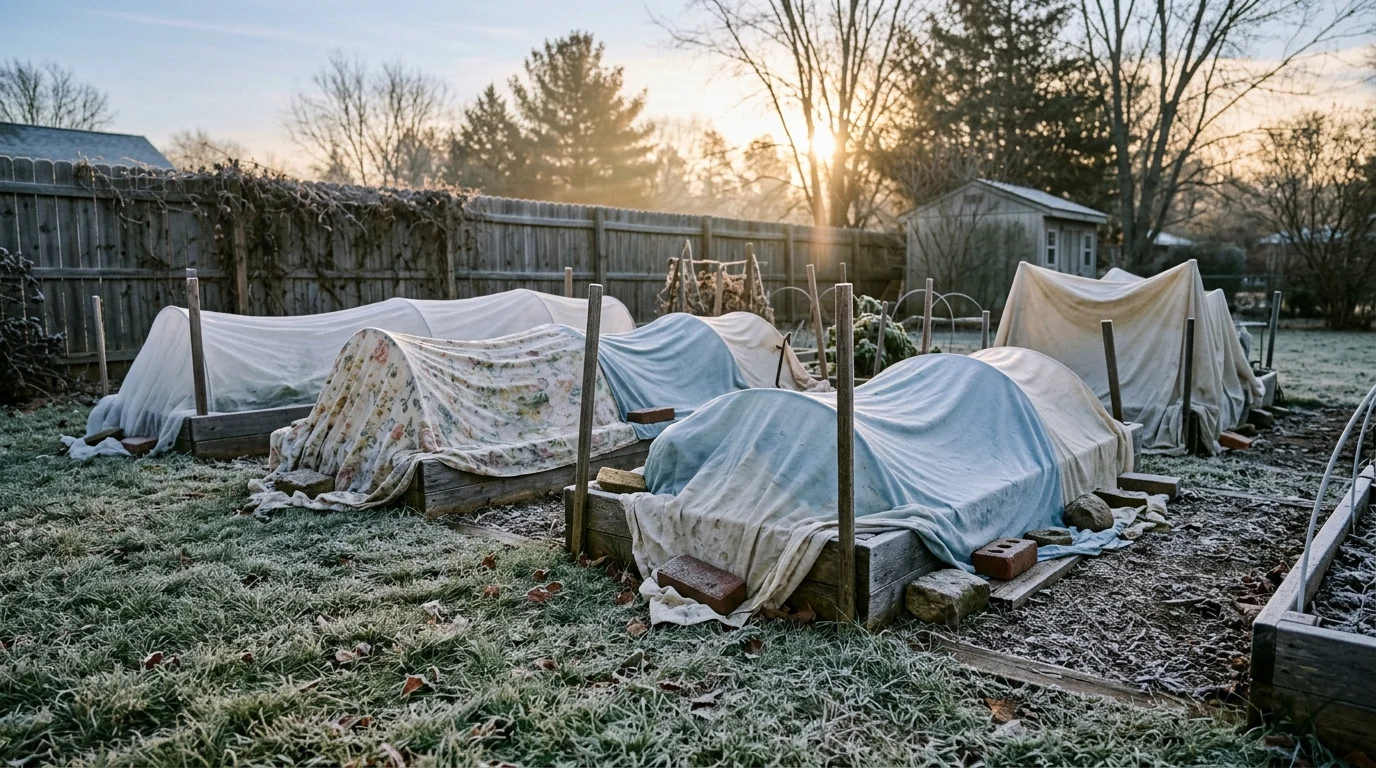
Quick Answer: To protect plants from frost, cover tender plants with frost cloth, old sheets, or blankets before sunset, securing the fabric to the ground with no gaps. Water the soil deeply the afternoon before, mulch 2-4 inches around the base, and move containers indoors or cluster them near the house. Remove covers mid-morning once temperatures rise above freezing. Never let plastic touch the leaves, and skip the hardy crops - kale, spinach, and carrots handle light frost alone.
At a Glance
| Fact | Detail |
|---|---|
| Light frost | 32-36°F (0-2°C) - scorches tender leaves, hardy crops unaffected |
| Frost | 28-32°F (-2-0°C) - kills most tender annuals and warm-season vegetables |
| Hard freeze | Below 28°F (-2°C) for 3+ hours - kills nearly all tender growth |
| Killing freeze | Below 24°F (-4°C) - ends everything except the hardiest crops |
| Best cover | Frost cloth, row cover, old sheets, or blankets - never plastic on leaves |
| Covers on | Before sunset, while the soil still holds daytime heat |
| Covers off | Mid-morning, once temperatures are back above freezing |
| Pre-frost watering | Deep soak the afternoon before; wet soil releases heat overnight |
| Mulch layer | 2-4 inches of straw, shredded leaves, or wood chips around the base |
| Most vulnerable | Tomatoes, peppers, basil, squash, cucumbers, annual flowers, citrus |
| Frost tolerant | Kale, spinach, carrots, Brussels sprouts, pansies, mums |
Frost vs. Freeze: Know Your Numbers
Frost is the ice that forms on plant surfaces when the temperature right at the leaf hits 32°F (0°C), even if the official air reading is higher. A freeze is when the air itself drops to 32°F or below. Your thermometer at 5 feet up can read 36°F while the garden at ground level is already frosting [1] (Source: Iowa State University Extension).
| Event | Temperature | What happens in the garden |
|---|---|---|
| Light frost | 32-36°F (0-2°C) | Tender leaves scorched, hardy crops fine |
| Frost | 28-32°F (-2-0°C) | Tender annuals and warm-season vegetables killed |
| Hard freeze | Below 28°F (-2°C) for 3+ hours | Nearly all tender growth killed |
| Killing freeze | Below 24°F (-4°C) | Season over except very hardy crops |
Cold air sinks, so the coldest spot in your yard is at ground level in low areas. A predicted 37°F can mean 31°F at the bottom of your garden - which is why first frost protection matters even when the forecast looks safe.
Which Plants Need Protection (and Which Don’t)
Spend your effort on the tender plants; the hardy crowd fends for itself.
Protect these (tender):
- Tomatoes and peppers - damaged at 33°F, killed at 32°F; our guide to growing tomatoes covers their limits
- Basil - the most cold-sensitive herb; blackens at first frost
- Squash, cucumbers, and melons - dead at 32°F
- Beans and sweet corn - killed by a light frost
- Annual flowers - impatiens, petunias, marigolds, coleus
- Citrus and tropicals - damage can start at 32-35°F
These tolerate frost (no cover needed):
- Kale and Brussels sprouts - survive to about 20°F and taste sweeter after frost
- Spinach and lettuce - handle 28°F
- Carrots, beets, and parsnips - roots insulated by soil; frost improves flavor
- Pansies, mums, and ornamental cabbage - bred for cold
- Broccoli and cauliflower - tolerate 26-28°F
That split is why our list of vegetables to plant in fall leans on the hardy group - they are built for this weather.
The 7 Methods of Frost Protection
1. Frost Cloth and Row Covers
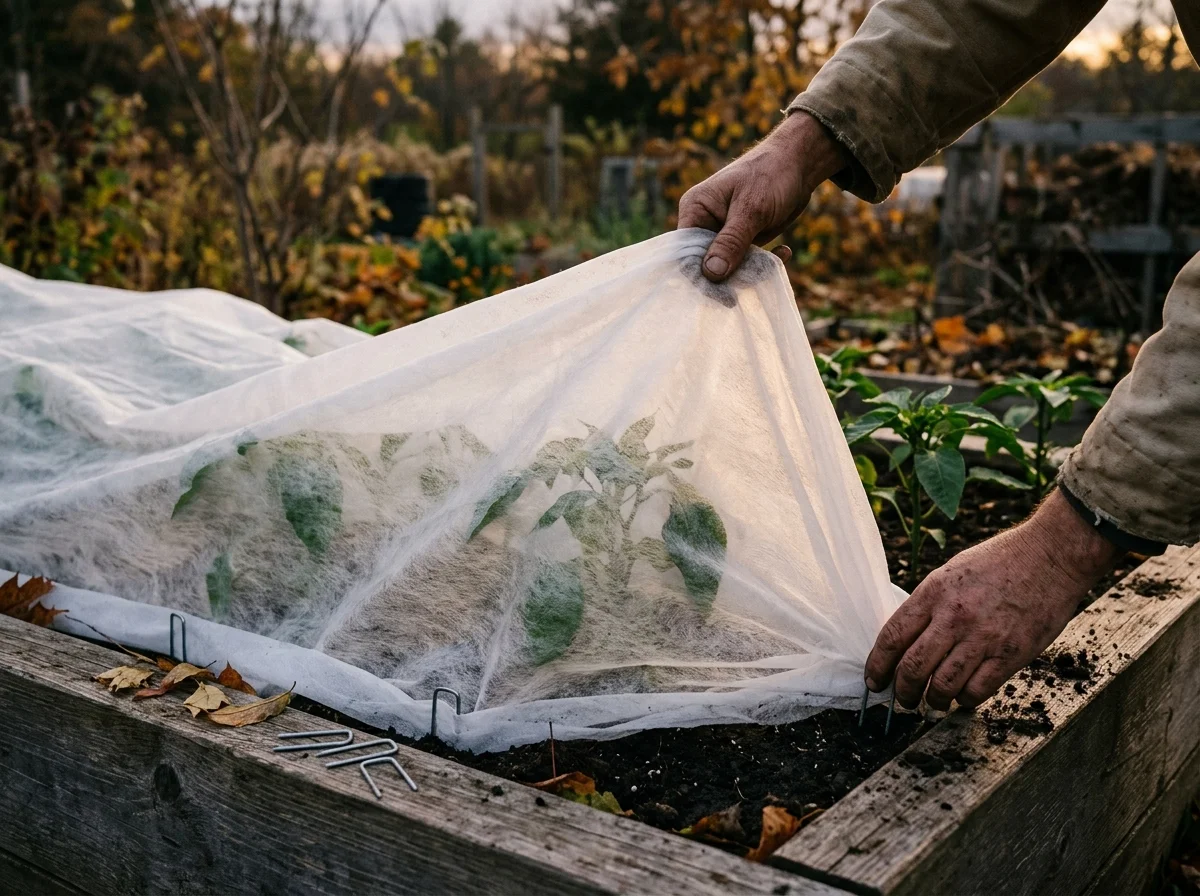
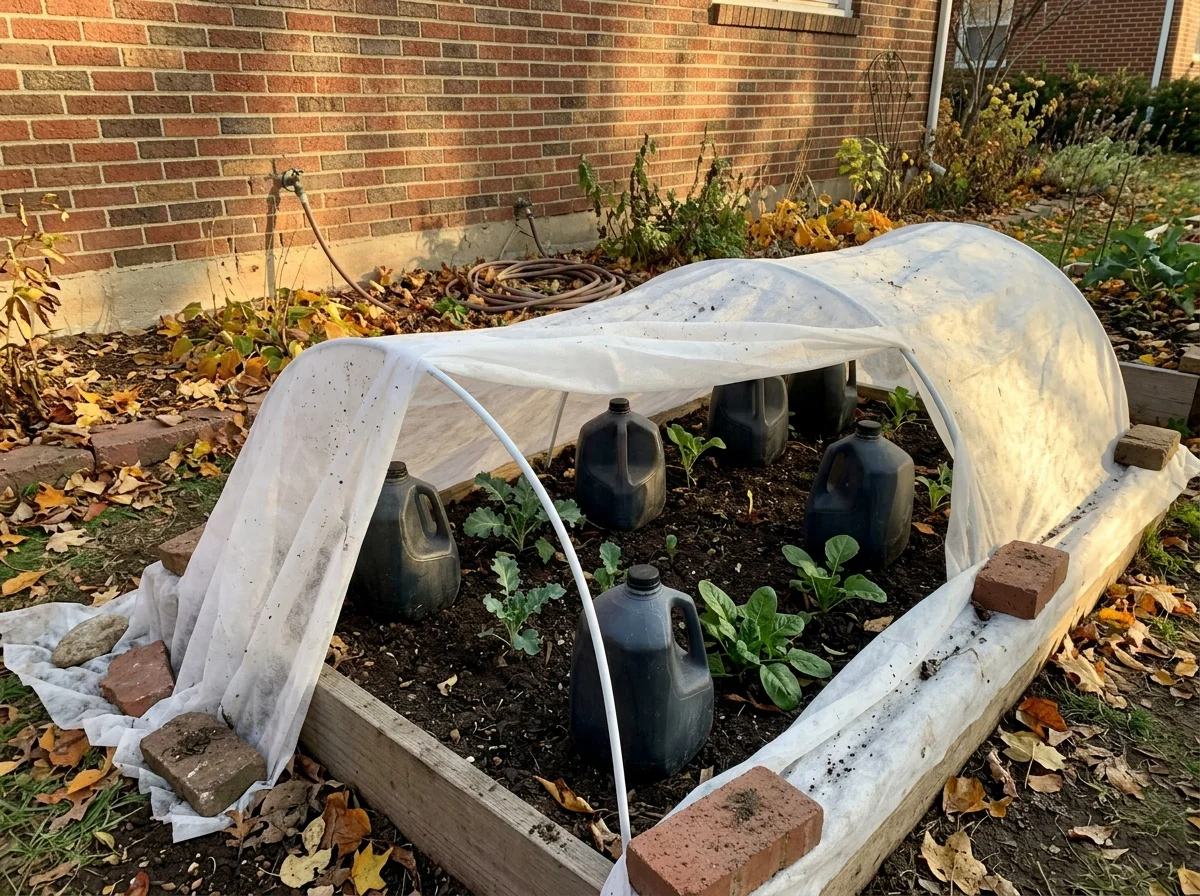
Frost cloth (floating row cover) is the best tool for protecting plants from freeze damage. The woven fabric traps heat rising from the soil; lightweight versions protect to about 28°F, heavyweight to 24-26°F [2] (Source: University of Minnesota Extension). Drape it over plants in the late afternoon and secure every edge to the ground with landscape staples, boards, or bricks - no gaps. The cover works like a tent holding the day’s soil warmth in, and an open edge lets it escape. For tall plants, set stakes or hoops first so the fabric rests on supports, not foliage.
2. Old Sheets and Blankets
Old bedsheets, blankets, burlap, and cardboard boxes work nearly as well. Sheets handle a light frost; heavy blankets protect to 26-28°F but need support so their weight does not snap stems. One hard rule: never plastic directly on leaves - wherever plastic touches foliage, that spot freezes faster than it would uncovered.
3. Cloches and DIY Bottles
For individual plants, a cloche - any dome that traps warm air - is fast and free. Cut the bottom off a gallon milk jug or 2-liter bottle and set it over a seedling, cap off at night; invert a bucket or flower pot over small plants; wrap a tomato cage in row cover for medium ones. A milk-jug cloche protects to about 26-28°F. Push it an inch into the soil so wind cannot roll it, and vent or remove it on sunny mornings - a sealed jug can pass 90°F by noon.
4. Water the Soil Deeply the Afternoon Before
The most underrated frost trick there is. Moist soil absorbs more solar heat by day and releases it slowly all night, warming the air around plants by 2-4°F [3] (Source: Oregon State University Extension). Water deeply in the early afternoon, keep foliage dry - wet leaves freeze faster - and do not rely on water alone below 25°F.
5. Mulch Around the Base
Mulch protects roots, not tops. A 2-4 inch layer of straw, shredded leaves, or wood chips insulates the soil and keeps the root zone several degrees above air temperature. For borderline-hardy perennials and roses, mound mulch 6-8 inches deep over the crown, then pull it back in spring.
6. Bring Containers Indoors or Cluster Them
Potted plants freeze faster than in-ground plants because their roots have no earth to buffer them. Carry pots into a garage, shed, or the house for the night. Too heavy? Cluster them against a south- or west-facing wall, which radiates stored heat all evening, and throw a sheet over the group. Our container gardening tips for beginners guide covers overwintering pots.
7. Cold Frames and Wall-of-Water
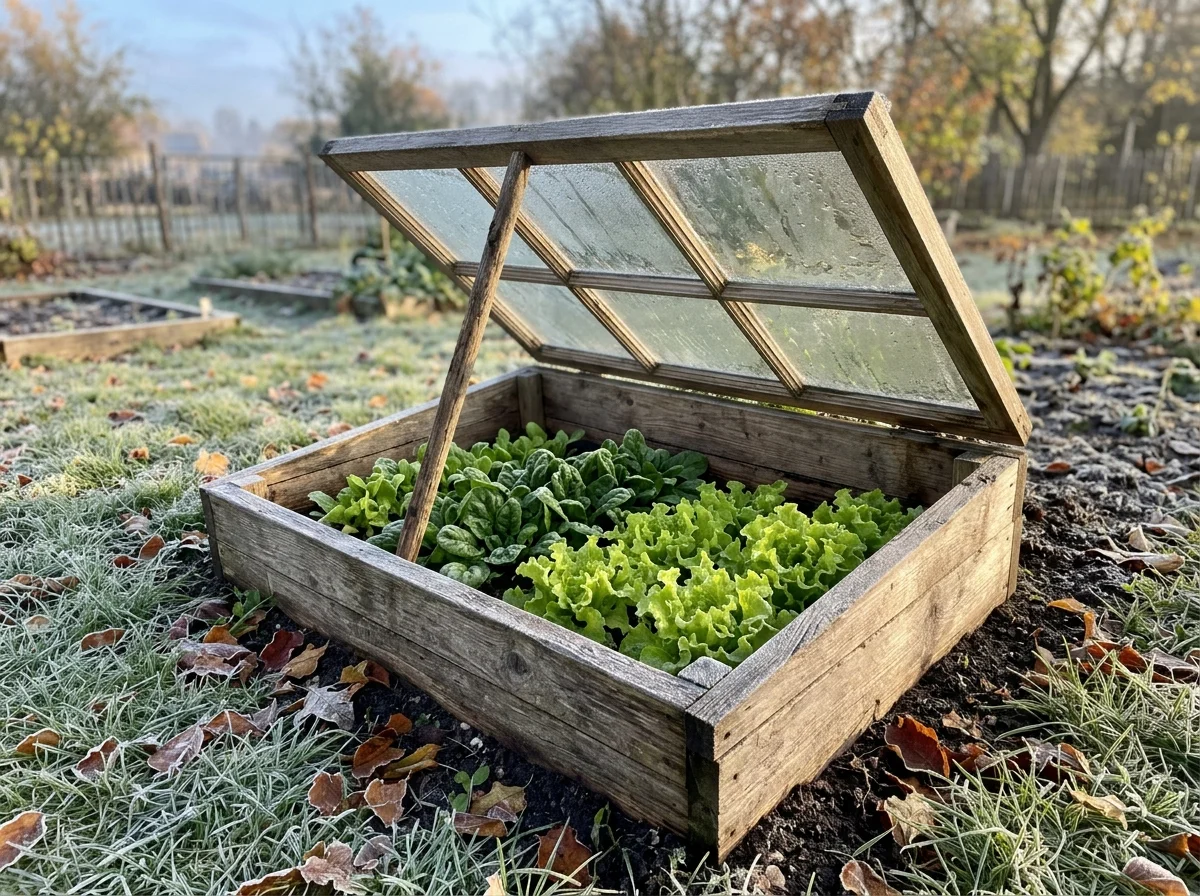
For season-long protection, two structures earn their keep. A cold frame - a bottomless box with a clear lid - runs 10-20°F warmer than the outside air and grows greens weeks past the first frost. A wall-of-water, a ring of water-filled tubes around one plant, protects to about 16-24°F. Vent both on sunny days: prop the cold frame lid once it passes 50°F inside, or you will cook what you meant to save.
Timing: When to Cover and Uncover
Covers go on before sunset, while the soil still holds the day’s heat - wait until dark and that warmth is gone. Covers come off mid-morning, once the sun is up and temperatures pass 32-34°F; left longer on a sunny day, trapped heat wilts plants by noon. Lightweight frost cloth can stay on through a string of cold days, but heavy blankets come off every morning.
Why Plastic Alone Fails
Plastic film pressed against a leaf conducts cold straight into the tissue, so contact points freeze harder than uncovered leaves would - you get freeze-burned patches in the shape of the tarp. Plastic works only over fabric, or stretched over hoops so it hangs clear of every leaf: a tent, never a wrap.
Wind makes everything worse. Moving air strips the warmth around plants and lifts loose covers. On windy frost nights, weigh down every edge and seam, and set a temporary windbreak - a board, a straw bale, a row of containers - on the windward side.
Microclimate Tricks That Add Degrees
South- and west-facing walls absorb sun all day and radiate heat half the night, keeping nearby soil 3-6°F warmer than open ground. Dark stones, bricks, and water-filled jugs tucked among plants do the same: they charge with heat by day and bleed it back overnight. A few gallon jugs of water under a frost cloth add 2-3°F of protection. And skip planting tender crops at the bottom of slopes, where cold air pools - the top of a gentle slope can be a full zone warmer.
Spring Frost vs. Fall Frost
Fall frost ends the season; spring frost can erase one that barely started. In fall, covering tomatoes and peppers through a 30°F night buys two to three extra weeks of ripening. In spring, the danger is twofold: transplants go out too early and meet a late frost - our guide on when to plant vegetables explains timing - and fruit trees hit by 27-28°F during bloom can lose the year’s entire crop of blossoms [4] (Source: The Old Farmer’s Almanac). Cover small trees with a sheet, or run a sprinkler so blossoms stay coated in ice at 32°F, which oddly protects them below that point.
How to Read a Frost Forecast
Three forecast details tell you how bad the night will be:
- Dew point. Above about 36°F, moisture condenses on leaves and releases a little heat. Below 30°F means dry air and much higher frost risk.
- Wind. Calm nights are frost nights; wind above 5 mph mixes the air and often prevents frost, though it makes covers harder to keep on.
- Cloud cover. Clouds hold the day’s heat in. A clear, calm night after a sunny day is the classic killer-frost setup.
Then check your own yard: cold air drains downhill, so low-lying beds frost while beds 20 feet uphill stay safe. Garden in a hollow? Treat the forecast low as 3-5°F optimistic.
Frost Tolerance by Crop
| Crop | Damaged at | Killed at | Notes |
|---|---|---|---|
| Basil | 36°F (2°C) | 32°F (0°C) | Most tender herb; blackens first |
| Tomatoes | 33°F (1°C) | 32°F (0°C) | Fruit survives brief 31°F |
| Peppers | 33°F (1°C) | 32°F (0°C) | Ripe fruit slightly tougher |
| Cucumbers, squash, melons | 32°F (0°C) | 31°F (-1°C) | One light frost ends them |
| Beans | 32°F (0°C) | 31°F (-1°C) | Leaves die first |
| Citrus (varies) | 32-35°F (0-2°C) | 26-28°F (-3–2°C) | Fruit tougher than leaves |
| Lettuce | 28°F (-2°C) | 26°F (-3°C) | Outer leaves scorch first |
| Broccoli, cabbage | 28°F (-2°C) | 24°F (-4°C) | Handles light frost well |
| Carrots, beets | 25°F (-4°C) | 20°F (-7°C) | Roots insulated; tops die first |
| Kale, Brussels sprouts | 20°F (-7°C) | 10°F (-12°C) | Flavor improves after frost |
| Pansies, mums | 25°F (-4°C) | 20°F (-7°C) | Blooms pause, plants survive |
After the Frost: Caring for Damaged Plants
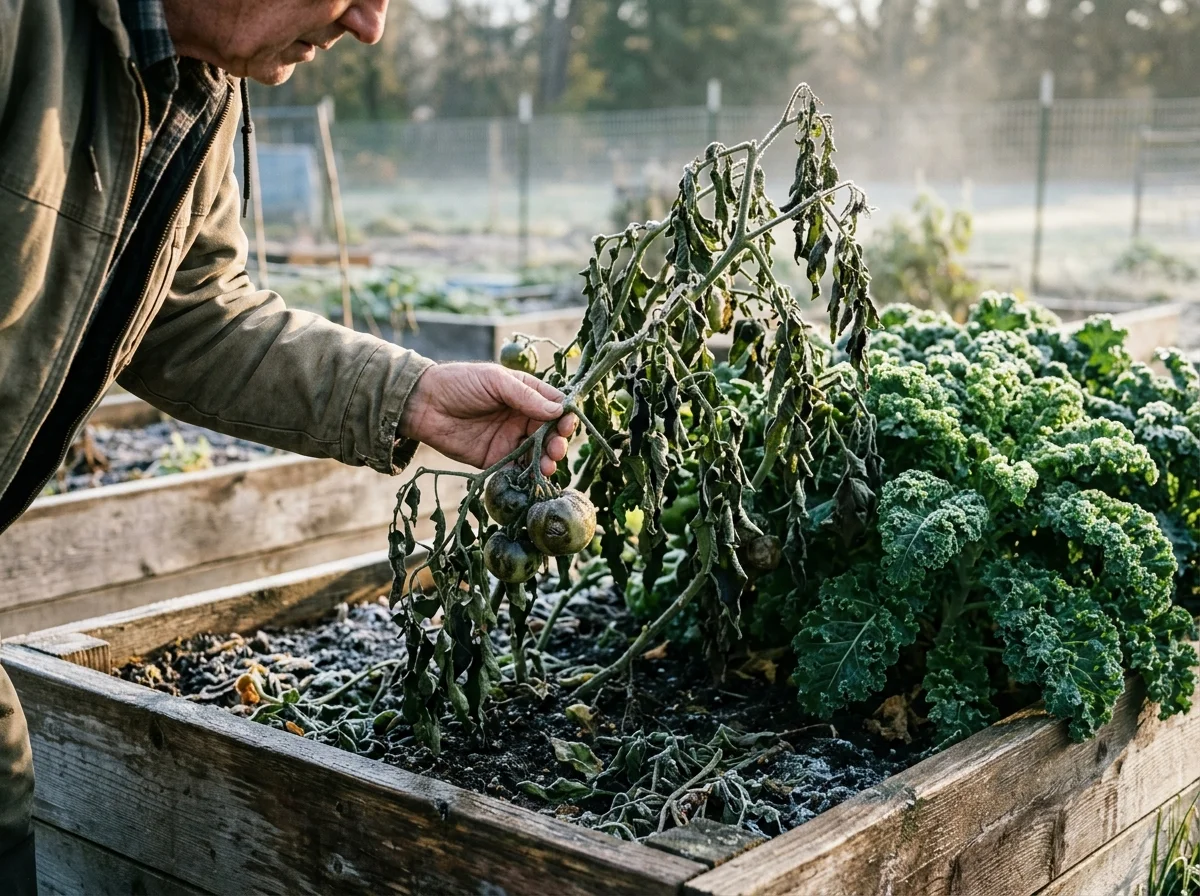
Walk the garden the next morning, but do nothing yet. Blackened, wilted leaves look terrible, yet the damage is often shallower than it appears, and dead foliage insulates the living tissue beneath it. Wait one to two weeks before pruning. Water normally, and do not fertilize - soft new growth now just feeds the next frost. After two weeks, scratch a stem: green under the bark means it will resprout; brown and brittle all the way down means it is done. Annuals blackened to the ground will not return - pull them and note the date for next year.
Common Mistakes
- Waiting for a freeze warning to act. The fix: cover at 36°F or lower; frost forms before the official freeze.
- Leaving gaps at the bottom of covers. The fix: pin or weigh down every edge so ground heat stays trapped.
- Using plastic directly on foliage. The fix: fabric on the plant, plastic only over hoops.
- Covering after dark. The fix: covers on by late afternoon, before the soil releases its heat.
- Forgetting to uncover in the morning. The fix: covers off mid-morning; sealed covers overheat plants by noon.
- Watering leaves instead of soil. The fix: soak the ground the afternoon before; keep foliage dry overnight.
- Protecting the hardy and skipping the tender. The fix: kale and carrots need nothing; cover tomatoes, peppers, basil, and flowers.
- Pruning frost damage immediately. The fix: wait one to two weeks for regrowth before cutting.
Troubleshooting
- Plants wilted and mushy under the cover: it stayed on too long on a sunny day; remove earlier and vent on bright mornings.
- Freeze-burned patches in the shape of the tarp: plastic touched the leaves; switch to fabric or build a frame.
- Covers blown off by morning: edges not secured to the ground; weigh down every side and add a windbreak.
- Everything died despite a 38°F forecast: you garden in a low spot; treat your hollow as 3-5°F colder and cover sooner.
- Tomatoes survived but fruit is soft and bland: fruit chilled below 33°F on the vine; harvest nearly ripe fruit before cold nights.
Frequently Asked Questions
Q: What temperature should I cover my plants?
A: Cover tender plants when the forecast calls for 36°F (2°C) or lower. Frost can form even when the air temperature reads 33-36°F, so err on the side of covering whenever a clear, calm night below 40°F is predicted.
Q: Can I use plastic to cover plants from frost?
A: Only as a cover over stakes or hoops so it never touches the leaves. Plastic pressed against foliage conducts cold straight into the leaf and can make frost damage worse than no cover at all.
Q: When should I take frost covers off?
A: Remove covers in mid-morning once temperatures climb back above freezing and the sun is up. On sunny days, lift or vent covers early so plants do not overheat underneath.
Q: Do I need to water plants before a frost?
A: Yes. Water the soil deeply the afternoon before a frost. Moist soil absorbs heat all day and releases it slowly overnight, keeping the air around plants a few degrees warmer.
Q: Will one light frost kill my vegetable garden?
A: Usually not. A light frost damages tender crops like tomatoes, peppers, and basil, but hardy crops like kale, spinach, carrots, and Brussels sprouts tolerate it and often taste sweeter afterward.
Q: How do I protect potted plants from frost?
A: Move containers into a garage, shed, or indoors overnight. If they are too heavy, cluster them against a south-facing wall of the house and cover the whole group with a sheet or frost cloth.
Q: Does mulch protect plants from frost?
A: Mulch insulates roots, not leaves. A 2-4 inch layer of straw, shredded leaves, or wood chips around the base keeps soil warmer and protects the root zone, but the top growth still needs a cover.
Q: What should I do with plants after frost damage?
A: Water them, skip fertilizer, and wait. Do not prune blackened growth right away, because it shields the plant from further cold. Give plants one to two weeks to show regrowth before cutting anything back.
Related Articles
- Gardening Tips for Beginners
- Container Gardening Tips for Beginners
- When to Plant Vegetables
- Vegetables to Plant in Fall
- How to Grow Tomatoes
- Vegetable Garden Watering Schedule
- Harvesting and Storing Vegetables
