
Have you ever looked out at your yard and felt overwhelmed by patchy, weed-filled grass? You are not alone! Many new homeowners struggle to figure out how to maintain a green, thick, healthy lawn throughout changing seasons. Fortunately, mastering lawn care for beginners is much simpler than you think once you understand a few basic lawn care principles.
Quick Answer: The essentials of lawn care for beginners boil down to 5 golden rules:
- Mow High: Set your mower deck to 3 to 4 inches. Tall grass shades the soil, retains moisture, and naturally crowds out weed seeds.
- Water Deeply: Give your lawn 1 inch of water per week early in the morning rather than light daily sprinkling.
- Follow the One-Third Rule: Never cut off more than 1/3 of the grass blade height in a single mowing session.
- Feed the Soil: Apply organic compost, worm castings, or slow-release fertilizer during peak growth seasons. Learn more in our detailed guide on how to fertilize your lawn.
- Aerate & Overseed in Autumn: Loosen compacted soil and sow fresh grass seed every fall to fix bare spots and keep grass dense.
Understanding Your Yard: Cool-Season vs. Warm-Season Grass
When learning how to take care of a lawn, the very first step is identifying your grass type. Grasses generally fall into two main categories, each requiring a different garden grass care approach:
- Cool-Season Grasses (Kentucky Bluegrass, Tall Fescue, Perennial Ryegrass): Thrives in northern climates with mild springs and crisp autumns. These grasses grow actively in spring and fall, go semi-dormant during scorching summer heat, and require fall overseeding.
- Warm-Season Grasses (Bermuda, Zoysia, St. Augustine, Centipede): Thrives in southern climates with hot summers. These grasses grow vigorously during summer heat and turn brown (dormant) during cold winter months.
Understanding whether you have cool-season or warm-season grass ensures you fertilize, mow, and seed at the exact right time of year.

Lawn Care Basics: The 5 Golden Rules of Grass Care
If you are looking for straightforward lawn care tips for beginners, follow these core rules to keep your yard looking great without unnecessary work:
Rule 1: The One-Third Mowing Rule
Never remove more than one-third of the grass blade height at one time. Chopping grass down too low shocks the root system, weakens the plant, and leaves room for weeds to take over.
Rule 2: Keep Mower Blades Sharp
Dull mower blades tear grass blades rather than cutting them cleanly. Torn grass tips turn brown and leave the lawn vulnerable to fungal diseases. Sharpen your mower blades twice per season.
Rule 3: Water Early and Deeply
Water your lawn between 6:00 AM and 10:00 AM. Deep watering once or twice a week encourages roots to grow deep into the soil. Light, shallow watering keeps roots near the surface where summer heat quickly dries them out.
Rule 4: Leave Grass Clippings (Grasscycling)
Unless your lawn is diseased, leave fine grass clippings on your yard after mowing. As clippings decompose, they return free nitrogen and organic matter to the soil, supplying up to 25% of your lawn’s yearly fertilizer needs.
Rule 5: Test Soil Compaction
Healthy roots need air and water. Test your soil compaction by pushing a screwdriver into the ground after a light rain. If it slides in easily, your soil is healthy; if it resists, your lawn needs aeration and topdressing.
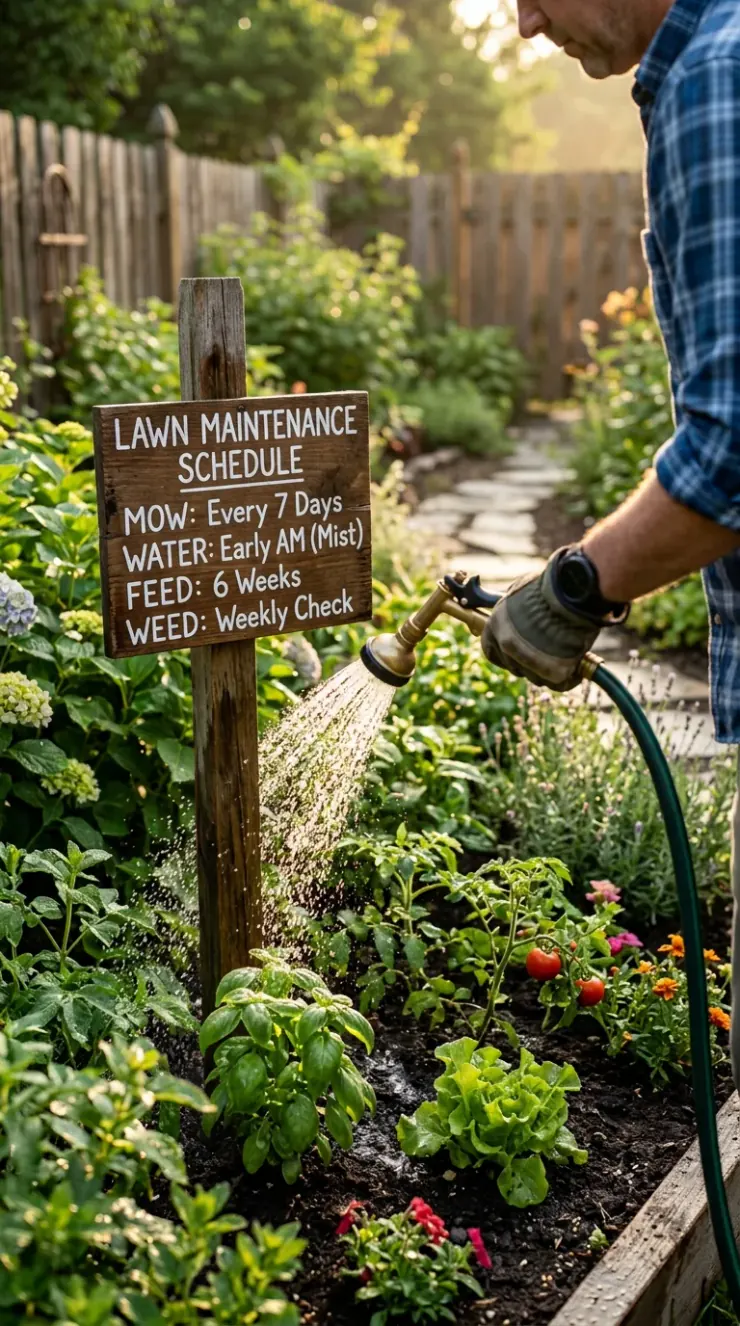
Building Your Seasonal Lawn Maintenance Schedule
To take the guesswork out of care for lawn beds, break your yearly maintenance into simple seasonal tasks:
Spring Lawn Prep & Weed Prevention
- Clean Up Debris: Gently rake away fallen leaves, winter twigs, and matted grass to let sunlight reach the soil.
- Inspect Mower: Service your lawnmower, change the oil, and sharpen the blades.
- Prevent Weeds: Apply a pre-emergent weed treatment in early spring when soil temperatures reach 55°F to stop crabgrass before it sprouts.
- Light Feeding: Apply a balanced spring fertilizer once grass actively starts growing.
Summer Grass Care & Deep Watering
- Raise the Mower Deck: Mow at 3.5 to 4 inches to shade soil and protect roots from high summer heat.
- Deep Irrigation: Provide 1 inch of water weekly (including rainfall). Use a small tuna can on the lawn to measure sprinkler output.
- Spot-Treat Pests & Weeds: Hand-pull broadleaf weeds or spot-treat grubs and chinch bugs as needed. For organic pest solutions, read our guide on garden pest control for beginners.
Autumn Aeration, Overseeding & Feeding
- Core Aeration: Pull soil plugs out of compacted lawns so air, water, and nutrients reach root zones.
- Overseed Thin Spots: Spread fresh grass seed over bare or thin areas while soil is still warm.
- Apply Fall Fertilizer: Autumn is the most crucial time to fertilize cool-season lawns, building strong root reserves for winter.
Winter Lawn Care & Equipment Protection
- Final Cut: Perform your last mow of the season slightly lower (around 2.5 inches) to prevent snow mold.
- Clear Leaves: Rake up remaining leaves so wet leaf piles do not smother sleeping grass.
- Store Equipment: Drain fuel from your mower and store tools in a dry shed or garage.
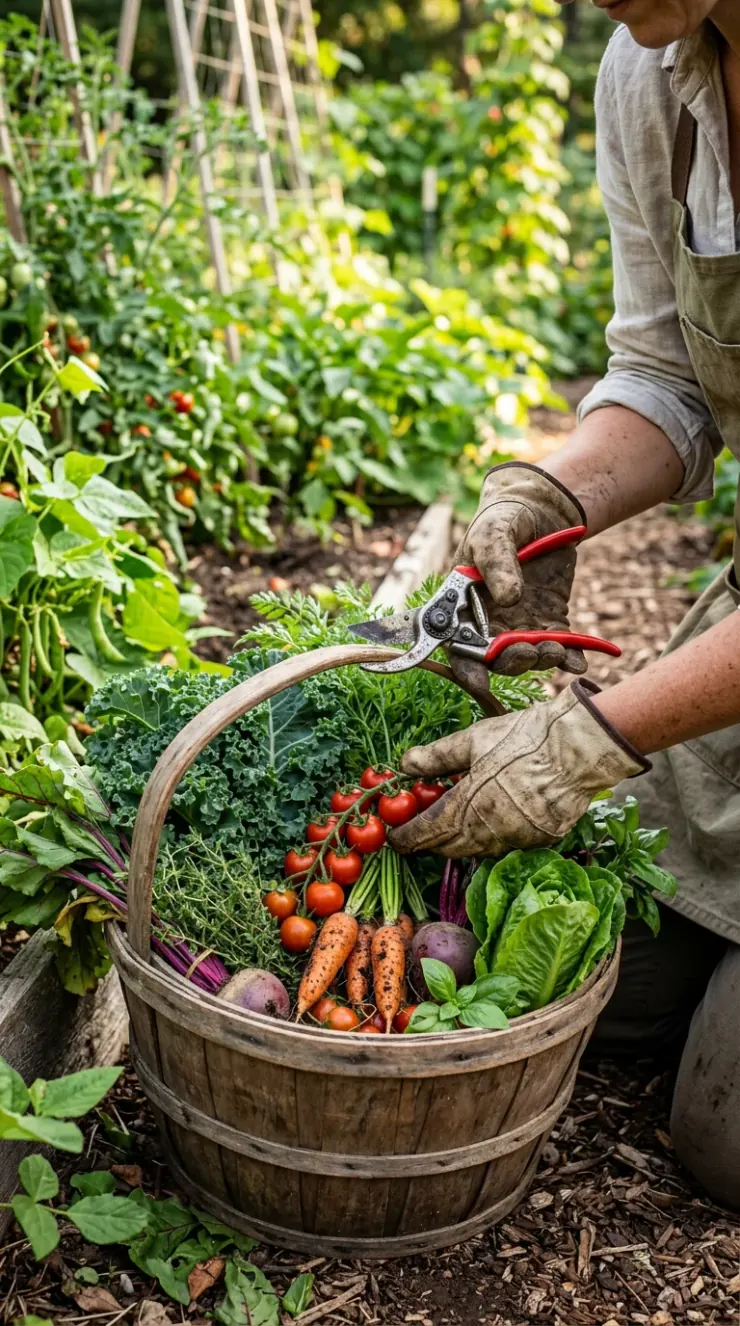
Essential Tools for Beginner Lawn Care
You do not need a garage full of expensive machinery for beginner lawn care. Start with these essential, reliable tools:
- Quality Lawnmower: A rotary push mower (gas, battery, or electric) with adjustable height settings and a mulching plug.
- Broadcast Spreader: Ensures smooth, even application of grass seed, fertilizer, and soil amendments without burning grass.
- Flexible Leaf Rake: Essential for clearing autumn leaves, thatch, and debris without tearing up grass roots.
- String Trimmer (Edger): Tidies up grass edges along sidewalks, driveways, and garden borders for a clean look.
- Rain Gauge or Sprinkler Timer: Helps you track rainfall and avoid overwatering or underwatering.
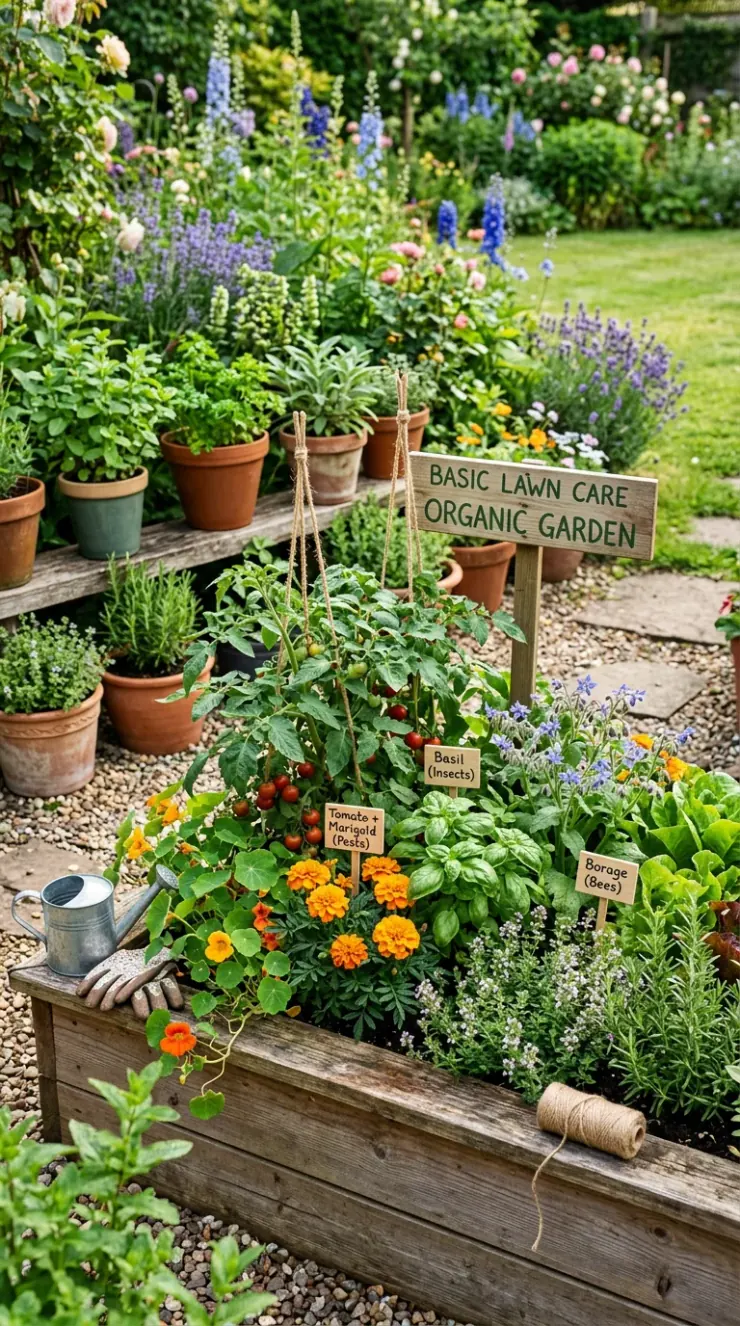
How to Fix Common Lawn Problems
Even with good lawn care basics, common issues can pop up. Here is how to fix them quickly:
Fixing Yellow or Brown Patches
- Drought/Heat Stress: If grass looks dull gray-green and leaves footprints when walked on, give it a deep 1-inch soaking.
- Grub Damage: If brown patches pull up easily like a loose carpet, check for white grub larvae beneath the sod and treat with organic beneficial nematodes or grub control.
- Pet Urine Spots: Flush pet urine spots immediately with a bucket of water to dilute concentrated nitrogen salts.
Controlling Persistent Weeds
- Thick, healthy grass is the ultimate natural weed barrier. For stubborn weeds like dandelions or clover, pull them by hand after rain when soil is soft, ensuring you remove the deep taproot.
Improving Hard Clay Soil
- If your soil feels like brick, topdress your lawn every fall with a 1/4-inch layer of rich organic compost. Over time, earthworms will pull the compost down, turning hard clay into crumbly soil. Learn more in our guide on how to prepare soil for planting.

Design tip: Create gentle, curved garden borders around your lawn for easy mowing and a beautiful landscape framing!
Soil Health & Organic Lawn Feeding
Building a thick, green lawn starts underground with the soil food web. Rather than relying heavily on synthetic chemical fertilizers, nourishing your soil naturally produces stronger, disease-resistant grass:
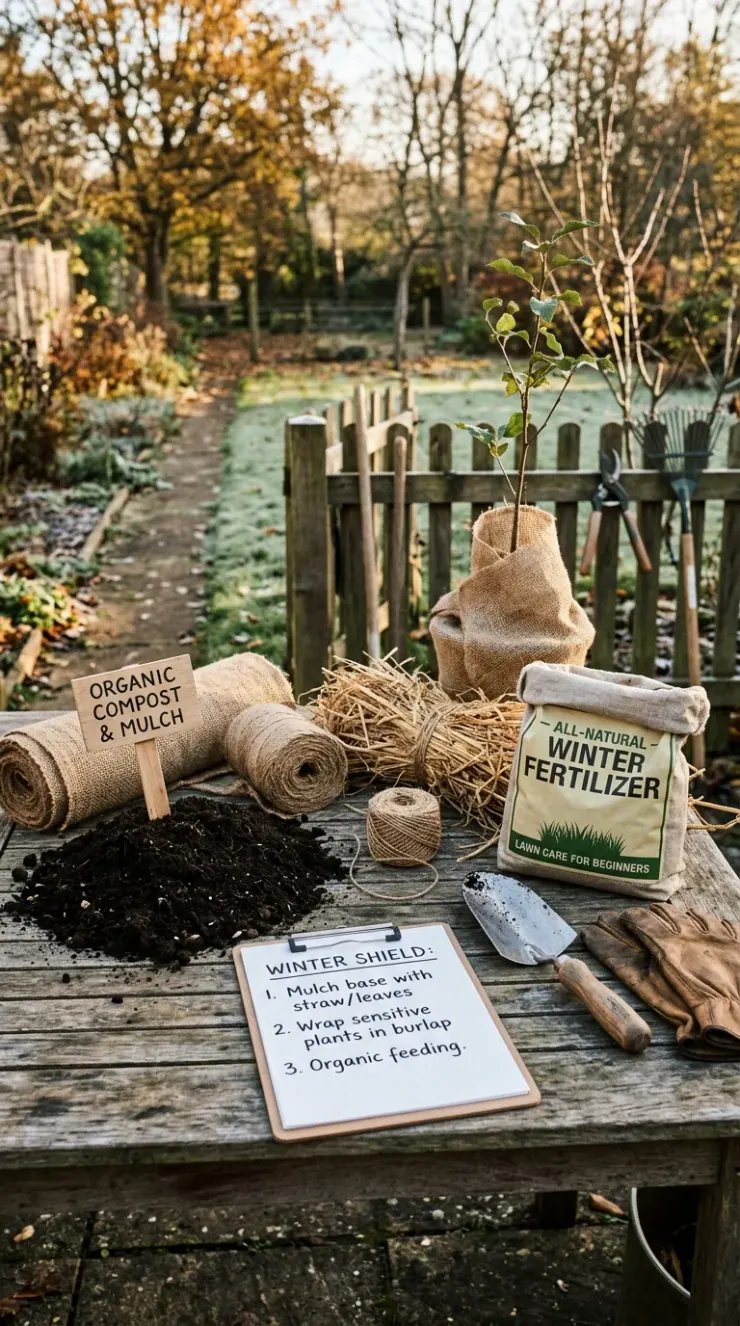
- Topdressing with Compost: Spreading 1/4 inch of screened compost over your lawn supplies slow-release nitrogen, trace minerals, and beneficial microbes.
- Worm Castings: An ultra-gentle, non-burning natural fertilizer packed with humic acid that promotes deep root development.
- Liquid Seaweed Spray: Spraying liquid kelp extract helps grass withstand summer drought and heat stress.
For foundational gardening principles, explore our comprehensive guide on gardening tips for beginners.
Frequently Asked Questions
Q: What is the most important lawn care tip for beginners?
A: Mowing high! Keeping your mower set to 3.5 to 4 inches is the single easiest thing you can do. Tall grass shades the soil, conserves water, encourages deep root growth, and naturally blocks weed seeds from sprouting.
Q: How often and how long should I water my grass?
A: Water deeply once or twice a week rather than watering for 5 minutes every day. Aim for 1 inch of total water per week (including rain). Water early in the morning between 6:00 AM and 10:00 AM.
Q: Should I leave grass clippings on the lawn or bag them?
A: Leave clippings on the lawn! Fine clippings break down quickly and return valuable nitrogen and moisture to the soil, acting as a free natural fertilizer. Only bag clippings if the grass is diseased or overgrown.
Q: When is the best time to plant new grass seed?
A: For cool-season grasses, early autumn is the best time because the soil is warm and weed competition is low. For warm-season grasses, late spring to early summer is ideal when temperatures are consistently warm.
Q: How do I fix yellow patches in my grass?
A: Check if the patch needs water, check for dog urine burn (flush with water), or pull gently on the turf to check for grubs. Raising your mower height and topdressing with compost will help the lawn recover.
Q: Can I grow a green lawn without harsh chemical fertilizers?
A: Absolutely! By mowing high, recycling grass clippings, topdressing with compost or worm castings, and watering deeply, you can grow a dense, vibrant lawn completely organically.