I used to think improving soil meant buying something strong enough to fix it — a bag with a bold claim, a quick dig, a before-and-after. The first time my tomatoes yellowed, I reached for fertilizer. When carrots forked, I bought more seeds. When water puddled for days, I blamed the rain.
Then I spent a season watching my neighbor’s garden, which she’d tended for twenty years on the same clay I was fighting. Her soil was almost black, smelled like mushrooms after rain, and when she pushed a trowel in, it slid 8 inches as if the earth exhaled. Mine thudded at 4 inches and clung. She didn’t have better land. She had better habits — small, steady ones that built soil the way savings builds wealth: a little compost here, a mulch blanket there, a pH test every other year, a cover crop when beds sat empty.
Soil isn’t fixed. It’s fed. And the good news is the same ten easy ways work whether you have heavy clay that sets like brick, pale sand that dries by noon, or tired beds that have grown vegetables for five years without a top-up.
Quick Answer: Improve any garden soil with these 10 easy ways: 1) Add 2–3″ finished compost, 2) Mulch 3″ with straw/leaves, 3) Test & correct pH to 6.0–7.0, 4) Aerate with broadfork (don’t over-till), 5) Add 10% perlite for clay compaction, 6) Grow cover crops, 7) Water deeply & evenly, 8) Avoid walking on beds, 9) Top-dress yearly compost, 10) Feed soil biology (worms, mulch, minimal chemicals). In 4–8 weeks soil holds moisture longer; in 2–3 seasons it becomes deep, dark, crumbly loam.
At a Glance: 10 Ways to Improve Garden Soil
| Way | What It Fixes | When to Do | Effort | Payoff |
|---|---|---|---|---|
| 1. Compost (2–3″) | Low organic matter, hunger, poor water | Spring & fall | Low | Biggest single gain |
| 2. Mulch 3″ (straw/leaves) | Evaporation, crust, weeds, heat swing | After seedlings 3″ | Low | Halves watering |
| 3. pH test & adjust to 6.0–7.0 | Locked nutrients, yellowing, poor fruit | Every 2 years, fall | Low | Unlocks fertility |
| 4. Broadfork aeration | Compaction, poor drainage | Spring if needed | Medium | Restores air without destroying life |
| 5. Perlite 10% for clay | Soggy, airless, cloddy | At build/amend | Medium | Permanent air pockets |
| 6. Cover crops | Bare soil, erosion, low life | After harvest | Low | Roots stitch soil open |
| 7. Deep even watering | Shallow roots, blossom end rot, cracking | All season | Low | Even moisture to 6–8″ |
| 8. Don’t walk on beds | Compaction erases all above | Always | None | Preserves structure |
| 9. Yearly compost top-dress | Depletion, settling, declining yield | Each spring | Low | Compounds yearly |
| 10. Nurture biology | Dull, lifeless soil | All season | Low | Dark, earthy, fragrant |
1) Add Finished Compost — The Single Biggest Lever
If you do only one thing, do this. Finished compost — dark, crumbly, smells like forest floor, no recognizable bits — is humus, the stable carbon that holds up to seven times its weight in water, buffers pH, and feeds the microbes that feed plants.
How: Spread 2–3 inches over the bed and fork or broadfork lightly into the top 8 inches. Don’t bury it deep; biology lives in the top foot. For a new bed, that’s your 30% in the 60/30/10 blend. For an existing bed, it’s the annual boost.
How much: About 1 cubic yard per 150 sq ft for a 2-inch layer. Bulk is far cheaper than bags for this.
What not to use: Raw manure, hot or woody “compost” that is mostly bark — both burn or rob nitrogen. If it smells like ammonia or you can still read the newspaper in it, it’s not ready.
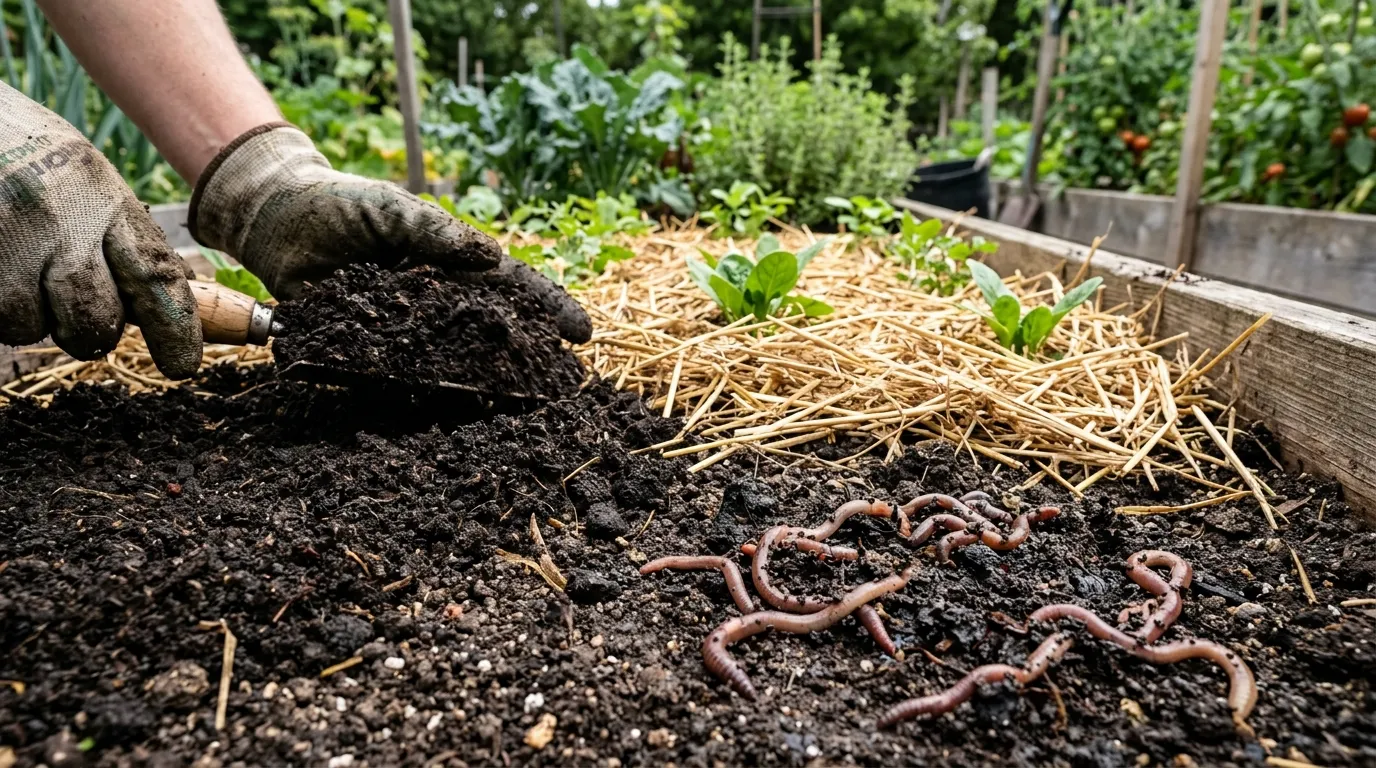
Within a month, water holds longer, earthworms appear, and the surface, when you pull back mulch, is darker. Compost is not fertilizer in the sharp sense; it’s the slow, steady diet soil prefers.
2) Mulch 3 Inches — The Blanket That Does Everything
Bare soil is dying soil — crusting, evaporating, heating, cooling, feeding weeds. A 3-inch blanket of straw, shredded leaves, or untreated grass clippings after seedlings are 3 inches tall solves five problems at once: it keeps that inch of weekly water at roots for a week, keeps soil 10°F cooler in July, suppresses weeds, prevents rain splash (less disease), and slowly becomes humus.
How I mulch: Wait till seedlings show true leaves so you don’t smother them. Tuck straw loosely, not matted six inches thick, leaving a finger’s width around stems to prevent damping off. Replenish when you see bare soil.
After harvest, don’t leave beds naked through winter — mulch 3 inches or sow cover crop. The soil you cover in December is the soil that’s ready in March without work.
3) Test pH and Nudge to 6.0–7.0 — The Invisible Dial
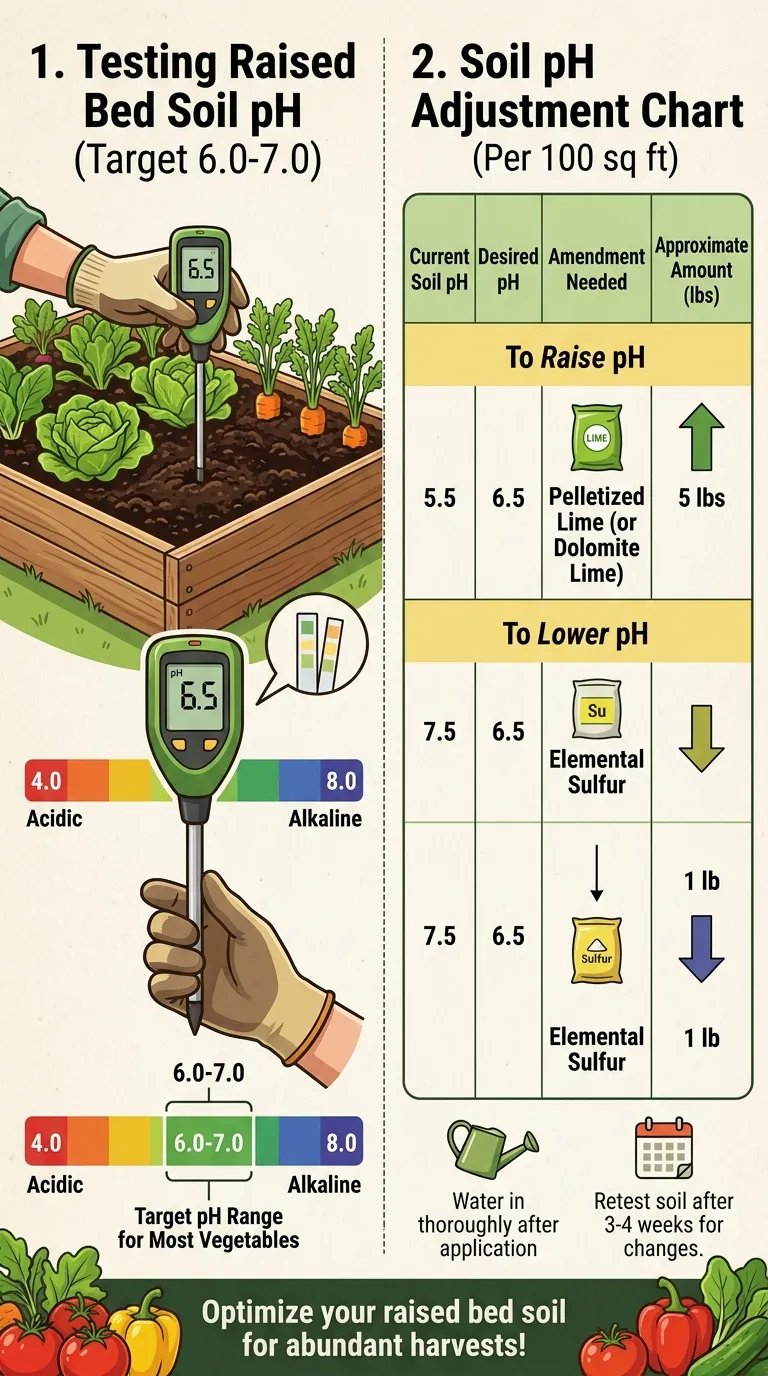
You can add all the compost in the world, but if pH sits at 5.2 or 7.8, nutrients are chemically locked — present but unavailable. Leaves yellow, fruit fails, and you chase fertilizer that can’t be taken up.
Test every 2 years via extension ($15–25). Aim 6.0–7.0, slightly acidic to neutral, where everything is available.
- To raise pH (acidic → neutral): Garden lime (calcium carbonate), typically 5–10 lbs per 100 sq ft per 0.5 point, applied in fall so winter rain works it through.
- To lower pH (alkaline → neutral): Elemental sulfur, typically 1–2 lbs per 100 sq ft per 0.5 point, needing warm soil and months.
Yearly compost buffers pH toward neutral in either direction — another reason that spring top-dress is gold. See soil pH guide.
4) Aerate Without Destroying — Broadfork, Not Rototill
Compaction is the quiet thief. Foot traffic, rain, and time collapse air pockets, especially in clay. Roots need oxygen; water needs paths down.
What I do: In early spring, I step a broadfork 8–10 inches deep, rock gently to crack, and move down the bed. I don’t invert or pulverize. A garden fork works similarly. This lifts and fractures without shredding fungal threads and worm channels that took all winter to build.
When not to till: Never till wet clay — it smears into pottery and bakes. If you can roll a shiny ribbon, it’s too wet. Wait till it crumbles. And don’t over-till dry loam to dust — dust crusts and repels water. Less tillage, more biology.
5) Add Permanent Air — 10% Perlite for Clay-Heavy Soil
Compost improves air, but clay can still swamp. Coarse perlite (or vermiculite in hot, sandy beds) adds permanent air pockets that don’t decompose. At 10% by volume (15% in the lower half of heavy-clay beds, 5% in sandy beds where you need water more than air), it keeps loam open after a downpour.
How: Fork 1 inch of perlite into top 8 inches along with compost when amending in-ground. In raised beds, it’s part of the 60/30/10 blend.
The first year I added perlite to my clay bed, drainage went from “puddle for 2 days” to “moist but not soggy next morning” — and stayed that way. Compost feeds; perlite breathes.
See best soil for vegetable gardens and raised bed soil mix.
6) Grow Cover Crops — The Living Stitch
Cover crops are the quiet heroes. When a bed would otherwise sit bare between crops or over winter, a quick sowing of crimson clover, field oats, or winter rye does what no bag can: roots pry soil open, feed microbes with exudates, fix nitrogen (legumes), and protect from erosion. Then they become mulch.
My simple rotation:
- After summer harvest (Aug–Sep): Sow oats — they winter-kill and lie down as mulch by spring, no digging.
- For overwinter beds: Crimson clover — beautiful, fixes nitrogen, cut at flower and compost or lay as mulch.
- Heavy clay: Winter rye — aggressive roots that crack compaction; cut at 8 inches before it heads and compost.
Even 4 weeks of cover between successions — pull lettuce, sow oats, let it grow while you harvest elsewhere — improves the next planting.
7) Water Deeply and Evenly — The Habit That Makes Everything Else Work
Ideal loam holds moisture 6–8 inches down when watered properly. Shallow, frequent sprinkles wet only the top inch, encourage shallow roots, and cause blossom end rot and bitter greens when the surface swings wet-dry-wet.
How: Water at the base mornings with a soaker or wand until a trowel shows moisture 6 inches down, then don’t water again until top 2 inches are dry — typically every 3–7 days with 3-inch mulch. Even, deep moisture is what keeps soil biology humming and prevents cracking.
If you mulch and still need daily water, your soil is likely still too sandy (add compost) or too shallow (deepen to 12–18 inches).
8) Stop Walking Where You Grow — Preserve Structure
One footstep compacts loam that took a season to open. Raised beds stay productive precisely because you never step inside — you reach from paths.
How: Keep beds 4 feet wide max (3 feet against a wall) so everything is reachable without stepping. Mulch paths separately. If you already have a wide bed, lay a temporary plank to distribute weight, but plan to narrow next season.
I test every new bed by standing on the path and reaching the center with a cultivator without leaning. If I can’t, it’s too wide.
9) Top-Dress Yearly — The Compounding Habit
Soil improvement isn’t one-and-done. Vegetables pull pounds of organic matter each season; rain and microbes consume more. The bed that gave abundantly this July will give less next July if you don’t replenish.
How: Each spring, spread 1–2 inches of finished compost over the surface and rake lightly into the top inch — no deep tilling. Between successions, sprinkle half-inch between rows after pulling a crop and sow again. Top up settling (normal 2–3 inches yearly) with 60/30/10 to keep ratio, not pure compost.
This single habit is why old gardens outperform new ones — organic matter climbs toward the ideal 4–8%, that earthy smell deepens, and yields climb with it.
10) Feed the Life — Worms, Fungi, and Gentle Inputs
Soil is alive. Feed the life and the life feeds plants.
- Invite worms: Cardboard over sod, compost top-dress, and straw mulch bring earthworms in weeks. Avoid deep tilling that slices them.
- Keep fungal networks: Don’t over-till; broadfork instead. Mycorrhizae attach to roots and extend their reach by feet.
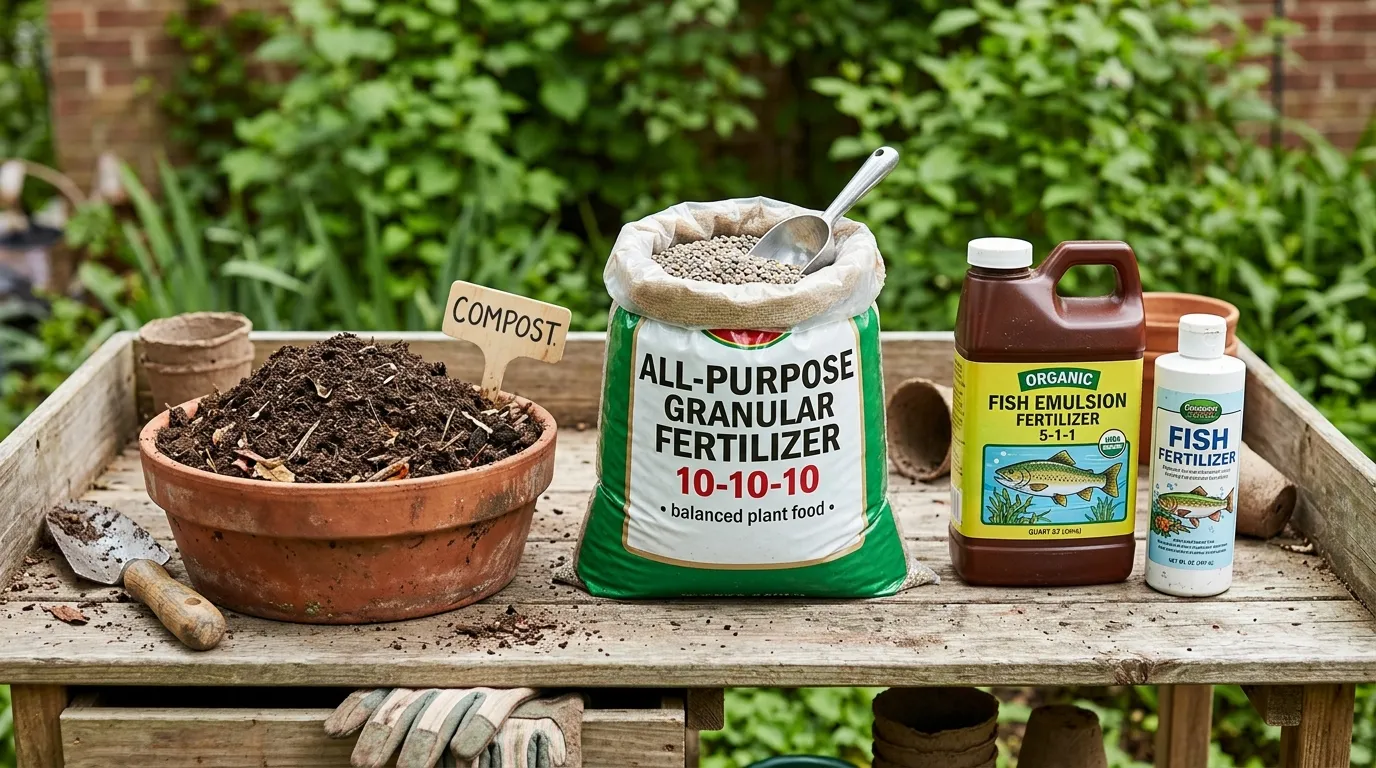
- Go easy on strong synthetics and fresh manure: Heavy salt fertilizers and hot manures can burn biology. Prefer compost, aged manure, and organic granular per soil test, applied at labeled rates.
- Leave roots in place: After harvest, cut stems at soil line and leave roots to decay — they feed microbes and leave channels. Pull only if diseased.
When you lift mulch in a biologically happy bed, you should see white fungal threads like tiny lace and smell that sweet forest earth — the sign you’ve built a world.
Common Mistakes That Undo Progress
Tilling wet soil. The fastest way to ruin clay is to work it shiny-wet — it smears, then bakes into clods that last seasons. Wait till crumbly. If you squeezed a ball and it shines, put the fork down and make tea.
Using 100% compost or 100% topsoil. Pure compost shrinks, stays soggy, crusts; pure topsoil compacts. Balance is 60/30/10. If you already went pure, fork in the missing parts now.
Chasing perfect numbers. Aim for pH 6.0–7.0, organic matter 4–8%, depth 12–18 inches, earthy smell. My first improved bed was maybe 50/30/20 from what I could source — it still grew beautiful food. Better beats perfect.
Letting beds sit bare. Bare soil between crops loses moisture and life in a week. Sow cover or mulch; never leave it naked.
Over-fertilizing to compensate for poor structure. Fertilizer can’t fix compaction or pH lockup. Fix structure and pH first; then feed per test lightly.
Troubleshooting: Why Soil Still Struggles
Water puddles for days. Compaction + clay + missing air. Broadfork when moist-not-wet, fork in 10–15% perlite + 2 inches compost, crown bed 6 inches above path, and mulch. Ensure no impermeable fabric trapping water beneath.
Dries in hours, pale and dusty. Too sandy or low organic matter. Add 2–3 inches compost, reduce perlite to 5%, add coir/cocol for water-holding, mulch 3 inches. Build depth to 12–18 inches.
Leaves yellow even with compost. Likely pH outside 6.0–7.0 or waterlogged roots. Test pH, correct per lab, and check drainage — compost can’t compensate for drowning.
Bed settled 5 inches by August. Normal first year if not watered in lifts or compost was wood-heavy. Top up with 60/30/10, not pure compost, and water in lifts going forward.
Crust forms after rain, seeds struggle. Over-tilled to dust or bare. Rake lightly, add compost, mulch after emergence, and cover carrot rows with a board 5 days to keep surface moist.
A Seasonal Calendar to Make It Stick
| Season | Do |
|---|---|
| Fall (best investment) | Soil test if due; lime/sulfur per test; add 2″ leaves/straw winter mulch; sow cover crop (oats/clover/rye) after harvest; plant garlic |
| Late Winter | Order compost early; check maturity (earthy, not ammonia); plan to broaden beds if too wide |
| Early Spring (4 wks pre-frost) | Broadfork only if compacted; top-dress 1–2″ compost; rake; water deeply day before sowing |
| At Planting | Mix 1/2″ compost into top 3″ for seedlings; mulch 3″ after 3″ tall |
| Between Successions | Pull, scatter 1/2″ compost, sow again — no tilling; keep mulch 3″ |
| Midsummer | Replenish mulch, side-dress heavy feeders per test only; water deeply then wait |
| Every 2 Years | Retest pH/nutrients, log results — trends matter more than single numbers |
Start With One Bed — Joyfully
You don’t need to fix the whole garden this weekend. Pick one bed — the one that disappointed you last year — and give it the full treatment: 2 inches compost forked into top 8 inches with a handful of perlite if clay, 3-inch straw blanket, and a promise not to step in it. Plant it intensively and watch. By midsummer it will be darker, looser, and more alive when you pull back mulch, and the vegetables will show you the difference before any lab report does.
I still walk out with coffee some mornings and lift a corner of straw just to smell that earth. It’s the smell of soil becoming itself again — fed, covered, and left to do what it’s done for millennia, quietly turning yesterday’s leaves into tomorrow’s dinner.
Soil first. Everything else follows.
Deep Dive: Choosing Compost, Mulch & Cover Crop Varieties
Compost Types Compared
- Aged cow manure: Balanced, mellow, widely available bagged.
- Mushroom compost: Slightly alkaline, great for acidic soils, rich.
- Homemade (kitchen/leaves/straw): Best biology if fully finished - dark, earthy, no recognizable bits.
- Worm castings: Potent but costly - use as 10% amendment or tea, not bulk fill.
Avoid ‘composted bark fines’ sold as compost - high wood, low nutrients, nitrogen robbery.
Mulch Types Compared
- Straw: Favorite - light, clean, easy to pull aside for sowing, does not mat.
- Shredded leaves: Free, excellent, but can mat if thick and wet - shred first.
- Untreated grass clippings: Nitrogen-rich, great thin layer 1 inch, thicker mats and smells.
- Bark nuggets: For paths, not beds - slow to break, ties up nitrogen at surface.
Cover Crop Cheat Sheet
- Crimson clover: Gorgeous red flowers, fixes nitrogen, attracts pollinators, winter-kills in zone 7+.
- Field oats: Fast, winter-kills, lies down as mulch by spring - easiest for beginners.
- Winter rye: Aggressive roots crack clay, overwinters, cut before heading at 8 inches.
- Daikon radish: Bio-drilling taproot punches through compaction, winter-kills, leaves channels.
Even 4 weeks of cover between successions builds structure faster than any bag.
Tools That Make Improvement Easy
- Broadfork: Cracks 10 inches without inverting - best $100 for clay.
- Soil thermometer & pH kit: $20 total, removes guessing.
- Straw bale: One bale mulches ~80 sq ft 3 inches.
- 5-gal bucket: Measuring scoop for 60/30/10 when amending large beds.
Small Budget Priority Order
If money is tight, spend in this order: 1) 2 inches compost, 2) straw mulch, 3) pH test, 4) perlite if clay, 5) cover crop seed. First two alone transform most beds for under $40.
By year three of yearly compost + mulch + cover, beds become self-renewing - worms and fungi do the tillage, and you just top-dress and plant.
Before/After Photo Cues
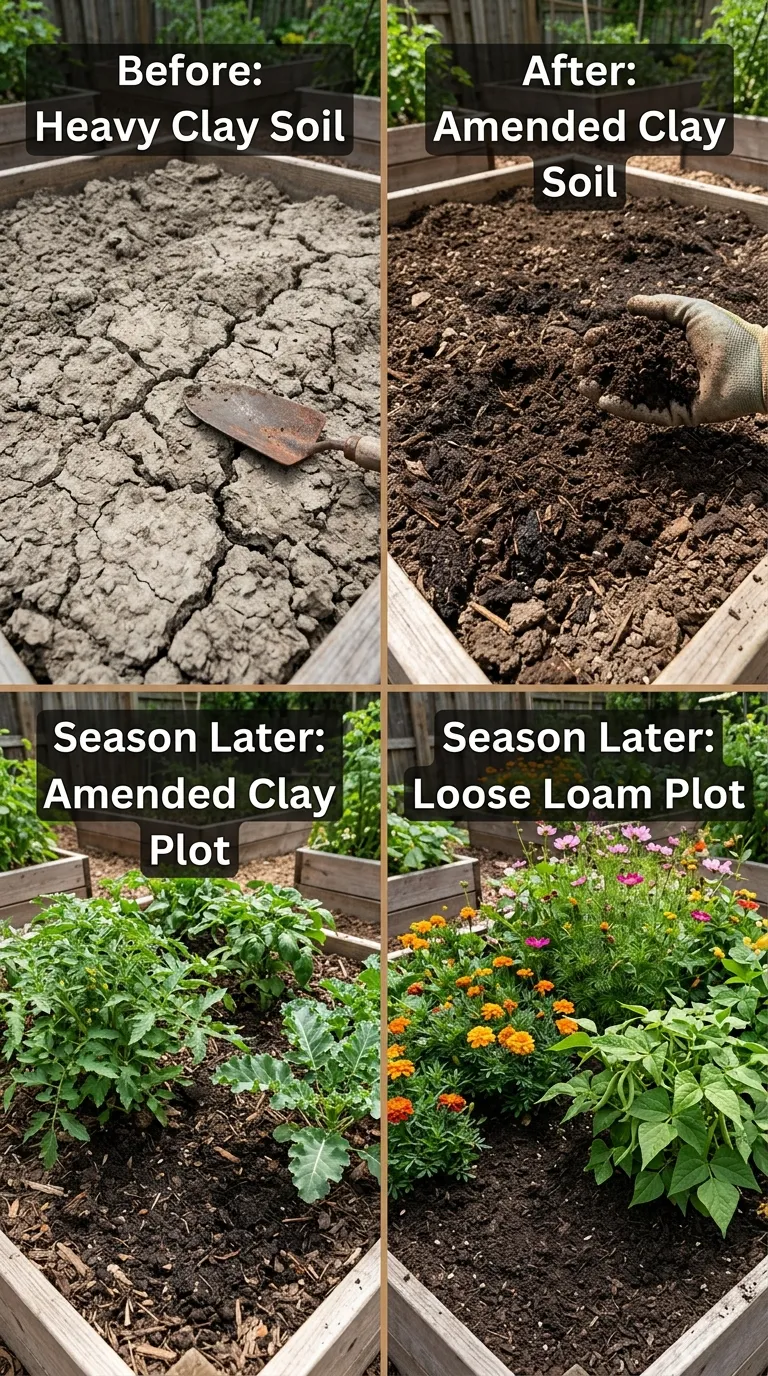
Before: pale, dusty or gray sticky, few worms, water puddles or runs off, crust after rain. After 1 season compost+mulch: chocolate brown, crumbly, earthy smell, 5+ worms per cube, water drains in hours but trowel damp next day, no crust under straw.
Take phone photo same corner each season - progress motivates.
Pitfall: Too Much Too Fast
Adding 6 inches compost at once can waterlog and make beds sink 50% as it decomposes. Stick to 2-3 inches incorporated 8 inches, then 1-2 inches yearly. Steady beats binge.
Similarly perlite over 15% makes droughty mix - 10% is sweet spot; adjust only if drainage test proves need.
Combining Improvements Timeline Example
Fall: test pH, lime per lab, spread 2 inches leaves + straw, sow oats. Spring: oats winter-killed flat, broadfork gently, top 1-2 inches compost, pH recheck. Summer: mulch 3 inches, deep water to 6 inches, succession with 1/2 inch compost between crops. Year 2: repeat, organic matter 3% -> 5%, drainage 0.5 -> 2 inches/hour.
Compounding, not heroic single dig, transforms soil.
Teaching Kids Soil
Let them do squeeze, ribbon, worm count. Shapes + critters make soil tangible, not abstract. My niece’s worm count became her proud garden metric - and she now insists on mulch.
Healthy soil is a family project where everyone sees life returning.
Printable One-Page Checklist
Copy this onto an index card and tape inside your shed.
- Sun mapped (9am, noon, 4pm) - 6-8 hrs for fruiting, 3-4 for greens
- Soil test every 2 years - pH 6.0-7.0, organic matter 4-8%
- Bed depth 12-18 inches, width 4 ft max, never walk inside
- Mix 60/30/10 topsoil/compost/perlite blended on tarp, filled in 6-inch lifts watered
- Compost 1-2 inches yearly top-dress, not till
- Mulch 3 inches straw after 3 inches tall, replenish when bare
- Water deeply to 6-8 inches, then wait till top 2 inches dry (chopstick test)
- Thin on time: carrots 2 inches, lettuce 8 inches, tomatoes 18-24 inches
- Succession sow every 10-14 days for greens/radishes
- Cover crop or mulch any bed empty >1 week
- Log pH, compost, varieties, harvest notes each season
Next Steps & Related Reads
If this article helped, these build directly on it:
- Best Soil for Vegetable Gardens - the full 60/30/10 loam explanation
- How to Improve Garden Soil - 10 easy ways to build loam over seasons
- Best Soil pH for Vegetables - testing and adjusting pH 6.0-7.0
- Raised Bed Soil Mix - DIY recipe with bucket math and sourcing
- Best Soil for Raised Beds - ideal ratio, depth and maintenance
- When to Plant Vegetables - timing by frost date and succession
A Final Note From My Garden
I still keep the first carrot that grew straight after I fixed soil - it dried on the windowsill, crooked in the way memory is, reminding me that good gardening is not about being perfect the first time.
It is about noticing what soil is telling you - the smell after rain, the way water drains, the worms that appear when you mulch - and responding with one small, steady habit at a time.
You do not need a perfect garden this season.
You need one bed, one handful of compost, a pH strip, and the willingness to kneel a little longer and watch.
Soil will do the rest.
It always does, if we let it.
Quick Troubleshooting Reference
| Symptom | Likely Cause | Quick Fix |
|---|---|---|
| Yellowing lower leaves | Nitrogen leached or pH low | Top-dress 1 inch compost, test pH, feed per test |
| Yellow between veins | High pH iron lock or soggy roots | Test pH, add sulfur if >7.5, improve drainage |
| Stunted, purple tinge | Low phosphorus / acidic pH | Lime per test, ensure 6.0-7.0, even water |
| Wilting despite moist soil | Root rot from compaction/soggy | Broadfork when moist, add perlite, mulch, stop overwatering |
| Forked carrots | Shallow/stony/compacted soil | Deepen to 18 inches, sieve stones, thin to 2 inches |
| Bolting lettuce bitter | Heat + inconsistent water | Shade afternoon, water evenly, harvest young |
| No fruit set | pH off, overcrowding, heat | Test pH 6.0-7.0, space 18-24 inches, hand-pollinate |
Year-One Success Plan
Month 1: Test pH, build or amend one bed 60/30/10 12-18 inches, mulch path. Month 2: Sow succession greens/radishes, trellis north side peas/cucumbers. Month 3: Deep water to 6 inches, keep mulch 3 inches, thin ruthlessly. Month 4: Side-dress heavy feeders only if test says, harvest outer leaves, log notes. Fall: Top-dress 1-2 inches compost, test pH if due, mulch 3 inches or cover crop.
Consistency beats intensity. One bed done right teaches the system.
Variety Spotlight: My Top 3 For Beginners
If overwhelm hits, start with these three — forgiving, high reward, and they teach you the habits.
- Lettuce ‘Salad Bowl’ - cut-and-come-again, shade tolerant, 30 days to first snip.
- Carrot ‘Chantenay’ - short, sweet, forgives shallow beds a bit, straight in 60/30/10.
- Tomato ‘Celebrity’ or Pepper ‘Gypsy’ - determinate/bush, heavy in 12-18 inch loam, caged early.
Grow these well and you have learned 80% of vegetable soil and water rhythms.
What I Wish I Knew Earlier
Soil work looks like nothing - spreading compost, tucking straw - but it is everything. The bed you feed in October feeds you in July. Mulch is not decoration, it is moisture insurance. pH is not chemistry class, it is the key that unlocks the pantry. And thinning feels ruthless until you taste the uncrowded harvest.
Start small, be consistent, and let soil teach you season by season.
Frequently Asked Questions
Q: How do you improve poor garden soil quickly?
A: Spread 2–3 inches of finished compost and fork lightly into the top 8 inches, add 10% coarse perlite if soil is heavy clay and compacts, mulch 3 inches with straw after seedlings establish, and test pH to keep 6.0–7.0 via lime or sulfur per lab rates. This creates loose, worm-friendly loam that holds an inch of water for a week yet drains freely within one season, without harsh rototilling that would destroy the fungal networks you’re trying to build.
Q: Does compost really improve garden soil?
A: Yes — more than any single input. Finished compost adds stable humus that holds seven times its weight in water, buffers both acidic and alkaline pH toward neutral, feeds earthworms and mycorrhizal fungi, and releases nitrogen, phosphorus and potassium slowly the way plants prefer. A yearly 1–2-inch top-dress raises organic matter toward the ideal 4–8%, darkens soil, softens clay, fattens sand and reliably doubles vegetable yields compared with unamended ground.
Q: How long does it take to improve garden soil?
A: Structure and moisture retention improve noticeably in 4–8 weeks after adding compost and 3-inch mulch, but deep biological richness — worm channels, fungal lace, that chocolate-cake crumb — builds over 2–3 seasons of yearly compost, mulching and cover cropping. The good news is improvement compounds: each season soil stays looser longer, needs less water and gives more, so effort actually declines as fertility climbs.
Q: Can you improve garden soil without tilling?
A: Absolutely, and for most gardens it’s better. Top-dress compost, mulch heavily, use a broadfork to crack compaction without inverting, grow cover crops between plantings and encourage earthworms — all build soil without tilling. No-till preserves the fungal hyphae and worm tunnels that make loam loamy. Only fork lightly when soil is crusted or compacted enough to puddle, otherwise let the life you’ve fed do the mixing over winter.
Related Articles
- Best Soil for Vegetable Gardens
- Best Soil for Raised Beds
- Best Raised Bed Soil Mix
- Best Soil pH for Vegetables
- How to Test Soil pH
- Vegetable Garden Layout & Planning
Sources & References
- University of Minnesota Extension — Improving Garden Soil — https://extension.umn.edu/yard-and-garden
- Oregon State University Extension — Gardening — https://extension.oregonstate.edu/gardening
- Iowa State University Extension — Horticulture — https://hortnews.extension.iastate.edu/
- Royal Horticultural Society — Soil Improvement — https://www.rhs.org.uk/soil-composts-mulches