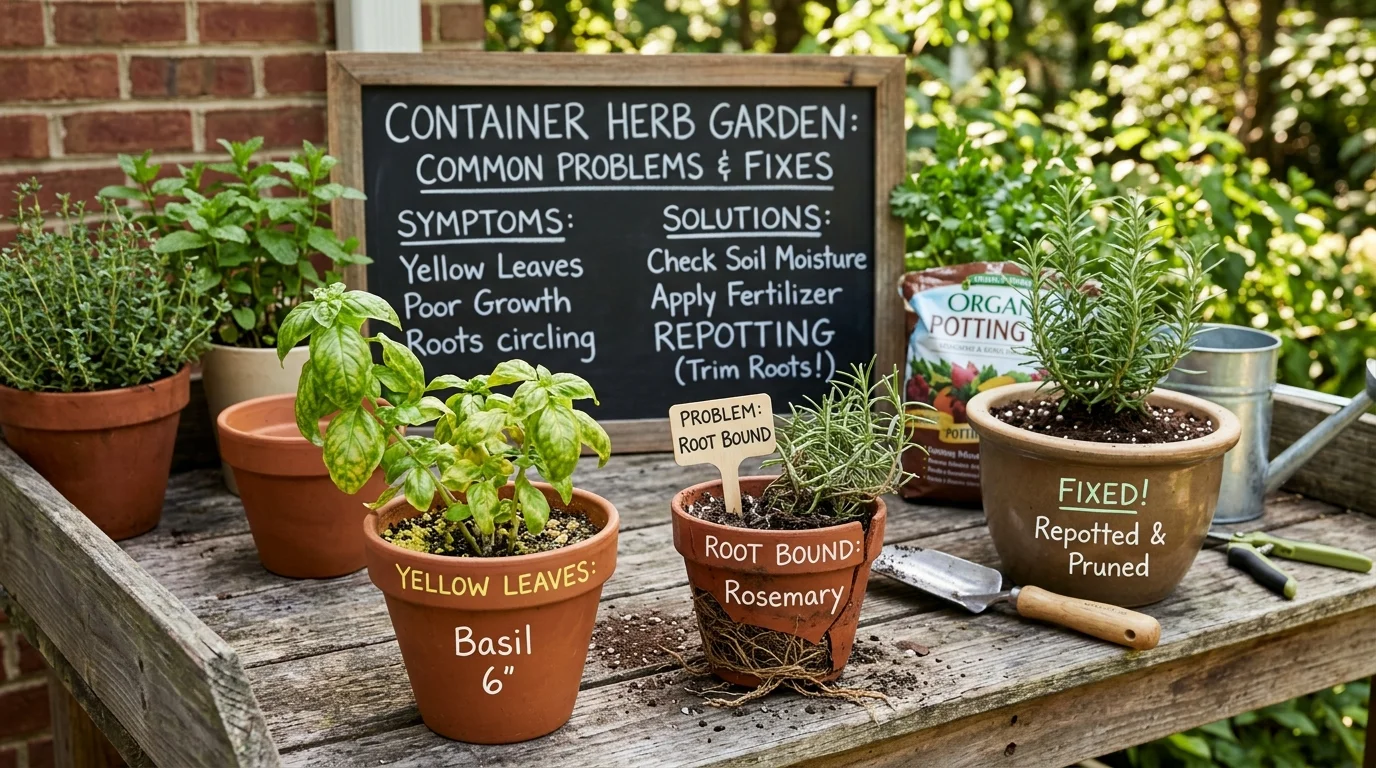
Container herb gardening is one of the most rewarding ways to grow fresh herbs, especially if you lack garden space. However, growing herbs in pots presents unique challenges that ground-planted herbs rarely face. Limited soil volume, restricted root space, and faster drying cycles create a set of problems that can frustrate even experienced gardeners. Understanding the 10 most common container herb gardening challenges and knowing how to fix them will transform struggling potted herbs into thriving, productive plants.
Quick Answer: The most common container herb gardening challenges are root rot from overwatering, leggy growth from insufficient light, root-bound plants in too-small pots, nutrient deficiency, salt buildup, temperature stress, container pests, soil compaction, and drainage failure. Most issues are preventable with proper pot selection, fresh potting mix, and appropriate watering practices.
Why Container Herbs Face Unique Challenges
When herbs grow in the ground, they benefit from a virtually unlimited volume of soil, natural drainage, temperature regulation from the earth, and a living ecosystem of beneficial microorganisms. Container herbs get none of these advantages. The soil in a pot dries out faster, heats up more quickly, compacts over time, and depletes its nutrients faster than garden soil. Every problem you encounter with container herbs traces back to one or more of these fundamental differences. Recognizing this helps you approach each challenge with the right solution.
Problem 1: Root Rot from Overwatering
Root rot is the number one killer of container herbs. It occurs when soil stays too wet for too long, depriving roots of oxygen and creating breeding conditions for fungal pathogens.
Signs
- Yellowing leaves that progress from bottom to top
- Wilting despite soil being wet
- Soft, mushy stems at the soil line
- Foul smell from the soil
- Brown, slimy roots instead of white, firm ones
The Fix
Remove the plant from its pot immediately. Trim away all damaged roots with clean, sharp scissors. Repot in fresh, well-draining potting mix in a clean pot with functional drainage holes. Going forward, always check soil moisture before watering by inserting your finger an inch into the soil. Water only when it feels dry. For Mediterranean herbs like rosemary and thyme, allow the soil to dry out more completely between waterings. Our guide on how to grow rosemary from cuttings includes specific watering advice for this rot-prone herb.
Problem 2: Leggy Growth from Insufficient Light
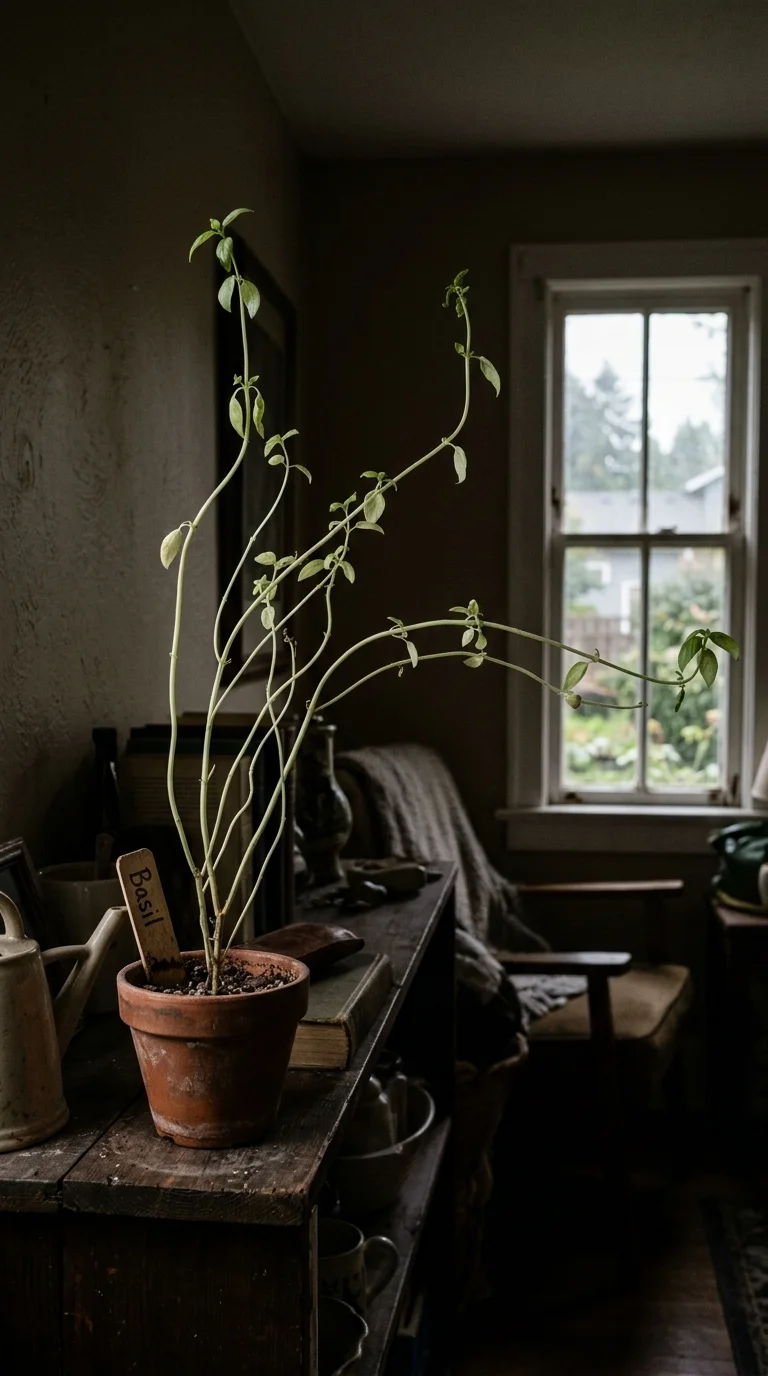
Leggy, stretched growth is one of the most common container herb problems, particularly for herbs grown indoors or in shaded locations.
Signs
- Long, thin stems with sparse leaves
- Large gaps between leaf nodes
- Pale green or yellowing leaves
- Reduced flavor and aroma
- Plant leaning or reaching toward light sources
The Fix
Most herbs need 6 to 8 hours of direct sunlight daily. Move containers to the sunniest available spot, typically a south- or west-facing windowsill. If natural light is insufficient, invest in a simple LED grow light positioned 6 to 12 inches above the plants, running for 14 to 16 hours daily. Rotate containers weekly to ensure even light exposure on all sides. For detailed indoor growing tips, see our guide on how to grow thyme indoors.
Problem 3: Pot Too Small for the Herb
A common beginner mistake is choosing a pot that is too small for the herb being grown. Small pots restrict root growth, leading to stunted plants that cannot access enough water or nutrients.
Signs
- Plant growth stalls despite good care
- Roots visible on the soil surface or growing from drainage holes
- Soil dries out extremely quickly after watering
- Plant topples over due to being top-heavy
The Fix
Repot the herb into a container 2 to 3 inches larger in diameter than the current pot. Most herbs do well in 6 to 8 inch pots, but larger herbs like rosemary and dill may need 10 to 12 inch containers. Always ensure the new pot has drainage holes. When repotting, gently loosen circling roots to encourage them to grow outward into the new soil. For a complete beginner guide to choosing the right containers and growing herbs successfully, see our article on how to grow herbs at home.
Problem 4: Root-Bound Plants
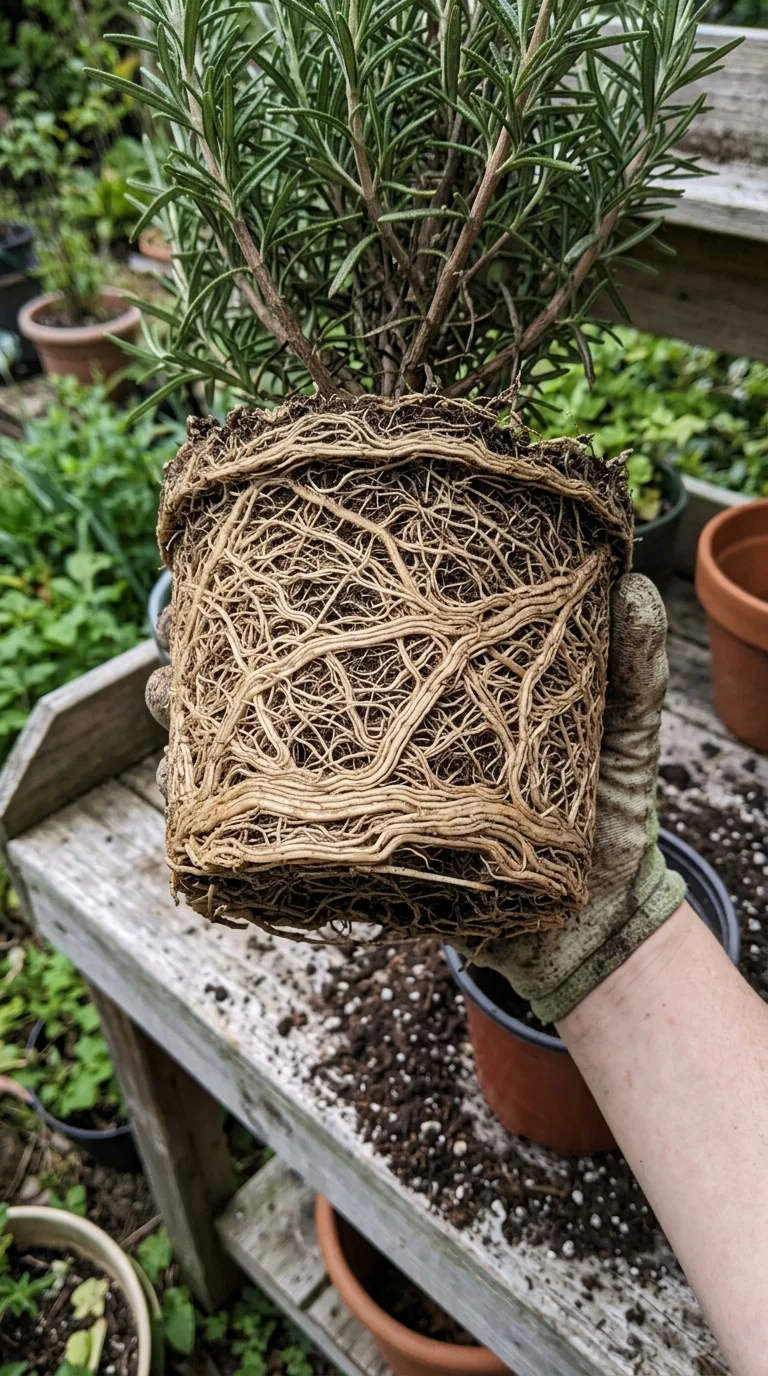
Root-bound herbs have roots that have filled the entire pot and begun circling the inside, creating a dense mat that cannot absorb water or nutrients effectively.
Signs
- Roots growing out of drainage holes
- Water running straight through the pot without being absorbed
- Plant wilts quickly despite recent watering
- Stunted growth and declining health
- When removed from pot, roots form a dense, pot-shaped mass
The Fix
Soak the root-bound plant in water for 15 minutes to soften the roots. Remove from the pot and gently tease apart the circling roots with your fingers, or make 3 to 4 shallow vertical cuts on the root ball with a clean knife. Repot in fresh soil in a pot 2 to 3 inches larger. Water thoroughly after repotting and keep in partial shade for a week while the plant recovers.
Problem 5: Nutrient Deficiency
Container soil depletes its nutrients much faster than garden soil because there is less volume to draw from and the herbs are entirely dependent on you for nutrition.
Signs
- Slow or stunted growth
- Pale or yellowing leaves (uniform yellowing suggests nitrogen deficiency)
- Purple tint on leaf undersides (phosphorus deficiency)
- Brown leaf edges (potassium deficiency)
- Small, pale leaves overall
The Fix
Feed container herbs with a balanced, water-soluble fertilizer diluted to half strength every 2 to 4 weeks during the growing season. Organic options like fish emulsion, seaweed extract, or compost tea work well. Stop fertilizing in autumn and winter when growth slows. If nutrient deficiency is severe, repot in fresh potting mix, which provides a fresh supply of nutrients. For herbs with specific growing needs, our guides on how to grow parsley in pots and how to grow chives from seed include detailed soil and feeding recommendations.
Problem 6: Salt Buildup from Fertilizer and Tap Water
Over time, minerals from tap water and fertilizer salts accumulate on the soil surface and in the pot, creating a white crust and potentially damaging roots.
Signs
- White or yellowish crust on soil surface
- Brown, crispy leaf tips and edges
- Stunted growth despite regular fertilizing
- Soil pulling away from pot edges
The Fix
Scrape off the visible salt crust from the soil surface. Water the pot deeply with filtered water or rainwater until water flows freely from the drainage holes, flushing out accumulated salts. Going forward, water until 10 to 20 percent of the water drains from the bottom each time. Reduce fertilizer frequency and always use half-strength solutions. Consider using rainwater or filtered water instead of hard tap water.
Problem 7: Temperature Stress in Containers
Container herbs are more vulnerable to temperature extremes than ground-planted herbs because pots provide little insulation for the root zone.
Signs
- Wilting in hot sun despite adequate watering
- Leaf scorch or sunburn (brown, crispy patches)
- Stunted growth in cold conditions
- Root damage from frozen soil in winter
- Flowering or bolting triggered by heat stress
The Fix
During summer heatwaves, move containers to receive afternoon shade or use shade cloth to reduce intensity. Group pots together to create a microclimate that retains humidity. Wrap terracotta pots with bubble wrap or hessian in winter to insulate roots. Move tender herbs indoors before the first frost. Place pots on feet or pot saucers with pebbles to prevent them from sitting on frozen surfaces. Our guide on how to grow basil at home includes specific temperature management tips for this heat-loving herb.
Problem 8: Pests in Container Gardens
Even herbs on balconies and windowsills are not immune to pests. Aphids, spider mites, whiteflies, and fungus gnats are common container herb pests.
Signs
- Sticky residue on leaves (honeydew from aphids)
- Fine webbing on leaf undersides (spider mites)
- Small white flies that rise when plant is disturbed (whiteflies)
- Tiny flying insects near soil surface (fungus gnats)
- Distorted or curled new growth
The Fix
Inspect plants regularly, especially the undersides of leaves. For aphids and whiteflies, spray with a strong stream of water or apply insecticidal soap. For spider mites, increase humidity by misting plants and apply neem oil. For fungus gnats, allow the soil surface to dry between waterings and use yellow sticky traps. Introduce beneficial insects like ladybugs for outdoor container gardens. Keeping plants healthy and well-watered (but not overwatered) is the best pest prevention.
Problem 9: Soil Compaction Over Time
Potting mix breaks down and compacts over time, reducing air space in the soil and making it difficult for roots to grow and for water to penetrate.
Signs
- Water pools on soil surface instead of soaking in
- Soil feels hard and dense when you press it
- Roots struggle to penetrate the soil
- Reduced plant vigor despite proper care
- Soil level drops noticeably in the pot
The Fix
The best solution is annual repotting with fresh potting mix. If you cannot repot immediately, gently loosen the top inch of soil with a fork and mix in a small amount of perlite or coarse sand to improve drainage. Avoid pressing soil down around plants. When repotting, choose a high-quality potting mix formulated for containers, which typically includes perlite or vermiculite for aeration. For tips on selecting the right soil mix for different herbs, see our guide on how to grow mint without spreading.
Problem 10: Drainage Failure
Pots without drainage holes, or pots where holes have become blocked, create waterlogged conditions that quickly kill herbs.
Signs
- Water sits in saucer for hours after watering
- Soil stays wet for days
- Algae or mold growing on soil surface
- Root rot develops despite careful watering
- Bottom of pot shows no signs of moisture
The Fix
Every herb container must have at least one drainage hole. If your decorative pot lacks holes, use it as a cache pot by placing the herb in a plastic nursery pot with holes inside the decorative one. Ensure drainage holes are not blocked by old roots or debris. Elevate pots on feet or bricks so water can flow freely from the bottom. Use a well-draining potting mix and never add gravel to the bottom of a pot, as this actually worsens drainage by creating a perched water table. For container growing basics from the start, check our guide on how to grow herbs at home.