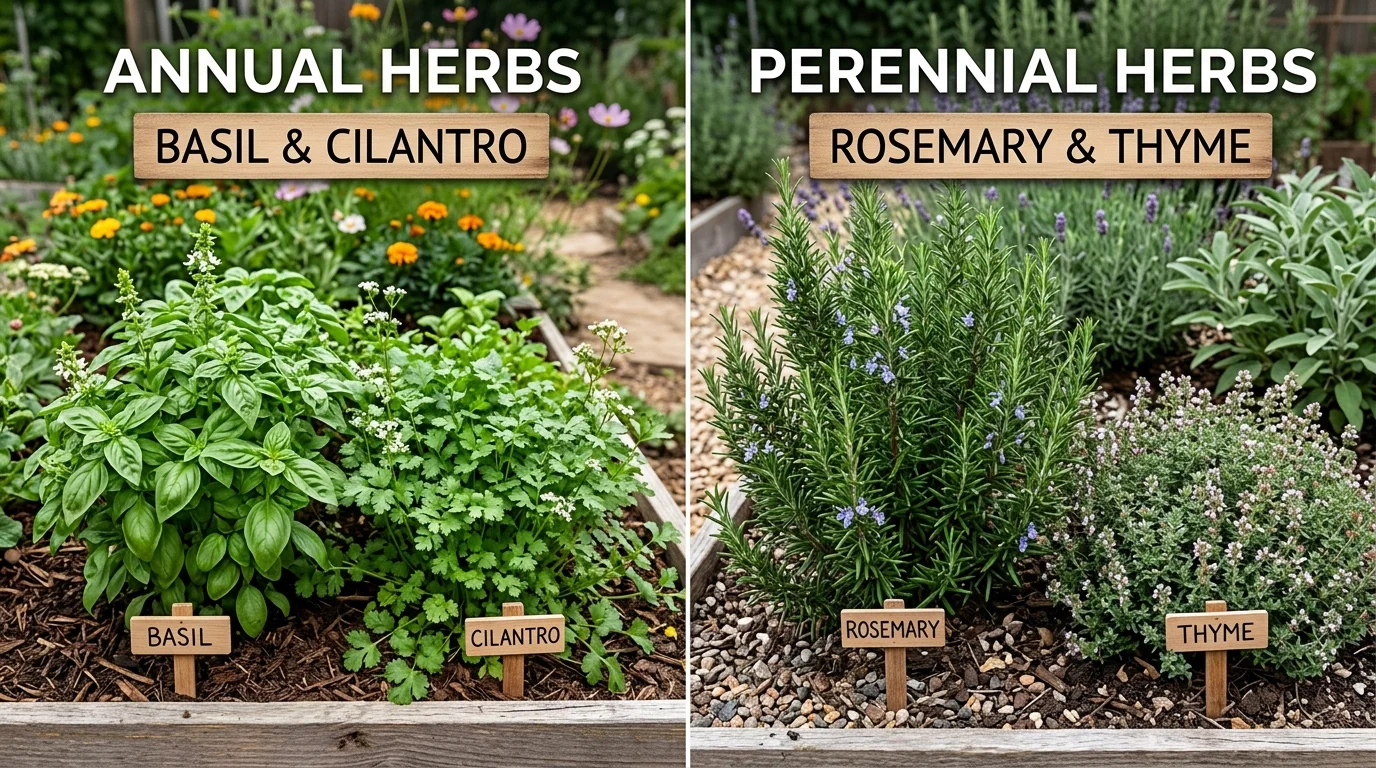
Understanding the difference between annual vs perennial herbs is one of the most important lessons for any home gardener. Knowing which herbs will return year after year and which need to be replanted each season saves you time, money, and frustration. It also helps you plan a garden that provides continuous harvests from spring through fall and beyond. Whether you are building your first herb garden or redesigning an established one, this guide to annual vs perennial herbs will help you make smart planting decisions.
Quick Answer: Perennial herbs like rosemary, thyme, oregano, mint, chives, and sage survive winter and regrow from their roots each spring. Annual herbs like basil, cilantro, and dill complete their life cycle in one season and must be replanted each year. Plant perennials in a permanent bed and fill gaps with annuals each spring for a continuous harvest.
What Is the Difference Between Annual and Perennial Herbs
The difference between annual and perennial herbs comes down to lifespan. Annual herbs germinate from seed, grow, flower, produce seed, and die all within a single growing season. They are designed by nature to live fast and reproduce quickly. This means you must replant them each year, but it also means they often produce abundantly during their short life.
Perennial herbs, on the other hand, live for two or more years. They establish a strong root system during their first growing season, then go dormant during winter. When spring arrives, the same plant wakes up and produces new growth without any effort on your part. Some perennial herbs, like rosemary and lavender, can live for a decade or more in the right conditions.
Understanding this distinction is critical for garden planning. If you plant only annuals, you are starting from scratch every spring. If you plant a solid foundation of perennials, you have a permanent herb garden that fills in and matures year after year, with annuals added for seasonal variety and experimentation.
Complete List of Annual Herbs
Annual herbs complete their entire life cycle in one season. Here are the most common annual herbs you will encounter.
Basil is the most popular annual herb. It thrives in warm weather, produces prolifically all summer, and dies at the first frost. Basil can be grown easily from seed each year, giving you the opportunity to try new varieties annually. Growing basil at home from seed is one of the most rewarding gardening experiences.
Cilantro (also known as coriander) is a fast-growing annual that bolts quickly in hot weather. In cool spring and fall conditions, cilantro produces abundant leaves. Once it bolts and flowers, the flavor changes and the plant sets seed. Succession plant cilantro every two to three weeks throughout the growing season for a continuous supply.
Dill is an annual herb that grows tall and produces feathery leaves and yellow flower heads. Like cilantro, dill bolts quickly in heat and is best grown in spring and fall. Save the seeds from bolted dill plants for pickling.
Chamomile can be grown as an annual herb for tea. While it can self-seed and return the following year, the individual plants typically decline after one season.
Lemon balm is technically a short-lived perennial in mild climates but behaves as an annual in cold regions. It spreads aggressively, so containment is important.
Complete List of Perennial Herbs
Perennial herbs are the backbone of a well-planned herb garden. Here are the most reliable perennials that will return year after year.
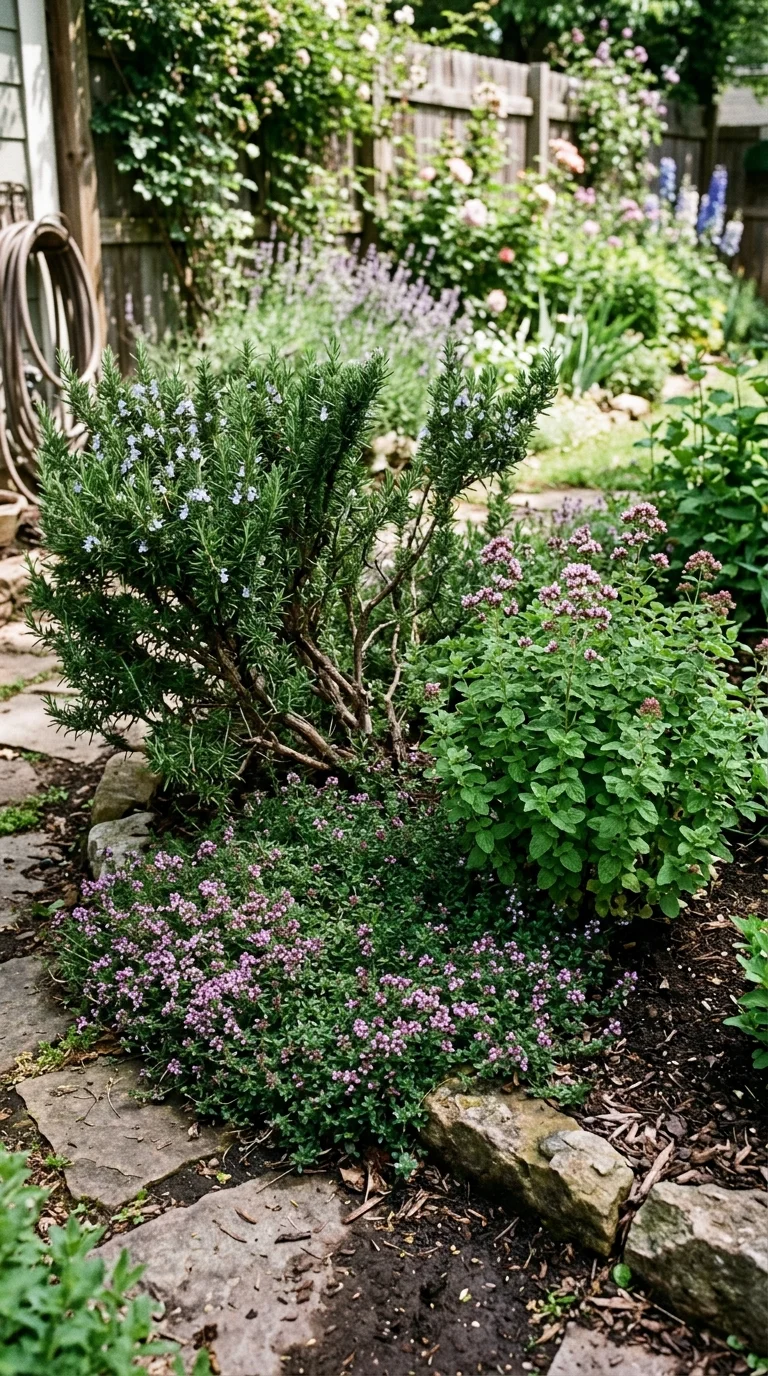
Rosemary is a woody perennial that lives for many years in warm climates. In USDA zones 7 and above, rosemary grows into a substantial shrub. In colder climates, it must be grown in a pot and brought indoors for winter or protected with heavy mulch. Learn how to propagate your own with our guide on how to grow rosemary from cuttings.
Thyme is one of the hardiest and longest-lived perennial herbs. It forms a low, spreading mat of tiny aromatic leaves and can survive winters in zones 4 and above. Thyme is drought-tolerant, low-maintenance, and produces for many years once established. Our guide on how to grow thyme indoors covers year-round growing.
Oregano is a tough, spreading perennial that returns reliably each spring. It thrives in full sun and well-drained soil and can become quite woody over time. Pruning oregano hard in early spring encourages fresh, tender growth. See our guide on how to grow oregano from seed for starting your own.
Mint is a vigorous perennial that spreads aggressively through underground runners. While this spreading habit makes it a challenge in open garden beds, it also means mint will survive and return year after year with minimal care. Contain it in a pot or buried barrier to prevent it from taking over. Our guide on how to grow mint without spreading covers containment strategies.
Chives are one of the easiest and most reliable perennial herbs. They die back to the ground in winter and return in early spring with fresh, onion-flavored leaves. Chives produce beautiful purple flower heads that are edible and attractive to pollinators. Start your own from seed with our guide on how to grow chives from seed.
Sage is a hardy, woody perennial that survives in zones 4 and above. The silvery-green leaves are aromatic and flavorful, and sage plants can live for many years. Prune sage in early spring to prevent it from becoming overly woody and leggy.
Lavender is a beloved perennial that thrives in sunny, well-drained conditions. While primarily grown for its fragrance, lavender is also a culinary herb used in baked goods, teas, and savory dishes. It is hardy in zones 5 through 9 depending on the variety.
Tarragon (French tarragon) is a perennial herb with a distinctive anise-like flavor. It spreads moderately and benefits from division every few years. Tarragon is essential in French cuisine and pairs beautifully with chicken, eggs, and vinegar-based sauces.
Herb Hardiness Zones and What They Mean for Your Garden
Understanding USDA plant hardiness zones helps you determine which perennial herbs will survive in your specific climate. The zones are based on average annual minimum winter temperatures, divided into 10-degree increments from zone 1 (coldest) to zone 13 (warmest).
Zones 3 to 5 (Cold Northern Climates): Thyme, chives, sage, oregano, and mint are reliable perennials in these zones. Rosemary and lavender will not survive winter outdoors and should be grown in pots that are brought inside during cold months.
Zones 6 to 7 (Moderate Climates): Most common perennial herbs survive well, including thyme, chives, sage, oregano, mint, and some hardier varieties of rosemary and lavender. This is a sweet spot for herb gardening.
Zones 8 to 10 (Warm Southern Climates): Nearly all perennial herbs thrive, including rosemary, which grows into a large, permanent shrub in these zones. Lavender also does well, though it requires excellent drainage to prevent root rot in humid conditions.
Zones 11 to 13 (Tropical and Subtropical): Rosemary, thyme, and other Mediterranean herbs can struggle with the heat and humidity. Focus on tropical-friendly herbs like lemongrass, Thai basil, and Vietnamese coriander.
Knowing your hardiness zone helps you choose the right herbs and plan for winter protection when needed.
Overwintering Tips for Perennial Herbs
Even hardy perennial herbs can benefit from a little extra care as winter approaches. These tips will help your herbs survive the cold and return strong in spring.
Mulch heavily around the base of perennial herbs. A thick layer of straw, shredded leaves, or wood mulch insulates the root zone and protects against freeze-thaw cycles that can damage roots. Apply mulch after the ground begins to cool in late autumn.
Move potted herbs indoors before the first frost. Herbs like rosemary, thyme, and lavender that are not hardy in your zone should be grown in pots so they can be moved inside to a sunny windowsill or unheated garage during winter. Reduce watering during dormancy but do not let the soil dry out completely.
Cut back dead growth in late fall. After the first frost kills the top growth of herbaceous perennials like chives and tarragon, cut the stems back to a few inches above the soil. This prevents disease and makes it easier for new growth to emerge in spring.
Protect rosemary with burlap wrapping. In zones where rosemary might struggle through winter, wrap the plant loosely with burlap to shield it from harsh winds and heavy snow. This extra protection can make the difference between survival and loss.
Do not fertilize in late fall. Fertilizing encourages new growth that will be damaged by freezing temperatures. Stop feeding perennial herbs by mid-autumn to allow them to harden off naturally for winter.
How to Plan a Mixed Herb Garden for Continuous Harvest
The best herb gardens combine both annual and perennial herbs for maximum variety and continuous harvests throughout the growing season. Here is a practical approach to planning your garden.
Start with a permanent perennial bed. Dedicate a section of your garden or a set of large containers to perennial herbs like rosemary, thyme, oregano, chives, sage, and mint. This becomes your permanent herb foundation that matures and expands year after year.
Add annual herbs each spring. Once your perennial bed is established, fill in with annual herbs like basil, cilantro, and dill each year. This gives you the freedom to try new varieties and experiment with different flavors without the commitment of a perennial planting.
Use succession planting for annuals. Instead of planting all your cilantro or dill at once, plant small batches every two to three weeks. This ensures you always have fresh leaves at their peak rather than a huge harvest all at once followed by nothing.
Consider your cooking habits. If you use basil and parsley most often, give them prime spots where they are easy to access. If you rarely use dill, plant only a small amount. Your garden should reflect the herbs you actually cook with.
Companion plant strategically. Some herbs grow well together. Thyme and oregano share similar sun and water needs and look beautiful as a groundcover beneath taller rosemary. Mint thrives in pots nestled among other plants without threatening to spread.
Growing herbs at home gives you the freshest, most flavorful leaves possible. Our complete guide on how to grow herbs at home covers everything from soil selection to harvest timing for a successful garden.
Frequently Asked Questions
Q: Can I grow basil as a perennial indoors?
A: Yes, if you grow basil in a pot indoors with consistent warmth and bright light, it can persist for several months beyond a single outdoor season. However, basil will eventually decline after flowering and should be replanted from seed for the best flavor and productivity.
Q: Which perennial herbs are the easiest for beginners?
A: Chives, thyme, and mint are the easiest perennial herbs for beginners. They are extremely hardy, forgiving of mistakes, and return reliably each spring. Chives in particular thrive with almost no care.
Q: How often should I replace perennial herbs?
A: Most perennial herbs do not need replacement for many years. Rosemary can live for over a decade, while thyme and oregano typically last five to eight years. If a perennial herb becomes woody and produces fewer leaves, it may be time to replace it or take cuttings to start a new plant.
Q: Can I grow annual and perennial herbs in the same pot?
A: Yes, but be mindful of growth habits. Pair herbs with similar water and sun needs. For example, basil and chives can share a container, but mint should always have its own pot because of its aggressive spreading roots.
Q: What happens if I do not harvest my perennial herbs?
A: Unharvested perennial herbs will flower and set seed, which can cause the leaves to become less flavorful. The plants may also become leggy and woody. Regular harvesting and pruning keeps perennial herbs productive, flavorful, and attractive for many years.